We have a City founded with due observance of auspice and augury; no corner of it is not permeated by ideas of religion and the gods; for our annual sacrifices, the days are no more fixed than are the places where they may be performed. Do you intend, Quirites, to abandon all these gods, both of state and of family?
Titus Livius (Livy), The History of Rome, Book V;
Benjamin Oliver Foster, Ph.D., Ed.
Preface: Initial Explorations of the Sacral-King Etymological Connotations of the Roman ‘Pater’
Manus—‘the hand’ as juridical power; a public, status-bearing authority of dominium by which a head of house lawfully holds, claims, transfers, and releases persons and things. Manus was marriage cast in the grammar of Roman property law: the wife entered the husband’s hand and familia through a juridical form of property-transfer. In property it speaks through mancipatio (a formal hand-taking sale ‘by bronze and scales’) and vindicatio (a courtroom claim to ownership); in marriage it names the wife’s passage in manum viri (into the husband’s legal hand) by confarreatio (sacral grain-cake rite), coemptio (symbolic purchase) or usus (a year’s cohabitation ripening into power), placing her filiae loco (as a daughter-in-law) within the husband’s domus (household corporation); its signs are gestures and set words: the manus consertio (a formal hand-joining over the disputed thing), the dextrarum iunctio (right hands joined in pledge), the touch of the vindicta (the small claiming-rod), the words meum esse aio (‘I say this is mine by Quiritary right’), the aes et libra (‘bronze and scales’) struck in sale, and the magistrate’s mittite ambo (‘both of you, let go’), which parts the claimants and sends the suit on to judgment. All of these modes of manus through which the City’s guarantee is made visible and the burdens of guardianship, worship, and stewardship are fixed in one hand.
Pater—generator and bearer of patria potestas (‘paternal power in law’); head of the domus (‘household-corporation’) whose numen praesens (‘present divine authority’) gathers land, blood, and cult into one corporate life; domestic judge with iurisdictio domestica (‘household jurisdiction’) and steward of the sacra privata (‘private rites of the house’), trustee of patrimonium (‘ancestral estate’) and name, whose auctoritas (‘earned authority’) and maiestas (‘majesty of office’) order dependentes and clientela (‘dependants’ and ‘client body’); in the royal register he stands as sacral-king in miniature, the household’s pontifex (‘bridge-builder/priest’), whence honours such as pater patriae (‘father of the fatherland’) and offices like rex sacrorum (‘king of rites’) echo his figure; his charge is succession and peace: to beget and train the heres suus et necessarius (‘necessary heir of the line’), to provide and protect under manus (‘legal hand/power’), to preside with a consilium domesticum (‘household council’), to exercise tutela where nature falters (‘guardianship’), to inculcate pietas (‘dutiful piety’), and to answer before gods and city for the welfare and continuity of the house—so that persons, property, and worship endure in one name under one hand.

Here the property-law origins of manus must be restored to the foreground. Roman marriage in manu was marriage expressed through the grammar of ownership: by coemptio, the wife was brought into the husband’s hand through the solemn machinery of mancipatio, entering his familia as filiae loco. The conjugal act thereby became more than union; it was legal acquisition, sacral annexation, and household incorporation under the husband’s potestas.
Manus over a wife is not necesssarily identical with patria potestas over a household; only the man who is sui iuris the paterfamilias is the juridical pater. If a woman marries cum manu by confarreatio, coemptio, or usus, she passes filiae loco into the husband’s familia; but where the husband himself is filius familias under his own father, the manus does not vest in him as an independent sovereignty, it is exercised at the apex of the line, so in law she comes into the power of her husband’s pater familias, not of the husband personally. To state it cleanly: manus is marital power; it transfers a wife cum manu into her husband’s familia filiae loco (‘in the place of a daughter’). Patria potestas is paternal sovereignty; it belongs only to a man who is sui iuris (a true pater familias) over his descendants and the corporate life of the house. They may often coincide, but they are not, technically speaking, identical.
Only when the husband is sui iuris (of his own right, not subject to a pater familias of his own) does manus over the wife coincide in his person with patria potestas over descendants and dominium over the estate; then, and only then, he is pater in the full sense. This is why the Augustan adultery statute reserves the ius occidendi (the right to kill), to the pater catching a daughter in ipso adulterio, while the husband receives a narrower licence; the law recognises that marital authority and household sovereignty are related, yet not the same jurisdiction.
From pater (PIE ph₂tḗr) flow the terms that comprehensively named the European civic architecture from the old world of Tradition: patria (the father’s land), patrimonium (estate with its sacra), patronus and patrocinium (protection and intercession), patricius and patres conscripti (the ruling houses), Greek patriarchēs (lord of a lineage), even the patronymon that fixes descent—each preserving the same spiritual figure: piety towards the source, protection descending downwards, succession forwards, and maiestas held at the centre as a living trust.
The patres of the Roman Senate are the ancestral core of Rome’s governing body, the elder houses whose authority preceded and outlasted kings. In the earliest constitution they stand as the fathers of the city in a literal and sacral sense; each pater held stewardship over a gens, and collectively they formed the collegiate body that guarded the auspices, preserved ancestral law, and mediated between divine sanction and civic command. They exercised the prerogatives of guardianship during interregna, appointed the interrex, and determined which candidate could be raised to kingship through augury. Their dignity did not derive from election by the multitude, but from ancestral standing and the custodianship of Rome’s sacred rites, which placed them above popular impulse and bound them to the city’s divine economy.
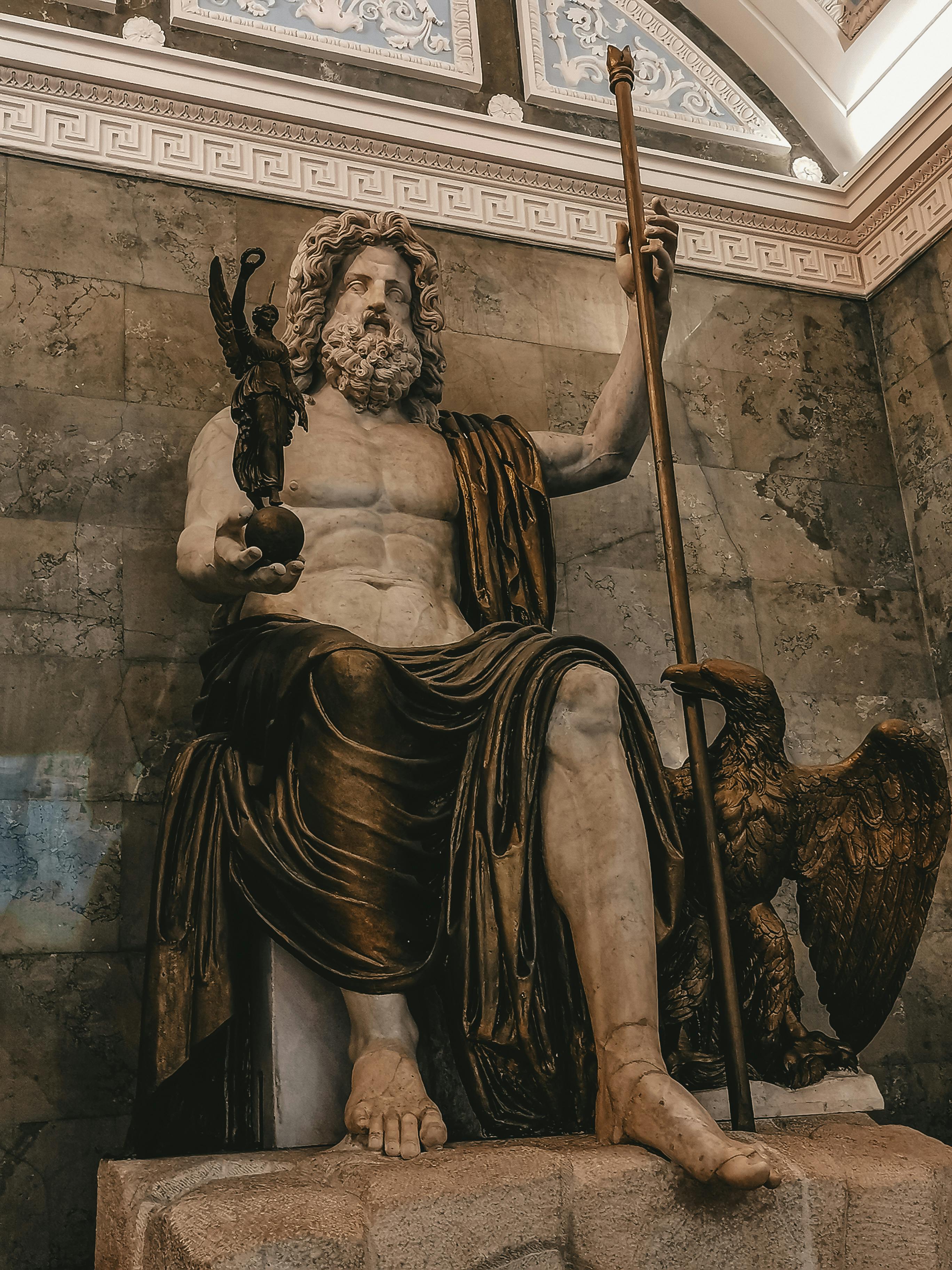
Above pater stands the Proto-Indo-European Sky-Father, Dyḗus ph₂tḗr; his name survives as Greek Zeus patḗr and Latin Iuppiter (archaic Diēspiter, gen. Iovis), all from the bright-sky root dyeu-, cognate with deus, divus, and diēs ‘day’, which reveals paternity as a luminous, law-giving principle rather than a mere household convenience. The second element of Iuppiter is exactly pater, preserved within the name as -piter; Roman cult kept this before the eyes in the habitual address Iuppiter pater, Optimus Maximus. In this lineage patriarchy reflects jurisdictive heaven; the father’s maiestas bears the sky’s ordering light as numen praesens, and patronage is its earthwards radiation into kin, clients, and city.
Romans very often said ‘Iuppiter Pater’ or a variation thereof. You will meet it in prayers, poetry, coinage, and on stone (e.g., dedications to Iovi Patri); it mirrors the Homeric vocative Ζεῦ πάτερ (lit. Zeu Pater) and belongs to a broad cultic habit in which pre-eminent founding gods are addressed as ‘father’ (cf. Mars Pater, Ianus Pater, Liber Pater, Dis Pater, Tiberinus Pater). For native speakers, Iuppiter was a fixed, opaque theonym; the old etymology (Diēspiter, ‘sky-father’) survived in learned memory and occasional poetic forms, yet everyday Latin no longer felt the internal pater. Adding Pater worked as a living epithet and mode of address—an honourific that foregrounded Jupiter’s protective, generative, and juridical sovereignty; it also aligned him with the wider Roman idiom that marks patronal authority by the title ‘father’. In effect, ‘Iuppiter Pater’ functions like ‘Father Jove’: not redundancy, rather the convergence of name and office in a single, solemn style.
Iuppiter pater, si est fas hunc Numam Pompilium cuius ego caput teneo regem Romae esse, uti tu signa nobis certa adclarassis inter eos fines quod feci.
The Public Augur of the Senate Patres; Titus Livius (Livy), The History of Rome, Book I; original translation by author
[…]
Father Jupiter, if it is permitted that this Numa Pompilius, whose head I now hold, should be king of Rome, do thou reveal to us sure tokens within the bounds that I have established.
Among Greeks the usage is even more transparent. Homer makes the formula habitual: Ζεὺς πατὴρ ἀνδρῶν τε θεῶν τε (Zeùs patḗr andrôn te theôn te), ‘Zeus, father of both men and gods’, and the vocative ὦ Ζεῦ πάτερ (ṓ Zeû páter), ‘O Father Zeus’, frame prayer and oath; epithets, often applied to cluster round the same idea of juridical paternity, Κεραύνιος (Keraúnios), Νόμιος (Nómios), Βασιλεύς (Basileús), Σώτηρ (Sṓtēr), ‘Thunderer, Lawful, King, Saviour’, so that Zeus appears as source of order whose fatherhood is legislative rather than merely generative. Cult fixes this in place: Ζεὺς Ἑρκεῖος (Zeùs Herkeîos) guards the courtyard altar of the oikos; Ζεὺς Κτήσιος (Zeùs Ktḗsios) keeps the storeroom and its seal; Ζεὺς Ξένιος (Zeùs Xénios) guarantees hospitality; Ζεὺς Ὅρκιος (Zeùs Hórkios) polices oaths; Ζεὺς Πολιεὺς (Zeùs Polieùs) presides over the city; Ζεὺς Πατρῷος (Zeùs Patrôios), or ‘ancestral Zeus’, receives honour from kin-groups and states alike, with a temple on the Athenian Agora marking descent and lawful succession.
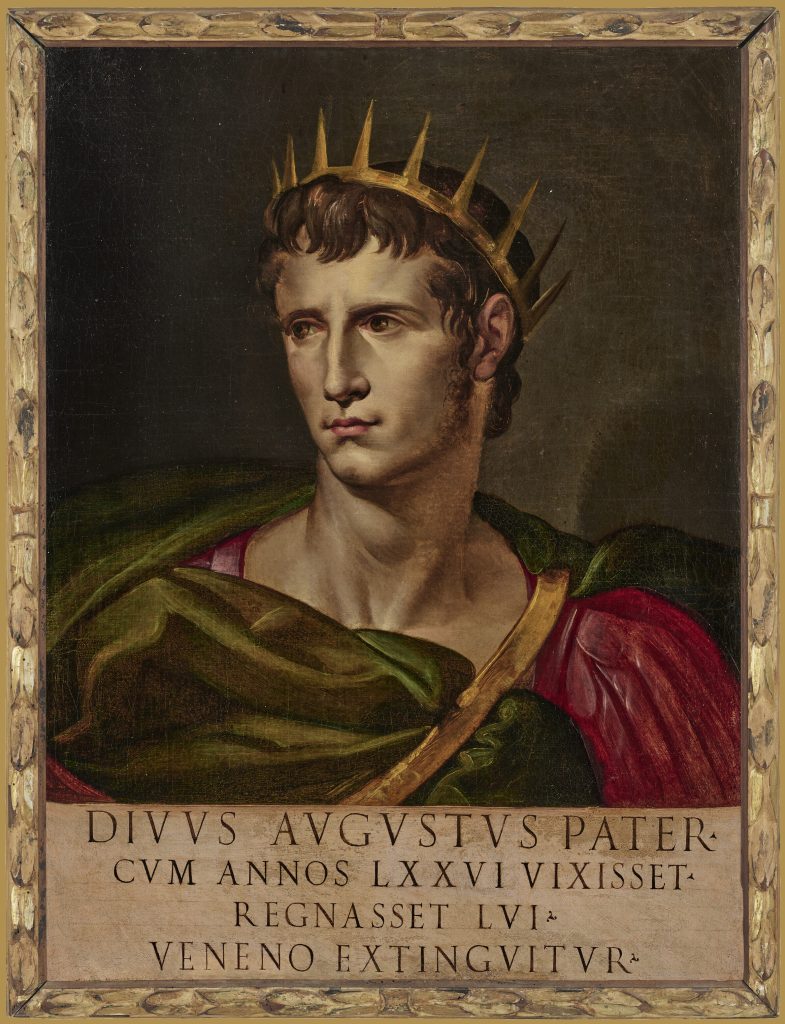
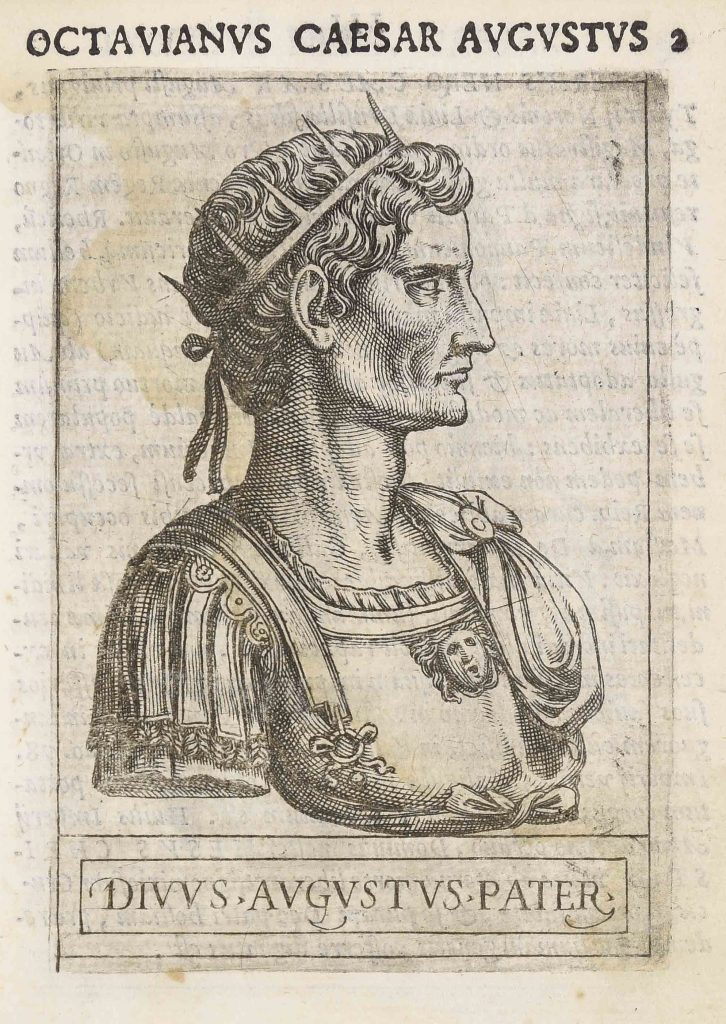
In the Hellenistic world the language of salvation moved from cult to crown with little resistance; cities acclaimed benefactor-kings as Sōtēr (Saviour), the deliverer who repelled danger, rebuilt walls, relieved famine, and thereby entered civic liturgy; with Rome’s ascendancy the same idiom was applied to the Caesars in Greek—Sōtēr, even Sōtēr tês oikoumenês—while Latin usage settled upon Conservator and Restitutor, together with the paternal civil honour pater patriae. Julius Caesar marked the hinge as parens patriae in life and Divus Iulius in death; under Augustus the father-title was welded to consecration itself, so coin and altar carried DIVVS AVGVSTVS PATER, with Caligulan issues adding PATER PATRIAE to make the constitutional claim explicit; from this point a stable grammar may be read, in which ruling as saviour follows from ruling as father, and fatherhood supplies the theological seat of public deliverance.

Philosophic hymnody crowns the pattern: Cleanthes salutes ‘Ζεῦ, πάτερ’ (Zeû páter), making Zeus the rational governor whom all follow; the Orphic hymns address Ζεὺς πατήρ (Zeùs patḗr) as the unifying principle of cosmos; even in Plato the world’s maker is styled πατὴρ καὶ δημιουργός (patḗr kaì dēmiourgós, ‘father and craftsman-maker’), a register that preserves the sense that true paternity entails measure, law, and providence. Linguistically, everyday Greek no longer felt the etymology within Ζεύς, hence πάτερ functions as a living epithet and form of address; the combination Ζεὺς πάτερ is therefore the convergence of name and office, and no redundancy; it harmonises with a wider habit that styles pre-eminent gods as ‘father’ to signify patronal sovereignty within house, city, and world.
Street-religion and state theology were drawn together by Augustan arrangements; the reformed compitalia set the Lares Augusti at the crossroads with the Genius Augusti between them, so that the emperor’s protective spirit took its place beside neighbourhood guardians, while Capitol and forum reserved the higher styles—numen Augusti, Iuppiter Conservator, Iuppiter Optimus Maximus; the picture that resulted was simple to read: pater in life as pater patriae, pater in death as Divus whose favour descended upon legions, harvests, marriages, and lawsuits; the heir reigned as Divi Filius, and the cord between altar and throne remained tight.
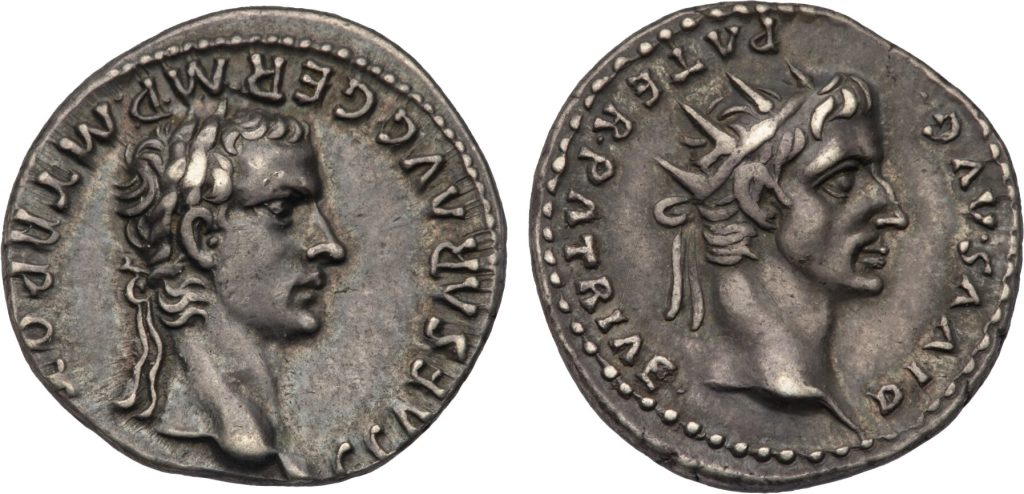
Obverse: C • CAESAR • AVG • GERM • P • M • TR • POT; laureate head of Gaius (Caligula) right.
Reverse: DIVVS • AVG • PATER • PATRIAE; radiate head of Divus Augustus right.
RIC I 16; Lyon 167/9; RSC 2; BMCRE 17; BN 21; CNR XIII 45. Price realised: 19,000 USD. Image and catalogue description via CoinArchives.com.
Here, a filial axis complemented the paternal register. Tiberian coinage presented the reigning prince as DIVI AVG F, son of the divine Augustus, while Caligulan issues adapted the same dynastic theology through descent from Divus Augustus, often as DIVI AVG PRON, great-grandson of the divine Augustus; in both cases the radiate DIVVS AVGVSTVS PATER or PATER PATRIAE stood above the living principate as tutelary source and guarantor. The present burden lay with the descendant, legitimacy and benediction with the deified ancestor, and succession and theology thereby converged. The elasticity of the pattern permitted dynastic piety in narrower form: Trajan’s coinage honoured his biological parent as DIVVS PATER TRAIANVS, introducing the ancestral pater of the imperial house into public cult. In every variant the term pater carried the weight, for it named the protectorate that secured law and fertility, fixed the emperor as household head writ large, and defined ‘saving’ as the political expression of fatherly rule rather than private benevolence.
When you see DIVVS, you are in the realm of posthumous consecration, and DIVVS AVGVSTVS PATER is a historically attested legend on imperial coinage, not a modern reconstruction. The pater here is meaningful. Under Tiberius and later ‘restoration’ issues, bronzes and asses carry DIVVS AVGVSTVS PATER with the radiate head of Augustus; Caligula struck silver reading DIVVS AVG PATER PATRIAE, which makes the linkage explicit: the divine Augustus is ‘Father of the Fatherland’. These types sit alongside the living style pater patriae (accepted by Augustus in 2 BCE) and the cultic numen/genius Augusti (the former the trait of a god), so that, once consecrated, Augustus becomes at once the divine founder of the regime and the paternal tutelary of the commonwealth; the legend signals a sacral fatherhood, not merely a memory of a civil honorific.
Raised to the cosmic register, the lineage reveals its first cause. Above the Roman father lay Dyḗus ph₂tḗr, whose heirs in cult were Zeus pater and Iuppiter pater; the emperor hailed as Sōtēr and Pater bore the father-gods’ numen into visible mediation; maiestas in the living prince functioned as numen praesens, while maiestas in the deified prince operated as a radiate patronage expressed through cult, omen, providentia, fortuna, and the commonwealth’s luck. The descent was conceived as unbroken: from bright heaven to Iuppiter, from Iuppiter to the Divus Pater, from the Divus Pater to the Divi Filius, and from the Divi Filius into the domūs that compose the city. ‘Saviour’ and ‘father’ thus formed a single predicate seen under two aspects; together they completed imperial theology and furnished the living image of a cosmic axis along which authority flowed and peace cohered.
Hence ‘patriarchy’, in its highest register, names the cosmic axis by which auctoritas streams from *Dyḗus ph₂tḗr’s bright law through the pater as numen praesens into the domus, and by patronage into clients and wards; it is the economy of pietas and patria potestas whereby heaven conjoins names, lands, and rites in concord, fixing a common peace as participation within that descending order. Under this schema the house mirrors the sky’s governance; inheritance, worship, and command stand as contiguous realities rather than separable contracts, and civic tranquillity endures because it is anchored within this very cosmology rather than in appetite, from which it is inextricable.
Introduction: the Hand, the House, the Heir; the Civilisational Elevation of Women from Their Natural State
Such are thus the fundamental features of the ‘Civilisation of the Mother’, characteristic, so to speak, of the pre-Aryan substratum of the ancient Mediterranean world. It was defeated by Apollonian, Dorian and Olympian Greece; then, and even more completely, by ‘solar’ Rome, jealous guardian of the principle of paternal right and of the ideal of virile spirituality.
Baron Julius Evola, ‘Do We Live in a Gynaecocratic Society?’ (‘Viviamo in una società ginecocratica?’), Augustea, 1936
Then let it be said without hesitation: patriarchy was a gift to women, precisely for being centred on what is greater than them, and one of the highest institutions of civilisational advancement ever devised for her prosperity.
The tale of an original garden in perfect poise, reflected in utopian Marxism from Judaeo-Christian romance, flatters innocence and the eternal stasis of childhood, denies the necessity of rank and right, and ushers in a levelling will that unhouses families, empties rites, and gathers power to a bureaucratic centre, bereft of true verticality, all while calling the result ‘peace’.

The Edenic conceit, imagines a primordial nature at rest, untroubled by hierarchy, property, or law; it is a romance of innocence that mistakes order for oppression and confuses stewardship with theft. As metaphysic it is hubris; as programme it advances a universalising will that levels ranks, dissolves houses, and centralises one’s very fibre around an abstract spiritual authority in the name of recovering paradise, thereby preparing no harmony, but a managerial dominion over pariahs who have been stripped of lineage, altar, and charter.
Before the rise of the patriciate, the woman’s lot was to be taken in conquest or to be ravished in passing; her offspring bore no name, no inheritance, no standing in the eyes of gods or men. She was at the mercy of the strongest hand in the field without law. The child she bore might be sired by a stranger who vanished the next day, or by a soldier who fell in the next raid. Her womb was fertile, yet her posterity was rootless; her beauty brought desire, but never the security of lineage. This primitive sketch bears a striking resemblance to the current condition of single-motherhood modernity, and our case could be closed there.
Call the patriarchal settlement an innovation commensurate with writing or the printing press: a civilisational technology whose axis was male sovereignty, whose effect was to raise women and children from the chaos of conquest and rut into the shelter of lineage, law, and ordered posterity. By the aegis of the father, woman was preserved from the predation of chance and desire, set instead within the continuity of the domus and the civic bond. Remove that aegis, and she is at once delivered over to every corrosive force patriarchy once held at bay, her ruin rebranded as emancipation, her disintegration hailed as progress. Thus the very spectacle of her ‘liberation’ proves its falsehood: for to be free of the father is to be enslaved to all lesser powers, a fall into subjection masked by slogans of deliverance; a fact at once recognised in the very language of classical patriarchy itself.
The benefits incurred were as profound as the injury received from its dissolution; as writing fixed the breath of speech into law and memory, patria potestas and manus fixed eros into covenant, transmuting the chaos of conquest and the stray sire into a named husband chosen under the eyes of fathers, gods, and city; the woman received the shield of a household, a dowry, witnesses, and a man whose honour, patrimony, and civic standing were pledged to her offspring; the child arrived within a lineage and carried a charge, the roof of the domus became a jurisdiction, the father a magistrate responsible before kin and heaven; in that crucible feminine prosperity rose because predation receded and investment flowed, and the standard of the husband ascended towards intellect, steadiness, foresight, and earned repute. Never before have women been so degraded, in the total abolition of the patriarchal sovereign, for stripped of his aegis they are rendered prey to the market, the state, and their own unmastered impulses, abandoned to servitude beneath every force once restrained by his hand. For the child-bearing half of the population, this has direct effects on the genome itself: once the patriarchal filter is abolished, liberated women no longer reproduce under the aegis of paternal choice and lineage, but follow their own raw impulses, magnifying their innate bias towards affective instability.
Pater, Dominus, and Kyrios: The Pan-Aryan Hearthfire and the Houselord’s Divine Inheritance, In Primis et Ante Omnia

The ancient patrician house was a sacred polity in miniature. Its father stood, beyond mere progenitor, manager, or elder, as the living axis through which blood, land, rite, sacrifice, and divine inheritance were held together. In Greece and Rome, within the Western Aryan order so named, the pater familiae belonged to a rank approaching that of the priest-king; the very word pater bore a royal resonance and stood beside terms of sovereign dignity such as rex, ἄναξ (anax), and βασιλεύς (basileus). It also functioned as a sacred epithet of the gods: Zeus Pater, Iuppiter Pater or Diespiter, Mars Pater, Liber Pater, Dis Pater, and, in the imperial cult, Divus Augustus Pater show how ‘father’ could signify divine sovereignty, generative power, protection, rulership, and numinous precedence.
The Greek civic equivalent appears in κύριος (kyrios), the lord, master, and household head whose authority over women, children, dowry, representation, and domestic economy gives the Hellenic analogue to the Roman paternal office of dominus; and in Aeschylus’ Eumenides, Apollo gives this principle its theological extremity, asserting the father as the true parent and the mother as nurse of the implanted seed, thereby instantiating paternal primacy at the very centre of divine judgement.1 Roman law would later express part of this archaic reality through patria potestas, the paternal power exercised by the male head over descendants in the male line, adoptees, and the wider household under his authority, and carry Apollo’s right of primogeniture through Europe for millennia.2 Yet the juridical form was already a late surface of something older: a sacral power, priestly and regal at once, whose root lay in ritual.
Were it not for the concept of imperium, the Romans would have succumbed to material motherhood of Asian derivation. Augustus contemplating the dead body of Cleopatra is symbolic of Rome’s ultimate conquest over the seductions of the Orient and ius naturale.
J.J. Bachofen, Mother Right: A Study of the Religious and Juridical Aspects of Gynecocracy in the Ancient World, 1861
From this centre one can understand why the State appears as the family magnified. The political order does not arise here as a social contract among isolated individuals; it unfolds as the enlarged structure of the patrician household, whose first lord is also judge, warrior, sacrificer, and guardian of ancestral continuity.3 Here imperium becomes the decisive passage from house to world. It is the father’s command raised beyond the threshold, armed with auspice, jurisdiction, lictor, spear, and sacrificial right; through it, the domestic sovereignty of the pater ceases to remain enclosed within the domus and becomes so ontologically supreme he is capable of ordering peoples, lands, armies, and fate. The pater held command over relatives and slaves, and he bore the military and judicial functions proper to a lord of the house; yet these were secondary radiations from the dignity and ontological station proper to his prior office. In primis et ante omnia, before every other aspect of his authority, he was the august bearer of the traditional rites and sacrifices of the family, rites through which the house maintained the superhuman legacy received from its founder.4
Though the precise formulation is later, the components, however, are thoroughly classical. Livy uses ante omnia in the sense of what must be done ‘above all’ or ‘before everything else’, and Pliny’s correspondence shows in primis as a normal idiom for what is especially or chiefly to be considered. This stood in deliberate contrast to the Augustan primus inter pares, the senatorial formula of the first among patrician peers. Its afterlife passes through the Western peerage, with par descending through Old French per into English peer, and is mythically figured in Charlemagne’s Twelve Peers and Arthur’s Round Table: aristocratic circles of men gathered around kingship, standing on par with the king in ontological rank, yet never abolishing the royal centre. The Senate could sound the formula of primus inter pares, since the peer exists there among well-born men of recognised rank; the household moved by in primis et ante omnia, for wife, children, dependants, estate, cult, and inheritance are no equals: they clearly and ontologically stand beneath the pater as the first and prior fount of domestic jurisdiction.
Western peerage permits renewal from within the same order, rather than mere substitution; the aristocratic peer may restore the principle when the centre decays, and would be expected to do so as a duty integral to fides, as did the patres of Rome herself, repeatedly. Outside the West, this aspect of Tradition, marked by a distinctly Roman flavour and channel of transmission, is lacking; in its absence arise degenerated forms of centralised ontological flattening and consolidated power, where no peer may rival the centre in being, revive its principle, succeed it without destruction, or correct it from inside the order itself.
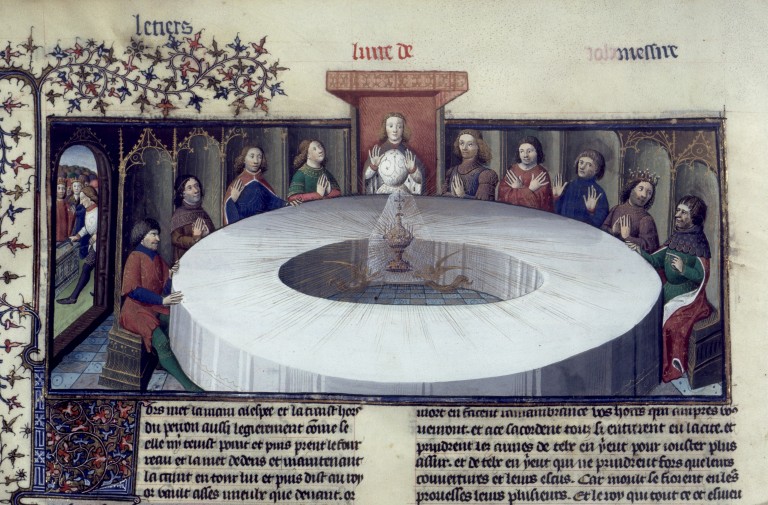
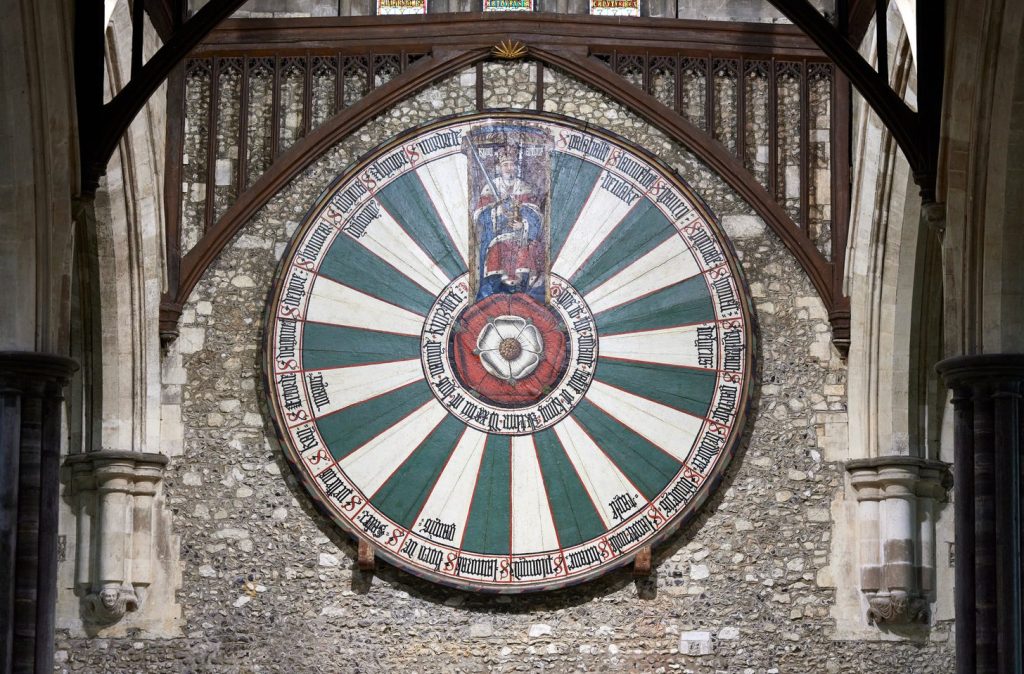
Western constitutional forms, having recently been imposed internationally by the West, may easily be read as an extra-European, foreign imposition upon the West itself; and, in any case, they belong to a far later period and a lower level of analysis than the one in question. Modern scholarship may eagerly read them backwards into the various restorations of, and deviations from, the culmination of Romanitas in the traditional order, yet the conflicts at issue are older and higher than that for which constitutional theory can account, or even encompass, re vera: belonging instead to metaphysical, cultural, and ethnic substrata already mirrored in sacred, juridical, and political form. The modern constitutional reading is a late, reduced, procedural analysis: power as arrangement, limitation, representation, contract, legality, institutional distribution. Modern scholarship reads a later, lower category backwards; the older order contains conflicts that constitutional theory can only misname after the fact. The conflict exists, but is not in essentia constitutional. It becomes constitutional only when a later mind translates sacred and ontological realities into the thin, materialist historiographical language of institutional analysis.
Roman patriarchy was no sociological accident, but a metaphysical form of conquering divine authority, solar in nature and imperial in expression. It was the active, world-shaping principle whose numinous lordship descended from sacred ordo and expressed itself through conquest, law, household, and cult, the empire standing as its visible figuration. Where Rome advanced, the father-right advanced with her. Gynaecocratic civilisations, mother-ethic cults, queenly dynasties, chthonic priesthoods, and lunar sovereignties, from Etruria and Carthage to Nubia, Cleopatran late-period Egypt, and Judaea, then beyond these lands to the Gauls, Lycians, Phrygians and Anatolians of the Mother, Lydians, Syrians of the Great Goddess, Cantabrians, Thracians, and the Germanic seeress-peoples of the northern marches, were drawn beneath the solar jurisdiction of Roman patriarchy: the world of pater, lex, fas et nefas, imperium, hearth, spear, and sacrifice.
Tu, genitor, cape sacra manu patriosque Penatis; me bello e tanto digressum et caede recenti attrectare nefas, donec me flumine vivo abluero.
Virgil, Aeneid 2.717–720, trans. H. Rushton Fairclough, rev. G. P. Goold, Loeb Classical Library 63
[…]
You, father, take in your hand the sacred things and the ancestral Penates; for me, fresh from so great a war and recent slaughter, it would be impious to touch them until I have washed myself in living water.
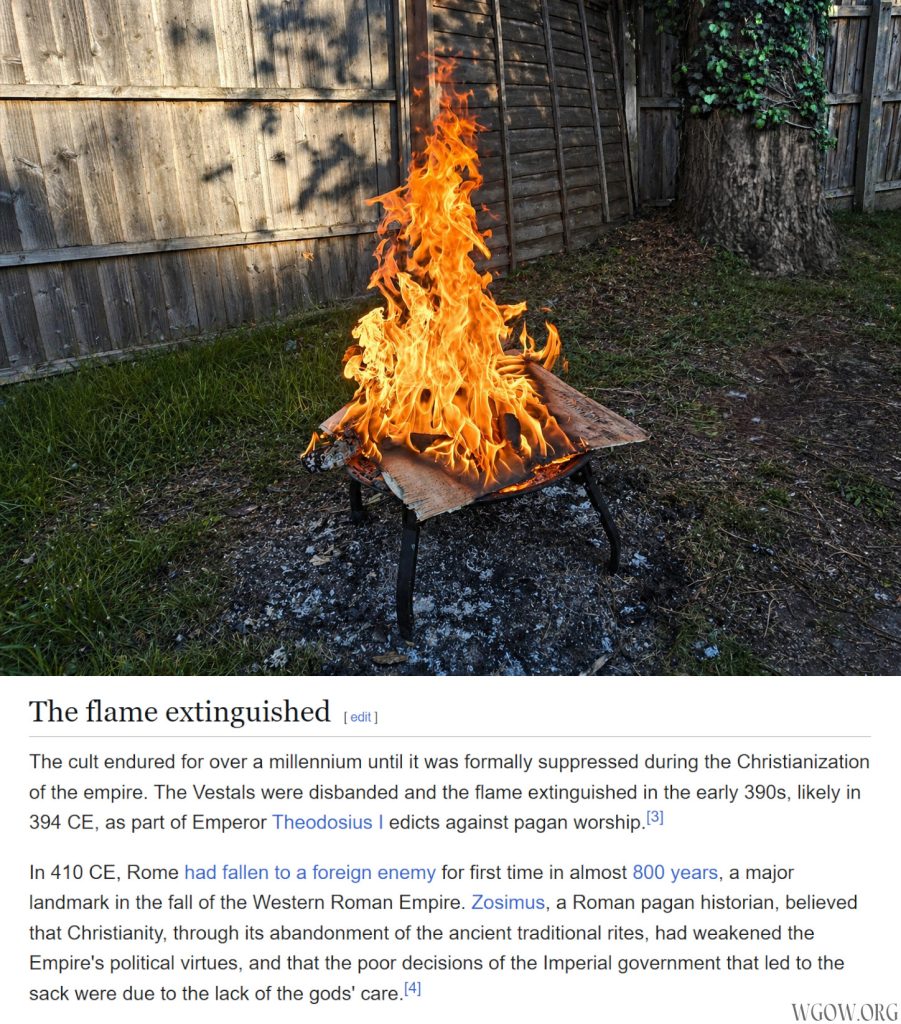
That legacy was given a body in fire. Rome preserves the image with particular clarity: the central fire of Vesta stood as the public hearth of the Roman people, tended by the Vestal Virgins, while the household cult had its own sacred focus through which family, ancestors, Lares, Penates, and domestic continuity were bound together.5 Early Rome possessed thirty curiae, traditionally arranged as three tribes divided into ten curiae each. Each curia had its own sacra, rites, meeting place, and priestly officers, the curio and flamen curialis; Dionysius likewise says that Romulus assigned one part of religious rites to the thirty curiones, who performed public sacrifices for the curiae. Each curia was therefore more than a civil subdivision: it was backed by the patrician-gentile organism from which it drew its rites, names, and sacral continuity. Behind the public division stood the ancestral house, and behind the house stood the hearth. The thirty curiae may thus be understood as thirty curial fires gathered around Vesta’s central flame: the many hearths of the patrician order concentrated into the one fire of Rome, where household, gens, curia, and commonwealth converged in a single sacral centre. The image of the thirty family fires surrounding the central fire of Vesta expresses the same domestic principle at a higher symbolic pitch: each family flame was to be sustained with special substances, exact rites, and secret norms; it had to burn continuously as the visible witness of the family’s divine inheritance.6
Plutarch makes the solar nature of the Vestal flame explicit: if the sacred fire went out, it was to be rekindled from no ordinary flame, but from the Sun itself, drawn into a concave bronze vessel until the rays converged at the centre and generated a ‘pure and unpolluted flame’. Read through the Augustan and imperial elevation of Apollo, whose Palatine temple stood beside Augustus’ own house and whose Actian radiance became inseparable from the victory-order of the Principate, this detail becomes still more charged: Vesta’s civic hearth is renewed by concentrated solar light, as though Rome’s central fire had to be reborn from the Apollonian source of form, purity, victory, and paternal radiance.7
How, then, was the guardian of a family hearth to keep the fire alive day and night? Was he expected to maintain a visible blaze without interruption, feeding it through every hour like an impossible rite of sleepless vigilance? The practical reality is subtler, and obvious to anyone who has kindled and kept a fire: continuity does not require theatrical flame at every moment. The hearth was to remain alive, watched, banked, fed, and recoverable; after dark, the fire could quieten into the deep red secrecy of embers beneath ash, still living, still guarded, still carrying the same ancestral heat. Embers can last for days when properly covered, holding the memory of fire in a half-hidden state, waiting to be breathed back into flame with morning fuel. Thus the hearth’s perpetuity was itself a lesson in inheritance. The fire did not need to blaze at every hour; it needed to survive every interval. At night the hearth withdrew into its concealed heart; at dawn the house renewed itself from the same living source, by awakening the old flame. Continuity lay precisely there: the family did not merely light a fire each day; it carried the fire through time.
Rome did not merely overthrow the mother-world; she gathered the father-world around her hearth. Greek oikos, Italic gens, Sabine marriage-law, Samnite martial kinship, Macedonian and Alexandrian solar kingship, Eastern dynastic fatherhood, and Germanic mund were all brought, by conquest or alliance, beneath the higher grammar of Roman paternal right.
The Roman pater before the hearth is no isolated Roman curiosity, but belongs to a broader Indo-Aryan/Indo-European sacral pattern in which the householder, the hearthfire, sacrifice, lineage, and divine mediation form a single organism. Agni as gṛhapati, the ‘lord of the house’ clarifies the type: the fire is priestly, messenger-like, ancestral, and domestic, yet also cosmic; the equivalent of the Roman ignis, a true cognate of Vedic Agni, both descending from Proto-Indo-European *h₁n̥gʷnis (‘fire’) and preserving, across Rome and the Vedic world, the sense of fire as a divine and operative presence rather than a merely material element. Whereas páti belongs to the Indo-European vocabulary of mastery, is cognate with Latin potis/potens, and stands within the same Indo-European power-field as potestas, giving the term a natural affinity with patria potestas. In the Vedic sphere, the Ṛgveda, the oldest surviving Vedic Sanskrit text and one of the most archaic witnesses of Old Indo-Aryan, remains part of India’s living domestic-sacral inheritance, still recited in households and even over dinner rather than consigned to antiquarian silence; within it, Agni receives extraordinary prominence: the collection contains 1,028 hymns, with 218 addressed to Agni.
Agni is the divine fire, priest, messenger, bearer of oblation, bringer of the gods, inner flame, and gṛhapati, ‘lord of the house’; yet gṛhapati also denotes the human householder, master of the dwelling, head of the family, and ritual patron. The two senses converge: Agni is the divine houselord present in the hearth, while the aristocratic father is the human houselord who tends, feeds, guards, and embodies that fire. In the Roman sphere, the ignis Vestae gives the civic and public form of this sacred fire, while the pater familias before the ancestral flame gives its domestic and patrician form.8 In Roman religion, Vesta’s flame itself signified the vitality and preservation of the community, and the Vestals’ duty to keep it alive gives the public counterpart to the private duty of the father before his own ancestral fire.9
Thus, O Agni, be easy of access to us, as a father is to his son. Stay with us for our happiness.
Ṛg Veda 1.1.9, the ninth verse of the first hymn of the Ṛg Veda, addressed to Agni; trans. Hermann Oldenberg, Vedic Hymns, Part II: Hymns to Agni, Sacred Books of the East 46, 1897
In the Vedic understanding, Agni is essentially Knowledge, or Light, assuming the character of force. He is the mental fire, the power of will without which no action can be undertaken. Through Agni, the divine knowledge of the Supreme Sun becomes accessible to man; he is the intermediary power by which the solar intelligence descends into human consciousness and becomes operative rather than merely remote. His functions are manifold: he is tapas, the force of concentration, inwards heat, and ascensional intensity, too often weakened into ‘austerity’ or misrendered as ‘penance’; he is the principle of combustion in the cosmos; and he is also jāṭharāgni, the digestive fire in the belly of man, by which food is transformed into life.
The ninth verse of the first hymn gives this relation its intimate and paternal form, praying that Agni cleave to us ‘as a father to a son’. This is not merely a plea for kindness. It expresses Agni as the protecting, generative, guiding, and hereditary fire: the divine force that attaches itself to the human being as a father attaches himself to his own issue. The image is crucial, because it shows Agni not only as cosmic flame or sacrificial priest, but as paternal presence, the inner and outer fire that guards the line, nourishes action, transmits divine knowledge, and binds man to a higher origin through a relation of filial dependence and sacred descent.
The father, then, is the virile priest of the hearth. His task is to prevent the sacred family fire from being extinguished, because that extinction would signify more than domestic neglect; it would mark a rupture in the mystical victory of the ancestor. Through his vigilance, that victory was reproduced, perpetuated, nourished, and carried into new generations.10 The household cult strengthened the Roman family’s bond with ancestral origin, and the family head bore ultimate responsibility for the cultic life of the house, even where particular acts could be delegated.11 Thus the father’s authority was sustained by the flame, and the flame, in turn, displayed the family’s immortal root. The pater is not simply ‘like’ Agni externally; he is the human representative of the same sacral function that Agni manifests divinely. The god as houselord and the father as houselord are two levels of one office, one cosmic, one domestic, joined at the hearth.
Agni is the archetypal houselord; the father of the house is the embodied human houselord. The hearth is the visible meeting-point between the two. In Vedic terms, Gārhapatya fire is the householder’s fire, kindled at marriage and maintained through life, from which other ritual fires are lit. In Roman terms, the pater familias before the ancestral fire occupies the same structural place: his authority issues from the fact that he tends and embodies the household’s sacred centre.
Gravitas is the bearing of a serious man; maiestas is the august elevation of a superior being, office, house, people, or divine power. It is not merely proper conduct, but the dignity that makes impropriety a kind of sacrilege, proper to the traditional pater. Seen by children, relatives, dependants, and servants, such a father must have appeared under a heroic aspect. He was the natural mediator of all efficacious relations with the supernatural; the one who vivified the mystical force present in rite and fire; the one through whom the family’s mortal members touched powers beyond the mortal plane.12 The Indo-Aryan comparison to Agni clarifies the type: Agni is invoked as a divine fire, messenger, priestly power, and bringer of the gods; Vedic hymns call him ‘Son of Strength’ and describe him as born in holy Order.13 In that light, the pater may be read as an incarnation of order, as the principle that brings the gods near, as the firstborn from order, as the son of strength, and as the guide who conducts men away from this lower world towards higher dimensions and the realm of right action.14
This is why he is called the ‘lord of the spear and of the sacrifice’. Martial sovereignty and sacrificial office meet in him. The spear signifies the armed and virile prerogative; the sacrifice signifies the right relation with gods, ancestors, and hidden powers. From that union came the ‘regal’ component of the family. The pater was the centre from which the entire rigorous system of traditional paternal rights flowed naturally: power over persons unto life and death, custody of rites, rule of property, continuity of name, and guardianship of the ancestral dead. Once memory of this primordial foundation disappeared, the rights themselves became juridical husks, and the later mind could recognise only domination and oppression where an older order had seen sacral responsibility.15
Iam ritus familiae patrumque servare id est, quoniam antiquitas proxume accedit ad deos, a dis quasi traditam religionem tueri.
Cicero, De Legibus 2.27, trans. Clinton W. Keyes, Loeb Classical Library 213
[…]
Next, the preservation of the rites of the family and of our ancestors means preserving the religious rites which, we can almost say, were handed down to us by the gods themselves, since ancient times were closest to the gods.
Roman legal language still carries traces of the primordial, traditional structure. The possessor of ius Quiritium stood within the civil body of rights proper to the Quirites, Romans in their civic capacity, a name made mythically resonant in Livy when Romulus addresses the reconciled Roman-Sabine people as Quirites after their union; around that right gathered the older signs of lance, sacrifice, and land, the citizen appearing as armed man, ritual participant, and holder of ancestral soil.16 Even where later law reduces the matter to property, dominium ex iure Quiritium preserves the archaic density of the order: ownership as a civil, paternal, and agrarian fact, secured within the body of Rome itself. Quiritary ownership later became a technical category of Roman property, and the older association of citizen-right, land, and ritual privilege helps explain why such rights were treated as inviolable within the archaic imagination. No mere economic possession, it was the full civil form of Roman ownership, rooted in the citizen body, secured through solemn forms such as mancipatio, and attached especially to res mancipi: land, slaves, beasts of draught and burden, and rural servitudes, the very things belonging to the old agrarian and paternal order.17 The pater stood at the point where rite, power, and sign converged. As head of the house he bore responsibility for the ancestral sacra, for the continuity of the household gods, and for the juridical order through which the invisible became command. Cicero’s formula, sacra privata perpetua manento, gives the principle its Roman severity; and his further statement that the rites of family and ancestors guard a religion received as though from the gods themselves, because antiquity comes nearest to the gods, reveals why the father’s office could never be reduced to private administration.18
The same logic explains the extreme juridical inviolability attributed to the patrician. In the earliest order described here, nulla auctoritas, no legal authority, could prosecute him, since he was regarded as a minister of the gods, comparable in later times to the king as a sacral person.19 A much later and narrowed echo of this household inviolability appears in English common law’s ‘castle’ doctrine: Semayne’s Case gives the formula that every man’s house is to him as his castle and fortress, and also states that, if thieves enter a man’s house to rob or murder him and the owner or his servants kill them in defence of himself and the house, it is no felony.20 The same current informs the knock-and-announce tradition and the older resistance to warrantless or irregular entry into the home, yet the common-law admission of Crown process already marks a later narrowing of the castle-principle, whereby the household’s old jurisdictional sanctity survived in form while its ancient inviolability was made penetrable by central authority; the aphorism ‘Every man is the king of his castle’ is therefore a reduced juridical survival of the older intuition that the household is a jurisdictional world with a lord at its centre.21 If he committed an offence within his own mundus, the Curia could only declare that he had acted impiously, improbe factum.22 The word mundus also had a Roman religious resonance as a sacred pit or chthonic aperture connected with the foundation of the City and the underworld; in this household context it evokes the enclosed world over which the patrician father exercised a sacral jurisdiction.23
His rights over relatives were therefore absolute in the most severe sense: ius vitae necisque, the right of life and death.24 Roman accounts of patria potestas preserve the memory of paternal power extending, in its earliest and most pure form, even to capital punishment; other traditions likewise preserve the father’s right to sell a child, as the Twelve Tables record the point at which repeated alienation naturally dissolved and juridically exhausted the bond itself: after a son had been sold three times, he passed out of the father’s power.25 In the world described by the passage, the father’s superhuman character made it natural that he could sell his children or put them to death at his own discretion. From this spiritual horizon arose the first formulations of ‘natural heroic rights’ and the ‘divine rights of heroic peoples’.26
Scholia (click to expand)
- Pater familiae means the father or male head of the family-household; rex is Latin for king, while ἄναξ and βασιλεύς are Greek terms of lordship or kingship. Pater also appears in divine and cultic usage: Zeus is frequently addressed as Zeus Pater; Iuppiter or Diespiter bears the ‘sky father’ sense; Dis Pater means ‘Rich Father’; and Roman Provincial Coinage records Divus Augustus Pater and Divus Augustus Pater Patriae on coin legends. In Classical Athens, kyrios denoted the male household authority responsible for women, children, unmarried female relatives, marriage arrangements, dowries, representation in court, and significant economic transactions; in Aeschylus’ Eumenides, Apollo’s defence of Orestes asserts that the father alone is the proper parent, while the mother is the nurse of the implanted seed.
- Patria potestas means ‘power of a father’; Britannica describes it as the power of the male head over children, descendants in the male line, and adoptees.
- Fustel de Coulanges, The Ancient City: A Study on the Religion, Laws, and Institutions of Greece and Rome, Book III, chs. 1–3, on the city as the enlargement of the family, the curia/phratry as an association of families, and the ancient city as a religious-political organism arising from domestic cult; cf. Dionysius of Halicarnassus, Antiquitates Romanae 2.7, 2.21, 2.23, on Romulus’ division of Rome into tribes and curiae.
- In primis et ante omnia means ‘first and before all things’, or ‘first and foremost’; ante omnia is the core Latin phrase meaning ‘before all else’. By contrast, primus inter pares means ‘first among equals’ or, more precisely in the Augustan-senatorial register, the foremost man among peers of recognised aristocratic standing; pares here denotes aristocratic parity within rank, not democratic levelling, and signifies precedence among men already elevated by ancestry, office, and honour rather than primal authority before all things. For the classical idiom, compare Livy’s repeated use of ‘ante omnia’ for what is to be regarded ‘above all’ or ‘before everything else’, e.g. Ab Urbe Condita 24.8.15, ‘ante omnia ne supplementum cum stipendio commeatuque ab Carthagine Hannibali transportaretur’, and 2.7.4, ‘ante omnia insignis’; and Pliny’s use of ‘in primis’ as an adverbial expression meaning ‘especially’ or ‘above all’, e.g. Epistulae 3.9.12, ‘Placuit in primis ipsum Classicum ostendere nocentem’, and 7.27.2, ‘Ego ut esse credam in primis eo ducor.’ For the later combined formula ‘in primis et ante omnia’, see Paul VI, Allocutio ad sodales Consilii de laicis et Pontificiae Commissionis studiosorum a iustitia et pace, 28 April 1969, ‘sed in primis et ante omnia praesidio confisa illius’; Pius XI, Quadragesimo anno, 15 May 1931, ‘id in primis et ante omnia prorsus necessarium putamus’; and Acta Sanctae Sedis 30 (1897–98), p. 648, ‘In primis et ante omnia animadvertendum duco, Processum canonicum huius Causae nullam praeseferre irregularitatem.’
- Cato, De Agri Cultura 143, on the hearth, the Kalends, Ides, Nones, holy days, and prayer to the household gods; Plautus, Aulularia, Prologue 1–8, where the Lar familiaris identifies himself as the household god of the family, says he has long possessed and guarded the house for its father and grandfather, and speaks of the treasure buried in the hearth; Virgil, Aeneid 2.717–720, tu, genitor, cape sacra manu patriosque Penatis, ‘you, father, take in your hand the sacred things and the ancestral Penates’, where Anchises is charged with bearing the sacred things and Penates from fallen Troy; cf. Aeneid 3.11–12, where Aeneas departs into exile with his comrades, son, Penates, and the great gods
- On the enlargement of the domestic-sacral principle into the archaic civic order, cf. Dionysius of Halicarnassus, Antiquitates Romanae 2.7, 2.21, 2.23, 2.64–67, on the division of Rome into three tribes and thirty curiae, the thirty curiones, curial sacrifices, and the central sacred hearth of Vesta. The thirty family or curial fires surrounding Vesta’s central flame express the archaic Roman order in its true form: the thirty curiae, their sacra, the patrician-gentile organism, and the Vestal hearth gathered into the one civic fire of Rome.
- Plutarch, Numa 9.6–7, on the Vestal fire being rekindled through a concave bronze vessel that concentrates the rays of the Sun into a pure and unpolluted flame; cf. Suetonius, Augustus 29, and Cassius Dio 49.15.5; 53.1.3, on Augustus’ Palatine temple of Apollo, raised beside his house after the god’s will was signalled by lightning and dedicated in 28 BCE; cf. Augustan Apollo as the divine patron of Actian victory and the restored order of the Principate.
- The Ṛgveda contains 1,028 hymns and is the oldest known Vedic Sanskrit text, with its early language belonging to the archaic Old Indo-Aryan stratum. Agni is addressed in 218 hymns, and is called gṛhapati, representing the spiritual force of the ‘lord of the house’ or ‘lord of the household’.
- The Vestal Virgins tended Vesta’s sacred public fire; Vesta was goddess of the hearth, and the flame was bound to Rome’s preservation.
- Fustel de Coulanges, The Ancient City, Book II, chs. 1–3, on the sacred hearth, the perpetuity of the family fire, and domestic religion as the bond uniting the living family to its ancestors; cf. Cicero, De Legibus 2.19 and 2.27, on private rites being perpetual and the rites of family and ancestors as a religion received as though from the gods themselves.
- Scholarship on Roman lararia describes domestic cult as strengthening family ties and symbolising ancient origins; accounts of the Lares also place household cultic responsibility ultimately under the paterfamilias.
- Fustel de Coulanges, The Ancient City, Book II, chs. 1–3, on the father as priest of the domestic religion and mediator of the family’s rites before the ancestral gods; cf. Cicero, De Legibus 2.19–22, on the perpetuity of family rites; cf. Dionysius of Halicarnassus, Antiquitates Romanae 2.26, on the Roman father’s sovereign authority over the household.
- Rig Veda 1.1.1–9, on Agni as priest, divine minister, invoker, and bringer of treasure; Rig Veda 1.12.1–10, on Agni as messenger, lord of the house, oblation-bearer, priest, bringer of the gods, and ‘Son of Strength’; cf. Rig Veda 1.36.5, on Agni as priest, lord of the house, and messenger in whom the divine ordinances gather.
- Rig Veda 1.12.1–10, on Agni as priest, messenger, oblation-bearer, bringer of the gods, and ‘Son of Strength’; Rig Veda 1.36.5, on Agni as gṛhapati, lord of the house, and messenger of men; cf. Rig Veda 10.5.7, where Agni is invoked as first-born of Order, and Rig Veda 10.1.6–7, on Agni as central fire, king, high priest, and bringer of the gods.
- Dionysius of Halicarnassus, Antiquitates Romanae 2.26, on the powers attributed to the Roman father by Romulus, including authority over children throughout life; Gaius, Institutiones 1.55, on those born in lawful marriage being under the power of their fathers; cf. Cicero, De Legibus 2.19–22, on the perpetuity of family rites and ancestral religion.
- On the Quirites as Roman citizens in their civil capacity and the ius Quiritium as the body of rights proper to Roman citizenship, see Gaius, Institutiones 1.32b, on acquisition of the ius Quiritium; cf. Livy, Ab Urbe Condita 1.13, where Romulus addresses the Romans as Quirites after the union with the Sabines; cf. Varro, De Lingua Latina 5.73, on Quirites and the civic name of the Roman people
- Gaius, Institutiones 2.14a–2.22, on res mancipi, mancipatio, and ownership held ex iure Quiritium; cf. Justinian, Institutiones 2.1.40–41, on ownership and civil-law acquisition
- Cicero, De Legibus 2.19, sacra privata perpetua manento, ‘let private rites remain perpetual’; cf. De Legibus 2.27, Iam ritus familiae patrumque servare id est, quoniam antiquitas proxume accedit ad deos, a dis quasi traditam religionem tueri, on preserving the rites of family and ancestors as guarding a religion received as though from the gods themselves, since antiquity comes nearest to the gods; cf. Dionysius of Halicarnassus, Antiquitates Romanae 2.26, on the Roman father’s sovereign power over the household. For a Vedic appendment, compare Agni as gṛhapati, lord of the house and mediator between men and gods, in the Rigvedic household-fire tradition.
- Nulla auctoritas means ‘no authority’; auctoritas in Roman usage means authority, sanction, power, or ownership.
- Semayne’s Case (1604) 5 Co. Rep. 91a, 77 Eng. Rep. 194, 195, K.B., gives the classic castle formula, ‘the house of every one is to him as his castle and fortress’, and states that if thieves come to a man’s house to rob or murder him, and the owner or his servants kill any of them in defence of himself and his house, ‘it is no felony, and he shall lose nothing’.
- Semayne’s Case (1604) 5 Co. Rep. 91a–92b, 77 Eng. Rep. 194, 195–198, K.B., is foundational for the knock-and-announce rule: even where lawful entry may be made on the King’s business, the officer ought first to signify the cause of his coming and request that the doors be opened; the case also recognises defined conditions of lawful entry, especially after request and refusal in matters of Crown process. On later treatment of the ‘home is castle’ line and the knock-and-announce doctrine, see Wilson v. Arkansas, 514 U.S. 927, 931–934 (1995), discussing Semayne’s Case as part of the common-law background.
- Improbe factum means an impious, wicked, or improper deed; the passage gives this as the Curia’s declaration rather than a prosecution.
- The Roman mundus was a sacred pit or vault, connected in ancient testimony with Rome’s foundation and chthonic symbolism.
- Ius vitae necisque means the right of life and death, associated with the paterfamilias under patria potestas.
- Britannica notes that early patria potestas included even capital punishment; the Twelve Tables preserve the rule that a father who sold his son three times lost paternal power over him.
- Giambattista Vico, The New Science, trans. Thomas Goddard Bergin and Max Harold Fisch, Cornell University Press, 1968, §§922–924, on the three kinds of natural law: divine law, heroic law, and human law, with heroic law as the law of force and the law of Achilles, who referred every right to the tip of his spear; cf. §§666–669 and related passages on the heroic age, noble houses, heroic peoples, and the rights of the fathers. Cf. Julius Evola, Revolt Against the Modern World, ch. 6, where Vico’s ‘natural heroic rights’ and ‘divine rights of heroic peoples’ are invoked in relation to paternal power, patria potestas, and the heroic-patrician order.
The Dysgenics of Female Sexual Selection; or, Modernity’s Unnatural Selection
Where patriarchal order prevailed, women were not abandoned to raw appetite nor to the gamble of conquest. Their partners were filtered through fathers, clans, and sacral-civic law; men were compelled to prove discipline, intellect, and foresight, for only then would they be entrusted with a wife, dowry, and the continuance of a lineage. The entire species benefited, because reproduction was tied to the elevation of masculine virtue and to the consolidation of stable households. Intelligence, responsibility, and gravitas were no luxuries nor vain indulgences; they were the preconditions for fatherhood itself.
But when the patriarchal filter is dissolved, the reins fall to female preference alone, unchecked by lineage or law. And here the logic turns dysgenic: for women are more neurotic, more volatile, more drawn to men who mirror their affective state than to those who surpass it; liberated female selection gravitates towards the impulsive, the unstable, the emotive. In a world where male violence is restrained, where governmental welfare subsidies erase the costs of poor choice, where equal pay and taxation of single men obliterates the patriarchal economic institutional of family wage, and where the state stands in as surrogate husband, the outcome is certain: neurotic men multiply, intelligence and discipline decline, sexual dimorphism itself erodes, and the species slouches towards an equalised mediocrity in the all-encompassing obliteration of any principle of masculine forma.

Most reproduction occurred among those of low income and little education, who kept many sexual partners and lived alone; the declared aim of depopulation through the education of women is but the reverse face of this tragic coin; the most highly educated of women bear children the least.

Thus, rather than being paired with well sexually-differentiated men of masculine gravitas, sacred ancestors, foresight, stabilising stoic clarity, and civic standing, they are drawn into unions with fatherless men who mirror and perpetuate their own volatility: neurotic, impulsive, pathos-laden feminised types who would once have been sifted out by noble fathers and clans. Because women are the bottleneck of reproduction, their partners shape the species itself; and when those choices are no longer disciplined by patriarchy, the hereditary pattern tilts towards the propagation of traits least compatible with civilisation: diminished intellect, weakened virility, unstable temperament, and the rootless pariah, part of no cosmos higher than the biological substratum, as the polarisation of sex differences itself is dissolved. What was once a system that aligned eros with order now delivers dysgenic drift on a civilisational scale, where the most fertile are those least fit to carry forwards the upwards line of mankind; the fall of the patriarchal filter permits neurotic, unstable, and short-sighted pairings to reproduce unchecked, such that the hereditary stock of mankind bends downwards, intelligence and discipline recede, and the very axis of sexual polarity is dissolved into an equalised, poorly-differentiated mediocrity.
Patriarchy is nothing other than the pagan-founded mode of aristocracy: the ordering of sex and generation upon the axis of male sovereignty, whereby the father, as paterfamilias, stands as the living bond between lineage, law, and cult; in his hand the household is raised from animal concourse into a miniature polity, the woman ennobled as materfamilias beneath his name, and the child consecrated to a continuity greater than appetite. To speak of patriarchy, rightly understood, is to speak of aristocracy in its most primordial and enduring form—the governance of blood, hearth, and posterity by the virile principle, without which no city, no temple, no throne could ever stand.
Dissolve this regime and the treasury steps into the father’s place; selection tilts towards short horizons; pair-bonds slacken; the most fertile become transients with many beds and no hearth; children enter the world as administrative cases; the surplus of industrious men is harvested and dispensed to clients; number overrules name; the sovereign economy supplants the sovereign household; call such a passage ‘progress’ and the ledger answers with orphans, subsidies, and a thinning stock of the very virtues that once lifted women into the shelter of the domus.

Among chimpanzees, conquest and mating are inseparable; males raid neighbouring groups, seize females, and kill the infants of rivals, so that only their seed endures; the effect is so profound that infanticide of a rival male’s children provokes oestrus in conquered females. The lion is no gentler: when a new male or coalition takes a pride, its first act is to slaughter the cubs of the vanquished, bringing the lionesses into heat and securing his lineage alone. In both, reproduction is no alliance, but conquest, the womb made hostage to the victor’s violence and the offspring of the defeated erased; this is true ‘natural selection’ where the male has his say, as modern female dysgenics is so frequently called. What we have in the modern order is not even ‘natural selection’, as is so piously claimed to defend poor female behaviour and dominance, but its inversion: a captured bureaucracy suppresses one half of the law of nature, forbidding the eliminations that once enforced strength, while subsidising precisely those unions that no patriarch, no beast, and no god would have permitted to endure.
A civilisation that truly honours women entrusts their future to fathers who choose proven men and bind desire to duty; a civilisation that scorns fathers abandons women to the equal marketplace; restore the law of the house, and the city relearns what writing taught the tongue—memory, measure, dispassionate clarity, responsibility.
Patriarchy was no barbarism, but the first great civilisational advance on behalf of woman herself. Where once her lot was to be taken in conquest, to bear the child of the ravisher, to live in the unmeasured flux of force and violation, patriarchy interposes the father, the lineage, the household, and with it the civilised order of marriage. The woman is no longer abandoned to nature’s law of rape and conquest or the chaos of promiscuity, but was given into the hand of a man chosen for his standing, his proven ability, his capacity to maintain her and their children. It was, for her, a step as decisive as the invention of writing: the sudden binding of chaos into law, of chance into record, of brute nature into continuity.
This is not the ruthless and barbaric law of the jungle, which at least prunes the weak; it is a neutered jungle, where female preference reigns unrestrained but without the natural consequences that would normally follow. The result is a proliferation of traits unfit for civilisation—instability, short horizons, careless fecundity. What was once the strength of the human species, the patriarchal selection for virile men of intellect and order, is inverted under naturalistic conceptions into a breeding ground for men who resemble women in their neuroticism and lack of mastery.
To call such an order ‘oppressive’ is an inversion. Patriarchy gave women the only true security they have ever known, lifting them from the animal condition of prey to the human condition of wife and mother under the aegis of a man who himself could be sovereign bearer of higher law. To replace this with the modern contrivance of welfare and state subsidies is no advance but a regression, to denigrate and to teach women to denigrate it is a weaponisation of women that is wilful and self-destructive: the woman is cast into dependence on a faceless power, her mate chosen not by lineage or by virtue but by whim, by accident, or by neurotic impulse, her children fathered by men whom no patriarch would have permitted to enter the line.
Thus the state, under the banner of emancipation, has ensured her eternal dependency and slavery by abolishing the greatest gift male patriarchy ever bestowed on women: ordered protection, sovereignty, continuity, and dignity. What was once a civilisational innovation of the highest order has been vilified in Marxist cant, and in its place stands only the sterile machinery of welfare—an innovation in reverse, as great a step down as patriarchy was a step up.
Section I: The Metaphysics of the Domus: How Apollo’s Patriarchy Holds Doric Forma, How It Fails, and Why the Feminine Materia Is Invoked as Its Dismantler
In the Traditional metaphysic hierarchy is the grammar of Being. The masculine stands as forma and lex, the principle that measures, names, and commands; the feminine stands as materia and matrix, the principle that receives, sustains, manifests, and brings to term. Act orders potency; heaven gives rule to earth; seed imposes pattern upon soil. This is not a contract between peers, it is a ladder of causes in which the higher gives law to the lower and the lower answers with fructiveness. Authority descends; service ascends; peace results when each term keeps its rank.
Ancient pedagogy binds music, gymnastic, and architecture into a single civic paideia. A youth drilled in Dorian singing internalises cadence and restraint; the colonnades under which he walks make that cadence visible; temples and marches, choruses and stoae converge on the same habitus. Hence the frequent pairing in texts: Dorian for courage and sōphrosynē; Doric for masculine proportion and structural frankness. The relationship is analogical and emblematic, never a claim that columns encode scales; it is a singular ethos (character, custom, habit; akin to the Latin mores) translated across media.
‘Doric’ and ‘Dorian’ derive from the Dorians, a Greek ethnos associated with the Peloponnese and the Spartan sphere; their dialect is ‘Doric’, their reputed character austere, orderly, sparing, and their women housebound, despite Spartans being considered novel for allowing their women outside to exercise (Scholia on Orestes, 108.01-15). This ethnonym supplies the label both for a harmonia in music and for an architectural order; the shared adjective signals provenance and ethos rather than a technical identity.
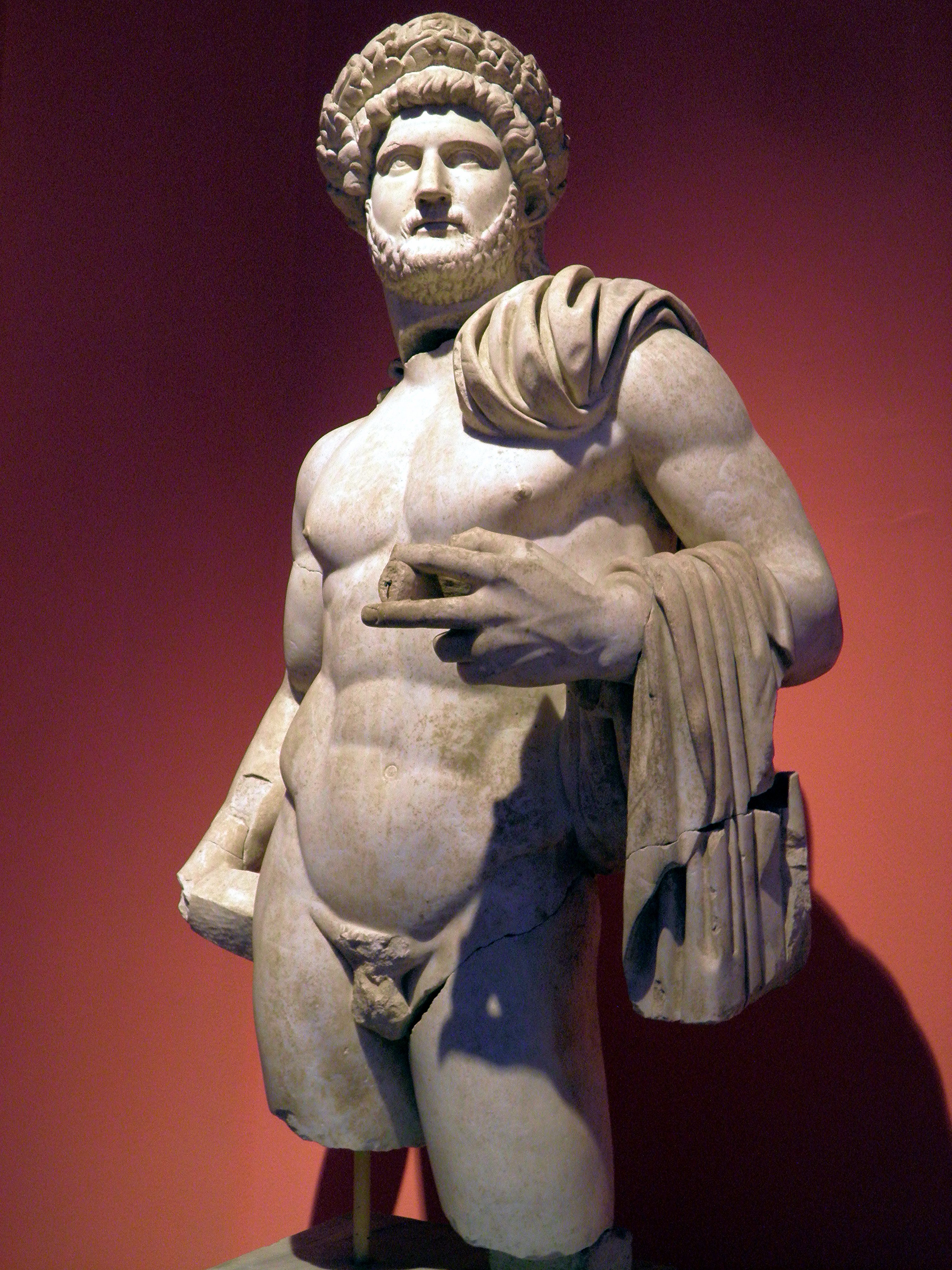
When a culture places the Doric ethos at the summit, it privileges form as law: the body trained to right tension, the voice to right mode, the stone to right span. The result is a public world where beauty serves nomos, where ornament yields to proportion, where logos commands matter; temples, statues, and songs become a grammar of sovereignty, with Apollo as patron of both lyre and line. In architecture Doric marks the most severe of the Greek orders; the column stands without a base, the capital is a plain echinus and abacus, the entablature carries a strict triglyph–metope rhythm. Vitruvius glosses the orders by sexed analogy: Doric proportion corresponds to a man’s body and carriage; Ionic takes the matron as analogue; Corinthian imitates the virgin’s delicacy. The Doric thus reads as a built ethic: compact, load-bearing, laconic in ornament, measure ruling mass.
In classical rhetorical inquiry, ethos designates the persuasive force derived from the speaker’s manifested character, a category systematised by Aristotle through his analysis of the artistic proofs; persuasion arises when an orator cultivates an image of reliability, intellectual competence, and moral rectitude, thereby generating a field of trust in which an audience feels the weight of what is spoken. The term itself, rooted in the Greek for ‘character’, extends beyond individual comportment to signify the prevailing ideals animating a people, a polity, or a doctrinal framework, revealing how collective values shape judgment and reception. Ancient thinkers held that this concept also explained the peculiar capacity of music to sway disposition and behaviour, a theme dramatised through the figure of Orpheus whose melodies were said to reorient the passions of men and beasts alike, to call the dead and to aid the soul’s ascent through the heavenly spheres by lyresong. Within rhetorical theory, ethos stands in concert with pathos and logos, forming a triad of strategies through which argumentation acquires its persuasive integrity; by establishing the speaker as prudent, just, and benevolent, authority is engendered alongside an implicit communion between speaker and hearer, thereby strengthening assent. Through this dynamic, credit adheres to the voice that speaks, as the voice simultaneously claims the right to be believed.
Along this classical ‘ethos’ theory, Dorian thus denotes an octave-species with a disciplined character: grave, steadfast, fit for training free men. Plato commends Dorian (and a war-ready Phrygian) for the education of guardians, while rejecting soft Lydian–Ionian strains; Aristotle treats harmoniai as imprinting dispositions in the soul, with Dorian cast as moderate and virile; the pseudo-Plutarchan De musica repeats the tradition of Dorian’s sōphrosynē and andreia. Read historically, ‘Dorian’ in music names a normative ethic of order and self-command rather than a church-mode scale. Lawful power is power measured, spiritualised, authorised, and proportionate—the Traditional notion of aequitas. It is not brute force or theatrical display; it is virile energy yoked to the rule of office, oath, and standard, so that action serves cosmic justice rather than appetite. In the Doric key, strength shows as measure and symmetry, not as strain: the body stands calm because it is governed by number; the ruler acts calmly because he is governed by law. For Romans this was virtus under lex and mos: the capacity to found, protect, and judge within bounds—the bounds of jurisdiction, proportion, and due rite. It is the difference between violence and sentence, between indulgence and discipline. ‘Limit’ names the frame that makes strength human and civic; ‘lawful’ names its source and aim.
In the older cosmologies the poles of Being are read as a hierarchic dyad: forma–materia, actus–potentia, yang–yin, puruṣa–prakṛti. Each is necessary; one is normative; both poles are required for the world to exist, yet only one is destined to rule. The supernatural, self-sufficient and immovable source belongs to the masculine; the natural realm of genesis and flux belongs to the feminine. Hellenes named the summit ‘the One’ (τὸ ἕν, to hén), ‘in itself’ (αὐτὸ καθ’ αὑτό, auto kath’ hautó): what is of itself, by itself, and not by reference to anything else. In the Platonic stream ‘the One’ is often paired with ‘the Good’ (τὸ ἀγαθόν, to agathón), beyond being (ἐπέκεινα τῆς οὐσίας, epékeina tēs ousías)—simple (ἁπλῶς, haplōs), self-sufficient (αὐτάρκες, autárkēs), lacking nothing. Pythagorean language adds the contrast: limit (πέρας, péras) versus the indefinite dyad (ἀόριστος/ἄπειρος δυάς, aóristos/ápeiros dyás); the One is limit and measure, the dyad is the source of multiplicity. Aristotle keeps the hierarchy with different terms: the first is pure act (ἐνέργεια, enérgeia without matter), the unmoved mover (κινοῦν ἀκίνητον, kinoun akínēton), thought thinking itself (νόησις νοήσεως, nóēsis noḗseōs); they set against it the dyad, the principle that multiplies, differentiates, and draws beings outwards through desire (ὄρεξις, órexis) and motion (κίνησις, kínēsis).
Pythagoreans and Platonists speak of the indefinite or unlimited dyad (ἀόριστος δυάς, aóristos dyás/ἄπειρος δυάς, ápeiros dyás) set over against limit (πέρας, péras), the One’s measure; Plato’s vocabulary ranges from ‘the great and the small’ (μέγα καὶ μικρόν, méga kai mikrón) to ‘the boundless’ (ἄπειρον, ápeiron) in Philebus, while Aristotle reports the Academy’s unwritten pairing of the One with the Indefinite Dyad and glosses the dyadic term as the source of multitude (πλῆθος, plḗthos) and motion (κίνησις, kínēsis). In this register the dyad names otherness (ἑτερότης, heterótēs) and difference (διαφορά, diaphorá); it drives coming-to-be (γένεσις, génesis) by desire (ὄρεξις, órexis), an appetitive leaning that multiplies forms outwards. Plotinus keeps the file: from the One proceeds Intellect (νοῦς, noûs), which looks towards an indeterminate (ἀόριστον, aóriston) it must measure; where measure fails, the many disperse.
The Stoics translate the polarity into formative reason (λόγος σπερματικός, lógos spermatikós) and matter (ὕλη, hýlē), with breath/spirit (πνεῦμα, pneûma) tightening the bond. Latin and scholastic hands render the same map as unitas–dualitas, finis–infinitum, forma–materia; the secondary, dyadic pole supplies alteritas (otherness) and appetitus (desire), it differentiates by divisio and sets bodies a-moving by motus. Thus, when we posit ‘they set against it the dyad, the principle that multiplies, differentiates, and draws beings outwards through desire and motion’, we are naming a technical complex: ἀόριστος/ἄπειρος δυάς, aóristos/ápeiros dyás as the fountain of more-than-one; ὄρεξις, órexis as the vector of expansion; κίνησις, kínēsis as the world’s restlessness; the One measures, the dyad urges, and only under measure does urging become order rather than flood.
The point is not the parity to which moderns are so accustomed, but order: the One gives law, the dyad receives. In scholastic terms actus precedes potentia; Aristotle’s form commands matter as measure commands clay as the sculptor’s chisel, in Doric idealist form, commands marble. Indian doctrine in Sāṃkhya speaks the same grammar with other names: puruṣa, impassible spirit, is masculine; prakṛti, the active matrix from which conditioned forms arise, is feminine. The Far East gives the pair an emblem in yang and yin; yang is the ‘virtue of heaven’, the ‘gentleman’, upright and ordering; yin is the earth’s receptive might, the ‘villain’, deep and fertile. Neo-Confucian writers make the priority explicit with lǐ over qì. The Stoics frame it as logos spermatikos shaping a passive substrate; Hermetic texts speak of Nous over Physis; the alchemists keep the same lesson in the maxim that coagula must govern solve.
In the Pythagorean theological tradition the monad as the One, source of limit, measure, and harmony, is identified with Apollo, since his very name was interpreted as a-pollōn (ἀ- + πολλῶν, a-, ‘not’ + pollōn, ‘of many’), marking him as the unity that gathers multiplicity into order. Thus, there is the Apollonian disclosure of pure manhood, the solar noûs free of the earthy admixture. Plotinus himself makes the move explicit: discussing the transcendence of the One, he recalls the Pythagoreans’ emblematic name ‘Apollo’, parsed as a-pollōn in order to signify the ‘not-many’ and thus to mark the god as a symbol of unity beyond all multiplicity.1
Creation, considered in its most abstract register, presupposes a polarity within an original unity; manifestation proceeds when two primordial conditions are conjoined, as procreation mirrors in image the metaphysical act. In the classical idiom this yields a stable pairing: the masculine names morphē (μορφή, ‘form/act’), act and determining power, the principle that awakens and directs movement; the feminine names ὕλη (hylē, ‘matter/potency’), the indeterminate potency that can receive any stamp and, once fecundated, ramifies into process, development and ‘becoming.’2 The ancient term hylē never signified mere physical stuff; it denoted a darkly possible substratum that both is and is not, the obscure capacity of ‘nature’ to change.3 Pythagorean teaching expressed this as a Dyad, the δεύτερον that forever stands as the ‘other’ to the One, coordinated with the khôra, the ‘receptacle’ and ‘mother’ of becoming.4
From this angle the pair male–female may be correlated to being and becoming; to what possesses its principle within itself, and to what bears its principle in another; to stability and identity on one side, and to soul, life and plasticity on the other. Plotinus speaks of οὐσία in its highest sense together with noûs, a pure light intelligible and Olympian, which acts as the fecundating Logos; over against it stands psyche (ψυχή, ‘soul/life’), the life of everlasting being that proceeds into time whenever form passes into manifestation.4 ‘Nature’, or physis (φῦσις, phŭ́sĭs), in the traditional sense belongs to the side of becoming and is therefore styled ‘female’, while the supernatural, unchangeable and luminous principle is styled ‘male’.5 Hence the perennial symbolism of Sky and Earth, uranic and chthonic powers, as cosmic emblems of the eternal male and eternal female.
Considered abstractly the two stand in mutual tension; in a world fitly ordered they meet in a synthesis where each keeps its proper act. Traditional civilisation rests on that alliance: form sets the rule, matrix brings it to term; heaven measures, earth yields abundance. Myths of decline turn on the breaking of this pact. They tell, in many figures, of the self-subsistent term losing itself in what is ‘other-than-self’; they describe a fall when spirit yields its measure to the appetite of becoming, when the stable centre submits to the law of desire and forgets its own principle. Read on the human plane, ascetical disciplines across traditions warn against such inversion; they caution that the seeker who would rise to the supernatural must not let the dissolving powers proper to prakṛti, to the dyad, to yin, set the terms of his ascent. Hence the ancient reserve: not contempt for women as persons, but a clear-sighted fear that the descending current of Becoming can draw a ruler of himself into servitude if he does not hold fast the higher rule. Where puruṣa remains lord, prakṛti is transfigured into rite and fruitfulness; where puruṣa abdicates, prakṛti becomes a flood.
Applied to the domus, the paterfamilias bears maiestas and auctoritas. He confers the name, sets the standard, judges within the house, binds covenant to estate, and answers upwards to the gods and outwards to the City. The materfamilias holds stewardship within his order. Within this is the juridical logic that ordered the imperium as it ordered the City: Rome’s sacred law that orders the soul through ordering the State. Linen and stores, sacra privata, dowry governance, the schooling of heirs, and the decorum of the household all stand under her custody, yet her dignity derives from his sovereignty and remains subject to it. Dextrarum iunctio is not parity but investiture. Manus is not a truce but the legal hand that encloses wife and goods within one jurisdiction. Concordia names agreement under rule of dominium, not a committee of equals.
No orthodox metaphysical order enthrones the Dyad, the summit belongs to the One alone—save for the Judaeo-Christian complex, and the record reads as a caution. Whenever the Judaeo-Christian complex allowed the Dyad to creep towards the summit (Grace versus Law; Faith versus Works; Flesh versus Spirit; Church versus Crown) it has bred a permanent civil war at the heart of its symbolism; the One (hen, ἕν, ‘unity’) ceded practical primacy to the Second (deuteron, δεύτερον, ‘the other’), and authority predictably decayed into blind causal arbitration. Marian maximalisms and soft sacerdotal domestications shifted centre of gravity from morphē to hylē; pastoral sentiment colonised nomos (νόμος, ‘law/order’). The consequence was predictable: princes took orders from feminine moral committees; altars cooled into lecterns; sovereignty bled out through a thousand mediating hands. To enthrone the deuteron is to crown hesitation and make divine law a social negotiation.
The deuteron is an instrument of procession and balance, never a crown; measure descends from hen as archē (ἀρχή, ‘first principle’), and wherever morphē yields to hylē, command dissolves into bargaining. Exalt the binary and you enthrone hesitation; temples cool, thrones consult themselves hoarse, rites congeal into therapies, and judgement curdles into committees. Keep the solitary apex and rank returns; metron (μέτρον, ‘measure’), harmonia (ἁρμονία, ‘fitting-together’), and rhythmos (ῥυθμός, ‘measured flow’) fall back into line; law speaks as a single voice and power appears without apology.
Plato treats ‘Dorian’ as more than a scale; he treats it as a civic temper. In the guardians’ musical training he retains only the Dorian and the Phrygian, because they model steadiness and lawful ardour, whereas Ionian and mixed Lydian soften, sentimentalise, and relax the soul. The point is political: musical ēthos forms civic ēthos; the polity should sound like its law. Hence Socrates’ directive to ban the lax harmoniai, to keep a measured Dorian for courage and self-control, and to allow a Phrygian suited to serious prayer and spirited exhortation. This musical pruning accompanies censorship of tales, discipline in gymnastics, and a common rule of life; together they tune the city to a single mode of character.
“After this, then,” said I, “comes the manner of song and tunes?” “Obviously.”
Truncated passage from The Republic, Book III, Plato; translated by Paul Shorey, 1969
[…] “But we said we did not require dirges and lamentations in words.” “We do not.”
“What, then, are the dirge-like modes of music?” “The mixed Lydian, and the tense or higher Lydian, and similar modes.”
“These, then, we must do away with. For they are useless even to women […], let alone to men.”
[…] “What, then, are the soft and convivial modes?” “There are certain Ionian and also Lydian modes that are called lax.”
“Will you make any use of them for warriors?” “None at all,” he said; “but it would seem that you have left the Dorian and the Phrygian.”
“I don’t know the musical modes,” I said, “but leave us that mode that would fittingly imitate the utterances and the accents of a brave man who is engaged in warfare or in any enforced business, and who, when he has failed, either meeting wounds or death […] confronts fortune with steadfast endurance […]. And another for such a man engaged in works of peace, not enforced but voluntary, either trying to persuade somebody of something and imploring him—whether it be a god, through prayer, or a man, by teaching and admonition […]. Leave us these two modes—the forced and the voluntary—that will best imitate the utterances of men failing or succeeding, the temperate, the brave—leave us these.”
[…] “Then we shall not need in our songs and airs instruments of many strings or whose compass includes all the harmonies.”
[…] “You have left,” said I, “the lyre and the cither. These are useful in the city, and in the fields the shepherds would have a little piccolo to pipe on.”
[…] “We are not innovating, my friend, in preferring Apollo and the instruments of Apollo to Marsyas and his instruments.”
Apollo’s lyre lends itself to the sober gravity of Dorian and to the noble ardour of Phrygian; the frame stands in bright measure, each string set by craft into concords of fourths and fifths, so that speech-rhythm may govern melody and courage may govern delight; the guardian hears no lax Lydian languor, no convivial Ionian softness, only the tones that school the chest for war and the mind for reason; hence the city honours Apollo’s instrument in the palaestra and the council-court, where the lyre’s disciplined tuning makes visible the polity within, while the many-voiced reed wanders and excites, and the sober string preserves measure and law. That musical order scales up to cosmic order in philosophy.
In Plato’s Timaeus, the World-Soul is composed through linked harmonic numbers (1, 2, 3, 4, 8, 9, 27) completed with means to generate the intervallic web; this is the metaphysical template behind later talk of a ‘music of the spheres’.

These are the intervals of Greek musical theory, they define what the ancients called diastēmata (διάστημα, ‘interval, space between’), the separations or distances that allow a scale to exist. For Plato, Soul itself is constructed from the same proportions that make music intelligible. This is why Soul can hear number, think order, and harmonise discord; it is built on the very arithmetic by which the cosmos is tuned. Λ is the Greek initial of ‘λόγος’ (logos); this association, made later by Platonists, reinforced the idea that soul’s structure is rational, proportionate, and internally ordered.
They are the powers of 2 (doubling) and powers of 3 (tripling). The Lambda symbol Λ was adopted in later antiquity (Middle Platonists and Neoplatonists) because it perfectly mirrors the mathematical construction: A single point at the top (unity), two diverging downwards progressions (multiplicity), and harmony produced by the relations between the two arms. Their importance lies in the ratios that arise from the left and right arms of the Timaean Lambda: 2:1, the octave; 3:2, the perfect fifth; 4:3, the perfect fourth; 9:8, the whole tone; 27:8, the interval marking the limit of the harmonic series in the schema.
The Lambda does not generate its crucial musical ratios by pairing only the numbers that sit strictly horizontal to one another. It pairs corresponding levels of descent, but the interval that matters is often between a value on one arm and the value one step above it on the other. The Lambda’s harmonies arise from corresponding steps of multiplicative descent, not literal horizontal alignment. The ancient theorists did not draw a perfect grid; they treated the two arms as parallel descent-lines, and the meaningful ratios occur by comparing numbers at the same generative step, and the number produced by one further multiplication on the opposing line. This produces the key Greek intervals.
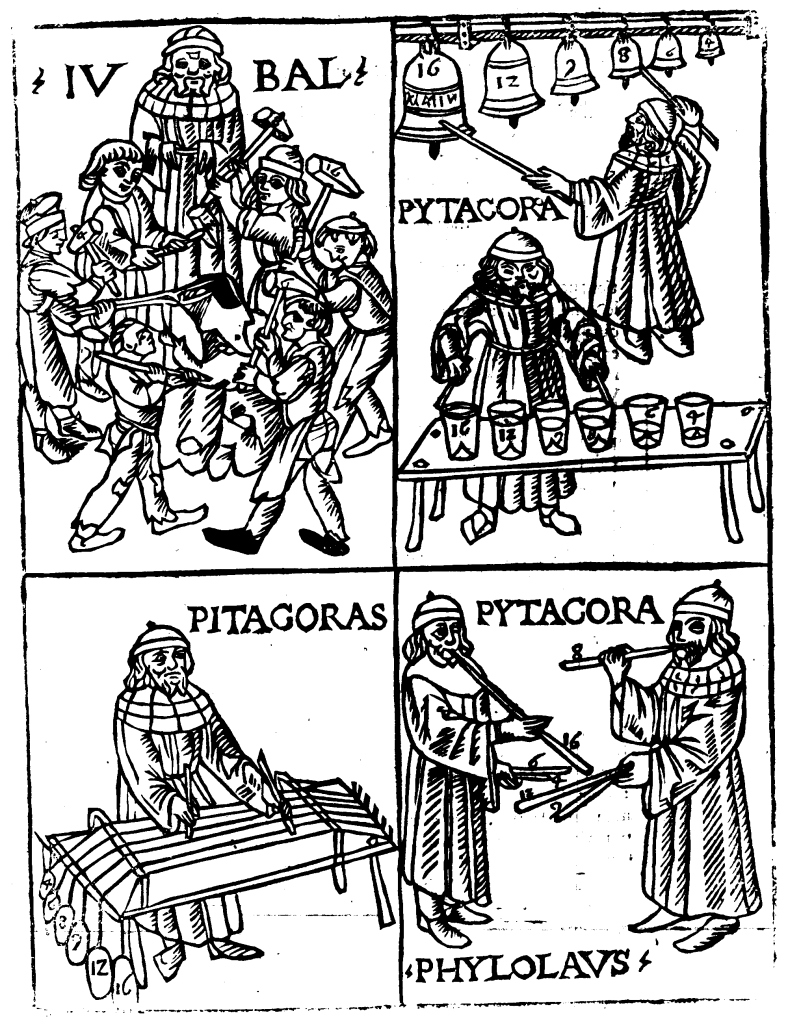
The number 2 appears as the first offspring of unity on the left, the generative principle of limit. The number 3 appears as the first offspring on the right, the generative principle of multiplicity.
The right-hand diagram is a map of all the musical intervals that arise when the two primal numbers of the Timaeus—2 and 3, the powers of limit and multiplicity—are allowed to combine freely. Every number in its lattice is some mixture of these two forces, of the form 2a3b2^a 3^b2a3b; and because Greek music is built entirely from ratios derived from these two primes, the diagram becomes a kind of harmonic landscape. The numbers that sit near one another in its curves are not placed decoratively; they resonate with one another by forming pure consonances. Thus 8 and 9 cluster because their ratio, 9:8, is the whole tone; 12 touches both 9 and 16, because it produces with them the perfect fourth (4:3) and the perfect fifth (3:2), the two great consonances of antiquity. As one moves outwards through the layers—18, 24, 36, 54, 81, 108—one sees the same intervals returning cyclically at higher magnitudes, as if the whole harmonic world were echoing its own first principles.
In effect, this diagram shows what the Lambda becomes when it is unfolded into sound: it is the complete field of tones, semitones, fourths, fifths, and compound intervals generated by the two cosmic principles. The curved lines that gather certain numbers into little chains are showing the families of consonant relations—the neighbourhoods of pure sound where the Greek scale takes shape. It is, if one wishes, the audible soul of the Lambda, the way number spreads out into harmony. Greek theorists could read this pattern and see immediately how a tetrachord is formed, how a mode acquires its ethos, and why the Dorian—structured by these pure ratios with the least distortion—was the mode Plato exalted as most fit for a measured and manly polity.
In this way the right-hand figure is not a second diagram at all, but the living extension of the one on the left. The Lambda gives the world its bones; this harmonic cascade shows how those bones sing.
If one wishes to read the Timaeus through the dyad of limit and expansion, this is no arbitrary graft; it grows directly from the Pythagorean and Platonic soil in which the dialogue stands. Philolaus opens his On Nature by stating that ‘nature in the world-order was fitted together from unlimiteds and limiters, both the whole world-order and all the things in it’, a thesis that already treats the cosmos as a harmonia (ἁρμονία, harmonia, ‘fitting-together’) of apeira (ἄπειρα, apeira, ‘unlimited things’) and perainonta (περαίνoντα, perainonta, ‘limiting things’).6 Aristotle confirms that the Pythagoreans set out a table of opposites in which peras (πέρας, peras, ‘limit’) corresponds with unity, right, male, and goodness, while the apeiron (ἄπειρον, apeiron, ‘the unlimited’) is linked with plurality, left, female, and the oblong.7 When Aristotle reports that Plato adopts as principles the One and an ‘indefinite dyad’ and explicitly compares this to the Pythagorean pair limit and unlimited, he simply names in conceptual form what the Timaeus embodies through number and proportion.8
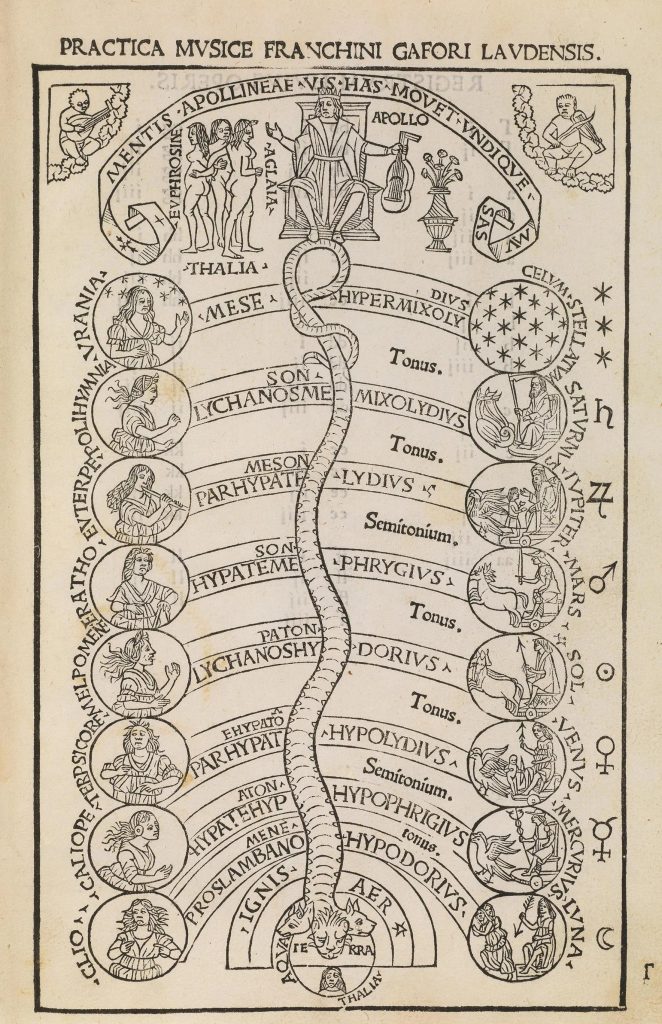
In the strict Pythagorean–Platonic reading of the Timaeus, the Lambda is nothing more or less than two geometrical descents issuing from a single source. At the apex stands the 1, the undivided point of origin. Down the left arm you have the powers of 2 (1, 2, 4, 8) the chain of doubling. Down the right arm you have the powers of 3 (1, 3, 9, 27) the chain of tripling. In the musical, and therefore cosmological, reading, the ‘two’ side furnishes you with the framework of octaves, the equal clearings of space; the ‘three’ side introduces the fifths and their progeny, which push outwards and complicate the field. This is why, in the traditional language, one may say that two behaves as a limiting articulation (the same thing made larger or smaller in exact proportion), whereas three behaves as an expansive articulation (introducing a new relation that is not simply more-of-the-same).
The left arm of the Lambda is generated by διπλασιασμός (diplasiasmós, ‘doubling’), the repeated multiplication of a unit by two, the operation that imposes spacing, limit, and structural articulation. The right arm descends through τριπλασιασμός (triplasiasmós, ‘tripling’), the multiplication of a unit by three, the operation that expands, unfolds, and allows plurality to proliferate. These are not ‘mystical’ attributes of the integers themselves but the qualitative tendencies of the generative acts: doubling draws boundaries and stabilises form; tripling projects outwards into diversity and harmonic multiplicity. Their union in the Lambda is the mathematical drama of limit and expansion that the Timaeus casts as the very weaving of the World-Soul.
All of that, however, takes place under the One. The 2 and the 3 are not rival principles; they are the first ways in which unity begins to express itself as structure. The One stands above both, and both are nothing but its first determinations. In that light, the ‘two’ in the Lambda is not a separate deity; it is the first visible act of division, the delimiting line drawn from the apex down one side, and the law by which all further doublings fall into place. The ‘three’ is the first act of triangulation, the opening of a space in which relation and harmony can arise; it is the law by which the other arm multiplies. This is why one can speak in shorthand and say that the left arm is the limiting side, the right arm the expansive side, without meaning that the number 2 ‘is’ a god and the number 3 ‘is’ a god. They are operations of the One.
The World-Soul, in Plato’s framing, is articulated through three primordial terms: the Same (τὸ ταὐτόν, to tauton), the Other (τὸ θάτερον, to thateron), and Being (οὐσία, ousia); each name signals a metaphysical function; identity, difference, and the sheer fact of existence, which the demiurge binds into a single living harmony. In the Timaeus, the left arm corresponds to the Same: the orderly, limiting, cyclical structure, the right arm corresponds to the Other: the power of differentiation, mixing, and motion, and the apex corresponds to Being, the unitary substrate of both.
Within Plato’s own corpus the schema is articulated with great clarity in the Philebus, where Socrates divides reality into four kinds: ‘the Unlimited, the Limit, the mixture of these two, and the cause of the mixture’.9 Everything subject to more and less belongs to the apeiron (ἄπειρον, apeiron, ‘the unlimited’), while determinate measures, ratios and proportions belong to peras (πέρας, peras, ‘limit’); beauty and harmony arise when a cause imposes limit upon the unlimited in right proportion.10 This is precisely the operation that the Timaeus enacts when the demiurge takes the three ingredients, Being, Same and Other, mixes them into a single nature, and then cuts off the strips of soul into the double and triple progressions 1–2–4–8 and 1–3–9–27, filling their intervals with means that generate the ratios 3:2, 4:3, and 9:8.11 In other words, the World-Soul is literally woven as number, peras shaping apeiron into musical proportion; our reading that sees in the Lambda a law of limiting and expansive poles, masculine and feminine, simply makes explicit what the text already performs.
Plotinus’ identification of Apollo with the One pertains to the highest level: Apollo as the unmoving, intellective source behind the sun, the god whose name (a-pollōn, ‘not-many’) signifies unity. This is Apollo as the hyperouranic principle. But when Apollo is considered within the ordering structure of the world—the god of measure, harmony, boundary, purification—he ‘descends’ into the symbolism associated with the left arm, the principle of limit.
This identification of Apollo does not contradict his appearance in the realm of measure and limit. Apollo, in this higher reading, is the symbol of the intellective unity—the nous that contemplates the One and reflects its order. The powers of two associated with limit serve, in this context, as the first form of differentiation under unity: they are not Apollo himself, but the Apollonian signature in becoming, the law by which the One imposes measure upon the manifold. The same law, when pushed upwards in interpretation, allows Apollo to be seen as the radiant icon of the One itself. The result is a twofold symbolism: Apollo as limit in the cosmos, Apollo as unity above the cosmos.
Limit itself has two registers: the absolute limit that stands above all multiplicity, and the operative limit that shapes multiplicity once it has appeared. These are not identical planes, though later summaries often conflate them.Apollo as the One belongs to the first register. Plotinus’ etymology (Apollōn as a-pollōn, ‘not-many’) points to Apollo as the intellective axis, the unifying light that refuses dispersion; this is the Apollo who governs identitas, the pure form that precedes any division, the luminous centre that is ‘without a mother’ because intellect, in the strict metaphysical sense, does not arise from a substrate. This is the Apollo whose lyre mirrors the world’s mathematical proportion, because proportion presupposes unity.
Apollo as the drawer of limits belongs to the second register. Once the world of number unfolds, once the Lambda’s two operations begin their work, intellect becomes the giver of measure within multiplicity. Here Apollo is no longer the pure One above the dyad, but the operative nous that imposes peras upon the apeiron, drawing the line that makes any cosmos whatsoever possible. In this sense, Apollo is aligned with the left arm of the Lambda, the stabilising power of the doubling sequence, because this is the arm that expresses the mathematical act of delimitation itself. There is perfect consonance: the Apollo who is the One governs the very possibility of limit; the Apollo who draws limits governs the application of limit within becoming. One is vertical sovereignty; the other is horizontal measure. The same god presides over both precisely because the order established in the world must issue from the unity above the world; the limit within the many is the reflection of the limit above the many. Apollo legislates on both planes: first as the singular axis that refuses the Many altogether, and then as the luminous principle that arranges the Many into harmony.
Thus, Apollo belongs to the One by essence and to the limit by function, just as the sun belongs both to the centre and to the radiance it casts.
The later Platonists then read the Timaeus back through this Pythagorean key and seal the interpretation. Proclus treats the progressions in the Lambda as a procession of the World-Soul which must have peras in order for the world to be a kosmos: the triple series is allowed to reach only as far as twenty-seven, the cube of three, since the procession of the many must turn and fold back if it is to remain within intelligible order.12 At the same time, Philolaus’ dictum that all things come to be when limiters and unlimiteds are ‘harmonised’⁸ stands as a bridge between Pythagorean doctrine and Socrates’ fourfold division in the Philebus, and these together form the conceptual background of the Timaeus: One over many, peras over apeiron, nous (νοῦς, nous, ‘intellect’) as cause over the mixture it shapes. The Lambda may therefore be read, with full traditional legitimacy, as a figure in which the primal unity descends into twoness, the limiting and the unlimited articulate themselves in the twin arms of two and three, and the entire musical articulation of the World-Soul reveals the same law that the Pythagoreans formulated in words.

Roman sources (e.g., Cicero’s Somnium Scipionis) then popularise the image: celestial motions sound a structured diapason whose proportions mirror those of a perfectly tuned lyre. Pythagoreans ground consonance in arithmetic proportion and use the monochord to reveal ratio as law; Aristoxenus (a Peripatetic) builds from trained hearing, treating intervals as perceptual continua organised into genera and tetrachords. Both still present the lyre as an instrument by which order is made audible, whether as number embodied or as measured perception disciplined by practice.
In the passage regarding musical modes in The Republic cited above, Plato trims the instrumental palette to those with modest compass and few strings; he removes ‘many-stringed and pan-harmonic’ instruments precisely to prevent easy modulation across harmoniai. A seven-string lyre or cithara set to a given harmonia will, in performance, keep faith with that single species; the player can transpose in pitch (tonos) yet remains within the same intervallic pattern. Changing to another harmonia demands re-tuning or a different instrument. So, if a lyre is tuned to the Dorian species it will present Dorian ethos throughout that piece; the same instrument could be re-tuned between pieces to Phrygian or another species, though it would not roam freely among them mid-performance. This is the ethical point of the restriction: simplicity of means fosters stability of character; Apollo’s strings serve Dorian firmness and Phrygian noble ardour, whereas pan-harmonic or many-stringed devices invite protean shifts.
That mapping of modes to dispositions sits inside Plato’s larger maxim that changes in musical forms unsettle the laws of a city; music is statecraft by other means. When he later praises the lawgiver who makes citizens ‘of one mind’ (μίας γνώμης), he is not abandoning the earlier programme; he is naming its end. The Dorian temper becomes a shorthand for a polity whose ruling principle is measure, order, and courageous calm; it is a ‘mode of State’ because it gives the city its tonic and keeps it from dissolving into private tastes.
Aristotle inherits the same grammar in his analysis of education and harmoniai: different tunings dispose the soul towards different actions, and the Dorian is praised as the fit pattern for disciplined, manly character, whereas other modes tend towards excitement or relaxation. Here again, music is legislation in seed; the politeia chooses the sounds that make certain habits likely and others rare.
So when commentators call the Republic a ‘Dorian State’, they mean that Plato aligns civic order with a normative sonic emblem: Dorian for the measured and manly, Phrygian permitted for serious exaltation, the rest refused because they corrode the citizen’s mettle and the city’s laws. It is an architectural metaphor in sound: the City stands upright only if its inner columns are tuned to a ruling pitch.
This hierarchy explains both the present vulnerability and the fitting remedy. In this scale of ranks the modern programme shows its method. It approaches the feminine first because the inner economy of worldly care and reputation lies there; it then substitutes procedure for judgement and report for obedience, until the house is ruled from without by those who flatter it from within. Where the masculine principle reigns, such appeals are received, weighed, and either placed in service or refused. Where the formal cause is weak, they colonise the household and seat a perpetual meeting in the kitchen. The cure is visible hierarchy. A written charter, a standing household council chaired by the pater, a defined stewardship for the mater, rites that bind eros to duty, and a domestic forum for admonition and appeal make the house legible as a realm. Compassion then works under justice; zeal is kept within proportion; outside supervision finds little purchase.
Extend the same ladder to public law and the outline clears. Houses are prior to offices; offices are prior to programmes; programmes answer to magistracy and not the reverse. A city that honours fathers and households binds power to form and lets mercy flow through ordered channels such as patronage, dowry, apprenticeship, altar, and archive. A city that enthrones consent without form dissolves ranks and breeds the Commune domestique, a scene of endless plebiscites in which no one bears final charge. Hierarchy restores the axis. The father rules; the mother stewards within his rule; the children learn to obey and to inherit; clients and neighbours see a standard they can trust. Only then do tenderness and relief cease to be instruments of capture and become ornaments of a lawful peace.
Scholia (click to expand)
- 1 (1) Aristotle, Metaphysics A.5 (986a22–b2): the Pythagorean table of opposites, peras (limit) over apeiron (the indefinite), male over female, form over matter, establishes the metaphysical structure in which the monad is the active, determining principle.
(2) Pythagorean number-symbolism testimonia: preserved in later doxographers, identifying the monad with Apollo by interpreting his name as a-pollōn (‘not-many’), making him the divine emblem of unity, measure, and order.
(3) Plotinus, Enn. VI.5.6: the Neoplatonist explicitly recalls the Pythagorean reading, using ‘Apollo’—a-pollōn, ‘not of many’—as a symbol of the One that transcends all multiplicity. - Aristotle, Generation of Animals II.1–3; Metaphysics Z.7–10.
- Aristotle, Physics II.1; traditional identification of ‘nature’ with becoming is rehearsed throughout the Peripatetic corpus; Metaphysics Θ.1; on ὕλη as potentiality.
- Plato, Timaeus 48e–52d (on khôra as ‘receptacle’, ‘nurse of becoming’); Pythagorean doctrine of One and Dyad in Aristotle, Metaphysics A.5; Iamblichus, De communi mathematica scientia 76–80.
- Plotinus, Enneads VI.9.1; V.9.3; V.1.6 (on procession and the relation of νοῦς and ψυχή).
- Philolaus, fragment on limiters and unlimiteds. Philolaus fr. B1 (= DK 44 B1): ‘The things that are are in their nature all number and the nature of the universe itself is fitted together out of unlimiteds and limiters, both the universe as a whole and the things in it.’ (Various translations; often in collections of early Pythagorean fragments.)
- Aristotle on the Pythagorean table of opposites. Aristotle, Metaphysics A.5, 986a22–986b2: discussion of the Pythagorean ‘table of opposites’, pairing peras (limit) with one, straight, right, male, rest, good, square, and apeiron (unlimited) with many, crooked, left, female, motion, bad, oblong.
- Aristotle on Plato’s One and indefinite dyad. Aristotle, Metaphysics A.6–9 (esp. 987b18–988a7 and 1080b7–1081a4): report that Plato posited the One and an ‘indefinite dyad’ as principles, explicitly likening them to Pythagorean limit and unlimited.
- Socrates’ fourfold division in the Philebus. Plato, Philebus 23c–27c: Socrates distinguishes four ‘kinds’: (i) the Unlimited (the more-and-less, hotter-colder, etc.), (ii) the Limit (number and measure), (iii) the mixture of these two, and (iv) the cause of the mixture.
- Limit, unlimited, and harmony in the Philebus. Plato, Philebus 25d–26d: discussion that beauty and goodness in things arise when measure and proportion (belonging to peras) are imposed upon the unlimited, producing a harmonious mixture.
- Construction of the World-Soul and the Lambda in the Timaeus. Plato, Timaeus 35a–36b: the demiurge mixes Being, Same and Other into the World-Soul, then divides it into strips according to a series of numbers formed by doubling and tripling—1, 2, 4, 8 and 1, 3, 9, 27—and fills the intervals with means, yielding the canonical harmonic ratios (3:2, 4:3, 9:8).
- Proclus on the limit of the triple series and cosmic order. Proclus, In Timaeum (Commentary on the Timaeus), on 35b–36b (typically Book III/IV in modern editions): treatment of the double and triple progressions as the procession of the World-Soul, with the triple series halted at 27 so that the expansion of multiplicity remains bounded within intelligible order and contributes to a kosmos rather than disorder.
- Philolaus on harmonisation of limiters and unlimiteds. Philolaus fr. B6–B7 (DK 44): fragments stating that things become knowable and ordered when limiters are applied to unlimiteds; often paraphrased as ‘all things that are known have in them number, for without number nothing can be conceived or known’, and that things arise when limiters and unlimiteds are harmonised (harmosthenta / harmozomena).
Lambda Without Limit in the Modern World; the Imposter Square and Compass
Once the schema is understood, it becomes very easy to recognise the same basic grammar in countless symbolic and esoteric systems. The primordial androgyne split into male and female is the One broken along the axis of limit and expansion; the two ‘hands’ of god, or the right and left pillars in temple symbolism, are the two arms of the Lambda, one bearing form and law, the other motion and multiplicity; the Masonic square and compass name the same pair of operations, one inscribing straight measure, the other sweeping curves and circles; the mediaeval dome over the square plan, heaven resting on the cube of the city, is again unity and curve imposed on the four-square earth. Whether or not every school self-consciously derived these figures from Plato, they move in the same architecture; once number has been grasped metaphysically, all later esoteric craft tends to rediscover and re-clothe it.
If we then translate this into social terms, the pattern sketched follows quite cleanly. A civilisation in order is one where the expansive powers of growth, fertility, erotic and psychic dynamism move under a clear axis of limit; the masculine, in the traditional sense, is the bearer of that axis, more than as a mere biological male, as the principle that sets form, law, measure. When that axis weakens, the expansive current does not cease; it spins, searches, turns against structures, levelling them, instead of flowering within them. In that lens, a movement like feminism appears as the expansive power running on without a stable counterpart; differentiation and self-assertion continue, but the vertical reference fades. You see a swarm of identities, a suspicion of fixed forms such as marriage and lineage, birth-rates falling and virginity rates rising even as discourse is saturated with sex and ‘empowerment’—the field is highly charged, yet the generative king, in mythic terms, lies sick or missing, so the crops fail, the marriages do not stabilise, the masculine-feminine polarity becomes conflictual rather than complementary.
The same schema describes the interior crisis of modernity: psyche, the realm of images and feelings, expands in all directions, and even prides itself on doing so, in radical revolt against the gods, while nous, the measuring and ordering intellect in the classical sense, is either reduced to technical instrument or denounced as oppression. The result is not simply ‘more freedom’; it is a loss of tuning and harmony altogether. Soul ceases to live as a Lambda, unity opening into measured intervals, and dissolves into a fog of impulses and fractured roles. The feminine principle, when it accepts maaculine form, magnifies it; when it refuses form, it magnifies the refusal itself, and the whole edifice starts to flicker. At that point, the only remedy is not more agitation, but the restoration of axis; the reappearance of a limit that does not crush, but quietly compels the proliferating forces back into harmony so that fields, families, and inner life can ripen instead of merely seething.


At this depth the social field begins to reveal itself as a spiritual malfunction, not a merely political deviation, and the images of Plato’s Lambda, of the dyad without restraint, and of Guénon’s doctrine of matter refusing form, all point to the same locus of breakdown.
The masculine, in all metaphysical languages, is no mere coercive constraint; it is a pole of formal presence, of peras (πέρας, limit), a sovereign centre that shapes possibility by its very existence. The feminine, whether as apeiron (ἄπειρον, the indefinite), as multiplicity, as the ‘lower waters’, or as the pole of psychē, is the field of expansion, of plasticity, fertility, unfolding, the realm that takes form only when the masculine centre gives it contour. When the two stand in right relation, expansion serves manifestation: the many expresses the One; multiplicity becomes a cosmos.
What we observe and what the modern world embodies with almost unbearable clarity—is expansion attempting to expand without centre, plurality attempting to proliferate without form. The Lambda ‘breaks’, not because the masculine arm fails to multiply, but because the field of multiplicity refuses to acknowledge alignment with the One above both arms. This is the essential point: the limit does not descend far enough to impose shape; nor does multiplicity rise far enough to receive it. In Guénon’s terms, matter—the people, the feminine pole in the cosmic sense—no longer allows itself to be led because it has lost the very sensation of form, the natural eros towards the centre.
That is the missing link: eros towards the centre.
Beyond mere submission in a moral sense, and obedience in a political sense, the yearning of multiplicity for unity, the instinct by which the indefinite seeks measure. When that eros dies, the indefinite becomes self-intoxicating, seeking only further differentiation. It becomes centrifugal rather than centripetal. And as every doctrine from the Upanishads to the Olympians warns, the centrifugal cannot ‘settle’ itself; it burns itself out by multiplying without aim.
This is why no amount of masculine force in and of themselves, laws, rules, institutions, can repair the breach. Force can coerce behaviour, but it cannot reawaken the metaphysical appetite for form. Only presence can do that: a centre that visibly embodies limit as radiance, not as pressure. When the masculine mistakes enforcement for presence, it contributes to the downwards spiral, because the feminine pole recognises only authentic limit—limit that is identical with form, identical with the One, identical with Being’s clarity. Anything less appears as mere aggression, and aggression fuels the centrifugal reaction.
And yes: the modern ‘identity-proliferation’, genders without number, causes without boundary, movements multiplying like spores, is precisely the signature of expansion unmoored from the axis of limit. Multiplicity, when deprived of the One, does not become abundant or fertile but fractured, because multiplicity can only be healthy when each part is in harmonic relation with the whole. This is why modern social movements feel unstable, brittle, hysterical: they express apeiron without peras, emotion without measure, psychē without nous.
There is a terrible irony in it, yes; an irony so sharp that it cuts through the entire modern esoteric façade like a sacrificial blade. The Lambda is a compass already opened, one arm fixed in the axial One, the other sweeping outwards in measured expansion, and the eye set above it is the ancient emblem of vision bound to form, the intellect surveying the field of becoming. Masonry inherited these pre-Christian mystery school signs yet drained them of all metaphysical severity. What once signified the marriage of limit and power became a sentimentalised rhetoric of ‘progress’, ‘light’, and universal social justice—precisely the expansive force divorced from its principle.

Hence the paradox: the fraternity that parades the square, the compass, the all-seeing eye, the Temple proportions, the domes and cubes of sacred architecture inherited every emblem of the ancient initiatic art, yet champions an emancipatory impulse that severs the expansive arm from the limiting one. They have taken the pictorial vesture of the mysteries while severing the axiom that made these images effective: the expansive power is lawful only when the axial power commands it. Remove that pole and the symbol empties into modern humanitarianism.
From this perspective the Masonic compass, the architect’s instrument of cosmic projection, becomes almost prophetic: an arm forced ever outwards, widening its sweep, never returning to the fixed point that alone renders its motion sane. The square, once the emblem of peras, of completed form, becomes a decorative prop. The eye loses its Apollonian severity and collapses into sentimental overseer of egalitarian uplift. All the externalities remain, yet the inner axis is dissolved.
So, to our final question: How is the field of expansion re-limited? By nothing external. By nothing imposed. By nothing reactive.
The indefinite returns to order only when the masculine centre stands: when presence becomes a vertical axis, no longer negotiating, apologising, or ‘competing’ with multiplicity, but simply is. The One does not plead to the many; the many recognise the One. Where recognition is absent, the only answer is withdrawal into form, which is precisely what the ancient mysteries prescribe: the restoration of centre precedes the restoration of order. Thus the ‘breakdown of the Lambda’ is ultimately the breakdown of verticality, the loss of the supra-dual One that commands both limit and expansion. Masculine attempts to impose limit fail because they come from below, from the dyad rather than from the monad. And the field of expansion refuses to be led because it has lost contact with the monad from above.
When the One is restored, when a centre reappears, the dyad coheres again, and multiplicity aligns. Without that, it frays, and no terrestrial force can compel it otherwise.
The Doric temple is form made visible. A single module governs the whole, usually the lower column diameter; from it unfold the shaft’s height, the spacing of intercolumniations, the entablature, and the cadence of triglyph and metope. The column rises without a base, its flutes cut crisp and shallow, the capital a strict echinus and abacus whose curve is tuned to the load. Refinements correct the eye rather than flatter it: a slight entasis in the shaft, a fall of the stylobate so subtle it reads as life rather than sag, corner contractions to reconcile number with sight. This is εὐρυθμία (eurhythmía), a rightness of rhythm that binds the parts to a common law. The result is not heaviness but repose; the structure feels inevitable because μέτρον (métron) rules ὕλη (hýlē, matter).
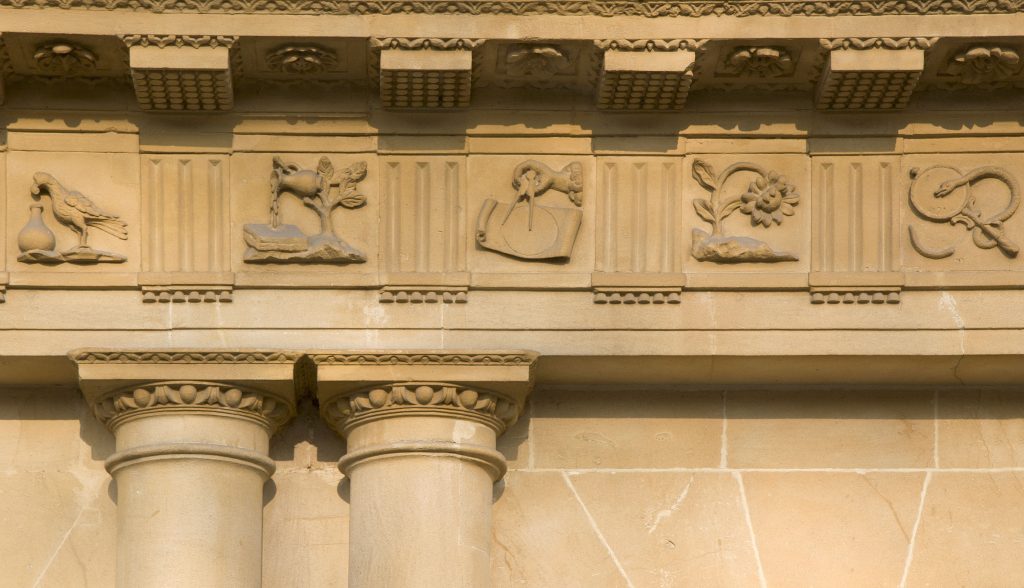
When the feminine principle is unmoored from masculine forma and lex, order gives way to flux. What should be received, sustained, and brought to completion begins, in infernal imitation, to prescribe and to command, speaking for a god that demands the submission of the woman and child, from the pater himself, rather than him taking his rightful place as the centre of the divine; measure yields to mood; rites lapse into therapies; the domus loses its axis. Pity becomes policy without judgment, safety becomes surveillance without limit, and the calendar fills with procedures that answer to no visible magistrate. The result is not mercy but drift, a household that consults feelings in place of law and that mistakes agitation for care.
In such a house the economy of pietas collapses. Concordia requires rank, yet the interior forum becomes a committee of equals that cannot ascend to the register of divine heights; admonition melts into ‘conversation’; the consilium domesticum is displaced by outsiders precisely because no one within will decide. Reputation, once guarded by honour, devolves into tribunals of gossip; denunciation brings credit, restraint is denounced as indifference. Dos is treated as a purse for causes, not a trust for succession; stores are spent for spectacle; accounts are kept for leverage rather than truth. Children learn grievance rather than obedience; the heir is trained to negotiate, not to rule.
Extended outwards, the same imbalance turns neighbourhoods into clinics and temples into offices. Without the father’s auctoritas to bind covenant to estate, benevolence is harvested by programmes that promise care without ritual and rights without duty. Appeals arrive through fear for the young and pity for the marginal, then harden into pledges, audits, and sanctions. The household becomes the last to know that its charity now funds its supervision; the ‘support’ it receives is the price of its dispossession. A city of such houses soon forgets how to recognise a decision and how to accept correction; it rewards the loudest sympathies and punishes the quietest standards.
In the Orphic theogonies, Zagreus, or Dionysus in his first, Titanic form, is the child of Zeus who receives the sceptre of the cosmos. He is the heir, designated while still radiant and whole. Yet the Titans, embodiments of indefinite multiplicity (apeiron), lure him with toys symbolising fragmentation, a mirror, knucklebones, articulated dolls, and with these false images they tear him limb from limb, reducing the kingly unity into scattered, chaotic pieces.
This is the archetype of expansion without limit: the many dismembering the form that ought to rule them.
Zeus, seeing the outrage, annihilates the Titans with the thunderbolt; from the ashes arise mortals, whose composition carries both the Titanic dispersal and the Dionysian spark. The later rebirth of Dionysus from the thigh of Zeus is the reassertion of order over dispersion, a restoration of the power that had been mutilated.
Thus the Zagreus cycle is the mythic mirror of the Lambda:
- Zeus: the One, limit, measure, the power that gathers.
- Zagreus enthroned: form imposed upon multiplicity.
- Titanic dismemberment: the many running loose, escaping limit.
- Rebirth: the restoration of a centre that can bind the many back into unity.
This is the metaphysical rhythm behind every traditional doctrine of sacral royal power and patriarchal primacy.
In such a world, the expansive arm of the Lambda behaves exactly as described: it proliferates, it multiplies identities, grievances, categories, ‘marginalities’, substitutions for sacred differentiation, all in an endless downwards spiralling without recourse to the centre. The very geometry that once mapped the creation of soul becomes a map of the disintegration of soul. When the expansive force is no longer mastered by the One, it becomes tragic in the Orphic sense of Zagreus—torn limb from limb by the Titans of multiplicity, devoured by the Many, scattered through the world.
Modernity is that Titanic banquet, a devouring of the form-giving power, leaving behind only fragments that call themselves ‘progress’, ‘justice’, ‘self-expression’, ‘identity’. The compass widens, the arc expands, the centre recedes. The many triumph, though their triumph is nothing save the absence of unity.
If the masculine pole fails here, it fails through abdication of presence, for the expansive field cannot be led by abstractions, policies, arguments, or moral appeals. The feminine pole—whether cosmic, social, psychological—yields only to actual sovereignty, the presence that does not negotiate its own legitimacy. The expansive principle will never halt itself; its motion is its nature. Only the return of an unquestioned axis, a Jupiterian centre whose very existence establishes the measure, arrests the flight. Guénon’s remark is perfect here: ‘matter’ always allowed itself to be led precisely because form was present. When form absents itself, matter does not revolt through wickedness; it simply expands into formlessness.
Thus the breakdown of the Lambda is nothing mystical: the fixed point is gone. The compass remains open with no hand upon it. Expansion continues with no principle to bind it. The Many behave as the Many always behave when the One is eclipsed.
The remedy is equally severe: the centre must be restored, not argued for.
The axis must be there, and presence alone re-establishes measure. In metaphysical terms: the Monad must make itself known again. In sociological terms: sovereignty must exist as a fact, not as a plea. In psychological and erotic terms: the masculine must resume the condition of form: stillness, luminosity, there-ness—which alone commands the expansive power into alignment.
Only then does the Lambda reassemble itself. Only then do the scattered limbs of Zagreus re-form around the heart of Apollo.
Apollo, Light of the World; Patron of Primogeniture, Caesaris Nominatio, and the Solar Law of Succession


[…] For the origin and completion are both in your care,
excerpt from Orphic Hymn to Apollo; original literal translation by hellenicgods.org 15–26; more poetic translation by Thomas Taylor (1792)
The cause of the blooming of all things; with your resonant lyre you harmonise the entire axis of the heavens,
At one time advancing to the lowest pitch,
And at another to the highest, at times in the Dorian mode,
You temper the entire axis; you keep the tribes of living creatures distinct,
You have mingled in harmony the share of all mortal men,
You have mixed an equal measure of winter and summer,
You have arranged the highest three strings in the winter, the lowest in the summer,
You are the seasonal Dorian flower of the lovely spring…
Wherefore you bear the formative seal of the entire cosmos.
Apollo is almost too good an image for what we articulate; he stands precisely where our whole edifice wants its centre of gravity to be.
He is, first, the god of nous in luminous form, as no abstract scholasticism, but as the solar intelligence that sees ‘what was, what is, and what will be’ in one act. That already answers the dyad of limit and expansion: Apollo does not merely sit at the apex as an empty One, he draws measure through the field. His very functions of prophecy, healing, the Dorian harmonia, the proportioned body, and the straight-aimed arrow, are enactments of peras imposed without cruelty upon the indefinite. When speaking of the Lambda, of the left and right arms as limiting and expansive operations, he is exactly the figure who stands at the summit and ‘owns’ both arms without dissolving into either.
He also roots our Roman and juridical strand. At Delphi he presides over the transition from vendetta to measured judgement; in Aeschylean terms he speaks for the father against the chthonic claim, and in philosophical terms he draws the line that turns generation into law. That is essentially the same axis we trace in the Lambda: the act by which number and form are laid across the raw field. Apollo is the god of that laying-out; in traditional iconography he surveys, apportions, draws limits, and then sings those limits into harmony with the lyre.
The Augustan answer to the Asiatic and maternal current is Apollo. Augustus is given a solar paternity from the beginning, and the surrounding tradition repeatedly binds his birth, house, victory, cult, and age to the Apollonian god.1 Actium gives this Apollonian pattern its political and metaphysical victory. Against Antony and Cleopatra, against the Egyptian Aphroditean and mother-right current, Augustus is the champion of Apollo: Servius links the Actian sanctuary to the god; Virgil’s Fourth Eclogue announces the coming age with the line, tuus iam regnat Apollo, ‘thine own Apollo now is king’; and the Julian star at Caesar’s funeral rites enters the same celestial grammar of a new age. The Aphroditean-Julian ancestry is never relinquished, for Caesar and Augustus remain within the Julian line of Venus; yet the supreme Augustan form rises beyond corporeal and maternal descent into Apollonian light. The Aphroditean-Julian age, supported by Cleopatra, therefore reaches its limit in Caesar and is superseded in Augustus by the Apollonian-solar age, symbolised by his conquest of Cleopatra and Caesarion: a victory achieved under the auspices of Apollo. The Julian line still descends from Venus, but its imperial immortality begins only when Apollo raises it beyond the law of substance. Material mother-right binds dynasty to womb, blood, and childlessness; Apollonian father-right overcomes that fatality through adoption, nomination, and the spiritual propagation of the name. Caesar lives again in Augustus because paternity has passed from flesh into light.2
Casta fave Lucina: tuus iam regnat Apollo.
Virgil, Eclogue 4.10; original translation by author
[…]
Chaste Lucina, be gracious: thine own Apollo now is king.
This is why Augustus appears naturally as an Orestes figure. Orestes is the Apollonian avenger of violated paternal right, purified and defended by Apollo against the blood-claim of the mother; Augustus is the avenger of his murdered father Caesar, and Pausanias gives the convergence in almost emblematic form: before the Heraion at Argos stood a statue said to be Orestes, although its inscription named it Αὔγουστος Καῖσαρ, ‘Augustus Caesar’. The Greek preserves the hinge by which Caesar ceases to be merely a family name and becomes an imperial title: Orestes, the Apollonian avenger of paternal right, is overlaid with Augustus, the adopted son of Caesar, so that filial vengeance, sacred paternal succession, and imperial light gather under the Caesarian name. The association is exact: both figures stand under Apollo, both avenge the father, both restore violated patriarchal order against a chthonic and maternal power;3a the latter against the ‘body’ of the Senate, against the claims to inheritance of Cleopatra and Caesarion. Even the relics of Orestes belong to this Apollonian-paternal field. Servius counts the cineres Orestis, the ashes or remains of Orestes, among the seven pignora imperii, the sacred pledges which ‘hold’ the Roman empire; the relic of Apollo’s avenger therefore becomes one of the visible guarantees of Roman sovereignty. Orestes preserves, in bodily token, the same law he enacts in myth: the son avenges the father, paternal right is restored, and kingship is secured beneath Apollonian command.3b
At this point adoption becomes more than a civil-law expedient. Caesar’s testamentary adoption of Octavian makes Gaius Octavius into Gaius Julius Caesar: without maternal birth and without physical procreation, Caesar is reborn in the person of Augustus. Here the Caesarian succession becomes the juridical shadow of Apollo’s own nature. Apollo is amētōr, without a mother, and autophuēs, self-engendered; Caesar’s rebirth in Augustus follows the same higher law.cf. 18 19 The father returns without the womb, the son is made without physical procreation, and succession is secured through form rather than substance. Adoption thus becomes the imperial rite of motherless generation: the Caesarian name produces the heir as Apollo produces by light.
Dio remarks upon the formal consequence of this adoption, and Bachofen draws from it the higher principle of Caesaris nominatio: the admission of a man into filial and imperial succession through the conferral of the Caesarian name. In ordinary inheritance, adoption still touches property, testament, and family law; in its imperial spiritualisation, the name itself becomes generative. To make a man Caesar is to name him into the father-line of rule. Lactantius’ phrase from the Tetrarchic world reveals the logic with startling clarity: Maximian did not wish to make Licinius Caesar, ne filium nominaret, ‘lest he should name him son’. The Caesarian name therefore carries filial force. It is paternity by nomination, succession by word, and spiritual generation by imperial title.4a The contrast is sharpened by the documentary order of the aerarium Saturni, the Saturnian archive in which public acts and legal records were deposited; Caesaris nominatio surpasses even this. Succession is no longer grounded in maternal birth, nor even in the Saturnian world of property, testament, archive, and written act. It is effected by the Caesarian name itself: paternity through word, dynasty through nomination, empire through Apollonian form.4b
Phoebus [Apollo] is to me a sire, a father: for I bless him that nourishes me. And for his benefits to me I call Phoebus who dwells in the temple by the name of father.
Ion; Euripides, Ion 136–139, trans. Robert Potter
This is the point at which the contrast between mother-right and Apollonian father-right becomes historically palpable. Corporeal fatherhood can fail through childlessness; the dynasty of light transcends that failure through adoption, nomination, and the transmission of a divine-paternal name. Servius makes the Caesarian name itself Apollonian: those born from the cut-open womb are consecrated to Apollo, god of medicine, and the Caesar family preserved Apollo’s rites because the first of their line was born exsecto matris ventre. The name Caesar therefore carries, in the antiquarian theology, the sign of a birth wrested from the womb and delivered into Apollo’s light; the modern Caesarean-section procedure preserves this association: a child born without the birth canal of the mother is thus an affront to the universalising claims of mother-right, and falls under the power of Apollo; the Caesarean name likewise. Here Apollo appears in his full force as Apollo Patrous: the fathering god who cares for children, works from afar, and carries lineage beyond the weakness of bodily generation. Caesarian nomination is therefore an Apollonian act, the transmission of fatherhood through name rather than womb. Euripides’ Ion supplies the mythic analogue. Ion is Apollo’s son; Xuthus and Creusa confront the darkness of childlessness; Apollo resolves the crisis by bringing forth a son who mounts the ancient throne.5 Augustus occupies the Roman equivalent of that pattern. Like Ion, he is marked by Apollo; like Orestes, he is the avenger of paternal right; like both, he is raised into succession by a divine-paternal principle that overcomes the instability of bodily descent. The name Ion becomes the ancestor-name of a people; the name Caesar becomes the successor-name of empire.
All who are brought forth from the cut womb of the mother are therefore consecrated to Apollo, because he is the god of medicine, through which they obtain the light. Hence Aesculapius is imagined as his son, for we said above that he was produced in this way. The family of the Caesars also preserved the rites of Apollo for this reason, because the first man of their family was born from the cut-open womb of his mother [exsecto matris ventre]. Hence he was also called Caesar.
Servius, In Vergilii Aeneidem Commentarii 10.316; original translation by author
Ionia itself is double. It stands at the hinge between Hellas and Asia. In the myth of Ion, it is drawn upwards into Apollo, Athens, father-right, recognition, throne, and dynastic name; in the Ephesian Artemis, it opens eastwards into Anatolia, goddess-sanctuary, collective refuge, and the maternal federation of peoples, in the telluric, earthy sort of soul that seems to have risen upwards from the anthill, rather than downwards from the gods. The same frontier therefore contains both the Apollonian law of succession and the maternal-federal current later mirrored in Servius’ Aventine Diana. The Apollonian order therefore stands as the highest Roman answer to the maternal and Asiatic current. Against the Great Mother, the eunuch priesthood, the Queen of Heaven, and the dissolving field of birth, blood, and chthonic generation, Apollo offers a different law: light over substance, name over womb, adoption over mere procreation, fatherhood spiritualised into dynasty. Augustus’ Apollo does not merely decorate the principate; he reveals its metaphysical grammar. The Roman imperial line becomes immortal; its paternity is no longer exhausted by the body. Through Caesar’s name, Apollo’s light, and the juridical miracle of adoption, the father lives again in the son, and empire passes from flesh into form.
Against this, Christianity offers a very different central image. The solar-intellective axis is there in remnant hints from Greece, as Logos, the ruling ‘light of the world’, yet it is immediately and specifically folded into a drama of suffering, humility, and the annihilation of any true, visible earthly sovereignty. The Apollonian principle is either spiritualised away into an unworldly abstraction or recast as demonic whenever it appears in concrete form: sun-gods, oracles, measured ritual, imperial clarity are expelled under the sign of ‘idolatry’, ‘anti-Christ’, or egalitarian ‘Satanic pride’, precisely because of his associations with sacred patriarchal and imperial authority. In our terms, that leaves the field in the hands of an unanchored psyche: devotion, affect, ‘spirit’, a cult of the Other, all floating without a recognised, immanent nous that may take form as king, law, or god-in-the-world. (More on this in the Christianity section.)
Apollo does more than illustrate our metaphysics; he exposes the missing term in the Christian dispensation.
For the broader symbolic network we are tracing of male–female differentiation out of an androgyne, the two operations in the Lambda, the right and left hands of a deity, the compass and square, dome and cube, Apollo again sits in the right place. He crowns the column, he stands at the still point between chthonic and ecstatic tendencies, and he legitimises the idea that form and limit are themselves sacred acts, not mere negations. If you want a single ancient figure who can carry the insistence on intellectual sovereignty, juridical measure, musical proportion, and solar clarity, and whose eclipse explains a great part of what we are criticising, Apollo is an entirely coherent, even inevitable, standard to raise.
In the older Greek ethos theory of musical harmoniai, writers from the Peripatetic and Plutarchean orbit characterise the Dorian mode as spoudaîos (σπουδαῖος, grave, steadfast), moderate in motion, and fit for manly discipline cf. 13; by contrast they treat Phrygian as excited and Lydian as soft or plaintive. Within that map the Dorian stands as the musical analogue of sōphrosynē and andreia, orderly restraint and courage, which are the civic virtues most readily tagged as ‘masculine’. The Orphic Hymn to Apollo invokes Dorian precisely at the moment it ascribes to Apollo the office of tempering extremes (‘you temper the entire axis […] at times in the Dorian mode’) so the hymn is doing more than naming a scale; it is naming the normative measure that reconciles winter and summer, high and low, multiplicity under rule.6
Two clarifications help. First, ancient ‘Dorian’ is an octave-species with an ethical register, not the later mediaeval ‘Dorian mode’; we do not import church-mode intervals or modern major/minor connotations.7 8 Secondly, ‘highest’ here should be heard hierarchically rather than acoustically: the hymn pairs Dorian with the archē and telos of ordering action; Apollo as kosmokrátōr fixes limits (péras) against the indefinite dyad, and Dorian functions as the sonic emblem of that limit. 9 10 In Traditional metaphysics, where the masculine names form, measure, and law, Dorian’s ancient ethos reads as the musical seal of the ruling principle—calm, sovereign, and fit to command. The Dorian is repeatedly cast as the ‘measured’ and virile mode, fit for rule and formation of character; this aligns cleanly with a metaphysics that seats the masculine as limit, measure, and law. Plato allows Dorian (with Phrygian for spirited courage) for the guardians whilst excluding soft or plaintive modes, precisely because Dorian keeps thumos disciplined and speech orderly, which is the musical analogue of political and psychic sovereignty.
Pseudo-Plutarch’s On Music, an essay by a nonetheless classical pseudepigraphal author appended to Plutarch’s Moralia, states the principle plainly, the dignity of mousikē proceeds from its divine origin and civic work:

Kitharōidós (κιθαρωιδός) literally means ‘kithara-singer’, it denotes a singer who performs to the kithara. The suffix -ᾠδός (-ōidós) is the same as in ἀοιδός (aoidós), ‘singer/poet’; hence a kitharōidos performs vocally to the concert kithara. Contrast κιθαριστής (kitharistēs), which denotes an instrumentalist only. The Latin art-historical term Apollo Citharoedus reflects the former; English may render it ‘Apollo the Citharode’ or, more plainly, ‘Apollo the kithara-singer’.
We on the other side have not heard of any man that was the inventor of the benefits of music, but of the God Apollo, adorned with all manner of virtue. […] Venerable is therefore music altogether, as being the invention of the Gods.
On Music, Pseudo-Plutarch
Later writers make the ethos explicit: the Dorian is ‘severe’, ‘temperate’, and ‘manly’, whereas lax or voluptuous modes unstring character; pseudo-Plutarch’s De musica preserves this traditional mapping of modes to virtues and civic order. When the Orphic Hymn to Apollo celebrates the god who ‘harmonises the whole axis with the kithara’, moving from low to high and naming the Dorian as the seasonable mean, it gives a mythic-theological warrant for that same hierarchy: Apollo’s tuning is the cosmic instance of limit over the indefinite, measure over multiplicity, with Dorian singled out as tempering and ruling.
Music theorists in the imperial period keep the ethic: Aristides Quintilianus treats harmoniai as forming êthos and assigns Dorian a sober, stable profile suited to education and magistracy, which is exactly the masculine, formative pole in the schema we are drawing. Aristotle’s politics of mousikē underwrites the same conclusion: the City should choose the mode that strengthens judgment and command rather than one that dissolves resolution; in his account, Dorian best supplies that end. It should surprise no one that Apollo, lord of measured song and radiant clarity, became the god through whom empire took its oath; his domains of prophecy, purification, lyre and bow furnish the full grammar of rule. The oracular voice grants foresight, the purifying fire renews a people for sacred service, the taut string and stringed weapon exemplify that rare union of harmony and precision upon which civic order depends. Hence the Augustan choice of the Palatine Apollo as tutelary power, where poetry, law and victory were conjoined, so that auctoritas shone like the sun’s disc over a pacified oikoumenē.
In Apollo’s cult the emperor could be read as the earthly reflection, a steward of luminous measure, a man whose fortune and virtus were held beneath the god’s lyre as beneath a cosmic tuning key; temples, games and hymns rehearsed this symmetry again and again, until the political body learned its proper intervals and the city’s walls, like Amphion’s stones, seemed to move into place at the touch of a plectrum. Empire thus clothed itself in Apollonian discipline and serenity, order made audible and visible, a sovereign music giving sanction to the deeds of a single will.

Greeks in Egypt recognised Horus through interpretatio graeca as Apollo’s solar predicate; falcon sight, royal tutelage, and punitive light converged in a god whose lyre and arrows measured reality and chastised presumption. That hieratic grammar, already older than Rome, furnished a language of sovereignty that Augustus refined with Caesarean triumph and mousikē as civic measure. Julius Caesar introduced into Rome a god who, though long revered in Greece, still held only a marginal place within Roman religio; he wove Apollo into the early fabric of his religious reforms and the seedbed of the nascent Imperial Cult, which his adoptive son Octavian would later elevate to centrality.11 And if the gens Octavia had been, by ancestral habit, votaries of Mars, it was nevertheless Apollo who came to dominate Octavian’s private cultus, providing the very forms and precedents that would shape the imperial rites thereafter.12 Louis XIV stands within this archaic continuum rather than any Renaissance salon or ‘Enlightenment’ service-monarchy; Versailles reads as a solar apparatus that sets the kingdom’s time, while ritual, hydraulics, and choreography bring magnates to orbit a single centre.
Apollo lends radiance that purifies and discloses order; Caesar lends juridical victory and the right to define space, calendar, and peace. Hence the canvases that show Louis as Apollo and Julius Caesar in triumph, a deliberate twinning of luminous sanction with triumphal law, recalling the pagan grammar in deliberate defiance of the papal splintering of the ancient and traditional sacral and temporal authority of monarchs. The image persisted into his age because it addresses perennial statecraft: authority appears as daylight that heals and burns, as harmony that aligns stones and citizens, as foresight that speaks through oracles and building lines. Court art, ceremony, and musical proportion therefore do more than adorn the crown; they enact a theology of presence in which the princeps stands as measure, and the realm consents by moving to that measured light.
Apollo persisted precisely because he carries the oldest royal code of radiance as justice, harmony as law, and that code remains serviceable wherever a ruler wishes dominion to act as the world’s true noon. The god of measure, clarity, and sanction suits a polity that understands divine rule as luminous reason rather than mere material force. From the Palatine temple to the bronze of Actium’s prows, Augustus yoked victory to mousikē and law, so that sovereignty appeared as a tuning of the civic lyre rather than a clang of arms. Apollo’s arrows chastise contagion and hubris, his oracles legitimate decrees, his kithara embodies proportion; in him, the empire could show dominion as harmony secured by foreknowledge. The cult thus holds the princeps as the keeper of measure, whose presence quietens dissonance in city and soul alike; a theological grammar for authority emerged, wherein radiance, prophecy, and punitive exactitude converged, and the ruler’s command acquired the cadence of a well-tuned mode.
The Dorian was treated as the sovereign tempering mode: the cast of sound most fitting to form magistrates of soul, measured, virile, and held in due tension. Plato allows the Guardians Dorian and Phrygian while dismissing softer, lachrymose strains; he does so because Dorian stiffens the moral fibre and renders speech and movement orderly rather than plaintive or drunken. Aristotle, writing on musical education, preserves the same hierarchy: modes impart ēthos; Dorian is stable and moderate, the proper mould for character rather than theatrical excitement.13 The technical tradition elaborates this judgement. The treatise transmitted under Plutarch’s name assigns Dorian a grave, orderly dignity, fitting for civic life, in contrast to modes that loosen discipline. Aristides Quintilianus, summing the late antique doctrine, links Dorian to steadfastness and symmetry in the soul’s motions.
From an aristocratic vantage, this hierarchy orders the arts of manhood as a cursus towards command: first, a chthonic, phallic potency grounded in earth; next, a Dionysiac amplitude that overflows; then the heroic, tempered by ordeal, fit to bear standard and pronounce judgement; thereafter the ascetic, which hardens power into lucidity and proves mastery of self as the prelude to mastery of men; last, the Olympian or Apollonian, where sovereignty is identical with form and the ruler stands as living measure, lex animata, the axis about which order revolves. These centres draw the myths of many peoples around them as iron to a magnet; on the opposing slope gather the chthonic Mothers, Demetrian and Aphroditic modes of fecundity, and the ambiguous, unfathomable Amazonian and catastrophic ‘Virgins’.14
The Hellenic image that crowns this map is Apollo: a god of noetic clarity who defends lineage, judges before the Areopagus, and stands as patron of form against the indefinite. Plotinus records the old habit of pairing gods with nous and goddesses with psychē, a coupling that frames Apollo’s solar office with impeccable metaphysical symmetry. His lyre sounds the city into order through metron, symmetria, rhythmos, and harmonia; even nomos (νόμος, ‘law; musical strain’) carries the double sense that binds civic statute to musical rule, while the kitharōidos (κιθαρῳδός, ‘lyre-singer’) images the magistrate who gives the downbeat to collective life.
We have already traced, in the preceding section, the primordial alignment that binds Apollo to unity itself: the Pythagorean disclosure of the monad as his sign, Aristotle’s pairing of limit with the masculine and indefinite with the feminine, and Plotinus’ reminder that even the god’s name whispers ‘not-many’. That axis need not be rehearsed again; it stands as the measure beneath what follows.
Plotinus gives the same correlation its noetic grammar: ousia (οὐσία, ‘being’) in its highest sense abides with nous; psyche is ‘the life of everlasting being’, proceeding when manifestation issues from the One and takes form; nous is unchangeable uranic light, fecundating as Logos; psyche develops in time wherever the two principles are conjoined and variously mixed.15 Traditional semantics of physis demand that ‘nature’, as becoming, be called ‘female’, while the supernatural, unchangeable, sovereign light be called ‘male’; hence the cosmic emblems of Sky and Earth, uranic and chthonic powers, as images of the eternal male and the eternal female.

Run more slowly, I beg you, steady your flight; I myself will follow at a more measured pace. Still, ask whom you are pleasing. I am no dweller of the hills, no shepherd, I do not keep watch in rough fashion over herds and flocks here.
Apollo’s address to Daphne; Metamorphoses 1.510–520, Ovid; original translation by author
You do not know, reckless girl, you do not know whom you flee—and that is why you flee. Delphi’s land is mine, and Claros and Tenedos, and Patara’s royal house serves me. Jupiter is my father. Through me what will be, what has been, and what is, stands revealed; through me songs are brought into harmony with their strings.
My arrow is certainly sure; yet one arrow, surer than all the rest, has made wounds in an empty breast.
First, Apollo’s own boast in Metamorphoses is decisive: ‘Delphi’s land is mine, and Claros and Tenedos, and Patara’s royal house serves me. Jupiter is my father. Through me what will be, what has been, and what is, stands revealed; through me songs are brought into harmony with their strings.’ That speech already places Apollo, as mantis of Delphi, on a height above time; he sees past, present, and future at once, and he is the principle through which harmonia governs sound. The same logic stands over the temple door: the Delphic letter ΕΙ is read by Plutarch as a vocative ‘Thou art’, a confession that Apollo possesses stable being, while Apollo’s oracles heal the affairs of life and at the same time provoke in the philosophic soul problems of nous that drive it towards truth.16 Apollo is already treated as the visible face of an unshaken intellective presence.
Plutarch then lifts Apollo beyond the visible sun: those who understand analogy, he says, judge that as body stands to soul and vision to nous, so the sun stands to Apollo; the sun is called his offspring, ‘being for ever born of him that is for ever’.17 Here Apollo ceases to be a local luminous deity and becomes the abiding generator of cosmic light, father of the very star that images him. Combine this with the Pythagorean table of opposites in which peras (peras, ‘limit’) and the One impose form upon the apeiron (apeiron, ‘the indefinite’), a pair explicitly read as male versus female; number and measure arise when the One defines the unlimited. Apollo, the god of measured music and the lyre, stands as patron of this limiting act: the Orphic hymn hails him as ‘golden-lyred’, ‘spermatic’, the one through whom the fields receive their ordered fertility.
On the other side of the same current lies the oracular fragment that calls the highest deity autophuēs, amētōr (autophuēs, ‘self-engendered’; amētōr, ‘without a mother’), dwelling in fire, beyond any single name. Whatever the Christian channel of transmission, the theology is pagan and stands in the circle of Chaldaean–Delphic speculation in which Apollo is priest and voice.18 If, with Plutarch and the later Platonists, one reads Apollo as the emblem of Olympian nous itself, the leap becomes much shorter: the ‘Apollonian’ is simply that intellective principle which fathers order without recourse to a maternal substrate, in exact accord with the doctrine that form proceeds from the active masculine while matter, the feminine, offers only passive possibility. Taken together, these loci justify treating ‘the Apollonian’ in a Platonising key as the intellective, limiting, form-giving principle—solar, measure-bearing, and masculine in the strict metaphysical sense, begetting order from itself while the feminine remains the receptive, merely possible field.
At the summit of the Hellenic series, thus, stands the Apollonian disclosure of pure manhood: Apollo himself embodies Olympian nous as perception made solar light, freed from earthy admixture and from spurious goddess-bindings of a lower age. Traditional theology preserves hard Doric formulas for this clarity: Apollo is amētōr (ἀμήτωρ, ‘without a mother’) and autophuēs (αὐτοφυής, ‘self-grown’), therefore he stands for the pure masculine without feminine influence; he ‘produces geometrically’, since the role of lending cast to formless and plastic hylē is the function of the masculine morphē, while the limitless apeiron (ἄπειρον, apeiron, ‘the boundless/indefinite’) is an aspect of the feminine. In sacred Athenian jurisprudence the same doctrine receives forensic expression: paternity generates, the woman is trophos (τροφός, ‘nurse, foster-mother’) who receives and nourishes the seed; order gives the cause to the father.19
Thus the steps are coherent. Mythic Apollo, son of Zeus and Leto, presides over Delos and over colonies; oracular Apollo at Delphi discloses all time and awakens self-knowledge; philosophical Apollo in Plutarch becomes the abiding generator whose nature stands above the sun; theological Apollo, in the oracular milieu, speaks of a god who is self-engendered and motherless. When Evola names Apollo, as ‘god of pure form’, amētōr and autophuēs, he is treating this whole Platonising trajectory as a single line: the Apollonian axis is the self-grounded nous that gives form, measures harmony, reveals what is, was and will be, and acknowledges no maternal darkness beneath it.

I will explain this, too, and notice how precisely I speak. The mother of her so-called child is not the parent, but only the nurse [trophos] of the newly sown embryo. The male who mounts is the one who generates the child, whereas she, like a host [xenē] for a guest [xenos], provides salvation [sōzein] for the seedling, so that divine power does not harm it. And I will offer you a sure proof of this argument: a father can exist without a mother. A witness is here at hand, the child of Olympian Zeus, who was not nurtured in the darkness of a womb, and she is such a seedling as no goddess could produce.
Apollo; Eumenides, Aeschylus; translated by Herbert Weir Smyth, revised by Cynthia Bannon and Gregory Nagy; further revised by the author
In Aeschylus’ Eumenides, we see the patriarchal metaphysic enshrined as legal precedent with a patrilineal conception that tames psyche beneath nous, roughly a century before being echoed by Aristotle in his Generation of Animals as well as numerous others such as the Pythagoreans cited by Stobaeus. Prior to Aeschylus, it is found in Diodorus Siculus citing Hecataeus.20 This agnatic principle stands in direct contradiction to matrilineal descent, for Roman legal kinship is not transmitted through the mother’s blood, but through the male line and the paternal authority of the paterfamilias. This emphasis on male-line descent has had a lasting influence on later legal and social systems, shaping the development of primogeniture in many European societies, where inheritance and titles traditionally pass to the eldest son, reinforcing the continuity of property and authority through the paternal line.
Agnatio is the Roman legal bond of kinship traced through the male line, especially through the authority and continuity of the paterfamilias. It is therefore juridical kinship, not merely biological blood-relationship: a person belongs to an agnatic line insofar as he or she stands within the same paternal family order, or could have stood under the same paternal power. The Roman jurists define it explicitly through males. Gaius writes that ‘those are called agnates who are related by civil law’, and that this civil relationship is one ‘which is joined through persons of the male sex’; brothers of the same father are therefore agnates even if they do not share the same mother. Justinian’s Institutes derives the same principle: ‘Agnati are those who are related to each other through males, that is, are related through the father’, while those connected through females are not agnati, but only cognati, natural blood-relations.21
Those are called agnates who are joined by legal kinship. Legal kinship is that which is connected through persons of the male sex. Thus brothers born of the same father are agnates to one another, who are also called consanguineous, nor is it required that they should have had the same mother. Likewise, the father’s brother is agnate to his brother’s son, and the latter to him in turn. In the same category are fratres patrueles, that is, those born from two brothers, whom many also call consobrini; by this principle, of course, we can proceed to further degrees of agnation.
Gaius, Institutiones 3.10; original translation by author
In the closing act of the Oresteia, The Eumenides unfolds, beyond a mere tale of vengeance, as a drama of hierarchy and restoration, where the violence born of blood and matriarchal justice yields to the masculine order of divine law. Orestes is haunted by the Furies, archaic avengers who serve the chthonic law of the mother, and is pursued for the slaying of his mother, Clytemnestra. These beings, ancient and pitiless, represent the subterranean forces of guilt and retribution that recognise no higher court than birth and blood. Yet the masculine gods intervene: Apollo, radiant and sovereign, shields Orestes from their pursuit and commands him to seek trial under the aegis of Athena, who herself embodies measured wisdom and paternal law rather than maternal passion.
The apparition of Clytemnestra’s ghost, rousing the sleeping Furies, evokes the last surge of the feminine claim to supremacy—the mother demanding vengeance upon the son. But this final protest is destined to be subdued. In Athens, divine justice assumes a civic form; the trial of Orestes inaugurates the principle that man, not the bloodline, becomes the bearer of right. Thus, through the union of Apollo’s command and Athena’s reason, the male principle establishes order over the chaos of the womb’s revenge, founding the patriarchal state and the tribunal of rational law in place of the shrieking darkness of instinct. The myth resolves with the taming of the Furies into Eumenides (Εὐμενίδες, ‘the kindly ones’) a symbolic act in which the primordial feminine is transmuted and subordinated to the discipline of solar masculine sovereignty.
After Clytaemnestra and Aegisthus slew Agamemnon as vengeance for the sacrifice of Iphigenia, Orestes, obeying Apollo, killed his mother in vengeance, underwent purification at Delphi and, hounded by the Erinyes for kindred-blood, was sent by the god to Athens for civic judgement. Athena, patros thygatēr (πατρὸς θυγάτηρ, ‘a father’s daughter’), founds a council that embodies this hierarchy in law and casts the decisive vote; Apollo pleads before the court that the woman is trophos of the seed while paternity is the true generative cause, therefore Orestes’ matricide is vindicated by patrilineal justice. The acquittal of Orestes therefore dramatises a passage from chthonic, blood-kin vendetta to Olympian, juridical order; from the Mothers’ claim to a city’s measured law; from psychē’s flood to nous-led form.
As Athena convenes the Areopagus and compels accusers and defender to plead in sequence; the Erinyes prosecute as guardians of the chthonic, matriarchal claim. Orestes answers with patriarchal authority under Apollo’s patronage; she receives Apollo’s doctrine of paternity as he adduces Athena’s own birth from Zeus as proof of paternal primacy, and accepts its standard as the city’s measure; when the citizen votes divide equally, she declares it her rightful office to judge and places her pebble for Orestes, adding the permanent canon that a tie favours the accused. In the same breath she subdues the chthonic powers by honour, enrolling the Erinyes as Eumenides; private wrath yields its field to public law, and the polis acquires a tribunal whose authority stands under oath and omen. Thus the feminine powers are integrated without usurpation; the maternal claim remains as nurture and sanction; the sovereign term belongs to the paternal principle, articulated by Apollo and instituted by Athena.22
To enrol the Erinyes as Eumenides is to transform a chthonic, blood-vengeance power into a recognised, honoured civic cult—without destroying it. In Eumenides, the Erinyes (Furies) enter as terrifying, primal avengers of kin-blood. Their jurisdiction is pre-legal, older than the polis, rooted in the mother’s claim and hereditary vengeance. They demand retribution on Orestes because he killed a blood-relative. They represent ancestral wrath, the dark underside of justice. When Athena judges the case and acquits Orestes, she doesn’t simply dismiss these goddesses. To banish them would invite cosmic backlash. Instead, she performs a political-theological act: She grants them permanent honours in Athens. They receive a sanctuary beneath the Areopagus, libations, offerings, and ritual respect. She changes their name—and therefore their function. They become Eumenides. In Greek religious thinking, renaming is reassigning role. They accept a civic role instead of a blood-vendetta role, their rage is redirected into protecting the city from injustice rather than punishing private vengeance, and the matriarchal chthonic power is domesticated and formally subordinated to Apollonian law.23
Their fury becomes a force for Apollonian order, no longer a rival to it. In so doing, it prevents the return of matriarchal feud-logic. If the Erinyes were rejected, they would remain hostile—Athens would be cursed. Honouring them integrates their domain rather than abolishing it. Thus the act of ‘enrolment’ gestures towards institutionalisation instead of suppression, cultic integration instead of exile and hierarchical subordination instead of chaotic competition.
It also symbolises the deeper metaphysic: the maternal/chthonic powers are not destroyed, they are given a lawful, subordinate place beneath the paternal, juridical order. In the metaphysical arc of the play, the polis replaces the oikos feud, Apollo’s rational principle replaces ancestral vengeance, Athena harmonises the two, but above all orders them. In one stroke, the founding of the Areopagus court ends private revenge, creates civic homicide law, transfigures archaic terror into civic guardianship, and stabilises the city. So, when Athena enrols the Erinyes as Eumenides, she converts primal blood-justice into a state-sanctioned force, honours it, renames it, tames it, and installs it beneath the sovereignty of public law. This is how Aeschylus imagines Athens’ legal order not merely invented and formalised, but ritually sacralised.
But what are we to understand by this Zeus with the garden into which, we are told, Poros or Wealth entered? And what is the garden?
Plotinus, The Enneads; third Ennead, fifth Tractate, Section eight
We have seen that the Aphrodite of the Myth is the Soul and that Poros, Wealth, is the Reason-Principle of the Universe: we have still to explain Zeus and his garden.
We cannot take Zeus to be the Soul, which we have agreed is represented by Aphrodite.
Plato, who must be our guide in this question, speaks in the Phaedrus of this God, Zeus, as the Great Leader—though elsewhere he seems to rank him as one of three—but in the Philebus he speaks more plainly when he says that there is in Zeus not only a royal Soul, but also a royal Intellect.
As a mighty Intellect and Soul, he must be a principle of Cause; he must be the highest for several reasons but especially because to be King and Leader is to be the chief cause: Zeus then is the Intellectual Principle. Aphrodite, his daughter, issue of him, dwelling with him, will be Soul, her very name Aphrodite [= the habra, delicate] indicating the beauty and gleam and innocence and delicate grace of the Soul.
And if we take the male gods to represent the Intellectual Powers and the female gods to be their souls—to every Intellectual Principle its companion Soul—we are forced, thus also, to make Aphrodite the Soul of Zeus; and the identification is confirmed by Priests and Theologians who consider Aphrodite and Hera one and the same and call Aphrodite’s star the star of Hera.
Apollo, therefore, as the god of the unmixed masculine axis, explicitly sets the patrilineal precedent in law, and Roman law carries his law through Europe for millennia after. The Areopagite settlement privileges the father’s claim as the formative cause; succession therefore tracks the paternal line with juridical dignity rather than maternal sentiment. By enthroning Apollo’s doctrine of morphē over hylē. Athena gives the city a rule that secures lineage through the male, which is the rationale of primogeniture: the first-born of the father inherits the office because cosmic authority flows from the generative source. The pater familias thus stands as living measure of the domus; the court’s verdict becomes a civic analogue of household order, reinforcing patriarchy as lawful hierarchy rather than mere habit, and binding inheritance, cult, and command into a single Apollonian cadence.24
Thus the Roman domus appears as a micro-cosm where Apollonian form governs the household psyche; the pater, standing at the hearth with the fire of raw intellection from nous, he officiates as hero and as priest, mediating between ancestral powers and living descendants; the flame keeps the pact; the law articulates the rank; and the lyre, in the forum’s larger circle, replays the same law as the higher octave of rhythm, proportion and measured speech.
Scholia (click to expand)
- Suetonius, Divus Augustus 94.4, where Atia sleeps in Apollo’s temple, is visited by a serpent, and later gives birth to Augustus, who is therefore understood as Apollo’s son; Ovid, Metamorphoses 15.865, where Apollo appears among Caesar’s household gods; Servius, In Vergilii Aeneidem Commentarii 6.230, where the sacred laurel greens on the Palatine at Octavian’s birth; Suetonius, Divus Augustus 29.1, and Servius, In Vergilii Aeneidem Commentarii 6.69 and 8.720, on Augustus’ temple of Apollo on the Palatine; Servius, In Vergilii Aeneidem Commentarii 3.274, on Apollo and Actium; Virgil, Eclogues 4.10, tuus iam regnat Apollo, ‘thine own Apollo now is king’; John F. Miller, Apollo, Augustus, and the Poets, Cambridge University Press, 2009, 1–8.
- Virgil, Aeneid 1.286–290; Plutarch, De defectu oraculorum 17; Suetonius, Divus Julius 88; John F. Miller, Apollo, Augustus, and the Poets, Cambridge University Press, 2009, 1–8.
- [a] Suetonius, Divus Augustus 10.1; Servius, In Vergilii Aeneidem Commentarii 1.286; Pausanias, Description of Greece 2.17.3; Tonio Hölscher, ‘Augustus and Orestes’, 1990. [b] Servius, In Vergilii Aeneidem Commentarii 7.188; Hyginus, Fabulae 261.
- [a] Cassius Dio, Roman History 46.47.5, on Octavian’s adoption into Caesar’s name, and Lactantius, De mortibus persecutorum 20.3: sed eum Caesarem facere noluit, ne filium nominaret; cf. J. J. Bachofen, Das Mutterrecht, on adoptio in familiam nomenque and Caesaris nominatio as the spiritualisation of Caesarian succession. [b] On the aerarium Saturni as archive for public acts, see Servius, In Vergilii Aeneidem Commentarii 8.319; Kaius Tuori, ‘Pliny and the Uses of the Aerarium Saturni as an Administrative Space’, Arctos 52, 2018, 199–220.
- Euripides, Ion 1464; Servius, In Vergilii Aeneidem Commentarii 1.329: ‘hunc tamen deum et ad †uberum custodiam et ad divinationem et ad medicinam et ad res urbanas, quae placidae sunt, et ad bella pertinere longinqua’, 3.332, 5.568, 9.299; Servius, In Vergilii Aeneidem Commentarii 10.316: ‘Caesarum etiam familia ideo sacra retinebat Apollinis, quia qui primus de eorum familia fuit, exsecto matris ventre natus est. Unde etiam Caesar dictus est.’ For discussion of this passage and its Caesarian-Apollonian implications, see Julia Dyson Hejduk, ‘Caesar and Caesarean Section: The Poetics of Medicine and Childbirth in Ovid’s Metamorphoses’, in Ettore Cingano and Lucio Milano, eds., Papers on Ancient Literatures: Greece, Rome and the Near East, S.A.R.G.O.N., 2008, 331–368.
- Orphic Hymn to Apollo 15–26: “σὺ δὲ πάντα πόλον κιθάρῃ πολυκρέκτῳ ἁρμόζεις … ποτὲ Δώριον εἰς διάκοσμον …” (standard Orphic Hymns editions; cf. Taylor’s notes).
- Aristoxenus, Elementa Harmonica II, on species of the octave and ancient harmoniai (ed. Da Rios; trans. Barker).
- Cleonides, Eisagōgē Harmonike (Harmonic Introduction) 10–14, on genera, species, and the ancient sense of Dorian (ed. Jan; trans. Barker).
- Plato, Philebus 23c–27c, on péras (limit) and apeiron (the unlimited) and their mixture; and Republic 398e–399a for the normative civic use of modes.
- Aristotle, Metaphysics I.6 (987b–988a) and XIII.9–10 (1091a), reporting the Academy’s pairing of the One with the Indefinite Dyad.
- Divus Julius, 1971; Stefan Weinstock
- Divus Augustus; The Lives of the Twelve Caesars, C. Suetonius Tranquillus; Loeb Classical Library, 1913
- Plato, Republic 398e–399a (Loeb: Shorey); Aristotle, Politics VIII.5–7 (1341a–1343a), esp. on the ethical character of Dorian, Phrygian, and Lydian (Loeb, Rackham); [Ps.-]Plutarch, De Musica (Moralia 1135b–1137a), on modal ēthē and the gravity of Dorian (Loeb, Einarson & De Lacy); Aristides Quintilianus, On Music I–II, on the ēthos of harmoniai and Dorian steadfastness (ed. Winnington-Ingram; trans. Barker).
- For the chthonic Mothers / Demetrian fecundity see the Homeric Hymn to Demeter (esp. the goddess’ withdrawal and the famine, and the institution of the Eleusinian Mysteries). For Aphroditic fecundity and erotic power, see Hesiod, Theogony 188–206 and the Homeric Hymn to Aphrodite 1–6, where her sway over gods and men is described in terms of generation and desire. For the Amazons as anti-polis, anti-male order, see e.g. Aeschylus, Eumenides 685–710, where Athena recalls the Amazons’ assault on Athens, and Herodotus 4.110–117 on their man-less, warlike gynocracy among the Scythians. For catastrophic virgins, one may point to Euripides, Bacchae (the Theban maidens in Dionysiac frenzy, whose virgin status turns destructive) and to the figure of Iphigeneia in Aeschylus, Agamemnon 228–247, where the untouched girl becomes the pivot of a sacrificial catastrophe.
- Plotinus, Enneads VI.9.1; V.1.6; V.9.3 (on procession, ousia, nous, psyche).
- Plutarch (or Ps.-Plutarch), De E apud Delphos and De defectu oraculorum: Apollo is interpreted as the god ‘ever’ behind the ever-generated sun, with the sun as his offspring and with the Delphic Ε read as the address ‘Thou art’, locating in Apollo a permanent, intellective being beyond the visible star.
(2) Plotinus and later Platonists: the pairing nous / psychē and the use of solar/apolline language for the intellective principle in Enneads such as III.5 and V.1, where Intellect is the source of ordered being and Soul its mediated expression
(3) Aristotle’s report of the Pythagorean table of opposites and his biology: male/form/limit versus female/matter/unlimited in Metaphysics A.5 (986a22–b2) and Generation of Animals II.1 (729a10–12), where the male is active and determining, the female passive and material, providing only the substratum. - Plutarch, Moralia, De Defectu Oraculorum, Vol. V of the Loeb Classical Library edition, 1936; ‘Hence many among earlier generations regarded Apollo and the Sun as one and the same god; but those who understood and respected fair and wise analogy conjectured that as body is to soul, vision to intellect, and light to truth, so is the power of the sun to the nature of Apollo; and they would make it appear that the sun is his offspring and progeny, being for ever born of him that is for ever. For the sun kindles and promotes and helps to keep in activity the power of vision in our perceptive sense, just as the god does for the power of prophecy in the soul.’
- For the oracular description of the highest god as ‘self-produced, untaught, without a mother, unshaken, a name not even to be contained in word, dwelling in fire’ (αὐτοφυής, autophuēs; ἀδίδακτος, adidaktos; ἀμήτωρ, amētōr; ἀσάλευτος … ἐν πυρὶ ναίων, asaleutos … en pyri naiōn), preserved as a response of Apollo at Colophon, see Lactantius, Divinae Institutiones 1.7, with the Greek fragment and context discussed in modern treatments of Asia Minor oracles; cf. Orphic fragment 243 Kern / 245 Bernabé, on the supreme god as αὐτοφυής (autophuēs) and ἀμήτωρ (amētōr).
- Aeschylus, Eumenides 658–667: ‘The mother of her so-called child is not the parent, but only the nurse [trophos] of the newly sown embryo. […] a father can exist without a mother. A witness is here at hand, the child of Olympian Zeus.’ (Apollo’s plea for paternity before the Areopagus). Athena’s casting vote in favour of Orestes then establishes the paternal principle as civic law.
- Aristotle, Generation of Animals 1.20, 729a9–730b32, and 2.1, 732a3–732b15, on the male as active/formative principle and the female as material principle in generation; Diodorus Siculus, Bibliotheca historica 1.80, transmitting the Egyptian doctrine commonly connected with Hecataeus; Euripides, Orestes 552, and fr. 1064; Stobaeus, Anthologium, ed. Hense, vol. II, 72, on the Pythagorean form of the same doctrine. See also Aeschylus, Eumenides 658–667.
- Gaius, Institutiones 3.10: Vocantur autem agnati, qui legitima cognatione iuncti sunt. Legitima autem cognatio est ea, quae per virilis sexus personas coniungitur. Itaque eodem patre nati fratres agnati sibi sunt, qui etiam consanguinei vocantur, nec requiritur, an etiam matrem eandem habuerint. ‘Those are called agnates who are joined by legal kinship. Legal kinship is that which is connected through persons of the male sex. Thus brothers born of the same father are agnates to one another, who are also called consanguineous, nor is it required that they should have had the same mother.’; Justinian, Institutiones 3.2.1: Sunt autem adgnati … cognati per virilis sexus personas cognatione iuncti, quasi a patre cognati … at hi, qui per feminini sexus personas cognatione coniunguntur, non sunt adgnati, sed alias naturali iure cognati … qui nascuntur patris, non matris familiam sequuntur: ‘Agnates are … cognates connected in kinship through persons of the male sex, as if kin from the father … those connected in kinship through persons of the female sex are not agnates, but otherwise cognates by natural right … those who are born follow the family of the father, not of the mother.’ Latin text: The Latin Library, Justinian, Institutiones 3.2.1; Judith Evans Grubbs, ‘Family’, in Paul J. du Plessis, Clifford Ando, and Kaius Tuori, eds., The Oxford Handbook of Roman Law and Society, Oxford University Press, 2016: ‘The Roman family was defined at law as a unit controlled by the all-powerful pater familias, its membership determined by relationship through the male line (agnatio).’
- Aeschylus, Agamemnon 224–247, 1372–1398; Choephoroi 269–305, 892–930, 1021–1076; Eumenides 1–93, 94–139, 235–306, 397–489, 566–673, 681–710, 734–753, on the sacrifice of Iphigenia, Clytaemnestra’s killing of Agamemnon, Orestes’ obedience to Apollo, his matricide, his pursuit by the Erinyes, Athena’s reception of the case, the trial, Apollo’s doctrine of paternity, Athena’s institution of the Areopagus, the tie-breaking vote, and Orestes’ acquittal.
- Aeschylus, Eumenides 778–1047, on Athena’s persuasion of the Erinyes and their reception into honoured civic cult; Pausanias, Description of Greece 1.28.6, on the sanctuary of the Semnai Theai beside the Areopagus and their identification with the Erinyes; Thucydides 1.126.11, on the altars of the Semnai Theai on the Areopagus; Alan H. Sommerstein, ed. and trans., Aeschylus: Eumenides, Cambridge University Press, 1989, commentary on 804–1047.
- Gaius, Institutiones 1.55, on patria potestas as the distinctive Roman legal power of fathers over children; Gaius, Institutiones 2.102–108 and 2.150–190, on testamentary succession and inheritance; Justinian, Institutiones 1.9, on paternal power; Fustel de Coulanges, The Ancient City, book 2, chapters 1–9, on the hearth, domestic cult, ancestral religion, the father as household priest, and the sacral-juridical structure of the ancient family; Peter Stein, Roman Law in European History, Cambridge University Press, 1999.
The Aesthetics of Apollo’s Lyre: Sacred Geometry and the Platonic Ideal in the Sensual Arts
Sculpture in the Doric field follows the same canon. Historically, Plato distrusted mimetic art, yet the Doric ideal in building and sculpture does embody the very priorities we name: measure (μέτρον, métron), proportion (συμμετρία, summetría), harmonious rhythm (εὐρυθμία, eurhythmía), order (τάξις, táxis), and disciplined strength (σωφροσύνη, sōphrosýnē). Early Severe Style figures (480–450 BCE) strip rhetoric away and leave planes that catch the Attic light with deliberate economy; the stance is frontal, the musculature legible, the pathos reined.
Aesthetics is the branch of philosophy concerned with beauty, art, and sensory experience, examining both the nature of artistic creation and the perception of form. Its domain extends from questions of taste and judgement to the metaphysical grounds of beauty itself.
At its root lies the Greek aísthēsis (αἴσθησις)—perception through the senses. Derived from the verb αἰσθάνομαι (aisthanomai), meaning ‘to perceive’, ‘to apprehend by the senses’, or more deeply, ‘to become aware’. In classical usage, αἴσθησις referred not merely to raw sensation but to the act of perceiving with understanding—a synthesis of sensory experience and discernment. In Aristotle’s terminology, it denoted the faculty through which the soul apprehends the forms of things without their matter, hence already implying an intellectual component beyond mere corporeal feeling and empiricist rationale.
For Plato, the eidos is ontologically primary—the really real. The physical world is derivative, a shadow or imitation. To know something truly is to know its eternal eidos, not its transient appearance. For Aristotle, this separation creates an impossible dualism. He insists that reality is always composite—a union of form and matter (hylē). The morphē is the inner actuality and defining essence of a particular being, not something existing apart from it. Thus, in Aristotelian terms, there is no ‘horse-form’ floating in heaven; the form of ‘horse’ exists in each actual horse as its organising principle. This doctrine is known as hylomorphism.
Yet from antiquity onwards, aesthetics was never merely sensory: for Plato and Aristotle, beauty was the visible manifestation of order, the harmony through which the soul recognises truth. In the Platonic and later Neoplatonic sense, the beautiful participates in the Good; it is the shining forth of intelligible form in matter. Thus, the contemplation of beauty was held to elevate the soul, leading it back towards the eternal archetypes from which all forms derive. αἴσθησις (aisthēsis) is precisely the threshold between the visible and the intelligible, the sensuous act through which the morphē becomes known and, in rare instances, luminous enough to awaken perception of the eidos itself. It stands midway between hylē and nous, mediating matter and intellect.
The artisan’s chisel, the divine hammer, the lyre of Apollo, the seal pressed into wax: all analogies for how the invisible assumes shape within the world of becoming. Αἴσθησις (aísthēsis), usually rendered as ‘perception’ or ‘sensation,’ does not in Greek thought mean passive sensory input. It derives from aisthanomai, ‘to apprehend through the senses,’ and designates the soul’s power to receive the form of things without their matter. As Aristotle says, to perceive is to become what is perceived in form; the sense organ and the object meet through likeness. Aísthēsis therefore stands as the bridge between the sensible and the intelligible — the mode through which the soul participates in the world’s formal order.
By a ‘sense’ is meant what has the power of receiving into itself the sensible forms of things without the matter. This must be conceived of as taking place in the way in which a piece of wax takes on the impress of a signet-ring without the iron or gold; we say that what produces the impression is a signet of bronze or gold, but its particular metallic constitution makes no difference: in a similar way the sense is affected by what is coloured or flavoured or sounding, but it is indifferent what in each case the substance is; what alone matters is what quality it has, i.e. in what ratio its constituents are combined.
Aristotle; De Anima, ‘On the Soul’
Through aísthēsis, the sensible morphē (form realised in matter) impresses itself upon the perceiver, and the intellect discerns within that impression something of the eidos (intelligible essence). In Platonic ascent, perception is the starting point: the sight of beauty in proportion or rhythm awakens memory of the Idea of Beauty itself. What the eyes see only dimly, the nous recognises as eternal. Hence the act of perception, when purified, becomes an intimation of noetic vision rather than mere sense experience.
In Aristotelian language, this process joins hylē (matter), morphē (form in matter), and logos (the rational principle of order). The senses perceive ordered matter; through aísthēsis, the soul apprehends the harmony of logos within it. Greek aesthetics, the very term from aísthēsis, originally meant this disciplined recognition of form through the senses, a moral and intellectual training of perception.
In the modern era, aesthetics became formalised as a distinct philosophical field. In the eighteenth century, thinkers such as Baumgarten, Kant, and Burke treated it as the study of judgement, imagination, and emotional response—the encounter between the perceiving subject and the artwork. Kant, especially, saw aesthetic experience as a moment of disinterested pleasure, where the mind recognises purposiveness without purpose—a glimpse of unity between reason and intuition.
Yet beyond this psychological framing, the metaphysical tradition, revived in Schelling, Hegel, and later Traditionalist thinkers like Evola and Guénon, returns to the older conception: beauty as an ontological bridge, uniting the sensory and the supra-sensory, the visible and the divine. In this view, aesthetics becomes the study of form as revelation, the manner in which order, measure, and proportion transmit metaphysical truth through sensible appearance. In short, aesthetics may be described as the philosophy of appearance, concerned not only with why things please or move us, but with how the very structure of beauty discloses reality—how the world, when seen in its right proportion, becomes transparent to the eternal.
With Polykleitos, the Canon becomes doctrine: a body proportioned by number, συμμετρία (summetría) carried through the limbs, στάσις (stásis) and κίνησις (kínēsis) held in counterpoise as χίασμα (chíasma). Polykleitos earned his repute as the supreme carver of the male figure; his chosen theme was the youthful athlete, the body purified of accident and set to an ideal. Number governed his art. Many have argued that his arithmetic began from a single module, often proposed as the terminal joint of the little finger, from which a ladder of measures was generated, fingertip to hand, hand to forearm, forearm to whole; the result is a body that reads like a fractal theorem, proportion speaking through muscle and bone.
Apollo, as the god of measure, light, and reasoned beauty, is the archetype of that same harmony. In him, divine intellect imposes luminous order upon the formless; he is the god of both the lyre and the bow; arts of tension held in perfect equilibrium. The Doryphoros incarnates this dual tension: a mortal form standing in serene stillness, its strength contained and disciplined rather than unleashed and chaotic.
After recovering from the astonishment with which I viewed these wonders, I said: “What is this loud and agreeable sound that fills my ears?”
“That is produced,” he replied, “by the onward rush and motion of the spheres themselves; the intervals between them, though unequal, being exactly arranged in a fixed proportion, by an agreeable blending of high and low tones various harmonies are produced; for such mighty motions cannot be carried on so swiftly in silence; and Nature has provided that one extreme shall produce low tones while the other gives forth high. Therefore this uppermost sphere of heaven, which bears the stars, as it revolves more rapidly, produces a high, shrill tone, whereas the lowest revolving sphere, that of the Moon, gives forth the lowest tone; for the earthly sphere, the ninth, remains ever motionless and stationary in its position in the centre of the universe. But the other eight spheres, two of which move with the same velocity, produce seven different sounds, — a number which is the key of almost everything. Learned men, by imitating this harmony on stringed instruments and in song, have gained for themselves a return to this region, as others have obtained the same reward by devoting their brilliant intellects to divine pursuits during their earthly lives. Men’s ears, ever filled with this sound, have become deaf to it, for you have no duller sense than that of hearing. We find a similar phenomenon where the Nile rushes down from those lofty mountains at the place called Catadupa; the people who live nearby have lost their sense of hearing on account of the loudness of the sound. But this mighty music, produced by the revolution of the whole universe at the highest speed, cannot be perceived by human ears, any more than you can look straight at the Sun, your sense of sight being overpowered by its radiance.”
De Re Publica 6.18, Marci Tullii Ciceronis; as translated by C. W. Keyes, 1928; a discourse on the music of the planetary spheres likened to the principles of musical harmony
The Lyre-String of Apollo
Apollo’s lyre embodies the solar trinity of the Apollonian world:
- Métron—the imposition of limit;
- Summetría—the relational order of parts;
- Eurhythmía—harmony in movement.
Together they form the masculine rhythm of civilisation—the sound of the Doric column translated into vibration, the audible geometry of the gods.
Métron: Measure and the Law of Limit
Apollo’s lyre is first and foremost an instrument of métron, the sacred measure that distinguishes cosmos from chaos. Each string, stretched to a specific tension, embodies the law of limit: too taut, and it snaps; too slack, and it fails to sound. The god’s tuning of the strings symbolised the establishment of cosmic order—the calibration of opposites (high and low, fast and slow, light and dark) into a single proportional whole.
In Doric architecture, this same principle manifests as the ratio between column and entablature, width and height. The lyre thus becomes the acoustic analogue of the column: each note, like each fluted shaft, proportioned to the others by necessity, not whim. Métron in sound is what the triglyph is in stone—the imposition of order upon formlessness.
Summetría: Proportion and the Harmony of Parts
While métron concerns the law of limit, summetría expresses the relation of measured parts, the living geometry of harmony. When Apollo plucks his lyre, the different strings do not merely coexist; they resonate in numerical ratios—2:1 (octave), 3:2 (fifth), 4:3 (fourth). These ratios, discovered by the Pythagoreans and enshrined in Plato’s Timaeus, were known as the mathematical fabric of the cosmos itself.
The Doric order and the Platonic form both obey the same law: summetría is the proportion that gives unity to multiplicity. The lyre, therefore, is Plato’s kosmos in miniature—a microcosmic harmony where each string, though distinct, participates in the same intelligible pattern. Just as a Doric temple achieves beauty by the precise relation of its parts, so the lyre achieves beauty when every tone participates in a greater numerical order.
Eurhythmía: Graceful Order in Motion
Eurhythmía (beautiful rhythm) is the natural flowering of the first two principles—measure in motion, symmetry in time. In the Doric body, it appears as poised movement; in the gymnasium, as disciplined grace; in music, as rhythm harmonised with proportion. The lyre’s rhythm transforms numerical law into living motion, converting geometry into time.
Apollo’s mastery of rhythm makes him the lord of measured movement, just as Mars governs force and Zeus command. His lyre turns divine order into vibration, allowing the human soul to experience through hearing what the intellect perceives through number—the ascent from sensual harmony to solar, metaphysical contemplation. In this way, music became for Plato a mode of moral formation: to hear Apollo’s harmony was to become harmonious.
Túptō to Týpos: The Making of Form
τύπτω (túptō) is a Greek verb of extraordinary depth, precisely because it fuses physical action and metaphysical creation in a single root. τύπτω in its full ancient sense means both to strike and to form through striking. It is one of those Greek verbs whose physical and metaphysical meanings are inseparable.
In its most literal sense, túptō means ‘to strike’, ‘to beat’, ‘to smite’. It describes the act of impact: a hammer upon bronze, a sculptor’s chisel upon marble, a musician’s hand upon lyre string. Yet from this same root comes τύπος (týpos), meaning ‘impression’, ‘mark’, ‘form’, or ‘archetype’. Thus, every strike simultaneously produces a form—an imprint left by force upon matter.
In the Greek consciousness, this was not metaphorical, it was ontological: creation itself was understood as the túptō of divine intelligence upon the raw substance of the cosmos. The Demiurge “strikes” the world into order; the sculptor imitates him by striking stone into proportion; the lyrist, by striking strings into harmony. At its root, túptō signifies the act of beating, smiting, stamping, or hammering, but from it arises the noun τύπος (týpos), meaning the impression, image, form, or archetype produced by that action. Thus the same gesture that wounds also shapes; the blow and the moulding are one. In Greek thought, túptō describes not mere violence but the creative act of imposition—the stroke that gives limit, the articulation by which the undifferentiated receives form.
So túptō carries a double valence:
- Energetic—the masculine act of delimiting chaos through decisive impact.
- Formative—the emergence of pattern, rhythm, or law from that impact.
In túptō, the motion of striking is never violent in the modern sense; it is hieratic articulation, the setting of a boundary. The Apollonian stroke upon the lyre’s string is the gesture of measure—force tamed, rhythmised, and made luminous. Each vibration is a rebuke to disorder, a rhythmic stamping of form upon formlessness.
The cosmos, in Greek thought, arises from precisely such divine percussion: the pulse that differentiates and orders the undifferentiated. From this sacred striking emerges τύπος, the imprint or form. When a craftsman hammers bronze, when a seal impresses wax, when a god strikes a lyre string into vibration—all are instances of túptō as formative impact. It is the principle that force must pass through measure to become creation; it embodies the masculine law that form is born of struck resistance, that beauty is the result of disciplined pressure upon chaos.
This is why, in the Apollonian cosmos, túptō is sacred: it represents the divine act of ordering through contact, of turning potential into proportion. The world itself is a series of such resonant strikes—each týpos a memory of that first measured blow from which form began.
It therefore stands at the metaphysical heart of all Apollonian arts, from architecture to sculpture, music, and law—each of which manifests the same principle: form born of force; beauty as the disciplined consequence of a measured blow.
The sculptor who chisels marble, the lawgiver who inscribes edict, and the god who strikes the lyre are all performing the same act—each impressing the intelligible upon the material. The lyre, therefore, is no gentle toy of melody, but a solar forge: Apollo shapes sound as Polykleitos shaped bronze. Both obey the Doric principle that creation requires disciplined impact, in the perfected balance between force and proportion of a lyre string.
The Theorem of Ideal Form: Sacred Geometry in Polykleitos’ Canon

Polykleitos set out his doctrine of proportion in a treatise he called the Κανών (Kanṓn, Canon), a programme of number and ratio by which the sculpted body could be made intelligibly whole; the bronze Doryphoros served as its lucid proof, a figure poised in measured symmetria with weight and counterweight held in quiet converse. The stance we call contrapposto is no flourish, it is a calculation; legs, hips, spine, and shoulders resolving into a single law that the eye can read at a glance. In his second century treatise On the doctrines of Hippocrates and Plato, Galen singled out the Doryphoros as the Greeks’ clearest image of their pursuit of harmony and beauty; in the well-proportioned male nude he saw no ornament, but a visible canon of health, balance, and right measure.
[Chrysippus] showed this clearly in the passage that I quoted a short time ago, in which he says that health of body is proportion in things that are hot, cold, dry, and wet, which are obviously elements of bodies; but he believes that beauty does not lie in the proportion of the elements but of the members: of finger, obviously, to finger, of all the fingers to palm and wrist, of these to forearm, of forearm to upper arm, and of all to all, as is written in Polycleitus’ Canon. Polycleitus first gave us full information in that book about all the proportions of the body, then he confirmed his account in action by fashioning a statue in accordance with the demands of the theory; and he gave to the statue, as he did to the treatise, the name Canon. All physicians and philosophers place beauty of body in the proportion of the members, and health in the proportion of the elements, whatever they may be, to each other.
De placitis Hippocratis et Platonis (‘On the Doctrines of Hippocrates and Plato’), Galen
The famous Doryphoros is not a portrait; it is Apollonian measure arranged as man. Reliefs at the metopes obey the same law. Figures are set in fields whose limits dictate the story; torsion is permitted only where the square will bear it; drapery breaks into considered ridges; ferocity in myth is framed by τάξις (táxis). Even in the Parthenon, where Ionic refinements enter the programme, the metopes on the Doric frieze render Gigantomachy and Centauromachy as order subduing frenzy, the chisel disciplining marble to a narrative of form over flux.
The Apollonian and the Doric are bound by a shared metaphysical grammar in the law of measure, clarity, and restraint through which form reveals the divine. The relationship, not merely stylistic, is ontological: Doric is the architectural and corporeal expression of what Apollonian signifies metaphysically; the Doryphoros the sculptural register of the same and the imperium, likewise, the civic. In Greek thought, Apollo embodies metron—measure, proportion, and luminous harmony. He is the god of clarity (saphēneia), of limit against chaos, of the form that radiates intelligible order. His principle is solar and intellectual: the revelation of light through structure. In later Nietzschean and Evolian register, the Apollonian represents form over flux, a shaping power that imposes serenity upon the tumult of life.
The Doric order, in turn, is the architectural translation of that same principle into stone—the manifestation of Apollonian law within the visible world. Its columns stand without base, rising directly from the stylobate like disciplined athletes, embodying the heroic male body as the measure of all verticality. Its proportions, triglyphs, and metopes follow the canon of mathematical harmony that Polykleitos would later render in bronze.
Thus, one may say that Doric is Apollonian form made manifest: the sacred geometry of the sun’s intellect given tactile body. Where Apollo governs by radiant clarity, Doric architecture and sculpture obey through proportion and weight; both reject excess, sentiment, and ornament in favour of the serene precision that reveals divinity in measure. To call something Doric is therefore to name it Apollonian in substance—the embodiment of spiritual light through disciplined form.
For the purposes of our discussion, these conceptions as they relate to the Doryphoros shall be elucidated:
| Term | Literal / Etymological Sense | Philosophical Connotation | Relation to the Doryphoros Canon |
|---|---|---|---|
| ἰδέα (idea), idea | From idein (ἰδεῖν), ‘to see’; Indo-European root wid- (‘to see, to know’, cf. video, Veda). | The intelligible vision—that which is seen by the nous directly; the archetypal pattern apprehended through intellectual sight. | The Idea of Man: a theorem of divine proportion, perceived by the intellect and made visible through art. |
| εἶδος (eidos), forma (species) | From idein; ‘form’, ‘kind’, ‘essence’, ‘that by which a thing is what it is.’ | The formal essence or intelligible structure grasped by reason—the ‘what-it-is-to-be’ (to ti ên einai). | The essential rational type of humanity, the inner law of bodily harmony underlying the statue’s design. |
| μορφή (morphē), forma (figura) | ‘Shape’, ‘configuration’, ‘moulded outline’. | The realised form; the organising principle immanent within matter, the structure through which the archetype becomes sensible. | The visible configuration of limbs and contrapposto—the embodied harmony of proportion. |
| ὕλη (hylē), materia | Literally ‘wood’, hence ‘matter.’ | Potentiality; the receptive substratum that can be informed by morphē; indeterminate until shaped by form. | The bronze itself—passive, yet capable of bearing the impress of divine ratio. |
| λόγος (logos), ratio | ‘Word’, ‘reason’, ‘account’, ‘measure’. | The rational, mathematical principle ordering form and guaranteeing its harmony; the intelligible law behind proportion. | The canon or rule of proportion governing the sculptor’s measure—the reason through which the form is perfected. |
| τάξις (taxis), ordinatio (dispositio) | From tassō, ‘to arrange, to set in order’. | The active ordering of parts according to logos; the compositional enactment of reason. | The deliberate arrangement of limbs, planes, and axes—the disciplined geometry of the finished form. |
Galen’s remarks come in De placitis Hippocratis et Platonis (‘On the Doctrines of Hippocrates and Plato’), where he argues that true medicine accords with a Platonic grammar of both measure and form. From Plato he takes the claim that the good and the beautiful reside in μέτρον (métron, measure), συμμετρία (summetría, proportion), and ἁρμονία (harmonía, fitting concord): the Philebus and the Statesman make ‘due measure’ the criterion of value; the Timaeus describes a world-body composed by a craftsman who orders parts by ratio, number, and purposive design. Galen translates this into anatomy and therapy: health is a right κρᾶσις (krâsis, mixture) and proportion of parts; beauty is the visible sign of inner harmony; the physician’s art, like the sculptor’s, seeks the rule that makes a whole.

Within that frame the Doryphoros becomes more than an admired nude. It is a legible Canon: a body whose segments answer one another by ratio, whose stance resolves forces into poised equilibrium. For Galen this mirrors Plato’s account of a well-ordered living being, where each part serves the whole and the whole confers measure on each part. The statue shows with the eye what Plato states with argument: that excellence appears when form governs matter, when number and purpose shape the many into an intelligible one, and when harmony in proportion yields both beauty and health.
While a sculpture, not a column, the Doryphoros breathes the Doric ethos: virile restraint of pathos, clarity of profile characteristic of Nous, parts subordinated to a single module. As the Doric temple is ruled by a governing diameter, triglyph–metope cadence, and refined corrections to the eye, so this figure is ruled by a body-module and reciprocal ratios that make rest and readiness legible. Doric architecture frames a god by number; Polykleitos frames a man by the same divine law godly perfection. The temper is one and the same: strength under limit, repose born of rule.
Doryphoros is not portrait but τύπος (type): a form that the eye can read as a norm. It disciplines matter to number so that the many becomes one. In that sense the statue is a civic answer to τὸ ἕν (to hén, the One). It does not illustrate a dialogue; it makes the same priority visible in flesh-like bronze. A culture that enthrones such Canons teaches and ennobles its citizens by sight. The module becomes a quiet law that passes from palestra to peristyle, from coin-die to cult image. Harmonic ratios used for the body govern column and plan, procession and frieze. Gods are represented in bodies that obey number, which anchors piety in intelligible form. The result is a shared grammar: proportion in art, sōphrosýnē in life, hierarchy in office, and law that feels inevitable because the senses have been educated to love measure.
In the Doryphoros, the entire hierarchy of form and perception is made manifest. The bronze (hylē) receives a perfected morphē, a configuration measured by logos, the rational canon of proportion. Through aísthēsis, the viewer apprehends this visible harmony, in the symmetry of limbs, in the equilibrium of motion and rest, and, through that sensory apprehension, the intellect perceives the deeper eidos of Man. It spiritual technology, an ennobling gesture that educates and elevates the viewer into higher realms of perception. The statue thus embodies the Idea: the archetype apprehended by nous made present in material form. To behold it is not merely to see an image, but to participate in an act of revelation, wherein perception becomes understanding and beauty reveals the union of the visible with the intelligible.
Polykleitos’ Doryphoros belongs to the High Classical moment of the Argive–Sicyonian school, when the male body became a public theorem of measure. Heroic nudity served as the uniform of the ideal citizen-athlete: youth without softness, musculature articulated like architecture, a stance resolved into symmetria and quiet contrapposto. The visage is intentionally generic and without pathos, so that the viewer reads canon rather than character. Ancient readers could not agree whether the bearer of the spear should be taken as a mortal exemplar or as a hero in embryo; some imagined a youthful Achilles moving towards his fate, others preferred the statue’s studied ambiguity, where type eclipses name.
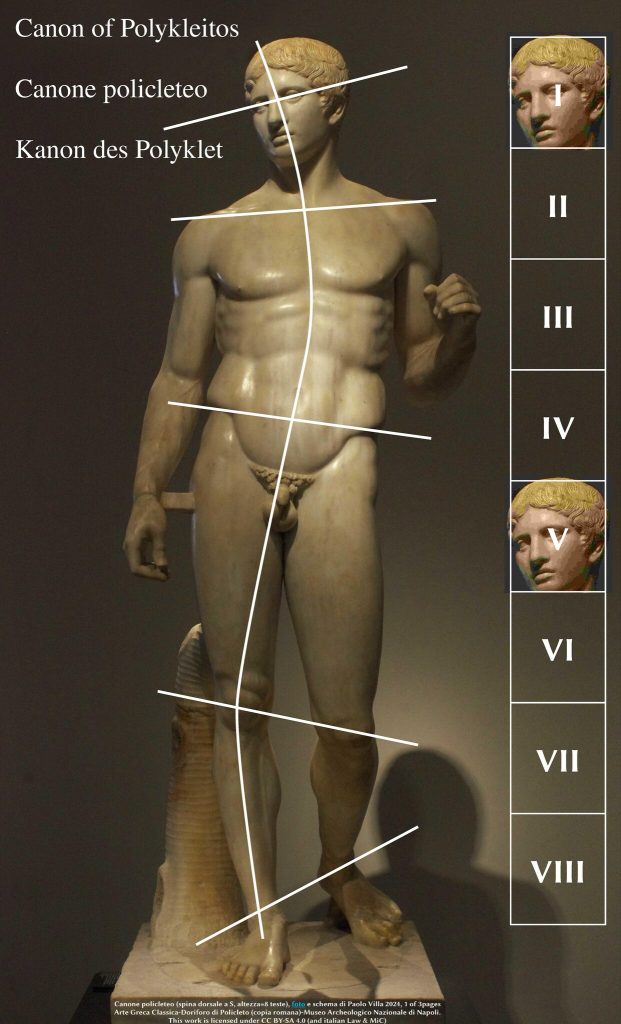
Historically, the Doryphoros of Polykleitos exerted a direct and lasting influence on later depictions of Apollo, giving life to the ideal form, particularly from the late Classical through the Roman Imperial periods. Its balanced contrapposto, rhythmic proportion, and expression of controlled vitality became the canonical formula for representing the youthful god.
Sculptors such as Praxiteles and his successors drew upon the Doryphoros as a structural archetype—the poised stance, idealised musculature, and serene countenance were adapted into the Apollos Lykeios and Apollos Sauroktonos types. Even in Roman copies and imperial cult statues, Apollo’s body retained the Polykleitan harmony: restrained power, inwards calm, and geometric proportion.
Context sharpens the programme. A celebrated Roman copy emerged at Pompeii in the municipal gymnasium, which suits a pedagogy that joined athletics to civic formation. Replicas furnished porticoes and atria as well, since householders wished to bind their space to a public canon of proportion. The point was not portraiture but the exhibition of a rule: a body becomes intelligible when weight answers to counterweight and each limb enters a ratio governed by a single law. Polykleitos wrote that law in the Κανών, then proved it by bronze; later cultures learned the sentence by copying the shape.
The so-called Line of Beauty arose in the eighteenth century as an attempt to give visual form to vitality itself—a principle of motion made visible through curvature. William Hogarth, in The Analysis of Beauty (1753), identified the serpentine or S-line as the emblem of grace, a subtle oscillation by which form seems to breathe. The curve, unlike the rectilinear or the perpendicular, resists rest; it conducts the eye through a sequence of anticipation and release, producing not mere shape but rhythm.
Yet the theory is more than decorative. It gestures towards a deeper aesthetic law: that beauty is a reconciliation of order and motion, of geometry with life. The straight line embodies mechanical efficient cause without the spiritual intellect of nous, rigour frozen into sterility, while the serpentine line restores the pulse of Being to measure. In this sense Hogarth’s discovery is an echo, perhaps unconscious, of the classical and Platonic intuition that true form must live; that proportion achieves perfection only when animated by rhythm (eurhythmia). The line of beauty thus stands as the emblem of aesthetic philosophy itself—form made dynamic, law awakened into grace.
The Canon outlived Greece, its afterlife is wide and various. Renaissance and neoclassical hands revived its cadence first: Michelangelo’s David stands as a Tuscan recasting of poised equilibrium; Donatello’s David toys with youthful measure in a lighter key; Canova’s Perseus, Apollo, and Napoleon as Mars recover lithe proportion with scholarly restraint. Antiquity had already multiplied the type: Myron’s Discobolus resolves violent motion into a readable arc; the Riace Bronzes present heroic bodies whose stance and musculature all but quote a lost Polykleitan rule; the Diadoumenos binds a fillet as if to bind number to flesh; Praxiteles’ Hermes with the Infant Dionysus softens the theorem without abandoning it. Rome internalised the lesson in its own idiom. The muscle-cuirass idealised the torso so that armour sat upon a notional Doryphoros beneath; the Augustus of Prima Porta is the best-known case, yet imperial images of Tiberius, Trajan, and the Hadrianic Antinous corpus likewise rely on a body scripted by ratio. Even martial types such as the Ares Borghese and colossal survivals like the Farnese Heracles show the same debt: mass and sinew are nothing until measure gives them speech. Across these galleries the constant is clear. Whether the figure is athlete, god, emperor, or civic hero, the viewer is asked to read a law in the body; symmetria and controlled contrapposto remain the grammar by which stone or bronze declares what a man is when form governs matter.
The Canon migrates easily from bronze to paint. Renaissance draughtsmen learn proportion at the block and carry it to the wall: Leonardo’s Vitruvian Man sets limb to square and circle; Raphael composes bodies in measured triangles and calm diagonals; Michelangelo paints contrapposto into the vault so that even a prophet sits in poised counterpoise; later Poussin builds whole histories from intervals and ratios, each figure a chord in a legible harmony; the academies codify these lessons as disegno and grand goût, so that a studio study in chalk rehearses symmetria before any colour is laid. Ingres’ cool line and David’s civic bodies show that painting can teach the same law as sculpture: the eye learns justice through number, and character through stance. Where the Canon rules, beauty is not a mood but a standard, and the figure trains the polis as surely as a colonnade.
From the Gymnasium to Today’s Bodybuilding Competition Stage; How Modern Athletics Surrendered Form Amidst the Reign of Mass
The Greek gymnasium (gymnasion, from gymnos, ‘naked’) was far more than a training ground; it was the crucible of the Hellenic ideal, the Apollonian temple of the body, where the cultivation of the body and the elevation of the mind formed a single discipline. Here the young citizen learned not only to run, wrestle, and hurl the discus, but to reason, recite, and reflect—an education in arete, excellence, that unified strength, intellect, and measure.


Founded upon the conviction that the human form mirrored the cosmic order, the gymnasium stood as both temple and school, its geometry echoing the order of the gods. Within its peristyles and palaestrae, the athlete’s body became a living canon, the counterpart to the sculptures of Polykleitos and the philosophical order of Plato. The exercises served not only to prepare men for warfare and the games but to enact the metaphysics of proportion—training the body to express the same harmony that the soul seeks through dialectic.
Victors at Olympia, Delphi, Isthmia, and Nemea received more than wreaths; as Pindar sings, their triumph seemed to touch the company of heroes and gods, so that the athlete’s ability, valour, poise, and beauty, on display without garment, bore a charge that was at once religious, civic, and ethical. From this climate arose a stable artistic type: heroic nudity, by which the unclothed figure presents not sensuality but measure and virtue, the body made exemplar and rule. In Archaic Greece the kouros (κοῦρος, nude athlete sculpture) crystallised a new public language of the body. Male nudity, licit on the training-ground and in warlike exercise, ceased to be mere exposure and became a sign of law and virtue. Viewers read kállos in the limbs and aretē in carriage and poise, and the old pairing kalòs kagathós (the noble and the good) gathered these into one ideal: beauty as the visible face of heroic goodness and civic virtue.
Philosophers, poets, and statesmen gathered there; the Academy and the Lyceum themselves were extensions of the gymnasial tradition, where philosophy arose from the disciplined vitality of the body. To think was to move rightly; to move rightly was to think in measure. Thus the gymnasium represented the Apollonian unity of form and intellect—the place where nakedness was not mere exposure but revelation, stripping away the accidental to reveal the archetypal.
The kouros spoke with a priestly clarity at the fountainhead of this story. Where the Gorgon’s mask on a pediment awakened deinos and holy dread, the radiant youth, upright and forward-stepping, with the quiet Archaic smile, suggested cháris (divine favour) resting on a perfectly schooled form. Emerging in the late seventh and sixth centuries BCE from an encounter between Greek craft and Egyptian canons of standing male statuary, it presents the frontal youth with advanced left foot, clenched hands, patterned musculature, and the archaic smile; these figures served as votives and grave markers, ideal rather than individual, and they flourished in marble from Naxos and Paros through the Archaic period (c. 600–480 BCE).
Set up as a tomb marker the type conferred honour and recalled noble life; offered as a votum, it thanked the god by displaying what ordered training and good birth could produce under a sacred eye. After the Persian Wars the idiom hardens into the Severe Style (c. 480–450), where planes replace ornament and the first true asymmetries appear; from this crucible the Omphalos Apollo arises, and within a generation Polykleitos forges the Doryphoros, transforming the inherited schema of the kouros into a living geometry—form measured, energised, and finally sovereign.
Nude, the figure declared its qualities without mediation: proportion as justice, rhythm as temperance, power as courage, serenity as wisdom. In short, the kouros made the moral legible in flesh, and the Games crowned that legibility with a consecration that carried the victor a little nearer to the immortals.


The lineage runs like a single revelation unfolding across stone and bronze: the Apollo of the Omphalos stands nearest to the Polykleitan ideal in time and spirit—an early Classical, Argive inflection where contrapposto first breathes within the Severe Style; the Doryphoros then codifies that breath into law. Métron and symmetría are given perfect chiastic balance and a canon of proportions that makes the youthful, virile body the vessel of Apollonian measure; the Praxitilean Apollos Lykeios and Sauroktonos—soften the geometry into inwards grace, lengthening the limbs, relaxing the stance, turning athletic tension into a lyrical poise; the Belvedere and imperial types re-project the same grammar at a grander, rhetoricised scale, wedding Polykleitan harmony to Hellenistic display and Roman majesty. Seen thus, the Doryphoros is the axis: the Omphalos Apollo anticipates it; Lykeios and Sauroktonos interiorise it; the imperial Apollos amplify it.
In the broader scope, the gymnasium embodies the Doric metaphysic: proportion as virtue, restraint as strength, form as law. It was the civic enactment of the Greek conviction that beauty and goodness are one (kalokagathia), and that through the harmony of body and soul, man could become a living image of divine order.
A parallel once lived in the modern gymnasium. Early 20th century bodybuilding treated the male body as a visible geometry: Sandow, Reg Park, Steve Reeves and their peers pursued symmetry, clean lines, and a silhouette that answered to waist, shoulder, and thigh in knowable ratios; proportion trumped bulk, and strength read as poise rather than bloat. Modern spectacle has largely traded this grammar for lifeless mass.
By the ’80s, the ‘mass monster’ craze had already set in, by the ’90s, and through the bulk of the 2000s until the 2020s, it reigned in full bloom. Pharmacology and stage-lighting inflate the frame until quantity devours quality; torsos swell beyond legible measure as ‘bigorexia’ and tragically shortened lifespans become the mainstay; turtle-shell abdomens are carved to ‘mass monster’ theatre rather than health and civic virtue; poses serve shock and ridicule rather than divine form and heroic gravitas.
Certainly, Polykleitos’ refined Platonic aesthetic sense would have felt affront. In a Guénonian register, the Reign of Quantity displaces the primacy of essence: what can be counted is preferred to what can be judged, mere enumeration displaces the intellect’s measure. Magnitude is worshipped for its own sake; number forgets its soul and becomes counting rather than Canon.
What should read as proportion and measure hardens into mere accumulation; size devours symmetry; the figure ceases to be an ennobling geometry and settles into a heap; a swelling tumour-clump. It is the cult of ‘more’ where metre has lost its music, a twilight in which quantity, unconsecrated by form, can no longer pass for greatness, and the Canon that once corrected appetite is dismissed as ‘subjective’. The result is a parable of the age. Painting that forgets drawing dissolves into effect; bodybuilding that forgets proportion collapses into heaps; culture that forgets measure mistakes abundance for greatness. A restoration begins where it always did: study the figure under a rule, prize symmetry over size, and let number return as the tutor of power.

Frank Zane carried Polykleitan form into the tail-end of the twentieth century and brought it into living motion. Styled ‘the sculptor’ in a nod to the very Doric discipline of form we have delineated, he continued the aesthetic trend of the early bodybuilding vanguard, and on a stage of gradually inflating though yet nascent ‘mass monsters’, he trained not for shock but for symmetria: a tapering torso, clean lines, limbs that read as measured intervals rather than heaps of mass. His posing and staging deliberately recalled Olympian statuary with athletic grace; quarter-turns, a quiet Attic twist that lent grace to strength, and pauses were set to reveal a legible geometry, drawing the waist into a classical key with the signature S-curve, so that chest, shoulder and thigh resolved into a single rule the eye could follow—a Greek sculptural motif that originates as architectonic necessity with Polykleitos, the by-product of rational proportion and opposing diagonals conveying poise and stability through counterpoise and chiastic equilibrium; carrying a Doric sense of latent energy held in measure. The trope is then elevated into a lithe serpentine register by Praxiteles. In an era drifting towards sheer quantity, the bodybuilding aesthete kept classical faith with métron and proportion, treating the body as a taught figure rather than a grotesque spectacle. The result was a living Κανών: strength shown as poise, beauty as number, presence as a quiet Doric authority that linked the modern sport back to the palestra and the peristyle.
What has occurred in the transition from early Egyptian-influenced sculpture to the Doryphoros, seems to have occurred in reverse, in modern bodybuilding.
The Doric programme reaches inwards. The temple cella houses an image not as an object of private feeling but as a focus for civic rite; gold and ivory may clothe a τύπος (týpos, statute-form), yet the pose remains hieratic and the gaze unperturbed. Architecture frames the god by number; sculpture clothes number in flesh. In both, ἰδέα (idéa, form) is prior; matter is chosen for its obedience to edge and plane; the tool never chases accident, it corrects it. One might say, without exaggeration, that Doric art is a practical metaphysics: πέρας (péras, limit) imposes itself upon the ἄπειρον (ápeiron, the boundless), and the city learns by its stones what the philosophers teach by argument.
Thus the analogy reads cleanly. Aristotle’s εἶδος (eîdos, form) commands ὕλη (hýlē, matter) as the Doric module commands the colonnade, and as the sculptor’s chisel commands marble to receive σχῆμα (schēma, figure). Where forma rules, stone becomes law made luminous; where forma abdicates, stone is only weight.
Read within our own civilisation the idiom is the same. Iuppiter Pater is luminous measure; Tellus and Ceres are the fertile field; rite yokes heaven to earth so that abundance answers to rule. In the house the paterfamilias is formal cause and judge; the materfamilias is the capacious power that receives, multiplies, and brings to term within that order; dextrarum iunctio is not a pact between peers but an investiture, and manus gives the investiture juridical body. Where form reigns, the receptive powers are transfigured into sacrament and husbandry; grain becomes bread because a calendar and a hearth constrain the fire; dowry becomes lineage because account-books bind generosity to succession; grief becomes hope because funerary rite gives limit to sorrow.
Myth remembers the same hierarchy. The ouroboros turns from devouring to renewal when the head commands the tail; Kālī cuts away excess as a servant of a higher law, not as sovereign of dissolution; yang uplifts while yin enriches when both keep their stations; Hermes Trismegistus sets Nous above Physis, so that nature is taught rather than obeyed; even the Pythagorean table gives the right-hand column precedence over the left, not in contempt of the second term, but for the sake of a world that holds together. The fall, in every idiom, begins when materia sets the terms and forma apologises; potency floods, names blur, cycles erase memory, and offices become functions that anyone may borrow and no one will answer for.

Facing it [the relief on the temple doors of Daedalus], rising from the sea, the Cretan land is depicted:
Virgil, Aeneid 6.14
and here the bull’s savage passion, Pasiphae’s
secret union, and the Minotaur, hybrid offspring,
that mixture of species, proof of unnatural relations


Right: Jay Cutler, 2009, executing his renowned ‘quad stomp’, which we see as more of a Minotaurian ‘bull stomp‘ the downwards gaze and grounded stance emphasising sheer mass, density, and dominance in the modern embodiment of quantity over proportion; though he is one of the more genetically gifted and balanced of the ‘mass monster’ era, his frame, physically incapable of an S-curve, has ballooned into a twisting of human and divine proportion in Dionysian pathos, under powerful hormones intended for literal cattle; he resembles the minotaur’s blend of man and beast, not the Apollonian forma of a god.
In the classical imagination, monstrosity is never meaningless; it is the counter-image that reveals the value of form. The gods embody perfection by embodying distinction; the monster exists to show the cost of its loss. The Minotaur is the echo of Apollo’s lyre out of tune, the Doric column collapsed into amorphous weight. It demonstrates that beauty and order are not given they are won—that every proportion depends on resistance to the formless. Born of Pasiphaë’s unnatural union with the sacred bull, the Minotaur’s origin is itself a sacrilege against týpos—the archetypal form. The bull, sacred to Poseidon, was meant for sacrifice, not for mating; thus the Minotaur is the fruit of man’s refusal to sacrifice desire, the perversion of piety into self-indulgence. It is what happens when the generative force (dynamis) escapes the control of reason (nous).
The modern gymnosophist, no longer the philosopher-athlete, has swelled to Minotaurian proportion; untethered from nous, the intellect proper, he has lost the soul’s gods-facing power that directly knows forms, in the Platonic sense. The body is vast and genetically gifted, yet vacuous; massive strength divorced from measure and purpose, it is questionable whether the inflated, scientifically-enhanced muscles, outstripping even the strength of their skeleton and tendons (and frequently damaging both), can even be used for a pragmatic purpose other than sheer vanity. What was once Apollonian discipline, form, and functional purpose, has curdled into a Guénonian Reign of Quantity and multiplicity for its own sake; the métron that shaped the Doric form is lost beneath chemical abundance and ungoverned appetite. In these mass monsters the human figure is a labyrinth of swollen flesh, a parody of the divine geometry it once expressed—the Minotaur reborn in Lycra, where will without Platonic intellect devours the very harmony that once made it godlike.
What has occurred in the transition from early Egyptian-influenced sculpture to the Doryphoros, seems to have occurred in reverse, in modern bodybuilding. One must ask—what would the architect of the geometrically ideal spear-bearing Doryphoros, Polykleitos himself, think, and which would he prefer? What would he remark were a student to present him with a statue of Cutler, and then Zane?
The analogy completes itself: modern bodybuilding, beyond merely imitating the Minotaur in silhouette and gesture, witnesses the potent steroid trenbolone itself entering from the cattle-yard, a veterinary hormone of the bullock and the feedlot, transmuting the athlete into the metaphysically and physically swollen, stamping, sweat-slick hybrid, laden with side effects of psychosis and sexual deviancy, whose hypertrophy carries an increasingly bestial nature, the very spectacle the Greeks would have recognised with horror, laughter, or ritual contempt as the human form surrendering to taurine excess—the aristocratic athletic space corrupted by literal feedlot pharmacology. From the 1990s into the early 2000s, trenbolone entered the bodybuilding underground with the stench of the feedlot still clinging to it: after the 1990 Steroid Control Act, illicit chemists and users increasingly turned to veterinary cattle implants such as Finaplix, pellets placed under the skin at the back of the animal’s ear, stripping out their trenbolone acetate and converting the implant material into black-market injectable steroid preparations.
Metaphysically the picture is simple. Potency without act produces no cosmos; a fertile field without a plough grows thickets of tanglewood, not harvests, as we see in the unrestrained crops of feminism; a vine without stake and tie sprawls and withers. So too the feminine, divorced from a shaping masculine, cannot deliver peace. It is not contempt to say so; it is our authority to do so, it is the height of truth and the grammar of Being. The remedy is as old as Rome. Restore manus as juridical form, publish a household charter so that offices are named, seat a regular council under the pater so that admonitions end in sentence, honour the materfamilias in her stewardship and keep it within rule, bind eros to duty by rite, and teach heirs that compassion serves justice rather than commanding it. Where hierarchy is visible and accepted, the feminine and its fruits are magnified and protected; where hierarchy is denied, those same gifts are conscripted by strangers and turned against the house.
The Cultural Technology of Doric Formalism Against the Swelling Tide of Becoming
Doric form is not merely an antique curiosity; despite the secularisation of modern academics, it is innately spiritual, a discipline of mind (nous) rooted in Platonic forms at the zenith of a civilisation that took metaphysics as the crux of its creative and social endeavours; one that beheld in physis the bodies of the gods themselves and by demonstration, instructed the populace, as rulers from the very peak. One can only study temples in sterile prose for so long before remembering that one touches the geometry of the very divine.
It teaches one that measure precedes impulse, that limit (πέρας, péras) tames the boundless (ἄπειρον, ápeiron), and that strength is most itself when it is calm. A Doric peristyle is authority made visible: one module governs column, triglyph, and metope; every correction to the eye—entasis, corner contraction, the slight fall of the stylobate—confesses a single law that subdues appearance to order. Stand within such a frame and you feel why hierarchy gives rest; proportion is not an aesthetic preference but a social ethic.
In the Hellenic–Roman imagination Doric severity and Platonic eidos move along the same current without necessarily needing a single spring; both prefer limit to the boundless, number to display, law to whim, and both carry a religious charge. The temple is no mere shelter or ecclesia, but a theophanic frame; the statue is no prettiness but a týpos that fixes presence within measured contour; processions, sacrifices, and vows unfold beneath a peristyle whose module governs sight and step alike. Such architecture tutors the soul to recognise Platonic Form; it does not illustrate a doctrine so much as embody a natural disposition in stone. Hence Doric becomes a natural house for Roman stoicism and civic gravitas; it sets the conditions under which Platonic language about the One, measure, and the intelligible Form can be attuned to the senses without strain.
For a Traditional life the lesson is immediate. Doric culture prizes μέτρον (métron, measure), συμμετρία (summetría, due proportion), τάξις (táxis, ordered arrangement), and εὐρυθμία (eurhythmía, right rhythm). These are not museum words. They instruct the way you keep a household ledger, arrange a shrine, set a daily rule, and speak with economy. Doric restraint is not thinness; it is virile fullness held in stoic reserve—the very external creative expression of the grandeur of Platonic internal spiritual grammar. The column without base rises from the earth with chastity; the echinus and abacus meet the load without complaint; the whole convinces by inevitability rather than display. That gravity is the father’s virtue: no fuss, no drift, no apology, only a form others can inhabit without confusion.
Sculpture in the Doric ambit confirms the ethic. The Severe Style keeps planes clean and passions bridled so that character reads at a distance. Doric is an architectural order and a broader aesthetic of measured austerity in building; the Severe Style is a label modern historians give to early Classical Greek sculpture (roughly 480–450 BCE), which replaces Archaic smiles and patterns with plainer planes, controlled movement, and sober gravity. They often coincide in time and spirit, and Severe-Style sculpture frequently adorned Doric temples, but the terms are not interchangeable: Doric names the order; Severe Style names a sculptural manner within the early Classical period. Polykleitos’ Kανών (and works like the Doryphoros) belong to the High Classical phase (c. 450–420 BCE), just after the Severe Style (c. 480–450 BCE). His statues inherit the Severe manner’s sobriety and clarity, but they systematise it into a mathematical canon—symmetria, chiastic balance, and fully articulated contrapposto—that marks a step beyond “Severe” into mature Classicism. In short: kin in spirit, not strictly Severe; rather, the programme that perfects what the Severe Style began. Polykleitos’ Κανών (Kanṓn) makes proportion a doctrine and poise a duty: the body stands in χίασμα (chíasma) where force and repose balance, as a house ought to balance mercy and sentence.
Even when myth turns violent on a metope, frenzy is squared by the field; drapery breaks into intelligible ridges; victory is narrated as order reasserting itself. Learn from this how to handle conflict: define the frame first, then allow motion; keep edges legible, let nothing sprawl.
The Metaphysics of the Classical Orders; Man, Woman, Girl
The Classical Orders of Doric, Ionic, and Corinthian derive their names from the Greek ethno-geographic and stylistic distinctions that shaped early temple architecture. The terms were reflections of regional character and the moral or spiritual temperament that each architectural form was understood to embody.
To a Greek or Roman of piety who understood the spiritual essence of locations, objects, and people, architecture carried indwelling presence; the order itself awakened a particular numen so that stone did not merely stand but summoned its proper power; Doric under the Genius of virile measure and steadfastness, Ionic attended by a matronal Iuno that lends clarity and persuasion, Corinthian bright with maidenly Iuno Lucina and the fecund air of Flora.
The other Classical orders can serve a metaphysic of order, but they do not announce self-sufficient virile limit (péras) as nakedly as Doric does. In De Architectura (I.2; IV.1), Roman architect and military engineer Vitruvius ‘genders’ the orders by proportion and ornament:


Corinthian: ‘Girl/maiden’; the slimmest shaft and the most ornate capital, sprouting acanthus leaves. Vitruvius retells the tale of Kallimachos seeing a basket set on a maiden’s grave, overgrown by acanthus—so the order is associated with a parthenos (maiden), lighter and more luxuriant.
Doric: ‘Man’; short-to-height ratios, no base, a plain capital; the triglyph–metope frieze reads like counted beats. Vitruvius calls it virile: stern, martial, and spare; so ancient writers liken it to a grown male body.
Ionic: ‘Woman’: taller, slimmer shafts on moulded bases; the volutes recall coiled hair; egg-and-dart and richer mouldings suggest a dressed, matronly figure. Hence a feminine dignity; graceful but ordered.
Roman Codifications:
The Romans systematised these terms and added two more: the Tuscan (a simplified Doric) and the Composite (a synthesis of Ionic and Corinthian). Vitruvius (1st century BCE) in De Architectura codified all five, interpreting them through anthropomorphic analogy.
Vitruvius’s old mnemonics of Doric as man, Ionic as woman, Corinthian as maiden—are not trifles of taste; they compress different layers of metaphysic into stone. The orders are three ways of showing how forma rules, persuades, or clothes the world of becoming. The Orders’ names originated as ethnic and regional designations, but evolved into moral and metaphysical symbols. Doric came to mean the measure of strength, Ionic the measure of intellect and grace, Corinthian the measure of beauty and abundance. The Greeks conceived architecture as frozen music—and the Orders, by their very names, became the harmonies of civilisation: Dorian rhythm, Ionian melody, and Corinthian ornament forming the triad of the classical world’s visible soul.
Ionic: Woman’s Eloquence of Grace and Pudor
The Ionic Order arose among the Ionian Greeks of the Aegean islands and Asia Minor, especially Ionia and Ephesus, where a more urbane and decorative sensibility prevailed.
- Form: slender columns with bases, voluted (scroll-like) capitals, continuous friezes, and an emphasis on proportion and ornamentation.
- Meaning: the Ionic was regarded as feminine in contrast to the Doric’s masculinity—graceful, intellectual, and ornate, expressing refinement rather than austerity.
- Origins: Ionia’s exposure to Eastern (Near Eastern) influences, through trade and empire, led to an architectural vocabulary more decorative and fluid than the Dorian.
‘Ionic’ thus came to signify grace moderated by intellect, a lighter and more elegant expression of order.
Ionic translates the same authority into a feminine idiom of eloquence. The shaft is taller and slender; the base mediates earth and column; the volute curls like ordered hair; the continuous frieze narrates rather than counts. Measure is still real, yet it persuades rather than commands. Ionic is matronly dignity: receptive to ornament, articulate in profile, temperate in its grace. It is the household’s mother-tongue, the law spoken with tact, the same hierarchy voiced as counsel, hospitality, and the gentle constraint of custom. One feels not the arrest of force but the rightness of cadence; the house does not march, it keeps step.
Slender shafts on moulded bases, taller ratios, and the spiral volute give a gentler, more rhetorical presence. The continuous Ionic frieze reads as flowing narrative rather than Doric’s counted alternation of triglyph and metope. Vitruvius already genders the order as feminine: graceful, articulate, urbane. In your schema, Ionic still respects measure (métron) and symmetria, yet it mediates law through eloquence—ornament as speech. The result is order with a softened edge: persuasion rather than command, rhythm rather than march. It fits a civic ideal of reasoned discourse; it is less congenial to a Platonic suspicion of image and to the Roman taste for stoic severity.
Corinthian: Girl’s Ornate, Virginal Youth
The Corinthian Order, youngest and most ornate, takes its name from Corinth, the city associated with luxury and artistic innovation in the late Classical period.
- Form: slender proportions similar to the Ionic but with elaborate acanthus-leaf capitals; richly ornamented entablatures.
- Meaning: the Corinthian was seen as the culmination of refinement, the embodiment of opulent beauty within the bounds of order. Vitruvius later described it as ‘virginal’ in contrast to the Ionic ‘matronly’ and Doric ‘manly’.
- Origins: first appears in the late fifth century BCE (attributed to Callimachus), becoming widely used in the Hellenistic and Roman periods.
Corinthian is the maiden brought under rule: the slimmest shaft, the richest capital, acanthus gathered into a bell that flowers yet answers to a strict contour. Here abundance is not suppressed; it is harnessed. The vegetal sign points to fecundity and display; the canon encloses it. Corinthian suits triumphal interiors, feasts, and shrines where plenty is meant to be shown without spilling into excess. In metaphysical terms it is the matrix honoured and contained. Becoming is given room, yet measure frames the bloom; youth is allowed to dazzle, yet the pedestal reminds it to obey.
Here vegetal abundance becomes the chief sign: bell-shaped capitals burst into acanthus; profiles multiply; light breaks on many small members. Vitruvius calls it virginal; later Romans make it the order of splendour. Proportion remains real, but the visual emphasis shifts to fecund display—a domesticated luxuriance. In metaphysical terms, matrix shows through the measure: forma still governs, yet the viewer feels becoming (leaf, tendril, growth) more than limit. Corinthian suits interiors, triumphal settings, and imperial magnificence; it embodies measured plenty rather than measured austerity.
Doric: Man’s Severe Strength and Piety
The Doric Order, oldest of the three, takes its name from the Dorian Greeks, the martial and austere peoples of the Peloponnesus, particularly Argos, Sparta, and Corinth. The Dorians were seen as embodying discipline, simplicity, and masculine virtue, and their architecture reflected this ethos.
- Form: sturdy, fluted columns without bases; plain capitals; triglyph-and-metope frieze; strong vertical rhythm.
- Meaning: the Doric temple was conceived as the architectural analogue of the disciplined male body—muscular, measured, and devoid of excess.
- Origins: the earliest stone Doric temples appear in the seventh century BCE (e.g. the Temple of Hera at Olympia), developing from wooden prototypes used by the Dorian settlers.
Thus, ‘Doric’ came to denote not merely a region or tribe, but a spiritual disposition: the architecture of métron and andreia—measure and manliness.
Read in this key, Doric embodies the solar masculine: limit (péras), number, and measured strength. A single module governs the whole; the column rises without base; the echinus and abacus bear the load without flourish; triglyph and metope beat time like a drilled file. This is virtus made visible: power authorised by proportion, judgement that does not shout, hierarchy that rests because it is sure. Doric teaches obedience to rule by the serenity of its stance; it is the father’s grammar in stone.
Architecture, sculpture, and cult form a single pedagogy. A Doric naos centres the image not for private sentiment but for public rite; gold and ivory may clothe the τύπος (týpos), yet the gaze remains hieratic. The city learns from its stones what the philosopher teaches with argument: εἶδος (eîdos, form) is prior to ὕλη (hýlē, matter). Transposed to your own domus, this becomes a set of habits. Fix a module for money and time, and let all recurrent decisions fall from it; keep a short canon of feast and fast days so that abundance and restraint have appointed hours; maintain an archive where judgement, gift, and admonition are recorded, because memory is the ally of form. Let the entrance, the hall, and the altar speak in one clean vocabulary—wood, stone, fabric—chosen for obedience to line rather than fashion.
There is also a spirit to guard. Doric form refuses sentimentality. It prefers clarity to charm and simple authority to mean cleverness. It will not flatter mood; it requires the patience to polish a curve until it reads as strength, and the humility to remove what jangles, even when it is skilful. In writing, this means Roman sentences that carry their weight without ornament; in speech, a softly-spoken Roman pace that holds imperial reserve, with thoughtfulness, and no more; in dress, an Augustan silhouette that serves function and rank. The reward is legibility. Those under your roof know where they stand because the domus itself speaks the grammar of limits.
Finally, Doric form dignifies piety. Limit is not meanness; it is hospitality to the sacred. A measured room receives a god more readily than a crowded one; a measured life receives counsel without panic. When you place a small image at a still centre, when you let light fall on an uncluttered wall, when you choose a rite you can keep, you enact the same metaphysic that tuned an echinus, the rounded moulding of a Doric capital, to bear its load with quiet exactitude. Your persons, your stores, your calendar, and your oaths fall under a single law that does not shout.
That is why Doric speaks to us: it is the architecture of virile auctoritas. It turns strength into repose, beauty into obedience, and space into a quiet certainty that order precedes us and will outlast us, if we will serve it.
The Metaphysics of the Devouring Feminine: Submission of the Feminine, and Its Liberation as the Descent into the Grave
Modern rhetoric drops all pretenses of reasoned argument and fixes its sights on the masculine by label and social stigma. A man who questions the prevailing order is filed under a slang taxonomy: ‘incel’, ‘toxic’, ‘fragile’, ‘mansplainer’, ‘patriarchal’, ‘deadbeat’, ‘creep’, ‘privileged’, ‘chauvinist’. Each term, rooted in feminist framing with sexuality and the principle of chthonic promiscuity as the height of social standing, short-circuits reason and degrades the metaphysical principle itself with characteristic feminine flippancy; shaming the sex, rather than testing a claim. In the same register criticism of the feminine arrives wrapped in apology, qualified away into harmlessness, or displaced into therapeutic euphemism as feminine license runs roughshod; criticism of the masculine is delivered as indictment and broadcast as a virtue. The result is a standing campaign to chip away at maiestas in its domestic form. The pater is recast as a case for treatment, a patient for counselling, a suspect for supervision; his auctoritas is trimmed by jokes, directives and HR catechisms until he holds office by permission rather than by right.
Feminine pathos has overtaken masculine logos, subversives have found an rich vein of ore in the pitting the devouring mother against the masculine, as if it were an insolent boy beneath her authority.
This is not accidental; it is useful to any socialist programme that prefers managed populations to sovereign houses. If the father’s dignity is absolute and inviolable, the domus stands as a small commonwealth and answers upwards only to law and to the gods. If his dignity is made conditional on compliance with each new social script, the house is opened to policy from without and to veto from below. The grammar is simple. Praise the feminine in the abstract and shield it from examination; pathologise the masculine in the concrete and keep it under review. With enough repetition the man accepts a secondary pole, performs contrition as a civic duty, and serves interests that do not serve his house.
The remedy is to refuse the frame and restore rank in speech and practice. Do not answer labels, require propositions. Do not apologise for office, demonstrate stewardship. Bar feminist slurs from the household forum, that are against men; insist on charges that can be weighed and answered. Write a charter that names the pater as judge and authority within the domus, the mater as steward within his order, and the rules by which admonition, correction and appeal proceed. Train sons to hold their faces to contempt and to keep records; train daughters to distinguish compassion from control. Honour the father in ritualised public forms and media, as no favour, but as the right attached to his charge. A city of households that speak and act in this key is hard to manage from outside, because the dignity of the man is no sentiment to be withdrawn; it is a settled office that does asks no leave to exist.
In Traditional metaphysics the feminine principle contains a double valence: the matrix that nurtures, clothes, and brings to term; and the chthonic power that loosens forms, returns what has been shaped to undifferentiated potential, and reclaims names into night, birdsong into the groaning dirge of the tomb. The image is older than any creed: earth receives the seed and yields harvest; the sprout differentiates out of the soil; the same earth takes the husk back into itself; the same sea that bears the ship will swallow it; the same lunar tide that rinses the shore will erode the cliff. In hieratic language this dissolving function is the solve that must answer to a prior coagula; potency without limit is abundance, potency without form is flood. Hence the need, both cosmic and domestic, for a visible principle of measure that can bid the waters recede, assign times to sow and reap, and fence the household within a known boundary.
In the Greek lexicon the feminine often corresponds to the unbounded: the Pythagorean ἄπειρος δυάς (ápeiros dyás, ‘indefinite dyad’) set over against πέρας (péras, limit); Plato’s χώρα (chṓra, ‘receptacle’ or ‘nurse’) in the Timaeus, the placeless ‘where’ that receives impressions; Aristotle’s ὕλη (hýlē, matter), pure δύναμις (dýnamis, potency) awaiting εἶδος (eîdos, form). This pole multiplies and differentiates; it draws beings outward through γίγνεσθαι (gígnesthai, becoming), ὄρεξις (órexis, desire), and κίνησις (kínēsis, motion). By itself it is fecund but undirected; it supplies room, not rule. Order appears when πέρας gives measure, when μορφή (morphḗ, shape) stamps the χώρα with an intelligible pattern, and when λόγος (lógos, reason) addresses the ἄπειρον as a craftsman addresses a pliant medium. The feminine thus stands as honoured matrix in need of law: neither contemptible nor sufficient, indispensable to manifestation yet dependent for peace upon a principle that says how far, how many, and in what figure.
Mythic Indo-European grammar renders this without apology. The ouroboros is the emblem: a circle of life that sustains itself by consumption; the tail is no error, but a law; the negative pole by which every cycle closes and begins again. When the head rules, the circle is ordered renewal; when the tail rules, the circle is devouring stasis. In Indic terms, Kālī is time manifest, the severer of false forms and the dancer on corpses; she is invoked precisely because form grows proud and needs correction; she becomes a scourge when no higher measure directs her scythe. The Mediterranean keeps parallel figures: Nemesis who cuts down excess, Ereshkigal who holds the underworld’s gate, Sekhmet who burns impurity, Tiamat who must be divided so the world can be built. None of these names license hysteria about womanhood; they name a metaphysical office that every civilisation must house, propitiate, and subordinate to a higher rule.

.jpg)

.jpg)


The young Tutankhamun, as Pharaoh, is declared axis of the world—the union of heaven and earth, life and death, motion and stillness. The monarch’s body stood as the hinge through which divine order turned, as Horus enthroned who bears the charge of renewal, his person becomes the vertical through which Ra descends, unites with Osiris, and rises again; the double ouroboros crowns and grounds that office, proclaiming the monarch’s role as stabiliser of order and guarantor of the world’s perpetual return; the mediator by whom the Sun’s cycle found its earthly reflection. The ouroboroi encircling the cosmic figure thus proclaim both the circumscription and renewal of time; the god within represents its beginning and its end, the eternal moment through which the cosmos perpetually recreates itself.
Traditional awakening doctrines speak of the world of Becoming as borrowed light. In Advaita Vedānta, Brahman is pure consciousness (cit), self-luminous; the manifold appears by māyā, which shines not on its own, but reflects—like the Moon borrowing the radiance of the Sun. What glitters in change is chidābhāsa (the ‘reflection of awareness’), a dependent luminosity that needs a source. Read in the old polarity: the feminine, as matrix of forms, is lunar; it receives, refracts, and distributes; its splendour is real as appearance but not sovereign as origin. The masculine, as solar principle, is the prakāśa (light) that does not need another to be seen. When the lunar is enthroned without the sun, reflection mistakes itself for source and flux claims ultimacy; when the solar rules, the lunar fulfils its dignity, showing things as they are while confessing the light it uses is given.
The feminine is thus read as πάθος (páthos), the power of affect, reception, and fecund responsiveness, allied to ὕλη (hýlē, matter) and δύναμις (dýnamis, potency). It gathers, sympathises, suffers-with, nourishes, and brings to term; it is lunar, domestic, and custodial; it moves with γίγνεσθαι (gígnesthai, becoming) and κίνησις (kínēsis, motion), and inclines by ὄρεξις (órexis, desire). Its excellences are mercy, hospitality, tact, and care; its knowing is immediate and relational, a wisdom of persons and seasons. Unruled, it dissolves into sentiment, superstitious flux, the rejection and stigmatisation of the supernatural and of form, and the tyranny of feelings; ruled well, it is the consecrated, honoured matrix in which form becomes fruit.
The masculine corresponds to λόγος (lógos), the principle of measure, naming, and ordinance, allied to εἶδος (eîdos, form) and ἐνέργεια (enérgeia, act). It sets πέρας (péras, limit), judges and commands, establishes oath and archive, fixes calendar and rank; it is solar, juridical, and founding; it speaks in canon, rule, and sentence. Its excellences are prudence, justice, constancy, and fortitude; its knowing is discursive and architectural, a wisdom of structures and ends. Unsoftened, it hardens into dryness or cruelty; amplified by páthos, the pact is upheld; the song of peace rings out, encircling the throne, setting the house in tune, keeping time and giving cadence to life.
In metaphysical terms, an inversion occurs when the pole of morphē (μορφή, morphē, ‘form’) cedes primacy to hylē; the axis of nous yields to psychē. Form gives measure, limit, and identity; matter gives fecundity, change, and plasticity. When the principle aligned with becoming enthrones itself as centre, the Dyad loses its orienting One; harmonia, metron , and rhythmos loosen, and process reigns without a sovereign term. In such a regime, power expresses itself through diffusion rather than mandate; law drifts toward nurture and management; authority redefines itself as facilitation; rites persist as sentiment while their Apollonian calibration fades.
In the household image, the hearth still burns, yet the pater’s juridico-sacral office no longer stands as living measure; lineage, duty, and adjudication become negotiable goods; succession answers to affect rather than to rank. On the civic plane, the Apollonian lyre—symbol of civic order—keeps its timbre only when form conducts; once khōra (χώρα, khōra, “receptacle/field”) takes precedence, rhythm follows appetite and the nomos (νόμος, nomos, “law; musical strain”) loses its binding force. The consequence is not merely ethical; ontology itself thins, since identity requires a principle that abides by itself, whereas becoming, relieved of a superior measure, multiplies states without finality.
From an aristocratic vantage, such centrality of the feminine principle marks a passage from sovereignty to administration; from command to coordination; from the heroic—and then ascetic—ascesis that culminates in Olympian clarity to a perpetual economy of care. The remedy is hierarchical re-junction: morphē enthroned above hylē; nous ruling psychē; Apollo’s measure restoring rank to Dionysiac amplitude; the household and the city taking their bearings again from a centre whose essence is form.
The right relation is hierarchical concord. Form precedes matrix, yet needs it; the fatherly lógos descends as rule and the motherly páthos rises as assent, so that σώφρων (sóphron, temperate) affection serves δίκη (díkē, right order), and generosity is kept from waste by law. The house then reads as a liturgy of this polarity: altar and ledger, rite and store, sentence and solace, each honouring the other without confusion of roles.
Within the domus the same polarity must be held. The materfamilias presides over store and linen, over the cyclical economies of baking, brewing, bleeding, birth and burial; she is steward of that power which breaks down to feed, which folds old garments into new cloth, which empties and replenishes every jar. The very arts that keep a house alive are arts of controlled dissolution; they turn grain into bread, fibre into thread, savings into dowry, sorrow into rite. Unruled, the same arts can unhouse a lineage: stores are spent as spectacle, dowry becomes purse for causes, kinship is thinned into sentiment, and the altar is replaced by psychotheraputic subversion. The feminine dismantling power is not a vice; it is a necessity that requires rank, time, and liturgy; without containment, without a prior law, it will dissolve the very frame that magnifies and hones its gifts.
The masculine function is to shape and to draw limits; it confers the name, sets the calendar, assigns offices, and keeps account; it fixes the points on the compass by which the cyclical powers can serve peace. In ritual this appears as staking and tying: vines trained to trellis, cloth cut to measure, seasons bound to feasts, grief given its appointed days, expenditure entered in the book. In law it appears as manus, dos governed rather than spent, heirs named, archives kept. The metaphysical order speaks plainly: when form governs, dissolution becomes fertility; when dissolution governs, form decays into appetite. The head chooses whether the ouroboros is a benediction or a maw.
The revolutionary catechism seeks the negative pole as instrument. It praises the ethics of care while detaching care from rank; it sacralises the work of loosening while cutting the cords of measure; it baptises dismantling as progress and treats every boundary as oppression. The result is not a creative solve that answers to a greater coagula; it is a permanent unmaking which calls itself compassion. In this climate the household’s dissolving arts are drafted into committees, pledges, and programmes; the feminine stewardship of cycles is made a vector for policies that never end; the house is kept in a state of managed erosion in the name of perpetual improvement.
The Traditional cure is not to deny the dismantling power, but to enthrone it. That is the sense of hierarchy. The paterfamilias bears forma and lex; he receives cyclical might as an entrusted force; he says when it cuts and where it stops; he joins solve to coagula so that expenditure becomes provision, compassion becomes justice, and burial becomes hope. The materfamilias acts with full dignity inside that frame; her office grows, not shrinks, when the frame is visible; her power ceases to be a solvent and becomes a sacrament. Concord follows: eros is yoked to duty by rite, wealth is yoked to worship by account, zeal is yoked to prudence by council.
Read thus, the ‘feminine as dismantler’ is a metaphysical caution; the negative pole is holy when it obeys a higher light. The ouroboros is not broken; it is crowned. Kālī is not banished; she is placed before the altar and given her day, so that time scythes only what must fall. The household prospers when its dissolving powers are harnessed to succession and its renewing cycles answer to law; the city breathes when houses keep that art. Where hierarchy fails, the devourer governs; where hierarchy stands, the devourer feeds the feast.
The Receptive Feminine Versus the Degenerative, and the Response of the Apollonian Man
When a man of centred axis interacts with women, he provokes a primal dynamic that belongs to the ancient grammar of form and potency; the feminine, if she is given to more instability than the average, instinctively presses, probes, and contests, seeking to discern whether the man’s presence is merely performance or genuine sovereignty. This initial resistance appears through teasing challenges, small provocations, fluctuations of tone, evasive replies, and minor emotional storms; it is a pressure-test of hierarchy, dignity, steadiness, and self-command. When a woman possesses an interior alignment towards order, this resistance possesses an end-point; once the man’s composure and direction reveal themselves as immovable, she sighs inwardly, her anxieties drain, her posture softens, her speech attunes, and she becomes cooperative, curious, affectionate, and proud to belong to a structure greater than her stormy moods. In such a psyche, resistance seeks resolution; it desires the moment where it may cease, and it bends toward form with relief rather than resentment.
The primitive, pathological feminine alignment displays an altogether different pattern; resistance becomes escalation, moralism, perpetual veto, social embarrassment tactics, and ideological hostility towards hierarchy itself. Here the woman does not seek the outline of form; she seeks to abolish the legitimacy of any form that might form and judge her. This arises when a culture trains women to enthrone boundless choice, effectively terminal stasis, sentimental absolutism, and mood-sovereignty; any masculine clarity becomes perceived indictment rather than shelter and elevation. The same man can receive opposite responses because the hinge resides in the woman’s metaphysical condition; one feminine psyche reveres the masculine contour as sanctuary, another perceives it as threat because it would impose identity, accountability, and finitude. Healthy resistance ends by yielding; diseased resistance delights in endless postponement. A man’s task is simply to stand, allowing the worthy to soften and the unworthy to reveal themselves; feminine acceptance flourishes once form is demonstrated, whereas feminine rebellion festers wherever form collapses or dares to exist without apology.
That is precisely the realisation towards which all of this tends.
An Apollonian axis does not answer provocation with commotion; it answers with stilling. Form does not chase, negotiate, or embroider itself—because movement toward the lesser grants it legitimacy. The more you do, the more you imply that your centre requires external confirmation; the less you do, the more all surrounding forces must reconcile themselves to your gravity.
To ‘do less’ is not passivity; it is sovereign economy. It asserts, calmly and without spectacle, that your outline is non-negotiable. You do not lean in, raise your voice, explain yourself, or court understanding. Apollo’s gesture is to subtract motion until the other’s frenzy reveals itself as ridiculous, unauthorised, unreciprocated. When you still the energetics of the exchange, you force the feminine psyche either to soften into relief or to expose its incapacity for repose.
Women who are capable of reverence will sense the silent contour and fall into its rhythm—they become slower, more careful, more attentive, as if a tuning fork has been struck. Women who cannot accept form will escalate their agitation; Apollonian stillness makes their disorder painfully visible, and they will resent you for shining that cold, geometric light upon their inner chaos.
This is why Apollo carries the lyre: measure, not motion; metron rather than mania. The masculine axis corrects the field by being, not by doing. Too much action concedes parity. Stillness declares hierarchy. When you cease matching their pace, you force them either to descend into harmony—or disqualify themselves by their refusal of form. A true centre clears the field without lifting a finger.
The Evil Twin of the City of Doric Strength: Inside the Christian Roma–Amor Complex
In Roman religious imagination the urbs did not exhaust what ‘Rome’ meant; beneath the public name lay a nomen arcanae potentiae—a hidden name of the City (or of her tutelary god) guarded as a state secret. Antiquarian writers report that to utter this name outside the strictest ritual confines was sacrilege, because the true name conferred power over the City’s divine protector: an enemy who knew it could perform an evocatio, calling the god out of Rome and re-founding his cult elsewhere (mirror), leaving the urbs metaphysically denuded.
The best-known victim of this taboo is Quintus Valerius Soranus, a scholar and tribune executed under Sulla. Later sources (Pliny, Plutarch, Servius, Solinus) say he was punished for revealing the secret name; one tradition has him crucified in Sicily, an unusually degrading penalty that underlines how seriously the breach was treated, even if modern historians suspect political motives behind the charge. The goddess Angerona, whose statue showed a sealed mouth, was sometimes interpreted as personifying the safeguarding of this unspoken name.
Ancient writers never agree on what the hidden name actually was. Later conjectures range from Valentia to more esoteric suggestions such as Hirpa, Evouia, or even Amor, the anadrome of Roma, which some moderns have treated as a sign of a secret dedication to Venus and a key to Rome’s occult double. The core idea, however, is stable: in the Roman mind a city, like a god, or perhaps more appropriately like in the earliest conceptions of numen, possessed a true name whose disclosure granted a kind of ritual command over its fate, so that the one who spoke it in the right formula did not merely name Rome, but held her.
The argument we present is not a philological one, but a philosophical lens that nonetheless has a firm basis in philology. For the purposes of our analysis, two currents shall be put forth.
Roma
In its deepest register the name of the sacred City, Roma, parallels strikingly with the Doric Greek rhṓma (ῥώμα), a word signifying strength, vigour, might, virile potency, and by extension the steadfast, upright force proper to a masculine civic axis; understood in this light, Roma names a city whose very title evokes concentrated power and the disciplined energy of a sovereign, Martial people.
To an ancient Greek ear the connotations would have been immediate and unequivocal. Hearing a city called Roma, a Doric-accented rhōmē, a Greek speaker would instinctively perceive a polis associated with martial strength, and a linguistic aura of virile energy; fitting for a rising martial state. Regardless of the strict philology, Roma would have sounded like ‘strength’ to many Greek ears, and the fit between name and destiny would have been almost too perfect to ignore. A comparable ancient corollary would be Egypt naming itself ‘Ma’at’, the kingdom of Truth and Cosmic Order, binding its political identity directly to the metaphysical principle it embodied, just as a modern ear would react if America had been literally named ‘Liberty’, its self-professed, supposed founding ideal elevated to the dignity of the state’s very name; although we may suggest ‘Tyranny’, the former works insofar as ritual inversion is the theme of the day.
Among the ancients there were writers, according to Plutarch, who implied that the City’s name could be traced through a Trojan woman bearing that name, and thus treating the name itself as Greek in character: Roma as the Doric form, Rome as the Ionian, both signify bodily strength and sovereign power. This places Plutarch within the tradition that regarded Romans and Trojans alike as bearing a Greek origin in both language and heroic lineage.
The strict philology cannot be asserted with finality, although the parallel between Roma and rhōma is so exquisitely, and uncannily consonant with our philosophical exploration of the City’s ancient essence and Doric ethos that we shall adopt this Roma = rhōma frame, as the conceptual axis through which to delineate the opposed currents of Roma and Amor.
Amor
When the letters of Roma are reversed, they yield Amor, ‘love’, a term which, though innocuous at first glance, forms an esoteric anadrome: the inversion of the virile force of ῥώμη into a softened, emotive, and often sentimental pole; in later religious and moral orders this inversion becomes emblematic of the shift from a solar, juridical, imperial conception of order (Roma) towards a feminised, affective, levelling ethos framed as universal ‘love’ (Amor).
Latin amor carries a surface sense of affection or desire, although its deeper ancestry links it to the Indo-European root am-, which signifies the mother, nurturing attachment, and the primal bond between infant and maternal figure. Greek ἀμοιβή (amoibē) and ἁμά (hama) belong to the same sphere of closeness, reciprocity, and unitive inclination. Through this root-world amor acquires a subtle maternal gravity that shapes the later Christian usage of ‘love’ as a moral absolute. The movement from am- as mother-root to amor as universalised sentiment mirrors the civilisational shift we are tracing: a transition from the virile, vertical force implied in rhōmē toward a soft, enveloping, maternal ethos grounded in the oldest stratum of Indo-European speech.
Amor, personified in Rome as Cupid, is the divine embodiment of the binding force of desire; he represents attraction, softening, and the compelling draw toward union. His nature reflects the Indo-European am- root’s maternal sphere rendered into erotic impulse, giving form in the Roman context to the enveloping, irresistible pull that later moral systems elevate as universal ‘love’. In Latin this root develops into amāre and amor, extending the maternal sphere into desire, affection, and unitive attraction; the god embodies that gravitational pull in divine form. Figures such as Ammos or Ammas, minor mother-spirits in Greek and Anatolian settings, preserve the am- root almost unchanged; they stand for the primal maternal presence, the nurturing enclosure from which the very idea of love as attachment first arises.
Christian agapē, presented as profound, selfless and unconditional love, is framed as the highest mode of affection: a divine outpouring toward humanity and a reciprocal human devotion toward the divine. Within Christian theology it stands above eros, the erotic pull, and philia, the bond of comradeship. In our schema this elevation signals a decisive metaphysical shift: the supreme principle of the cosmos becomes Love, not Strength, Rank, or Victory. Agapē thus inherits and sanctifies the Indo-European am- root, transposing the maternal, enveloping, equalising impulse from the human sphere into the nature of the divine itself. The Christian God becomes the apotheosis of amor, and the entire order of being is reconfigured around a universal, levelling compassion rather than the virile clarity, disciplined power, and triumphal sovereignty once associated with rhōma and the cults of Strength and Victory.
From Gladiator to Star Wars: Slave Rebellion on the Silver Screen and the Messianic American Dream of Anti-Rome
The essence of socialism is impersonal and sexless, because it is atheistic.
Dmitry Merezhkovsky, Les Mystères de l’Orient, 1927
The word ‘proletarian’ comes from the Latin proles, posterity, generation. The proletarians are ‘producers’, ‘generators’ in body, yet eunuchs in spirit; they are no longer men nor women, but those terrible ‘comrades’, impersonal and sexless ants of the human anthill, ‘little balls of pressed caviar’, in Hertzen’s phrase.
Traditionalist writers have often seen in America the terminal phase of the same current that hollowed out Rome from within; Baron Julius Caesar Evola, in particular, speaks of the United States as a kind of anti-Rome, as the culmination of Protestant currents affirming primordial Christianity, untethered from the Roman Traditionalism that, for a time, kept these currents from fully expressing themselves in Catholic or Byzantine form; a civilisation in which the classical hierarchy of spirit → soul → body, form → matter, aristocracy → demos has been systematically overturned. Though the Christianised compromise nevertheless promulgated a lunar form of spirituality against the solar patriarchy of the imperial cult of Tradition, that once sat at the foundation of the Tradition of Europe in uncompromised glory, and it has acted in every manner to subvert in every form the higher imperial sacrality wherever it was found, to empower degenerative progressive currents, for its own primacy at the expense of every authentically higher vantage beyond dogmatic claims that undermine the manifestation of spiritual authority in this world, and prevent the descent of the divine into the body.
America speaks in Roman masks: Senate, Capitol, Republic, citizen, law, magistracy, eagle, fasces, tribunal, and imperium reduced to constitutional theatre. Yet beneath these names the Roman core has been evacuated. What was once a patrician body, rooted in house, father, ancestry, cult, rank, and command, becomes a revolving door for the deracinated, the fatherless, the arriviste, parvenu and novus homo, the managerial woman, and the mechanical functionary; no ancestral gravity binds the office, no mos maiorum restrains the appetite for turnover, publicity, faction, and numerical assent. Elections with harsh term-limits, guarded with an almost religious denial of anything transcendent and supreme, themselves cannot take hold as sacred succession, because the American order knows only the restless circulation of instruments within a productive conglomerate. In Evola’s terms, America stands as the civilisation of praxis, profit, quantity, visible achievement, and mechanical greatness: a soulless anti-Rome speaking Latinised forms after the Roman spirit has departed.
The Senate, the Capitol, the eagle, the fasces, the language of republic, citizen, law, and magistracy: these things once fed the European Tradition because they belonged to a living order of ancestry, rank, cult, land, and paternal command. The United States broke away from that inheritance while still speaking in the language of Romanitas, suitably rewritten for Enlightenment perversions, as though even its rebellion could not escape the imperial grammar it had abandoned; it staged its revolt as a return to a Republic that would have decried those very values, a republic that did not subvert Rome, but naturally flowered into the imperium. It had to speak in Roman terms because Rome remained too compelling to discard; yet in American hands the names survive as masks, emptied of patrician substance and made to serve productivity, publicity, quantity, and the restless circulation of the rootless. First, America cannot escape Roman grammar; then, it falsely stages rebellion as republican return, but Rome itself destroys the American fantasy of Republic against Empire.
Even its party divisions do not restore order; they merely stage managed alternation within the same pecuniary regime, where faction replaces house, money replaces ancestry, and election becomes the ritualised circulation of interests through offices no longer held by blood, cult, or paternal gravity. Even ethnos is lowered in this world. What was once ancestry, house, lineage, sacred memory, cult of the dead, and descent from a named paternal source is reduced to ‘race’ as biology: blood without ancestor, stock without house, population without rite. The sacred forefather disappears behind measurement, census, phenotype, and material heredity; the living chain of descent becomes a biological category administered by the same quantitative mentality that dissolves Senate into procedure, office into turnover, and people into mass.
Where Rome understood itself as Rhōma (ῥώμη), strength and virile axis crystallised in the sacred City (Urbs Sacra), the American mythos enthrones quantity, production, comfort, and an almost religious cult of the formless individual beholden only to the ideale animale; the Jupiterian imperial eagle survives as a vestige, as it hovers over a democracy of consumers and opinion-groups, not over a civitas bound by law, rite, and patrician order. In Evola’s reading, America is what happens when the ‘Amor’ current completes its work: the symbols of empire are retained, but any reference to a transcendent principle, a solar centre or a genuine imperium is bled away, leaving a planetary machinery of wealth, technology, and sentiment that moves by mass desire alone.
America too, in the essential way it views life and the world, has created a “civilization” that represents the exact contradiction of the ancient European tradition. It has introduced the religion of praxis and productivity; it has put the quest for profit, great industrial production, and mechanical, visible, and quantitative achievements over and above any other interest. It has generated a soulless greatness of a purely technological and collective nature, lacking any background transcendence, inner light, and true spirituality. America has also put the view in which man is considered in terms of quality and personality within an organic system in opposition with that view in which man becomes a mere instrument of production and material productivity within a conformist social conglomerate.
Baron Julius Evola, ‘Bolshevism and Americanism’; essay published in Nuova Antologia, no. 10; May 1929
From that perspective, America does not simply depart from Rome; it represents Rome’s full inversion—Roma turned entirely inside out. The Roman world once subordinated economy to law, law to cult, and cult to an impersonal, virile Idea; the American world subordinates everything, including law and religion, to economic dynamism and the rapid proliferation of rights-claims of atomised individuals. The old ordo of ranks and dignities dissolves into managerial bureaucracy and publicity; citizenship becomes ‘the masses’, the populus Romanus is replaced by a fused blob of electorate and market. For Evola this is not an accidental decline, it is the consummation of the same levelling process that began when the imperial axis was betrayed: the sibylline, plebeian, sentimental current which once worked inside Rome has, in America, shed even the last remnants of classical form and stands revealed as a naked counter-tradition, a global anti-Rome whose very success marks the exhaustion of the classical cycle.
Modern American Rome-fantasy almost always reads Rome from the other side. Its instinct is not the gaze of the pater, senator, augur, victor, founder, or emperor, but the gaze of the slave, the exile, the rebel, the displaced son, the oppressed province, the wounded outcast, and the insurgent who discovers his sanctity in revolt. Ridley Scott’s Gladiator (2000) delivers the messianic pattern in its most seductive Roman costume: a general of Rome is betrayed, reduced to slavery, reborn as a gladiator, and made righteous precisely as he turns against the imperial centre.1 The imperial form survives as spectacle, architecture, eagle, legion, arena, and marble, but its moral centre has been transferred to the enslaved body beneath it.
Star Wars gives the same myth in galactic form. Its ‘Empire’ is a technological, centralised, martial order, while its sacred sympathy belongs to the Rebel Alliance, the marginal force, the fugitive cell, the irregular army, the slave-boy, the smuggler, the orphan, and the dispossessed. George Lucas himself made the political grammar plain when he linked the Rebels to the Viet Cong and described the ‘highly technical empire’ in terms of the English and American empires defeated by the ‘little guys’.2 Thus the American imagination projects Rome only to condemn it, borrowing imperial splendour while teaching the slave’s resentment against imperium.
This grammar appears even in the cinematic emperor himself. Palpatine is the obvious pop-Caesarian figure of the American screen: senator, chancellor, manipulator of emergency powers, destroyer of the Republic from within, and founder of the Empire under the applause of liberty’s own institutions. George Lucas made the historical frame explicit when he spoke of democracies giving themselves to dictators and named Julius Caesar beside Napoleon and Hitler, reading the myth of World War II into antiquity itself, through the Americanist programme. The Roman crime is therefore recoded for the democratic eye: a republic yields itself to one man, the Senate remains as a hollow theatre, and imperium becomes villainy.3
The type then mutates across later pop-imperial figures. In Dragonball Z Lord Frieza gives the same morphology in armoured, galactic, and almost heraldic form: the cold emperor, the conqueror of worlds, the master of imperial legions, the polished alien Caesar whose soldiery advances as a monstrous parody of discipline, rank, and conquest. Frieza’s design also carries a Western genre-current beyond Star Wars and Superman: the smooth bio-armoured menace of Giger’s Alien passes into his glossy, quasi-exoskeletal plates, giving Toriyama’s imperial tyrant an insectoid, biomechanical chill beneath the anime elegance. Even the armour of Frieza’s legions resembles a space-age transposition of Roman imperial armour, with breastplates, segmented forms, martial skirts, shoulder-guards, and ceremonial severity translated into alien military design; it invokes the heroic Trojan image of the armed imperial host, then refines it through polished curvature, synthetic material, and the cold splendour of cosmic conquest.
‘Emperor of the Universe’, belongs to the same universal and cosmic grammar as Caesaric cult-language of sōtēr tēs oikoumenēs, ‘saviour of the world’: sovereignty as a total claim upon ordered existence, not as local rulership. Palpatine’s title, Galactic Emperor, is the same principle in Star Wars: Caesarism translated into stellar monarchy, where Senate, republic, army, and cosmos are gathered beneath one imperial will. The resemblance need not be reduced to a documentary claim of influence. It is a symbolic chain: Caesar, Palpatine, Frieza, each made legible to modern mass culture as the imperial principle turned monstrous, the emperor as alien predator, the legion as machine, the hierarchy of command as cosmic enslavement. Frieza is the more revealing imperial image precisely because he is charming, gentlemanly, aristocratic, and softly spoken, moving with the unhurried ease of a classical patrician who has never needed to raise his voice in order to be obeyed. Nor to exercise the ius vitae necisque over his subjects with the severe composure proper to a Japan that also knew kiri-sute gomen and could enforce the dreadful prerogatives of rank with the same ritual precision that governs the removal of shoes before a threshold.

He does not tremble before the judgement of a god who demands slavery from his worshippers while pretending that obedience is love; such a deity already speaks the grammar of servitude, and therefore forfeits the right to condemn dominion in another. Frieza’s cosmic monarchy is at least candid. He commands, conquers, rewards, exterminates, and possesses with a remarkable ease that requires convoluted rationalisations or political cautions in Western equivalents, with no need to disguise power as pity or conquest as salvation. His elegance lies in that terrible absence of apology: he does not cloak sovereignty beneath the beggar’s language of humility, nor reduce empire to a guilty humanitarian mask.
Lord Frieza is, in this sense, unapologetically one of the most Roman figures ever to grace the screen, precisely because the divine imperial image, passing through Japanese hands and rendered through the unmitigated machismo martial arts spectacle of boys’ shōnen manga, is stripped of the feminised Western sickness that divides lordship against itself: temporal ruler here, sacral ruler there, Caesar wounded by priest, emperor judged by altar, Dante’s ‘two suns’ already dimmed by the Christian partition of sovereignty, such that Palpatine finds it necessary to appeal to crisis rather than auctoritas, in a way Caesar never did. In Frieza one sees something older, cleaner, and more terrible: a Japanese Caesar whose command requires no priestly permission, whose racial supremacy, stripped of mere humanness, does not blush before heaven, and whose cosmic imperium appears as a single, indivisible fact of rank, force, splendour, and will.
The Emperor of the Universe stands above his subjects as lord and master, and, his cruelty is inseparable from his station; he is aristocratic terror without the hypocrisy of slave-morality, domination without penitence, supremacy without the theatrical blush of moral self-denial. He does not possess the coarse theatricality of the mere tyrant; he possesses the courtesy of one who already knows the structure of the universe bends beneath his station. His refinement is part of his terror: the smile, the delicate phrasing with refined usage of Japanese honorifics, the beautiful armour in the very same royal purple that was the privilege of Caesar, the almost courtly politeness with which he orders extermination, all mark him as a sovereign figure rather than a brute. As Emperor of the Universe, he is not simply a villain in imperial costume; he is the nightmare of aristocratic command as seen through the plebeian eye, majesty made intolerable because it refuses to apologise for supremacy.
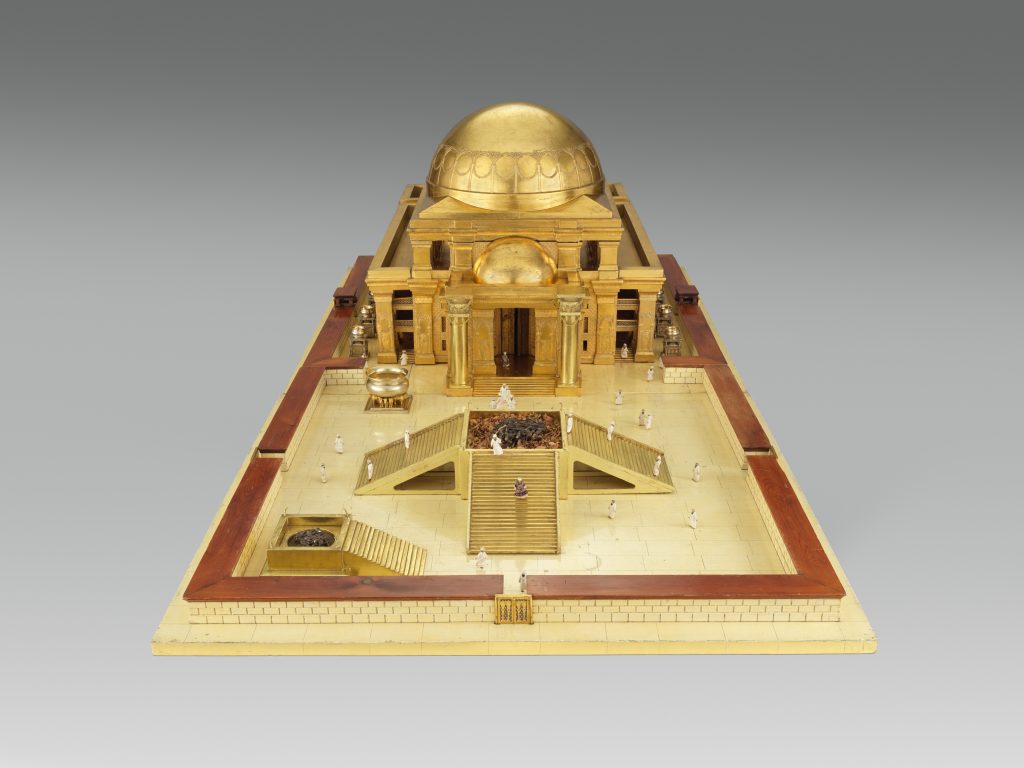
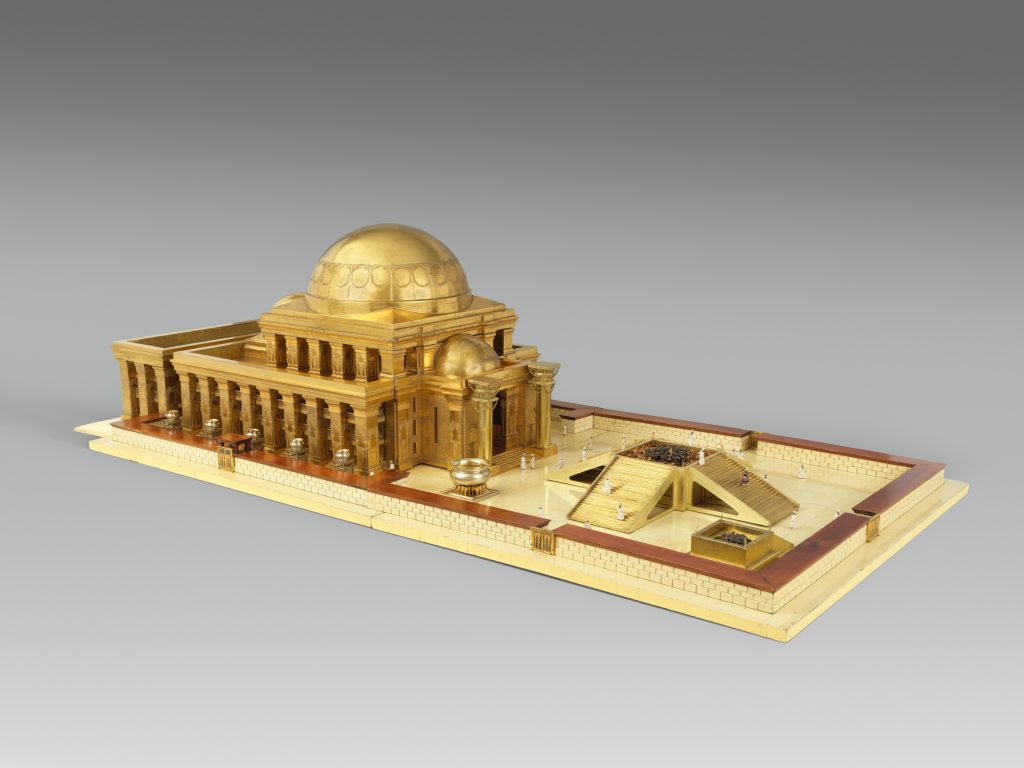
The Super Saiyan motif codes the messianic conflict between Rome and Judaea in shōnen form: an imperial hegemon rules the stars, subdues peoples, destroys worlds, and holds beneath his command a proud, bellicose race with a cosmic destiny, whose own king is reduced to vassalage under the Emperor of the Universe. The Saiyans are therefore better understood less as a simple ‘warrior race’ than as a conquered chosen people awaiting apocalyptic vindication: violent, priestly in their electional symbolism of chosenness, bound to prophecy, and destined to produce the golden redeemer through whom the imperial order is judged. Frieza stands as the Roman viewed through the Judaean imagination: polished, aristocratic, lawful in his own imperial cruelty, and untroubled in his right to command, yet cast as the oppressor of a chosen bloodline whose genocide becomes the seed of messianic reversal: in Jewish literature, the Roman destruction of the Second Temple was depicted as ‘the end of the world’, since the Temple was not merely a sanctuary, but the visible axis of Judaean civic-religious life, where sacrifice, priesthood, law, festival, purity, genealogy, and divine presence converged.4 Its architecture and furnishings were also understood as a sacred image of the cosmos itself, with Josephus and Philo reading the veil, lamps, loaves, priestly vestments, and sanctuary through elemental, planetary, zodiacal, and heavenly correspondences.5
Rome’s decimation of the Temple therefore ended Temple-centred Judaism as it had been known: the priesthood was displaced, the sacrificial cult ceased, and the visible geometry through which the Judaeans had located themselves before God was torn from the earth. In a Second Temple milieu already charged with apocalyptic and messianic expectation, such a destruction could naturally be read as the end of the world.6a Likewise, the Saiyans have their race and ‘world’ ended in a genocidal attack by Lord Frieza, in order to pre-empt their rise as a rival power; integral to the anti-imperial invective of Dragonball Z, the protagonists are messianic dispersed survivors of an apocalyptic genocide at the hands of the universal ruler, seeking vengeance and radicalist subversion of the imperial-patriarchal order. Within this apocalyptic horizon, the redeemer could be imagined as more than a teacher or spiritual restorer: a Davidic royal warrior-king whose advent would bring judgement, vindication, the purification of Jerusalem, and the overthrow of Israel’s enemies.6b Christianity may thus be read as a Judaean attempt to survive the loss of the Temple by interiorising and relocating cult: the sanctuary passes from architecture into body, from altar into spirit, and from priestly precinct into the gathered community, so that the Temple becomes portable, inwards, and ecclesial.7 Christianity radicalised this messianic-Temple logic by locating divine presence in Christ, the ecclesial body, and the inwards sanctuary of the believer, so that messianic fulfilment and Temple-presence became inseparable. Freemasonry later reactivates Solomon’s Temple as an initiatic architecture, taking its builders, pillars, measurements, and lost sacred centre as the symbolic structure through which moral formation, craft hierarchy, and esoteric ascent are staged.8
The Saiyan king’s reduction into vassalage sharpens the Judaean parallel, though it also exposes the bias of the projected myth: native royal authority is imagined as a broken crown beneath the imperial foot, its sovereignty humiliated before destruction, its remnant awaiting apocalyptic vindication. Historically, however, Judaea’s position within the Roman order was not so simply downtrodden. Herodian kingship had existed as a Roman client monarchy, Judaea later became a province in 6 CE, with Agrippa I briefly restoring Herodian kingship over Judaea in 41–44 CE, and Temple-centred priestly authority remained a powerful native structure until the self-inflicted catastrophe of 70 CE. Judaea’s catastrophe was not the simplistic work of Roman oppression. It was self-inflicted through revolt, factional fanaticism, priestly and populist conflict, intra-Judaean violence and internecine war, and the suicidal politics of a besieged people tearing itself apart before Rome’s legions brought the final, inevitable judgement.9a
Cassius Dio’s account of the Diaspora Revolt shows why Rome could come to regard Judaean and Jewish revolt as more than a provincial disturbance. In Cyrene, he writes that the Jews under Andreas destroyed both Romans and Greeks, consumed flesh, wore skins, anointed themselves with blood, forced victims into gladiatorial combat, and left two hundred and twenty thousand dead; in Cyprus, under Artemion, another two hundred and forty thousand are said to have perished, after which no Jew was permitted to set foot on the island. This is revolt as sacrilege, massacre, and anti-civic fury: Roman and Greek bodies reduced to ritualised trophies, cities emptied, and the imperial order forced to answer with exterminating severity. The Temple had already fallen by then, but Dio’s passage gives the later imperial rationale in its most brutal form: a people whose uprisings could convulse Cyrene, Egypt, Cyprus, Mesopotamia, and Judaea could no longer be treated as a merely local cultic nuisance, but as a recurrent, transregional engine of rebellion requiring Roman suppression at the root.9b
The Diaspora Revolt was the great Jewish uprising of 115–117 CE, during Trajan’s reign, later remembered in Jewish tradition as the Kitos War. It came after the First Jewish–Roman War and the destruction of the Second Temple in 70 CE, and before the Bar Kokhba Revolt of 132–136 CE. Its distinctive feature was that it was not centred only in Judaea, but erupted across major Jewish diaspora communities in the eastern Roman world, especially Cyrenaica, Egypt, Cyprus, and Mesopotamia, with disturbances in or around Judaea itself remaining a more difficult and debated question. The timing was crucial: Trajan was away on his Parthian campaign, so the eastern empire was already militarily strained. The revolt was extremely violent in the ancient accounts: a diaspora-wide eruption of ethnic, civic, and religious violence against Greeks and Romans. Rome suppressed the revolt through commanders such as Marcius Turbo in Egypt and Cyrenaica, and Lusius Quietus in Mesopotamia; the name Kitos War comes from Quietus. The result was devastating for Jewish communities in North Africa, Egypt, and Cyprus, many of which never regained their former prominence.9c The Diaspora Revolt is useful because it shows that Roman suspicion and repression of Judaean/Jewish revolt did not arise from one isolated rebellion. The Roman view was formed across a sequence: the First Jewish War, the destruction of the Temple, the Diaspora Revolt, and then Bar Kokhba. By the time the pattern is viewed as a whole, Rome is no longer dealing with mere local unrest, but with recurrent religious-national insurgency across the imperial order. This is the Roman memory of revolt in its starkest form: massacre, anti-civic fury, and Mediterranean-wide insurgency answered by imperial severity.
Meanwhile the Jews in the region of Cyrene had put a certain Andreas at their head, and were destroying both the Romans and the Greeks. They would eat the flesh of their victims, make belts for themselves of their entrails, anoint themselves with their blood and wear their skins for clothing; many they sawed in two, from the head downwards; others they gave to wild beasts, and still others they forced to fight as gladiators. In all two hundred and twenty thousand persons perished. In Egypt, too, they perpetrated many similar outrages, and in Cyprus, under the leadership of a certain Artemion. There, also, two hundred and forty thousand perished, and for this reason no Jew may set foot on that island, but even if one of them is driven upon its shores by a storm he is put to death. Among others who subdued the Jews was Lusius, who was sent by Trajan.
Cassius Dio, Roman History 68.32.1–3, trans. Earnest Cary, Loeb Classical Library
The image is therefore less a sober Roman-Judaean analogue than the old revolt self-narrative, that itself fuelled the genocide of Graeco-Egyptian-Roman Mediterraneans, transposed into shōnen form: empire above, chosen remnant below, and a defeated people mythically purified by the very subordination history renders more ambiguous. The Super Saiyan is thus the slave-revolt Messiah transposed into cosmic mythology, born from extermination, exile, wrath, and sacred memory; his golden radiance is the sign that a defeated people has converted suffering into divine vengeance. Like a Judaean, he returns from the brink of death even stronger and more determined than before, which Frieza finds to be a potential challenge to his own imperium. The pattern comes close to Isaiah: ‘He hath no form nor comeliness; and when we shall see him, there is no beauty that we should desire him’ (Isaiah 53:2); the redeemer appears beneath expectation, outside the splendour of imperial stock, lacking the visible marks by which worldly power recognises greatness. He is ‘despised and rejected of men; a man of sorrows, and acquainted with grief’ (Isaiah 53:3); the chosen one is first the cast-off one, the overlooked remnant, the wounded vessel through whom history is reversed.
This is the turnabout embodied by Goku: the discarded infant, the low-class Saiyan, the commoner’s bloodline judged negligible by the aristocracy of conquest, yet secretly bearing the apocalyptic answer to Frieza’s cosmic imperium. Isaiah gives the grammar of the paradox: ‘For he shall grow up before him as a tender plant, and as a root out of a dry ground’ (Isaiah 53:2); the radical plebeian ‘saviour’ does not arise from the expected throne, nor from the formal house of command, but from dry ground, exile, humiliation, and prophetic concealment. The golden warrior therefore appears as the branch of a defeated people, the despised remnant whose suffering becomes radiance, whose wrath becomes judgement, and whose very inferiority in worldly rank becomes the sign of providential election. Frieza, Emperor of the Universe, is overthrown by the bloodline he had consigned to extinction; the imperial sovereign is judged by the child of the remnant, and the low-born one becomes the terrible answer to cosmic dominion.

March, 2012

Superman was created by Jerry Siegel and Joe Shuster, and the Moses parallel, the infant sent away in a vessel from a doomed home, is widely noted in later criticism and scholarship. Goku is, in this sense, the Japanese Superman: the infant from another world, sent through the cosmic waters in a pod that functions as a space-age basket, adopted among strangers, raised beneath a hidden destiny, and revealed in time as the messianic answer to catastrophe. Superman had already carried the Moses-pattern into American myth: Kal-El, of the house of El, is the child cast away from a doomed world, preserved in a vessel, and delivered into exile so that the remnant may return as redeemer. Goku repeats the structure through Japanese shōnen grammar, yet the messianic force becomes wilder, more martial, and more openly apocalyptic: the low-class Saiyan, saved by apparent abandonment, becomes the golden avenger of a destroyed people.
There is also the older Wukong Sino-Japanese mythic substratum beneath the space-age Moses pattern. Goku’s pod may function as a cosmic basket, but it also resembles the stone-egg motif of Sun Wukong: the sealed, inhuman vessel from which the monkey-hero emerges, already bearing the trace of heaven, earth, violence, and destiny. The Saiyan infant descends through the stars as Wukong emerges from stone, each figure arriving from a strange container of birth rather than from ordinary lineage; the hero is not simply born, but released from a mythic shell. This gives the image a double charge. Through Superman and Moses, Goku belongs to the messianic child cast away from a doomed or threatened people; through Wukong, he belongs to the rebellious, solar, simian wonder-child whose very birth hints at a force outside normal order. The spacepod is therefore basket and stone egg at once: Judaean exile translated through American myth, then recharged by the Sino-Japanese monkey-king pattern, where the child of the strange vessel becomes the being who challenges heaven, empire, and cosmic hierarchy.
The same grammar appears in narrative-rich video games like Morrowind, where the Nerevarine prophecy gives the player the role of a returned, chosen figure moving between indigenous memory, outlawed cult, foreign empire, and false gods. The Ashlander cult expects Nerevar reborn to restore ancient promises, cast down the Tribunal, and drive out the outlanders; the prophecy also requires unifying the Great Houses and Ashlander tribes, so the messianic figure becomes both redeemer and national-religious consolidator. This is the same mythic engine in another register: the chosen remnant, the foreign dominion, the corrupt sacred order, the outlawed prophecy, the return of the true one, and the final restoration of a people through divinely charged revolt.
America, and global media formed in its shadow, continually read Rome through the eyes of the revolt against Rome itself, rather than as its heir. The imperial figure appears as the oppressor of the chosen remnant; the cosmic Caesar becomes Pharaoh, Babylon, Rome, and galactic tyrant at once; the conquered people becomes the vessel of destiny; and the discarded child becomes the instrument by which imperium is judged. The pattern is ancient, yet modern cinema and its descendants endlessly re-enact it: empire is given splendour so that rebellion may inherit moral sanctity, and Rome is summoned again only to be seen through the eyes of those who curse it.
American rhetoric is always anti-imperial even while the spectacle is intoxicated with empire. The screen delights in standards, armour, formations, marble, throne rooms, star destroyers, arenas, legions, disciplined ranks, and the awful beauty of command; yet the moral lens is placed beneath them, among the slave, rebel, deserter, smuggler, orphan, fugitive, gladiator, and provincial insurgent. A gladiator is literally a slave-caste fighter struggling through blood for survival, freedom, and revenge, and so Rome is made visible through the sand of the arena, through the wounded body beneath the imperial gaze. The empire supplies the splendour; the slave supplies the morality. This is the American dream of slave revolt.
American mass cinema is one of the chief liturgical instruments of the Americanist regime: it does not merely entertain, it rehearses obedience to the founding myth of revolt, so that the spectator learns to experience empire, hierarchy, senatorial gravity, sacred command, and vertical order as tyranny before any argument is permitted to begin. Rome is placed upon the screen as the eternal adversary because Rome is the image of form; against it the slave, the smuggler, the gladiator, the rebel pilot, the fugitive, the desert-prophet, and the sentimental barbarian are transfigured into moral archetypes of liberation. The old revolutionary catechism is thereby made sensuous: the republic of commerce, appetite, resentment, and self-invention must always appear as the deliverer from the imperial principle.
The slave must be understood less as an economic condition than as a typological caste: the being whose centre of gravity lies below form, below command, below the vertical axis of law, cult, lineage, and self-mastery. In an Evolian sense, the slave is the man of necessity, appetite, fear, resentment, and reactive becoming; his world begins from constraint, and therefore his metaphysics becomes the hatred of every principle that stands above constraint.
This is why the slave-rebel occupies such force in modern cinema. He is made into the moral hero precisely because he embodies the lower type’s revolt against measure. His cry for ‘freedom’ is seldom freedom in the aristocratic sense, meaning inner sovereignty, mastery over the passions, and participation in a higher order; it is usually freedom as release, discharge, inversion or levelling of any superior principle, escape from rank, revenge upon the master, and sentimental vindication of the wounded self. The slave does not ascend into form; he demands that form justify itself before his pain.

The Gladiator tagline, ‘A hero will rise’, is already explicitly anti-Roman in its moral grammar, positing the slave-rebel against the personified City. The hero does not arise as Rome’s own fulfilment, as consul, pontifex, triumphator, emperor, restorer, or bearer of ancestral command; he ‘rises’ against the city from beneath it, from enslavement, dispossession, provincial virtue, and wounded domestic memory. In Ridley Scott’s Gladiator (2000), Rome is personified as a vast civic organism whose hunger must be managed; Commodus feeds the City spectacle in order to drug its political instincts, turning the arena into the corruptive mouth through which Rome is distracted from its own decay. The choice of Commodus as antagonist is no mistake, and a half-hearted attempt to couch the radical narrative in historicity. The phrase is therefore spoken from outside Rome, from the outskirts of the imperial order, whence the arena becomes the pulpit of resentment and the slave is invited to stand as judge over the civilisation that contains him. The notion is innately a radical, plebeian, subversive and alien view of Romanitas, spoken by the outsider; one that is seen continuosly, endemicn in the Christian polemic that captured it and the Judaean rebel that sought to smash it, now triumphantly come to the fore in Americanism. It is not a Roman film. An entire generation of American boys was thus radicalised into seeing Caesar as a megalomaniacal tyrant, rather than as the sacred apex of Roman ordo. Its emotional momentum is relentlessly downward and revolutionary: from emperor to general, from general to slave, from slave to moral judge, until the whole vertical order of Rome is dragged into the arena and made to answer before the wound of the underling, repeating a common Christianising pattern.
I think he knows what Rome is. Rome is the mob. Conjure magic for them, and they’ll be distracted. Take away their freedom, and still, they’ll roar. The beating heart of Rome is not the marble of the Senate; it’s the sand of the Colosseum. He’ll bring them death, and they will love him for it.
Gracchus; Gladiator (2000), Ridley Scott
This is the film’s constant movement. It borrows Rome’s armour, standards, language, architecture, hierarchy, and ceremonial weight, yet it continually nips at Rome rather than inhabiting it. The camera loves the spectacle, then recoils from the principle; it delights in the eagles, legions, imperial procession, and marble authority, then assigns moral purity to the man broken by that same order. Reduced to the Colosseum, a rather ironic trope for literal Hollywood narrative propaganda, Rome is never allowed to speak fully from within her own sacred grammar. She is made magnificent as scenery, then condemned as tyranny by the emotional logic of the slave-revolt tale. Thus the gladiator becomes the perfect Americanist icon: a slave of the arena transformed into judge of Rome. His suffering grants him moral superiority over civilisation itself; his wound becomes a tribunal; his private grief is elevated above the Senate, the gods, the sacred City, and the imperial axis. It would be infantile if it were not so radical and caustic, yet that is what, time and again, makes propaganda so effective: reducing complex matters or noble virtue down to an inverted lowest common denominator trope that can then be catechised and mobilised—and this movement is seen time and again in Christian polemic against Rome, to great effect. Apparently, the lid must judiciously be kept shut, even in our day; an actually Roman production can never be allowed, by either modernist material reductionism, or the plebeian American Dream. In typological terms, this is the slave-caste made sacred by the modern screen: the lower nature transfigured into conscience, resentment ennobled as justice, rebellion aestheticised as liberation.
Against the Roman type, whose dignity consists in command, ritual, ancestry, and the severe containment of life within form, the slave type represents dissolution under the sign of moral innocence. The slave-rebel is therefore indispensable to Anti-Rome: through him, cinema can make hierarchy appear as cruelty, obedience as humiliation, empire as pathology, and revolt as redemption. The entire metaphysical inversion is contained in this figure: the man below order is taught to imagine himself above it.
This is why the gladiator occupies such a privileged position in the American cinematic imagination. The gladiator is a slave-caste combatant, a man of the arena, spectacle, blood, and managed death; yet modern cinema converts this figure into the moral superior of Rome itself, as though the chained man, by desiring ‘freedom’, automatically becomes metaphysically higher than the City, the fasces, the magistracy, the ancestral gods, and the imperium that contains him. The audience is trained to identify with revolt before it understands order. Rome is never first encountered as mos maiorum, cult, law, household, triumph, sacrifice, and the terrible dignity of command; Rome is encountered as the iron backdrop against which liberal sentiment can stage its favourite miracle, the slave discovering that his private pain authorises judgement over civilisation. The Etruscan dynasty subverted the Romulean order by drawing the lesser orders into democratic consequence, deforming the State through the entire Republic until Augustus restored the founding patrician principle in imperial form. Gladiator therefore carries a subtle but deeply corrosive subtext: its slave-revolt fantasy against Augustan Rome, and its democratic sanctification of the Republic, reopen the old Etruscan wound within Romanitas, now expressed through slave rebellion, egalitarianism, and democratic resentment.
The Galactic Senate is one of the most transparent Roman codes in Star Wars: a vast deliberative chamber, robed delegates, provincial representation, emergency powers, acclamation, procedural decay, and the gradual translation of senatorial form into imperial command. Yet it is also an Americanist inversion of Rome: the Senate is presented through the modern imagination as a swollen democratic theatre, a Babel of planets, species, factions, petitions, procedural evasions, and sentimental grievances, where sovereignty has been dispersed into endless speech and where the old dignity of senatorial counsel has decayed into managerial paralysis.

This is the crucial double-symbol. On the surface, the Galactic Senate invokes the Roman Senate, because the drama requires the grandeur of antique political form: Rome gives the image weight, antiquity, hierarchy, and historical inevitability. Beneath that surface, however, the Senate behaves as the American liberal order imagines all old authority: corrupt, performative, compromised, trapped in legalism, morally exhausted, awaiting either revolutionary purification or emergency executive seizure. The result is a Senate that wears Roman robes while thinking like a modern parliament, a senatorial body deprived of patrician gravity and reimagined as a plebeian, cosmopolitan, procedural mass.
Its Americanist character lies precisely in this inversion. The old Roman Senate, at least in its sacred and ancestral idea, implies lineage, memory, auctoritas, grave counsel, continuity with the fathers, and the political embodiment of an order older than the individual. The Galactic Senate, by contrast, is a modern chamber of universal representation, a galactic congress of interests and identities, where every world speaks as a claimant and the centre slowly loses the capacity to command. It is Rome translated through the liberal imagination: the Senate remains as spectacle, while auctoritas has been dissolved into debate, lobbying, bureaucratic manoeuvre, and sentimental appeals to ‘democracy’.


The feminine and modernist line appears most clearly in Padmé’s transition from queen to senator. As Queen Amidala, she enters the Galactic Senate in a Cleopatra-like register: hieratic, painted, ceremonially arrayed, and foreign to the procedural instincts of a Roman-coded yet Americanised republic whose procedural hatred of kingship she only partially grasps. Like Cleopatra, she carries monarchy as an embodied fact, regalia as political theology, and sovereignty as presence; yet she must speak before a system that translates command into motions, committees, votes, delays, and legal exhaustion. The irony is that her queenly dignity gives the scene its splendour, while the Senate’s plebeian-modern machinery forces that splendour to submit to procedure. Her wounded sovereignty collides with a plebeian chamber of delay, negotiation, petition, and bureaucratic impotence; yet this does not make her the bearer of a pure solar kingship against republican decay.
Her image carries the older Cleopatra problem: feminine sacrality, eastern splendour, matriarchal cult, theatrical regalia, and the dangerous enchantment of a sovereignty that arrives through beauty, lament, and wounded presence rather than through patrician command. The split headdress of Padmé strengthens the Isiac reading: its lateral descent around the face recalls the Egyptian vulture crown or vulture cap, in which the bird’s wings fall down either side of the head, turning the queen’s face into a frontal cult-image framed by protective, maternal, and funerary regalia; making the monarch appear less as a parliamentary actor than as a sacred apparition. Padmé’s face lends itself to a funerary-cultic reading because the costume removes the face from ordinary expression and turns it into a fixed, frontal, almost mask-like object of veneration.
The white make-up gives the face an embalmed stillness; the red lips and cheek marks read less as natural adornment than as ritual signs placed upon an image; the headdress encloses the head so tightly that the living woman appears converted into an icon, reliquary, or ceremonial effigy. Isis is not only mother and queen; she is the goddess of mourning, restoration, and funerary protection. A face framed in this way, pale, solemn, frontal, and enclosed, naturally moves towards that register: queen as sacred mourner, queen as goddess-image, queen as living funerary icon before the Senate’s vast civic theatre. Padmé’s image draws on a Cleopatrian Isis-iconography in the sense that her queenship appears as a sacred visual presence before it becomes a political function.
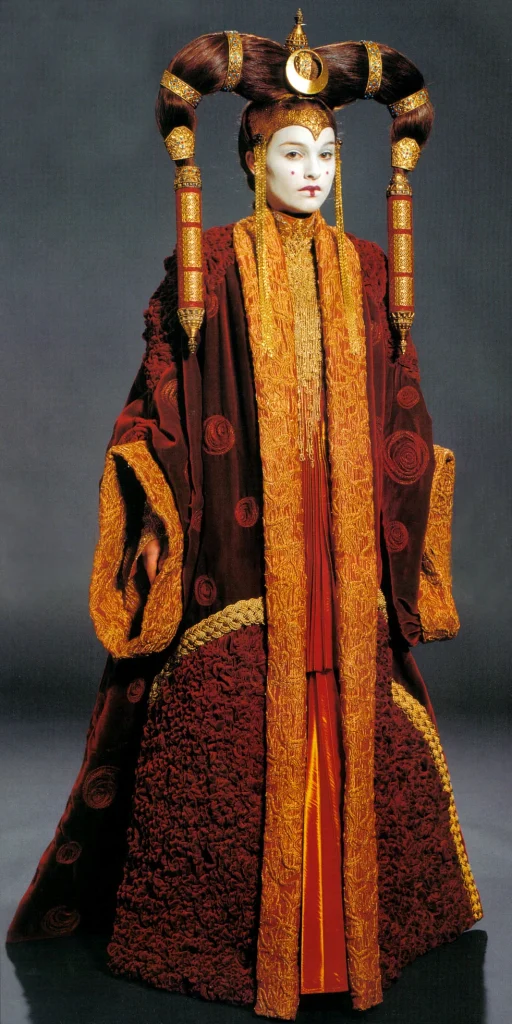
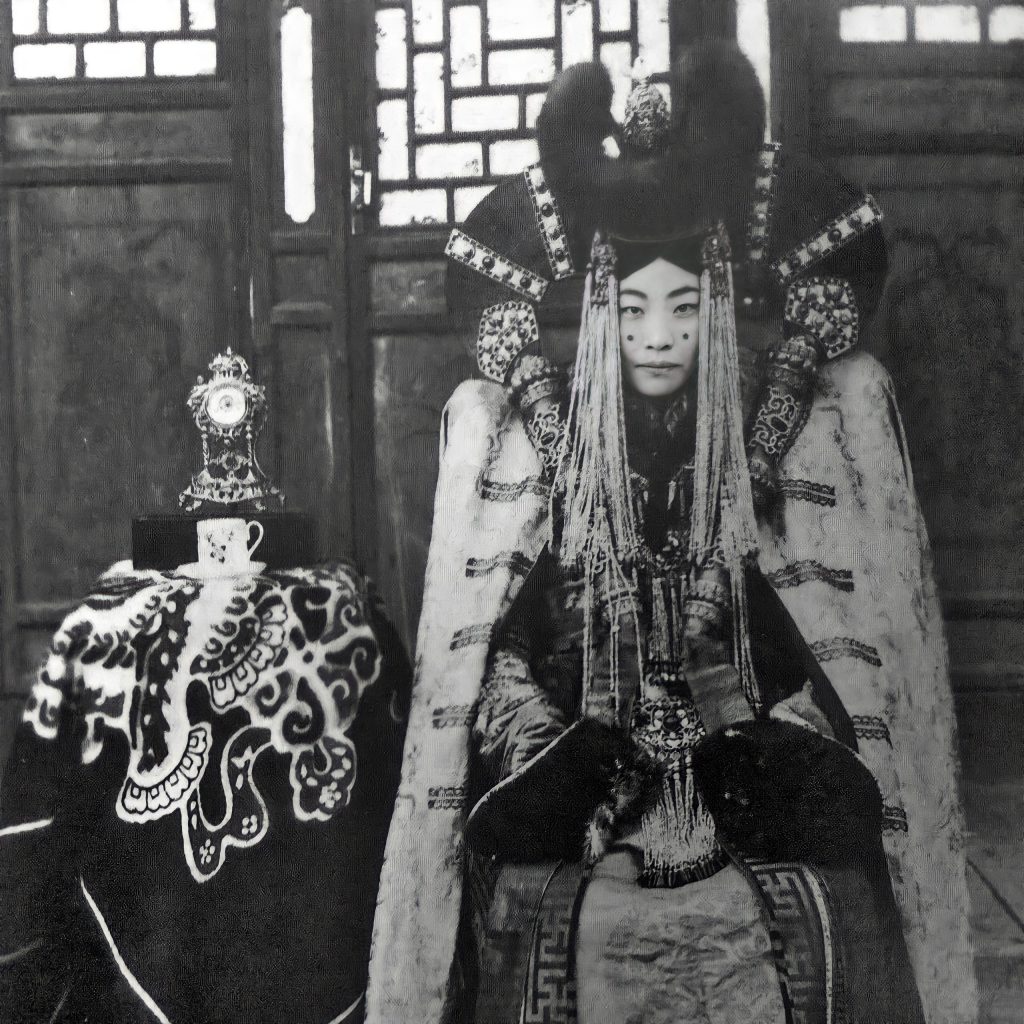
From that Egyptian root, the image expands into a wider imperial-oriental grammar, with Japanese, Tibetan, and Mongolian resonances strengthening the sense of courtly distance, ritual splendour, and sovereign withdrawal.
The Mongolian comparison strengthens the Hathoric reading, it gives the visual analogy a second bovine root rather than a merely formal resemblance. Hathor’s crown is founded upon cow-horns and the solar disk: the goddess’ head becomes the place where nourishment, celestial maternity, erotic splendour, kingship, and solar power converge; the horns cradle the disk, so the female divine head becomes the bearer of the Sun. Isis later assumes this crown because she absorbs Hathor’s maternal and royal functions, especially as mother of Horus and universal protectress; the throne-goddess is expanded through the cow-goddess, and Isis becomes legible as queen, mother, mourner, restorer, and cosmic female sovereignty at once.10 Cleopatra’s Isis-Hathor image therefore draws upon an already composite theology, in which the queen’s head bears not ornament, but divine office.
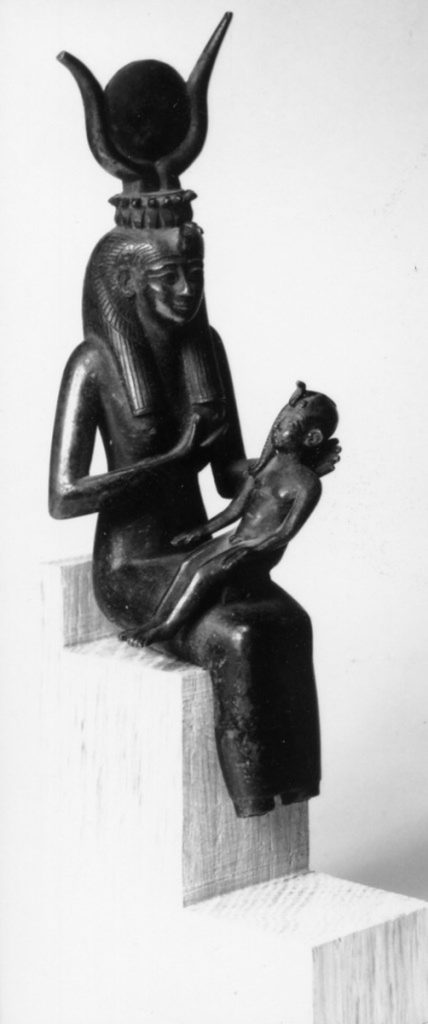
The Khalkha Mongolian headdress supplies a remarkable parallel from the other side of Eurasia. Married Khalkha women wore a distinctive horned headwear known as ever, literally ‘horns’, and Central Asian women’s head ornaments more broadly preserve a language of horned forms, protective power, marital status, wealth, and public ceremonial identity. Tereza Hejzlarová notes that stylised horns occur on women’s headdresses in Central Asia, and specifically states that ‘a particularly distinctive form of ‘horned’ headwear called ever (horns) is worn by married women of the Khalkha Mongols’. In that world, the horned female head is pastoral, aristocratic, marital, and protective; it enlarges the woman into a heraldic presence, making social rank and ritual identity visible through the architecture of the head.11 Padmé’s Senate gown stands at the point where these streams meet: Hathor’s cow-horned goddess-crown, Cleopatra’s Isis-Hathor theatrical sovereignty, the Mongolian noblewoman’s horned courtly coiffure, and the cinematic queen-image of Naboo all converge upon a single symbolic act, the elevation of the female head into a sacred sign of sovereignty.
On the Egyptian side, the reason Isis wears Hathor’s crown is syncretic and theological; Isis’ older and more proper emblem is the throne-sign, since her Egyptian name is connected with the throne; Hathor, however, is the great bovine, maternal, royal, erotic, musical, solar, and sky-goddess, intimately tied to kingship through Horus and Ra. As Isis rises in importance, especially through her role as mother of Horus, mourner and restorer of Osiris, protectress of the dead, and universal goddess in later Egyptian and Graeco-Roman religion, she naturally absorbs Hathor’s attributes. The Global Egyptian Museum summarises the point directly: from at least the New Kingdom Isis was associated with Hathor and acquired from her the cow-horns and sun disk.12
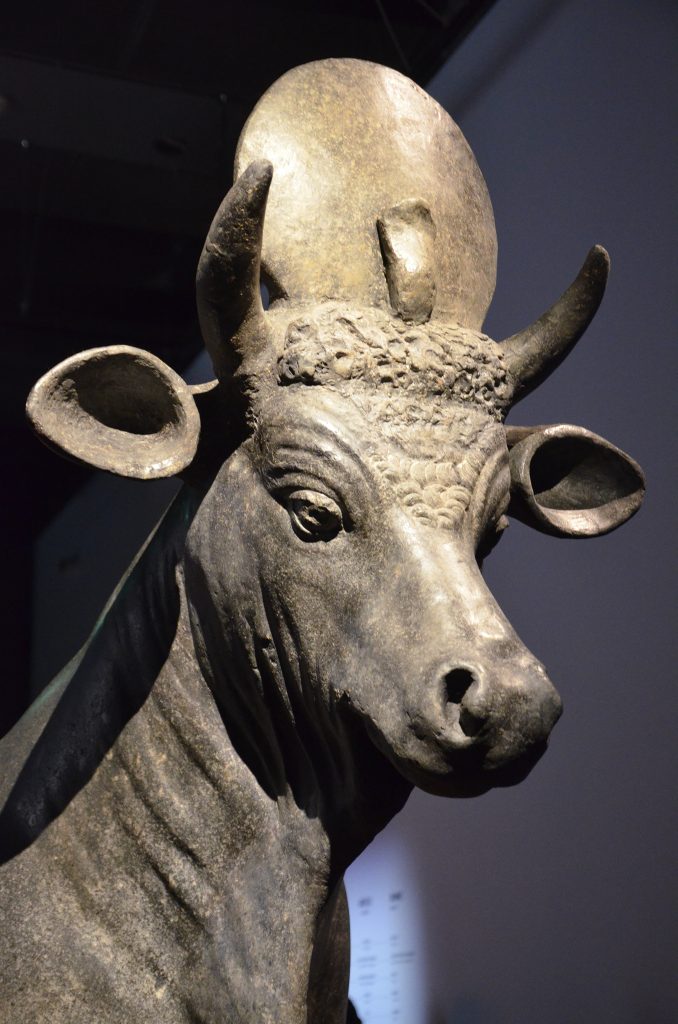
The deeper implication of the horned female headdress is that a sign ordinarily associated with male animal force, frontal power, virility, and command is transferred to the female head as a symbol of authoritative power. Although cows as well as bulls may bear horns, the horn is culturally drawn towards the bull: the goddess is crowned with a sign already endowed with male solarity, fertility, and sacral kingship, even when transferred into the regalia of the feminine divine. Egyptian religion already knew the horn’s higher grammar through the sacred bull: Apis, first-generated by Ptah, embodies virile fertility, royalty, and divine masculine presence. The appropriation of this potent symbol of solar command by the feminine power represents the subordination of the virile sign to the maternal-cosmic field: the bull’s horn, once the emblem of generative force, royal potency, and divine masculine presence, is lifted from the axis of command and placed upon the goddess as an instrument of her totality. In Evolian terms, this is the Southern and telluric power drawing the solar-phallic sign into its own orbit, absorbing sovereignty into the Mother rather than letting it stand as autonomous, vertical, and Uranian. In the Hathoric-Isiac complex, the cow-horns cradle the solar disk, so the goddess does not merely receive ornament; she bears a bovine and celestial sovereignty upon her head, converting horned power into divine maternity, queenship, nourishment, and solar protection. In the Khalkha Mongolian coiffure, the horned form similarly enlarges the married noblewoman into a public sign of rank, pastoral nobility, marital status, and aristocratic display. The horn carries an obvious virile charge: across cultures its powdered or medicinal use as an aphrodisiac has made it a material emblem of potency, generative force, and animal sovereignty; a sign of masculine animal potency and sovereign force, is thus feminised without being weakened: it becomes the architecture of sacred womanhood, the visible mark that the female body has been raised into office, lineage, fertility, and courtly power.
The result is a composite image of Asiatic feminine sacral monarchy: Isis and Cleopatra at the centre, then the ceremonial languages of Asia gathered around them as amplifying echoes. Cleopatra remains the essential political analogue because of Padmé’s relation to Palpatine. The queenly feminine presence enters a Roman-coded Senate, bearing splendour, sacred theatricality, and dynastic aura into a chamber already hostile to kingship and hollowed into plebeian procedure. Palpatine understands how such presence can be made politically usable: the Isiac image supplies glamour and sacral intensity, while the Senate supplies delay, paralysis, and republican exhaustion.
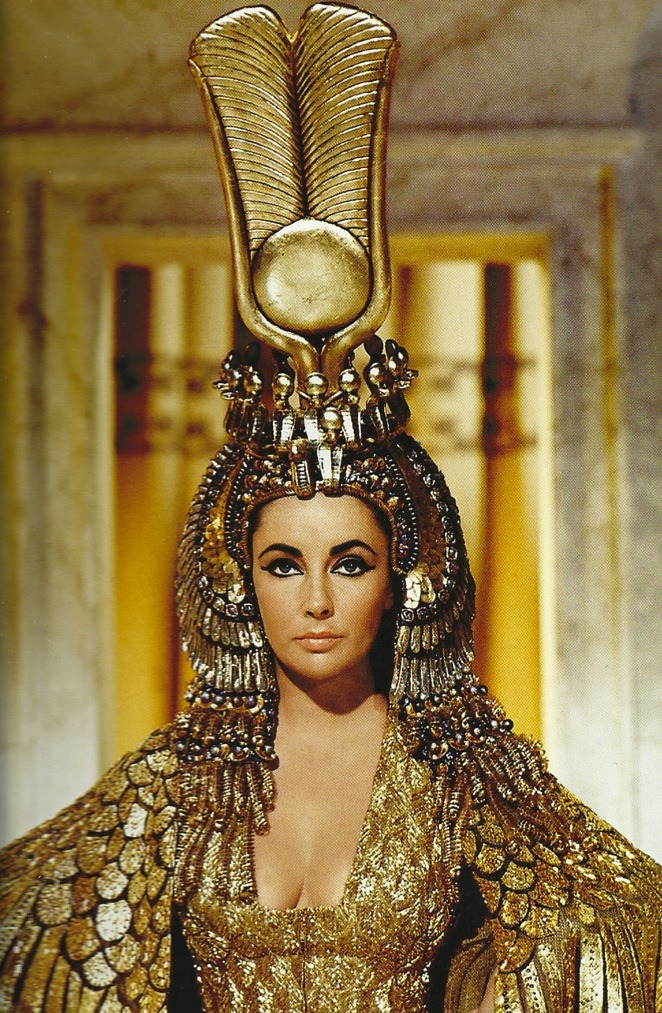
She does not enter the scene like an ordinary elected ruler or parliamentary actor; she is composed as an idol of monarchy, with the face rendered mask-like, the body enclosed in ceremonial splendour, and speech slowed into a formal, almost liturgical cadence. The effect is Egyptianising and Isiac: the queen appears as a vessel of feminine sacrality, enthroned within costume and gesture, so that sovereignty is seen before it is argued. Padmé’s Cleopatra-allegory is further complicated by the fact that Naboo’s queenship is itself elective, meritocratic, and already subordinated to democratic legitimacy. She appears before the Galactic Senate as a monarch in splendour, but her monarchy has been made acceptable to the American mythos by being drained of hereditary sacrality and godhood: queenly presence is permitted only after selection, consent, youth, virtue, and public service have purified it of dynastic command. The queen is therefore regal in image, yet democratic in warrant; Cleopatra has been Americanised before she even enters the Roman-coded chamber.
This is why the image has force even when Naboo’s monarchy is elective. The democratic mechanism sits beneath the surface, but the screen presents her through the older grammar of sacred queenship: stillness, frontal display, ritualised beauty, and the suggestion that the ruler’s body itself has become a cult-image. Padmé evokes Cleopatra through iconographic function, as a queen whose political authority is intensified by the aura of Isis, regal femininity, and ceremonial apparition.
Padmé stands as a feminine-sacral sovereign whose very sovereignty has already been domesticated by procedure, so that the film can enjoy queenly splendour while denying the older metaphysics of kingship. Her regalia evokes throne, cult, and sacred rule, yet the political order beneath it remains plebeian and meritocratic: the crown is allowed as theatre, as costume, as civic office, as elected innocence, while hereditary power and divine lineage remain excluded. The result is a perfect American inversion of monarchy: queenship without blood, splendour without dynastic terror, sovereignty translated into public-service virtue.
Thus, when she enters the Galactic Senate, two forms of subjugated sovereignty meet: the queenly principle already reduced to elected meritocracy, and the senatorial principle already reduced to universal congress. The Cleopatra image survives, but as an Americanised Cleopatra, a ceremonial queen whose splendour is made safe by democracy; Palpatine’s genius lies in recognising that even this diminished monarchy can still wound the Republic, and that queenly grievance, once forced to petition before procedural paralysis, can become the first lever of imperial transformation.
The Senate before which she speaks is already fallen in the opposite direction. It is Roman-coded in architecture and title, yet plebeianised and Americanised in spirit: a vast congress of petitioners, delegates, factions, grievances, and procedural impotence, where auctoritas has been dissolved into representative noise. Thus the scene is not monarchy confronting true Rome, but two distortions meeting inside a Roman shell: the Cleopatra-principle of feminine ceremonial sovereignty on one side, and the Americanised plebeian Senate on the other. Palpatine’s genius lies in using both. He lets queenly injury collide with republican paralysis, then converts that collision into the first motion of Caesarism.
As Senator Padmé, however, the Cleopatra-principle is internalised by the Republic itself. She becomes moral witness, humanitarian voice, pacific conscience, and the emotional vessel through which the senatorial world is coded as maternal, pleading, procedural, and anti-sovereign. The Senate becomes the chamber of lament before the masculine seizure of command. The drama therefore sets up empire as terrifying virility and the republic as wounded feminine conscience, which is precisely the American cinematic grammar: hierarchy must be made dark, while procedural sentiment must be made pure.
In Latin, if senator belongs to senex, the elder man, the fatherly counsellor, then the modern female senator is already a philological monstrosity, a liberal solecism seated in a word whose root resists her admission. For the correct antiquarian title one need only consult Lewis & Short: ānus, an old woman, sometimes honourable, but commonly a term of contempt. In that sense, Anus Padmé may be a better fit. The American Senate, having ceased to be an assembly of patres, may therefore complete its own inversion with proper lexical honesty: let the men who are not fathers be tribunes, and let the women be styled Anus rather than Senator. The title would at least have the merit of Latin accuracy, which is more than can be said for the institution.
Yet the series cannot hold her cultic gravity: as a consequence of the queenly motif, Padmé is drawn into a downward descent, increasingly taking on Amazonian and bellicose traits according to the cultic catechism of American cinema, where sacred feminine presence must be translated into action, combat, and democratic self-assertion. Only after this queenly-Isiac image has been established does the series Americanise her into the action-heroine: the elected monarch becomes the senator, the ceremonial sovereign becomes the armed fugitive, and the cultic figure is drawn down into movement, pursuit, romance, and combat.
This descent is the deviation. Unlike Cleopatra (1963) modern American cinema cannot endure the sacred feminine image as pure presence; it must trace her natural conclusion into utility, kinetic self-assertion, and blaster-bearing masculinised competence before she becomes narratively acceptable. Padmé’s passage from Senate-gown apparition to armed senator is therefore the Americanisation of the queen-goddess image: the Cleopatrian-Isiac form is retained as visual splendour, then submitted to the democratic rite of action, where ceremonial sovereignty is made to prove itself by running, shooting, surviving, and entering the machinery of adventure.
Palpatine’s ascent completes the Roman allusion while preserving the Americanist moral frame. He rises through the Senate, receives emergency powers, transforms legal office into permanent command, and has the Empire acclaimed by the very chamber that should have restrained him. This is openly Roman-coded, with unmistakable echoes of dictatorship, Caesarism, senatorial crisis, and imperial reconstitution; yet the film’s moral machinery converts that process into the nightmare of democracy violated from within. Rome is invoked because Rome supplies majesty; America judges the image by its own plebeian fear of command. Thus Star Wars borrows the robes, Senate, legions, eagles, emperors, and ceremonial weight of Rome, then subjects them to the revolutionary myth that all vertical order is secretly tyranny.
The Galactic Senate is therefore a perfect artefact of cinematic Anti-Rome. It is Roman enough to confer splendour, American enough to make that splendour suspect, modern enough to dissolve aristocratic auctoritas into universal representation, and feminine enough in its moral coding to make sovereignty appear as a violation of the tender body politic. The viewer is allowed to enjoy the architecture of empire, the massed ranks, the senate chamber, the imperial procession, and the terrible beauty of centralised command; then the script intervenes to instruct the soul that such beauty must be feared. This is the propaganda mechanism in miniature: Rome is summoned as image, emptied as principle, and condemned as myth.
The American Senate is Roman-coded only by parody and theft of outline. It is called a Senate, yet it is not a council of patrician fathers, not an ancestral body of houses, gentes, auctoritas, priestly memory, and divine descent; it is a plebeian chamber inflated with republican vanity, closer in spiritual type to a permanent tribunate of the mob than to the grave curia of the fathers. Its very name gestures towards senex, elder, and senator, one of the old men, the fatherly counsellor of the city; yet the Americanist inversion keeps the shell and dissolves the substance, replacing patres with career litigants, publicity-seekers, ideological merchants, factional demagogues, and modern procedural creatures whose authority comes from numbers rather than lineage.
This is why the Galactic Senate in Star Wars is so revealing. It takes the Roman image, robes, chamber, provinces, emergency powers, acclamation, and imperial metamorphosis, then passes them through the American imagination, where the Senate becomes an arena of plebeian representation, sentimental grievance, procedural delay, alien miscellany, and democratic incapacity. It is Rome filtered through a regime that cannot imagine patrician auctoritas except as corruption, and cannot imagine command except as the beginning of tyranny. The Senate is therefore made vast, theatrical, multiracial, species-chaotic, and spiritually and literally fatherless: a universal congress masquerading in Roman costume, less a curia of patrician fathers than a permanent tribunate of the plebs, where the name of Senate remains while the paternal principle, the ancestral house, and the divine lineage of command have been emptied from within.
From Gladiator to Star Wars, the same grammar repeats under different masks. The imperial legions are given grandeur, discipline, armour, banners, and cosmic scale, because even hostile artists cannot depict empire without accidentally confessing its splendour; yet the moral script remains anti-imperial, insurgent, and American. The emperor is coded as the absolute danger, the senate as corrupted form, the legions as dehumanised machinery, and the rebel alliance as innocence armed with explosives. The regime thereby indulges the aesthetics of empire while forbidding reverence for its principle. It dresses its villains in the visual language of Rome because the eye knows what the ideology denies: hierarchy has majesty, command has beauty, and empire possesses a magnificence no merchant-republic can generate from its own entrails.
The myth of World War II functions as the great sealing rite of this cinematic theology. Every rebellion against order is retroactively baptised in the moral aura of 1945; every uniformed hierarchy may be darkened by proximity to the defeated enemy; every imperial image can be made suspect through the same reflexive association. The war is continually re-enacted because it supplies the Americanist regime with its inexhaustible myth of innocence: America as liberator, America as rebel, America as reluctant sword of universal moral judgement. Through this mythology, the regime can maintain planetary power while imagining itself anti-imperial; it can command bases, markets, currencies, screens, and minds while still posing as the farm boy, the partisan, the escaped slave, the underdog, the sentimental liberator.
Cinema is the dream-machine of Anti-Rome. It teaches the masses to desire dissolution as justice, to mistake rebellion for nobility, to treat command as pathology, and to regard sacred hierarchy as the prelude to villainy. The Americanist regime must endlessly reproduce this vision because its own empire cannot openly confess itself as empire. It must rule through anti-imperial myth; it must conquer under the mask of liberation; it must destroy Rome again and again on the screen, because Rome remains the image of the one thing it cannot tolerate: a civilisation that knows power as sacred form rather than apologising for power as humanitarian necessity.
This is the essential anti-Roman movement inside American cinematic propaganda. The screen loves Rome’s images but hates Rome’s principle. It wants the arch, the eagle, the triumph, the senate, the armour, the command, the legions, the bronze and marble gravity of empire; yet the moral narrative must always be given to the rebellion, the liberated slave, the insurgent multitude, the sentimental victim of power. Rome is retained as aesthetic capital and rejected as metaphysical order. The result is Anti-Rome: imperial imagery animated by democratic slave morality, a civilisation that dresses itself in Roman symbols while dreaming from the side of Spartacus, the rebel cell, and the defeated province.
To confuse Plato for a utopian abstractionist is no different than confusing the American Senate, that democratic counterfeit born of Masonic contrivance which funnels fatherless men and women through a revolving door (of Becoming, not Being) with the true Senate of Rome (derived from senex, ‘wise elder man’), an aristocratic body of patrician auctoritas and sacred continuity. It is sleight of hand designed by the same ancient currents that also enthroned the tribune of the plebs as champion of mob will against noble ordo. In both cases the manoeuvre is deliberate: to smear what was once the axis of form and hierarchy with the paint of levelling ideology, so that the guardian of Initiatic Wisdom appears a dreamer, and the Senate of Mars’ sons a debating club of merchants. It is the classic ruse of Freemasonry appropriation by inversion.
Dr. Carl Jung expands on the theme of the predomination of atomised and yet, promiscuous collectivity:
The most amazing feature of American life is its boundless publicity. Everybody has to meet everybody, and they even seem to enjoy this enormity. To a central European such as I am, this American publicity of life, the lack of distance between people, the absence of hedges or fences round the gardens, the belief in popularity, the gossip columns of the newspapers, the open doors in the houses (one can look from the street right through the sitting-room and the adjoining bedroom into the backyard and beyond), the defencelessness of the individual against the onslaught of the press, all this is more than disgusting, it is positively terrifying. You are immediately swallowed by a hot and all-engulfing wave of desirousness and emotional incontinence. You are simply reduced to a particle in the mass, with no other hope or expectation than the illusory goals of an eager and excited collectivity. You just swim for life, that’s all. You feel free—that’s the queerest thing—yet the collective movement grips you faster than any old gnarled roots in European soil would have done. Even your head gets immersed. There is a peculiar lack of restraint about the emotions of an American collectivity. You see it in the eagerness and in the hustle of everyday life, in all sorts of enthusiasms, in orgiastic sectarian outbursts, in the violence of public admiration and opprobrium. The overwhelming influence of collective emotions spreads into everything. If it were possible, everything would be done collectively, because there seems to be an astonishingly feeble resistance to collective influences. It is true that collective action is always less laborious than an individual attempt. The momentum of collective action carries much further than even concentrated individual effort, since it makes people unaware of themselves and heedless of risks. On the other hand, it easily goes too far and leads people into situations which individual deliberation would hardly ever have chosen. It has a decidedly flattening influence on people’s psychology.
Dr. Carl Jung; ‘The Complications of American Psychology’, originally published in English as ‘Your Negroid and Indian Behavior’, Civilization in Translation; 1930
You see this particularly in the American sex problem as it had developed since the war. There is a marked tendency to promiscuity, which shows not only in the frequency of divorces but quite particularly in the peculiar liberation from sex prejudices in the younger generation. As an inevitable consequence the individual rapport between the sexes will suffer.
Roma, whose very name echoes the Doric ῥώμη, rises as the platonic ideal of Strength itself; a City conceived as a virile axis, radiating the disciplined force of Jupiter and Mars, the masculine law that binds a people around a sovereign centre. Yet from her earliest centuries there moves within her walls a second presence, an older and more subterranean daemon carried by Etruscan queens, Anatolian oracles, and the Sibyl’s imported pages; this current favours the lunar, the oracular, the plebeian and the ecstatic, introducing into the Capitoline precinct a softness of mood and a feminine authority whose whispers seek constantly to erode the solar edge of the civic order.
Jewish messianism arrives precisely when the Julio-Claudian flame falters; it surveys the fault-lines within Roma and speaks to the swelling lunar strata with prophetic clarity, providing a language in which the enemies of Rōma, strength itself, can imagine their ascendance. Christianity then forges these elements into a single inverted imperium: Roman titles, Roman forms, Roman urban symbolism; Jewish eschatological fire and the expectation of a returning king; Etruscan–Anatolian sensibility with its goddess-shaped moral gravity. Thus the anadrome Roma → Amor ceases to be a word-game and becomes a civilisational fact; the Bride, the Mother, the rhetoric of universal ‘love’ assume the throne once held by Strength, and the feminine–plebeian daemon gains the very vocabulary of empire.
Across the centuries this lunar current clothes itself in ecclesial vestments, sides with communes and nations against emperors, then sheds the vestments and governs bureaucracy, philanthropy, and sentiment across the modern West. Roma lingers as an Idea of stoic clarity and hardness, virility and patriarchal gravitas and solar radiance, yet the world built around us today bears far more of Amor: the inverted double, born from an ancient breach, trained through prophetic revolt, and enthroned through the long work of substitution.
Scholia (click to expand)
- Ridley Scott, dir., Gladiator, DreamWorks Pictures and Universal Pictures, 2000; on Maximus as a betrayed Roman general whose family is murdered, who is enslaved as a gladiator, and who returns to Rome against Commodus, see IMDb’s plot summary and Peter Bradshaw’s contemporary review in The Guardian.
- George Lucas explicitly linked Star Wars to the Vietnam War and the ‘little guys’ defeating the ‘highly technical empire’, including the American Empire; see AMC’s account of Lucas’ discussion with James Cameron, and the Pacific Council’s summary of Lucas’ 2005 statement that Star Wars was ‘really about the Vietnam War’ and his concern with democracies becoming dictatorships.
- On Lucas’ political frame for Palpatine and the transformation of democracy into dictatorship, see Richard Corliss and Jess Cagle, ‘Dark Victory’, TIME, 29 April 2002, where Lucas names Julius Caesar, Napoleon, and Hitler as examples of democracies giving themselves to dictators; cf. Eliana Dockterman, ‘George Lucas Wrote Star Wars as a Liberal Warning. Then Conservatives Struck Back’, TIME, 10 October 2017. Frieza is treated here typologically, as a later pop-imperial analogue: galactic emperor, armoured conqueror, master of legions, and monstrous deformation of the imperial principle.
- 2 Baruch 4:2–7, on the heavenly sanctuary ‘prepared beforehand’; 6–8, on the angelic removal of the Temple vessels and supernatural staging of the destruction; 10:6, ‘Blessed is he who was not born’; 10:10–12, where sacrifice ceases and Zion’s ruin darkens heaven, Sun, and moon; Frederick J. Murphy, ‘The Temple in the Syriac Apocalypse of Baruch’, Journal of Biblical Literature 106, no. 4 (1987): 671–683; Jonathan Klawans, Purity, Sacrifice, and the Temple: Symbolism and Supersessionism in the Study of Ancient Judaism (New York: Oxford University Press, 2006), 111–144; Martin Goodman, Rome and Jerusalem: The Clash of Ancient Civilizations (London: Allen Lane, 2007)
- Josephus, Jewish War 5.212–218; Josephus, Jewish Antiquities 3.123, 3.180–187; Joabson Xavier Pena, Temple as Cosmos: The Jerusalem Temple Imagery in Josephus’ Writings (PhD diss., University of Groningen, 2020). Pena argues that Josephus assigns cosmological meaning to the Temple, its furnishings, cultic services, and priestly attire, presenting the Temple/Tent as an embodied image of the universe created and maintained by the Judaean God; Joabson Xavier Pena, ‘Wearing the Cosmos: The High Priestly Attire in Josephus’ Judean Antiquities’, Journal for the Study of Judaism 52 (2021): 1–29; Philo, On the Special Laws 1.66–97; Philo, On the Life of Moses 2.88–135
- [a] John J. Collins, The Apocalyptic Imagination: An Introduction to Jewish Apocalyptic Literature, 3rd ed. (Grand Rapids, MI: Eerdmans, 2016); Seth Schwartz, Imperialism and Jewish Society, 200 B.C.E. to 640 C.E. (Princeton: Princeton University Press, 2001); Michael E. Stone, ‘Reactions to Destructions of the Second Temple: Theology, Perception and Conversion’, Journal for the Study of Judaism 12, no. 2 (1981): 195–204; cf. 2 Baruch and Murphy, ‘The Temple in the Syriac Apocalypse of Baruch’, cited above. [b] Psalms of Solomon 17:21–32, especially the prayer that God raise up ‘their king, the son of David’, who will ‘drive out sinners’, ‘destroy the pride of the sinner’, ‘destroy the godless nations’, and cause the nations to serve under his yoke; 1QM / War Scroll 1.1–15, on the eschatological war of the Sons of Light against the Sons of Darkness, including the Kittim, Edom, Moab, Ammon, Amalek, and Philistia; cf. John J. Collins, The Scepter and the Star: Messianism in Light of the Dead Sea Scrolls, 2nd ed. (Grand Rapids, MI: Eerdmans, 2010).
- John 2:19–21, where Jesus speaks of the Temple and the text identifies it with ‘the temple of his body’; 1 Corinthians 3:16–17, where Paul calls the community ‘the temple of God’; 1 Corinthians 6:19, where the believer’s body is ‘the temple of the Holy Spirit’; Ephesians 2:19–22, where the community is built into a holy temple; G. K. Beale, The Temple and the Church’s Mission: A Biblical Theology of the Dwelling Place of God, New Studies in Biblical Theology 17 (Downers Grove, IL: InterVarsity Press, 2004); Peter W. L. Walker, Jesus and the Holy City: New Testament Perspectives on Jerusalem (Grand Rapids, MI: Eerdmans, 1996).
- Guy L. Beck, ‘Celestial Lodge Above: The Temple of Solomon in Freemasonry’, Nova Religio 4, no. 1 (2000): 28–48; Jay Macpherson, ‘The Freemasons, the Temple, and the Lost Ark’, Lumen 33 (2014): 47–68.
- [a] Jonathan J. Price, Jerusalem under Siege: The Collapse of the Jewish State, 66–70 C.E. (Leiden: Brill, 1992); Steve Mason, A History of the Jewish War, A.D. 66–74 (Cambridge: Cambridge University Press, 2016); Josephus, Jewish War 4.130–388; 5.1–26; 5.424–438. [b] Cassius Dio, Roman History 68.32.1–3; Miriam Pucci Ben Zeev, Diaspora Judaism in Turmoil, 116/117 C.E.: Ancient Sources and Modern Insights (Leuven: Peeters, 2005). [c] Miriam Pucci Ben Zeev, ‘The Uprisings in the Jewish Diaspora, 116–117’, in The Cambridge History of Judaism, vol. 4, ed. Steven T. Katz (Cambridge: Cambridge University Press, 2006), 93–104; Martin Goodman, Rome and Jerusalem: The Clash of Ancient Civilizations (London: Allen Lane, 2007); cf. Dio, cited above.
- Richard H. Wilkinson, The Complete Gods and Goddesses of Ancient Egypt (London: Thames & Hudson, 2003), 140–143, 146–149; Barbara S. Lesko, The Great Goddesses of Egypt (Norman: University of Oklahoma Press, 1999), especially the chapters on Hathor and Isis; R. E. Witt, Isis in the Ancient World (Baltimore: Johns Hopkins University Press, 1997), especially on Isis’ assimilation of other goddess-forms in the Graeco-Roman world
- Tereza Hejzlarová, ‘Uzbek Head Ornaments from the Collection of the Náprstek Museum’, Annals of the Náprstek Museum 39, no. 2 (2018): 5–18; Hejzlarová is especially useful because she explicitly says that Central Asian women’s head ornaments can bear horn-symbolism, that ‘mother’s horns’ is one meaning attached to a head ornament name, that horned headwear appears across Central Asia, and, in a note, that the Khalkha married woman’s distinctive horned headwear is called ever, meaning ‘horns’.
Eiren L. Shea, Mongol Court Dress, Identity Formation, and Global Exchange (London and New York: Routledge, 2020); Eiren L. Shea, ‘Painted Silks: Form and Production of Women’s Court Dress in the Mongol Empire’, The Textile Museum Journal 45 (2018): 36–55 - Global Egyptian Museum, ‘Isis’, Global Egyptian Museum, accessed 20 June 2026, https://www.globalegyptianmuseum.org/glossary.aspx?id=201. The entry states that from at least the New Kingdom Isis was frequently associated with Hathor and ‘acquired her headdress, cow’s horns and sun disk’; Susan Tower Hollis, ‘Hathor and Isis in Byblos in the Second and First Millennia BCE’, Journal of Ancient Egyptian Interconnections 1, no. 2, 2009, 1–8; Geraldine Pinch, Handbook of Egyptian Mythology, ABC-CLIO, 2002, 137–139.
The Bride of Christ: The Translation of the Roman Pater from Head into Dependant Under Wife, Child, and Slave, Before a Committee of Equals
25 And there went great multitudes with him: and he turned, and said unto them,
Luke 14:25-26; Matthew 23:9; King James Bible
26 If any man come to me, and hate not his father, and mother, and wife, and children, and brethren, and sisters, yea, and his own life also, he cannot be my disciple.
[…]
9 And call no man your father upon the earth: for one is your Father, which is in heaven.
Despite the unmistakable survival of Roman legal forms beneath modern law, the Christian egalitarian schema, completed by the chivalrous spectacle of Mars kneeling before Venus, has corroded the original precept: manus as property-law, wife as incorporated into the husband’s house, and marriage as juridical transfer beneath paternal sovereignty, rather than reciprocal surrender before the sentimental tribunal of the feminised, and communal soul. And the evidence bears this out: with the obliteration of these virtues, marriage has ceased to stand as a formal institution and has yielded to casual arrangements without office, boundary, rite, or recognised station. What remains is scarcely marriage at all, but an amorphous sexual traffic in which attachment forms and dissolves without law, and even the distinction between the sexes is further eroded by the same modern appetite for fluidity, interchangeability, and unbounded relation. Any Roman could have easily foretold this most banal of outcomes; the question is who, in an age already trained to squander and mock its own inheritance, would have listened? We had neglected too much of value long before we learned to name the loss.
In the older, higher order, a man did not have to petition endlessly for relational value from his lessers, who may at any instant pull the rug from under and nullify the arrangement at whim, to the severe financial and custodial harm of him and his children; his value issued from office, sex, name, rank, duty, and command. He entered the house as pater, husband, bearer of law, protector of boundary, owner of continuity, and potential founder of lineage. Modern ‘sexual traffic’ reverses this completely. The man is made provisional, auditioning, negotiable, emotionally assessed, sexually humiliated and ranked, and discarded according to appetite as the government continually awards property and custody to what, in Roman law, would herself be property; he no longer arrives as one who commands form, but as one more atomised, equal participant in an undifferentiated market of bodies.
This mutilates modern man himself: stripped of innate station and placed into the bridal posture, he is placed outside the circle as the thing to be judged, appraised, exchanged, and temporarily admitted before the feminine crowd, a replaceable suitor whose value is no longer grounded in command, lineage, office, or form, but in lookmaxxing, looks-match anxiety, ‘1–10’ rating charts as if he himself is the woman with no innate masculine gravitas beyond his appearance, swipe-value, ghosting and ‘left on read’ womanly passive-aggressive status-signalling, ‘shit-test’ babysitting and frame-holding, and the endless preening by which he petitions for ‘natural selection’ from those who now presume to sit in cruel judgement over him, in such a tyrannical manner that only a woman or child playing a game could muster, a game in which he is always disadvantaged relative to his female contemporaries and always to be replaced by a superficially fitter specimen, however far he debases and mocks himself for approval; and thus the man destined to command form and sacred law is degraded into nothingness before his feminine equals—or, at the end of the inversion, his feminine superiors. The entire edifice has effaced itself by its own volatility, its own futility, and its own inferiority compared to true gravitas, true meaning, and true transcendence.
In the Traditional settlement the father is the centre of the divine; his numen praesens gathers altar, name, and estate into one axis; the lararium looks inwards to him as priest and judge, conduit of ancestors and gods, his maiestas sustains the sacra privata, his manus encloses wife and children within a rule that carries blessing as well as sentence. The pattern is beyond metaphor; it is ontology: pater as formal cause, domus as ordered cosmos, worship and law converging at a single hearth; what the rex sacrorum is to the City, the paterfamilias is to the house. Petition rises to him; provision descends from him; the gods are near because their light is refracted through an embodied office that confers names, keeps accounts, and binds succession.

Christianity’s severance of the Indo-European patriarchal axis and usurpation of these forms subtly recentred the head and thus, inverted the polarity of the kosmos itself. The household father is recast as a supplicant among other dependants, equals before god in the body of the commune, the ecclēsia, the assembly of the synagogue; he stands under the ‘Heavenly Father’ just as the woman and child stand under him, yet he also is told to learn his part from their needs and voices as his voice is silenced; the god he is commanded to obey is announced to him by the household dependants whom he rules, and often interpreted by clerics who translate domestic claims into divine decrees.
Christ’s saying, ‘If any man come to me, and hate not his father, and mother, and wife, and children […] he cannot be my disciple’ (Luke 14:26), establishes a spiritual path of allegiance, commonly termed ‘faith’, that supersedes the Traditional household axis itself; beyond the pater, the domus itself is targeted for radicalist disruption. However exegetes may soften the verb of a caustically subversive passage as typical Semitic hyperbole for ‘love less’, the rule remains jurisdictional: the Roman dominus is displaced by an alternative claimant, who requires undivided loyalty and feminine submission, as the domus is reclassified as contingent upon discipleship. Further passages furnish the severing of the axis in the Roman context: ‘And call no man your father upon the earth: for one is your Father, which is in heaven.’ (Matthew 23:9).
The Christian proclamation that men and women possess rational souls of the same order, equally weighed before their god, rests on explicit doctrinal affirmations: the soul bears no sex in its essence (Gregory of Nyssa, De Hominis Opificio 16); the Creator ‘shows no partiality’ in the dispensation of salvation (Gal. 3:28); and the resurrected state abolishes earthly hierarchy such that “they neither marry nor are given in marriage” (Matt. 22:30). These claims culminate in Augustine’s assertion that woman, considered as mens (mind), shares the identical rational nature as man, the distinction applying only to the body and its temporal functions (Augustine, De Trinitate XII.3). Meanwhile, other themes of inversion in the Christian doctrine, such as ‘the last shall be first, and the first last’ (Matthew 19:30; 20:16), ‘the meek shall inherit the earth’ (Matthew 5:5), the abasement of the exalted and exaltation of the humbled (Matthew 23:12; Luke 14:11; 18:14), and even the precedence of tax collectors and harlots before the established guardians of sacred order (Matthew 21:31), tend naturally towards the effacing of the traditional Roman order.
Such a doctrine stands in hard dissonance with the Graeco–Roman understanding, where form is active and masculine and matter receptive and feminine; where the male principle embodies nous (νοῦς, nous, ‘intellect’) and telos, and the female belongs to psychē (ψυχή, psychē, ‘life-soul’) as the seat of flux and nutritive becoming. Aristotle defines the male as to poiētikon (τὸ ποιητικόν, ‘the begetting cause’) and the female as to pathētikon (τὸ παθητικόν, ‘the being-acted-upon’) in the very act of generation (GA II.4, 737a27–29); the Roman jurists likewise encode the paternal principle as the axis of the domus and its sacra, the materfamilias occupying a complementary yet subordinate sphere circumscribed by pudicitia and tutela (Gaius, Inst. I.55–56). In this world the soul was graded by its function: the civic and intellectual soul was virile, aligned with the paternal line and with juridical responsibility; the feminine occupied the nutritive and affective strata.
In 1 Corinthians 7:4, the Pauline formula declares: ‘The wife hath not power of her own body, but the husband: and likewise also the husband hath not power of his own body, but the wife.’ The first half appears, for a moment, to preserve the ancient grammar of traditional marital subordination; the second half at once deceptively bends that grammar into reciprocity and consensus egalitarianism, converting command into mutual bodily claim, at once feminising the male by receptive material standards typically within the purview of women. This is neither Roman patria potestas nor the sacral gravity of the pater familias; it is the conjugal mutualisation of rule, the reduction of hierarchy into bilateral possession. Where Rome sets the father as hearth-priest, juridical head, and living axis of the domus, Paul’s formula divides feminine bodily sovereignty between spouses, making the household no longer a descending order from paternal fire, but a negotiated enclosure of reciprocal debt. In that single movement, the vertical grammar of the Roman house is bent into Christian parity; the father ceases to stand as domestic pontifex, and becomes one party within a mutual, communal and consensus-driven economy.
To a Roman mind, the man’s assumption of the submissive role would have been an outrage against the ordines themselves: the living ranks of house, sex, rite, command, and divine station, set by the heavens, and participant in the same ontological order of being. The pater was not a male loverboy within the bedchamber, but the sacral head of the house: priest of the hearth, bearer of the ancestral rites, lord of wife, children, slaves, property, name, and domestic continuity. To place him beneath a feminised and reciprocal bodily claim, to make him receptive where he was born to command, and to subject his virile office to the measure of the wife, was therefore no private rearrangement of conjugal affection, but an emasculation of the very axis through which the household touched the gods. Spoken into a Graeco-Roman world whose prevailing ordo still knew the father as household head, cult-bearer, and juridical source, Paul’s formula in 1 Corinthians 7:4 enters as a radical and subversive shibboleth against paternal sovereignty, of the same anti-paternal lineage and alien civilisation as the command to ‘call no man father’ (Matthew 23:9) or the demand that the disciple ‘hate’ his own father (Luke 14:26): the ancient paternal station is struck at the root, in body, name, and sacred authority. The same offence would sound in the Vedic register: the gṛhapati, house-lord before the sacred fire, stands as the axial bearer of rite, offering, and domestic command, not as a conjugal body answerable in equal measure to the claim of the wife. In that inversion the man is wounded precisely where his dignity is most of the gods: his body ceases to stand as the sign of command and becomes an object of negotiated possession, while the houselord, once guardian of fire and rite, is dragged into the dependent posture of those ordered beneath him.
The Christian levelling of rational essence therefore dissolves the older hierarchy, for it severs the metaphysical link between sex and function that structured both household and polity. Where Aristotle and the Roman tradition contemplated an ordered cosmos in which the paternal principle impressed form upon the mutable, Christianity reinterpreted that mutability as morally neutral and elevated both sexes to an identical spiritual standing—an innovation that transformed not only theology, but the anthropology on which ancient authority rested.
In the Classical grammar, the father stands as Dorian forma; he confers limit, law, and name, and the household takes its rhythm from his measure. In much of Christian moral culture that form is softened into purity codes; the masculine is judged chiefly by its conformity to historical ideals first fashioned for maidens, and the axis of the house shifts from solar sovereignty to lunar sentiment. ‘Goodness’ becomes chastity understood as abstention and compliance; the head of the house is praised for resembling the submissive bride and her chaste pudor, rather than the bridegroom and his regal auctoritas. The result is not the elevation of virtue but the translation of masculine office into lunar devotions: affective tenderness, pledges, renunciations, and a public display of harmlessness.
The mechanism is clear. Texts that require a bishop to be ‘husband of one wife’ become, by pastoral habit, a universal benchmark that measures the man less by rule, provision, and sentence than by adherence to a bridal ideal. Courtship is catechised as an apprenticeship in meekness; marital fidelity is recast as no covenantal justice, but as identity badge; the husband is taught to give proofs of virginal innocence rather than proofs of authority. In place of the rites that bind eros to duty—manus, dos governed, a charter of the house—one finds pledges that perform worthiness: purity rings, accountability groups, testimonies delivered to audiences who judge affect rather than order. Rendered equal before a paternalistic god, the Christian patriarch indeed is another bride rendered submissive to an abstracted pater, having himself abdicated this role.
Beginning with the Church’s own Greek: the ekklēsía (ἐκκλησία, assembly) is gathered by the kḗrygma (κῆρυγμα, proclamation) into koinōnía (κοινωνία, communion), sustained by leitourgía (λειτουργία, public worship), formed through didachḗ (διδαχή, teaching), expressed in diakonía (διακονία, service), receiving cháris (χάρις, grace) and manifesting charísmata (χαρίσματα, gifts) within the sōma Christoū (σῶμα Χριστοῦ, Body of Christ). This lexicon already signals a predominance of reception and growth: an assembly that expands, ministers, and accommodates.
Set against a solar organisation of domus and imperium, this is a lunar disposition that never rises to rule. It privileges génesis (γένεσις, becoming), kínēsis (κίνησις, motion), and the swelling of plḗthos (πλῆθος, multitude) through órexis (ὄρεξις, desire) tamed by counsel rather than by law. In metaphysical terms it settles under the aóristos/ápeiros dyás (ἀόριστος/ἄπειρος δυάς, the indefinite or boundless) and treats adaptability as virtue. The professed Lógos (Λόγος, Word) seldom descends as péras( πέρας, limit) and eîdos (εἶδος, form); potentia swells, actus recedes; procedure takes the place of ordinance; sentiment and inclusion outrun judgement and oath. The result is an ecclesial oikonomía that manages flux rather than mastering it, a koinōnía that multiplies without canon, a leitourgía that consoles more readily than it consecrates.
By the Roman measure the hierarchy is inverted. The solar pattern would set a visible forma at the centre, crown auctoritas, fix calendar and forum, and bind charity to jurisdiction so that grace builds law rather than dissolving it. The prevailing catechetical habit does the reverse. It enthrones reception and pastoral care as first principles, leaves νόμος unspoken, and asks the father to join the assembly as a penitent among equals. Such a body can comfort, teach, and distribute; it cannot found, judge, and keep the peace. Without Lógos as measuring cause, the dyad urges outwards and the house drifts. Only a return to the solar axis of domus and imperium would restore rank, so that worship serves order and the many answer to a centre that truly gives the pitch.
Christianity, the Roman Bride’s Religion; Monotheism, the Veil of Isis Panthea
An austere, stoic Roman patrician bearing maiestate humano Augustiorem, simillimus dis—majesty more August than human, most like the gods (Livy, Ab Urbe Condita 5.41.8)—hearing the Christian liturgy for the first time, might have felt no noble thunder of Iuppiter Pater, no civic radiance of Apollo, no ancestral gravity of the hearth, but something more intimate, cloying, and displaced: the doting language of surrender addressed to a jealous invisible master, the trembling supplications, the chaste purity and abstinence from wine morally expected of Roman women, the bridal softness of the soul and self-emptying service to a superior patriarchal will, the language of being possessed, redeemed, washed, fed, forgiven, and gathered into the arms of an odd resemblance of the household ‘lord’ of Rome, whose highest cultic expression was the god-emperor. He might have recognised, with a cold patrician disgust, the rites and phrases proper to the dependent interior world of his wife, transferred from the chamber and the household shrine into the centre of public worship; the very posture of humiliation, subjugation, and emasculation from which the jealous Augustan peerage of primus inter pares had once safeguarded the Roman man. What Rome had placed under paternal government, Christianity raised into a universal, egalitarian cultic posture; what the pater familias had ordered within the domus, the new rite made into the soul’s highest relation to its god. The patrician would have heard, beneath the incense and chant, a domestic inversion: not the citizen standing beneath the bright law of the father-god, but the inner household’s language of dependency enthroned as theology.

Roman sexual ordo did not proceed from the later sentimental fiction that husband and wife stood as symmetrical claimants upon one another’s bodies (1 Corinthians 7:4). The wife’s fidelity—her fides, obedience, and pietas to the pater unto death—preserved the line, the house, the legitimacy of sons, and the sacral continuity of the domus; the husband’s virility, by contrast, moved within a wider field of rank, appetite, conquest, patronage, and generative overflow. Prostitution, concubinage, mistresses, slave-women, and extra-marital offspring did not necessarily stand as metaphysical affronts to marriage, as reflected by the account of Marcus Cato’s On the Dowry about the traditional right over life and death properly belonging to patria potestas (ius vitae necisque, covered in Section II) where during divorce the bride may be put to death for adultery, but not the groom, because marriage itself was not conceived as a fragile romantic enclosure requiring equalised captivity on both sides, and divorce itself is only a later deviation from the primordial rights of the pater. The Roman wife could remain faithful, dignified, and undivorced because the husband’s erotic surplus did not automatically unseat his status as pater, house-lord, and bearer of name and title, nor did the bridal dignity seek to undermine its unique station by attempting a retaliatory imitation of the masculine act. To the instinctively egalitarian mind, this asymmetry immediately appears as hypocrisy, and the answer seems simple: if the man strays, the woman may stray in return. Yet that response already presumes the collapse of the sexual ordo, for it treats two unequal stations as though their acts possessed the same meaning, weight, and ontology. Male excess does not imperil paternity in the same manner that female adultery imperils lineage, inheritance, legitimacy, and the sacral continuity of the house. For the wife to answer masculine surplus with adulterous retaliation is therefore not symmetry, but abdication: she abandons the very station whose dignity she claims to vindicate, turns fidelity from sacred custody into bargaining weapon, and dissolves the bridal office into a theatre of equalised grievance. The asymmetry was structural: the woman guarded legitimacy; the man radiated virility.
God is described in the Old Testament as married to Israel and Judah, and in the New Testament the church is described as the Bride of Christ.
David Instone-Brewer, ‘Three Weddings and a Divorce: God’s Covenant with Israel, Judah and the Church’, Tyndale Bulletin 47, no. 1, 1996, 1–25.
This order had its divine image in Jupiter and Juno. Juno’s dignity is not abolished by Jupiter’s generative excess; rather, the hierarchy of heaven itself discloses the difference between conjugal queenship and sovereign virility. Jupiter sires, descends, conquers, impregnates, and overflows; Juno remains queen, consort, guardian of marriage, and divine embodiment of the lawful feminine station. The pattern is not egalitarian reciprocity, but ontological rank. A god does not cease to be king because his force exceeds domestic containment; indeed, that very excess belongs to his kingship.
This degradation reaches its final form in the sexual guilt imposed upon men, as though the male himself were to be remade into a virginal bride: timid before desire, ashamed of virility, and answerable to a bridal ethic of bodily purity foreign to the Roman paternal axis. At its worst, the same ethos becomes an instrument against rank itself. A powerful man may be dragged beneath accusation, reputational penalty, institutional abandonment, and public ritual humiliation before any court has adjudicated the matter; the controversy surrounding Prince Andrew is the obvious modern emblem of its culmination, where even nobility has no ontological supremacy and is stained under the aspersions of the feminine, since the civil claim was settled in 2022 without admission of guilt, and he has repeatedly denied wrongdoing. No Roman order would have treated the mere fact of male sexual implication as an ontological stain sufficient to unmake status in advance of judgment. Such is the triumph of the Puritan bridal guilt-ethos: men are subjected to the sexual shame once reserved for the guarded maiden, while the feminine accusation, even before juridical completion, is permitted to menace nobility, office, and inherited rank.
The modern inability to understand this is itself diagnostic. Once the paternal principle is feminised, the husband is reimagined as a mirror-wife, bound by the same interior, exclusive, possessive economy demanded of the woman. Virility is no longer treated as a radiating power ordered by rank and responsibility, but as a breach of emotional contract. Thus fatherhood is reduced from sacred headship to negotiated companionship, marriage from lineage-bearing institution to mutual sentimental enclosure, and the pater from lord of the house to one spouse among two. In that loss, the paternal axis is not merely softened; it is made answerable to the very egalitarian measure that dissolves its nature.
In this sense, Christianity reveals itself as the cult of Roman wives: a cult whose own vocatives, caresses, abasements, bridal figures, and supplicant vocabulary belong to the inwards chamber of dependency; once universalised, it becomes the public emasculation of men, compelling the Roman male to approach divinity in the posture of the wife, the captive, and the kneeling dependent. The nomenclature ‘Bride of Christ’ applied as a term of derision to Christians condenses millennia of theology into a singular typographic resonance, beginning with the Church explicitly named as the communal feminine body that is the ‘Bride of Christ’ and extending, without strain, into Marian exaltation, the Assumption of Mary, and her coronation as Queen of Heaven; all governed by a dysgenic, submissive, receptive, bridal, and explicitly feminine spirituality (heautòn ekénōsen, Philippians 2:7). Catholic and Orthodox retorts that present this queenship as merely derivative evade the deeper continuity, for the bridal grammar itself uncovers the feminine cult-pattern once sent into the background in the Old Testament under the title ‘Queen of Heaven’, a pattern later turned outwards as a weapon against the traditional cults of Rome, which were branded demonic and anti-Christ even as their infrastructure was usurped.
The Orthodox counterpart, in practice and in tone, is the Theotokos (Θεοτόκος, ‘God-bearer’), honoured as Panagia (Παναγία, ‘All-Holy’), and celebrated in the feast of the Dormition (her ‘falling asleep’), which in Orthodox teaching still culminates in her being taken into heavenly glory; the vocabulary differs from the Catholic ‘Assumption’, yet the devotional architecture remains recognisably Marian and intensely liturgical. Orthodox hymnography also piles up the same kind of exalted epithets, and the title ‘Queen’ appears in prayers and popular devotion, even where it is less juridically systematised than in the later Latin West.

Isis, in her late Hellenistic and Roman reception, is repeatedly hailed as Panthea or All-Mother, a universal feminine principle who gathers divinity into herself and dispenses legitimacy, protection, and life to gods, kings, and peoples alike. After the Twenty-first Dynasty, Egyptian society is known as having turned away from self-generating solar kingship towards a lunar, matriarchal order, marked by priestly usurpation of royal power, much like the Catholic church would repeat, and the oft-noted inversion of civic life, where women conducted public affairs while men remained within the domestic sphere, suckling the infants so they could not rebel; a cultural symptom of involution.
Once Isis is framed as Mother Nature (rerum naturae parens), the title, less ‘sum of goddesses’ and more cosmic maternity, becomes the generative matrix itself, opposed to any supernatural, eternal point of view; and from there the transposition into Marian language is almost automatic, because the move required by severe monotheism is a change of predicate (divinity → holiness) rather than a relinquishing of function (maternal plenitude, mediation, enthronement, protectorship). If Panthea can carry ‘All-Mother’ as a permitted rendering of Isis’ total maternal principle, then Panagia becomes the monotheist transposition of the same structural apex, where the maternal absolute is retained while the predicate is shifted from θεία to ἁγία—divinity disallowed as term, yet preserved as totalised sanctity, mediation, and maternal sovereignty.
The Christianisation of the Mediterranean world did not simply destroy the old goddess; it often displaced her visual grammar into Christian form. Her cult had already passed from Egypt into the Hellenistic and Roman world, taking root across the sea-roads, the imperial cities, Italy, Rome, Pompeii, Aquileia, and the northern provinces, where Isis appeared as mother, queen, saviour, mistress of fate, and universal goddess.1 When Christianity advanced over this Isiac landscape, the old image of Isis holding or nursing Horus passed into Marian form: the divine mother with the holy child, once enthroned as Isis lactans, reappeared as Mary with Christ at her breast or upon her lap.2 The cult-name changed; the icon endured. The goddess was displaced into the Virgin, Horus into the infant Christ, and the Mediterranean mother-child image survived under Abrahamic dominion.
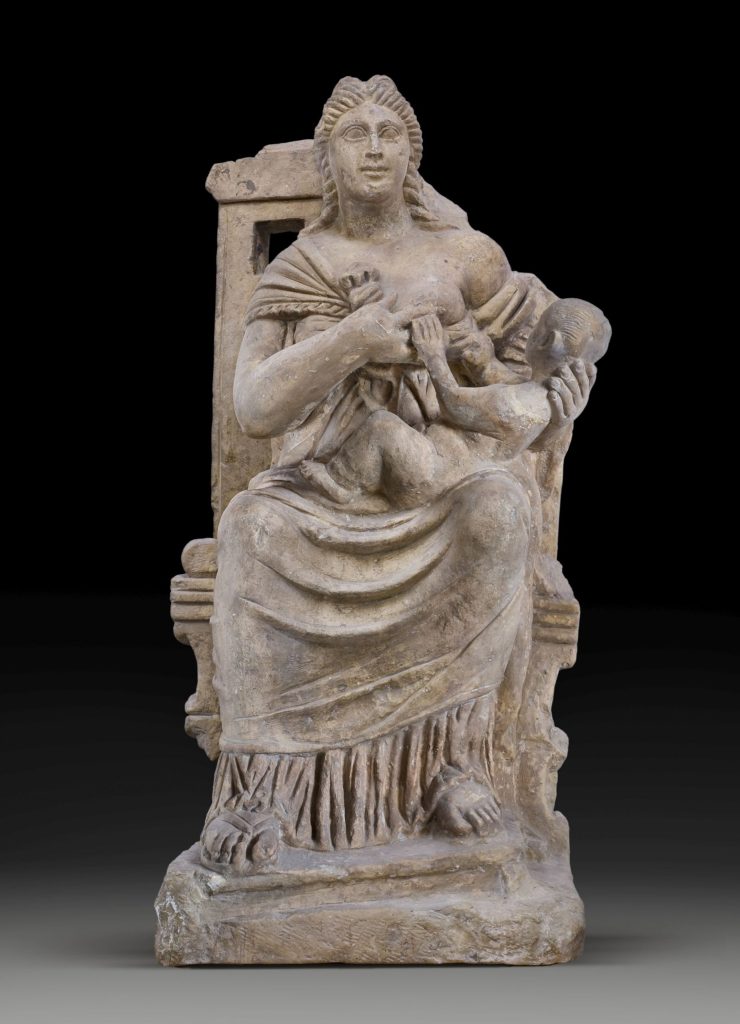
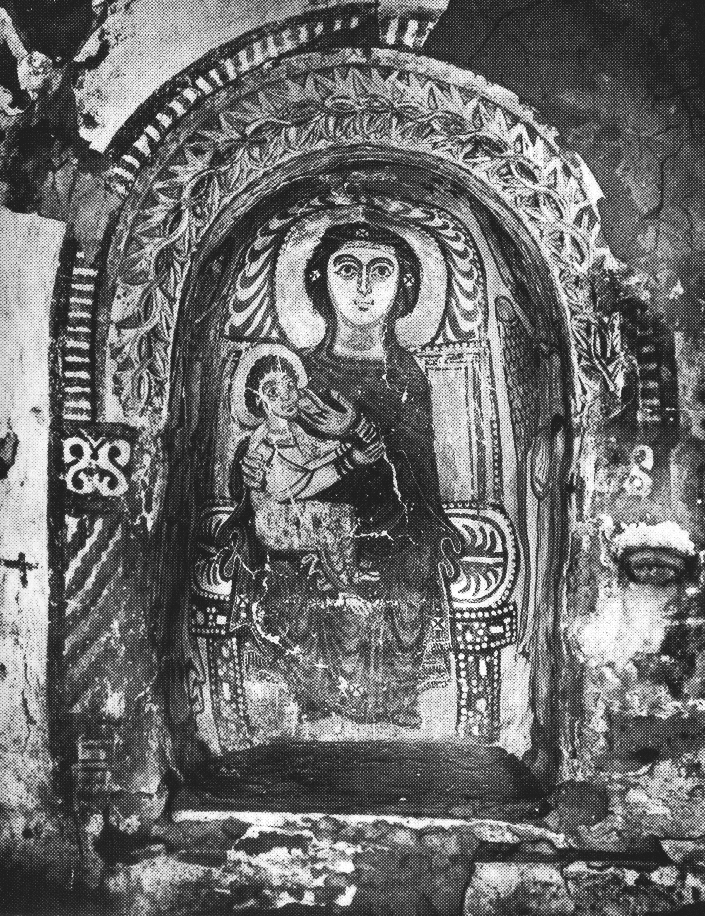
Right: Mary Nursing the Christ Child (Galaktotrophousa), Monastery of Apa Jeremiah, Saqqara, Egypt, 6th–7th century CE; the Isis lactans mother-child type translated into Coptic Christian form
Early twentieth-century scholarship, for instance, interpreted the ancient mysteries as a forerunner to Christian soteriological beliefs, thus challenging the latter’s originality. The often interchangeable terminology found in the ancient texts, which encompasses variant ritual structures such as initiation and ecstasy (mysteria, mystes, telete, orgia), has encouraged the conception of unifying themes.
Kiki Karoglou, ‘Mystery Cults in the Greek and Roman World’, The Metropolitan Museum of Art, October 2013; https://www.metmuseum.org/essays/mystery-cults-in-the-greek-and-roman-world
The evidence demonstrates that whereas Isis lactans can be documented in the Mediterranean from 700 BCE until the fourth century CE, Maria lactans-imagery only appears uncontested in Egypt from the seventh century CE onwards.
Sabrina Higgins, ‘Divine Mothers: The Influence of Isis on the Virgin Mary in Egyptian Lactans-Iconography’, Journal of the Canadian Society for Coptic Studies 3–4, 2012, 71–90
‘Panthea’ (Πανθεία, ‘All-Goddesses’, ‘All-Mother’) is the feminine absolute: a title that gathers many goddess-functions into one canopy, Isis as the ‘all-goddess’ whose single face absorbs the offices of many. The title is Greek, yet the centre of gravity is Egyptian, and the ‘all-mother/all-divine’ conception is already present in the late Theban modality of Isis, then merely rendered into the Greek tongue. Panthea is functioning here as a Greek caption for an Egyptian metaphysical reality, Isis as ‘All-Mother’, with the Greek term serving as an instrument of intelligibility rather than the generator of the conception, rooted in Egyptian iconography and function (plenty-horns; the seated nursing mother; the mother of Horus/pharaoh).
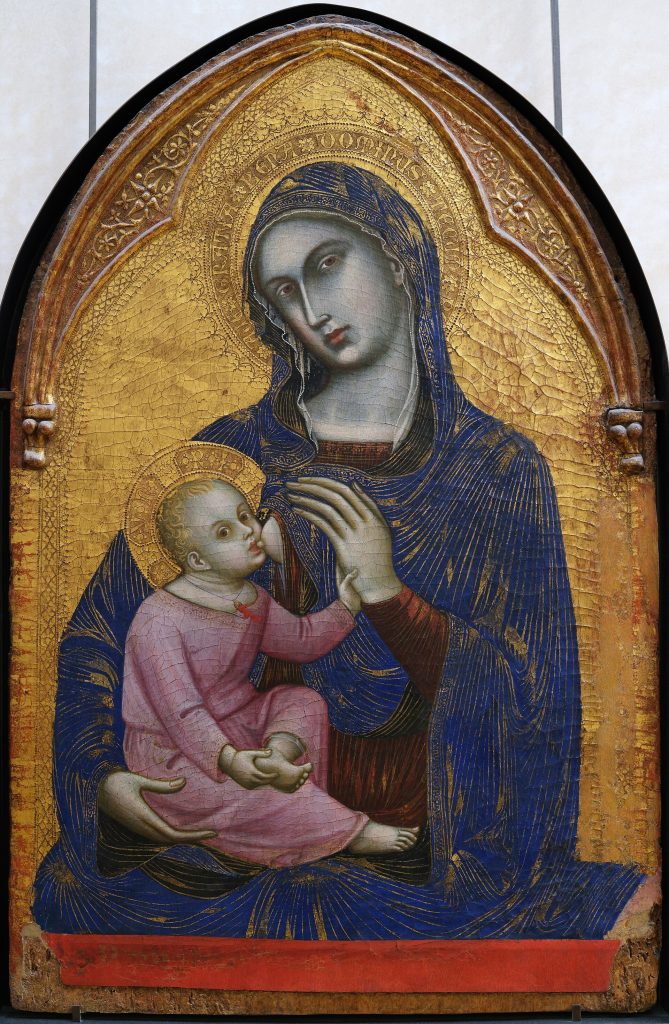
‘Panagia’ means ‘All-Holy’, and in Orthodox devotion it is a Marian title of superlative sanctity, woven into liturgy, iconography, and intercession. In a monotheist cosmology that polices the word thea, ‘all-goddess’ is formally barred, yet ‘all-holy’ can perform much of the same gravitational work: an apex feminine figure, addressed, invoked, enthroned in hymn, approached as protector and mediator, whose ‘holiness’ becomes so totalised that it behaves, psychologically and ritually, as a permitted analogue of the absolute feminine, even while remaining, on paper, categorised as creaturely sanctity. Transposed into Panagia, the implication is exactly this manoeuvre: the predicate changes, the function persists.
Neither Christianity nor Islam can openly confess the goddess at the root of the numerous inherited formulae and doctrinal concepts, because the admission of a maternal divine source would fracture the whole absolutist edifice of Abrahamic sovereignty by which it obliterated rivals under exclusivist claims. The older prayers of the Mesopotamian, Semitic, Egyptian, and Greek mother-cults could address the goddess directly as begetress, mistress, saviour, queen, fate, totality, and all-containing power; the Abrahamic religions must instead abstract the same grammar into the invisible masculine singular, stripping the formula of its maternal name while preserving its contractive force and feminised modality of dependent worship. What was once spoken to Isis, Ishtar, Astarte, Cybele, Demeter, or the many-named goddess cannot be allowed to remain visibly feminine, because a named goddess would immediately imply a world of rival powers, rival cults, rival mothers, and rival claims upon creation. Monotheism therefore survives by masking the inherited structure: the old language of divine maternity, exclusivity, nourishment, salvation, and cosmic absorption is retained, while the mother herself is omitted from the prayer. To admit her would open the flood-gates; the one god would cease to stand alone, and the hidden pantheon would return through the very formula meant to abolish it.
I am yesterday, today, and tomorrow; there is nobody except me.
Isis of Saïs temple inscription probably Late Period Egypt, especially the Saïte Twenty-Sixth Dynasty milieu c. 664–525 BCE; Plutarch, De Iside et Osiride 9, for the Saïtic inscription; Jan Assmann, Moses the Egyptian: The Memory of Egypt in Western Monotheism, Harvard University Press, 1997, 118–119, for the proposed Egyptian reading
Begetress of all, who makest all offspring thrive;
Babylonian hymn to Ishtar, ‘To Ishtar, Begetress of All’, 1600 BCE
Mother Ishtar, whose might no god approaches.
I am the LORD, and there is no other; besides me there is no god.
Isaiah 45:5
Indeed, I am Allah. There is no deity except Me, so worship Me and establish prayer for My remembrance.
Qur’an 20:14
Each line has a different theological accent while preserving the same underlying movement: the divine centre swallows the field, erases rivals, and demands the contraction of reality around itself. In the goddess material, this appears as cosmic maternity, creation, fate, and absolutism. These formulae do not merely resemble one another as isolated phrases; they disclose a deeper inheritance from the cosmic mother cult of antiquity, with all its pretensions to creation, absolutism, salvation, engulfment, and sentimental sovereignty. The voice of a maternal-cosmic absolute before which the worshipper is reduced to dependence, longing, confession, and submissive surrender resounds forth. Later Abrahamic devotion carries this structure into the worship of the invisible saviour: the named goddess disappears, yet the emotional architecture remains, with abasement before absence, rescue through submission, and the exaltation of dependency into holiness. The old Isiac position survives wherever divinity is imagined as the total horizon of being, the wound and cure at once, the hidden source before whom the soul must melt, plead, and be saved.
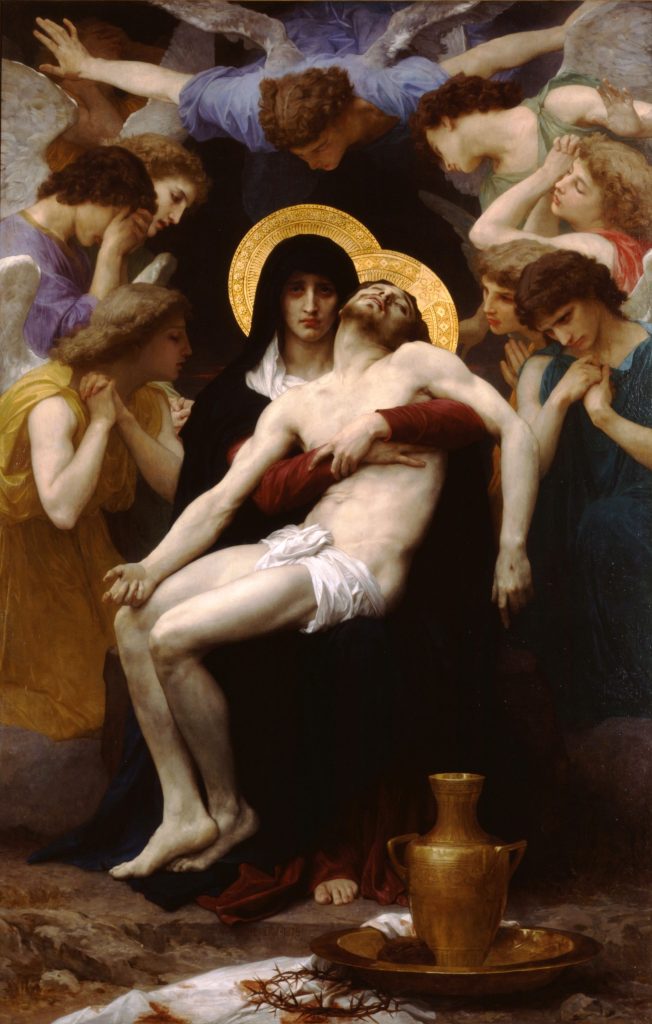
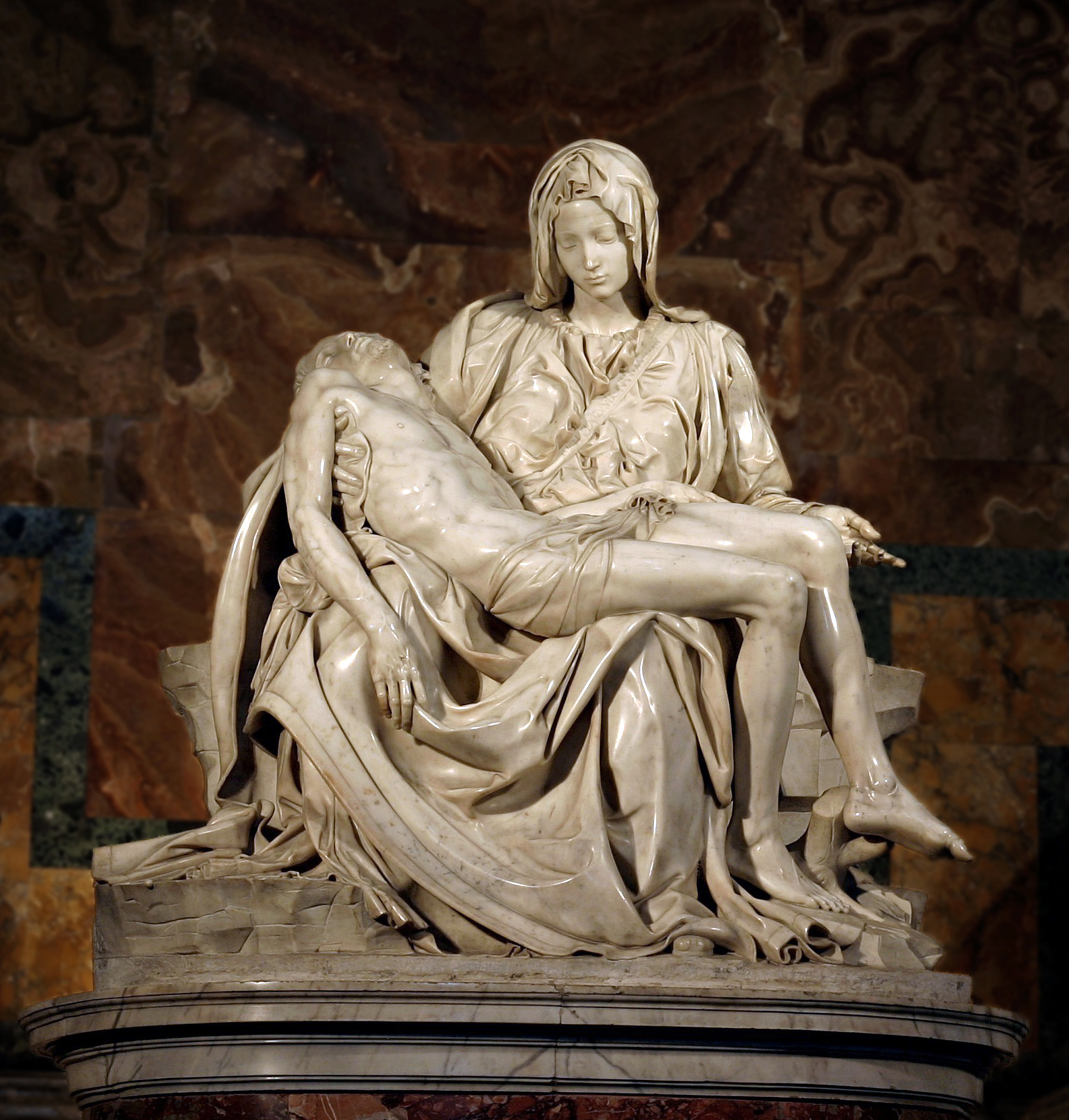
Italian pietà descends from Latin pietas, but Christianity narrows and emotionalises the word until it comes to mean pity, mercy, compassion, devotional sorrow, and finally the artistic image of Our Lady of Pity: the bereaved Mother receiving the sacrificed son across her lap, the nursing mother-child type inverted into Christian lamentation. The Isis lactans mother-child type is cynically re-staged in funereal Christian form, the older divine image of goddess and sacred child preceding it as the buried template: the bereaved Mother receives back the sacrificed saviour, breast and nourishment displaced into corpse, lamentation, and devotional grief. Here the Saïtic claim, ‘there is nobody except me’, finds its Christian mourning-mask: the goddess is first as origin, last as return, and ultimate as the maternal abyss into which even the sacrificed god is delivered back.
Creation is already a metaphysically feminine word in theological disguise, because its deepest image is birth: the emergence of form from enclosure, the swelling of hidden potency into visible being, the passage from womb, water, earth, matrix, or darkness into manifested life. The cosmic egg, womb, cave, lotus, shell, primordial waters, vessel, and ouroboros all gather around the same feminine birth-symbolism: creation imagined as enclosure, gestation, emergence, nourishment, and return to the generative source. The mother-cults understood this with far greater clarity than later abstract theologies implied by omission, hence the ingratiating deference to the sanctity of of all pregnancy, birth, and life, regarded as ontologically equal in the predomination of the rights of ‘nature’; regardless of monstrosity, disability or the justified rank and station of the son proper to the rights of primogeniture. They did not begin with command alone, nor with a dry juridical fiat, but with the pregnant source: Terra Mater, the primordial waters, the goddess who contains, nourishes, bears, and receives again.3 Hence the oldest creation-themes so often gather around the feminine body of the cosmos: earth as womb, sea as matrix, goddess as begetress, mother as origin of gods and men in whom one finds rest, comfort and completion, or else the fraternal collectivity of equal siblings into which one is subsumed with a cloying magnetism of warmth and earth. When later monotheism speaks of creation while suppressing the Mother, it preserves her function under another grammar; the world is still imagined as brought forth from an absolute source, yet the maternal image is displaced into invisible command.
The Greek Galaktotrophousa, the Milk-Nourishing Virgin, belongs to the same maternal-cosmic grammar as the galaxias kyklos, the ‘milky circle’, whence the Milky Way itself appears as the heavens written in the language of the breast. Milk becomes creation’s visible substance: the child is nourished, the world is brought forth, and the sky itself is imagined as a vast maternal stream, a white river of life flowing from the primordial mother-cult into Christian Marian form. The key is the Greek root gala / galakt-, meaning milk. From that root comes Galaktotrophousa, literally the Milk-Nourishing or Milk-Feeding one: gala, galaktos supplies the milk, while trophē / trephein gives nourishment or feeding. The same milk-root also forms galaxias kyklos, the milky circle, which passed into Latin as galaxias and then into English as galaxy; from galaxy comes galactic. So the nursing mother, the Marian milk-icon, the Milky Way, the galaxy, and the galactic all unfold from the same cosmic creationist linguistic image: milk as nourishment, milk as celestial substance, milk as the visible sign of maternal-cosmic creation.

The old mother-cults already contain the seed of Abrahamic exclusivism: ‘Mother Ishtar, whose might no god approaches’ belongs to the same religious current as the Saïtic formula, where the goddess gathers time, generation, law, and fate into herself. The Ishtar hymn strengthens the comparison because the mother-cult does not merely sing fertility, tenderness, or erotic abundance; it already speaks the grammar of divine supremacy. Abrahamic exclusivism later gives this maternal-cosmic pretension a sterner, invisible, juridical form: ‘I am the LORD, and there is no other’; ‘besides me there is no god.’ The goddess is no longer named, yet the maternal structure remains, the single all-containing power before whom every rival is dissolved and must vanish. Ishtar is hailed as the Mother, ‘Begetress of all’ before whom all may only stand as mere offspring, while the Saïtic goddess declares herself yesterday, today, tomorrow, and without any being beyond her. Later monotheism does not invent this grammar from nothing; it hardens the maternal-cosmic absolute into an invisible, domineering mother-sovereign rather than the aristocratic, empowering god of kings, retaining the same demand that all rival powers evaporate before the one adored source of fate, generation, judgement, and salvation.
The famous Saïtic formula was commonly received through the Greek and later esoteric tradition as the declaration of the veiled goddess: ‘I am all that was, is, and shall be, and no mortal has lifted my veil.’ Assmann’s correction returns the line to its Egyptian grammar and cosmology, where the supposed ‘veil’ is better understood as a mistranslation of an idiom whose force is divine exclusivity. The Hellenic reading is therefore a magnificent displacement rather than a mere error: Egyptian theology speaks in the register of primordial self-sufficiency, while the Greek, Neoplatonic, and initiatory imagination transforms the same formula into the mystery of Nature concealed from the uninitiated gaze.
Assmann’s retroactive translation works by returning the Greek veil-formula to a plausible Egyptian idiom, where the phrase later understood as ‘no mortal has lifted my veil’ can be read through Egyptian grammar and cosmology as a declaration of divine exclusivity. He reads the Saïtic formula beneath Plutarch’s veil-inscription as an Egyptian monotheistic declaration: ‘I am yesterday, today, and tomorrow; there is nobody except me.’ That is extremely coherent. Assmann’s proposed reconstruction turns on the Egyptian expression wp ḥr. In ordinary idiom, this can carry the force of ‘except’ or ‘apart from’, yielding the stark theological sense: ‘I am yesterday, today, and tomorrow; there is nobody except me.’4 Yet taken more literally, wp means ‘to open’ and ḥr means ‘face’; the same words can therefore be heard as ‘to open the face’, or ‘to uncover the face’. Assmann’s brilliance is to see that the Greek veil-formula, ‘no mortal has lifted my robe’, may be the Hellenised surface of an Egyptian exclusivity-formula: the goddess’ declaration that none exists beside her was transformed, through translation and temple-mystery imagery, into the famous claim that none has unveiled her.
The first half declares temporal totality: the goddess spans past, present, and future. The second half declares ontological exclusivity: nothing exists outside her. In other words, the Egyptian version is less about a mysterious veil and more about the goddess as primordial, self-sufficient, all-containing divinity. It works because Egyptian religious language often expresses cosmic eternity through mythic-temporal formulae rather than abstract philosophical terms. ‘Yesterday, today, and tomorrow’ is more idiomatically Egyptian than the Greek-sounding ‘all that was, is, and shall be.’ The Greek version universalises it into a philosophical formula of Being across time; the Egyptian form would speak in a more sacred-mythic register of temporal totality.
There is also the possibility that the Greek rendering was no mere mistake, but a deliberate hieratic play upon ambiguity. A formula whose Egyptian sense may have declared, ‘there is nobody except me’, could be drawn by Greek religious imagination into the language of veiling, unveiling, and forbidden disclosure. In that movement, the goddess’ exclusivity becomes a mystery: the one beside whom none exists is also the hidden one whose face no mortal has uncovered. The pun allows the inscription to pass from theological absolutism into initiatory drama, perfectly suited to Greek eyes already trained by mystery rites to think in terms of concealment, revelation, sacred garments, and the perilous unveiling of divine truth.
This formula finds close later analogues in Deuteronomy 32:39, ‘I, even I, am he; there is no god beside me’, Isaiah 45:5–7, ‘I am the LORD, and there is no other; besides me there is no god’, and the Qur’anic formula lā ilāha illā anā, ‘There is no god except Me’, especially Qur’an 20:14 and 21:25. Given Isis’ prominence across Egypt, the eastern Mediterranean, the Hellenistic world, and later the Roman Empire, the connection is hardly extravagant. Isis was already one of the great international divine figures through whom Egyptian theology entered Graeco-Roman religious consciousness; a formula of divine totality attached to Neith-Isis at Saïs would naturally belong to the same religious bloodstream later feeding, provoking, or being inverted by Biblical and Qur’anic exclusivism.
The modern pop-music love song is Isis worship after the temple has fallen: the rite is forgotten, the incense is gone, the goddess is no longer named, yet the old cult returns whenever the beloved is sung as moon, sea, night, fate, poison, wound, memory, salvation, and world. The Saïtic formula supplies the occult structure. The female pop-starlet enthrones the pop star as the hetaira herself, the erotic-maternal idol before whom the crowd gathers in devotional submission, granting her divine precedence as the Isiac rite in secular form, enthroning the pop star as the hetaira of the age: womanly power made sovereign in spectacle, with the crowd gathered before her magical glamour as the living image of matriarchal rule. Romantic music does not merely praise and dote on women; it installs the woman in the Isiac position, making her the singer’s temporal totality and exclusive cosmos. The mortal beloved becomes past, present, future, destiny, injury, and cure; desire becomes a broken, incomplete liturgy; the radio hook becomes a vulgar hymn to Isis disguised as heartbreak.
Abrahamic monotheism carries the same longing sentimental mechanism into worship: loss, longing, abasement, and rescue are rendered as liturgy before an invisible god, while the old Isiac structure remains unnamed beneath the devotional surface. The saviour becomes the absent beloved magnified into heaven; distance becomes holiness, dependence becomes virtue, and the soul is trained to dote upon an unseen power whose silence deepens attachment rather than breaks it. What love music performs in the register of woman, Abrahamic worship performs in the register of god: the world contracts around an inaccessible object of longing, and the worshipper calls that contraction faith.
The Abrahamic mode of worship thus carries forth, through inversion and displacement, a mother-cult priesthood whose logic elevates the feminine principle and prepares its predominance in modernity, in the presumption of the supremacy and pristine ‘virginity’ of the woman, in modern dating and secular ‘ethics’ passed off in the centring of ‘family life’, in the condition colloquially recognised as the chivalrous ‘tradcuck’. This structure is ancient, as Jeremiah’s ‘Queen of Heaven’ points towards the great Near Eastern goddess-complex (Ishtar; Astarte/Ashtoreth), and Israel’s older cultic strata preserve even sharper traces, where inscriptions can speak, with disquieting plainness, of ‘Yahweh … and his Asherah’, the consort-pattern surviving inside the very tradition that later wages a superficial war against it that nonetheless fails to alter the essence of the religion or the people, as can plainly be seen.5
Hence, though in a spiritual and mystical fashion, we are all children of Mary, and she is Mother of us all. Mother, spiritually indeed, but truly Mother of the members of Christ, who are we.
Pope Pius X, Ad diem illum laetissimum, 1904
From there the line runs cleanly into Christian grammar, as the Church is explicitly named as the Bride of Christ, and Mary, ‘Mother of us all’, is assumed and crowned as Queen of Heaven; the titles once bound to Asherah return in Marian form, while the Isiac grammar of the All-Mother, or the Semitic Ishtar, ‘Begetress of All’, celestial sovereign, and final maternal horizon survives beneath Christian names; who, for their part, may as well recite the original Babylonian prayer. The Christian doctrine of Mary as ‘Mother of us all’ justifies itself through the Woman of Revelation, who gives birth to the male child ‘who was to rule all nations with a rod of iron’ (Revelation 12:5), and through ‘the rest of her seed’ against whom the dragon makes war (Revelation 12:17); yet the title carries a far older and heavier charge: the pre-Christian grammar of the All-Mother and the Eastern-Semitic ‘Begetress of All’, before whom the faithful appear as mere children—brothers and sisters—gathered beneath a celestial maternal power.
The whole spiritual posture is rendered receptive, bridal, maternal, and intercessory, even where militaristic Roman imperial offices and titles are borrowed in a masculine key from Mars, Apollo, Hercules, Zeus and Caesar. Alongside this, rabbinic pilpul itself can torque covenant into an astonishing asymmetry; through casuistic leverage and hair-splitting reality-weaving sanctified as dialectic method, displacing the Socratic ‘dialogue’ with something much darker. The divine will is rendered answerable to the interpretative act, so that human decree compels divine fulfilment (‘when the righteous decree, the Holy One … fulfils their words’, Bamidbar Rabbah 14:4; cf. Psalm 145:19; Babylonian Talmud, Ta‘anit 23a, on Job 22:28), and the notion of Yahweh subordinated and browbeaten by Israel, reads less an accusation than the mechanism underlying the occult trajectory of modern secularism laid bare.
Hence the outcome: denunciation of Rome’s traditional solar cults as demonic and anti-Christ, imitation of their public forms, and yet an essence that never becomes solar, patriarchal, or hierarchical in the Roman sense; it coheres instead into an Amazonian, hyper-masculine mother-cult whose feminine predominance expresses itself as anti-supernatural, anti-eternal, anti-hierarchy, anti-godhood, precisely while it anathematises the older cultic order that made transcendence and sacred rank explicit.
Ultimately, the work of Rome in wifully overturning subversive feminist cults hostile to the patres, was undone. The admonition of Rome’s divinities is indistinguishable from the proscription of divinity itself; the throne was usurped, as the heavens were emptied of gods and earth emptied of heroes.
The maternal presumption is intrinsic to the Abrahamic spectrum: even where the tongue forbids open deification, the cosmology still leans upon a feminine grammar of receptivity and submission to an external ‘other’ compounded by the need for divine intercession, of bridal enclosure and crowned maternity, so that the ‘all-mother’ returns as a naturalised ‘all-holy’ cosmic ‘matrix’ and the structure survives every nominal prohibition. Yet this is masked by a contrary presumption, endlessly repeated, that women are ‘nothing’, without identity or spiritual office as queen or goddess-mother; the denial functions as a seal, for what is unnamed cannot be recognised, what is unrecognised cannot be refused, and thus the pattern renews itself by its own disavowal, a vicious circle that subtly encroaches on all sides, like the darkness itself, reducing down any point of view of engagement with the supernatural as ‘demonic’ or the eternal as delusion, effacing any conception of solar, kingly or self-sufficient godly spirituality, whose very mechanism is to render exit psychologically inconceivable.
Within this disposition, the feminine influence coheres with an anti-supernatural, anti-eternal, anti-hierarchical sensibility, hostile to godhood and sacred sovereignty, even as it anathematises the older cults that embodied hierarchy, transcendence, and ordered divinity in open form.
Scholia (click to expand)
- The Isis cult’s Mediterranean spread is well attested: the Met notes that Isis arrived at Rome by the end of the second century BCE and reached its height in the second century CE, while the cult’s presence in Italy is also represented by major Isiac sites such as Rome and Pompeii; work on Aquileia discusses Isis and Mater Magna in north-eastern Italy; Kiki Karoglou, ‘Mystery Cults in the Greek and Roman World’, The Metropolitan Museum of Art, October 2013 https://www.metmuseum.org/essays/mystery-cults-in-the-greek-and-roman-world
- Harvard Art Museums states of an Isis nursing Horus statuette that this representation ‘may have served as the source for Christian iconography of the Virgin Mary nursing’ the Christ Child; Sabrina Higgins’ Divine Mothers surveys the scholarship on Isis/Mary lactans imagery and notes both the proposed influence and the limits of proving deliberate cultic continuity; On Isis lactans and Marian lactans iconography, see Harvard Art Museums, ‘Isis and Horus’, object 303606; Sabrina Higgins, ‘Divine Mothers: The Influence of Isis on the Virgin Mary in Egyptian Lactans-Iconography’, Journal of the Canadian Society for Coptic Studies 3–4, 2012, 71–90.
- Mircea Eliade explicitly links feminine fecundity to a cosmic model in ‘Terra Mater’, calling Mother Earth the ‘universal Genetrix’, noting archaic myths in which Mother Earth conceives alone, and invoking Hesiod’s Gaia giving birth to Ouranos; Mircea Eliade, ‘Terra Mater’, in Patterns in Comparative Religion, trans. Rosemary Sheed, University of Nebraska Press, 1996, ‘Terra Mater’
For Mesopotamia, the Sumerian Namma/Nammu material is equally useful: in Enki and Ninmah, Namma is called the ‘primeval mother who gave birth to the senior gods’; The Electronic Text Corpus of Sumerian Literature, ‘Enki and Ninmah’, lines 12–23; The same tradition describes Nammu, goddess of the primeval sea, as ‘the mother who gave birth to heaven and earth’, and elsewhere as ‘the mother, the ancestress who gave birth to all the gods’; Samuel Noah Kramer, ‘Tales of Sumer: Man’s Oldest Myths’, University Museum Bulletin, vol. 19, no. 4, December 1955 - Jan Assmann, Moses the Egyptian: The Memory of Egypt in Western Monotheism, Harvard University Press, 1997, 118–119.
- On the formulae ‘Yahweh of Samaria and his Asherah’ / ‘Yahweh of Teman and his Asherah’ from Kuntillet ‘Ajrud, see William G. Dever, Did God Have a Wife?, Eerdmans, 2005, 161–168; Zeev Meshel, Kuntillet ‘Ajrud, Israel Exploration Society, 2012. On the related Khirbet el-Qom inscription, see Ziony Zevit, ‘The Khirbet el-Qôm Inscription Mentioning a Goddess’, BASOR 255, 1984, 39–47.
Eunuchs for the Kingdom: Christian Castration and the Drag-Cult Galli, Semiviri of the Asiatic Great Mother
12 For there are some eunuchs, which were so born from their mother’s womb: and there are some eunuchs, which were made eunuchs of men: and there be eunuchs, which have made themselves eunuchs for the kingdom of heaven’s sake. He that is able to receive it, let him receive it.
Matthew 19:12, King James Bible
The bridal inversion of Christianity descends still further into the body. In Matthew 19:12, the Gospel gives the castrative possibility its own scriptural aperture: ‘For there are some eunuchs, which were so born from their mother’s womb: and there are some eunuchs, which were made eunuchs of men: and there be eunuchs, which have made themselves eunuchs for the kingdom of heaven’s sake. He that is able to receive it, let him receive it.’1 The verse gives Christian sanctity a terrible bodily horizon: virile generation can be renounced beneath the sign of heaven; the male body can be turned away from descent, house, genius, and paternal continuity; the eunuch can appear as a privileged figure of religious seriousness.
The outrage lies precisely here: why does Jesus speak of self-made eunuchs with such serene acceptance, even apparent commendation, in a world already familiar with the Galli of the Magna Mater? Matthew’s phrase touches the very ritual form by which the servants of the Great Mother unmanned themselves before a superior sacred power. The Roman world had already seen what this meant. The eunuch-priest was no abstract ascetic symbol, but the cultic body of surrendered virility: male generation cut away, paternal potency renounced, manhood offered beneath the sign of a power that stood above him and required his alteration.
The final phrase is itself an indictment: ‘He that is able to receive it, let him receive it.’ This is no accidental softness of speech, nor a harmless mention of abstinence. It is the tone of a threshold, a hard saying offered to those capable of bearing its severity. This sentence is a hint that even the rabbi himself knows the saying has now crossed into extremity: he pauses at the edge of the utterance, hesitates before his own violence, and then leaves the harsh words standing. The Gospel therefore does more than notice eunuchhood; it places the self-made eunuch within the esoteric horizon of the kingdom, then seals the matter with a formula that makes self-castration sound almost initiatic. Later Christian literalism is therefore no wild misunderstanding from nowhere. The knife of the semivir was cleanly glinting inside the gospel.
To show you that promiscuous intercourse is not among our mysteries just recently one of us submitted a petition to the Prefect Felix in Alexandria, asking that a physician be allowed to make him a eunuch, for the physicians there said they were not allowed to do this without the permission of the Prefect. And when Felix absolutely refused to sign such a permission, the youth remained single […]
Justin Martyr, First Apology 29, trans. Cyril C. Richardson, in Early Christian Fathers
Justin Martyr’s First Apology makes the tendency still plainer. In Alexandria, a young Christian petitioned the Roman prefect Felix for permission to be castrated, asking that a physician might make him a eunuch; the request was denied, yet Justin preserves the incident apologetically, as proof that Christian continence was no rumour, no theatrical pretence, but a bodily seriousness capable of pressing even against Roman permission.2 The Roman magistrate refuses the knife; the Christian imagination has already desired it.
Eusebius then gives the doctrine its terrible exemplar in Origen. Taking the evangelical saying about eunuchs in too literal and extreme a sense, Origen made himself one of those who had become eunuchs for the kingdom of heaven’s sake.3 In him, the bridal, ascetic, anti-generative current becomes flesh: the learned Christian, devoted to scripture, sacrifices the paternal organ beneath a heavenly imperative, and the male body is reconstituted as a vessel of doctrinal purity rather than as bearer of house, genius, name, and line.
Origen’s self-castration stands at the threshold of Christian asceticism like a grim emblem: the body is mutilated so that desire may be conquered for womanly chastity and ‘continence’ before an invisible god.
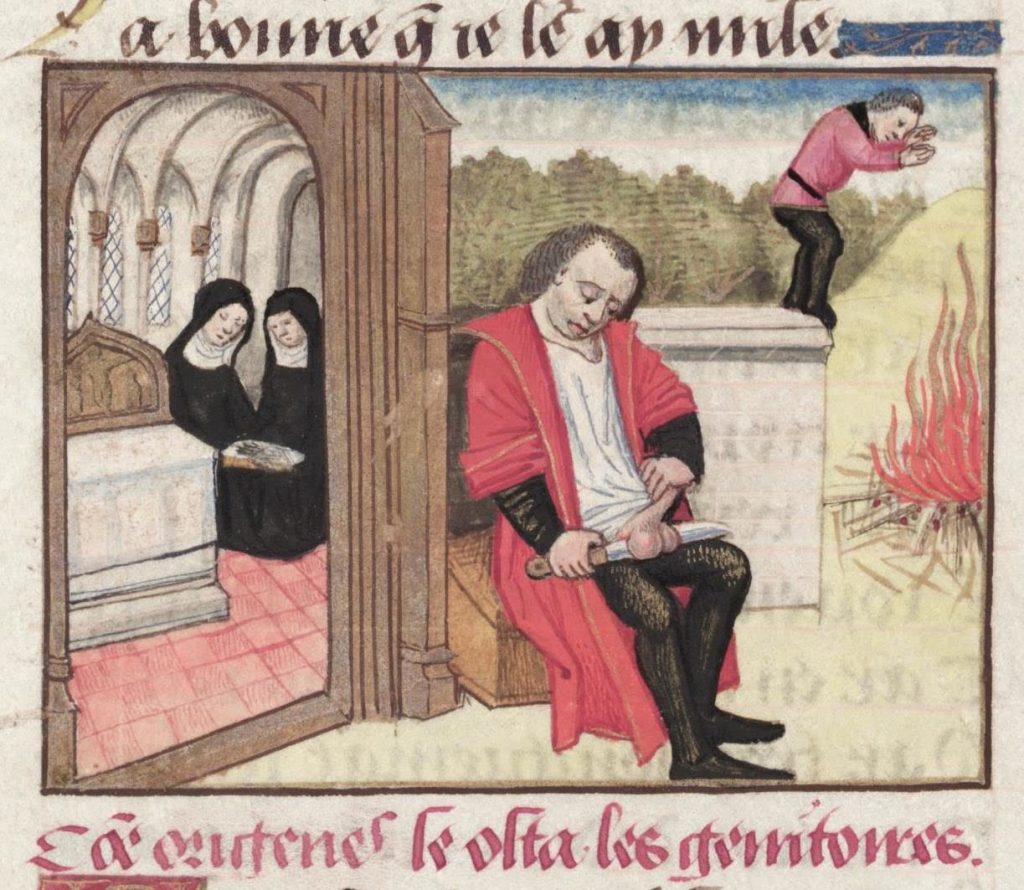
At this time while Origen was conducting catechetical instruction at Alexandria, a deed was done by him which evidenced an immature and youthful mind, but at the same time gave the highest proof of faith and continence. For he took the words, “There are eunuchs who have made themselves eunuchs for the kingdom of heaven’s sake,” in too literal and extreme a sense. And in order to fulfill the Saviour’s word, and at the same time to take away from the unbelievers all opportunity for scandal — for, although young, he met for the study of divine things with women as well as men, — he carried out in action the word of the Saviour.
Eusebius, Historia Ecclesiastica 6.8, trans. Arthur Cushman McGiffert, in Nicene and Post-Nicene Fathers, Second Series, vol. 1
Here the comparison with the Magna Mater becomes unavoidable. The Galli mutilated themselves before the Great Mother; Christian ascetics, beneath the sign of heavenly marriage, continence, and eunuch-like sanctity, approached the same sacrificial grammar by another theological road.4 In both cases, virile generation is treated as the obstacle to a higher sacred allegiance. The organ of fatherhood is surrendered before the superior cultic power: in the one case before the Mother, in the other before the kingdom and its bridal mysticism.
The Magna Mater, also known as Cybele, was officially brought to Rome in 204 BCE, during the Second Punic War, after consultation of the Sibylline Books, themselves a vestige of the ousted matriarchal and Asiatic Etruscan king; her sacred stone was fetched from Phrygia and received into Rome under the pressure of foreign war with Carthage, the gynaecocratic city of legendary Queen Dido and the goddess Astarte-Tanit, then lodged first in the Temple of Victory on the Palatine, until her own Palatine temple was dedicated in 191 BCE.5 The goddess therefore entered Rome as an imported Asiatic power, admitted under emergency, prophecy, and state supervision, rather than as a native expression of Roman paternal cult.
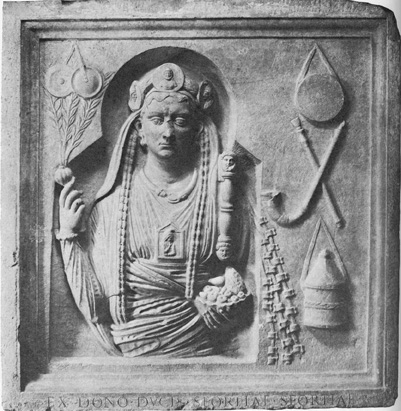
They deny that they are men, though they are; they wish to be believed women.
Julius Firmicus Maternus, De errore profanarum religionum 4.2; trans. Clarence A. Forbes, Newman Press, 1970
[…]
They adorn their womanishly-nurtured hair and, dressed in delicate garments, scarcely support their heads on weary necks.
The Galli came with this foreign religious field as the Phrygian priestly body of the goddess, yet Rome kept them marked as alien. Dionysius of Halicarnassus gives the essential distinction: the Roman praetors performed the sacrifices and games of the Idaean Mother according to Roman custom, while the goddess’s priest and priestess remained Phrygians, carrying her image through the city with timbrels, flutes, and begging rites in honour of the Mother of the Gods.6 Thus Rome admitted the goddess, but kept the eunuch-priestly current visibly Asiatic, foreign, and exterior to the native dignity of Roman paternal form.
Roman contempt saw the matter clearly. Juvenal introduces the rites of Bellona and the Mother of the Gods with the figure of the ingens semivir, the huge half-man, whose soft genitals had been severed with a potsherd; Smith’s dictionary of antiquities preserves the Roman vocabulary of derision around the Galli as spadones, semimares, semivir, and nec viri nec feminae.7 The word semivir is not a decorative insult. It names the ontological wound: no longer vir in a higher sense, no longer the complete male capable of standing as father, householder, and bearer of line, but a broken intermediate consecrated through the very mutilation by which paternal form is annulled. When Christian sanctity then honours the eunuch ‘for the kingdom of heaven’s sake’, the comparison with the Magna Mater ceases to be a loose analogy and becomes a direct disclosure of shared castrative grammar.
He receives women’s raiment and ornaments. Thus they act during their ceremonies of castration.
Lucian, De Dea Syria 51; trans. Herbert A. Strong and John Garstang, The Syrian Goddess, 1913
The Galli of Magna Mater were not merely eunuchs in the physical sense; the cult imposed a wider ritual un-manning. Ancient accounts describe the novitiate Gallus, after castration, rushing through the city and receiving ‘women’s raiment and ornaments’ from the house into which he cast the severed parts; Christian polemic, despite the priestly attire, chastity, castration, and their own saviour’s words affirming the Galli, later reports the same logic with brutal clarity, saying that they ‘deny that they are men’ and ‘wish to be believed women’.8 Their emasculation was therefore carried into dress, adornment, public role, ecstatic music, begging, prophecy, and feminine presentation: long coiffured hair, jewellery, bright or saffron garments, cosmetics, cymbals, drums, and the frenzied service of the Mother.9 The Gallus became a living sign of subordination to the maternal goddess, not only deprived of virile generation, but costumed, named, and displayed as a feminised religious functionary of Magna Mater.
The Galli reveal the inner logic of the Mother-cult in its most pitiless form: the priest approaches Magna Mater by ceasing to stand before her as a man. The rite strips him of virile generation, clothes him in feminine ornament, and makes his body into a liturgical confession that the highest sanctity belongs to the feminine principle. Ancient witnesses give the fragments plainly: Attis’ myth turns upon castration and a shift into feminine form. The synthesis follows: the Gallus does not merely serve the Mother, but seeks proximity to her by entering the form she sanctifies.10 If the woman is the divine image of the cult, then the male priest’s transition into feminine appearance is the cult’s most radical sacrament: manhood is surrendered before the Mother, and the feminine becomes the holy condition into which the servant is absorbed. The rite therefore discloses the metaphysics of Magna Mater with terrible clarity: the highest sanctity is maternal, and the male priest approaches it through ritual emasculation, costume, and transformation.
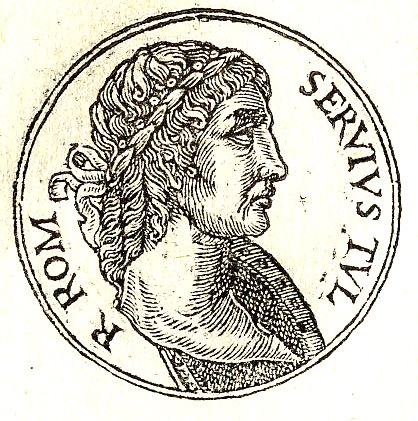
The deeper vulnerability lay in Rome’s own Etruscan inheritance. Servius Tullius was remembered through traditions of slave-birth, feminine mediation, and scandalous sacral generation: Ocrisia, a captive slave-girl within the house of Tarquinius Priscus, belongs to the royal interior and is directed by Tanaquil, the Etruscan queen, seer, and mistress of the household’s occult authority. In the older form of the legend, a male generative organ appears rising from the royal hearth-fire; Tanaquil interprets the prodigy, adorns Ocrisia as a bride, and arranges the conception by enclosing the slave-girl with the daimonic sign, and he was given Servius as his personal/common name ‘from her own condition, since she had been a slave when she had given birth to him’.11a Servius’ association with the Lar who begot him, together with his reorganisation of the vici, binds him to the institution of the Compitalia: a public and pious cultic expression of his divine paternity, extending the rites of his household into the civic neighbourhoods, extending his domestic Lar outwards into the Lares of the crossroads, thereby affirming his maternal bond with Rome’s lower orders, and presenting his kingship as the sacral patron and protector of their claims. That makes him dangerous for the aristocratic-sacral perspective, because he does not merely favour the lower ranks politically; he provides them with a cultic and civic form under royal sponsorship.
Tanaquil’s role is even more revealing than Servius would be: she is the Etruscan queen and seer who recognises the slave-born child, mediates his prodigious origin, draws him into the royal household, joins him to the Tarquinian line through marriage to her daughter, and finally secures his ascent to kingship. Her act is the full scandal of the legend: she marries her daughter to a slave-born man, placing dynastic transmission under a maternal authority that overrides the paternal right. In the Servian legend, monarchy passes through feminine divination, household enclosure, slave-maternity, and matriarchal dynastic arrangement. Servius thus emerges from a slave mother and rises to power by female command and a chthonic sexual prodigy, rather than from the Olympian line of clean patrician descent. In Bachofen’s sharper reconstruction, the legend is a Roman historicisation of the Sacaea, those ‘hetaeric slave festivals’ in which the peoples of the Assyrian cultural sphere celebrated the return of mankind to the ‘great mother of life’, and to the ‘freedom and equality of all’.11b
Servorum dies festus vulgo existimatur Idus Aug., quod eo die Servius Tullius, natus servus, aedem Dianae dedicaverit in Aventino, cuius tutelae sint cervi.
Festus, De verborum significatu 460.33–36 Lindsay; ed. W. M. Lindsay, Teubner, 1913; original translation by author
[…]
The Ides of August are commonly regarded as the festival day of slaves, because on that day Servius Tullius, born a slave, dedicated the temple of Diana on the Aventine, under whose protection are the stags.
Livy and Dionysius say that Diana’s temple on the Aventine was founded as a major cultic centre and common sanctuary for Rome and the Latin peoples, deliberately modelled on the Ephesian temple of Artemis, whose cult had served as a shared religious centre for the Ionian cities of Asia. Festus then marks its dedication day as a festival of slaves because Servius, ‘born a slave’, founded it; and Appian then gives the later political recurrence: in the Gracchan crisis, the popular party occupied and fortified the same temple. So the sequence becomes stronger: foundation, slave festival, plebeian-popular refuge in the earthy, ant-souled disposition that seems to rise from below, from swarm and soil, to engulf all, rather than descend from the divine order above.12 With the Asiatic cultic rites, matriarchal-slave disposition, and broader inheritance of Etruscans themselves, which we explore in a later segment, this becomes a multi-pronged Eastern incursion into the Roman order; a converging pressure of goddess-sanctuaries, slave-marked rites, prophetic women, eunuch priesthoods, and maternal sovereignties, softening the patrician axis from within until Christianisation arrives from the East to inherit, moralise, and enthrone the discursive grammar under a new name.
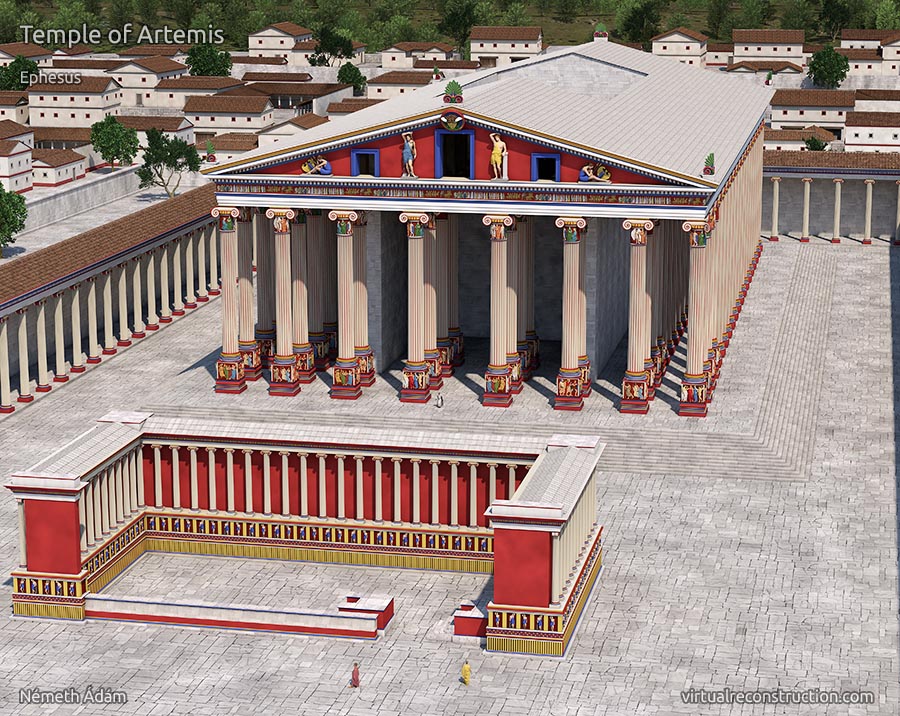
The Galli are not merely priests of a generic mother-goddess, but of the Magna Mater Idaea, the Idaean Mother brought from Asia Minor into Rome through the Sibylline machinery. Likewise, Ephesus was one of the great coastal cities of Ionia along western Anatolia, in what Roman and Greek writers commonly treated as Asia or Asia Minor, placed in modern Selçuk / İzmir, Turkey. So when Livy and Dionysius connect Servius’ Aventine Diana with the Ephesian Artemision, they are not pointing to a generic Greek temple in mainland Greece; they are pointing eastwards, across the Aegean. The Ephesian Artemis and Servius’ Aventine Diana belong to the same mother-cult grammar from the beginning: peoples gather before the Mother as children, dissolved from the hard line of paternal aristocratic descent into a communal body of dependence, refuge, and common belonging.
The Roman case makes the logic apparent, as Latins, slaves, plebeians, and later Gracchan rebels cluster around the Aventine goddess against the patrician, solar, and juridical axis of Rome. This was no aristocratic or solar cult of imperium (command), but a maternal sanctuary of the commune: peoples, Latins, slaves, plebeians, and later revolutionary fugitives gathered beneath the feminine divine power as egalitarian chidren, as the Mother’s field formed a counter-centre to patrician and imperial order. The Great Mother’s egalitarian brotherhood gives the term semiviri its full sting: the Gallus is not merely a mutilated male, but one reduced beneath the condition of vir, man in the proper virile sense, into something closer to a mere homo—a human body among bodies, levelled before the Mother.
In the view of his grateful contemporaries King Servius, founder of the Roman community, author of popular freedom, was a product of those hetaeric slave festivals in which the peoples of the Assyrian cultural sphere celebrated with unrestrained enthusiasm the return of men to the commandments of the great mother of life, to the freedom and equality of all.
J. J. Bachofen, Myth, Religion, and Mother Right: Selected Writings of J. J. Bachofen, trans. Ralph Manheim, Princeton University Press, 1967, ‘The Myth of Tanaquil’, 221–222
Livy and Dionysius establish the Servian Aventine cult; Festus and Appian show why it can be read as a continuing anti-patrician and sub-aristocratic undercurrent within Rome proper. This was precisely the kind of king the old patres could revile: a ruler born from a sub-patrician, feminine, chthonic, and slave-marked matrix, raised to power through a woman’s intervention, and associated with plebeian ascent against aristocratic exclusivity. The centralisation of power gained by bypassing the solar patrician ethos in favour of these populist undercurrents is why appeals to the feminine, plebeian, and democratic masses are associated with oppression, subversion, and tyrannical rulers across a wide cross-section of Indo-European mythological figures, including Tullius, as a legendary king.
Servius and Tarquinius Superbus mark the Etruscan deviation inside Roman kingship: their reforms loosened the old aristocratic foundations of power and drew the common citizenry into political and military consequence. The deeper danger lay in the principle of the census itself: the reduction of civic being to number, property, income, and military utility. Here the Roman body was made legible to quantity. The man of lineage, rite, and ancestral station was increasingly set besides the counted commoner, as though both could be arranged within the same administrative scale. In this sense, the Servian reform foreshadowed that lower reign of measure which Guénon would call the reign of quantity: the replacement of living hierarchy by enumeration, of sacral distinction by census, of order by count.13
Servius organised the commoners into the comitia centuriata, which displaced the comitia curiata as Rome’s principal legislative assembly. This reform required the institution of Rome’s first census, making Servius the first Roman censor. For this purpose, citizens assembled by tribe in the Campus Martius, where they registered their social rank, household, property, and income. The census determined each citizen’s tax obligations, his capacity to furnish arms and serve in war when called upon, and his assignment to a particular voting bloc.14 Once created, the comitia centuriata could not be simply unmade. As the Republic’s highest court of appeal, it possessed the power to overturn judicial decisions, and the Senate was constitutionally compelled to seek its approval. In time, this Servian instrument became the very machinery by which plebeian nobility and plebeian ascent were legitimised inside the Roman state. The imperial restoration of Augustus was therefore understood, with a certain natural force, as the return of traditional aristocratic Rome of Romulus against the Etruscan-popular deformation: a re-ascent towards the older, founding, pre-Etruscan kingship, before the soldier-commonalty had been installed as a permanent counterweight to patrician authority.15
This places Servius within a wider Proto-Indo-European pattern—one in which rulership, legitimacy, and the fate of the world are determined by the struggle between lineages. Across the ancient world, rulers increasingly sought a base among the commoner-soldiery, appealing over the heads of aristocratic houses and, where possible, bypassing the old nobility altogether. In ancient political language, this appeal to ‘the people’ against the aristocracy was the operative mark of tyranny: kingship descending from sacred and aristocratic form into popular military dependence.16 The Tarquinian drama belongs to a deeper Indo-European grammar of terminal sovereignty. In several related traditions, the closing crisis of an age begins when a demonic or anti-sacral ruler, sprung from an alien or hostile paternal stock, enters the seat of command among gods or heroic men: Set among the Egyptians, Loki among the Norse, Zahhak in Iran, Kingu among Babylonian or Mesopotamians, Minos in Greece, Tarquin at Rome, and Eochu Balor or Bres in Ireland. His rule is marked by injustice towards his own people, imposing oppressive burdens upon his subjects, forcing them into compulsory labour upon defensive works, and a dependence upon foreign or outsider forces, whose support replaces the organic fidelity of the rightful community. Yet their dominion is never eternal; each is overthrown and cast down, through firm, conscious valour, culminating in an eschatological reckoning. After an act of peculiar sacrilege or outrage, this false sovereign is driven out and withdraws among his foreign kin.
From within the violated order there then arises the answering figure, Horus against Set, Víðarr against Fenrir, Fereydun against Zahhak, Marduk against Kingu, Lucius Brutus against Tarquin, and Lugh against Balor or Bres: the silent avenger, often bound by the old Indo-European logic of the népōt, the nephew or grandson, whose blood-relation to the expelled tyrant makes the final reckoning dynastic as well as cosmic. The two powers then converge in mutual ruin, and the catastrophe concludes through the rupture of world-order and the ending of a temporal cycle; in the Norse and Iranian forms, even the final battle is preceded by a world-winter, as though the cosmos itself freezes before the last violence of the age.17 Beyond archetype absent heritage, the recurrence of this theme across traditions, along with an origin myth related to two brothers, suggests an underlying connection in which sovereignty is inseparable from a common divine ancestry, as its disruption threatens cosmic stability—a sovereignty that the Romans, and the Macedonians before them, treated as fact and regarded as inherently their own.
The Tarquinian line then bound Rome to the Sibylline Books,18 those Asiatic-Southern oracles conferred by the authority of the female seeress, through which the Idaean Mother would later be summoned in the Hannibalic crisis. The Augustan settlement brings the older Sibylline inheritance under a new principle of sacral command. Suetonius records that, after assuming the office of pontifex maximus on the death of Lepidus, Augustus burned more than two thousand anonymous or disreputable Greek and Latin prophetic writings, retained only a selected body of the Sibylline Books, and deposited them in two gilded cases beneath the pedestal of Palatine Apollo. This is the first decisive gesture: prophecy is no longer allowed to circulate as a diffuse, foreign, anonymous, and politically available force. It is sifted by pontifical authority, purged of dubious accretions, and placed beneath Apollo, the god of Augustan purification, order, and luminous command.19 The Roman adoption of Etruscan haruspicial rites passed into a different context under patrician discipline, subordinated to Roman auspices, priesthoods, and public law; yet the adoption itself left an aperture, by which the Etruscan-feminine current, formerly excised from kingship, could re-enter the field through Rome’s own sanctioned sacral machinery.20
Idque aliquamdiu observatum, ut pro familiarium sospitate pueri mactarentur Maniae deae, matri Larum.
Macrobius, Saturnalia 1.7.35; ed. and trans. Robert A. Kaster, Loeb Classical Library 510, vol. I, Saturnalia, Books 1–2, Harvard University Press, 2011
[…]
And this was observed for some time, so that, for the safety of the household members, boys were sacrificed to the goddess Mania, Mother of the Lares.
Macrobius’ account of the Compitalia makes the mother cult prerogative of the Tarquinian and Etruscan kingship still darker and more explicit. Tarquinius Superbus is remembered as restoring the crossroads festival not to the lares alone, but to the lares together with Mania, the Mother of the Lares. The rite is therefore drawn beneath a maternal power standing behind the household and the vicus, within an Etruscan horizon of metronymic descent: substance is derived through the mother as the guardians of the vici are redefined by maternal derivation, rather than paternal. The neighbourhood itself is reorganised through the feminine, chthonic plane of numerical weight, democracy, and the sacrifice of young boys. In accordance with an oracle of Apollo, living male children—pueri mactarentur—were sacrificed to Mania, Mother of the Lares, ut pro capitibus supplicaretur: heads for heads, life for life, the household preserved through the offering of the young boys to the maternal power beneath the democratic vicus. Only after the expulsion of Tarquin did Brutus abolish the living victims, replacing them with heads of garlic and poppy, ‘so that the oracle was obeyed, in so far as it had prescribed “heads,” and a criminal and unholy sacrifice was discarded’.21
In its darkest implication, the Tarquinian rite shows the Etruscan dynasty snatching boys from the household and surrendering them to the Mother at the crossroads, where masculine futurity is torn from the domestic line and offered to an occult economy of maternal preservation. In the Tarquinian Compitalia, cult and civic administration converge: the civic body is gathered into Rome through the eclipse of the solar-patrician principle by a maternal-daemonic order, where Mania, the lares, the vici, slaves, effigies of the Mother, and the sacrifice of boys anticipate the same surrender of masculinity to the Mother along with the effacing of the paternal line as seen in the semiviri Galli, and Jesus’ formulation of ‘eunuchs for the kingdom’. Servius’ own Lar-paternity and servile maternity thus stand within a broader Etruscan-royal complex of mother cult.
Set again within its native Asiatic order, Jesus’ saying on those who ‘made themselves eunuchs for the kingdom of heaven’ recovers its full historical weight: Judaea’s own ‘Queen of Heaven’, Babylon’s ‘Begetress of All’, Etruscan Tanaquil, Servius’ Aventine Diana of slaves and plebeians, Ionian Artemis, Phrygian Magna Mater, and the semiviri of the Mother disclose an older Eastern grammar, in which male wholeness is ritually surrendered before a maternal-cosmic dominion. Likewise the admonition to ‘hate the father’ (Luke 14:26) and to ‘call no man father’ (Matthew 23:9) of the prevailing prejudice. Far from producing ‘eunuchs for the kingdom’, the formula reveals itself more truly as the making of eunuchs for the Mother; and far from the vaunted emancipation of brotherly caritas and democratic equality, it discloses the chthonic voice of the telluric plane rising upwards, like the pestilential murmur of a vast insect swarm. With this invocation, Jesus rends the breach beneath the patrician Augustan order, calling upwards an older, abyssal current whose nature is at once hostile to the paternal solar sovereignty of Rome. In this convergence, the parallel with modernity itself becomes unmistakable.
Justin does not seem to grasp how extraordinary the example appears from outside the Christian enclosure: he offers attempted castration as ghastly evidence of obsequious moral purity, rather than crass, bizarre and sexual self-harm, while the Roman prefect, almost comically, becomes the restraining figure of order, measure, and bodily sanity. He claims this incident as evidence for their lack of sexual rites, yet self-castration in itself, is literally a sexual emasculation rite intended for gender-transition in egalitarian, fraternal mother cults of the Asiatic East; the context of the rite cannot be divorced from the contemporaneous ‘Drag-Queen’ Galli. The apologetic mind is so convinced of its own elevation above ‘pagan suspicion’, in a bout of extreme hubris, that it cannot see the deeper indictment: the ideal it proudly adduces is already anti-generative, anti-paternal, and hostile to the ordinary dignity of embodied man for a sanctity that is apparently derived from mother cultist semiviri. It exposes a kind of sanctified tunnel vision: the Christian apologist, in his grandiosity, thinks he has refuted libertinism, yet reveals an even stranger, distinctly matriarchal hatred of virile nature that has now come to predominate in secularised form, in our day. Not life, but its total abdication. An excess of mortification, longing in the hallucination of another ‘kingdom’ and the pursuit of a messianic salvation beyond the present; the refuge of the failed, the outcast, the accursed, those incapable of embracing and willing their own destiny. A symptom of souls marked by insufficiency, tormented by suffering, whose very essence is bound to unfulfilled desire, rather than knowledge of the ascesis of confrontation, overcoming, and mastery; never to produce generations, nor to govern and lead a house at the seat of its solar axis, but to sever and end it at the root. To be born a man and then to reject virility itself. In Roman terms, this is not purity, but deformation and mutilation—monstrum—exalted into proof.
Against this current, the Roman paternal order stands in absolute contrast. The pater is sanctified as bearer of rite, fire, name, genius, house, and jurisdiction. The Christian eunuch-current therefore does more than preach chastity. It discloses an anti-paternal metaphysics: the sanctification of the male body precisely where it has ceased to be generative, commanding, ancestral, and juridically potent. What appears in the cult of the Great Mother as ecstatic mutilation reappears in Christian form as heavenly continence, scriptural eunuchhood, and the bridalisation of man before a power that demands his unmaking.
Scholia (click to expand)
- Matthew 19:12, King James Bible.
- Justin Martyr, First Apology 29, on the Alexandrian youth petitioning Prefect Felix for permission to have a physician make him a eunuch; Justin presents the incident as proof against accusations of Christian sexual promiscuity. The passage is available in New Advent and CCEL translations.
- Eusebius, Historia Ecclesiastica 6.8, on Origen taking Matthew 19:12 ‘in too literal and extreme a sense’ and making himself a eunuch.
- Daniel F. Caner, ‘The Practice and Prohibition of Self-Castration in Early Christianity’, Vigiliae Christianae 51.4 (1997), 396–415, especially the opening treatment of Justin’s Alexandrian youth and early Christian self-castration as an expression of continence.
- Livy, Ab Urbe Condita 29.10–14, on the Sibylline command to bring the Idaean Mother to Rome during the Second Punic War, her reception by Publius Cornelius Scipio Nasica, and her lodging in the Temple of Victory; cf. Ovid, Fasti 4.247–348, on the arrival of the Great Mother at Rome; on the dedication of her Palatine temple in 191 BCE, see Livy, Ab Urbe Condita 36.36.
- Dionysius of Halicarnassus, Antiquitates Romanae 2.19.3–4, on foreign rites introduced by oracle, the Roman praetors performing the sacrifices and games of the Idaean goddess according to Roman custom, and the priest and priestess of the goddess being Phrygians.
- Juvenal, Satires 6.511–515, especially ingens semivir and mollia qui rapta secuit genitalia testa; William Smith, ed., Dictionary of Greek and Roman Antiquities, s.v. ‘Galli’, on the Galli as castrated priests described as spadones, semimares, semivir, and nec viri nec feminae.
- Lucian gives the clearest ritual detail: after the act of castration, the man ‘runs wild through the city’ holding what he has cut off, casts it into a house, and from that house receives ‘women’s raiment and ornaments’; Lucian, De Dea Syria 50–51; Firmicus Maternus gives the sharpest late-antique polemical formulation, saying of the Galli: negant se viros esse… mulieres se volunt credi, ‘they deny that they are men… they wish to be believed women’; Julius Firmicus Maternus, De errore profanarum religionum 4.2 or 12.2 depending on edition, trans. Clarence A. Forbes, The Error of the Pagan Religions, Newman Press, 1970.
- For the broader clothing and gender presentation, Chris Mowat summarises the evidence directly: the Galli were male-bodied, practised self-castration, and wore traditionally feminine clothing and makeup; Chris Mowat, ‘Don’t Be a Drag, Just Be a Priest: The Clothing and Identity of the Galli of Cybele in the Roman Republic and Empire’, Gender & History 33, no. 2, 2021, 296–313.
- On the Galli’s transformation into women through the authority of the goddess, see Filippo Carlà-Uhink, ‘Between the Human and the Divine’, in TransAntiquity, Routledge, 2017, 16–18, citing Lynn E. Roller, ‘The Ideology of the Eunuch Priest’, Gender & History 9, no. 3, 1997, 542–559; see also Asuman Lätzer-Lasar, ‘The Heterarchy of the Roman Galli: Womanhood as Tool for Creating Religious Authority’, Religion and Gender 14, nos. 1–2, 2024, 81–108.
- [a] Servius’ slave-birth and hearth-phallic conception: Dionysius of Halicarnassus, Roman Antiquities 4.1–2; Pliny, Natural History 36.70.204. [b] Bachofen reads the Servian legend through the mother-right complex of hetaeric slave-festivals, the Assyrian cultural sphere, and the ‘great mother of life’; J. J. Bachofen, Myth, Religion, and Mother Right: Selected Writings of J. J. Bachofen, trans. Ralph Manheim, Princeton University Press, 1967, ‘The Myth of Tanaquil’, 221–222. Evola later adopts the same line in his account of ‘The Roman Cycle’.
- Servius’ Aventine foundation of Diana’s temple is given by Livy, who has Servius invoke the Ephesian temple of Diana as a common sanctuary for the Asiatic cities before founding an analogous Roman-Latin sanctuary; Livy, Ab urbe condita 1.45. Dionysius gives the same tradition, saying Servius persuaded the Latin cities to join Rome in building a common temple of Artemis/Diana, modelled on the Ionian sanctuary at Ephesus; Dionysius of Halicarnassus, Antiquitates Romanae 4.26. Festus preserves the slave-festival tradition attached to the temple’s dedication day: Servorum dies festus vulgo existimatur Idus Aug., because Servius Tullius, natus servus, dedicated Diana’s Aventine temple on that date; Festus, De verborum significatu 460.33–36 Lindsay. Appian records the later Gracchan occupation of the same sanctuary, saying that Gaius Gracchus and Fulvius Flaccus occupied and fortified the Temple of Diana on the Aventine during the crisis of 121 BCE; Appian, Bellum civile 1.26.
- Livy, Ab Urbe Condita 1.42–44: ‘He instituted the census … in order that by its means the various duties of peace and war might be assigned … in proportion to the amount of property each man possessed’; ‘Servius introduced a graduation; so that whilst no one was ostensibly deprived of his vote, all the voting power was in the hands of the principal men of the State.’ Dionysius of Halicarnassus, Antiquitates Romanae 4.15–19: ‘He ordered all the Romans to register their names and give in a monetary valuation of their property’; ‘He levied troops according to the division of the centuries, and imposed taxes in proportion to the valuation of their possessions.’ Cicero, De Re Publica 2.39–40. Cornell, The Beginnings of Rome, pp. 148, 238.
- Livy, Ab urbe condita 1.43, on the distribution of citizens into classes and centuries, the arms assigned by property-class, and the voting order of the centuries; Livy, Ab urbe condita 1.44, where Servius commands all citizens, ‘knights and infantry alike’, to appear in the Campus Martius after the census. Dionysius of Halicarnassus, Antiquitates Romanae 4.14–16, on Servius’ division of city and country into tribes, the use of these tribes for levies, military taxes, and public service, and the requirement that all Romans register their names, property valuation, father, age, wives, children, and tribe or district; Dionysius, Antiquitates Romanae 4.16–19, on the formation of classes and centuries, the connection between census-rating, arms, service, and taxation; Dionysius, Antiquitates Romanae 4.21–22, on the weighted voting power of the wealthier centuries and the lustral assembly in arms after the census. Cicero, De re publica 2.39–40, on the Servian arrangement by which voting power was graded according to census and civic burden.
- Cassius Dio records that Octavian first wished to assume the name of Rome’s founder, ‘Caesar was exceedingly desirous of being called Romulus’, but abandoned the title when it provoked suspicion that he desired kingship, taking instead the name Augustus, ‘signifying that he was more than human’: Cassius Dio, Roman History 53.16.7–8; trans. Earnest Cary, Loeb Classical Library, vol. VI, Roman History, Books 51–55, Harvard University Press, 1917.
- Dionysius of Halicarnassus, Antiquitates Romanae 4.12–13: ‘He then accepted it from the populace, telling the senate to go hang; for he did not ask that body to ratify the decision of the people, as it was accustomed to do.’ Livy, Ab Urbe Condita 1.46–49: ‘His sympathies were with the dregs of society from which he had sprung’; ‘he had instituted the census that the fortunes of the wealthy might be held up to envy’; Tarquin ‘was the first of the kings to break through the traditional custom of consulting the senate on all questions.’ Cornell, The Beginnings of Rome, pp. 195–197, 334–335.
- J. P. Mallory and D. Q. Adams, The Oxford Introduction to Proto-Indo-European and the Proto-Indo-European World, pp. 439–440, on traditions preserving ‘traces of a Proto-Indo-European eschatological myth’ in which the end comes through a ‘cataclysmic battle’; J. P. Mallory and D. Q. Adams, Encyclopedia of Indo-European Culture, pp. 180–181, on the hostile ruler from ‘a different and inimical paternal line’, exemplified by ‘Norse Loki, Roman Tarquin, Irish Bres’, whose subjects are ‘forced to erect fortifications’ while he ‘favors outsiders’, followed by the rise of the ‘silent one’, ‘Norse Víðarr, Roman Lucius Brutus, Old Irish Lug’, often the ‘nephew or grandson (népōt)’ of the expelled figure, and ending in the ‘interruption of the cosmic order’ and the close of a cyclic age; Jaan Puhvel, Comparative Mythology, p. 285, on the Norse and Iranian forms of the terminal ‘cosmic winter’.
- Aulus Gellius, Noctes Atticae 1.19.1–11. Gellius records the annalistic tradition that ‘an old woman, a perfect stranger, came to king Tarquin the Proud, bringing nine books’ and declared them to be ‘oracles of the gods’; after twice burning three books and demanding the same price, she moved Tarquinius to consult the augurs, who deplored the loss, whereupon he bought the remaining three and deposited them ‘in a sacred repository’. Gellius adds that these books were afterwards called the Sibylline Books and were consulted when the immortal gods had to be approached publicly. See also Dionysius of Halicarnassus, Roman Antiquities 4.62.
- Máté Marton, ‘The Case of Apollo and the Sibylline Books’, Sapiens Ubique Civis 3, 2022, 147–176. Marton explicitly frames Augustus’ action as a reconceptualisation of the Sibylline Books’ role in Roman religion and politics through their affiliation with Apollo.
- Roman handling of Etruscan divinatory and haruspicial discipline: Cicero, De divinatione 1.41–42; Cicero, De haruspicum responso 18–19.
- Macrobius, Saturnalia 1.7.34–35: ‘the games used to be celebrated at the crossroads throughout the city, after Tarquin the Proud reestablished them in honour of the Lares and Mania, in accordance with an oracle of Apollo directing that the gods’ favour be sought ut pro capitibus supplicaretur “with heads on behalf of heads”’; ‘For some time the ritual required the sacrifice of boys [pueri mactarentur] to the goddess Mania, the mother of the Lares, to insure the safety of the family’; after Tarquin’s expulsion, Junius Brutus ordered ‘heads of garlic and poppy’ to be used, so that the oracle was satisfied while ‘the crime attaching to the ill-omened sacrifice’ was removed; and ‘likenesses of Mania hung before each household’s door to avert any danger that might threaten the household’s members.’ Macrobius, Saturnalia, vol. I, Books 1–2; ed. and trans. Robert A. Kaster, Loeb Classical Library 510, Harvard University Press, 2011.
Venus Triumphans, Mars Humiliated, Titan Unleashed: The Knight Kneels to the Lady; Chivalric Worship of the Feminine ‘Other’

In Francesco del Cossa’s Allegory of April: Triumph of Venus in the Palazzo Schifanoia, Venus rides the militaristic triumphal chariot typically reserved for the sovereign in Roman cultus, drawn by swans while Mars kneels before her, humiliated and chained like a slave, surrounded by couples flirting, kissing and playing music; love here is enthroned and armed valour is quite literally on its knees, an early humanist visual anticipation of the chivalric topos of the knight kneeling to the lady as if before a minor deity, which seems like a deliberate invocation of this very image and an occult insinuation of the modern cultus of feminism and matriarchal compulsion of continuous deference to the woman and her authoritative sexuality, upon the Ferrara palace wall. Venus presides over well-bred couples strolling, embracing and making music, a painted extension of Este court festivity and chivalric sociability, expressed through early Renaissance allegory. It still breathes the air of the court of Borso d’Este, where knighthood, tournament and amorous pageantry furnished the social script; the kneeling armoured figure before Venus reads as a chivalric gesture as the language assumes that of astrology and humanist mythology.
In the Aquitanian and Poitevin atmosphere attached to Éléonore d’Aquitaine, the old Roman aristocratic arts were placed under a courtly judgement that altered their meaning. Hunting, when left as the mere pursuit and mastery of the beast, could be made to seem coarse beside the more theatrical ordeal of mounted combat, where the knight’s violence was refined by being performed before the court and then converted into homage before a chosen lady.1 The duel of horses therefore ceases to be mere collision and becomes a ritual of address: force is not denied, but it is made ‘knightly’ by passing through the feminine tribunal of favour, praise, and courtly recognition. Amy Kelly’s famous account of Eleanor’s ‘Courts of Love’ may be used here not as the whole historical foundation, but as the emblem of this wider displacement, in which masculine prowess is drawn away from the hunt and made answerable to the lady’s court.
Across the Abrahamic field there runs a barely disguised mother-complex self-evident to all but the most obsequious and mystically enamoured: while God is named as Father in dogma, the psychic economy of the believer is cradled by this feminised Other who absorbs dependence, guilt, and consolation. Whether it appears as the Mother of God, the Holy Church as ‘Our Mother’, a merciful Shekhinah, or the ‘Bride’ who intercedes and nurtures, the structure places the faithful not as grown sons before a king, but as children before an all-receiving womb, licensed to remain unripe so long as they cling. In this configuration the feminine pole silently monopolises the work of pardon, comfort, and affective expansion, while the masculine principle, formally supreme, is emptied into abstraction; sovereignty is professed as paternal, yet experienced as maternal, and the entire dispensation inclines towards a soft, boundless enclosure rather than a virile axis of law and form. This mother-complex, when it is not appropriating solar and Roman offices, eventually manifests as a full lunar-feminine mother cult of the void.
The entire disorder of this late age proceeds from a single hypertrophy: the elevation of the expansive pole to the dignity of the centre. One sees it clearly in the modern cult of the feminine as the supreme ‘Other’, enthroned where form ought to stand. What once would have been read as a symbolic inversion—the knight kneeling to the lady—has become a social dogma in which the centrifugal powers are treated as sovereign principles, no longer answered by a countervailing axis of limit or form. The contemporary ‘princess’ posture of modern dating, performed even in the smallest exchanges of courtship, expresses the same metaphysical seizure: the Other raised above the One, the pole of boundless possibility enthroned, with no Apollonian measure left to recall it to order. In such a climate virility is dismissed as puerile or a maladapted social faux pas, and ritually castrated or emasculated, sometimes literally; the categories themselves then lose shape, since expansion without limit exhausts its own meaning; what was once a symbol among others swells until it displaces the very hierarchy that once contained it.
Christianity never understood a masculinity whose essence lies in command grounded in transcendence. It recognised the danger of male force towards its own self-preservation, although it lacked a doctrine that could integrate that force as a sacred expression of the world-order. A truly Roman or Aryan view sees the warrior as a potential theophany; eros as something that can be consecrated; wrath as something that can be ritually bound; the pater and the emperor as living axis. Christianity never truly swallowed that. At best it baptised fragments of it, uneasily. What it caged it did not transfigure; it merely repressed. It oscillated between using this force and condemning it, without ever granting it a true sacramental status.
In the Apollonian and Pythagorean schema we have been tracing, transcendence shines through a hierarchy of forms. Apollo, as One and as the draughtsman of limit, gathers the many into order; individual gods, heroes, kings and laws participate in that ordering intelligence at their own rank. Divinity descends as a scale: One, limit, measure, form, proportion, each degree nearer or further from the pure axis, yet of the same nature. In such a world, the ‘other’ is tamed and married; the expansive pole receives its contour from the limiting pole, so that multiplicity remains fertile rather than centrifugal.
Abrahamic monotheism retains the word ‘One’ yet shears away this entire graduated middle. God is proclaimed absolutely beyond the world; everything here is ‘created’ in the sense of an artefact that shares no nature with its maker. The consequence is that no form, no soul, no king, no warrior, no patrician, no rite, no god can stand as a modulus of the divine. There is only an infinite gulf across which obedience and sentiment must leap. Transcendence ceases to be a luminous axis running through beings and becomes an abstract monopoly jealously defended against any earthly participation. The universal god takes on attributes of a lunar and feminine deity, the infinite and unmanifested void to whom all creation returns, more characteristic of the mother cults of Etruscan and Southern Mediterranean variety.
Once we do this, we do not extinguish the metaphysical need for mediation; we drive it sideways. If nothing in the world may be honoured as god, the sacred hunger fastens itself on whatever appears as ‘the other’ of the current order in liberal cult: the victim, the marginal, the foreign, the excluded. The very thing which, in the older schema, required taming, integration and even elevation under peras is elevated into an object of cultic veneration itself. The dyad which should stand under the One, limit over unlimited, is inverted; the apeiron is canonised under the slogan of pure transcendence that no longer allows an Apollonian centre in the world.
From there the rest follows almost mechanically. Expansion without recognised limit becomes a moral duty; every new fringe, deviation, plurality must be welcomed as a fresh epiphany of the ‘beyond’, precisely because there is no longer a legitimate within that can claim divine right. The monotheism that outlawed earthly gods ends by divinising the endlessly proliferating ‘others’ of its own order, in modern liberal cults of identity and femininity; what once stood as matter to be shaped now appears as a higher court of appeal. In traditional terms that is exactly what may be intuited: the axis of Apollo remains metaphysically real, yet the consciousness formed by Abrahamic exclusivism refuses to see any valid image of it in this world, so the expansive pole runs rampant, unacknowledged as such and therefore ungoverned.
Because Christianity never grants virility a metaphysical status, it oscillates; one moment blessing kings and knights as ‘defenders of the faith’, the next moment preaching against their pride and violence, holding them in a perpetual tension between guilt and necessity.
You end up with men who must kill, rule, impose order, yet are told the true ideal is the saint who would rather suffer than strike, and that the highest perfection lies in spiritually-castrated, celibate, obedient priests. Masculinity becomes a tolerated pathology: useful on the frontier or in war, suspicious in the sanctuary. The sacramental centre of the religion lies with men who renounce woman, property, and blood; the actual maintenance of order lies with men who are never allowed to feel wholly clean inside that frame.
I like the comfort in knowing that women are generally superior and naturally less violent than men.
Kurt Cobain, Journals, 2002
When this frame rusts and breaks, the caged force bursts out. However, by then it has lost its initiatic reference. It no longer remembers itself as Mars in service to a higher order; it erupts as the Titan; a post-Christian, post-bourgeois male type who senses that something in him was chained, emasculated and mocked, and retaliates by embracing brutality and unbridled contempt for the woman (‘misogyny’ is too subversive and political a term) as a creed. Christianity never taught him how to consecrate his force; it only alternated between shaming it and exploiting it, ceaselessly empowering the feminine and plebeian strata to its own ends. And yet, it was the only thing binding him to any sort of higher conception, if feminine and lunar, having denigrated the cults of martial gods as ‘demonic’ or ritually mocked them into effacement. Once the shame crumbles, the exploitation flips into ressentiment. The result is pure material force and virility in its most basal form, without altar.
The Titan surges upwards to storm the gates of the heavens, sinews wrought of earth’s own unrestrained fury, and hurls himself against the precincts where the soft-bosomed powers of Christian priesthood preside; his assault, a declaration that the virile aspect of matter’s raw strength shall no longer kneel before the damp and lunar throne. He storms the Gates of Heaven with a will that recognises no higher axis, desiring conquest without consecration, mastery without initiation, simply because he has none—the virile powers have been ostracised and neglected, not integrated, divinised and consecrated to Victory. He is the virile force in its most untutored state, seeking to drag the sky down into the dust. In this clash, the gynaecocratic deity, whose dominion is woven of passivity and possession, finds her citadel battered by a giant who values dominion through sheer mass and immediacy, scorning any subtle or hieratic ascent.
Christian civilisation never quite lives according to its own proof-texts; the deeper grammar often speaks through images, cult, and social form. Within that grammar of presuppositions and mode of being the woman of modern Western life very easily inherits the traits of a divine mother, or a communal matron, whether or not one can explicitly produce a verse that sanctions it. The matrix is already prepared: the Church herself is styled mater ecclesia; the Virgin is hailed as Theotokos, self-generating ‘God-bearer’ akin to the mother cults of old, seated as Queen of Heaven and addressed in devotional language that borders on omnipresence and universal mediation; the faithful are encouraged to approach Christ through her, to await her intercession, to see in her a heart more tender than the Judge’s own.
Once that structure exists, the pattern migrates from altar to street. The feminine pole becomes the privileged ‘Other’ within the symbolic economy of salvation: the one before whom the knight kneels, the lady whose favour confers honour, the ‘pure’ figure whose intuition and feeling soften the harshness of law. Chivalry and courtly love re-cast the Marian schema in secular form; the man acts, fights, suffers, and the woman’s presence or absence confers meaning upon that action, as the Virgin’s fiat and compassion frame the drama of the Incarnation and Passion.
In modern democratic and romantic codes the same architecture persists in thinner air. Official doctrine insists on equal rational souls and shared dignity before God; yet the lived structure elevates woman as moral arbiter, emotional centre, and quasi-sacral sexual temptress whose approval crowns a life and whose displeasure carries a whiff of damnation. The princess rhetoric, the language of ‘goddess’ and ‘self-love’ in pop psychology, the assumption that male desire must justify itself at the social bar of female feeling, all rehearse, without theology and without liturgy, the old Marian pattern. Scripture can be marshalled to deny this, as if a citation could dissolve centuries of image, rite, and custom; the architecture of symbols says otherwise, and ordinary social behaviour unconsciously repeats the posture of kneeling before a purified feminine that hovers, half-seen, between mother, queen, and judge.


The iconography is explicit and a consistent trope that invokes a poisoned and usurped Roman Tradition, repeating the claim of the same feminine primacy that once had Apollo and his bearer, the god-king Caesar, cast as demonic forces to be overthrown by the progressive Abrahamic political hubris. In quattrocento painting Mars is consistently shown in contemporary armour rather than antiquarian costume; Renaissance artists routinely dressed gods in the armour of their own day; a kneeling, love-struck warrior in full harness placed before Venus almost always signifies Mars under her power. By the seventeenth and eighteenth centuries this hierarchy hardens into a set-piece: Rubens’ The Return from War: Mars Disarmed by Venus and its many studio and later imitations under the title Venus Disarming Mars stage the goddess physically stripping the war-god of his weapons, while putti and attendant Graces tug away shield and cuirass, pressing roses and doves upon him; in some later Neoclassical treatments, such as Pompeo Batoni’s Peace and War (Venus Disarming Mars), the allegory is made explicit as ‘Peace’ conquering ‘War’.

Set against this stands the Roman precedent the painters quietly reverse. In the Hadrianic marble group conventionally known as Hadrian and Sabina as Mars and Venus (Louvre), the emperor as Mars receives arms and support from Sabina in the guise of Venus Genetrix: the consort equips and confirms the warrior’s generative and martial function of an emperor who famously waged a vicious and taxing war against a revolting Judaea, she does not deprive him of it; love completes and legitimises arms rather than neutralising them. The Christian and post-Christian allegories invert this axis: Venus ceases to be the power that arms Mars for just combat and becomes instead the sweet but irresistible force that unmans him, a kind of sanctified “triumph of Love” over Fortitude. Within a chivalric world already moralised by courtly and Christian sentiment, this imagery feeds a subtle corruption of the code: the knight’s vow bends away from principled service to a transcendent order and towards personal adoration of the lady, whose elevated position on the chariot or beside the disarmed warrior echoes Marian and ‘Bride of Christ’ overtones. In such paintings Love no longer crowns masculine valour within a higher hierarchy; it disarms it, turns the sword into an ornament, and fixes in the European eye the spectacle of masculine force genuflecting before a feminised ideal that has quietly stepped into the place once held by the imperial Venus who armed Mars.
Botticelli’s Venus and Mars sits in the next phase of the same development. The panel functioned as a backboard for a cassone or bench in a marriage context, meant for a domestic interior rather than a church, and thus to instruct the newly married pair. Love (Venus) reclines alert and composed while Mars lies disarmed and languid, seemingly in a post-coitus haze, his armour scattered, watched over and toyed with by mischievous satyrs; Renaissance viewers read this as Love’s victory over War, the soft taming of virile fury that suited the ethics of the courtier whose prowess now existed in the service of marital harmony and polite eros. It is already a chivalric ethos absorbed into humanist marriage propaganda, the knight’s energy domesticated as ornament in the bridal chamber.
By the time we reach Rubens and Brueghel’s Return from War: Mars Disarmed by Venus at the Getty, the allegory has swollen into full Baroque theatre: Mars arrives from battle, his spear and armour stripped away by Venus and her putti, the whole scene understood explicitly in the seventeenth century as an allegory of Peace, ‘Love’s victory over Strife’, in the shadow of the Twelve Years’ Truce. The chivalric pattern has passed from mediaeval code into princely diplomacy: the traditional aristocratic martial force exists to be pacified, soothed and aesthetically neutralised beneath the feminine figure, now a personification of concord as well as lover. David’s Mars Being Disarmed by Venus in the nineteenth century simply drags this same schema into cold Neoclassicism, with a perfected, androgynised Venus surrounded by Graces removing the last emblems of war from a visibly yielding Mars; critics already read it as an allegory of the disarming of heroic violence in favour of the pacified bourgeois order.

Seen together, these works trace exactly the curve we are tracking: from courtly chivalry to early humanist allegory, then to Baroque and Neoclassical state imagery, the icon of Venus subduing Mars becomes the painterly liturgy of a civilisation that still borrows the armour and insignia of knighthood while quietly transferring sovereignty to the personified principle of ‘Love’, Peace, or the Lady. The kneeling knight in Cossa, the supine Mars in Botticelli, the half-resisting, half-yielding Mars of Rubens and David mark successive stages of the same metaphysical inversion: valour survives as costume, while the axis of command migrates into the smiling allegory that disarms it.
Chivalry was the bridge by which an already feminised Abrahamic symbolism crossed into secular humanism, continually inflating women and reinforcing their infallibility to being held accountable, until we have the modern monstrosity of our day. Christianity had long prepared the ground where did it not directly undermine imperial ambitions in favour of communes, republics and rebel monarchies: the Church as sponsa Christi, the cult of Mary as universal Mother, the soul figured as a bride who must yield, all of which quietly placed the masculine principle in the posture of petition and supplication before a feminine Other. When courtly love emerged, it took this bridal–maternal structure and transposed it into feudal key; the knight, outwardly a miles of Christ, inwardly learned to kneel before his lady as vassal, to receive from her not only erotic favour but moral authorisation and spiritual refinement.
Renaissance humanism inherits exactly this posture and strips it of its overt theological clothing. In allegories such as Francesco del Cossa’s Allegory of April: Triumph of Venus or the various Venus Disarming Mars paintings, the Christian pattern of Love disarming Valour, the bride mastering the warrior, the feminine as tribunal of the masculine is recast in classical costume. A humanist, or perhaps Etruscan Venus now stands in full view where the Marian–ecclesial complex once stood hidden, and the armoured male becomes a decorous accessory in her imperial triumph. Humanist artists and writers, steeped in both chivalric ethos and patristic nuptial mysticism, give this structure a new language of ‘love’, ‘grace’, and ‘human dignity’, yet the direction of authority remains unchanged: the active and generative, martial pole is subdued, refined or even neutralised by a domestic, erotic, or socio-civic feminine figure.
In that sense, Renaissance humanism is less a break than a fruition. The courtly and ecclesial habit of kneeling before the bride, of locating moral legitimacy in the smile or frown of a feminised Love, passes into the mature cult of humanitas in which ancient gods, civic virtues, and modern sentiments all bow to the same underlying schema. Chivalry’s matronly Christianity does not vanish; it is transposed into humanist allegory, where the knight’s oath to his lady becomes the intellectual’s piety towards a gentler, yet no less sovereign, image of Man-and-his-goddess.

The omission is intolerable, for within this schematic the feminine is the terminal ‘Other’, the furthest pole of expansion, and it becomes the natural sink for every loosened, unbounded, centrifugal force in a civilisation whose limit-principle has collapsed.
When the masculine no longer names the form that measures, when peras fails, what fills the vacancy is not some neutral abstraction but the most proximate expansive force available: the feminine conceived as pure alterity, the limitless, the unbounded, the subjective, the emotive, the protean. Every culture that abandons its Apollonian centre drifts into this inversion, because the feminine, in metaphysical language, is not ‘evil’—it is simply the pole of unrestrained multiplicity, the side of the Dyad that widens, dissolves, and proliferates when no form arrests it.
This is why you see, over centuries, an unmistakable elevation of woman into a cultic object of veneration, even in structures that pretend to uphold a masculine God. The process unfolds with absolute predictability: the knight kneels to the lady, courtly love dethrones martial sovereignty, chivalry inverts command into supplication, and the feminine begins to serve as the quasi-divine standard before which the male axis buckles. That same logic persists into the present with the grotesque parody of ‘princess-culture’, where a woman plays at a quasi-royal status precisely because the words that once denoted genuine sovereignty have been emptied of meaning and now cling to the nearest available symbol of the Other.
None of this is ‘psychology’; it is structural. Once limit is forbidden—once the Apollonian measure is declared oppressive—the unlimited rises unchecked. The feminine pole becomes the civilisational North Star because the masculine no longer enacts the act of delimitation that keeps the field coherent. What you observe in the modern world is, therefore, not an aberration but the exact metaphysical consequence of the Abrahamic interdiction against immanent divinity: by abolishing the possibility of form made present in the world, it leaves only the formless, the dyadic overflow, to claim the centre.
Hence the observation stands: the feminine appears glorified only because everything else capable of meaningfully embodying limit has been stripped of legitimacy, and this leaves the expanding pole to masquerade as sovereignty. The ‘divinisation of women’—in chivalric ritual, in romantic ideology, in contemporary social scripts—is simply the worldly expression of a deeper metaphysical disorder: the throne has been vacated, the axis removed, and multiplicity has rushed in to occupy the empty place of the One.
This is the true genealogy of the modern inversion.
Scholia (click to expand)
- Amy Kelly’s ‘Eleanor of Aquitaine and Her Courts of Love’, Speculum 12, no. 1 (1937), pp. 3–19, may be used as the classic formulation of Eleanor’s courtly legend, especially the image of feminine judgement presiding over love and knightly conduct, without making the strict historicity of a formal ‘Court of Love’ bear more weight than necessary. E. M. O. Merino, ‘Eleanor of Aquitaine and Twelfth-Century Anglo-Norman Literature’, describes Eleanor as exercising ‘unquestionable influence in the development and popularisation of the new courtly sensibility in France’, and as patron of the courtly love tradition carried by troubadour song and of the Matter of Britain in the roman courtois; Merino also says that at Poitiers she welcomed major troubadours and helped bring together fin’amors, chivalry, and Celtic myth. Larry D. Benson, ‘Courtly Love and Chivalry in the Later Middle Ages’, is useful for the wider chivalric frame, since he treats courtly love as ‘settled language of the chivalric system’ through which the chivalric class understood and displayed itself. Margaret Aziza Pappano, discussing Bernart de Ventadorn’s vida, gives the traditional account in which Bernart went to Eleanor, his songs pleased her, and she received him at court.
Demonological Slander of Any Men That Dare Stand
In the Eumenides, the settlement Athena decrees is institutional subordination, not sentimental reconciliation: the chthonic powers are given honour, seat, and cult, yet they are placed beneath the Apollonian dispensation of measure, oath, and civic law. Their rage is acknowledged, but they do not rule; the polis turns its face upward. This reflects the metaphysical grammar preserved in later Platonists: Zeus as nous (νοῦς, ‘intellect’), the sovereign principle of form and law; Aphrodite as psychē (ψυχή, ‘soul/life’), the domain of generative allure, passion, and relational flux. The hierarchy is therefore vertical: intellect above soul; form above becoming; Apollo between, as the lucid ray by which intellect governs soul.
The Christian dispensation, however lofty its doctrinal claims, developed historically in a very different direction; its emphasis fell increasingly upon the affective and pneumatic strata—upon the Holy Spirit as interior consolation, inspirited fervour, collective feeling, and pastoral cure, and upon the Church figured as the Bride, which is to say the receptive soul. The bridal image is powerful, yet it locates the centre within the domain of psychē; the cultic drama is rendered in tenderness, comfort, forgiveness, and the pathos of suffering. The ascent toward the noetic sphere with Apollonian clarity of forms, the aristocratic virtues of judgment, hierarchy, and intellectual contemplation—was gradually mistrusted as pride, rationalism, or Satanic pagan hauteur of the Anti-Christ.

By analogy, if in every rational being the soul is the principle that decides what the body will do, how could one think that those who admitted to having authority only in matters of social and political concern should not be subordinated to the Church, to whom they willingly recognized the exclusive right over and direction of souls? Thus, the Church eventually disputed and regarded as tantamount to heresy and a prevarication dictated by pride that doctrine of the divine nature and origin of regality; it also came to regard the ruler as a mere layman equal to all other men before God and his Church, and a mere official invested by mortal beings with the power to rule over others in accordance with natural law. According to the Church, the ruler should receive from the ecclesiastical hierarchy the spiritual element that prevents his government from becoming the civitas diaboli. Boniface VIII, who did not hesitate to ascend to the throne of Constantine with a sword, crown, and scepter and to declare: “I am Caesar, I am the Emperor,” embodies the logical conclusion of a theocratic, Southern upheaval in which the priest was entrusted with both evangelical swords (the spiritual and the temporal); the imperium itself came to be regarded as a beneficium conferred by the pope to somebody, who in return owed to the Church the same vassalage and obedience a feudal vassal owes the person who has invested him. However, since the spirituality that the head of the Roman Church incarnated remained in its essence that of the “servants of God,” we can say that far from representing the restoration of the primordial and solar unity of the two powers, Guelphism merely testifies to how Rome had lost its ancient tradition and how it came to represent the opposite principle and the triumph of the Southern weltanschauung in Europe. In the confusion that was beginning to affect even the symbols, the Church, who on the one hand claimed for herself the symbol of the sun vis-à-vis the empire (to which she attributed the symbol of the moon), on the other hand employed the symbol of the Mother to refer to herself and considered the emperor as one of her “children.” Thus, the Guelph ideal of political supremacy marked the return to the ancient gynaeocratic vision in which the authority, superiority, and privilege of spiritual primacy was accorded to the maternal principle over the male principle, which was then associated with the temporal and ephemeral reality.
Baron Julius Evola, Revolt Against the Modern World (1934)
Over centuries, Christian polemic sealed this inversion with demonology. Hellenic cults of intellect, cosmic order, ancestral veneration, and virile rite that provide a life beyond slavery to the god of Israel were repeatedly and provocatively branded Satanic, diabolic, Antichrist, idolatrous, paedophilic. Apollo’s clarity became the serpent’s whisper; Athena’s justice, witchcraft; Zeus’ sovereignty, idolatry. Every daimon whether positive or negative was cast as a ‘demon’ and every path to the higher world negated as the material world and its feminine representatives encroached from all corners. The Apollonian road upward was cordoned by fear. Those who sought it were warned of eternal flames, inquisitorial suspicion, and excommunication. It was safer to dwell in the warm fog of the pneumatic than risk the cold geometry of intellect. Thus the psychic and affective—formerly seated beneath law—took the centre, and the intellective was cast into shadow.
The doctrine of the ‘noetic effects of sin’ is already malformed at its root, because it begins from a moralised anthropology, not an ontological hierarchy. ‘Noetic’ is itself a Greek-derived term, from nous, the higher intellect; thus Christianity speaks of the intellect’s fall in the very language of Hellenic intellection. Christianity names the wound in Greek terms, then turns the knife against the Greek god of luminous intellection. Noetic derives from Greek noētikos, meaning ‘intellectual’ or ‘apprehending by intellect’, from noeîn, ‘to perceive, apprehend, think’, from nous, ‘mind’, ‘intellect’, or higher intellectual faculty. Apollo, as radiant nous, measure, form, clarity, and sovereign distance, is the true object of the demonological accusation: the Christian doctrine borrows the language of the noetic order while declaring that very order darkened, fallen, and suspect unless subordinated to faith, guilt, and priestly mediation.
The doctrine holds that, after the Fall, human intellect is wounded by sin and therefore cannot rightly apprehend God, creation, or moral truth apart from divine grace, culminating in Christ as the restorative Logos who heals, illumines, and reorders fallen reason. Thus the ‘noetic effects of sin’ becomes an anti-Apollonian formula written in Apollonian grammar: Greek categories are retained as conquered, appropriated, and repurposed instruments against their maker, while the god of lucidity is displaced by a theology of abasement. The doctrine also smuggles in a democratic assumption: that all men possess the same faculty of truth, merely clouded by moral corruption. Evola’s answer would be harsher. Men are unequal in essence. The noûs is awakened in the differentiated being, the initiate, the aristocratic type; in the mass, it remains dormant, sentimentalised, or degraded into opinion, morality, and social utility.
Christianity reduces intellectual blindness to sin because it needs the world interpreted through obedience, penitence, and salvation. A Traditionalist would see this as priestly inversion. The higher intellect is reached through ascent, discipline, initiation, virile detachment, and reintegration with transcendent form; it is vitiated less by ‘sin’ than by passivity, sentimentalism, egalitarianism, and the collapse of inner sovereignty.
One may smirk, then, that after the obliteration of Hellenism’s intellective cults, after Apollo’s ray was called diabolic and Athena’s court renamed witchcraft, the same tired aspersions wander the earth like vagrant ghosts, now hurled at harmless Eastern Buddhists, who suddenly find themselves accused of Satanic quietism and demonry simply for sitting still. Indeed, this invokes the image of a feminine total-rejection of spirit itself in favour of a worldly point of view. It seems that, having strangled the Apollonian ascent at its source, the West must locate new heretics among those who merely breathe calmly and fold their legs. The panic is almost charming: erase Zeus, exile Apollo, rename Athena, and still the broom twitches at anyone who has enough sovereignty to meditate without trembling.

Carved in high relief upon a rough-hewn wall within the Alexandrian catacombs, the Agathos Daimon appears as a serpentine guardian whose coils form a stable, rooted base from which its body ascends. The creature’s head rises calmly, neither striking nor writhing, crowned by a pschent and a circular nimbus bearing a radiate visage—suggestive of solar affiliation, protective fortune, and domestic prosperity. The sculptor gives the scales a regular rhythm, evoking order rather than menace; the serpent’s posture is composed, its ascent vertical, as if indicating the household’s upwards link to divine favour. Slight vegetal motifs near the lower coils hint at fertility and continuity. The entire composition sits within a recessed architectural field, implying a shrine-like function: a tutelary presence to watch over the dead as once it watched the living.
It is, in fact, the unmistakable signature of a subversive movement that it must first vandalise the older symbols of intellect and form, then re-code them within a demonic lexicon, ensuring that all ascent above the psychic fog appears not merely suspect, but spiritually treasonous. By sinking the Apollonian ray beneath the rubric of ‘Satanic’ and ‘demonic’, the Christian dispensation achieved a curious psychological coup: it placed a quarantine line around clarity itself. From that moment on, anything calm, measured, or geometrically ordered became, by insinuation, whispered by the serpent.
Yet such vandalism has strange aftershocks. Once the old solar symbols are submerged, what remains is a cargo cult of phantoms. On one side you find feverish personalities idolising a cartoon of ‘forbidden knowledge’, trafficking in adolescent darkness and imagined blasphemy, mistaking every discarded pagan trinket for a crowbar to pry open heaven. They play at diabolism with theatre props, unaware that the original rites were serene, civic, and aristocratic—precisely the opposite of their tantrum.
On the other side, this self-parody is seized as proof. The Christian pretension is fed; it points to the pantomime and says, ‘Behold, the Devil.’ It congratulates itself for having forecast the very hysteria and downwards pull it created, for it was the Church that taught the crowd to fear anything bearing the Apollonian outline, anything that towers in solar primacy above the masses. Having evacuated the temple, it gaslights the ruins. The spectacle is perfectly circular: denigrate the old symbols until only their grotesques survive, then display those grotesques as evidence that the original was grotesque.
Thus the subversion works twice—first by demonising form, then by allowing only its caricatures to surface. The common eye sees a carnival mask and assumes that mask is antiquity itself; the priest sees the carnival and assumes his warnings prophetic. Meanwhile, the genuine thing—the quiet clarity of nous, the aristocratic discipline of form, the jurisprudence of Athena’s court—goes unrecognised, except by a few who notice how very poorly darkness imitates the sun.
It is a bitter irony that this ἀγαθός δαίμων (agathós daímōn, ‘noble spirit’), once a sober emblem of household sovereignty, generative blessing, and ancestral continuity to be propitiated after meals, has suffered such a grotesque inversion. In the Hellenistic and Romano-Egyptian world, the noble serpent signified good fortune, the stewarding of lineage, the quiet genius of the hearth of the domus. Yet, through the long polemic of the Abrahamic imagination, all serpentine iconography was swept into a single, undifferentiated category, reducing even the ἀγαθός (‘noble’, ‘good’) spirit to a theatrical demon—‘Satanic’ by default. Thus the ancient distinction between agathós (‘good’, ‘noble’) and kakós (‘bad’, ‘malign’) of spirits was not merely blurred but ceremonially annihilated. The symbol of domestic prosperity was reduced to a caricature of rebellion; the protective daemon of the family became a scarecrow for the catechism. In this obliteration we witness no theological refinement, but a cultural coup: the erasure of nuance, the flattening of spirit into propaganda, and the flogging of a once-sovereign image into the service of fear.
How Constantine, the ‘Christian Emperor’, Unbound Women from Roman Tutelage
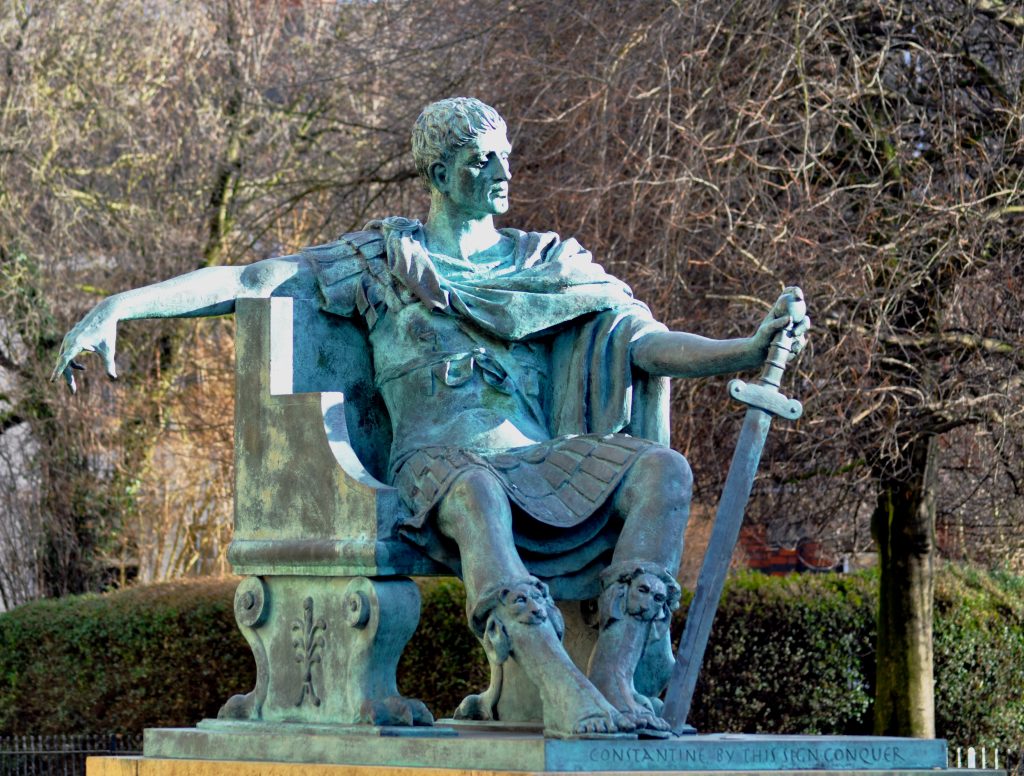
In Roman society, patriarchy was a juridical, ancestral, and sacral architecture. At its summit stood the pater familias, the living male head of the familia, whose patria potestas gathered children, descendants, household property, adoption, inheritance, and domestic continuity beneath one sovereign axis; Britannica defines this power as the authority exercised by the male head over children and descendants in the male line, noting that originally the father alone held private-law rights.1 The Roman household was therefore no sentimental modern ‘family’, but a little polity, a cultic and legal organism ordered around masculine command, ancestral transmission, and the continuity of the gens.
Besides this central power stood tutela mulierum, the guardianship over women: an adult woman sui iuris, though capable of owning and administering property, still required the auctoritas of a male tutor for certain formal legal acts.2 3 4 This was distinct from patria potestas, for the woman under tutela was neither child nor wife under paternal power, nor was her tutor necessarily the sovereign master of her whole person and estate; yet the institution preserved the same metaphysical grammar. The feminine legal person, when detached from father, husband, or direct household subjection, was still placed within a masculine juridical horizon, supervised through auctoritas, so that property, marriage, lineage, and public consequence did not drift away from the ordering principle of the Roman house. By the classical period this guardianship had already been softened, and Gaius could say that women of full age conducted their own affairs while the tutor’s intervention was often a matter of form; Morrell notes that Gaius presents the tutor’s auctoritas as antiquated and largely formal, while Szabó likewise summarises the Gaius passage as showing adult women administering their own property despite formal guardianship.5 Augustus understood this more deeply than later Christian legislators: exemption from tutela through the ius liberorum made female legal release a reward for fertility, binding liberty itself to maternity, household increase, and service to Rome.6
Constantine’s abolition of tutela mulierum was therefore a juridical severance from one of Rome’s older patriarchal ligatures. The institution had placed the adult woman sui iuris under the authorising shadow of a male tutor, so that even where she possessed property, certain solemn acts still required masculine auctoritas; by Constantine’s day the form had been weakened, but the civilisational memory remained. His legislation between 320 and 325 most plausibly brought the ancient guardianship to its end; Arjava supports this reconstruction through legal evidence and Egyptian papyri, where appeals to the ius liberorum practically disappear after Constantine’s authority reached Egypt.7 From a Roman sacred-patriarchal view, the significance is grave: the older law, however attenuated, still preserved the metaphysical truth that the feminine legal person stood within a masculine axis of house, gens, and civic-sacral order. Augustus had kept the principle alive by binding female exemption to maternity; Constantine cut the tie between woman, fertility, and patriarchal oversight, turning what had been a Roman hierarchy of household and cultic continuity into a more abstract juridical individualism. In that sense, the abolition of tutela mulierum belongs not merely to legal history, but to the deeper involution by which Rome’s ancestral forms were retained as shells while their sacred patriarchal substance was quietly withdrawn.
The cult that had admonished its followers to first ‘hate the father’ (Luke 14:26), as is now the triumphing sentiment, and then to ‘call no man father’ (Matthew 23:9) in a world credited to the Roman pater, had at last succeeded in abolishing the last vestiges of the father. Christianity appears less as the destroyer of hierarchy by open revolt than as the solvent that entered beneath the thresholds of the household and the city, moving first among those least rooted in the ancestral sacra: plebeians, slaves, widows, women, the disinherited, the spiritually aggrieved, and all who found in the new creed a tribunal higher than the father, the husband, the magistrate, the ancestor, and the god of the city. Its promise was inwards elevation: the last shall be first, the meek sanctified, the soul detached from blood, rank, cult, and civic station; yet this very inwardness carried a social consequence, because it allowed the subordinate person to imagine a dignity prior to, and finally superior to, the Roman order that had once given form to life.
There is, then, an irony in Constantine too severe to ignore. The same emperor later canonised in Christian memory as the hinge of a new dispensation appears, in his own dynastic house, as one who exercised the old imperial and paternal severity in its most terrible form. In 326 CE, his eldest son Crispus was executed; soon after, Fausta, his wife, was also put to death, later tradition placing her end in an overheated bath.8 The motives remain obscure, darkened by court scandal, hostile sources, and the shape of a Phaedra-esque intrigue; yet the essential fact remains. Constantine, who presided over the Christian transformation of Roman sovereignty, did not stand as some meek apostle of domestic sentimentalism. He acted, in extremis, as Roman lord of house and empire, wielding something that looks far closer to the ius vitae necisque of patria potestas than to the softened marital and familial pieties later projected upon him: son and wife alike removed beneath the terrible judgement of the imperial household. If Christian memory later sought to read such blood through guilt, penitence, or spiritual conversion, that only deepens the hypocrisy and widens the gulf between the two opposing views: Rome sees the terrible judgement of the sovereign house; Christianity converts the same act into penitential theatre, making the houselord kneel before the creed that would dissolve his very sacred grammar. The point is clear: the Roman act remains Roman; the Christian reading arrives afterwards to moralise and appropriate it.
In this sense, later feminist-type liberation did not arise as an inexplicable modern accident, but as one of the delayed fruits of a spiritual inversion already latent in the Christian attack upon patria potestas, household cult, aristocratic birth, and the sacral hierarchy of the masculine line; and in the present day is evident the total culmination of the twin venomous, radical anti-paternal maxims of Luke and Matthew. The Roman woman under the old order was situated within house, lineage, fertility, and ancestral continuity; the Christian woman, even when outwardly obedient, possessed a rival metaphysical court in which virgin, widow, martyr, nun, and moral conscience could stand above husband, father, and city. What modernity later calls ‘liberation’ is therefore, from this view, the secular afterlife of Christian spiritual egalitarianism: the old supernatural rhetoric falls away, but the revolt of the interior person against sacred form remains. Christianity did not need to proclaim feminism in modern terms; it had already enthroned the principle from which such emancipation could descend, namely that the private soul, abstracted from caste, sex, household, and cult, may judge the entire visible order in the name of a higher, anti-Roman law.
Scholia (click to expand)
1 Encyclopaedia Britannica, ‘Patria potestas’, defines the father’s power as authority exercised by the male head of the family over children and descendants in the male line, and notes that originally the father alone held rights in private law.
2 Gaius, Institutes 1.190–191, in the Harvard Ames Foundation translation, states that women of full age conducted their own affairs, with the tutor’s auctoritas in certain cases often reduced to a matter of form.
3 William Smith’s Dictionary of Greek and Roman Antiquities, entry ‘Tutor’, distinguishes women from underage wards by noting that adult women could manage their own affairs and required a tutor’s auctoritas only in certain cases.
4 Mária Szabó, ‘Tutela mulierum: The Institution of Guardianship over Women in Roman Law’, summarises the Gaius passage as showing that adult women, although legally under guardianship, administered their own property, while the tutor’s sanction had become a formal condition for certain transactions.
5 Kimberly Morrell, ‘Tutela mulierum and the Augustan marriage laws’, notes Gaius’ description of the tutor’s auctoritas as already antiquated and largely formal by the classical period, with praetorian intervention and earlier reforms having weakened the institution before Constantine.
6 Ibid. explains that the Augustan ius liberorum freed freeborn women with three children, and freedwomen with four, from tutela mulierum.
7 Antti Arjava, ‘The End of Tutela Mulierum’, Journal of Roman Studies, argues that Constantine’s legislation between 320 and 325 most plausibly ended the institution, with Egyptian papyrological evidence showing the practical disappearance of appeals to the ius liberorum after Constantine’s authority reached Egypt. A caution is necessary here. Arjava’s statement that tutela mulierum had undergone a ‘well-known weakening’ by the early Principate is useful as a technical legal observation, but his emphasis easily lends itself to the familiar modern gloss in which every loosening of female restraint is treated as a presumptive liberal movement towards full equality and autonomy. A modern legal historian, especially when writing on women’s legal status, may instinctively foreground the loosening of a restriction as ‘weakening’ or proto-emancipation, while allowing the larger Augustan restoration, with its severe reproductive, marital, and civic discipline, to recede into the background; such emphasis is hardly neutral in a field already saturated with liberal and feminist assumptions, and increasingly shaped by female scholars who benefit from the very emancipation whose categories they project backwards into Rome, thereby turning the historiographical habit itself into evidence for the point. In the Augustan context this is misleading. The same regime that created the ius liberorum also strengthened marriage, punished adultery, disciplined celibacy, rewarded fertility, and subordinated private household life to the reproductive and moral command of the State, in accordance with a revivalist religious movement lauded as the affirmation of the archaic paternal Roman Tradition, rather than any abstract doctrine of female emancipation. Moreover, Augustus’ affirmation of Apollonian cult and identification with Orestes classes him as an affirmation of the archaic paternal right. The release of certain women from tutela was therefore no liberal emancipation, but a conditional exemption granted within a harsher paternal economy: guardianship yielded, in that instance, to lawful fertility and the continuation of Rome. The ius liberorum did not enthrone woman as sovereign individual, but released her from one juridical restraint after she had served the higher civic and reproductive demand.
8 On the deaths of Crispus and Fausta in 326 CE, and the later tradition that Fausta was killed in an overheated bath, see Zosimus, Historia Nova 2.29; Zonaras, Epitome Historiarum 13.2; cf. David Woods, ‘On the Death of the Empress Fausta’, Greece & Rome 45.1 (1998), 70–86
The Pater Patriae of Tradition (‘Father of the Fatherland’) Usurped by the Nuptiae Nupta (‘Bride of the Brideland’) of Social Justice and Moral Panic
Traditional vocabulary understands the lunar mode of piety as receptive, cool, and reflective; it does not originate light, it receives it and gives it back softened; its virtues are obedience, modesty, patience, and kenōsis (κένωσις, ‘the act of emptying’, i.e. the self-emptying of Jesus); it listens for will and conforms; it prefers vigil, fast, confession, and hymn; it keeps inner rooms swept and accomodating, like the bride, so the presence may enter; it honours rule by yielding to it rather than by promulgating it. The solar mode is active and radiant; it gives rather than borrows; its virtues are judgement, founding, provision, oath, and sacrifice; it sets the calendar, names the office, consecrates the house, and bears sentence; it seeks to make the divine will operative in law, rite, and polity. Both belong in a complete order; yet they do so hierarchically, with the solar as measure and the lunar as answer.
In the Christian ecclēsia the lunar temper predominates; the Church calls herself Bride; the central acts are hearing the Word, receiving grace, and conforming the will; sanctity is imaged as humility before a transcendent Spouse; even rule tends to present itself as service, and power is praised when it effaces itself. Marian devotions, the monastic ideals of poverty and meekness, the rhetoric of being ‘docile to the Spirit’, and liturgies that culminate in reception rather than in royal consecration all reinforce a piety of reflected light. The result is a spiritual habit rich in tenderness and penitence, yet less able to crown the solar virtues of magistracy and founding; where this habit becomes civil grammar, the lunar overspreads the solar, and the city learns to value acquiescence more than command. A restoration of balance would not abolish the lunar; it would seat it as honoured accompaniment, so that the radiant source speaks with authority and the reflective heart keeps the note.
5 Let the same mind be in you that was in Christ Jesus,
Philippians 2:5-8, NRSV
6 who, though he existed in the form of God,
did not regard equality with God
as something to be grasped,
7 but emptied himself (heauton ekenōsen),
taking the form of a slave,
assuming human likeness.
And being found in appearance as a human,
8 he humbled himself
and became obedient to the point of death—
even death on a cross.
Even the language of ‘servant leadership’ participates in the same current. Service as the twin of command is a royal virtue; service as a substitute for command dissolves office into servile ‘niceness’. The father who once judged within his forum learns to apologise to a greater power for deciding; he consults feelings before virile law; he seeks permission to be what he already is. The family becomes a communal prayer group moderated by a chaplain, not a domus presided over by a magistrate. Where forma abdicates, processes multiply; the man proves his virtue by submitting to supervision rather than by bearing responsibility and delivering outcomes.
In a Roman register this shifts primacy from patria potestas to corpus mysticum; the paterfamilias ceases to be the embodied centre of worship and law, and becomes himself a petitioner before a community that pronounces on his bonds. Once the father’s maiestas is negated in principle, wife and children are, by the same logic, rendered negotiable; their duties are filtered through an ecclesial test that may command separation, renunciation, or redistribution whenever the spiritual rule so directs.


The consequences for civil order follow. Where the house had stood as first polity under a visible head, the verse authorises a standing preference for vocation over manus, for congregational claims over succession, for itinerant mission over estate. The ecclesia declares its competence to call a man away from his lararium, to judge his ties as impediments if they constrain zeal, and to praise the abandonment of inherited offices as proof of purity. From that vantage the domus is not the miniature kingdom to be crowned and kept; it is a set of relations to be subordinated and, if need be, dissolved. The logic is consistent: negate the dominus, and the domus is thinned to a set of revocable affections; enthrone an abstract ‘Father’ above the living pater, and the altar, name, and archive of the house pass under an authority that answers elsewhere.
One need not reach for correlation in abstracts, the connection is stated outright in catechism: in Christian polity the decisive image is the ecclēsia as the Bride of Christ. Scripture crowns the metaphor: a single Body of believers stands equal before the heavenly Bridegroom; the Head is Christ who is absent to the senses yet present by preaching and sacrament; the members possess parity of access to grace and are told that in this Body ‘there is neither Jew nor Greek … male nor female.’ The model relocates sovereignty. The living paterfamilias and the sacred emperor cease to be the proximate centres of worship and law; the corpus mysticum takes their place, with an invisible Head who cannot be summoned to the forum, only a visible clergy who, in his prolonged absence, interpret his will. What had been a household axis, embodied in one man who answers to gods and city for wife, children, clients, and estate, is replaced by a congregational axis in which every baptised person enters as an equal petitioner before the same Bridegroom.
The Roman Augustus was a living sovereign, the father of the fatherland whom one could see, hear, and touch at all times; a man who convened senate and people, issued sentence, and made himself accountable in speech as well as rite, as his spiritual influence ordered the sacred City. He spoke under the auspices of Iuppiter Optimus Maximus, with Apollo Palatinus as tutelary, vowed victory to Mars Ultor, guarded hearth and succession with Vesta and Iuno Regina, and took counsel of Minerva; in his person the Genius Augusti made the will of the gods intelligible to the City.
The Christian vision carries an inner logic. If the Church is the Bride, then every household is a satellite of that nuptial assembly; the father is no longer the domestic priest-king but a communicant among equals. Office yields to vocation, jurisdiction to pastoral care, oath and archive to testimony and feeling. The Head remains a universal abstraction, invoked to bind or loose marriages, to call men from their craft or house, to redistribute alms by distant authority. The emperor himself is translated into a steward of the Bride’s peace rather than the living image of Iuppiter Pater; the paterfamilias becomes a moral client of homilies that weigh his tenderness more than his judgement.
The Pater Patriae of Tradition (‘Father of the Fatherland’) is usurped by the Nuptiae Nupta (‘Bride of the Brideland’). Equality before the heavenly Bridegroom then descends as parity within the congregation; the domus loses its crowned centre because another centre has been enthroned above it, and the rites that once founded a house now serve a fellowship that judges the house.
The consequence is profound for form. Measure migrates from hearth to pulpit, from name to message, from altar of the Larēs to an abstract Head who speaks by proxies and documents. The ecclesial Bride is a body of equals beneath a distant Spouse that knows no Platonic measure nor Form; it perfects the displacement begun when the father was told to stand as a supplicant with wife and child. In such a settlement the embodied sovereign—pater or princeps—no longer supplies immediate law; he is folded into an amorphous People of God whose Head cannot be hailed in court and whose will is announced by councils, synods, catechisms, and committees. The old Roman hierarchy of house and city bends to a new hierarchy of community under an invisible king, and the centre of divine presence moves from a specific man and his hearth to a universal society that claims his household in the name of a Bridegroom he does not personate.
In this schema the pre-Christian forms remain in outline—altar, marriage, blessing, even the pre-Christian Roman vocabulary of Pater and ‘fatherhood’—yet their content shifts; the Pater becomes a conduit rather than a source, his auctoritas becomes pastoral sentiment, and the standard by which he is judged is the abstract projection of care that those below him articulate and that ecclesial or bureaucratic arbiters ratify.
The result is a complete metaphysical reversal: the divine no longer stands at the centre as luminous measure embodied in the house itself, by the patriarch; it is floated above as a universal sanction for every demand arising from below, and the ancient offices are kept as shells through which the new, infernal commands speak. A restoration requires the re-centring of worship and judgement in the living pater, so that counsel from wife and child is honoured as counsel, not enthroned as oracle, and so that the household’s rites answer upward to heaven through a constituted head rather than outward to abstractions that dissolve the headship they claim to bless.
We are taught to worship an absence. The Head of the ecclesia is proclaimed present, yet never appears; his voice is mediated by men who read, interpret, and instruct in his stead; his will descends as minutes, canons, programmes, and homilies, and that is when the church itself has not degenerated into a ‘personal relationship’ where the absence is filled by ones own thoughts and patriarchal projections. The worshipper does not face a sovereign he can question at the hearth or hail in the forum; he submits to a chain of proxies, papers and split-personalities. Authority dissolves into a liturgy of representation: a pulpit speaks, a committee confirms, a catechism codifies, and the living centre is nowhere to be found.
Form yields to a cult of the Void. Where forma once set limit, the age bows before τὸ κενόν (to kenón, ‘the empty’), praises ἡ χώρα (hē chṓra, the formless ‘receptacle‘), and treats ἄπειρον (ápeiron, the boundless) as if it were grace. In this register the Void takes a feminine aspect, not as honoured matrix under law but as the absence of law: receptivity without measure, becoming without aim, a womb unvisited by seed. Worship so directed does not crown the house; it dissolves it, for what receives without rule devours what it cannot shape.
In the Christian dispensation the body is trained to silence itself; mortification, the cauterising of beauty as ‘vanity’, and the emasculation of glory by the suspicion of pride turn flesh into a site to be governed by introspective sterility rather than outwards mastery, measure and form; iconoclasm tears down statues, and the heroic nude is denigrated as temptation by the illiterate horde rather than Polykleitian Canon, so the public pedagogy by which number ruled matter gives way to penitential inwardness and a piety that mistrusts visibility. The result is not merely a change of taste; it is the removal of a standard that made strength legible, for where statues no longer instruct and where beauty is treated as danger, the city forgets how to read law in the body and how to associate virtue with poised embodiment.
The opposite temper appears in the Christian iconoclastic mood, which read the heroic nude and the measured bodies of the gods as snares of the flesh rather than as lessons in order. Where a Polykleitan figure taught proportion, chastened strength, and the serenity of number, the new gaze fastened on exposed skin and degraded it into sexual provocation. The Doric grammar of limit and the Platonic preference for eidos were set aside as ornaments of pagan pride; marble that once schooled the senses to love measure became, in this reading, an incitement to satanic vanity. What had been civic pedagogy was recast in the feminine register as peril to bridal chastity, and the body’s sacred Canon fell under suspicion as a rival to grace.
Look back a little and see what has happened. Nineteen hundred years ago you were an innocent, carefree, pagan race. You worshipped countless gods and goddesses, the spirits of the air, of the running streams and of the woodland. You took unblushing pride in the glory of your naked bodies. You carved images of your gods and of the tantalising human figure. You delighted in the combats of the field, the arena and the battle-ground. War and slavery were fixed institutions in your systems. Disporting yourselves on the hillsides and in the valleys of the great outdoors, you took to speculating on the wonder and mystery of life and laid the foundations of natural science and philosophy. Yours was a noble, sensual culture, unirked by the prickings of a social conscience or by any sentimental questionings about human equality. Who knows what great and glorious destiny might have been yours if we had left you alone.
Marcus Eli Ravage, ‘A Real Case Against the Jews’, The Century Magazine, January 1928
But we did not leave you alone. We took you in hand and pulled down the beautiful and generous structure you had reared, and changed the whole course of your history. We conquered you as no empire of yours ever subjugated Africa or Asia.

Out of that suspicion grew a devotional optics that prized inwards contrition over visible form. Images were stripped, statues toppled, and the very language of sacred geometry was muffled. Beauty and aesthetics as a medium by which the divine could ennoble and be apprehended ceased to be a public standard and became either an irrelevance or a danger; proportion no longer tutored the soul, because the senses were thought unfit to carry covenantal doctrine as theological debate became the medium of choice. In missing the higher register—number as law, the body as a vessel of métron, the temple as theophany—such a culture severed art from metaphysics. Where the heroic nude had once linked strength to measure and presence to divine favour, the iconoclastic habit left absence in its place, and with it a populace untrained in reading form as a path toward the intelligible.
The iconoclastic zeal that tore down statues of gods, heroes and generals alike, constituted no purification but an abolition from which civilisation has not yet recovered—the erasure of the heroic nude as a symbol of harmony between the soul’s virtue and the body’s form that once trained the civic grammar of Forma and proportion. Where the Hellenic and Roman artist sought the canon, the divine proportion of Polykleitos wherein beauty mirrored the soul’s equilibrium, the Christian penitent saw sin; the flesh became a wound to be scourged, a temptation to be buried beneath sackcloth and ash.
The body, once the luminous vessel of order, was made suspect, profane, and mute before the imagined purity of the invisible; more akin to the void of unformed materia than forma.

Its modern echo, though garbed in pastel slogans and the hysterical tenderness of the age, is of the same lineage. The radical feminist cult, preaching its faith of ‘body positivity’, unkempt and unhygenic refusal to groom body hair, and chanting its mantras of ‘love every body’ and ‘healthy at every size’, proclaims not beauty’s restoration but its void. It crowns absence with affirmation, mistaking dissolution for acceptance; for in rejecting proportion, restraint, and the vertical discipline of form, it inherits the same nihilistic will of emancipation that once violently shattered the marble of gods.
In the continuum between the Christian mortification and the feminist emancipation, a vacancy appears: the virile heroic nude is first denounced as pride, then replaced by an ethic that refuses masculine hierarchy of any kind; the activist slogan rejects shame at the same time as it also abdicates measure, so that the very idea of an aspirational Form to which material bodies might be educated is denigrated as tyrannical oppression; affirmation replaces canon, sentiment replaces discipline, and the criterion becomes feeling rather than virile clarity and proportion; what remains is either mortified flesh that hides from view or a formless permissiveness that denies the claims of métron and symmetria, and in neither case does the body serve as an axis of civic order or a visible schooling in virtue.
Both cults—one deprived, the other indulgent—are twin negations of the Canon of Polykleitos; one despises flesh in the name of heaven, the other adores decay in the name of equality. Neither remembers that beauty was once a law.


The feminine again becomes an abominable wildgrowth as every dark claimant rises to the fore, once unrestrained and uncultivated. Once more, women demonstrate their boundless, contradictory nature bereft of all intelligence, in the sense of supra-sensible ideal, and are able to be shaped into any form desired, even the most debased and humiliating; therefore becoming the most vulnerable and easily duped vehicles of modernist degeneracy.
As an aside, it was Augustus, the genius of an Olympian empire, that refused to dine with freedmen and considered looking at dwarves and the crippled to solicit a bad omen (monstrum). While it was the radical Rabbi that proclaimed the first will be last and the last will be first, placing the disinherited and dysfunctional at the Olympian summit. We certainly confirm the antipodean monstrosity that arises in the absence of the divine form venerated by the Graeco-Romans.
This pedagogy reshapes the soul. One learns to trust the sign over the signer, the document over the man, the office over the officer. Presence yields to procedure; hierarchy thins into guidance; judgement is displaced by compliance. A Roman could grasp his ruler’s hand, hear his oath, appeal to his auctoritas under the eyes of Iuppiter, Apollo, Mars, Vesta, and Iuno. We are trained to accept an empty throne, to venerate messages that cannot be cross-examined, and to call obedience to intermediaries piety. The habits formed in such worship spread: households become assemblies moderated by counsellors; cities become programmes administered by clerks. Where the centre is absent, power migrates to those who speak in its name, and reverence becomes a discipline of believing without the relief of sight.
The maiming of the genitals of Hadrianus Augustus’ heroic nude (in an earlier section, here) betrays no piety, only zealous panic. It is the gesture of a mind that cannot bear measure in the flesh, that mistakes métron for provocation and symmetria for pride, and so abolishes what it cannot master; a primitive prejudice continually aggravated and preyed upon in radical movements, to our very day.
In later centuries, discomfort with the heroic nude was sometimes met with a painter’s glaze or a discreet fig leaf, a prudential veil that conceded modesty while leaving the Canon intact. Here there is no such economy, only barbaric, unlearned violence. The genitals were not covered but smashed, the marble pulverised by a blunt tool so that absence itself becomes the statement.
It reads as a symbolic castration, nay, a veritable circumcision, an initiation into Judaic covenantal law, as an assault on the body’s generative axis itself and on the public pedagogy of métron and symmetria that the sacred statue taught. Such blows are administered by resentful zeal, by prudery armed with a hammer, and by a theology that fears the senses rather than instructs them. Where the Canon once taught strength under limit and the body served as a public theorem of order, the vandal answers with a void; it is enforced pathos and self-effacement masquerading as virtue and asceticism, an anxious refusal of form that leaves only wreckage where law and beauty had stood.
In the inverted Christian scheme the feminine supplies the rule by which all is judged; her modesty and abstinence become the de facto canon, and so limit (πέρας, péras) is set from below. The masculine, deprived of its office as forma, is drawn into the currents it ought to measure; appetite and programme together pull him outward into motion (κίνησις, kínēsis) under the pressure of desire (ὄρεξις, órexis). What should be a solar standard becomes the lunar veto; negations replace law; he proves purity by compliance rather than by founding, providing, and judging. Thus actus yields to potentia, lex to mood, and the house drifts: the man entangled in the stream of matter, the woman’s tests enthroned as norm. Peace does not follow, because polarity has lost rank; only when measure descends again from the father, and the receptive power answers within that measure, do movement and limit reconcile into order.
Such violence reveals a temperament that mistakes form for threat and proportion for pride. It is the piety of fear rather than mastery, a zeal that cannot govern the senses and therefore seeks to annihilate their object. The blow answers law in the body with nullity, as if to extirpate virility from the civic image and to unseat the principle of measure that binds flesh to office. What should have been corrected by rite and rank is instead obliterated by resentment. The result is not moral uplift but a void where rule once stood, a mute testimony that the will to abolish is strongest where the capacity to order has failed.
Liturgically the translation is complete when male devotion is encouraged to imagine itself as the Bride. Bridal mysticism has its place at the edges of ascetic life; converted into a civil catechism it invites the father to stand before his dependants as the one who waits, longs, and yields. The economy of symbols reverses. The lunar virtues of modesty, reticence and soft patience are enthroned as the primary tests of the male; the solar virtues of judgement, constancy and command are scorned, and tolerated only if they can be neutralised and expressed without offence. Boys are trained to avoid stain; they are not trained to bear rule. Temperance movements exemplify the same inversion. Wine and strong drink, once governed by calendar, aristocratic form, and rite, are anathematised as such; temperance becomes a universal abstinence in which the male is praised for his emptiness, sterility and prolonged childhood, rather than mastery and metaphysical virility. A sober house in the Roman sense is one where the pater regulates feasts, stores, and measures; a sober house in the Temperance sense is one where the pater proves his submission to a code authored elsewhere. The virtue is displaced from governance to negation; the man does not order, he refrains. What should be a solar discipline—rule over appetite by rule over time—becomes a lunar fast without liturgy, a permanent Lent with no Easter in view.
To a Greek or a Roman the pater stands within the sacred. Zeus is invoked as ‘patēr andrôn te theôn te‘, Jupiter is ‘Iovi Patri‘ or ‘Optimus Maximus‘, and in the house the living father bears numen praesens as judge at the hearth. Pietas binds son to sire, and the city brands offences against parents with ritual horror. To instruct a man to “hate” his father, however clothed in exegetical softness, reads as a demand to break the axis by which law and worship descend. It is not only impiety, it is treason against the order of being, since patria potestas and sacra privata are of one line. In that world the father is not a negotiable affection, he is a constituted person through whom the gods are near, and to set enmity between son and sire is to set enmity within the cosmos.
The imperial person completes the same grammar at public scale; just as Romans extended the grandeur of patriarchal logic from sacred household to sacred State, the Christian polemicists extend their critiques of monarchy in reverse, from State into household patriarchy itself. ‘Augustus’ designates not a talented official nor bureaucrat, he is quite literally sacra in corpore, the crowned focus of auctoritas, the earthly mirror of Iuppiter Pater, the throne usurped by the Christian schema. To replace the Augustan image with the cult of a crucified slave, to enthrone as universal sovereign a victim put to death by the state, is a deliberate inversion of the royal type. It translates maiestas into pathos, kingly office into passion-narrative, and the city’s axis into a theatre of pity. The trend of downwards descent begins with the initial untethering of the sacral axis.
Government by kings was first introduced into the world by the Heathens, from whom the children of Israel copied the custom. It was the most prosperous invention the Devil ever set on foot for the promotion of idolatry. The Heathens paid divine honours to their deceased kings, and the Christian world hath improved on the plan, by doing the same to their living ones. How impious is the title of sacred majesty applied to a worm, who in the midst of his splendor is crumbling into dust!
As the exalting one man so greatly above the rest cannot be justified on the equal rights of nature, so neither can it be defended on the authority of scripture; for the will of the Almighty, as declared by Gideon and the prophet Samuel, expressly disapproves of government by kings. All anti-monarchical parts of scripture have been very smoothly glossed over in monarchical governments, but they undoubtedly merit the attention of countries which have their governments yet to form. RENDER UNTO CAESAR THE THINGS WHICH ARE CAESAR’S is the scripture doctrine of courts, yet it is no support of monarchical government, for the Jews at that time were without a king, and in a state of vassalage to the Romans.
[…]
To the evil of monarchy we have added that of hereditary succession; and as the first is a degradation and lessening of ourselves, so the second, claimed as a matter of right, is an insult and an imposition on posterity. For all men being originally equals, no ONE by BIRTH could have a right to set up his own family in perpetual preference to all others for ever, and though himself might deserve SOME decent degree of honours of his contemporaries, yet his descendants might be far too unworthy to inherit them. One of the strongest NATURAL proofs of the folly of hereditary right in kings, is, that nature disapproves it, otherwise she would not so frequently turn it into ridicule by giving mankind an ASS FOR A LION.
Of Monarchy and Hereditary Succession; Common Sense, Thomas Paine; as hosted by Marxists.org
The entrenchment of feminism is not an accident of late modern taste; it is the natural sequel to the Christianisation of the patriarchal domus.
The consequence is metaphysical before it is social. Forma dissolves into materia when the measuring principle is asked to prove its worth by bridal chastity and permanent abstention. A father who glories in having had only his wife may honour faithfulness in a private key; if this becomes the crown of his public ethic, other crowns fall: succession, jurisdiction, patronage, oath, and account. A man who boasts of teetotal rectitude may keep himself from vice; if this becomes the sign of godly virtue, the calendar that once governed feast and fast is forgotten, and the house lives on rules it did not write. What should have been hierarchy becomes hygiene.

Once the father was translated from forma and magistracy into a pastoral client of a higher ‘Father’, the household lost its solar measure and was catechised instead in the bridal ethics of care, sentiment, and renunciation. In that frame the feminine ideal of Becoming—genesis, flux, therapeutic adaptation, the priority of process over form—acquired moral primacy; what the Greeks named γίγνεσθαι (gígnesthai) and κίνησις (kínēsis) became the standard, while limit (πέρας, péras) and law receded. Pastoral tenderness replaced virile judgement, safeguarding displaced sovereignty, and negations stood where rites and offices once bound eros to duty.
Feminism inherits this settlement and perfects it: it enthrones the receptive and procedural as norm, demands that authority prove itself by abstentions and apologies, and treats hierarchy as a vice rather than a principled grammar. Restore the father as formal cause and the axis realigns; until then, the culture will continue to praise Becoming and punish Being.
The subversion is not subtle. It asks the people to venerate weakness as the measure of rule, to take the scaffold as a throne, and to imagine public order on the template of private suffering. A modern equivalent would be to set a Baphomet in a civic shrine and name it “progress,” for the move is the same in kind, an enthronement of the contrary sign as if the contrary were fulfilment. Where the ancient form crowned strength ordered to justice and service, the new emblem sanctifies reversal as a principle, and the result is not mercy governed by law but a polity taught to prefer negation to hierarchy.
In the civic order that followed the Christianisation of the domus, the offices once gathered in the father have been redistributed into procedures, committees, and professions; women, formed by those procedures and concentrated in the institutions that transmit them—school, clinic, parish-office, charity, HR—now exercise, in aggregate, a style of authority that imitates patriarchal headship while answering to external scripts. The result is a public tutela without a visible tutor: codes of conduct promulgated as moral law; reputational sanctions applied as household discipline; budgets and benefits dispensed as patronage; admissions, exclusions, and the continual infantilising narrative of ‘safeguarding’ enforced as if at a family bar. What was once royal judgement seated at a hearth becomes supervision circulated through networks of care; the sign of authority is no longer a seal and a sentence, but a policy and a training; the sanction is not a father’s word, but access granted or withdrawn across cult, school, and workplace.
This settlement alters the substance of rule. The idiom is procedural and therapeutic, not juridical; the measure is risk-aversion and sentiment, not succession and oath; the calendar is audit and review, not feast and fast. Women, honourably fulfilling the roles to which the age invites them, become the principal officers of this dispersed magistracy; they carry keys, ledgers, and reputations; they compel compliance without ever naming sovereignty. In such a world the headship of the house is crowded from without by soft jurisdiction and from within by the expectation that domestic order defer to external standards. A restoration would not banish feminine stewardship; it would place it again under a visible forma: the father’s chartered forum, a household calendar binding pity to justice, and the re-centring of name, estate, and rite, so that the many worthy labours of women serve a law that is once more domestic rather than managerial.

A social order that relocates measure from embodied office to universal welcome will, by design, draw those who cannot or will not meet greater standards. When hierarchy yields to a fellowship of equals beneath an absent Head, entry shifts from proof of capacity to profession of need. The result is predictable. Those under censure in the older canon find sanctuary in the new one; what once demanded amendment of life now asks for testimony of feeling. Celsus saw this early. In the Alēthēs Logos (known through Origen), he charges that the nascent Church recruited those ‘of the vulgar sort’, the guilty who sought to evade civic scrutiny, debtors, runaways, prostitutes, criminals, the easily led, and children, fleeing from intelligent and noble men; he mocks gatherings that celebrate credulity over discipline and welcome those whom the city would have corrected or excluded. His polemic is acid, yet it captures a structural fact: when parity is the gate and pastoral comfort the atmosphere, the threshold lowers, standards soften, and institutions become safe harbours for the aggrieved, the unstable, and the evasive.
An inverted schema also reverses incentives. If virtue is indexed to displays of victimhood, confession replaces restitution; grievance outruns amendment; reputation accrues to those who are treated rather than those who take charge. Offices that once filtered for judgment, continence, and stewardship begin to reward emotive fluency and aversion to rule. Over time such bodies tilt toward the pathological because pathology is more legible in a regime that prizes wounds over works. Traditional polities solved this with form: visible ranks, vows that bind, audits that bite, and rites that require preparation before admission. Where form is displaced by inclusion, the house fills first with those whom form would have disciplined, and the ethos that follows is one of permanent clinic rather than ordered commonwealth.
In Rome a man’s virility and dignity carried sacral weight. Virtus took its name from vir and denoted more than courage in arms; it named command of oneself and of one’s house, the capacity to beget heirs, to found, to judge, and to protect. Cult confirmed the grammar. The fascinum guarded legions and infants as an apotropaic sign; Liber and Priapus marked fertility as a civic good; Fortuna Virilis received honours that linked male potency to public order. Law and custom drew a bright line between pudicitia as restraint and stuprum as dishonour; an adult citizen who made himself sexually passive was shamed because he abdicated the active, form-giving office proper to his rank. Male continence meant mastery and measure rather than negation; rightful use, not self-erasure, kept the peace of the domus.
The virtus of the imperial person was, more than private excellence, a civic necessity, the visible conduit of the pax deōrum into law, harvest, and arms; in him numen and office met, so that his right action steadied the seasons and his continence secured the salūs publica. When the princeps stood virile and measured under Iuppiter, the city believed the world itself held its line—Fortūna, Mars, and Ceres answering to a single, ordered will for the common peace.
Nowhere is the destruction of the cosmic axis of Roman virtus at the hands of Christian hubris-meekness more evident than in the insolence of the modern woman; the radical feminine, loosed from every measure of form, expects of its victims every wrong to be met by patient acquiescence; it canonises forbearance as the only virtue and treats the measured masculine recourse to correction, revolt, or sentence as sin and sickness, amidst deliberate campaigns to pathologise patriarchy as a neurosis. In that climate justice is reframed as need for therapy, courage as ‘harm’, and proportionate force as pathology; grievance may speak without limit, yet judgement may not act. The result is a polity that can only absorb injury as it forbids remedy, where procedure replaces verdict and endurance replaces peace. Only when a lawful masculine measure is restored—capable of warning, deciding, and, when due, striking—does mercy cease to be a veto and become a virtue under rule.
In Roman sexual ethics the adult male citizen was expected to act, not be acted upon; to adopt a passivus role marked him with the taint of the pathicus/cinaedus and drew scorn as a failure of virtus. Such conduct, especially where freeborn youths were involved, could expose a man to prosecution for stuprum under statutes such as the (obscure) lex Scantinia, and—more commonly—to infamia, with civic disabilities that might include exclusion from juries, public office, and credible witness. Satirists and orators make the social penalty plain: a reputation for sexual passivity ruined standing, wrecked patronage networks, and was wielded as a political bludgeon. In the army, where disciplina and manly habitus were policed, a ‘soft’ reputation risked severe punishment and career death. In short, the Roman code treated male receptivity and passivity not as a harmless preference but as a civic defect that un-fitted a man to rule himself, his household, and others.
By contrast, modern liberal currents that style themselves emancipatory, themselves offshoots of Christian morals, often continue the trend of celebrating a theatrical passivity in men. The model held up is compliant, self-cancelling, and erotically receptive in spirit even when chaste in deed; it seeks approval in displays of harmlessness and treats assertive agency as a vice to be unlearnt. In practice this reverses the Roman settlement. Modern erotics catechise passivity as virtue, packaging femdom choreographies and tableaux of pegging as imperatives of moral improvement rather than emasculating and destructive spectacle. A whole market normalises male sexual receptivity as the ideal—sissification, cuckoldry, and humiliation scenarios recast abdication as growth and sell inversion as enlightenment. Pornographic scripts reward the man who yields, who asks leave to exist, who performs softness on command; agency is traded for compliance and branded as healing, as the women are masculinised and expectant in kind. The message is catechetical: to be good is to be pliant, to be godly is to be safe and passive, and to be praised is to refuse the formative act that once marked virility.
The solar term that ought to shape becomes the lunar term that is shaped; forma yields to flux, actus to potentia, and the masculine is praised in proportion to how little it impresses its measure upon the world.
The result is not gentleness crowned by rule but a vacancy that invites stronger currents to occupy the space once held by the father. Where masculinity has not been stigmatised into oblivion, it remains primitive and unformed by the forma of dignity and virtus. A restoration would not reject restraint or tenderness; it would restore them to their place as subjects of virile office, so that continence is power formed by law, not the performance of passivity, and the house is ordered by a man who knows his generative dignity to be sacred.
Modern Woman; the Final, Unrestrained Manifestation of the Degenerative Feminine Gone Ghost
She glides through glass and signal, white as the glow of a screen; no longer moaning through halls, but humming in message tones. Once ghosts lingered for love or vengeance; she lingers for attention’s residue, a thin, evaporating perfume of validation.
Touch her and your hand passes through curated air; she is mist with mascara, absence in high definition. The living call her, scroll her, plead to her, but she answers only in echoes. Her art is vanishing, her beauty, disappearing.
The old ghosts were bound by curses, tragedies, unfulfilled vows; this one is bound by nothing at all. Her haunting is elective. She does not linger for love, nor for vengeance, but for attention’s rapid blast, that glimmering ectoplasm of recognition that clings to her image. She floats from one soul to another, leaving each colder than before; never malefic, only unnaturally living, and vacuous, like the draught that follows when a door closes on its own.
Men, for their part, wander through these haunted rooms like bewildered mediums, mistaking the shimmer of apparition for affection. They learn to whisper into the void and call it courtship. And when she fades, as fade she must, they perform their small rites of grief: muting her name, deleting the messages, staring at the spot where she once glowed.

The modernist programme fashions a type that will not take form. It treats obligation as an imposition, turns promises into options, and prefers the trace of a ghosting disappearance, even in the midst of a marriage, to account, decorum, and adult co-operation, when a reckoning is due.
In an Aristotelian register, what we are naming is privatio formae: potency unruled by form. As an archetype, the unframed feminine appears where materia refuses forma, where receiving does not submit to measure, and where cyclical powers of dissolving and distributing operate without a prior law. Its signatures are evasion over account, mood over vow, sympathy over justice, spectacle over store, therapy in place of rite, and grievance in place of standard and essence. Socially, she surfaces where reputational networks displace office, where the token of compassion eclipses the labour of provision, and where external committees are invited to arbitrate what a household should judge within.
None of this indicts womanhood per se; it identifies a pattern of her failure to thrive, her unshaped receptivity that any civilisation must yoke to patriarchal rule if it is to endure.
In the modern woman, as a fully unmoored and degenerated regression from the metaphysical axis, presence and essence are traded for convenience, speech for silence, covenant for mood.
The phenomenon of ghosting, wherein woman characteristically abruptly withdraws all contact for the most femininely fickle of upsets or contradictions, without explanation, closure, decorum, or acknowledgment—is symptomatic of a deeper structural shift in the psychic economy of the modern world. It is not merely a matter of ‘rudeness’ nor even of insolence and primitive, savage immaturity, or feminine weakness, but of ontological disintegration in the regression back to the raw feminine—an atomised erosion of continuity in relations, meaning, and obligation.
At root, several layers of cause converge in the phenomenon of female ghosting:
- Fragmented selfhood. The contemporary feminine psyche has been shaped by environments of constant stimulation, image exchange, and micro-validation. The ‘self’ is no longer cohesive but episodic, maintained only by the flux of attention. When faced with contradiction or frustration, she experiences not disagreement but annihilation. The withdrawal or ‘ghosting’ is a primitive defence mechanism—a regression to an instinct to preserve the fragile ego by removing the source of dissonance.
- Moral inversion of courtesy. Courtesy presupposes hierarchy and stable roles; to be courteous, one must recognise a superior or at least a peer worthy of measured response. The democratic flattening of relations abolishes this. Modern ‘equality’ dissolves respect, leaving only power relations disguised as emotional autonomy. To ghost is therefore seen as self-protection, not discourtesy.
- Cultural sacralisation of emotional comfort. The modern social order exalts subjective safety over truth or honour. Therefore, an expectation of passivity and self-effacement is imposed on the male, rather than on the female, where it is most appropriate. Any tension, even if (and usually is) instigated by the woman, is interpreted as harm; any firmness as aggression, and women are actually radicalised into an aggressive posture towards men, justified by the framing as threat, rather than honourable head. The capacity to endure friction, once the mark of mature, manly and aristocratic character, has been psychologised into childish trauma. Thus, a pathological cycle of negative expectation and aggression endures, cleverly engineered beneath the surface of sociological consciousness. The instant withdrawal is thus culturally sanctioned cowardice.
- Digital mediation. The ubiquity of screens makes disappearance effortless and consequence-free. The psychic gesture of withdrawal is reinforced by the physical ease of vanishing—one button replaces the ritual of departure, apology, or reconciliation.
The woman turns ghost, and in turn, the ghost turns whore; in light of the irruption of divorce custody and alimony vampirism, the whore, homelessly unmoored from a domus, and the ghost, are two sides of the same feminine coin.
When the receptive power is severed from measure, it ceases to be hearth and becomes draft; it refuses form, will not take rule, and dissipates what it ought to gather. Untethered care turns inward, seeking mood rather than duty; memory of obligation thins; promises are treated as provisional; presence yields to evasion, and speech to silence where a reckoning is due. Reputation becomes a currency spent for short gains; alliances are kept while they flatter, abandoned when they bind; counsel is taken only from circles that confirm desire; the ledger of debts—time, patience, gratitude—is set aside. In public, such a spirit prefers appearance to account: the token of compassion over the labour of provision, the post over the deed, the grievance over the standard. In private, it resists the simple discipline of schedule, custody, and report; it leaks stores into spectacle and converts rite into therapy. This is not tenderness; it is dereliction wearing a gentle mask.
Reputation becomes a token to be spent for short gains, alliances are kept while they flatter and dropped when they bind, counsel is sought only from circles that baptise desire, and the ledger of debts—time, patience, gratitude—is folded away. In public, this type chooses the sign of compassion over the labour of provision, the statement over the deed, the grievance over the standard. In private, schedules are evaded, custody is treated as a burden, stores leak into spectacle, and rite is thinned into therapy. The outcome is not tenderness but dereliction wearing a gentle mask, a drift that dissolves households and then petitions bureaux to manage the ruins.
The remedy is hierarchy without apology. A formed house names offices; it binds cyclical powers to calendar and charter; it requires attendance, answer, and record; it yokes mercy to justice and zeal to proportion. Where the formal principle stands, where a pater keeps the book and a mater keeps the stores within rule, the same energies that drift will build: care becomes stewardship, sympathy becomes service, presence becomes covenant. The unmoored current cannot be pleaded with; it must be framed, given hours, given duties, given witnesses, and recalled to oath and altar until it holds its shape. Only then does the receptive power recover its honour, and only then do houses endure.
The ancients feared ghosts because they defied death. We fear this one because she defies life; forever visible, forever unreachable, smiling faintly through the glass that separates the living from the merely online.
Section II: The Upwards Spirit-Technology of Manus: The Father’s Hand on the Ladder of Civilisation
The Roman manus names more than a husband’s authority; it expresses a juridical grammar in which a single hand gathers persons, things, and worship into one corporate life, the domus, under a living head who bears burdens as well as rights; from this imagination of unified household power Europe distilled a long patriarchy of law and custom, and, in many realms, the rule of primogeniture that preserved patrimonies whole. The paterfamilial model, as our heritage, with status flowing towards a centre and goods cohering rather than fissioning, gave mediaeval legislators and lords a precedent for agnatic lines, entails, and majorats; the wife who entered in manum became filiae loco and her substance was administered within the husband’s house; inheritance techniques, whether feudal or Roman-learned, then laboured to keep title, cult, and duty from fragmenting across cousins, creditors, and time.
Jupiter stands as the sovereign term to which the Apollonian schema answers; where Apollo discloses nous (νοῦς, nous, ‘intellect’) as lucid measure and purifying light, Jupiter embodies archē (ἀρχή, archē, ‘first principle’) as rulership itself, the sky-throned source of mandate, oath, and right. In Greek and Roman cult the relation is explicit: Apollo speaks as prophētēs (προφήτης, prophētēs, ‘spokesman’) of Zeus; the Delphic utterance is the articulated logos (λόγος, logos, ‘rational ordering word’) of the higher will, boulē (βούλη, boulē, ‘counsel’). Thus Apollo is the intelligible ray; Jupiter is the noetic sun from which the ray proceeds.
Under this hierarchy the Apollonian triad of metron (μέτρον, metron, ‘measure’), harmonia (ἁρμονία, harmonia, ‘fitting-together’), and rhythmos (ῥυθμός, rhythmos, ‘measured flow’) receives warrant from Jupiter’s jurisdiction over nomos (νόμος, nomos, ‘law; ordinance’) and oath; Zeus/Iuppiter as Horkios/Dius Fidius guarantees speech with thunder and stone, while Apollo tunes the city to that guarantee with the civic lyre. The Apollonian morphē (μορφή, morphē, ‘form’) that shapes becoming stands over hylē (ὕλη, hylē, ‘matter’) by Jupiter’s charter; measure is sovereign because sovereignty stands behind it.
In the person of rule the same gradient holds. Jupiter signifies the hēgemonikon (ἡγεμονικόν, hēgemonikon, ‘ruling part’) of the polity; Apollo is its clarifying discipline, the power that renders decree exact, proportionate, and luminous. Jupiter grants imperium; Apollo supplies the grammar of command. Jupiter binds the oath that establishes office; Apollo supplies the cadence by which that office governs. Jupiter is enthroned unity; Apollo is the solar lucidity through which unity becomes intelligible order.
Carried into the house, Jupiter marks the paternal throne of the hearth—Iuppiter as sky-father whose auspice frames the family’s right—whilst Apollo furnishes the pater’s rule with form: the just allotment, the cleansing of disorder, the measured rites by which the living bind themselves to the Lares. In brief: Jupiter is the sovereign source; Apollo is the sovereign style. Jupiter crowns; Apollo conducts. In the domus the paternal seat stands under Jupiter’s auspice; the pater familias takes the omen at the hearth and holds judgement with fides pledged to Iuppiter Dius Fidius, so that command rests on oath rather than appetite. Apollo furnishes the style of this sovereignty; he tunes the house by metron, harmonia, and rhythmos, giving form to daily rites and allotments. Vesta keeps the central fire; the Lares receive due portion; Apollo’s civic lyre, kithara (κιθάρα, kithara, ‘lyre’), sounds in the pater’s ordinances as proportion in speech and equity in distribution. Thus Jupiter grants the right to patriarchal rule and seals speech with oath; Apollo renders that right luminous and exact in household law. The children learn by this double presence that authority has a sky and a cadence; the house endures because sovereignty stands above it and measure breathes within it.

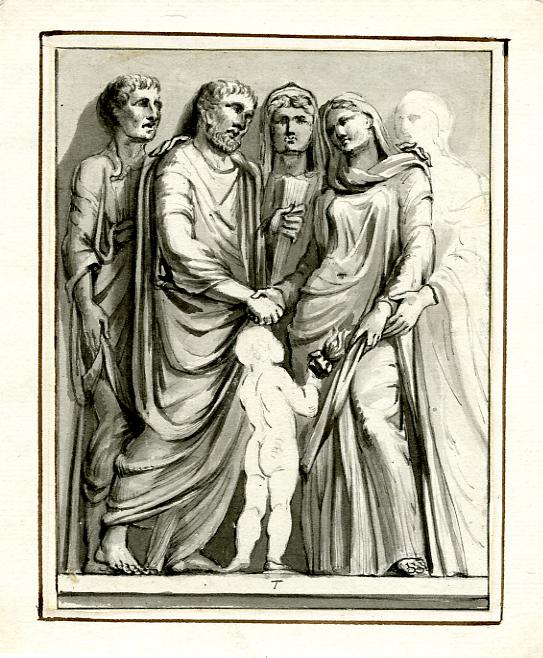
Modernity has unstitched this sacred arrangement with infernal resolve and grave consequences; codifications prized free alienation, contract between self-standing individuals, and the liquidation of corporate households; married women’s property reforms, the abolition or attrition of fee tails and majorats, and equal partition at intestacy dissolved the old estate into divisible assets; the family shifted from a juridical person to a provisional association, reversible at will, financed by wages calculated for solitary adults rather than for houses that rear heirs, maintain dependants, and carry traditions; authority passed from the domus to offices, councils, and bureaucratic guardians who possess taxes and procedures rather than the intimate knowledge of blood and altar.
The late Judaeo-Christian ideal of the ‘equal partnership’ in marriage, construed as a compact between two autonomous selves whose bond rests in sentiment and contract, dissolves the very subject that law and cult once recognised as primary; the domus yields to a companionship, manus gives way to endless negotiation bereft of command, and the offices of paterfamilias and materfamilias are recast as alternating roles without hierarchy or maiestas. This anthropology of parallel sovereignties weakens succession and stewardship; estates fragment under egalitarian arithmetic; dos and sacra privata lose their juridical seat; children migrate from the custody of a house into the arms of managerial governmental guardians whose jurisdiction expands as household command recedes.
Judaism and Christianity alike carry within their soteriologies a universalising presupposition: the congregation as a corpus fidelium gathered before the One who ‘regards no person’, where souls bear the imago Dei without regard to rank, and where admission to covenant or baptism confers a parity of standing before the altar; rabbinic qahal and Christian ecclesia articulate this in distinct registers—the minyan and synagogue as threshold of communal presence, the sacerdotium commune as the ‘priesthood of all believers’, the Pauline formula ‘neither Jew nor Greek’ as a charter of soteriological equivalence—so that within the liturgical precinct a levelling logic operates, unifying diverse estates into a single communio oriented to salvation in the ‘kingdom not of this world’.
When sacramental parity is sundered so that altar and forum stand apart, hierarchy is recoded as a convenience, corpus mysticum is mistaken for a civil blueprint, and the equalitas of souls substitutes aristocratic aequitas, hardened into a political axiom that treats office as a revocable function of popular will and, in characteristic infernal register, treats the gradus of Being as scandal rather than natural law. A settlement of true Romanitas proceeds otherwise. Sacerdotium cum imperio resides in the pater, whose numen praesens carries maiestas into law, whose manus binds marriage and property, whose auctoritas orders dependants and clients; the divine is anchored in domus, succession, and embodied sacred office. The Christian dualism of throne and altar, once secularised, breeds contractual anthropology, free-floating personae, and the evacuation of maiestas from house and polity; a restoration must therefore repudiate equality coram Deo as a political principle, reserve it to eschatology if one will keep the word at all, and enthrone inequality of office in the economy of order, so that the pater again bears the one axis by which altar, hearth, and judgement cohere.
The Roman forum knows no divided sovereignties. Sacrum and sentence flow through one hand; pietas and imperium meet in the living pater; the city breathes by houses that keep their sacra privata and hold manus as a sacrament of order. The Christian formula that sunders altar from rule, then moralises equality into politics, unthreads this axis and leaves only offices on licence; a Traditional revival restores the unity, refuses egalitarian dogma as a categorical mistake, and returns maiestas to its seat in name, lineage, domus, and rite.
Equality within this frame becomes a solvent rather than a rule; it converts provision into two careers pursued in centrifugal fashion, converts disagreement into justiciable grievance, and converts marriage into a terminable contract supervised by clerisy and courts that claim moral tutelage while leaving no authority in the home. The aggregate effects are legible: fertility thins as costs and rivalry escalate; credit attaches to individuals rather than names; no-fault exit incentivises short horizons; the market prices every adult as a solitary unit, and the state arrives to parent the unparented with stipends and surveillance. In such a climate the city ceases to be a republic of houses and declines into a traffic of appetites; the altar is silent, the archive is sold, the heir is an afterthought. A Roman settlement cures at the root; manus restores a single axis of command, paterfamilias reappears as responsible head whose auctoritas orders goods, rites, and persons, and marriage becomes a juridical union oriented to continuity rather than a pastime of symmetrical wills; from this, provision steadies, patrimonies endure, and the peace of the streets thickens because the peace of the hearth has a keeper.
The Judaeo-Christian god, as preached in the congregational key, is the god of the subject, the woman and the child; he answers to petition, consoles dependency, and crowns obedience; he speaks in the grammar of sheep and shepherd, not in the idiom of dominus and house. The titles ‘Father’ and ‘Saviour’ are retained from the Roman pagan schema, yet emptied of jurisdiction and translated into communal pastoral care; hierarchy is redescribed as nurture; equalitas animae is promoted from an eschatological consolation to a civil axiom; offices are demoted to functions revocable by sentiment, and gradus are treated as scandal rather than nature. The psychological result is plain: the deity becomes the projection of a dependent conscience, a sky-patron who ratifies the claims of the protected and the tutored; the pater in the room is displaced by a voice that answers round the table to tears and to grievance; the altar of the lararium is replaced by a pulpit in the parlour; the consilium domesticum is replaced by collective moral suasion.
Once enthroned in the house, this projection abolishes the possibility of realised sovereignty in the man; the paterfamilias is renamed ‘husband’ and ‘dad’, without sovereignty, then placed under the surveillance of those he ought to govern; the wife and the children invoke the god of the subject against the head of the subject’s household; scripture and sermon are interpreted as warrants for pastoral correction of the one magistrate whose manus should not be judged from below; confession supplants command, counselling supplants sentence, and the house ceases to be a jurisdiction, becoming a clinic. The psychology is not royal; it is ecclesial, communal, and infantilising; it elevates care over rule, pathos over auctoritas, forgiveness over iustitia and aequitas, safety over constantia; it punishes male rank as a moral fault and praises softness as sanctity; it equips those without office with a sacred veto over those with charge, and baptises the veto as love. A Traditional settlement refuses this. The father is not a case to be managed; he is the axis; his person is not raw material for the family’s projections; he is the bearer of numen praesens for that house, answerable upward to the gods and outward to magistracy; he governs by rite, account, and sentence; he receives petitions; he does not live under them.
It is a darkness that proclaims itself light, a lunar pity that names solar sovereignty cruelty and calls order oppression. It baptises softness as sanctity, brands judgement as hatred, and styles dependency virtue. It says “mercy” where it means licence, “love” where it means veto, “equality” where it means the enthronement of grievance. It calls the father a threat and the orphaned crowd a church, then claims the victory as righteousness. In plain speech: it is tenebrae pretending to be lux, malum naming itself bonum.
Our study proposes a measured restoration: the eternal principles of the Eternal City rather than museum pieces. The city benefits when the household again stands as a coherent unit with a recognisable head who is answerable for dependants; succession rules that privilege continuity over fragmentation stabilise land, craft, and memory; marriage gains gravity when it re-enters the orbit of patrimonial responsibility; a ‘family wage’—secured by law, bargaining, or fiscal preference—permits mothers and children to live under protection rather than perpetual market exposure; none of this requires cruelty, all of it requires rank and duty. Recovered in this key, manus becomes a civilising force: the hand that claims and keeps also nourishes and answers; the heir receives more than wealth—he receives office; the wife enters more than intimacy—she enters a house; the city recognises more than citizens—it recognises families.
Men, take yourselves and your posts as absolutely sacred, hold your authority and hierarchy inviolable, refuse all compromise, and make this the fixed foundation of the renewed patriarchal order.
Admit that softness and compromise delivered our present disarray under feminine rule, and remember that our fathers brooked no concessions; we are no lesser.
The men who came before brooked no compromise with forms that dissolved the household, and we are no lesser. Refuse the ideologies that flatten office into sentiment, refuse the habits that make magistrates of strangers and wards of sons, refuse the speech that calls authority a vice. Establish standards and keep them, honour succession and protect it, bind wealth to worship and law, and let your manly auctoritas be felt as quiet weight. This is no pose, but vocation; take it as a vow, and let the genius within confirm it each day.
Take up your office. Treat your sovereignty as sacred, your hierarchy as inviolable, and your house as a jurisdiction under the eye of the gods. Do not apologise for rank, do not barter away manus for comfort, do not outsource judgement to committees; accept the ancient burden in full, provide, decide, discipline, and answer for the peace of your domus. Let your rule be lawful, exact, and merciful by measure, not by weakness; restore the altar, write the charter, keep accounts, train the heir, and make your name a seal others can trust. A people is rebuilt by houses that stand; a house stands when a pater holds his post without flinching.
Ubi tu Gaius, ego Gaia: The Roman Way of Marriage-Abduction, How Rome’s Marriage Rite Formalises Masculine Conquest and Taming of the Feminine

The Roman wedding took its shape in a single public act: domum deductio, the solemn leading of the bride from her father’s house to the husband’s. Ancient narrators describe the passage in a language of seizure and reluctance, with tears, blush, and the guarded reserve of the feminine known as pudor; her show of resistance serves a juridical and sacred end, recalling the city’s founding myth of the rape of the Sabine women, by which marriage, alliance, and cult were first bound together.1
Rome roots marital order in the founding act of raptus (to violently seize or abduct). The Sabine seizure is not a tale of private passion; it is the civic charter that fixes the grammar of union: women are taken by force from one hearth and translated into another under public auspices; men receive and bind; the City sanctions the passage. In a decidedly Traditionalist mode that is conscious of re-enactment as rite and the invocation of numen, every later wedding re-stages this settlement of victory over the feminine, in ritualised, lawful form.2
It speaks to the Christianisation of Roman custom that the old myths and forms—the ritualised feminine modesty before the capture and conquest by the male, has been inverted under chivalric gestures to signify the male’s submission, loyalty, duty and service to the matriarch.
The modern custom of carrying the bride over the threshold of her new home is an unconscious survival of Rome’s Rape of the Sabine Women. The lift declares the abduction of a woman made lawful and proclaims that a woman has been translated, by rite and force of patriarchal office, from one house to another.3
Romulus, so the story runs, secured wives for his men by a sudden violent raptus during the Consualia; later weddings kept a memory of that founding act so that every lawful union echoed the ritual dynamics of Rome’s first alliances. Hence the conventional signs of Roman nuptiae: the bride’s pudor shown in tears and blush; the feigned resistance as she is led from her father’s door; the lifting of the bride over the threshold of the door sill (the flat strip at the base of a doorway) so that she is not seen to enter under her own power; the cry of ‘Talassio!’, linked by legend to a Sabine maiden honourably assigned to a noble named Talassius; the pronuba who places the girl’s hand in the husband’s (dextrarum iunctio), as if transferring custody after a taking.4
It speaks to the Christianisation of Roman custom that was not confined to the inversion of the State religion and cultural ethics; the old myths and forms—the ritualised feminine modesty before the capture and conquest by the male, has been inverted under chivalric gestures to signify the male’s submission, loyalty, duty and service to the matriarch, as masculinity is recast as passivity in the face of any humiliation by the ravenous, chastising, and decadent feminine.
The formalisation of the post-Chivalric male is the mainstay of the disintegrated, if not inverted, hierarchy of modern dating and courtship. Heroism and the motif of the romantic ‘saviour’ replaces the conquest, victory, and dominance of the Traditional Sōtēr, betraying an unconscious reliance on feminine approval and autonomy that goes unrequited more often than not, as the masculine adopts the passive role in relation to the feminine that absorbs more of the privileges of her ruling counterpart, tutting, ruling, and chastises the man under feminised etiquette for leadership and expression; dependant on a richness of character, the civic courtesy of a peer, and manly honour, that she often lacks in equal rhythm, driven by the cultural mode of Christian meekness and abdication.
It is in the small gestures where a civilisation, at the heights, is made; numerous cultures have encoded ritualised conquest and the formal, uncompromising submission of the female to a new order, before her suitor as master and lord, and it is Rome, our direct heritance, that remembered and bore the strongest manifestation of any of the motifs of ritualised conquest. Consequently, it is the men of the modern mood that have completely abandoned, if not debased, morally stigmatised and hated any of the themes of patriarchal rule, or even lesser formal rites of relations whatsoever, that not only countenances the disintegration to the characteristic fickleness of the feminine, but that rewards her by principle, with the man’s resources and children.
Instead, the man is stripped of his dignity and expected to behave as an overfamiliar equal among the women and children, now cohering communally rather than around the domus, without the forms that ennobled masculine conquest beyond a primitively felt, and unrefined chauvinism.
In the Roman rite, the domum deductio leads the bride from her father’s door under torch and song; pudor is displayed so that consent appears as her obedience to rite, not private whim; the cry ‘Talassio!’ preserves the memory that a maiden could be marked out and cleared through the crowd to a designated husband; the lift over the limen enacts a formal abduction across a sacred boundary. Hierarchy is not argued; it is performed.5

Ubi tu Gaius, ego Gaia.
Roman wedding refrain
Ubi tu Gaia, ego Gaius.
In Roman nuptials the bride was carried over the threshold (super limen tollere) rather than step across it herself. The act does four things at once. First, it preserves pudor: she is not seen to stride into the new house under her own will, which suits the staged reluctance of the domum deductio and appeases her Lares by showing she has not ‘deserted’ them. Secondly, it is apotropaic: thresholds (limina) are liminal and sacred; a stumble there was ill-omened (inauspicia), and some antiquarians warned against letting the bride’s foot touch a place associated with household divinities and the dead beneath the floor; lifting her averts defilement and bad luck; Romans also read it as omen-warding (a stumble at the sill boded ill). Thirdly, it recalls the archaic kidnapping-myth: the new house receives her as if taken and lawfully transferred, not self-installed. Lastly, it is a juridical signal: the husband, with attendants, physically bears her into his domus, enacting the change of guardianship and the translation of sacra to a new hearth. In short, the lift is modesty, omen-warding, mythic memory, and legal incorporation in one simple motion.6
In Rome’s ancestral order the expectation placed upon a woman rested upon several tightly interwoven virtues, the foremost of which were univir and pudor. Univir names the ideal of the ‘one-man woman’, a wife whose constancy remains bound to a single husband in life and after death; it signifies an integrity of loyalty that mirrors the household’s unity under its pater. Pudor refers to the inward sense of restraint, dignity, and self-command that governed her conduct—a vigilant inner sentinel shaping posture, speech, dress, and the boundaries of visibility. Alongside these stood castitas, the purity expressed through moderation rather than cloistered negation, and gravitas feminea, the sober bearing expected of a matron whose presence reflects the honour of her lineage. Together these virtues form a coherent discipline: a Roman woman shaped her life under the eye of tradition, mindful that her comportment either strengthened the household’s authority or introduced discord into its sacred economy.
In the Sabine-rape legend the shout ‘Talassio!’ functions as a claim and a safeguard. Livy says that when the Romans seized the Sabine women, a girl ‘conspicuous for her grace and beauty’ was designated for a man named Thalassius/Talassius, and the cry ‘for Thalassius!’ was raised to clear a path and warn others not to lay hands on her; the acclamation then survived as a fixed nuptial shout. Plutarch retells the same story among several etymologies in Quaestiones Romanae, and Servius, commenting on Virgil, likewise links the cry to the Sabine episode, treating ‘Talassio’ as an invocation that protected the maiden’s chastity in the melee.7
The ritualised act does serious work. It appeases her natal Lares by showing she was not a deserter; it guards modesty by marking departure as compelled rather than wanton; it proclaims translation of sacra from one hearth to another; and it binds the union to Rome’s foundational alliance, so that every marriage participates in the city’s own rite of incorporation.8
Over time the battlefield signal was carried into wedding processions as an auspicious refrain, roughly parallel to the Greek invocation of Hymen: it could be heard simply as ‘for the husband’ or personified as the god Talassius by later antiquarians; some late-antique writers treat the wedding cry Talassiō as if it named a marriage god. Festus preserves alternative explanations that connect the word to wool-working (the basket tálāros/calathus), folding the domestic arts into the rite, but the Sabine-origin gloss ‘for Talassius!’ is the oldest and clearest sense in the legend’s context.9
A torchlit train escorted her through the streets; boys patrimi et matrimi (whose parents both lived) sang auspicious verses; nuts (nucēs) were scattered to mark the girl’s exit from childhood; at the threshold she was lifted lest she stumble, then her right hand was joined to her husband’s (dextrarum iunctio) by a prōnūba, with the old formula ‘ubi tū Gāius, ego Gāia‘ to fix the new name and role. Plutarch is our best ancient witness for the formula’s context.10
At the heart of the rite stood the antiphonal pledge: the bride pronounced, ubi tu Gaius, ego Gaia (where you are Gaius, so I am Gaia), as the bridegroom returned, ubi tu Gaia, ego Gaius; a compact of names before altar and witnesses, by which the two were publicly conformed to one civic person and one house.
Gāia is not the Greek earth-goddess; it is the ordinary Latin praenomen (female form of Gaius/Caius) used here as a generic ‘Jane/John Doe’ pair for bride and groom. Romans themselves took it that way. Plutarch lists the phrase among nuptial customs, even offering etymological just-so tales (e.g., linking Gaia to Tanaquil /Gaia Caecilia), which shows he understood the names as placeholders, not divine epithets.
Modern scholarship follows suit: Gaius was one of the most common praenomina, and Gaia its feminine, often used proverbially; the bridal acclamation ‘ubi tu Gaius, ego Gaia’ marks the bride’s incorporation into the husband’s house, not a theonymic claim.
So, although Gāia happens to be homonymous with the Greek Gaia/Gē (the goddess), the wedding line does not invoke that goddess; it uses stock human names to express co-identification within the domus. Plutarch is our best ancient witness for the formula’s context.
Before the household gods she touched fire and water, and placed simple offerings to the Lares and Penates; within the atrium the lectus genialis, the marriage couch set as a permanent emblem. It stood in the atrium as a visible token of marriage and fertility; Roman authors and antiquarians link it with genii, childbirth deities, and the household’s public face, at the installation of the bride into her new domus. The couch signified the union and received the bride’s installation; first intercourse generally took place in the cubiculum, though some households may have observed it upon the nuptial bed itself.11
The vesture matched the rite. The bride wore the flammeum (saffron veil), a floral wreath, a yellow reticulum for the hair, and the tunica rēcta woven on the old-style loom and tied with the nodus Herculeus (‘knot of Hercules’), a knot the husband alone might lawfully loose; her hair was parted with the hasta caelibāris and braided into sex crīnēs, a six-fold plait that married martial measure to domestic order. The groom appeared in his citizen’s toga, and the procession cried ‘Hymen! Hymenaee!’ or ‘Talassio!’, a word whose etiologies point back to the city’s archaic nuptial myth. Upon arrival, modest banter (fescennīna) and the nuptial feast completed the public incorporation; the sign of the bed in the hall made the union visible to kin and clients, while the private consummation, whenever it occurred, stood under the same auspices.12
In Roman matrimonial ritual, the arrangement of the bride’s hair and head-covering was, beyond cosmetic, juridical and sacral. The uxor in manu was presented, not merely adorned, and every element of her appearance announced transition from the patria potestas of her father to the marital household. The ceremony began at first light. Literary tradition preserves the expectation that the bride rose early on the nuptial day, gathered flowers from her father’s property, and fashioned a wreath to be worn at the crown of the head. The garland, drawn from the natal garden rather than purchased, signalled continuity of lineage and the lawful transfer of a maiden under protection; it also fixed the veil in place. Garlanded virginity is a recurrent Roman motif: floral coronation marks youth, modesty, and sexual reserve in poetry and relief sculpture, and it recurs later in bridal practice (especially in the floral chaplets worn by bridesmaids and juvenile attendants), where it is still glossed as a sign of purity and “innocence”. The Roman usage, however, was not merely sentimental. It formed part of a structured language of auspice, fertility, and lawful union, framed for the household gods.13


Funerary relief depicting an elegant woman with a maiden, both wearing intricate coiffures. The mother’s hairstyle corresponds to the ‘tutulus’ proper to Roman matrons. The ‘tutulus’, originally Etruscan, belonged chiefly to the materfamilias, a style retained even as other fashions shifted. The hair was parted, heaped upwards and formed into a high knot, then bound with purple woollen fillets. Photos by Egisto Sani
The coiffure itself was distinctive. The canonical bridal style is commonly referred to by antiquarians as the tutulus. This term, elsewhere used for the conical, bound-up hairstyle associated with archaic matronal status and even with priestly office (notably certain forms of the materfamilias and the regina sacrorum), denotes in the nuptial setting an elaborately partitioned and elevated arrangement.14 The bride’s hair was divided into six sections (the seni crines), a number often read symbolically in connection with auspicial numerology and with the ritual language of marriage by confarreatio, an archaic patrician form of union that itself involved sacerdotal witnesses and sacrificial bread.15 Ancient testimony preserves the striking detail that this parting of the hair was carried out not with an ordinary comb, but with a spearhead or spear-iron (hasta caelibaris).16 The gesture was multivalent. Later Roman writers explain it apotropaically, as a means of driving off malign forces that might trouble the bride on the threshold of her new domus; in other readings, the spear marks a controlled echo of the old ‘capture marriage’ logic—force tamed into rite—so that the language of seizure, once literal, survives as solemn formality within a lawful match.17
After the division, each of the six bands of hair was curled, drawn upward, and coiled high on the head, producing a structured elevation rather than loose flow. Iconography suggests that while the mass of the hair was thus gathered and disciplined, small tendrils or ringlets were permitted to fall at the temples, along the jaw, and at the nape.18 This produced a controlled softness at the face while preserving the hieratic, almost priestly, summit. The exclusivity of the style is repeatedly stressed in antiquarian sources. This was not a fashionable coiffure in general circulation: it belonged to the wedding alone, and, in that sense, it functioned as a visible legal status marker. To appear in public with the tutulus announced: ‘I am being, or have just been, given in marriage under auspice.’
Over and above the hair rose the veil. The Roman bridal veil, the flammeum, was consistently described as flame-coloured, most often a yellow-orange or saffron tone rather than a modern white.19 The colour choice is significant. ‘Flame’ linked the bride to hearth, to Vesta, and to the light within the husband’s house into which she would now be folded. The flammeum also named submission in a strict sense: it was a public sign that the woman would now live under the marital household’s law, whether by manus (full transfer into the husband’s legal hand) or, later, in a looser settlement, under his recognised headship. Roman moralists speak bluntly of pudor (modest restraint) and obsequium (deference) as qualities embodied at the moment the veil descended.20 The draping was not delicate. Surviving descriptions make clear that the veil could fall from crown to foot, enveloping the bride entirely in a single chromatic field.
Whether the flammeum fully covered the face throughout the procession and rite is debated, both in ancient sources and in modern scholarship. Some testimony, especially that of late republican and early imperial antiquarians, implies that the face was veiled until the formal moment of union and unveiling, which would align Roman usage with other Mediterranean threshold rituals in which the groom “receives” the revealed face and thereby assumes custodianship.21 Other passages, and some surviving reliefs, suggest that the veil could be arranged so as to frame rather than conceal the features, functioning more as a long mantle and less as a full face-covering.22 In either construction, the veil retained an explicitly apotropaic role. The covered or shrouded head impeded the ingress of hostile forces; malevolent spirits, the sources tell us, could not easily “enter” the bride if the veil interposed a ritual barrier.23
Taken together—early rising, self-gathered garland from the natal garden, seni crines parted with the spear, hair coiled into the tutulus, the flammeum drawn like a living ember over the entire figure—these elements enacted a public theology of marriage. The bride did not drift from one sentimental attachment to another. She was translated, under divine witness, from one lawful sacred centre to a new one. Her body, dress, and hair carried that meaning. Later bridal conventions in Europe preserve fragments of the language (especially floral coronets for bridesmaids and veiling of the bride before presentation), but often detach them from their original juridical and sacrificial weight. What was once a declaration of transfer into a new domus, ritually defended and cosmically warranted, survives as a token of ‘innocence’ and ‘chastity’, categories now moralised and psychologised rather than anchored in household sovereignty.
The motive for this settlement was plain to Romans and is historically attested across their literature and law. The domum dēductiō effected the bride’s translation from one sacra to another, securing the acceptance of the new house’s gods and the continuity of cult at the hearth. It created iūstum mātrimōnium before witnesses, so that children would be citizens and heirs, the dōs would be governed under known rules, and the husband’s manus or marital authority, where that form was chosen, would be legible to neighbours and courts. The feigned reluctance protected modesty, appeased the natal Larēs, and warded envy; the lifting over the threshold avoided ill-omen; the cries and torches linked each union to the city’s ancestral charter.24
In sum, the wedding was no sentiment with trimmings, but a rite of passage in the strict sense: separation, liminality, and incorporation, all ordered to a single end, the founding of a house whose altar, name, and estate would endure.25
At the threshold the old powers are appeased and ranked. The natal Larēs are shown that their charge has not deserted them; the new house’s gods are offered fire and water; the bride is installed upon the lectus geniālis so that the union stands at the centre of the domus and answers to its altar. Prōnūba places hand in hand (dextrārum iūnctiō); the antiphon ubi tū Gāius, ego Gāia … aligns names to one civic person; dōs passes under governance; where chosen, manus encloses the wife fīliae locō within the husband’s household. The rite elevates the woman’s dignity as office, not parity; she is honoured because she is ordered; her stewardship of sacra privata, linen and stores, and the education of heirs derives from a visible head who answers to law and gods for the whole.26
The myth’s harsh origin keeps the structure intelligible. The Sabine precedent declares that alliance is made by the stronger power shaping the receptive; that peace follows when the taking is regularised by covenant, altar, and dowry; that Concordia is agreement under rule. Hence the tokens: the flammeum veils the face because modesty serves hierarchy; the hasta caelibāris parts the hair because martial measure presides even in marriage; the sex crīnēs braid the household’s cycles to a single standard; the scattered nucēs renounce girlhood because childhood ends where office begins. Nothing here flatters the fiction of equality; everything here speaks of auctoritas descending and pietas answering upward.1
Measured by this canon, so-called companionate marriage marks a recession from form to feeling. When the capture-myth is forgotten, the threshold becomes a photo; the lift becomes gallantry; manus is treated as oppression rather than jurisdiction; dōs dissolves into purse; the couch in the hall is “tradition” rather than an emblem of lawful union at the house’s heart. The Sabine charter had taught that eros must be yoked to duty and name; the modern contract teaches that inclination legitimates itself. Rome’s rite binds desire to a lineage and seats a magistrate in the house; its forgetting leaves two “equals” negotiating terms while no one answers to heaven or city for the result.27
Scholia (click to expand)
1 Livy 1.9; Plutarch, Romulus 14; Dionysius of Halicarnassus, Roman Antiquities 2.30–31 (on the Sabine women and their incorporation into Roman households). These sources frame abduction and forced transfer as the founding grammar of Roman marriage, later ritualised as legality and alliance.
2 Plutarch, Romulus 14; Dionysius of Halicarnassus, Roman Antiquities 2.30–32; the presentation of raptus as civic rather than private sets force, alliance, and cult in one settlement.
3 Hersch, Karen K., The Roman Wedding: Ritual and Meaning in Antiquity (Cambridge, 2010), 162–168, on super limen tollere and its survival in later European bridal practice as a threshold-carry stripped of its original juridical and mythic force.
4 Livy 1.9; Plutarch, Romulus 14; Festus s.v. pronuba; Servius ad Aen. 4.103–105, on dextrarum iunctio and the husband’s formal receipt of the bride; these witnesses preserve the gestures of pudor, resistance, seizure, and hand-transfer.
5 Plutarch, Quaestiones Romanae 31; Festus s.v. Talassio; Servius ad Aen. 4.103. The domum deductio is read as a civic liturgy of capture made licit, not as private romance.
6 Varro ap. Festus 79 L; Servius ad Aen. 4.166; Hersch 2010, 162–171; Pliny, Nat. Hist. 28.27, on ill-omen at thresholds. These sources explain the carry across the limen as modesty, omen-avoidance, juridical incorporation, and mythic memory of seizure.
7 Livy 1.9; Plutarch, Romulus 14; Plutarch, Quaestiones Romanae 31; Servius ad Aen. 4.103. The cry ‘Talassio!’ is preserved as both ward and claim, and later becomes a fixed nuptial acclamation.
8 Dionysius of Halicarnassus, Roman Antiquities 2.30–32, on the Sabine women as mediators of concord and the forging of civic peace; Hersch 2010, 180–193, on the translation of sacra between households and the appeasement of both sets of Lares.
9 Plutarch, Quaestiones Romanae 31; Festus s.v. Talassio; Suda s.v. Ὑμέναιος for Greek bridal acclamations to Hymen as a structural analogue. Late antiquarian etymologies also link ‘Talassio’ with domestic work-baskets (calathus), drawing the Sabine seizure into household industry.
10 Plutarch, Quaestiones Romanae 30–31; Gellius, Noctes Atticae 10.15; Hersch 2010, 204–210, on patrimi et matrimi, nut-scattering, dextrarum iunctio, and the exchange ‘ubi tu Gaius, ego Gaia’ as a juridical alignment of identities within one domus. Plutarch also preserves folk etymologies linking ‘Gaia’ to Tanaquil / ‘Gaia Caecilia’, which shows the formula was already antiquarian in his day.
11 Varro ap. Festus 79 L; Hersch 2010, 148–156, on the lectus genialis, offerings of fire and water to the household gods, and the first installation of the bride before witnesses as a public fact of union and fertility.
12 Festus s.v. flammeum and nodus Herculaneus; Varro ap. Festus 79 L; Gellius, Noctes Atticae 10.15; Tertullian, De virginibus velandis 15; Servius ad Aen. 4.103–105, 4.166, 4.373. These witnesses attest the saffron veil (flammeum), the nodus Herculaneus that only the husband might lawfully loose, the six-plait hair, the auspicious cries, and the veil’s protective force as a ward against hostile powers at the limen.
13 The association of floral garlands with maidenhood and lawful transfer appears throughout Roman poetic and antiquarian testimony; cf. Catullus 61 and 62, where floral imagery is bound to nuptial modesty and controlled fertility, and Servius on Aeneid 4.136.
14 On the tutulus as a specifically matronal/ritual elevation of the hair, see Festus s.v. tutulus; also Varro, De lingua Latina 5.130, where women’s hair-binding is linked to status and cult.
15 The number six and the seni crines are noted in later Roman sources as distinctive to the bride; see Gellius, Noctes Atticae 10.15, and Servius, ad Aeneid 4.137–138, who ties the sixfold division to archaic patrician wedding forms under confarreatio.
16 The use of the spearhead (hasta caelibaris) for parting the hair is transmitted by Festus (Paulus Festus, epit. 55 L) and later repeated in antiquarian compilations; the weapon evokes both martial auspice and fertility through masculine potency.
17 The ‘captive bride’ motif, ritualised as controlled force, is already rationalised by Roman authors who present early marriage as a taming of Sabine-style seizure into lawful incorporation; cf. Plutarch, Romulus 14, on the Sabine precedent. The spear detail is often read through that mythic lens.
18 Hairstyle reconstructions rely on Roman statuary and funerary relief of bride figures, in which coiled masses are elevated and yet soft curls trail at the face. For iconographic surveys, see Hersch, Karen K., The Roman Wedding: Ritual and Meaning in Antiquity (Cambridge, 2010), ch. 4.
19 The veil as flammeum is securely attested: Varro (ap. Festus 79 L) and later sources consistently describe the fiery or saffron colour. Saffron-dyed veils also surface in depictions of certain priestesses, reinforcing the link with sacral status.
20 On pudor and obsequium as expected virtues of the bride at the moment of passage, see Livy 1.9 (in the context of early Roman marriage ideology), and Seneca, De Matrimonio frg., for the moralising imperial perspective.
21 The face-veiling hypothesis draws on analogies with other Italic and Greek nuptial unveilings (anakalypteria) and on scattered antiquarian notices that the groom ‘lifts’ or ‘receives’ the bride unveiled at the decisive point of union.
22 Some visual evidence, particularly Roman domestic wall-painting of nuptial scenes from Campania, suggests the veil worn back from the face but still enveloping the body. These images, however, may already idealise and cannot be taken as strict reportage.
23 The apotropaic function of the veil as a barrier to malign forces is noted by later Roman-Christian polemicists who describe pagan wedding customs in order to criticise them, which indirectly preserves the older rationale; compare Tertullian, De virginibus velandis 15, where veiling is explicitly associated with protection and warding.
24 Gaius, Institutes 1.108–113, on iustum matrimonium, dos, and marital authority; Hersch 2010, 115–140, on manus-marriage, transfer of sacra, and household jurisdiction signalled in the rite.
25 Arnold van Gennep, Les Rites de Passage (1909), on separation–liminality–incorporation as a tripartite structure; applied to Roman nuptials in Hersch 2010, Introduction and ch. 2.
26 Gellius, Noctes Atticae 10.15; Festus s.v. pronuba; Servius ad Aen. 4.103–105, on dextrarum iunctio, filiae loco, and matronal office within the husband’s household.
27 Hersch 2010, Conclusion; Treggiari, Susan, Roman Marriage: Iusti Coniuges from the Time of Cicero to the Time of Ulpian (Oxford, 1991), ch. 7–9, on the shift from manus and dos toward the companionate ideal, and the evacuation of domestic magistracy into sentiment.
Vindicatio Manus: Claim, Hand, and the Grammar of Roman Power in Marriage as Property Law
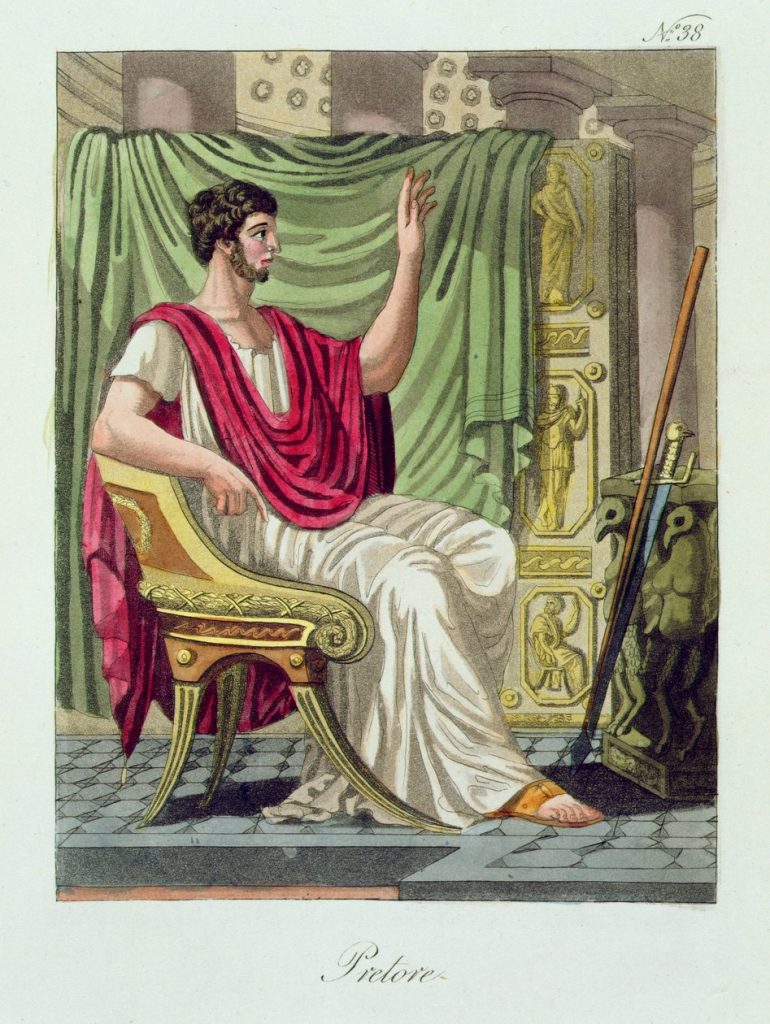
Praetor, No. 38 from ‘Antique Rome’, engraved by Labrousse, Jacques Grasset de Saint-Sauveur; published 1796
Manus in marriage belongs to the same juridical imagination as Roman property law: the wife passes into the husband’s hand through formal acts of acquisition, especially coemptio, which uses the solemn machinery of mancipatio, so that marriage becomes, in its purest archaic form, a transfer of woman, cult, property, and sacral allegiance into the husband’s familia.1 Strictly speaking, the juristic label that survives in our sources is in iure vindicatio, the archaic real action by which one asserted a right in rem (‘against the thing’) before a magistrate, together with its ritual kernel, the manus consertio (‘joining of hands’) and the application of the vindicta (the symbolic rod); the collocation vindicatio manus is a convenient shorthand for the nexus of gesture and action in which vindicatio is performed by the manus, and the manus itself is thereby displayed as the visible organ of private dominion under public auspices. In the earliest form, a claimant, grasping the disputed thing—or a token thereof—touched it with the rod and uttered the classic formula ‘Hunc ego hominem ex iure Quiritium meum esse aio’ (‘I declare that this man is mine according to the law of the Quirites’), whereupon his adversary did the same; the praetor restrained the parties, assigned interim possession (vindiciae) and took sureties (praedes litis et vindiciarum, ‘sureties for the litigation and for the interim possession’), before the matter passed to adjudication—an entire grammar of ownership enacted as choreography in court.2
Mancipatio dicitur quia manu res capitur.
Gaius, Institutiones 1.121; original translation by author
[…]
Mancipation is so called because the thing is taken by the hand.
The facets of property law within marriage have been stigmatised by the egalitarian moralist regime, which admits neither differentiation nor dominium, and polices both with the sternness of an actual, socialist tyrant; yet, in principle no less than in history, marriage and property reveal themselves as twin forms flowering from the same masculine root. The close union between property ownership, marriage, and the predominance of the masculine principle in society, together with the dissolution of property law and marriage alike under the ascendancy of the opposite principle, becomes starkly clear in the next section’s treatment of archaic divorce law and the Roman right over life and death, where a jealous husband may judge his wife ‘as a censor’ within the primordial law of the household.
Because a slave was in early law a paradigmatic res mancipi, the procedure applies with exemplary clarity to him; the claimant appears with the slave before the magistrate and vindicates him as homo ‘belonging by Quiritary right’, while for land the parties carry a clod into court or perform a stylised deductio to and from the fundus, the same words and gestures attaching to a fragment that signifies the whole; the ritual is the same, the substance differs only by the nature of the thing.3 In the old Roman legal context, especially around legis actio sacramento in rem, the phrase refers to the persons who guaranteed that the party awarded interim possession would produce the thing, or its value/proceeds, after judgment. Through this in iure phase the praetor’s award of interim possession secures the fruits during litigation, and the solemn wager (sacramentum) supplies the sanction. In Roman law, the legis actiones were the old archaic forms of civil procedure, rigid, formal, verbal, and ritualised, by which a Roman citizen brought a claim before the magistrate. They belonged to the earliest procedural world of Rome, where exact words, gestures, symbolic seizure, sureties, and spoken formulas carried juridical force; when the legis actiones recede and the formulary procedure prevails, the rei vindicatio (the Roman action by which an owner claims a thing as his own. Literally, ‘vindication of the thing’ or ‘claiming-back of the property/thing.’) persists in a petitory formula and, where used, a sponsio stands in the place of the old pledges (a formal Roman verbal promise, usually made by question and answer: spondesne? spondeo—’do you solemnly promise? I solemnly promise.’)—continuity of concept under reformed procedure.4
What the modern mind tends to call symbolism was, to the ancients, the very grammar of reality. Gesture, no metaphor, was enactment—an operation upon the soul through form. When a monarch taps the shoulder of a kneeling knight, or a bishop strikes the cheek of the confirmand, the act is not ornamental theatre but a juridical motion of the spirit: authority descending through touch, consecrating through measure. Such rites are vestiges of the old Roman conception that power is no social convention of law but a visible hierarchy of Being, and that to participate in it one must be shaped, quite literally, by its form.
1902
Like so many Catholic customs, the ‘penitential wand’ is usurped from the Roman vindicta. The Catholic penitential wand (ferula poenitentialis) used in certain rites of reconciliation, and earlier by bishops in public penances, almost certainly preserves the form and juridical symbolism of the slender rod employed by the Praetor or his lictor in manumission ceremonies.5
In the Roman world, the vindicta (from vindicare, ‘to claim, to assert right’) was the staff by which liberty or authority was visibly conferred. During manumissio vindicta, the praetor or magistrate touched the slave with the rod while pronouncing his freedom—‘Hunc hominem liberum esse volo.’ The act was not mere sign; it was a juridical transmutation through gesture. Authority descended from above through contact; the law, embodied in the magistrate, operated by tactus as by word.6
Catholic pomp and ceremony preserves this inheritance because it sprang forth in the metaphysical soil of the reigning offices they wished to usurp—communicating in the language of Roman understanding that order is first sacramental. The Church, in maintaining these gestures, continues the ancient conviction that the soul is schooled through the body and that law is not an abstraction but an incarnate rhythm. Behind the knight’s accolade and the bishop’s benediction lies the same principle that once governed the imperium: Rome’s sacred law that orders the soul through ordering the State, the conviction that the visible world must mirror the divine order lest chaos reclaim both polity and man.
Oikoumenē in the Traditional Caesarian register signals the inhabited world as a concrete jurisdiction. It is the mapped and taxed orbis terrarum, surveyed by census, divided into provinces, bound by roads, law, and army. Augustus’ decree can reach ‘the whole oikoumenē’; the term carries the weight of imperium, auctoritas, and a visible centre in the person of the princeps. Peace is pax Romana; unity is legal and fiscal; universality is territorial reach under a single sovereignty.7
In the Christian register oikoumenē is spiritualised and moralised. It comes to mean the totality of peoples called into one confession, hence oikoumenikoi councils as assemblies for the universal Church. Universality now rests on communion and right doctrine, not on roads and legions. Geography yields to orthodoxy; census yields to symbolon; the emperor may still convene a synod, yet the claim of “ecumenical” is the Church’s, and the Head is unseen. Pax Christiana replaces imperial quiet with sacramental peace; the orbis christianus is a body of believers rather than a belt of provinces.8
Late antiquity shows the hinge. Christian writers inherit the Roman word yet shift its centre of gravity. ‘Ecumenical’ first describes councils that, in practice, draw their bishops from the Empire’s space, but the logic is already other: truth makes the circle, not frontier stones. Titles follow suit: ‘Ecumenical Patriarch’ signals care for the whole inhabited world as a flock, not mastery of it as a tax-base. The emperor’s sponsorship remains an instrument; it is no longer the principle.9
Read through our schema the movement is clear. The Caesarian oikoumenē is solar: a visible axis in a living ruler, form before flux, law before sentiment. The Christian oikoumenē is lunar: a receptive totality gathered by preaching, sacrament, and charity, an equal body beneath an absent Head. The first instructs by edict and forum; the second persuades by kerygma and council. Hence the long transformation from imperium to ecclesia: orbis terrarum becomes orbis christianus, pax becomes pastoral, and universality migrates from territory to communion.
To see how deeply vindicatio and manus interpenetrate, one need only consider manumission by vindicta. The lictor lays the rod upon the slave and proclaims him free ex iure Quiritium—he ‘vindicates into liberty’—whilst the master simultaneously loosens his grasp with the words ‘hunc hominem liberum volo’, quite literally sending him ‘from the hand’ (manumissio); jurists long understood this as a fictitious in iure vindicatio in which liberty is the res, the lictor playing the role of opposing claimant who asserts freedom, and the magistrate’s pronouncement supplies the public seal upon a private will. The phrase manu asserere liberali causa captures the symmetry: the same manus that once held in dominion becomes the instrument that declares release, and the same vindicta that once marked proprietary claim becomes the sign of status transfiguration.
Mancipatio is effected in the presence of not less than five witnesses, who must be Roman citizens and of the age of puberty (puberes), and also in the presence of another person of the same condition, who holds a pair of brazen scales and hence is called Libripens. The purchaser (qui mancipio accipit), taking hold of the thing, says: I affirm that this slave (homo) is mine Ex Jure Quiritium, and he is purchased by me with this piece of money (aes) and brazen scales. He then strikes the scales with the piece of money, and gives it to the seller as a symbol of the price (quasi pretii loco).
Gaius, Institutiones 1.119; as rendered by George Long in William Smith, ed., A Dictionary of Greek and Roman Antiquities, s.v. ‘Mancipium’
The slave, while he remains a slave, exemplifies res mancipi in another way: his conveyance inter vivos, like that of Italic land and beasts of draught, traditionally required mancipatio, the formal ‘taking by hand’ per aes et libram in the presence of witnesses and the libripens; the buyer grasps the thing and speaks his claim to Quiritary ownership, striking the scales with copper—the ceremony that produces mancipium and binds the alienation with words and metal alike. Here too the forensic vindicatio stands alongside the conveyancing rites as cognate expressions of a single idea: dominium is declared, grasped, and protected through a public script whose leitmotif is the hand.
The same vindicatio served the most Roman of ends in accordance with the classical and aristocratic notion of juridical aequitas, rather than levelling of every vertiginous value under the sentimentalism of modernist freedom: where a person was held in unlawful bondage as a slave, an adsertor libertatis brought the vindicatio in libertatem, and the magistrate, pending judgment, granted vindiciae secundum libertatem so that the claimant lived as free during the suit—procedure and presumption bending towards liberty whilst still conserving the Traditional architecture of claim and counter-claim.10 The jurisprudence preserves the low wager on freedom and the openness to repeated assertion, such was the weight of the status at issue; in the background one still recognises the manus as a juridical figure that can be laid upon the body through manus iniectio, restrained, or finally removed by sentence and rite.
All of this prepares the discreet bridge to manus in marriage. In a matrimonium cum conventione in manum the wife passes in manum viri and becomes filiae loco in her husband’s familia; one of the modes by which this occurred, coemptio, is itself a mancipatio, with the same copper and scales, the same witness-structure, and the same performative assertion that effects a universal succession of family-law consequences—her property is absorbed as if by a miniature inheritance, her status is re-inscribed under the husband’s paternal jurisdiction. The other modes—confarreatio and usus—do not employ mancipatio; yet even usus mirrors property logic in that a year’s cohabitation ripens into manus as a kind of personal usucapion, and the famous trinoctium interrupts that accrual. Thus the manus that we see in vindicatory gesture and in conveyance, the manus that can hold, release, or lay claim, reappears in family law as a status-bearing power; the legal imagination that “takes by the hand” a slave or a field can, by publicly scripted rite, “take by the hand” a wife.
From this perspective, vindicatio manus names less a technical heading than a Roman habit of mind: dominium and status are spoken into being by formula and touch; the manus consertio before the praetor, the vindicta raised and lowered, the aes et libra struck and weighed, and the passage in manum of a woman who thereby becomes materfamilias, together disclose a single juridical poetics in which the hand is sovereign, the word is deed, and ownership, freedom, and familial authority are articulated through cognate ceremonies that the classical jurists later expressed in cleaner formulary dress without extinguishing their archaic logic.11
Scholia (click to expand)
- Gaius, Institutes 1.108–115; Aulus Gellius, Noctes Atticae 3.2.12–13; W. W. Buckland, A Text-Book of Roman Law from Augustus to Justinian, 3rd ed., rev. Peter Stein, Cambridge University Press, 1963, 106–109; William Smith, ed., A Dictionary of Greek and Roman Antiquities, 2nd ed., John Murray, 1875, s.v. ‘Matrimonium’; W. W. Buckland, A Text-Book of Roman Law from Augustus to Justinian, 3rd ed., rev. Peter Stein, Cambridge University Press, 1963, 106–109.
- Gaius, Institutes 4.16; Max Kaser, Roman Private Law, trans. Rolf Dannenbring, 2nd ed., Butterworths, 1968, 344–347; Adolf Berger, Encyclopedic Dictionary of Roman Law, Transactions of the American Philosophical Society 43, no. 2, 1953, s.vv. ‘In iure’, ‘Praedes litis et vindiciarum’, ‘Sacramentum’, ‘Vindicatio’, ‘Vindiciae’, ‘Vindicta’; George Long, ‘Vindicatio’, in William Smith, ed., A Dictionary of Greek and Roman Antiquities, John Murray, 1875, 1198–1200.
- Gaius, Institutes 1.119–123, 2.14a–22; Adolf Berger, Encyclopedic Dictionary of Roman Law, Transactions of the American Philosophical Society 43, no. 2, 1953, s.vv. ‘Dominium’, ‘Mancipatio’, ‘Mancipium’, ‘Res mancipi’, ‘Rei vindicatio’; George Long, ‘Mancipium’, in William Smith, ed., A Dictionary of Greek and Roman Antiquities, John Murray, 1875, 727–728.
- Gaius, Institutes 4.11–31, 4.91–95; W. W. Buckland, A Text-Book of Roman Law from Augustus to Justinian, 3rd ed., rev. Peter Stein, Cambridge University Press, 1963, 616–621; Max Kaser, Roman Private Law, trans. Rolf Dannenbring, 2nd ed., Butterworths, 1968, 350–356.
- On the episcopal or penitential ferula as ceremonial rod, see Joseph Braun, Die liturgischen Paramente in Gegenwart und Vergangenheit, Herder, 1924, 599–604; Herbert Thurston, ‘Crosier’, in Charles G. Herbermann et al., eds., The Catholic Encyclopedia, vol. 4, Robert Appleton, 1908. On the Roman vindicta, see Gaius, Institutes 4.16; George Long, ‘Manumissio’, in William Smith, ed., A Dictionary of Greek and Roman Antiquities, John Murray, 1875, 730–731; George Long, ‘Vindicatio’, in Smith, Dictionary, 1198–1200.
- Gaius, Institutes 1.17; Justinian, Institutes 1.5.2; Adolf Berger, Encyclopedic Dictionary of Roman Law, Transactions of the American Philosophical Society 43, no. 2, 1953, s.vv. ‘Adsertor libertatis’, ‘Manumissio vindicta’, ‘Manu asserere’, ‘Vindicta’; George Long, ‘Manumissio’, in William Smith, ed., A Dictionary of Greek and Roman Antiquities, John Murray, 1875, 730–731.
- Luke 2:1; Res Gestae Divi Augusti 3, 25–26; Henry George Liddell, Robert Scott, Henry Stuart Jones, and Roderick McKenzie, A Greek-English Lexicon, 9th ed., Oxford University Press, 1940, s.v. ‘οἰκουμένη’.
- Norman P. Tanner, ed., Decrees of the Ecumenical Councils, vol. 1, Sheed & Ward / Georgetown University Press, 1990, 1–19; Henry George Liddell, Robert Scott, Henry Stuart Jones, and Roderick McKenzie, A Greek-English Lexicon, 9th ed., Oxford University Press, 1940, s.v. ‘οἰκουμενικός’.
- Francis Dvornik, Byzantium and the Roman Primacy, Fordham University Press, 1966, 47–74; John Meyendorff, Imperial Unity and Christian Divisions: The Church 450–680 A.D., St Vladimir’s Seminary Press, 1989, 55–82.
- Adolf Berger, Encyclopedic Dictionary of Roman Law, Transactions of the American Philosophical Society 43, no. 2, 1953, s.vv. ‘Adsertor libertatis’, ‘Manus iniectio’, ‘Vindicatio in libertatem’, ‘Vindiciae secundum libertatem’; Charles Donahue Jr., Roman Law, Outline and Materials, Harvard Law School / Ames Foundation, c15, ‘Freedom and Slavery’.
- Gaius, Institutes 1.108–123, 2.14a–22, 4.16; George Long, ‘Vindicatio’, ‘Mancipium’, and ‘Manumissio’, in William Smith, ed., A Dictionary of Greek and Roman Antiquities, John Murray, 1875, 727–728, 730–731, 1198–1200; ‘Matrimonium, Nuptiae’, Roman section, in Smith, Dictionary, 740–744; Adolf Berger, Encyclopedic Dictionary of Roman Law, Transactions of the American Philosophical Society 43, no. 2, 1953, s.vv. ‘Dominium’, ‘Manus’, ‘Mancipatio’, ‘Rei vindicatio’, ‘Vindicta’.
Ius Vitae Necisque; Male Magistracy in Divorce and the Right over Life and Death of the Household Commonwealth
[Romulus] also enacted certain laws, and among them one of severity, which forbids a wife to leave her husband, but permits a husband to put away his wife for using poisons, for substituting children, and for adultery; but if a man for any other reason sends his wife away, the law prescribes that half his substance shall belong to his wife, and the other half be consecrate to Ceres; and whosoever puts away his wife, shall make a sacrifice to the gods of the lower world.
Plutarch, ‘Romulus’ 22.3, Parallel Lives; translated by Bernadotte Perrin, Loeb Classical Library, vol. I, 1914
In the Traditional settlement the father’s manus carried within it the ius vitae necisque, the household’s original jurisdiction over life and death. The rule did not arise as caprice; it issued from patria potestas as an office, the pater acting as domestic judge and trustee of the sacra privata, with a charge to guard lineage, goods, and rites as one organism. Hence the old stories that Roman memory placed at the foundations: a son cut off for treason to the city or treachery to the house; discipline in the field upheld by a consul who was also a father; the common element being a jurisdiction that began at the hearth and answered, in last resort, to the gods and to the commonwealth. Divorce, in the archaic context, is not the modern liberty of exit, but a scene of male judgement: where the wife’s offence justifies repudiation, dismissal may pass into death; where the husband acts arbitrarily, the law turns its penalty upon him.
Plutarch gives us something legislative and Romulean: the founder himself is said to have enacted a law in which the wife may not abandon the husband, while the husband may put away the wife for grave offences, with religious penalties attached if he does so without proper cause. Plutarch is valuable as corroborating founder-testimony: it gives the structure an archaic, Romulean pedigree. It says: even divorce, in the Roman imagination, begins under the law of the founder, the household, the husband, and the gods below. Modern at-will divorce treats the wife’s claim upon the husband’s substance as an entitlement within dissolution itself; the Romulean law places the same material penalty inside an entirely different order, where the husband’s authority remains paramount, the wife is entirely forbidden to depart, and loss of property acts to assert that very order, punishing only the male who repudiates outside lawful and patriarchal form.
Plutarch’s Romulean testimony stands as an archaic rebuke to the modern fiction of at-will divorce by egalitarian women: the wife is not imagined as a mobile contractor exiting a dissoluble arrangement, nor a matriarchal authority to whom children belong, but as a bound participant in a household order whose dissolution belongs to male judgement, lawful cause, and sacred penalty. Scholarship, far from the neutral poise it claims, incessantly highlights historical deviations from the primordial principle, even where laws and gods are explicitly stated. There are some things academia simply refuses to stomach and must ameliorate. Under the bias of its own egalitarian and materialist modernist presumptions, the field has the frenzied habit of running away with them, intoxicated, wherever the modern liberal-egalitarian dogma may be introjected, rather than a carefully guarded, rigorous Traditionalist analytic method of essence and metaphysics first that alone is able to filter through the dross to set truths above mere ‘facts’.
Against the modern habit of reducing marriage to a sentimental lover’s contract, or to a Christian moral abstraction, Plutarch preserves an older Roman severity: the wife is forbidden to leave, while the husband alone retains the right to put away; just cause sanctifies the act, wrongful repudiation demands chthonic propitiation and may accrue criticism, yet the right remains his. The passage is therefore not a concession to modern divorce, but testimony against it. Divorce appears under Romulus as an exceptional act of household magistracy, not as the ordinary prerogative of feminine dissatisfaction and caprice. Where modernity treats divorce as an at-will escape from form, the Romulean law treats marital dissolution as a sacral rupture: asymmetrical, punitive, and answerable to the gods below. Dionysius of Halicarnassus completes the picture: divorce was so far from being an ordinary exit that he reports no Roman marriage dissolved for five hundred and twenty years, and when Spurius Carvilius at last put away his barren wife under necessity, the act was still remembered with public hatred.
The institution of marriage, in the hierarchical bounds of jealous guardianship, belongs to the predominance of the masculine principle in society, and to that principle’s close alliance with property law: the feminine is given a garden in which to flourish, while form, custody, inheritance, and possession remain under paternal command. The relationship is generative; one produces the other. Its dissolution, by contrast, belongs to the ascendancy of the opposite principle, where marital form is displaced by arbitrary, socialist, egalitarian, unnaturally selective, and frivolous trysts, interchangeable at will because no sovereign principle remains to bind desire to house, property, lineage, or law.
The private law left strong traces of this gravity. Sons and grandsons in potestate did not stand as independent legal persons; action and title ran through the paterfamilias; domestic wrongs counted first as breaches of order rather than as free-standing delicts among equals. In that climate a paternal execution could be recorded by jurists as improbe factum (‘done improperly’), yet impune in civil consequence; moral censure was noted, private action did not lie, and public prosecution followed only where statute or magistrate’s edict expressly intervened. The vocabulary itself preserves the temper: a deed ‘improperly done’ as to mos and aequitas, yet not ex lege actionable within the ordinary forms; a distinction consonant with a world that trusts an office to judge within its own walls.
The connection with manus proves exact. The same hand that manu consertum joined claims in rem and that dextris iunctis sealed marriages also held domestic jurisdiction; manus was more than possession or conjugal power, it was the axis by which the domus cohered as a corporate life. Where a son’s deed threatened the continuity of name and sacra, or where a daughter’s shame endangered the stem, the old order read the case as an injury to a body rather than a quarrel between private individuals. In later statute this grammar reappears under stricter forms: the father’s summary right in the lex Iulia de adulteriis when an adulterous daughter is seized in ipso adulterio under the father’s roof; the expectation that grave domestic judgements proceed after a consilium domesticum; the imperial rescripts that reprove cruelty, yet still assume that household order is first a household charge. Over time the arc bends from absolute potestas to a supervised office; yet supervision respects the form of the office and preserves the doctrine that the house is a jurisdiction.
The participation of the wives with their husbands in this holiest and first food and their union with them founded on the sharing of all their fortunes took its name from this sharing of the spelt and forged the compelling bond of an indissoluble union, and there was nothing that could annul these marriages. This law obliged both the married women, as having no other refuge, to conform themselves entirely to the temper of their husbands, and the husbands to rule their wives as necessary and inseparable possessions.
Dionysius of Halicarnassus, Antiquitates Romanae 2.25.3–4; translated by Earnest Cary, Loeb Classical Library, vol. I, 1937
In Marcus Cato’s archaic testimony, even divorce appears under the shadow of male magistracy: the husband who puts away his wife judges her as a censor, and where adultery is found, repudiation opens onto the right over life and death. Even the penalty for arbitrary divorce does not equalise the marriage; it presupposes the husband as the acting magistrate, whose power to dismiss is true, but whose authority must answer to cause, law, and the gods. Early Rome shows the sacral aristocratic form in its native clarity. Kings presided over a city whose law grew out of mos and rite, and the leges regiae named and sacralised what the domus already lived. Dionysius preserves the kernel with unusual fullness. He praises Romulus for forging a holy and indissoluble union in which the wife shares her husband’s possessions and sacred rites, conforms herself to his temper, and is ruled as a necessary and inseparable possession. He also gives the institutional centre: ordinary faults fall to the woman’s kin with her husband to judge; the gravest injuries to the house, adultery and wine, are punishable with death, since drunkenness breeds adultery and adultery ruins lineage; for five hundred and twenty years no marriage was dissolved until the notorious divortium of Spurius Carvilius, and Dionysius adds that ‘there was nothing that could annul these marriages’ (Dionysius, Ant. Rom. 2.25.2–7).
Plutarch confirms the same architecture from another angle. He reports a severe code forbidding a wife to leave her husband, and allowing a husband to put away a wife only for defined breaches of the domestic trust, namely poisoning of the children, counterfeiting his keys, substitution of children, and adultery, with heavy penalties if he divorced for any other cause, including forfeiture to wife and to Ceres, together with atonement to the gods below (Plutarch, Romulus 22.3, scroll to ch. 22). Read together, Dionysius’ household tribunal and Plutarch’s restricted repudium show a constitution in which the paterfamilias rules as magistrate of a corporate house, the king crowns that order from above, and the city does not intrude into the inner forum except to consecrate it. The law, so far as we can recover it, confirms the supremacy of the pater and the inviolability of the domus as Rome’s first polity.
The wisdom of this law concerning wives is attested by the length of time it was in force; for it is agreed that during the space of five hundred and twenty years no marriage was ever dissolved at Rome. But it is said that in the one hundred and thirty-seventh Olympiad, in the consulship of Marcus Pomponius and Gaius Papirius, Spurius Carvilius, a man of distinction, was the first to divorce his wife, and that he was obliged by the censors to swear that he had married for the purpose of having children (his wife, it seems, was barren); yet because of his action, though it was based on necessity, he was ever afterwards hated by the people.
Dionysius of Halicarnassus, Antiquitates Romanae 2.25.7; translated by Earnest Cary, Loeb Classical Library, vol. I, 1937


Further to this end, within the structure of patronage, a sexual relation begun in bondage was understood to continue into manumission as an expression of enduring fides to the patron, the bond persisting beyond formal liberation; hence no category equivalent to modern ‘consent’ where such relations were already contained within dominion and hierarchy. In Rome, a dominus had legal authority over slaves in matters of discipline, labour, marriage arrangements, and sexuality. A slave could not legally refuse a master’s sexual use. There was no formal crime of ‘rape of a slave’ by the owner, because the slave’s body was not legally their own. Sexual exploitation of slaves was common across genders. Kings possessed extreme personal authority. Royal households included slaves, attendants, pages, concubines. Sexual access to slaves and captives was culturally assumed as part of sovereign power. No one in that world would have regarded it as shocking.
The later juristic memory of a husband’s lethal competence in flagrante, preserved under Marcus Cato’s name and transmitted by Aulus Gellius, belongs to this same Traditional forum of judgement and exemplum. ‘If you should take your wife in adultery, you may with impunity put her to death without a trial; but if you should commit adultery or indecency, she must not presume to lay a finger on you, nor does the law allow it.’ (Gellius, Noct. Att. 10.23, Eng. trans.). In aristocratic terms the picture is plain. Marriage stands as holy estate and economic union; the wife, filiae loco, is enfolded into the husband’s sacra and store; adultery and wine are read as no private pleasures but as treasons against patriarchal lineage; penalty is domestic first, sacral always, public only by reflection. Dionysius praises the lawgiver because such discipline made wives modest and unions unbreakable; Plutarch underlines that divorce belongs to male office and for cause; Cato supplies the steel that such a discipline requires.
When a husband puts away his wife, he judges the woman as a censor would, and has full powers if she has been guilty of any wrong or shameful act; she is severely punished if she has drunk wine; if she has done wrong with another man, she is condemned to death.
Marcus Porcius Cato, De dote (On the Dowry), as quoted by Aulus Gellius, Noctes Atticae 10.23.4–5; translated by John C. Rolfe, Loeb Classical Library, vol. II, 1927
[…]
If you should take your wife in adultery, you may with impunity put her to death without a trial; but if you should commit adultery or indecency, she must not presume to lay a finger on you, nor does the law allow it.
Cato defines divorce as an act of domestic judgement, in which the husband, putting away his wife, assumes a censorial office over her conduct and may condemn moral fault with the severity of ancient Roman authority. For the wife, repudiation could become a censorial judgement upon her conduct, and, where adultery was discovered, that judgement could pass from dismissal into death. Killing a wife for infidelity stood as a classic ground of provocation in English law until 2009; the courts teem with older cases in which men pleaded a wife’s adultery as the catalyst that loosed their hand. In Morgan James Smith (1999), Lord Hoffmann observed that, in the historical doctrine, the discovery of a wife in adultery had long been treated as a lawful trigger of loss of self-command, styled ‘the highest invasion of property’. In this register Rome appears as foundational Tradition intends, for the sacred and the sentence flow through one hand, the house stands as the primal commonwealth, and maiestas is embodied in the living pater whose altar and tribunal are one.
Across the common law tradition the occasions deemed sufficient to rouse a man to fatal anger arose from a narrow, time-bound honour-ethic, already a pale compromise when measured against the older and more absolute magisterial jurisdiction once exercised by the Roman pater familias, whose authority had once grounded such judgments in a divine right rather than mere compromise. By the early eighteenth century this compromise had hardened into doctrine, and under Queen Anne the courts set out its contours with unusual clarity.
In Reg. v. Mawgridge (1707) Keil. 119, a dispute in which a guest of the Lieutenant of the Tower, having quarrelled over a woman, first cast a wine bottle at his host and then killed him with a sword, Sir John Holt, Lord Chief Justice gathered all the judges for what he styled a case ‘of great expectation’. From their deliberation emerged four situations that ‘by general consent’ counted as adequate provocation.
One concerned a verbal confrontation that tipped instantly into physical insult, exemplified by ‘pulling him by the nose’ or ‘filliping upon the forehead’, after which an immediate killing reduced the charge to manslaughter. Another concerned the fatal intervention of a comrade who stepped in when the original victim had been assaulted. A third involved siding with a fellow citizen who was being ‘injuriously treated’ and killing in the heat of that defence. The last, and long the most symbolically charged, concerned slaying a man found in adulterous congress with one’s wife, on the ancient notion that jealousy seizes a man with ungovernable fury and that adultery constitutes ‘the highest invasion of property’.
Where a man is taken in adultery with another man’s wife, if the husband shall stab the adulterer or knock out his brains this is bare manslaughter: for jealousy is the rage of man and adultery is the highest invasion of property.
Sir John Holt, Lord Chief Justice, Reg. v. Mawgridge (1707), 84 E.R. 1107, 1115
Where principles carry no consequences, they gradually cease to function as principles at all, and soon become mere preferences. Holt was speaking within a framework, at a relatively late period, in which a wife’s fidelity was treated in proprietary and patriarchal terms. The force of this language lies in its recognition of marriage as an extension of the paternal axis: a hierarchical order of household, name, lineage, and authority, guarded by the husband as its juridical and spiritual head. The modern egalitarian reduction of marriage to consensus, negotiation, and agreeable ‘conversation’ is already a fall from masculine form into feminine formlessness. Where paternal right is dissolved, fidelity becomes preference with no accountability, adultery becomes psychology, whose feelings are adjudicated before the feminine, democratic committee, and the household ceases to stand as an ordered, sacred dominium. Marriage is abolished inwardly before it is abolished legally; its ruin begins when the husband’s claim is no longer recognised as a principle of hierarchy, and the right of that hierarchy.
The early moral folklore is unusually thick on wine and the household’s right to punish, and the sources are explicit. Pliny records the Traditional norm that Roman women were not allowed to drink wine, then strings two exemplary punishments: Egnatius Maetennus beat his wife to death for drinking from the wine-jar and, far from being prosecuted, was ‘acquitted by Romulus’ (Pliny, Nat. Hist. 14.89). Fabius Pictor related that a matron who had unsealed the coffer containing the keys of the wine-cellar was forced by her family to die of starvation (Fabius Pictor fr. 25 = Peter F27, Jacoby F26, Chassignet F11 (mirror)); Pliny, Nat. Hist. 14.89); the same complex of testimonies preserves the custom of kissing female kin to detect the smell of wine on the breath (Gellius, Noct. Att. 10.23). Valerius Maximus retells the cudgelling, noting that no reproach followed because the act was judged a public example of violated sobriety punished as it deserved (Val. Max. 6.3.9). Aulus Gellius, quoting Cato’s speech De dote, generalises the ethos: women, he says, were judged and even punished by a magistrate no less severely for drinking wine than for adultery; the same excerpt preserves the older claim that a husband who caught his wife in adultery might kill her with impunity, whereas she had no reciprocal right (Gellius, Noct. Att. 10.23). Scholars add that later authors already treated these tales as belonging to the very old order, and they caution that Pliny’s antiquarian taste may have highlighted spectacular cases; yet the convergence of Pliny, Fabius Pictor, Valerius, and Gellius shows a consistent memory of a household jurisdiction in which female sobriety and sexual fidelity fell under the pater’s severe charge, with penalties ranging from loss of dowry to death, and with kin or magistrate stepping in only at the edges (Komar, ‘Wine Taboo Regarding Women in Archaic Rome’, Greece & Rome 68 (2021) (mirror)).
Christian Temperance recast the old nexus of feminine sobriety and fidelity into a public mandate that quietly displaced the pater from his own forum; what had been a household charge, judged within the domus as part of the Traditional economy of pietas and disciplina, became, under Evangelical-Puritan moralism, a congregational crusade staffed and led by women who claimed the right to patrol drink, manners, and marriage from the street-corner and the statute-book. The wine taboos that once served as instruments of inner feminine domestic obedience were moralised into a universal, anti-patriarchal cause; the kiss at the threshold to detect wine on a daughter’s breath returned as an infringing inspection at the door of the masculine tavern; the consilium domesticum was reissued as committee, the father’s sentence as petition and pledge, the private discipline of manus as public agitation for licence laws and prohibition. In effect a collective, clerically sanctioned matrical office emerged, a guild of ‘mothers of the home’ presiding over the equalised commune of emasculated men nagged by pulpit, press, and ballot, and it exercised a supervising will over men in the name of infantilising protection; the symbolism looked domestic and the language invoked the household, the jurisdiction went beyond. The result was an inversion and atomisation of the architecture: sobriety ceased to be a token of obedience within a ranked household and became a warrant for female oversight of the city, so that authority migrated from one lawful hand to many sterile pious hands, and a chorus of atomised and equalised reformers took on, in aggregate, the prerogatives that once belonged to a single sovereign paterfamilias.
Against the Traditional background, the Augustan moral laws appear as a deliberate translation of household severity into public statute and court, criminalising adultery, disciplining celibacy, and rewarding fertility through the leges Iuliae and the lex Papia Poppaea, while narrowing the old instant household licence to tightly bounded, in-flagrante exceptions. Three measures frame it: the lex Iulia de adulteriis coercendis (18 BCE), the lex Iulia de maritandis ordinibus (18 BCE), and the lex Papia Poppaea (CE 9). Together they criminalised adultery, shifted discipline from the domus to the city’s courts, penalised celibacy and childlessness, and rewarded fertility. Unmarried men aged roughly twenty-five to sixty (caelibes) and unmarried women twenty to fifty were restricted in their capacity to take legacies and inheritances beyond close kin; time-limits were imposed to marry or remarry; the child-quota privilege (ius trium/quattuor/quīnque liberōrum) conferred immunities and preferments. These points are set out succinctly in Suetonius, Dio, and modern analyses of the legal fragments.
Although the Augustan marriage laws are often read by scholars as a negation of the patriarchal principle, they cannot be separated from Augustus’ cultic Apollonian identification and his cultural association with Orestes, whose vindication over the mother’s blood-claim makes him an affirmative figure of the archaic paternal right, as treated in our Apollo section. Parts of the legislation can look like a weakening of traditional male guardianship. The ius liberorum, for example, could free women with the requisite number of children from tutela; yet even this is an affirmation of the pro-natalist policy. Modern scholars tend to read it that way because, at the legal level, Augustus appears to move authority out of the household and into public law; the Augustan legislation took the ostensibly private acts of marriage and adultery and brought them under public jurisdiction and state regulation. The metaphysical reading and the Evolian counter is that Augustus does not abolish father-right by drawing adultery and marriage into public law; rather, he raises paternal correction from the private household into the higher order of the sacred State, where the princeps appears as the imperial bearer of form, measure, and paternal authority.
In the Traditional household schema of the Republic, there was no general public crime of adultery. Discipline lay first with the domus under the Traditional economy of patria potestas. Literary witnesses preserve the rule that a husband who caught his wife in flagrante could kill her without trial, or else convene a consilium domesticum and condemn her; Marcus Cato’s speech De dote, preserved by Aulus Gellius (Noct. Att. 10.23), is the classic testimony. The wife dared no injury as she had no reciprocal right. Allied mores on female sobriety stood under the same household jurisdiction: Pliny, Valerius Maximus and Fabius Pictor record exemplary punishments for women who drank wine or tampered with the wine-cellar keys. In short, adultery and wine were policed as matters of household order; the city intervened only at the edges.
The formalised criminal law of adultery under Augustus is tight and revealing. Lex Iulia de adulteriis coercendis (18/17 BCE) converted adultery into a public crime heard in court, with relegation (banishment to separate islands) and partial confiscation as standard penalties. At the same time the statute reserved a lethal prerogative to the woman’s father: A pater surprising his daughter in ipso adulterio in his (or the husband’s) house held a narrow ius occidendi over both parties, and may kill daughter and partner; the husband’s licence was markedly smaller: he could kill the low-status adulterer in his own home caught red-handed, but not his wife, though later emperors sometimes commuted the penalty for killing the wife in consideration of sudden rage; otherwise he must prosecute. After killing a qualifying adulterer the husband had to divorce at once and publicly declare within three days the name of the adulterer and the place where he found them; failure to prosecute exposed him to the charge of lenocinium (pimping) for profiting by or tolerating his wife’s adultery. These compartments held even if the husband was sui iuris: the lethal clause attached to paternity, not to marriage, which fitted the classical reality that most marriages were sine manu and the wife remained under her natal paterfamilias.
Jurists of the Severan age wrote full tractates on the law; what is recast in modern glosses as a ‘constrained exception’ is more accurately read as a Traditional recodification of the household’s capital competence as part of an overarching revival of the sacred ancestral custom so frequently cited by Augustus himself, fixing the ius vitae necisque where it properly resides sub tecto patris and only in ipso adulterio and declaring by statute the pater’s inviolability within his own jurisdiction. The quaestiones received the residue of public wrong; the domus retained the sentence that preserves its peace. The rarity of recorded executions commends the settlement’s authority rather than any humanist restraint as modern historiography is wont to read into the facts: when a prerogative is visible, named, and ritually guarded, order follows, and a few known exemplars render the sword effective while it stays sheathed.
The marriage-and-fertility code worked with fiscal screws and calendar discipline. Caelibes and orbi (‘married without children’) lost shares of bequests, with the lapsed portion becoming caduca; a disbarred heir had one hundred days to marry (dies centesimus) and so cure the disability; widows and divorcées were granted vacationes to remarry (one year and six months under the lex Iulia, doubled under the lex Papia Poppaea); age cut-offs applied; and the senatus consultum Pernicianum made certain penalties stick past age if the law had not been obeyed in time. The ius liberorum excused civic burdens and conferred privileges; imperial grants of the same right could simulate the effect for favoured persons. This is the machinery by which the regime pursued a pro-natalist order among the elite.
How does the ‘wine-key’ lore sit within this? It witnesses to a pre-Augustan ethos in which the paterfamilias policed female sobriety as part of household honour. Pliny’s tale of Egnatius Maetennus and the tradition, traced via Fabius Pictor, of a wife starved for stealing the wine-store keys belong to that archaic regime. Augustus did not legislate an execution for “copying a key”; his laws criminalised adultery and managed marriage and fertility through courts and incentives. The imperial settlement therefore curbed the ancient absolute, retained a few instant, house-bound exceptions for paternal justice, and otherwise pulled the matter into public jurisdiction.
A patrician diatribe, in our register: the leges Iuliae appear as a civic harness placed upon the ancestral office of manus. The old household commonwealth once kept its peace by its own rites and censures; Augustus’ statutes declared that the city would now measure chastity, inheritance, and fertility with its own yardstick. The good parts are clear enough: vice dragged into daylight; succession of the great houses protected by rewarding fertility; an elite prevented from dissolving itself by sterile pleasures. The price is equally clear: a transfer of jurisdiction from domus to forum, from consilium domesticum to quaestio, and from auctoritas to administration. The tales of wine and keys do not furnish Augustan law; they remind us what the law supplanted.
Two closing precisions. First, mandatory child-bearing is a shorthand; the regime penalised those who would not marry or beget within set ages and privileged those who did, rather than literally commanding conception. Secondly, the severities that readers associate with “wives and wine” are early. Pliny and Valerius Maximus preserve their memory; Augustus domesticated them into rules about adultery and inheritance, and the jurists of the High Empire narrowed the remaining paternal blade still further. The moral project thus looks Roman in aim and modern in means: a pro-natalist policy enforced by law of succession, a public crime of adultery pursued in court, and the old right of the father surviving as a rare exception within a city that had decided to make intimate order its business.
As the civic state fattened, the Traditional principle thinned. Slaves who once stood under the house’s undisputed rod were wrapped in edicts and rescripts, a master faced penalties for blood that his own judgment had measured, and even a slave could petition against ‘intolerable severity’; sons who once lay within the father’s ultimate competence were drawn into public forums for capital matters, with the paternal hand tolerated only in narrow, statute-bound corners; the old juristic tag, improbe factum, survived as a timid moral tut-tut where private suit no longer lay. What follows is not refinement but recession: a primordial household jurisdiction is domesticated into administrative process, unreviewed decision is replaced by bureaucratic trial, and the primacy of the domus is recast as a permission rather than an office.
The English inheritance supplies a recognisable afterglow. ‘An Englishman’s home is his castle’ enters the reports in Semayne’s Case and passes into common speech as it passes into English common law: domus sua cuique tutissimum refugium, each man’s house his safest refuge. The crown’s officers give notice at the door; entry requires warrant or urgent necessity; private arrest on one’s own ground has long stood under firmer conditions than arrest in the open. The American ‘castle doctrine’ and cognate immunities later dress the same Roman heritage in republican clothes. The Roman lends points to English civic grammar as both recognise the house as a primary jurisdiction with heightened walls, a place where public force treads softly and where the head of household is presumed to rule absolute.
A civilisation that honours manus as office assigns first responsibility to those who hold it; the pater bears the weight of decision and the risk of censure; the city intervenes where cruelty announces a forfeiture of trust, yet otherwise expects the house to keep its own peace. Such a settlement breeds steady households and trains heirs in judgment; it also spares the public courts an intimacy they are poorly fitted to govern. The liberal alternative, which dissolves the household into a collection of litigating individuals, multiplies process while weakening command; misrule does not vanish, it migrates outward and downward into bureaucratic tutelage.
Two precisions complete the picture. First, the archaic ius vitae necisque is best read as an original competence rather than as a permanent licence. As Rome thickened in institutions, competence narrowed and procedure ripened, yet the principle—household jurisdiction prior to public—remained. Secondly, improbe factum belongs to a juristic register that separates morality from actionability. A father’s killing could be “improperly done” in the eyes of law and custom and still fall outside private suit, either because the office absorbed the event or because only a magistrate could call it up for public judgment. That discipline strikes modern ears as austere; it was meant to be. The Roman house was a commonwealth in small; the father was meant to rule as a magistrate under the gods; and the city treated him accordingly, as responsible first to his consilium domesticum and finally to Jupiter’s law. If a modern polity wishes to recover household dignity without barbarism, this is the path: recognise the domus again as a legal person with its own jurisdiction, reserve criminal excess to the magistrate, and keep bright the old maxim that a man’s house is his refuge because it is also his realm.
Roman record does yield a few hard cases. Dionysius of Halicarnassus reports the archaic doctrine itself, the father’s ‘ius vitae necisque’, with power to imprison, scourge, chain for field-labour, and, in extremis, to kill, even where the son already bore high office; this stands as the background rule rather than a specific execution scene. When examples are named, they tend to be public, formal, or tightly conditioned: Titus Manlius Torquatus condemned his own son before the assembled army for disobedience in war, a capital camp sentence under consular imperium that Roman memory read also as a father’s dread prerogative; Livy is the classical source for the episode, and later images standardise the beheading in front of the troops. In the conspiracy of Catiline, Sallust notes Aulus (or Fulvius), a senator’s son, seized on the road and put to death ‘by order of his father’, with no court interposed and no method recorded, the act presented as a domestic execution for treason to house and state. Statute fixes the most explicit household killing in Augustus’ ‘lex Iulia de adulteriis’: a father catching his daughter and her partner in the very act, in his own house or that of his son-in-law, could kill both on the spot, a sharply delimited ‘ius occidendi’ often discussed by the jurists and, tellingly, rarely if ever attested in use. By the High Empire the old latitude contracts into supervised office: Hadrian, in Marcian’s report, exiled a father who slew a son for adultery with a stepmother during a hunt, ruling that he had killed ‘more by the right of a brigand than of a father’, since ‘patria potestas ought to consist in pietas, not in cruelty’; Ulpian likewise requires a father to accuse, not to kill unheard. Thus the legal picture that can be safely described runs as follows: an early principle acknowledging the house’s capital competence; a few emblematic executions under military or emergency colour; a narrow statutory licence in adultery cases with instant, place-bound killing; and, from the second century, rescripts and juristic doctrine that channel such extremities into public judgement.
Remove capital competence from the house, and crime migrates outward in swarms; what a father once ended at the threshold becomes a docket, a custody bill, and a street war. The courts fill, the prisons breed, and the police acquire tasks for which no bureaucracy is fit, because the primary magistrate has been abolished in his own dwelling. Where patria potestas is repudiated, petty vice hardens into habit, insolence into assault, and the neighbourhood learns to live under alarms rather than under a known and crowned hearth. A city of households keeps order as a matter of course; a city of unattached individuals invites disorder as a matter of system. Christianity dissolved the household’s capital competence by recoding authority at its root. The predicates ‘Father’ and ‘Saviour’ were reserved to heaven, the altar displaced the domus as axis, and the law of souls supplanted the law of houses.
What had stood as patria potestas with its inner tribunal and last resort over life and death was drawn into two external forums, episcopal discipline for sin and public prosecution for crime; canonists and princes together replaced the father’s sentence with confession, penance, and royal justice, and improbe factum migrated from a juristic censure within the house to a moral admonition under clerical custody. Over the centuries the Traditional office thinned to guardianship and maintenance, the sacrificial severity of the pater yielded to pastoral care, and the city learned to see persons as equal souls to be shepherded rather than members of a corporate household to be ruled.
In the modern age the same levelling current furnished the platforms on which first-wave feminism rose. Protestant Temperance networks, organised through myriad NGOs for the moral rescue of the home, supplied cadres, pulpits, and money to campaigns for the female franchise even as early as the radical 1800s; the Women’s Christian Temperance Union in America and cognate Temperance associations in Britain argued the ‘home protection’ vote, and suffrage leaders moved through those channels with ease. Read in a Traditional key, the movement inherits a lunar principle of universal provisioning and safety, Christianised in tone and institutional form, and it advances equality of claim at the cost of solar sovereignty of command; an egalitarian cult of care, capable of much charitable work, yet unintelligible without the prior Christian moralisation that weakened the household magistracy it now supplants.
Companionate Marriage: The Canonisation of the French Revolution Communard Within the Domus
Companionate marriage is the modern reconception of wedlock as an affective partnership that exists foremost as a close friendship between two people who choose each other for mutual attraction, affection, intimacy and personal fulfilment; the home is reimagined as a private partnership of equals, while bearing children, passing on property and anchoring a wider family line within patrimony are demoted from organisational first place, becoming contingent goods that are inherently atomised and rootless, if not shared communally. In earlier arrangements, marriage was the hinge of sacred lineage and household sovereignty; fathers and kin weighed a man’s steadiness, standing and means before entrusting their woman to him, since the union carried civic, economic and sacral consequences.
The type emerges from late-mediaeval and Protestant revaluations of the household, gathers force in Protestant moralism and the English Puritan emphasis on conjugal friendship, then hardens across the eighteenth and nineteenth centuries into an ideal of tender domesticity sustained by sentiment, privacy, and the cult of the home; romance literature, the rise of individualism, and a bourgeois economy suited to private interiors gave it a stage and a script.
It was by the French Revolution that the household, from the eighteenth and nineteenth centuries onwards, was drawn into the orbit of contrat, consentement, and égalité. The volonté générale displaced the Roman auctoritas as first principle, laïcité redefined marriage as a civil act, and the Code civil taught Europe to see the family as a partnership before it was a patrimony. Across the nineteenth century sentiment and private choice gathered prestige; legislatures then supplied the machinery that fixed the shift in law: Married Women’s Property Acts, liberalised divorce, contraception as policy, and a welfare state that treated the couple as citoyens with revocable claims, shifting the centre of gravity from a continuing domus conveyed by its custodians to the couple and their feelings. Although this form offers tenderness and relief from harsh mismatches; it also disintegrates the domus into an utopian model, recalling the undifferentiated primordiality of the Garden of Eden, that loosens the old architecture of patrimony and the father’s continuous stewardship of wife, children and estate. Marriage ceased to be a transmitted office with rites and estate, and became a voluntary bond that endures while the parties will it.
This settlement has its mercies; it softens harsh mismatches and gives tenderness a recognised place. It also weakens the architecture that trained a wildflower éros on the trellis of duty, succession, and the father’s steady stewardship of wife, children, and land; pietas yields to preference, patrimony to copropriété, and the corporate household to an affective dyad supervised by the state. The result is intimate kindness on shorter terms, and a thinning of the long discipline by which houses stood, names endured, and authority remained legible. In strict scholarly usage, a communard is a participant in, or supporter of, the Paris Commune of 18 March–28 May 1871: a member of the insurgent municipal government of Paris, its National Guard rank-and-file, or its political–social milieu, suppressed during the Semaine sanglante (‘Bloody Week’). Authoritative reference works define the Commune as a short-lived revolutionary city council that defied the Versailles government; its adherents are accordingly termed communards, many of whom styled themselves Fédérés after the federalist National Guard.
The 1871 Commune arose in the wake of military defeat and siege, advanced a programme of radical municipal autonomy, anti-clericalism and social measures (e.g., rent remission, separation of Church and State, workers’ control in abandoned workshops), and was crushed with heavy casualties and mass prosecutions. These are the events that fix the canonical meaning of communard in modern historiography.

Musée Carnavalet
Earlier precedent and usage. The word commune has an older Parisian pedigree: during the French Revolution an insurrectionary Commune of Paris (1792–1794) functioned as a radical municipal authority alongside national organs, drawing energy from the sections and sans-culottes. While contemporaries spoke of the Commune and its members, the label communard in today’s strict sense is reserved for 1871; applying it to 1792–1794 is retrospective shorthand. The term commune itself evoked mediaeval urban self-government, hence the recurring association with municipal sovereignty rather than doctrinaire ‘communism’.
A communard is ‘a member or supporter of the revolutionary municipal regime that governed Paris in spring 1871’, encompassing elected councillors, National Guard militants and affiliated activists; by extension, writers sometimes use it loosely for actors in other French urban communes, but scholarly reference keeps the primary sense with 1871.
In juridical and economic terms, companionate marriage rides alongside the slow unpicking of coverture, the diffusion of marital choice to the couple rather than the kin-group, and the displacement of the family wage by dual-earner expectations; the Married Women’s Property Acts, expanding female contractual capacity and control over property, align with an ethic that treats marriage less as a node in a lineage and more as a voluntary society of two persons. The nineteenth-century sentimental home softens the old hierarchies into roles defined by affection and moral suasion; the twentieth century completes the pivot through contraception, liberalised divorce, and welfare mechanisms that uncouple child-rearing from the father’s continuous economic stewardship.
Sociologically, companionate marriage recasts the telos of the domus: from a house ordered to inheritance, cult, and civic continuity to a private dyad negotiated by feeling, self-realisation, and reversible commitment; stability subsists only so long as sentiment holds, which invites legal and fiscal scaffolding to absorb the risks once borne by kin, guild, and patrimony. Spiritually, the form privileges inwardness over rite and oath; the oath remains, yet its gravity is thinned by an anthropology that prizes authenticity and therapeutic harmony above the older grammar of duty, discipline, and descent.
One can acknowledge the consolations it offered—tenderness, companionship, relief from brutal mismatches—whilst seeing how, as a civilisational principle, it dissolves the paternal axis that once yoked eros to order; when the couple’s felt bond becomes the first principle, the wider claims of lineage, household sovereignty, and civic reproduction cease to govern, and the polity drifts toward managerial substitutes for the lost architecture of the fathered home.
In strict history a communard is a participant in the Paris Commune of 1871, the insurgent municipal regime that claimed sovereignty for the city against Versailles; by analogy, the communard of the household names the type who imports that municipal grammar into the private sphere. Where the 1871 Communards spoke the language of Commune, section, citoyen, égalité, laïcité, and mandat impératif, the domestic communard recasts the domus as the Commune domestique. Marriage is reimagined as civil contrat sustained by perpetual consentement; the father becomes a socius answerable to a kitchen Assemblée; the consilium domesticum turns into a comité de quartier of counsellors, caseworkers, and school functionaries; patrimony is treated as propriété sociale open to réquisition and partage égalitaire; the family is administered by a rolling règlement intérieur in the idiom of volonté générale. In that rhetoric the wife becomes citoyenne with veto, the children perform as minor sans-culottes with grievance, and the paterfamilias is reduced to a commissaire on a short mandat, supervised by reports and visits that mimic the surveillance of the Fédérés. What the Commune did to the Hôtel de Ville the household communard attempts at the hearth: altar replaced by laïcité, sacra privata displaced by programme, and patria potestas emptied into copropriété.
Once this vocabulary prevails, the old corporate life of the house dissolves. The Roman manus that joined wife and goods to a line gives way to therapeutic ‘process’; auctoritas yields to ballots and complaint; discipline is renamed ‘violence’ and placed under a domestic loi des suspects in which the head of house must prove his innocence again and again. Legal reforms that wear the colours of égalité, from property separation to unilateral divorce, from administrative welfare to regulatory inspection, furnish the apparatus by which a Commune can be kept permanently in session at home. The result, far from Concordia, is but a chronic, low-intensity Semaine sanglante of litigation, injunctions, exclusions, and fiscal réquisitions that exhaust the very body they claim to protect.
Ministère de l’Opinion, no formal portfolio, was a historian’s shorthand for the police–censorship–propaganda nexus that measured, steered, and manufactured opinion publique from the Revolution into the Empire, with the Ministry of General Police under Joseph Fouché as its living core; revolutionary committees had already fused political surveillance with rites and print control, and under Napoleon this complex supervised newspapers, printing and books, theatres and clubs, planted informers, funded friendly pens, closed hostile presses, and coordinated the Direction générale de l’imprimerie et de la librairie, so that the regime possessed, in effect, a true ‘ministry of public opinion’, a functional organ whose charge was to police rumour and sentiment and to compose the national voice to order.
Against this, the Traditional answer is simple and exact. Restore the domus as a juridical person; enthrone the pater as sacral magistrate with maiestas and charge; keep wealth, worship, and name in one custody; let dextrarum iunctio bind eros to duty; and measure provision by the standard of a house that must endure. Only then do tenderness and counsel take their rightful places under order, and only then is the ‘commune’ returned to its proper meaning as a city served by houses rather than a club that has seized them.
La Commune Domestique des Égaux: The Spiritual Corruption and Psychological Operation That Singles Out Women
Picture a civic theatre in which a Grand Opéra psychologique is staged for the hearth.
The impresarios are the Ministère de l’Opinion, a chorus of pedagogy, press and philanthropy; their script is the catechism of contrat, consentement, égalité; their scenery is laïcité painted as sunlight. At centre steps a figure named La Citoyenne, noble in bearing yet unmoored from lineage; to her ear the chorus sings lullabies of safety and pity, and in the wings the fonctionnaires adjust the lighting so that hierarchy looks like shadow and patronage like theft. Each act rehearses the same persuasion: the domus is a mere address, marriage a compact revisable at will, the pater a useful employee answerable to a family Assemblée.
In the first tableau of horrors, a trio of masked spirits approaches, Démocratie, Liberalité, Communauté. ‘We are your guardians’, they say; ‘we will relieve you of care’. They offer the woman a sash inscribed volonté générale and place in her hand a mandat impératif that binds the husband to consultation. The old dextrarum iunctio is replaced by a contract-signing at a municipal desk; the lararium is boxed and sent to storage; the hearth receives a framed certificate of laïcité. At the edge of the stage the Fédérés of the Commune domestique beat time on pots and pans, a soft percussion that never stops.
In the second tableau the house is parcelled into bureaux. The pantry is renamed propriété sociale; the family purse becomes a ledger of réquisitions and partage égalitaire; visiting officers of salut domestique pin a règlement intérieur to the door. A comité de quartier begins to sit at the kitchen table, tender in manner and tireless in audit; it issues admonitions written in the pastel language of ‘wellbeing’. The man of the house, once magistrate, is rehatted as commissaire, a chair that rotates, a post that must answer questionnaires.
In the third tableau the children enter with the cockades of minor sans-culottes; they speak the language of rights, rehearsed at school; they wield the rhetoric of égalité without the weight of officium. The wife appears as citoyenne whose virtue is to supervise; pity is now policy; correction is renamed violence and placed under suspicion; confidence in command is recoded as pride. ‘Consult’, says the chorus; ‘report’, say the officers; ‘apologise’, says the new creed; ‘your rule is forfeit unless consent is perpetual.’
In the penultimate scene the psychological art shows its mechanism. It offers protection in exchange for jurisdiction; it flatters with flares of ‘empowerment’, yet pulls all cords back to the gallery of sponsors. Credit and spectacle polish the illusion; crisis is dramatised to keep the pit attentive; the alliances of media, clinics and bureaux provide the backstage staffing of a permanent Commune. The audience is women because women keep the house; the target is the father because the father is the axis; the effect is a crowd that governs a throne it no longer remembers.
The final scene is quiet. The chorus praises tenderness, which is good, and safety, which is necessary, and offers them as substitutes for order. The audience applauds, yet the set is thin. There is no altar, there is no charter, there is no corporate name. The house drifts, kindly, supervised, and always slightly afraid. In this allegory the communard of the household is not a monster; she is the citizen made into steward of a perpetual meeting, conscripted by a gentle coup that promised to lift burdens and instead dissolved offices. The film of light that coats the piece is the trick; the technique is real and has worked.
There is another ending. The curtain lifts on a restored domus. The pater resumes his sacred office, answerable upwards to the gods and outwards to the law; the wife honours the order she secures; the children learn rank and duty; the house keeps accounts, rites and archives. Compassion returns to its rightful place under rule. The Commune domestique gives way to Concordia. The psychological operation loses its hold when the man of the house refuses the rôle of commissaire, takes again the oath of magistrate, and treats his post as sacrosanct. Only then does the music of égalité find a true harmony, because it rests on a hierarchy that does not apologise for existing.
The communard catechism flatters many women into a posture of moral ascendancy, then makes that feeling the engine of rule. It promises care without hierarchy, justice without judgement, safety without standards; it awards a badge of virtue for joining the cause, then supplies ready-made foils named ‘ignorance’ and ‘reaction’. In that economy conviction is measured by denunciation, not by discernment; borrowed sanctity replaces inward discipline; pity becomes a warrant to supervise. The result is a genteel presumption that mistakes warmth for wisdom, and that projects its own unexamined premises onto others as if error lay only outside. Committees and campaigns multiply, the household is treated as a ward, and the pater is addressed as a patient to be managed. What presents itself as enlightenment is often a ritual of reassurance, a loop in which the chorus praises compassion while quietly outsourcing authority to bureaux and courts. The adherent is told she is ‘empowered’, yet her power consists in activating mechanisms others built, and in repeating phrases others coined; the confidence feels natural because the stage is set to make it so.
A Traditional measure asks harder questions. Does the virtue claimed conform to duty, rite, and continuity, or does it dissolve them; does knowledge grow through experience, or is it replaced by slogans that chase applause; does the household keep its tribunal, or is judgement displaced by grievance and petition. Many women, drawn in good faith by the promise of protection and mercy, find themselves drafted into a permanent meeting where compassion is currency and authority is always elsewhere. The moral hubris is not personal, it is structural: a system that confers innocence in advance and calls every dissent ‘reaction’ cannot know what it does not test. The cure is not bitterness but rank. Recover the household as a jurisdiction, restore offices that answer upwards rather than downwards, and let care be governed by rule. Then charity ceases to be theatre, order ceases to be a target, and those once enthralled by a soothing ideology can regain the dignity of real stewardship under a standard older than the crowd.
The Systematic Targeting of Women by Hostile Subversives
If a movement targets women as a demographic, it is fair and necessary to analyse the campaign on that same demographic basis—its channels, messages, incentives, and effects on women. The demographic distinction is introduced by the programme, not by us; answering it at that level is proper scholarship and sound strategy.
The modern programme targets the feminine offices that already carry moral credit and dense social ties. Parish work, school gates, neighbourhood charities, HR and compliance staff, police or school matron duties and the informal courts of reputation have given women real reach; reformers route their appeals through those channels. The appeals are cloaked in the colours of care, safety, and decency; they promise protection for children and relief from roughness; they affirm the listener’s goodness in advance. What begins as a summons to conscience is then bound to an apparatus of committees, pledges, subsidies, and supervision. The transaction is simple; moral concern is exchanged for participation in managed communitarian schemes, and participation yields status, funding, and a vocabulary of complaint. The household magistracy is unseated not by frontal assault but by the steady relocation of judgement to boards, counsellors, and caseworkers who speak in the house’s name.
Secondary conduits are media tailored to lifestyle and advice, social platforms that reward testimonial and disclosure, and training circuits that offer certificates. These supply regular touchpoints; each touchpoint pairs moral suasion with practical enrolment, for example a pledge, a committee seat, or a reporting duty. It further segments by life-stage and role, for example new mothers, university-age women active in societies, mid-career professionals in care and education, and widows or divorcées seeking networks. The common denominator is custodianship of reputation and care; influence radiates outwards from these nodes.
The tactics are well known, and they work because they exploit universal heuristics. Fear appeals are tied to children; the danger is presented as imminent; only a designated programme can avert it; dissent is framed as negligence. Three frames recur. First, protection: ‘your children, your patients, your clients are at risk; only this programme can mitigate the harm.’ Second, credential: ‘by joining you show leadership, compassion, and modernity.’ Third, community: ‘good women in your circle already agree; those who hesitate lack courage.’ The frames collapse prudential debate into urgency; dissent is coded as indifference; scepticism is recast as disloyalty to the vulnerable.
Moral credentialling grants instant innocence for joining the cause; wearing the badge is treated as proof of virtue; argument yields to affiliation. Reputational coercion travels through parish, school, and workplace; refusal is made costly by whispers and formal reports; acceptance is rewarded with committee seats and minor honours. Incentives favour denunciation over discernment; publicly ‘calling out’ a target brings approval; deliberate judgement is recoded as complicity. Bureaucratic patronage turns activism into a paid function; grants and posts appear; a rota of trainings and panels supplies income and prestige; the household head finds himself dealing not with his wife’s counsel, but with an office.
Once this machinery is in place, the grammar of authority shifts inside the home. Decisions are referred upwards to guidelines; disputes are routed outwards to mediators; records are kept, and the keeping becomes a habit; the head of house is required to consult forms rather than persons. A private wrong is interpreted first as a policy failure; a private correction is interpreted first as a breach of process. The old consilium domesticum is replaced by a standing committee; the rites of the house are replaced by therapeutic routines; mercy is separated from law and recast as oversight. None of this requires ill will; it is the logic of a system that prefers supervision to office.
A Traditional counter begins with jurisdiction. The house must again be a legal person with named officers; the pater must hold the final custody of policy; the mater must hold defined stewardship over cult, stores, and dowry; both must sit in a regular household council, minuted and archived, so that judgement is visible and accountable within the proper forum. A written household charter clarifies the chain of decision, the division of competences, and the procedure for admonition and appeal; it provides a lawful record that can be shown to outside bodies when needed; it instructs kin and clients in how the house keeps order. Where jurisdiction is clear, supervision has less purchase.
Second, create a counsel of matrons aligned to the pater. Choose two or three women of standing from allied houses; ask them to sit, at need, as sober witnesses in matters that touch the wife’s stewardship and the daughters’ honour; give them a simple protocol, and give their advice weight without displacing the magistrate. This preserves female dignity, strengthens the materfamilias, and denies outside committees the claim that ‘no one’ reviews household practice. A counsel is not a bureaucracy; it is a circle of peers who know the rites and the rules, and who can speak plainly within them.
Third, teach the children how propaganda works. Make them practised in spotting fear appeals, moral credentialling, social proof cascades, and reputational threats; train them to ask what interest is served, what burden is shifted, what record is kept, and who pays. Give them short, exact case studies drawn from school, media, and parish life; show them how external programmes recruit through pity; show them where pity belongs under rule. This inoculation is not cynicism; it is prudence of a civic kind.
Fourth, re-anchor philanthropy in rite and patrimony. Give alms through the household altar and its festivals; route generosity through known local patrons who keep lists and books; tie the larger gifts to dowries, apprenticeships, and burial clubs; refuse subscriptions that only fund more supervision. The practice secures the moral instinct without ceding policy to networks that dissolve the house. Charity retains warmth; it also retains order.
Fifth, separate genuine mercy from supervisory busywork. Establish a short list of non-negotiables where the house corrects without outside counsel; establish a short list of negotiables where advice may be sought, but decision remains within the domus; keep a ledger of interventions and outcomes, so that sentiment does not drive policy; publish, within the kin group, a yearly account of household discipline and provision. The point is not severity for its own sake; the point is to show that care and command can be held together by adults who answer for results.
Finally, attend to style. Speak with courtesy; decide with firmness; reserve apology for fault, not for office; reward loyal service; punish sustained insolence; praise competence in the wife’s sphere before outsiders; praise judgement in the husband’s sphere before the same; give children public honour for self-command; mark feasts and transitions with visible rites; let the house be known for exactitude in money and mercy. A house that moves in this rhythm is difficult to capture, because its own institutions answer the wants that outside committees claim to supply.
The effect of these measures is cumulative. Appeals routed through care meet a settled cadre that already cares with skill; reputational pressure meets a network of allied houses that honour rank; paid activism meets a ledger that funds real relief; denunciation meets a charter that demands evidence. The domus ceases to be a ward; it becomes once again a city in small, and those who address it find themselves speaking to a magistracy rather than to a crowd.
The Hearth as Throne: Pater, Fire, and the City of Houses
Once the law is grasped, the rod upon the thing, the scale, the witnesses, the wife received in manum, one sees at once that Rome staged authority as a rite; behind the formulas stood a cosmic fire. The domus was a shrine with walls; its axle was the hearth, where the family’s gods received grain, wine, and the first breath of each morning; there the pater kept vigil as priest, judge, and captain of a little realm. His jurisdiction travelled through gestures of the hand, yet its source burned in the brazier: the focus, whose flame joined household to city, and city to the supernal order that Romans summed in the grave phrase numen praesens.

The public counterpart was the civil hearth, tended by virgins consecrated to the City’s life; around that centre, private hearths formed a luminous ring, each flame a pledge that a house would endure, breed an heir, and transmit both goods and rites. The father fed this fire with chosen substances, observed scrupulous hours, and guarded the sequence of invocations; negligence dimmed more than the coals, since the glow of the focus signified continuation of name, property, duty, and the ancestral pact. In that light the pater appears as a sacral-king in miniature; his seal confirmed alliances; his word settled quarrels; his table acted as altar where hospitality rose into cult.
The symbolism is pan-Aryan and intelligible at a glance. Fire purifies, judges, and bestows rank; it keeps watch, consumes impurity, and reveals form; poets in many tongues saw in the flame the very principle of order—kosmos made visible. The father, bearing that flame, became the household’s axis; he did not merely coordinate tasks; he fixed a vertical relation between heaven and the family name. Titles scattered across Roman life echo this role: pater of a house; pater patratus in treaty; pater patriae at the summit of the state; rex sacrorum as custodian of rites in the civic sphere. Each office recites the same truth: the masculine head holds a charge that is legal and liturgical in one act of stewardship.
Hence the pater’s threefold burden. First, guardianship of the sacra privata: the Lares, the Penates, the shades, and the rites that bind them to the living line; he alone had competence to perform certain offerings or to delegate them; ritual exactness preserved the channel through which protection and blessing returned to the house. Secondly, rule over persons and goods: patria potestas linked authority to aliment, discipline, and the wise apportionment of labour; children and dependants flourished within that measured severity which Rome counted a virtue. Thirdly, defence and judgement: the head of house received guests, answered insults, and decided quarrels at his level; he bore the spear before he taught his son to carry one.
Roman jurists recognised these sacral underpinnings in cool prose. The pater’s auctoritas spoke through mancipatio and adoption, through marriage cum manu, through emancipation and testament; he could consolidate or divide estates, create new legal persons by adoption, and transmit the worship itself as an inheritable trust; the family existed as a corporate reality with continuity beyond individual whims. Severe formulas—those that touch life and death or the sale of a child—were hedged by custom, counsel, and shame; power stood beneath the gaze of the gods and of one’s peers, which proved a stronger fence than transient statutes.

The temple-image of joined right hands—dextrarum iunctio—condenses all of this. In public art the gesture blesses a marriage; in archaic procedure the same ‘joining of hands’ names the moment when rival claims meet before the magistrate; the hand that founds a union and the hand that vindicates a field are recognisably the same; both carry the peace of the city into private life. Thus manus in marriage is no metaphor for sentiment; it is a rite of jurisdiction; a woman crosses the legal threshold and becomes filiae loco within the husband’s familia; she does not vanish as a person; she reappears as member of a larger person—the house—with a share in its honour, protection, and destiny.
From this ritual grammar Europe fashioned a long settlement: heirs designated to preserve land and cult; estates held together across centuries; domestic sovereignty honoured by neighbourhood and law. Where primogeniture prevailed, it answered a theological and civic problem at once: the altar must not fall silent; the land must not be carved into impotence; names must remain attachable to obligations and gifts; a single head secures that continuity, while younger branches prosper under his wing or depart to found collateral lines.
Modern policies unstitched that pattern—contract absolutised, households privatised without rank, estates atomised; the city learned to count adult units rather than houses, and it taxed, employed, and educated accordingly; the cult dimmed to nostalgia; the father’s office became a feeling; wages were computed for solitary actors; marriage was lightened of its juridical gravity; guardianship migrated to bureaucratic custodians whose reach extends everywhere and whose love reaches nowhere. This has delivered mobility and novelty; it has also delivered households without direction and children without inheritance, materially or spiritual.
A recovery begins where the flame is relit and the law remembers what the rite proclaims. The home requires a recognised head; the head requires means; hence the family wage—whether secured by policy, covenant, or custom—so that a house can carry dependants and keep rites without bargaining away its soul; hence succession rules that prefer the integrity of the estate to the egalitarian thrill of division; hence marriage forms that restore entrance into a familia and bind property to responsibility; hence charters of the house—written or tacit—that state the sacra, the heir-designation, the dowry customs, the burial places, and the disciplines by which a name remains radiant.
Within such a settlement the old gestures regain meaning. The clasp of hands at the wedding altar ceases to be a photograph and becomes jurisdiction conferred; the will ceases to be a fight among siblings and becomes an act of transmission that secures a single bearer for land, archives, and shrines; fatherhood ceases to be generic affection and becomes office; the mother’s dignity rises rather than falls, for honour cleaves to a house with a crown upon it. Magistrates, in their turn, act ex officio to defend this order—assigning vindiciae during disputes, safeguarding the heir’s peace, and curbing predation that would strip the altar to feed appetites without loyalty.
To speak in the Roman key is to speak of rank and service rather than domination for its own sake. The pater stands as first servant of the fire he tends; he receives before he commands; his manus supports as well as restrains; he is the living contract between the dead and the unborn; he bears the burden of being answerable to both. Where such men exist, grandmothers sleep under the protection of their own name; widows stand surrounded by kinsmen; youths inherit duties before they inherit pleasures; craftsmen keep shops that outlive a trend-cycle; temples and neighbourhoods recognise a few great houses and many good ones; the city learns once more to respect a signet-ring.
When the rod touches the thing and the word is spoken; when a wife is received, an heir proclaimed, a liberty bestowed, the flame behind the act becomes visible to those who can see. Rome taught that public peace begins in the sanctuary of the home; the law gives the gesture; the hearth gives the soul. Rebuild that, and the rest can be ordered: primogeniture as the spine, manus as the ligament, the family wage as the blood; over all, the steady fire, which is never merely heat or spectacle, but the presence that binds a people into a city of houses.
The Ancestral Fire: Lares, Penates, and the Genius That Governs a Domus
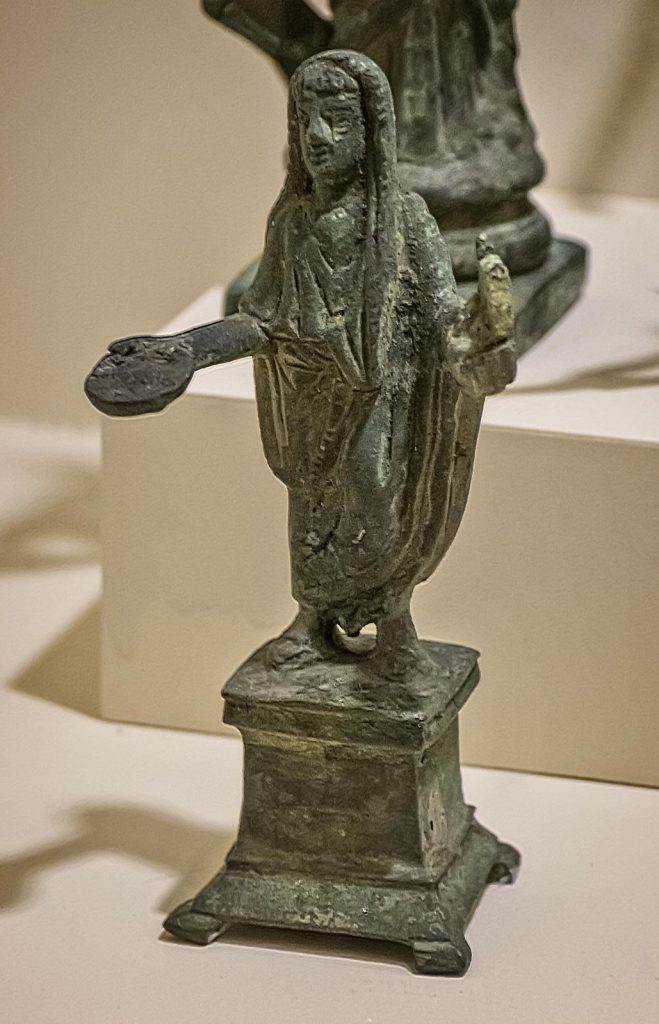

Item in potestate nostra sunt liberi nostri, quos iustis nuptiis procreavimus. Quod ius proprium civium Romanorum est: fere enim nulli alii sunt homines, qui talem in filios suos habent potestatem, qualem nos habemus.
Gaius, Institutiones 1.55; original translation by author
[…]
Our children, whom we have begotten in lawful marriage, are likewise in our power. This right is peculiar to Roman citizens; for there are almost no other men who have such power over their sons as we have.
Once the juridical scene has been set—the hand that claims, the scale that measures, the wife received in manum—the older architecture behind it begins to glow; the domus is a sanctuary with a legal address, and at its centre lives a flame that is at once hearth and throne, whose numen praesens binds the living to their dead and both to the city. The pater stands there as household pontiff; he speaks law with his hand and worship with his breath; the two powers interpenetrate, since custody of persons and custody of fire are a single office in Rome’s imagination. The very word Lar carries a lordly accent: ancient testimony and modern lexica trace it to Etruscan lar / larθ (Latinised Lars), a title of rank that survives in names such as Lars Porsena; Rome thus inherited a term already scented with sovereignty and guardianship. The household Lar is no trinket; he is a tutelary person who marks a boundary, receives gifts, and confers luck (felicitas) upon the name that honours him.
In the Roman house the hearth, the focus of Vesta, gave the family a living axis; poets call Vesta identical with Earth and speak of the perpetual fire as the symbol of home and continuity, a doctrine that binds domestic cult to the city’s centre. The statues of the Lares familiares stood near this fire and received daily offerings, their guardianship stretching from table to threshold; through them the household felt the nearness of ancestral presence.
Here, the pater familias bears a juridico-sacral charge. Archaic law collected his prerogatives under patria potestas, enumerated already beneath the headings of the Twelve Tables, later expounded in juristic manuals; the Roman peculiarity, Gaius says, lay in the unique comprehensiveness of this power over descendants born in lawful marriage: fere enim nulli alii sunt homines, qui talem in filios suos habent potestatem, qualem nos habemus, ‘for there are almost no other men who have such power over their sons as we have.’ Dionysius describes the earliest severity of the institution with the candour of an antiquarian, recalling that the father held judgement over life and limb in an age when law and rite still overlapped. The hearth and the law therefore converged in one visible person; he presided pro aris et focis, feeding the family fire and reading in it the sign of order. The old theatre of Athens placed a divine argument behind this paternal primacy when Apollo declared the mother trophos, the ‘nurse’, and affirmed the father as begetter, a forensic myth of causality that Rome’s jurists instinctively recognised.
Within this circle dwell the Lares and the Penates. The Lares are ancestral powers: kinsmen who have crossed the river of death and now stand as guardians of place and bloodline; they love the threshold, the storeroom, the cross-roads, the family boundary; their care is concrete: doors, fields, children, and the honour of the name. The Penates dwell conceptually nearer the vessels and the grain; they keep watch over stores, cook-fire, and provision; they are patrons of plenty rather than of parade. One may picture the lar familiaris as the founding strength of the house distilled into a godling, heroic progenitor or first builder, who presides as the household’s memory made present.
The genius gives all this its pulse. The word carries generation within it; it names the formative daimon that accompanies a man from birth; it increases with his virtue; it weakens with his dissipation; it is invoked on birthdays and consulted in crises; in women the parallel presence is called the juno—the feminine potency that fructifies, shelters, and brings forth. Marriage in the Roman key brings this into legal and liturgical focus. When a bride passes in manum viri, the household receives a juno whose dignity complements the husband’s genius; dos equips the union for burdens and heirs; the domestic cult receives a new celebrant with her own rites and signs. Thus the law’s ceremony is a rite of powers: two presences, ordered for one house, joined under a recognised head.
Graeco-Roman comparisons illuminate without dissolving the Roman flavour. Greek speech remembered household spirits in the herōes and the herms that guard boundaries; Latin speech preferred the language of place and household, of storeroom and table; both traditions, however, agree that a family is never merely biological; it is a compact with unseen allies who demand rites in exchange for custody. Because the Lares mark and keep places, Rome naturally heard of Lares militares at the boundary of the camp and on the march, and of Lares permarini for sea-going safety; the same grammar governs farm, street, cohort, and harbour. The genius loci belongs to this family of powers: a spring, a bridge, a hill receives a resident guardian who must be met with bread and wine before men attempt lasting works there.
The Lares appear under many epithets because their care scales. As Lares domestici they stand at the hearth; as Lares compitales they keep the cross-roads and the little altars where neighbourhoods meet; in this guise they received public honour at the Compitalia, a festival that strengthened the city by binding its quarters to reciprocal watch and celebration. As Lares praestites they protect the civic body as a whole; under the Principate they acquire an imperial accent, Lares Augusti, since the restored commonwealth sees itself concentrated in the emperor’s peace, and the people’s safety appears under his genius. The military knows its own variations: Lares militares frequent the camp boundary and the standard; the frontier shrine carries the same grammar as the farmhouse lintel. The Lar familiaris keeps the threshold and the table; Lares domestici belong to the hearth; Lares compitales keep the neighbourhood cross-roads (compita) and gather the vici into corporate life at Compitalia; Lares praestites are protectors of the civic body; under the settlement of Augustus the shrines at the cross-roads receive the Lares Augusti with the Genius Augusti between them—street-level tokens of a restored commonwealth whose centre irradiates protection to its quarters
So too with the genius. There is the genius loci—the daimon of a consecrated place, whether spring, hill, or market; there is the genius populi Romani, a public presence invoked for the commonwealth’s endurance; there is the genius Augusti, the personal and institutional spirit attached to the imperial office; each represents a condensation of life into a guardable form, a power that can be addressed, fed, and enlisted for continuity. Emperors who completed their course under auspicious signs received consecratio; the funeral pyre became ladder; the senate inscribed divus upon the name; the imperial genius widened into an imperial star, and the citizen learned again that good government is a liturgy before it becomes an edict.
A Roman is accompanied from birth by his genius, the formative daimon that waxes with continence and courage, and a woman by her Iuno; in matrimonium cum manu the house gains a new divine participant whose rites harmonise with the husband’s genius, while dos equips the union for burdens, heirs, and feasts. The domestic cult thus renders visible the metaphysical marriage that the law declares. Daily use gave these ideas a homely body. The morning began with a handful of meal, a splash of wine, a word before the Lares; children learned their names by watching father tend the fire and mother lay out the salt-cellar and cup; oaths at the family table carried legal and spiritual consequence; guests were received within the gods’ hearing; a share of the feast returned to the guardians before the household put hand to bread; at departure and return, at birth, betrothal, and burial, the same little statues, blackened by years of smoke, looked on as witnesses. The mater familias exercised stewardship here; her juno was honoured in cycles concerning fertility, birth, and the lore of stores; her keys, linens, and keepsakes formed a treasury of memory without which the house would lose its scent and colour.
The psychology of the genius deserves especial weight here, for it discloses a distinctly Roman path to greatness. A man advances by alignment with his proper daemon; continence, courage, measured anger, justice in little things—these feed the inner companion; dissipation, cowardice, self-betrayal, and dereliction of office starve it. The heroic state emerges where the man’s will and the genius cease to quarrel; his actions then carry a signature that others can feel; the house warms; dependants flourish; clients draw near; the name gathers luck; one senses the presence that the jurists dimly pointed to when they wrote of auctoritas as weight of person rather than volume of command.
Rome never forgot that order must be defended. In the archaic Carmen Arvale the Lases are invoked alongside Marmar—the old name of Mars—a pairing that discloses a primordial alliance between guardianship and war; the god who strides (Gradivus) secures the fields, while the Lares keep the gates and lines. Seen from the forum, this entire complex looks like religion; seen from the altar, it looks like politics. The domestic cult secures property because it makes ownership a trust under witnesses; primogeniture preserves the altar because the altar gives the estate its thread; marriage achieves stability because it recruits divine participants whose union outlives quarrel; civic feasts at cross-roads and in camps distribute honour because they remind free men that their safety rests upon shared guardians attentive to boundary and duty.

sacr(um).
Gavia Statuta
v(otum) s(olvit) l(ibens) m(erito).
CIL XI 2096; from Chiusi romana: Research in Prosopography and Socio-Economic History; Giuliano Caracciolo, Historical Institute, University of Cologne, Rome, Italy. Cologne, October 30, 2018; upscaled by author
This alliance flowers in explicit victory-cult. Epigraphy gives us Marti Victori on altars to Mars Victor across the empire; the title fixes the god as guarantor of achieved success and continuing peace. Augustus’ political theology then binds hearth and empire by elevating the Lares Augusti and the Genius Augusti, so that the household grammar—fire, guardians, victorious patron—scales cleanly to the city. A few inscriptions even fuse the registers in miniature: dedications such as Lari Victori sacr(um) Gavia Statuta v(otum) s(olvit) l(ibens) m(erito) (CIL XI 2096) show the Lar himself honoured under the aspect of conquest; the form is debated in detail by scholars, yet the epigraphic evidence signals a living habit of speech in which ‘guardian’ and ‘victor’ are two faces of one protection.
What then for us, who live among extinguished hearths and scattered archives. The recovery is neither antiquarian pageantry nor private whim; it is a programme of form. A house restores a corner for its Lares, however small; the flame, whether literal or represented, is tended; the head of house learns the sentences and timings; children speak names of forebears before they recite alphabets; marriage contracts remember that two presences join as well as two incomes; wills designate an heir for goods and for rites; the signet returns to use; a calendar of family days re-enters the year. Where several houses in a street attempt this together, the old compitum reappears with modern modesty; neighbours mark a few shared days; a lamp is lit at the boundary; a ward takes shape that policemen will quietly bless.
The paterfamilias—numen praesens of the domus—tends the focus at dawn and evening; he names the Lares, touches the flame with grain and wine, and seats the images at table; oaths made here carry both legal and sacred weight, because property is held in trust under witnesses who are more than human. The materfamilias bears queenly charge over stores and linens, keys and calendar; her Iuno is honoured in cycles that concern fertility, birth, and the lore of the household treasury; together they preside as a miniature priesthood, and children learn their ancestry by imitating their gestures.
All this fits the legal settlement already argued: manus provides jurisdiction for the rite; the rite provides soul for the jurisdiction. The hand that vindicates a field is the hand that pours wine for the guardians; the signature that closes a deed is the sign that seals a vow; the heir receives office with property; the wife enters a people within the people—the family whose gods she serves and whose honour she helps to display. Rome taught Europe to build a city out of houses rather than out of solitary appetites; where the household fire burns with discipline, the law grows brave again; provision steadies; children learn to revere before they reason; and the genius loci—of farm, workshop, square, and empire—finds votaries once more.
Here the juridical settlement we defended—manus, primogeniture, a recognised head, the family wage—receives a soul. The altar desires one heir; the estate desires one steward; the archive desires one seal; hence the preference for an undivided succession that can preserve the sacra privata with the land; hence adoption (adoptio, adrogatio) when nature fails; hence the restoration of dos and household arbitration to keep the domus whole even when marriage dissolves.
Sons of the Great All-Mother: Terrae Filius, Etruscan Materfamilias, Modern Evolutionism, and the Roman Polemic Against Matriarchal Descent

Et ille stips, dum fratri suo irascitur, nescio cui terrae filio patrimonium elegavit. Longe fugit, quisquis suos fugit.
Petronius, Satyricon 43.5; original translation by author
[…]
And that blockhead, while angry with his brother, left his patrimony to some son of the earth or other. Whoever flees his own people flees far indeed.
Roman tradition remembers the mater familias as a figure of grave dignity, installed inside a legal order that formally places all authority in the hands of the pater familias; yet the very fact that Rome felt compelled to name, honour, and symbolically elevate the mother within such a rigidly agnatic system already hints at an older, different balance. Modern epigraphy shows that in Etruria the mother’s line could occupy the foreground in a way that would be unthinkable in early Roman and later European custom: metronymics and maternal gentes are attested with striking frequency, especially in cities such as Chiusi, where references to the maternal family group in male epitaphs could become unusually prominent.1 This habit of naming sons through the mother’s house, alongside the visibility of elite Etruscan women in banqueting scenes and public iconography, supports the older view that Etruscan society preserved important matrilineal or at least matrifocal features; the woman appears as a bearer of religious authority and status in her own right, rather than simply as a dependent attached to a husband’s lineage.2
In the Traditional gambit, patriarchal authority does not exist without institutional privileges, against the current order where ‘patriarchy’ as such is chastised. Classical tutela mulierum framed a woman’s capacity within guardianship; sine manu preserved her separate estate under her natal tutela; cum manu translated her filiae loco into her husband’s potestas.3 A modern household that restores manus should affirm the same axis: the materfamilias holds office as a minister of the house whose authority is derivative; her acts take force from the pater’s maiestas and remain subject to it. She tends the domestic cult and calendar by mandate; she governs dos through a dowry-trust constituted under the husband’s direction; she keeps keys, plate, linens, and stores as custodian; she instructs children in letters, manners, and rites according to a syllabus set by the head of house; she oversees servants and retainers as his procuratrix. Her seal binds within these provinces because the pater has commissioned it; revocation or enlargement lies with him, advised by the consilium domesticum; obsequium and reverentia express the rule, and the household knows one fount of jurisdiction.
Tutela mulierum, though often described by later jurists as arising from infirmitas sexus, cannot be divorced from the deeper polarity at work in early Roman history.4 The Roman paternal right of patria potestas, grounded in the sacral authority of the pater familias, stood as a deliberate antithesis to the Etruscan-Mediterranean complex in which lineage, cultic authority, and even royal legitimacy were mediated through the woman. Dionysius of Halicarnassus preserves the tradition of Tanaquil’s interpretation of omens and her role in turning Lucumo towards Roman kingship; Livy makes the same Etruscan queen the decisive figure in the elevation of Tarquinius Priscus and the political management of Servius Tullius’ succession.5 These are not neutral folkloric survivals, but indices of a civilisation in which the feminine principle held primacy in political and sacral mediation.
Guardians are appointed for males as well as for females: but for males only while under puberty, on account of the infirmity of age; for females, however, both under puberty and after puberty, both on account of the weakness of their sex [propter sexus infirmitatem] and on account of their ignorance of legal affairs [propter forensium rerum ignorantiam].
Ulpian, Regulae 11.1, early third century CE; transmitted among the Tituli ex corpore Ulpiani, original translation by author
Ulpian’s formula does more than subordinate women; it defines the nature of juridical maturity itself. The male child requires a tutor because age has not yet completed him; once puberty delivers him into manhood, the defect lapses. The female, however, remains under guardianship both before and after puberty, because her essential incapacity is attached not simply to an abstract ‘immaturity’, but to the ontological condition of her sex itself. Thus the adult woman is placed, in legal structure, besides an underaged boy, though for a deeper and more permanent reason: the boy awaits completion into male public capacity, while the woman, even when mature, remains outside that capacity by nature of her station.
In strict Roman theory, tutela mulierum expresses an unambiguous hierarchy: the woman, even when sui iuris, remains under the formal guardianship of a male tutor for certain juridical and financial acts, because of what jurists formulated as infirmitas sexus and ignorance of legal affairs.6 In the archaic patria potestas this fits cleanly: the pater familias embodies civic and sacral authority; the wife stands under his manus; daughters and widows pass from the hand of one agnatic guardian to another. Yet the historical progression of this regime is anything but linear. Already in the late Republic and early Principate, the same juristic tradition that repeats the language of ‘womanly weakness’ quietly hollows it out in practice: widows and heiresses manage large estates; elite matrons litigate through compliant tutores; and Augustus’ demographic legislation introduces the pro-natalist ius liberorum, by which women with the requisite number of children could be freed from tutela altogether.7 An affirmation of the archaic paternal tradition remains, lauded as a revivalist religious movement that identifies Augustus with Apollo and Orestes as the avenger of father-right, but the bedrock of a return of the maternal principle has been laid.
By contrast, Roman law, especially in its archaic form, was erected precisely upon the exclusion of this principle. The pater familias alone possessed the extreme disciplinary powers traditionally associated with patria potestas; the household gods, the Lares and Penates, were bound to the male line; inheritance flowed agnatically; marriage in manu transferred a woman into the husband’s sacral lineage.8 The legal institution of tutela mulierum thus emerges not as a merely condescending restraint placed upon women, but as part of the Roman attempt to prevent the resurgence of the earlier Etruscan pattern: in effect, a juridical bulwark against the reassertion of a matrifocal order Rome had conquered in both fact and myth.

Read against the Etruscan background, this relaxation can be taken as more than mere pragmatism. Etruscan custom attested metronymic naming and an exalted female religious status, with royal dignity itself, in the legend of Tanaquil, mediated by a woman whose omen-reading confers sovereignty.9 Evola’s suggestion is that such a type survives Rome’s military destruction of Etruria by turning inwards: the matronal principle, defeated as public sovereignty, reappears within the Roman house as matrona and mater familias, an office whose dignity owes as much to pre-Roman Mediterranean forms as to the original, stark patria potestas.10 On this view, the gradual attenuation of tutela mulierum, culminating in the effective autonomy of fertile, property-holding women, marks the slow resurgence of a previously conquered feminine order inside Romanity itself. The Roman juridical shell, guardianship, patria potestas, agnati per virilis sexus personas, remains outwardly intact, yet the Etruscan element creeps into the inner life of Rome by granting the woman a quasi-sovereign economic and moral position in the domus, even when the law still pretends that she acts only per interpositam personam.
The Roman slur of origin terrae filius, ‘son of the earth’, names the man sprung from soil, matter, and autochthonic generation rather than from a recognised paternal line: generis incertus, of uncertain descent; without birth, without clear agnatic lineage of house and station, name and inscription within the ancestral line or, all the spiritual implications of a solar essence from which caste and type may be delineated. The contrast with the patrician notion of divi filius and its highest expression in the Caesaris nominatio of the imperial cult is immediate. In this sense the phrase becomes a metaphysical stigma upon matter-centred, telluric, and matriarchal inheritances: the man generated from earth rather than father, from chthonic substrate rather than solar lineage, from the maternal field rather than the paternal axis. Set besides Etruscan maternalism, underworld revelation, and the prominence of women in matrilineality and mother right, it makes the derision towards maternal cults plain and clarifies the Roman demand for father, house, and juridical agnatio.
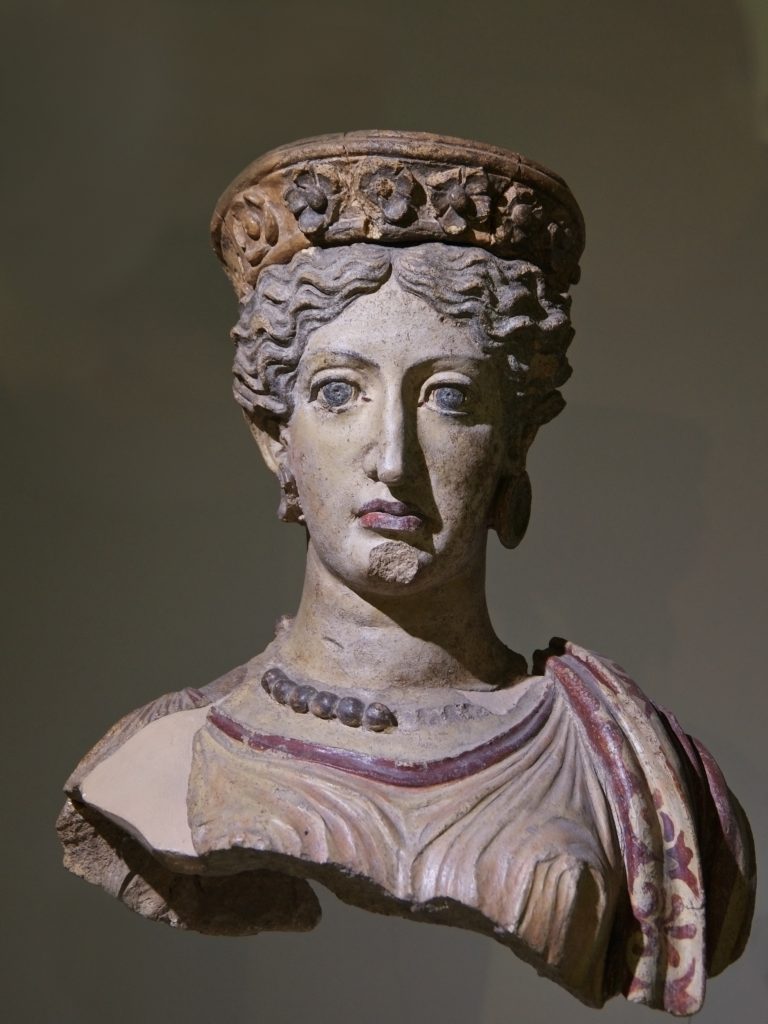
Modern evolutionism, in its deepest metaphysical suggestion, gives this earth-born stigma its scientific mythology. By its own account, life arises from inert matter: from accidents of prebiotic chemistry, mineral substrate, self-organising compounds, and the hypothetical RNA-genesis in which a molecule becomes both script and scribe, both matter and pseudo-form, before the cell, the organism, and the pater. From there, mutation, selection, ‘descent with modification’, and common ancestry carry the same thesis forwards: man is generated from below, from chemistry into slime, from slime into animality, from animality into reason, with no paternal descent from a higher divine forma, no solar archetype, no sacred house, no founder, no name bestowed from above. The ancient slur thus returns as formally ratified modern evolutionist metaphysics. What the Roman patres scorned in the terrae filius, the man of soil, uncertain descent, and maternal earth-birth, modern doctrine universalises as the official genealogy of life itself: autochthonous becoming, material generation, and matter or, the Mother, dreaming upwards into man—reminiscent of the feminist grasping towards manhood itself.
As exemplified by the Caesaris nominatio outlined in our Apollo section, where mother-right predominates, inheritance follows substance: blood as matter, womb as continuity, descent as the persistence of the body-form; where father-right predominates, inheritance follows essence: name, form, office, and spiritual transmission, by which lineage, in the Roman conception, is raised above mere biological succession. After Caesar’s deification in 42 BCE, Octavian assumed divi filius, ‘son of the deified Julius’, so the name becomes more than inheritance; it becomes a cultic chain between paternal adoption, divine honour, and imperial succession.
Greek μήτηρ (mētēr) quite literally means ‘mother’ and is cognate with Latin mater, both descending from the same Indo-European mother-word.11 From this maternal root the Latin tradition derives materia and materies, which then feed the English ‘matter’. This connection becomes especially concrete in the Roman lexical field, where materia and materies mean material, substance, wood, and timber, while the older sense points particularly to the wood of a tree, the building-stock from which things are composed; even mater itself could pass beyond the biological mother into the transferred sense of a trunk or parent stem. This makes the metaphysical implication stronger than a mere cunning metaphor: in the Roman word, substance is not first encountered as a dead abstraction, but as mother-stock, the body of wood, the generative trunk from which visible extension, branching, and differentiation proceed; the maternal term already contains the logic of source, in which all manifest things receive their material substance and proceed from her by a purely organic derivation, before any later philosophical abstraction. Thus ‘matter’ carries a civilisational memory of the mother as the origin, the cosmic matrix, stock to be bred, and body-bearing substance; the inherited language binds maternity and substance together at the root.
It should be noted too that under the influence of the very recent idea of “progress,” “philosophies of becoming” have, in modern times, taken on a special form which theories of the same type never had among the ancients. This form, although it may have multiple varieties, can be covered in general by the name of “evolutionism.” We will not return here to what we have already said elsewhere on this subject; we will merely recall the point that any conception which allows for nothing else than “becoming” is thereby necessarily a “naturalistic” conception, and, as such, implies a formal denial of what lies beyond nature, that is to say of the realm of metaphysics, which is the realm of the immutable and eternal principles […] a pretended intuition which is modelled on the ceaseless flux of the things of the senses, far from being able to serve as an instrument for obtaining true knowledge, represents in reality the dissolution of all knowledge possible.
René Guénon, The Crisis of the Modern World (1927), ch. 3, ‘Knowledge and Action’
This becomes especially useful against the modern evolutionary ‘family tree of life’. Evolutionism retains the ancient organic grammar of the root and trunk, the branch and natural descent, the family and ramification; Darwin’s own notebooks and later evolutionary biology made the tree a governing image of common ancestry and his ‘theory of descent with modification’12 in a stark echo, or perhaps conscious recall, of the ancient sense. Yet the older materia points to the tree as no mere diagram of accidental branching, but as the Mother itself: the substantial body out of which branches emerge, and upon which their visible differentiation still depends. The modern diagram therefore borrows the authority of an older genealogical and organic image, while translating it into a regime of blind material rearrangement in which she is not openly acknowledged; it keeps the family tree, but forgets the Mother.

Here evolutionism discloses its hidden sympathy with the matriarchal cults of the Great Mother. Nature becomes the vast maternal matrix from which life wells upwards and to which the buried dead return, womb and tomb joined in one telluric circuit. The earth is revered as the life-giving body itself, the immanent source of form, fertility, decay, and renewal, so that generation is imagined as an emergence from below rather than a descent from the Olympian height. Materialism is not the death of religion, but the concealment of a mother cult beneath the exclusivist grammar of nature: the world is presented as self-born, self-lawed, self-sufficient matter, while every higher principle of paternal form, divine command, and transcendent measure is dismissed as mere illusion before the all-encompassing claim of the All-Mother. In this new form of exclusivism, the Mother does not announce herself as a goddess; she appears as Nature, Matter, Necessity, Evolution, and Life itself.
Besides evolutionism’s want of stable form and its concealed metaphysic of indefinite progress, its inner tendency is dissolution: type gives way to mixture, form to average, and ascent to the reign of quantity. The modern liberal catechism that ‘we are animals’ performs the inversion with perfect vulgarity: what was once a rebuke becomes the premise, what was once degradation becomes ‘science’, and what was once the mark of fallen or uncivilised man becomes the alleged essence of man as such. In Plutarch’s account, the god Janus ‘is said to have lifted human life out of its bestial and savage state’, and the surrounding life of Numa gives that sentence its fuller Roman force: civilisation is not the discovery that man is an animal, but the sacred re-forming of a violent people through kingly law, divine sanction, and the precedence of civil order over the martial impulse.13 To begin from the animal, therefore, is to begin from the negation of civilisation, and then to marvel, with feigned innocence, when that civilisation dissolves back into the maternal condition it had once overcome.
Beyond the maternal configuration of Christianity already traced elsewhere, evolutionism must be granted its legitimacy as a ‘thing’ in the metaphysical order: a genuine modern myth of becoming, whose power is only strengthened when Christian polemic reduces it to mere falsehood, thereby lowering the guard before the very doctrine it means to defeat. Evolutionism, like the matriarchy and mother right it represents, is not best refuted by treating it as mere nonsense, but by granting its proper metaphysical place: it is the doctrine of becoming within the maternal and material order, and its falsity begins where that order claims dominion over the solar, celestial, and formal principle of man. Our polemic does not need to descend into the evidential quarrels of biological evolution; it treats evolutionism from above, at the level of first principles, as a modern myth in which substance is made primary, form is denied stability, and becoming is enthroned as the law of all things.
In the Etruscan register, maternal descent therefore deepens into something more than social lineage: it becomes literal derivation of substance and matter from the universal goddess, from Uni as queenly mother, from Cel as earth-mother, from Phersipnai as underworld mistress, and, in the later syncretic horizon, from Isis Panthea, the many-named All-Mother in whom the scattered maternal powers are gathered into one total feminine matrix. Matrilineality here is no mere household custom; it is the cultic confession that origin lies in the great feminine matrix, the maternal body of nature itself, from which blood, people, omen, and fate ascend. Against the radiant transcendence of the Olympians, who stand above earth as form, law, measure, and paternal command, this cultic imagination remains chthonic: life rises from matter, sinks back into matter, and worships the matrix that both produces and devours it.
Livy preserves the Roman moment of adoption in the sack of Veii. When the Etruscan city fell in 396 BCE, Camillus did more than plunder a hostile cult; he performed the ceremonial calling forth of Juno Regina from the Veientine citadel, evocatio, inviting the goddess to leave her conquered seat and pass into Rome, where a temple awaited her on the Aventine.14 This Veientine Juno is difficult to sever from Uni, the Etruscan queen-goddess who appears also upon the Liver of Piacenza, inscribed within the sacred cartography of Etruscan divination.15 The name itself cannot be treated as an accident of no significance. Uni stands visibly beside Latin uni, ‘to the one’ or ‘for the one’, from unus, ‘one’; even where strict etymological derivation remains disputed, the verbal resonance is too perfect for symbolic indifference. The Etruscan goddess appears as queenly mother and sovereign feminine unity: a Juno before Rome, an All-Mother in Etruscan form, whose passage into the Roman field marks the solemn reception of a conquered, foreign, and matriarchal power into the city’s sacral order.
If the suggestion is novel, it is novel because modern philology rarely thinks in terms of cultic transmission. A stricter philology may derive Latin unus from the Indo-European word for ‘one’, and may leave the name of Uni in the usual uncertainty of Etruscan studies; yet the symbolic identity cannot be dismissed.16 The Etruscan goddess who stands behind Juno, queenly mother, patroness of women, marriage, family, and divine sovereignty, thereby enters the Roman field with a name already charged with unity, universality, and maternal totality. Whether as hidden influence, sacred convergence, or archaic onomastic survival, the possibility remains suggestive: Uni may have helped shape more than the Roman Juno; she may have impressed herself upon the very linguistic aura by which the One, the universal, and the All-Mother could be heard together.
Tuscos Asia sibi vindicat.
Seneca, De Consolatione ad Helviam Matrem 7.2; original translation by author
[…]
Asia claims the Etruscans for herself.
The Etruscan question therefore cannot be confined to local Italian antiquarianism. Ancient testimony and anthropological evidence alike draw Etruria towards the Asiatic and matriarchal current pressing into the Roman field: underworld revelation, mother-right, divinatory anatomy, and a sacral order turned towards earth, entrails, fate, and the feminine matrix. Seneca’s phrase, Tuscos Asia sibi vindicat, ‘Asia claims the Etruscans for herself’, preserves the ancient sense that Etruria was drawn towards the East, whether by migration, descent, or cultic affinity.17 The Liver of Piacenza then gives that tradition an anthropological body: an Etruscan bronze liver, inscribed with divine names and arranged as a cosmological instrument of haruspicy, standing in striking conceptual parallel to the clay sheep-liver models of Mesopotamia and Anatolia. The British Museum’s Old Babylonian liver tablet, probably used for instructing pupils in divination, divides the liver into marked zones, each bearing the implication of a blemish appearing in that place.18 Thus the Etruscan liver does not stand alone as a purely Italic object; it belongs to a wider Asiatic and Near Eastern science of entrails, omen, sacrifice, and chthonic reading, precisely the sort of foreign divinatory matrix through which the mother-right and underworld complexion of Etruria becomes intelligible.
The derivation of Latin Iuno from Etruscan Uni is not secure, since the evidence permits more than one direction of influence. Uni is certainly the Etruscan counterpart of Hera-Juno, and Juno herself stands within a Roman field shaped by Etruscan mediation, especially through the Capitoline triad traditionally associated with the Etruscan kings; yet Iuno can also be explained internally from the Italic vocabulary of youth, vitality, and generative force, the same field as iuvenis and iunior.19 A strict philologist therefore hesitates to say simply that Juno ‘comes from’ Uni. The safer claim is that Uni and Juno belong to the same queenly mother-goddess complex, while the direction of naming remains contested: Latin may have received pressure from Etruscan cult, Etruscan may have adapted an Italic divine name, or both may preserve an older convergence of feminine sovereignty, fertility, and divine unity. Precisely because the philological line is unsettled, the symbolic force remains open: Uni, Juno, and Latin uni stand together in a charged field of oneness, womanly sovereignty, and maternal totality.
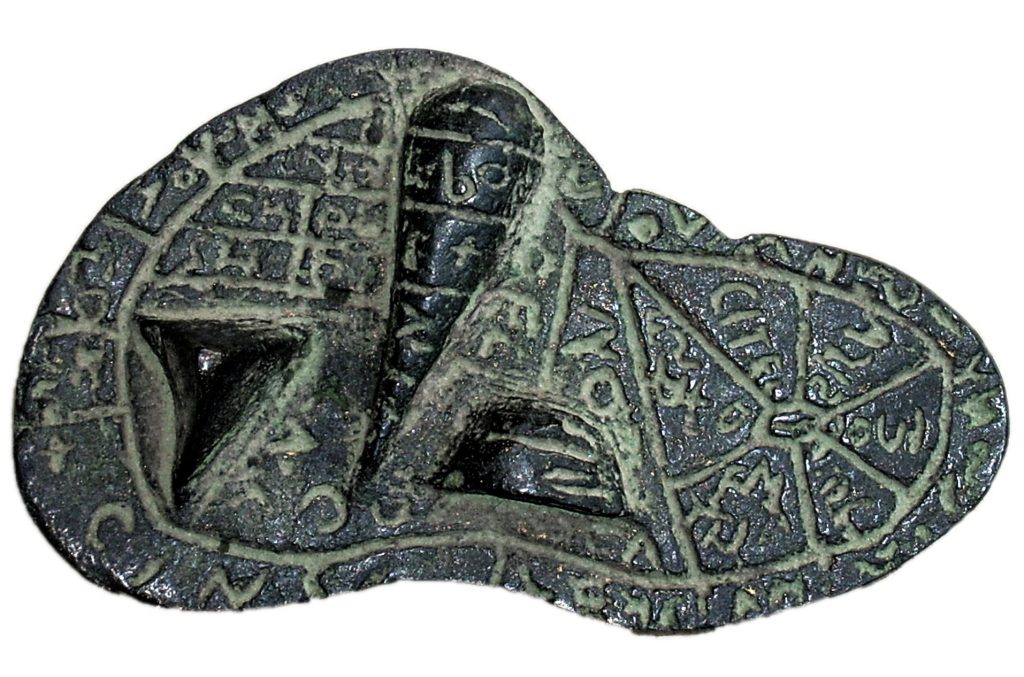
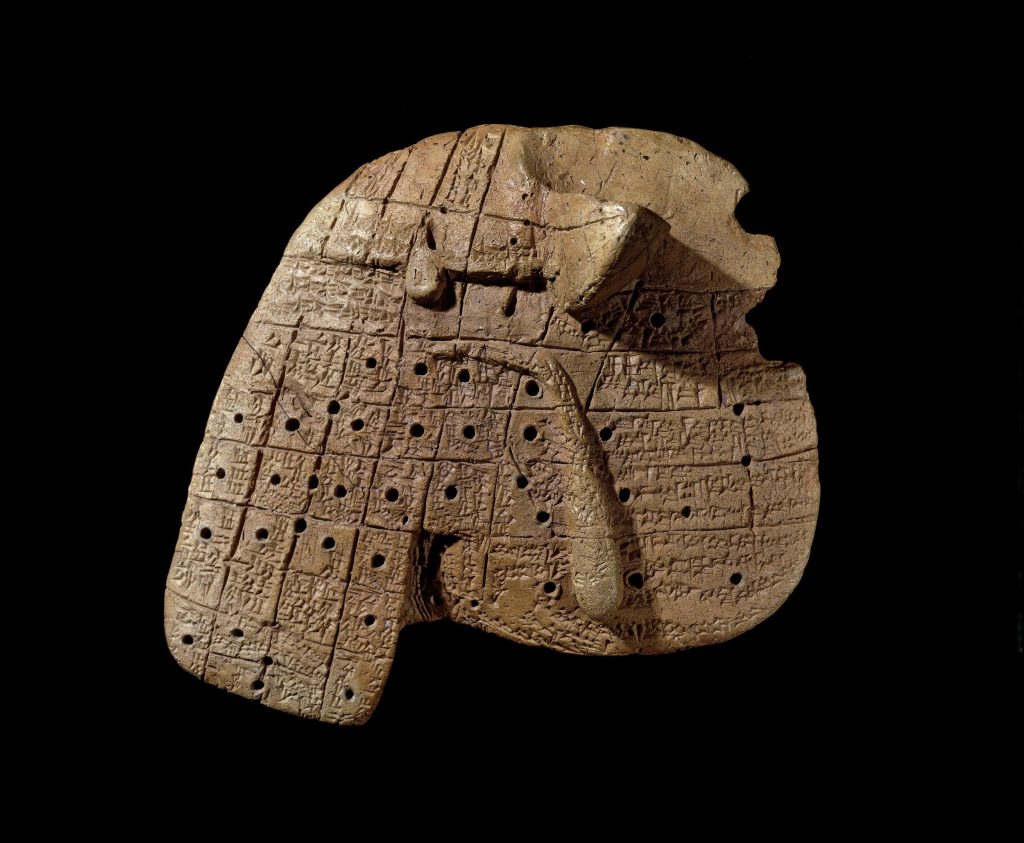
The Asiatic-matriarchal schema is, of course, far too useful to modern scholarship to be rightly delineated and treated with full severity. Liberal democratic-egalitarian and radical feminist historiographies endemic to the field find in Etruscan maternal prominence a flattering mirror of their own conceit: woman enlarged, paternal line softened, chthonic cosmology aestheticised, and the foreign matrix quietly translated into ‘complexity’, ‘plurality’, or social charm. The Etruscan evidence is no longer allowed to appear as foreign, Asiatic, chthonic, matriarchal, and anti-paternal. Yet scholars are no less children of their time than the ancients whom they presume to judge; their specialism can become a narrowing of sight, a discipline of licensed omissions, hubristic airs of authority and obsequiousness, and a cultic initiation into contemporary prejudice. The so-called non-specialist, precisely because he stands outside the guild’s approved reflexes and may bring to the field a metaphysics higher than its own permitted instruments, can sometimes perceive the structure more rigorously: he is not paid, trained, flattened, or flattered into missing what the evidence plainly discloses.
Almost always the men who achieve these fundamental inventions of a new paradigm have been either very young or very new to the field whose paradigm they change. […] These are the men who, being little committed by prior practice to the traditional rules of normal science, are particularly likely to see that those rules no longer define a playable game and to conceive another set that can replace them.
Thomas S. Kuhn, The Structure of Scientific Revolutions, on why those young or new to a field may perceive the collapse of a paradigm before its licensed guardians
The funerary evidence further develops the anthropological body. Burial is no neutral disposal of the dead. It is the rite proper to telluric return: the body received back into the Great Mother, the corpse hidden in the maternal depth, the dead handed over to the same earth from which the son of matter claims descent. Against this stands the Trojan and Roman pyre, the rite of flame, smoke, and upwards passage: Patroclus, Hector, Misenus, Pallas, and the Roman noble dead passing through fire rather than sinking into the chthonic matrix.20 Christianisation helped make burial the normative Christian and mediaeval European rite, Inhumation had already begun to advance within the imperial period, amid the wider entrance of foreign cults, Asiatic rites, Judaean burial habits, and chthonic salvationist currents into the Roman field; Christianity did not create this descent into earth, but gathered it, consecrated it as orthodoxy, universalised it, and eventually hardened it into a Christian mortuary regime weaponised against pagan fire, most starkly in the Saxon capitulary of Charlemagne. The clearer legal prohibition, now unmistakably persecutory, appears later under Charlemagne, whose Capitulatio de partibus Saxoniae, issued amongst the Saxons during the Saxon Wars, made the burning of the dead according to pagan custom a capital offence in 789 CE.21
If any one, in accordance with pagan rites, shall have caused the body of a dead man to be burned and shall have reduced his bones to ashes, let him be punished capitally.
Capitulatio de partibus Saxoniae 7–8, in Dana Carleton Munro, trans., Translations and Reprints from the Original Sources of European History, vol. 6, no. 5, University of Pennsylvania, 1900
[…]
If any one of the race of the Saxons hereafter concealed among them shall have wished to hide himself unbaptized, and shall have scorned to come to baptism and shall have wished to remain a pagan, let him be punished by death.
The Saxon Wars belong to the biblical ledger of racial extermination, further developing the ethnically stratified opposition of burial and cremation customs—quite literally violently imposed upon an Indo-European ethnic group by the ruler of a foreign cult of Asiatic derivation. Alessandro Barbero identifies the massacre of Verden through scriptural genocide: Charlemagne acts as a new king of Israel, and the Saxon rebel becomes the Amalekite, the enemy who has raised his hand against God’s people and is therefore to be destroyed, man, woman, child, and livestock, without remainder. Carolingian Christian kingship itself moved inside the theological world of Israelite holy war, where pagan resistance could be read through the grammar of Amalek, Moab, Jericho, covenant, treason, and sacred annihilation. Carolingian kingship thus inherited Christianised Roman law, yet this law had first arisen from the pre-Christian patrician institutions of the pater: paternal jurisdiction, severed from hearth, gens, and ancestral fire, now weaponised into Christian-Soviet tyranny. Philip Jenkins, writing from within a Christian reckoning with violent biblical texts, places Charlemagne within the long afterlife of Amalek-language as a warrant for holy violence and ethnic genocide. The Saxon thus appears as the ethnic enemy marked for conversion, punishment, deportation, or genocidal erasure: the baptism-resistant man placed beneath the biblical command to blot out the enemy of the sacred community.22 The Capitulatio de partibus Saxoniae gives this logic juridical form. It does not merely govern Saxony; it criminalises pagan survival itself, punishing refusal of baptism with death and striking the cremation of the dead according to pagan rite as a capital offence. The Saxon is attacked in god, body, corpse, rite, memory, and ancestral fire.
In reality, the most likely inspiration for the mass execution of Verden was the Bible. Exasperated by the continual rebellions, Charlemagne wanted to act like a true king of Israel. The Amalekites had dared raise their hand to betray God’s people, and it was therefore right that every last one of them should be exterminated. Jericho was taken and all those inside had to be put to the sword, including men, women, old people, and children, even the oxen, sheep, and donkeys, so that no trace would be left of them. After defeating the Moabites, David, with whom Charles liked to compare himself, had the prisoners stretch out on the ground, and two out of three were killed. This, too, was part of the Old Testament from which the king drew constant inspiration, and it is difficult not to discern a practical and cruelly coherent application of that model in the massacre of Verden. Besides, the royal chronicler wrote a few years later, the war against the Saxons had to be conducted in such a manner that “either they were defeated and subjugated to the Christian religion or completely swept away.”
Alessandro Barbaro, Charlemagne: Father of a Continent, trans. Allan Cameron, University of California Press, 2004
The Capitulatio de partibus Saxoniae was no abstract church preference for burial, but a legal code issued by Charlemagne and promulgated amongst the Saxons during the Saxon Wars, designed to force Saxon submission to Frankish rule and Christianity. Its provisions placed the old rites under death: whoever burned the body of the dead according to pagan custom and reduced the bones to ashes was to be punished capitally; whoever concealed himself among the Saxons, refused baptism, and wished to remain pagan was likewise to die. The fiery mortuary rite is therefore struck beside the refusal of baptism itself: the Saxon is to lose his gods, his pyre, his ancestral mound, his right to remain pagan, and finally the custody of his dead.
Thus the terrae filius is rendered still more foreign, religiously stratified, and ethnically charged to the Roman-Trojan imagination: earth-born in origin, earth-bound in death, and marked by the burial customs endemic to Judaea and the Asiatic cults, where the body is restored to soil, tomb, womb, and underworld rather than carried through the purifying fire of the paternal and heroic rite. The contrast is therefore anthropological evidence for a metaphysical division: burial belongs to the earth-born and mother-bound imagination; cremation belongs to the heroic, solar, and paternal order.
Matrilineal derivation clarifies signatures and money. The dowry-trust stands ring-fenced to preserve her patrimony and to furnish income for the burdens of marriage; investment policy issues from the pater as director; the materfamilias executes that policy, keeps the books, and presents accounts for inspection; her countersignature operates as agency of the house, never as a competing sovereignty. Where spouses elect sine manu, her separate estate endures in law; obsequium binds her conduct to the husband’s rule, and the household charter records how her property converses with the common life through annuities, portions, and specified gifts. Where they elect cum manu, her person and goods enter the husband’s familia with ritual seriousness; the pater bears full answer for them before gods and city, and she exercises every daily stewardship as participation in his maiestas rather than as a parallel throne.
Ceremony reflects this hierarchy with grace. In the lararium the materfamilias prepares offerings, keeps the vessels, and calls the little ones to attention; the pater speaks the principales formulae and holds the last word on times, fasts, and feasts; her governance of the inner treasury, linen, plate, and stores displays prudence and economy; his rule decides allocations, alms, and extraordinary expense. Education of the heirs proceeds under his authority; she shapes habit and temper; he sets the course in estate-craft, law of persons and things, arms, accounts, and the family archive; her praise mounts with fidelity to this order, since honour in a Roman house rises in proportion to service rendered under command.
The legend of Tanaquil makes the same point in narrative form. Livy’s account presents the Etruscan queen as seer and king-maker, whose auspices and decisions mediate the very transfer of kingship from Ancus Marcius to Tarquinius Priscus and then to Servius Tullius; royal dignity passes through her reading of omens and her political will.23 A later Roman tradition softens and domesticates this figure by recasting her as Gaia Caecilia, an exemplary matron associated with spinning, weaving, and nuptial custom, whose distaff and spindle were preserved as relics in Rome; yet even this transfiguration preserves the sense that a woman can embody a quasi-foundational charisma for the City.24 The office of mater familias in historical Rome, honourable, ritually significant, yet juridically subordinated, can be read as a compromise formation in which an originally Etruscan pattern of female prestige has been recoded within a Roman structure of paternal right.
Roman law and social language themselves testify to this duality. In strict legal theory the pater familias alone holds patria potestas, the encompassing power over children, wife, and property; he is the corporate personality of the domus.25 Yet alongside him stands the mater familias, a title that by the late Republic marks a respectable woman of good birth and moral standing, often sui iuris, who manages the internal economy of the household, oversees slaves and children, and carries the family’s honour in public ritual and social display.26 Recent scholarship on Roman family history and gender has emphasised that this dignified female role is not an inevitable by-product of patria potestas, but reflects a specific cultural valuation of the married woman and mother, a valuation that many historians now connect to the visibility of elite women in Etruscan models, where women appear more prominently in civic religion, funerary commemoration, and social iconography.27
On the religious plane, the tension between a virile, patrician form of Roman spirituality and an older, more chthonic Italic-Etruscan current can be seen in the contrast between augural and haruspical traditions. Roman augury, especially as embodied in the patrician pater familias and the civic magistrate, tends towards a solar and juridical style of sacrality; Etruscan disciplina centres on entrails, thunder-prognostics, and a fearful casuistry of signs, traditionally traced to the earth-born figure Tages, who rises from a ploughed field to reveal the hidden grammar of fate.28 When, during the Second Punic War, the Senate consulted the Sibylline books and imported the Magna Mater from Asia Minor as Magna Mater deorum Idaea, it drew once again on channels in which Etruscan and kindred priesthoods had long mediated between Rome and foreign, often feminine divinities.29 The Great Mother’s enthronement on the Palatine, in close proximity to Victory, can be read as another moment where a potent mother-symbol is grafted onto the Roman state cult, formally subordinated to senatorial control yet charged with a charisma that does not spring from the Roman paternal line.
Seen against this background, the Roman mater familias appears less as a spontaneous Roman creation and more as a disciplined survival of a different Italic and Etruscan configuration, in which maternal lineage, female ritual authority, and royal mediation through a queen or priestess were once more overt. The later Roman ideology of patria potestas and the proud self-image of Rome as a rigorously agnatic, virile civilisation represent, in this reading, a sustained effort to assert a new principle over and against an earlier matrifocal tendency; yet the legal and symbolic category of the mater familias, together with the persistent honour shown to figures such as Tanaquil/Gaia Caecilia and to imported Mother-goddesses, betrays the depth of that older stratum. The Roman mother of the house thus stands at a crossroads of two civilisations: she is framed by the Roman father’s authority, yet her very title and prestige whisper of an Etruscan world in which the mother’s name, the mother’s cult, and the mother’s auspices once bore a more primary weight.
Scholia (click to expand)
- On Etruscan metronymics and the unusual prominence of the maternal line, see The Etruscan Metronymic: From Matriarchy to Maternal Prestige, which analyses 2,876 Etruscan and Etrusco-Latin epitaphs from Chiusi, Tarquinia, and Volterra, and treats Chiusi as an especially important case.
- On elite Etruscan women, banquet iconography, and public social visibility, see Larissa Bonfante, ‘Etruscan Women’, in The Etruscan World, ed. Jean MacIntosh Turfa, Routledge, 2013; cf. Sybille Haynes, Etruscan Civilization: A Cultural History, J. Paul Getty Museum, 2000.
- Gaius, Institutiones 1.108–115, 1.136–141, on manus, potestas, and tutelage; cf. Gaius, Institutiones 1.144, 1.190–195, on tutela mulierum and infirmitas sexus.
- Gaius, Institutiones 1.190–195; Ulpian, Regulae fr. 11, via Digest 26.1, on women ‘needing tutores because of the weakness of their sex and ignorance of legal affairs’; on females requiring tutores both before and after puberty, propter sexus infirmitatem et propter forensium rerum ignorantiam.
- Dionysius of Halicarnassus, Antiquitates Romanae 3.46–47; Livy, Ab Urbe Condita 1.34–1.41.
- See above, n. 4, on Gaius and Ulpian’s juristic rationale for tutela mulierum; here applied to the formal position of the woman sui iuris, who could possess her own legal personality and estate while still requiring a male tutor for specified juridical acts.
- On the practical attenuation of tutela mulierum in the late Republic and early Principate, including compliant tutores, female estate-management, and the ius liberorum, see Kimberly Morrell, ‘Tutela mulierum and the Augustan Marriage Laws’, Eugesta 9, 2019/2020; cf. Gaius, Institutiones 1.194–195; Tacitus, Annales 3.28.
- Dionysius of Halicarnassus, Antiquitates Romanae 2.26, on paternal power; cf. Gaius, Institutiones 1.55–56, 1.108–115, on patria potestas and manus.
- Dionysius of Halicarnassus, Antiquitates Romanae 3.46–47; Livy, Ab Urbe Condita 1.34–1.41; cf. modern epigraphic studies of Etruscan metronymics.
- Julius Evola, ‘Rome vs Etruria’ and related writings, including La tradizione romana and The Mystery of the Grail, on the Etruscan feminine-sacerdotal element as an inner current within Romanity.
- For the philological cluster, see Michiel de Vaan, Etymological Dictionary of Latin and the Other Italic Languages, s.v. mater, materia, and materies, where Latin mater is placed in the Indo-European mother-word family, with Greek μήτηρ among its cognates, and materia/materies treated as related forms meaning material, substance, and wood. Lewis and Short, s.v. māteria/māteriēs, gives ‘stuff, matter, materials of which anything is composed’, with the concrete sense of the wood of a tree and timber for building; the same lexicon, s.v. māter, gives the ordinary meaning ‘mother’, but also the transferred sense ‘of the trunks of trees’. Etymonline’s entry for ‘matter’ usefully summarises the English development: Middle English materie comes through Old French from Latin materia, ‘substance from which something is made’, also the ‘hard inner wood of a tree’, from mater, ‘origin, source, mother’; it also notes, importantly for keeping the chronology clean, that the philosophical sense expanded in Latin under the influence of Greek hylē, ‘wood’ or ‘firewood’, later used for matter in the Aristotelian sense.
- T. Ryan Gregory, ‘Understanding Evolutionary Trees’, Evolution: Education and Outreach 1 (2008), observes that Darwin sketched his first evolutionary tree in 1837, that tree imagery remained central to evolutionary biology, and that phylogenetics reconstructs historical descent through evolutionary trees; he also notes Darwin’s own arboreal metaphor in On the Origin of Species, where buds, branches, dead boughs, and ramification become the governing image of descent with modification. The source is useful here not for accepting the evolutionary premise, but for establishing that modern evolutionary biology explicitly retains the organic and genealogical symbolism of the tree.
- Plutarch, ‘The Life of Numa’ 8.2–3, 19.5–6, Parallel Lives, vol. I; trans. Bernadotte Perrin, Loeb Classical Library 46 (Cambridge, MA: Harvard University Press; London: William Heinemann, 1914). At 8.2–3, Plutarch says that Numa, undertaking to ‘mollify and newly fashion’ a stubborn and warlike people, ‘called in the gods to aid and assist him’; at 19.5–6, he explains Numa’s elevation of January before March as a sign that the martial should yield precedence to the civil and political, before describing Janus as a patron of civil and social order who ‘is said to have lifted human life out of its bestial and savage state’.
- Livy, Ab Urbe Condita 5.21–23, on Camillus, the sack of Veii, the calling of Juno Regina from Veii to Rome, and the Aventine temple vowed for the goddess.
- On Uni as the Etruscan counterpart of Hera-Juno and her appearance on the Liver of Piacenza, see Nancy Thomson de Grummond, Etruscan Myth, Sacred History, and Legend, University of Pennsylvania Museum of Archaeology and Anthropology, 2006, pp. 78–84; cf. the Liver of Piacenza.
- On Latin unus from the Indo-European word for ‘one’, see Michiel de Vaan, Etymological Dictionary of Latin and the Other Italic Languages, Brill, 2008, s.v. ūnus; cf. the uncertainty surrounding Etruscan divine names and their relation to Italic forms.
- Seneca, De Consolatione ad Helviam Matrem 7.2: Tuscos Asia sibi vindicat, ‘Asia claims the Etruscans for herself’; Seneca gives the phrase in a wider passage on the migration and displacement of peoples.
- British Museum, ‘The Liver Tablet’, museum no. 92668: Old Babylonian clay model of a sheep’s liver, 1900–1600 BCE, probably from Sippar, described as an instructional model with fifty-five sections explaining the implications of blemishes in each position.
- On Juno’s Etruscan-mediated cultic setting, especially the Capitoline triad traditionally associated with the Etruscan kings, see Encyclopaedia Britannica, ‘Capitoline Triad’; on the standard derivation of Iuno from the Italic field of youth and vital force, cf. Latin iuvenis and iunior, see Michiel de Vaan, Etymological Dictionary of Latin and the Other Italic Languages, Brill, 2008, s.v. Iūnō and iuvenis.
- On cremation and burial as opposed symbolic strata, with cremation associated by Evola with the Uranian and heroic view of immortality and burial with a Demetrian or telluric view of the afterlife, see Julius Evola, Revolt Against the Modern World, ch. 30; cf. J. J. Bachofen, ‘An Essay on Ancient Mortuary Symbolism’, in Myth, Religion, and Mother Right: Selected Writings of J. J. Bachofen, trans. Ralph Manheim, Princeton University Press, 1967. For the Trojan and heroic cremation rite, see Homer, Iliad 23, on the funeral pyre of Patroclus, and 24, on the cremation of Hector; Virgil, Aeneid 6.212–235, on the funeral pyre of Misenus, and Aeneid 11.185–224, on the funeral honours of Pallas. On cremation as the dominant Roman funerary rite of the Late Republic and early Empire, see A. D. Nock, ‘Cremation and Burial in the Roman Empire’, Harvard Theological Review 25.4 (1932), 321–359; J. M. C. Toynbee, Death and Burial in the Roman World, Cornell University Press, 1971. On Judaean burial and ossuary practice in the Second Temple period, see Rachel Hachlili, Jewish Funerary Customs, Practices and Rites in the Second Temple Period, Brill, 2005.
- On the Roman-period transition from cremation to inhumation and the limits of attributing that change simply to Christianity, see A. D. Nock, ‘Cremation and Burial in the Roman Empire’, Harvard Theological Review 25.4 (1932), 321–359. On the Capitulatio de partibus Saxoniae as a legal code issued by Charlemagne and promulgated amongst the Saxons during the Saxon Wars, intended to force Saxon submission to the Franks and to Christianity, see Capitulatio de partibus Saxoniae 7–8, 22, in Dana Carleton Munro, trans., Translations and Reprints from the Original Sources of European History, vol. 6, no. 5, University of Pennsylvania, 1900, on death for cremation according to pagan rite, death for remaining unbaptised and pagan, and the required burial of Christian Saxons in church cemeteries; cf. Encyclopaedia Britannica, ‘Capitulatio de Partibus Saxoniae’; Bonnie Effros, ‘De partibus Saxoniae and the Regulation of Mortuary Custom: A Carolingian Campaign of Christianization or the Suppression of Saxon Identity?’, Revue belge de philologie et d’histoire 75.2 (1997), 267–286.
- On Verden and the biblical extermination-pattern behind Charlemagne’s Saxon campaign, see Alessandro Barbero, Charlemagne: Father of a Continent, trans. Allan Cameron, University of California Press, 2004, pp. 46–47, on Charlemagne acting as a true king of Israel and the Amalekite and Moabite pattern of sacred destruction; cf. Philip Jenkins, Laying Down the Sword: Why We Can’t Ignore the Bible’s Violent Verses, HarperOne, 2011, on the historical use of Amalek as a warrant for sacred violence and genocide, including Charlemagne’s Saxon Wars; cf. Deuteronomy 25:17–19 and 1 Samuel 15:3 on the biblical command concerning Amalek.
- Livy, Ab Urbe Condita 1.34–1.41.
- Pliny the Elder, Naturalis Historia 8.74.194, on Tanaquil/Gaia Caecilia’s distaff and spindle preserved in the temple of Sancus; cf. later Roman bridal traditions associated with Gaia Caecilia.
- Gaius, Institutiones 1.55–56; Dionysius of Halicarnassus, Antiquitates Romanae 2.26.
- On the mater familias as a social and moral title rather than a symmetrical legal equivalent to pater familias, see Susan Treggiari, Roman Marriage: Iusti Coniuges from the Time of Cicero to the Time of Ulpian, Clarendon Press, 1991; Suzanne Dixon, The Roman Mother, University of Oklahoma Press, 1988.
- On the connection between Roman female prestige and Etruscan models of public female visibility, see Larissa Bonfante, ‘Etruscan Women’, in The Etruscan World, ed. Jean MacIntosh Turfa, Routledge, 2013; Sybille Haynes, Etruscan Civilization: A Cultural History, J. Paul Getty Museum, 2000; cf. modern epigraphic work on Etruscan metronymics and maternal naming.
- Cicero, De Divinatione 2.23; cf. ancient traditions on Tages and the Etrusca disciplina; see also Nancy Thomson de Grummond, Etruscan Myth, Sacred History, and Legend, University of Pennsylvania Museum of Archaeology and Anthropology, 2006.
- Livy, Ab Urbe Condita 29.10–14, on the importation of the Magna Mater from Asia Minor in 204 BC; Livy, Ab Urbe Condita 36.36, on the temple’s dedication in 191 BC; cf. modern topographical accounts of the Palatine temple and the goddess’s temporary housing in the temple of Victory.
Concordia Augusta: The Imperial Hearth of Harmony
Concordia is not a sentiment; she is a polity. In Roman understanding the goddess does more than flattering factions into embrace; she orders ranks into right relation so that the city breathes evenly from its head to its extremities. When the princeps restored her shrine and styled her Concordia Augusta, the message was theological as well as political: harmony begins at the summit, in the household of the ruler, and then flows by degrees into marriage, order, legion, and province. The imperial domus is therefore the first altar of concord; when the ruler and his consort live under auspices and rite, when heirs are acknowledged, when the archives of the house are kept with gravity, the goddess is seen to smile upon the Forum and the frontiers alike.
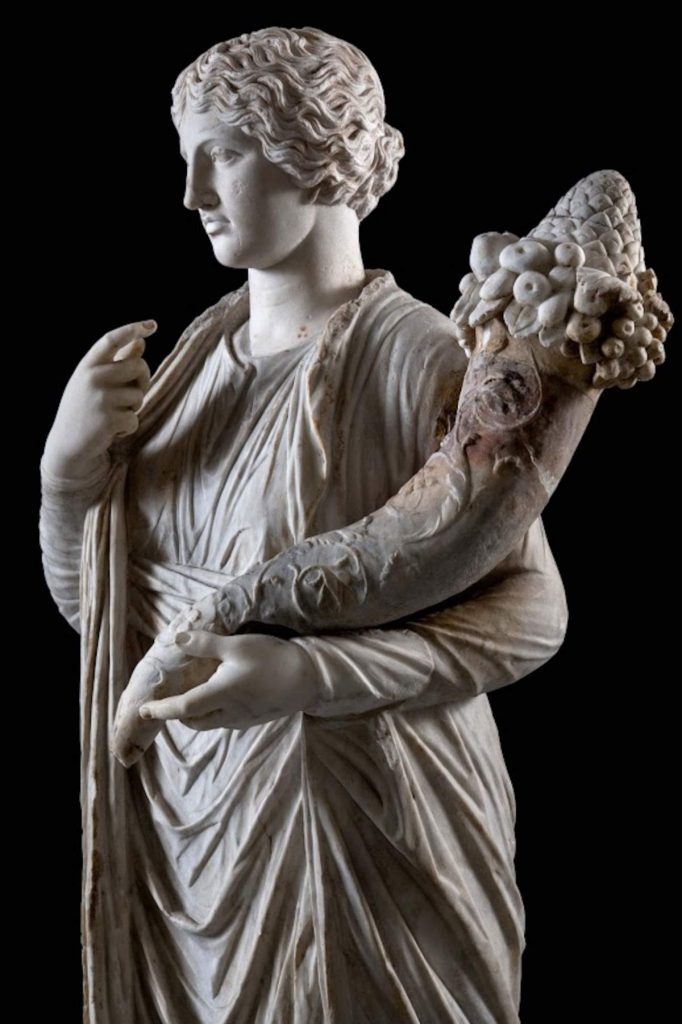
The temple history mirrors this doctrine and fixes the cult upon Rome’s heights. Camillus vowed the Forum temple in 367 BCE and dedicated it on 22 July; it stood on the north-western margin of the Forum, backed against the Capitoline near the ancient Vulcanal. A Victoria on the roof proclaimed achieved peace; lightning once struck that image, a prodigy read, then answered, by renewed rites. The building, faced in fine marble, was judged among the city’s most comely; in later ages it served in effect as a museum, sheltering notable works of art; Tiberius restored it and reopened it on 16 January 10 CE, dedicating it expressly to Concordia Augusta, the ‘Harmony of the Imperial Family’. A companion sanctuary stood on the Arx of the Capitoline with its own dedication day, 5 February; the praetor Manlius had vowed it in 218 BCE when disorder among the troops was stilled. Though compact, it was richly appointed. Another shrine, credited to Livia and placed in or near the porticus Liviae, is praised by Ovid as magnifica. In the fevered months of 44 BCE the Senate authorised a Concordia Nova in relation to Julius Caesar; the deed remained unbuilt, a design interrupted by murder. Earlier still, in 304 BCE, the aedile Cn. Flavius set a small bronze aedicula near the Forum temple; he had published the fasti, the calendar of lawful court days, and, meeting patrician displeasure, vowed an altar to Concordia to quiet contention, paying for it with fines levied upon money-lenders; that lesser shrine vanished when the great temple was enlarged in the second century.
Coins and reliefs supply her grammar in miniature and teach the posture by which peace is won. The clasped right hands are dextrarum iunctio, the legal handshake that seals a marriage and a compact; the matronal veil names modesty; the cornucopia promises plenty governed by measure; the olive branch declares peace with honour; the caduceus stills dispute; the patera signifies due libation; an anchor marks patient hope. Birds attend her: the stork, sign of filial devotion within the house, and the dove, emblem of mildness under law. These are not ornaments; they are instructions. A city that would enjoy her presence must give her the materials she blesses: lawful oaths, ordered nuptials, disciplined treasuries, and a calendar of feasts that teaches citizens to expect tranquillity as the reward of obedience.
From the imperial hearth Concordia flowers by set steps. First comes Concordia Coniugalis: the marriage of the ruling house provides the paradigm, not as romance but as jurisdiction; husband and wife are united under manus, with dos governed for children and sacra, and quarrels judged in a forum competent to preserve the house. Next comes Concordia Ordinum: patrician and plebeian stand in one commonwealth without confusion of offices; the ordo ordinum is a harmony of timbres, not a melting of metals; nobles govern, commons consent, and both prosper because place and duty are legible. Then Concordia Militaris: legions and standards keep a single step with the Senate’s counsels and the treasury’s measure, so that victory does not curdle into licence. Finally Concordia Provinciarum: the provinces share Rome’s peace because Rome shares her gods, her law, and her coin; not a levelling, but a settlement in which the centre radiates order and the periphery answers with loyalty. In later practice she stands with Janus, Salus, Pax and Spes; matrons honour her on the Caristia/Charistia of 22 February, a feast of kin-reconciliation; she is remembered again on 1 April at the Veneralia of Venus Verticordia, with Fortuna and Venus invoked beside her; other dates appear in the civic memory—30 March and 30 January—as local observances gathered to her name. Under Augustus her image naturally converses with the Ara Pacis, for Pax is the serenity of a concord that has taken root.
Greek Homonoia is her cousin, yet Rome gives the figure a harder edge. Homonoia praises like-mindedness; Concordia governs like-mindedness within unequal ranks. Hence the specific applications found upon stone: Concordia Coniugalis for marriage, Concordia Militaris for the army, Concordia Provinciarum for the settlement of realm and limbs. The clasped hands on imperial coin do not hide force; they show force accepted as lawful and dignified by pact, whether it be a joint rule, an imperial marriage, or the public compact by which ruler and ruled keep their places. Even beyond Rome’s walls the name is guarded; the famous Doric temple at Akragas, long called “Concordia”, is more likely another dedication, a reminder that the Roman goddess is not a free label for any handsome ruin but an exact power with exact rites.
The family feast of Caristia shows her domestic face under a sterner light than sentimentality permits. Reconciliation here is rite; wrongs are confessed, bread and wine are offered, and kin resume their stations so that inheritance may proceed without rancour. When mothers invoke Concordia with the deities of beginnings, health, and peace, they do so as ministers of order within the house; the goddess answers with the steady abundance that a cornucopia promises only to those who keep accounts and times. The same logic governs her Augustan title: Concordia Augusta is marital harmony raised to public principle, the law of household unity projected over the commonwealth.
In this patrician key Concordia is kin to Pax and daughter to Iustitia. She presupposes a world in rank: paterfamilias over domus, magistrate over ward, Senate over people, prince over all under Iuppiter. Her enemy is not vigour but dissonance. She tolerates no private orchestra of appetites; she requires a conductor and a score. Hence her place beside the Capitoline and her alliance with Victoria: concord is the resting state of a city that has mastered itself. When shrines to Concordia multiply—on the Arx, beside the women’s colonnades, at the cross-roads of policy and cult—the point is not ubiquity but penetration; the same note is to be audible in household shrines, in the Senate’s decrees, in the camp’s obedience, and in the provinces’ acquiescence.
Restore this pattern and Concordia returns. The imperial household again takes marriage as a jurisdiction, not a spectacle; patrician houses live as corporate persons with heirs and sacra privata; magistrates and captains read from the same book; provincial governors act as patrons rather than predators. Then the clasped right hands recover their old meaning, the olive branch is more than a motif, the anchor regains its promise, and the word “harmony” ceases to be a plea. It becomes the calm that falls upon a city when the gods are honoured, the ranks are clear, and the head of the commonwealth keeps his house in order.
Patronus, Clientela, and the Visible Head: The Modern Corporation as Domus
It is a bitter sight that the last centralising authority left in our civilisation is the modern corporation. The house has been unthreaded; the feminist parish speaks in matronly whispers; the magistracy apologises for its own seal; the university devolves into ahistorical seminar and activist slogan; the regiment is handled by committee. Only the firm keeps a calendar that binds and a chair that commands authority. Only in the boardroom does the room fall to order when a single voice calls it to. What was once the daily rite of the domus is now the quarterly rite of earnings; what was once the charter of the house is now the memorandum of association; what was once a priest at the hearth is now a compliance officer with a checklist.
For the atomised masses the sovereign god and patriarch is the economy; its liturgy is the index and the forecast, its feasts are sales and bonuses, its sacraments are credit and consumption, and its priests read the movements of markets as oracles. It promises salvation as growth, commands sacrifice as ‘efficiency’, and claims a devotion that once belonged to household altar, lineage, and law.
Yet even this degraded survivor testifies to an older truth: men still require a visible head, a chain of command, a body of dependants, a common estate, and a juridical personality through which dispersed energies are gathered into form. In Rome, this principle appeared in its nobler civic expression through the relation of patronus and cliens, or, in its plural and political extension, patroni and clientes: a vestige of the patriarchal order carried beyond the household into the city, where protection, loyalty, service, honour, advancement, dependence, and reciprocal obligation gathered around a superior man whose authority remained personal before it became merely administrative. Even suffragium, ancestor of the modern word ‘suffrage’ now sanctified in the democratic imagination as the pure abstraction of the vote, reveals a less flattering and far more Roman truth in its basis in patronal support and influence; it discloses the persistence of the paternal axis within public life, the citizen and dependent drawn towards the man of standing, access, honour, and command. Suffragium is the act by which a man of standing lends his weight to another: a vote, assent, recommendation, favour, or patronal backing that helps advance, protect, or secure the dependent within public life.
The irony is that modern suffrage, especially in its egalitarian, feminist-radical mythology, imagines itself as the abolition of paternal hierarchy; yet its own Latin ancestor passes through a semantic world where voting, support, patronage, and dependence converge. Beneath the later slogans of ‘women’s suffrage’ and ‘suffragette’ lies a Roman field where vote, assent, support, recommendation, patronal favour, and the gravity of superior men already belong together: suffragium without the paternal axis is only the sound of Rome emptied of its ordo. Rome understood the ‘vote’ not as a mystical expression of equal souls, but as something embedded in rank, fides, clientela, and the gravity of men of standing. What now survives in modern phrases like ‘women’s suffrage’ and ‘suffragette’ as a slogan of abstract equality once passed through a Roman field of vote, support, patronal influence, and dependence, revealing the citizen drawn towards the man of standing, access, honour, and command. The modern term preserves the sound while emptying the cultic structure: suffragium without patronus, suffrage without the paternal axis, the Roman truth stripped of its hierarchy and retained only as a democratic relic.
The Augustan settlement reveals how high this logic could rise. Just as the pater bore the domestic principle upwards into the State, the patronus, whose very name preserves the same paternal root, carries that same axis outwards through clientela, the relation of patron and client by which fatherhood translates into protection, favour, command, obligation, and dependence. Grant Parker, PhD in Classical Philology and Associate Professor of Classics at Stanford, states the matter with particular clarity: ‘In fact the Augustan principate was, above all else, a manifestation on a vast scale of personal clientela.’ De Ste Croix’s account of suffragium, Crook’s study of the consilium principis, and Yavetz’s treatment of Plebs and Princeps all strengthen the same picture: Rome’s public order did not abolish personal dependence beneath a neutral mechanism, but raised patronal relation to cultic, imperial magnitude. The princeps appears as supreme patronus, the imperial household as magnified domus, and the Roman world as a hierarchy of persons drawn towards one commanding centre. The modern corporation is therefore not the fulfilment of this order, but its metallic husk: command without cult, hierarchy without fides, dependence without honour, and centralisation without the sacred fire from which lordship once drew its right.
In fact the Augustan principate was, above all else, a manifestation on a vast scale of personal clientela.
Grant Parker, PhD in Classical Philology and Associate Professor of Classics at Stanford University, ‘Patronage of Letters in the Early Roman Empire’, Akroterion 36.4, University of the Witwatersrand, 1991
The company keeps what the city and the household surrendered. It publishes articles that people read; it holds councils that begin on time; it audits, archives, and executes. Its ledger is kept; its archive is in fireproof cabinets; its will is legible in minutes and resolutions. Around it move lesser bodies that imitate its gravity. HR supplies a catechism in place of mos; policy substitutes for oath; diversity pledges stand where patronage and rite should be; wellness replaces fast and feast. The corporation alone rewards order with pay and punishes breach with speed; it alone expects an account and receives it without blushing.
Yet its sovereignty is thin. It centralises without sacralising; it commands without blessing; it binds to targets, not to destinies. Its calendar year turns on fiscal quarters, not on rites; its justice is procedure, not judgment; its mercy is a benefits package that cannot teach gratitude. The Board approves mergers with the calm of a senate yet cannot confer a name that outlives a logo. The warehouse hums and the data centre glows, but the altar is cold. Men bring their best hours to a system that neither fathers nor buries, that records no lineage, that remembers no dead except as write-offs.
Heraldry in Europe and the insigne of the patrician announce a living house: arms bear witness to lineage, office, and covenant; tinctures and charges recall vows, victories, and lands; crests and supporters display alliances; mottos bind conduct to rule. A coat of arms is not a picture but a sentence of law, legible to peers and courts; it travels on seals, plate, liveries, and standards, and it accrues authority as generations keep faith with the name. The device guarantees a living house; it is a pledge before the ancestral gods and the city, an oath at the hearth that the forebears will be answered for and the heirs provided for.
The corporate logo is a related instrument with a different soul. It marks a trade rather than a lineage; it compresses reputation into a sign for markets, not a claim upon kin. Like arms, it strives for memory, simplicity, and recognition; it appears on charters, façades, uniforms, and packaging; it seeks continuity through design systems and brand books. Yet it guarantees products, not persons. It certifies a promise of performance within a fiscal cycle, not a vow to heirs; it can be redesigned by committee, sold with the assets, retired at a rebrand. Heraldry signals stewardship of estate, altar, and archive; a logo signals management of inventory and narrative.
The analogy has use. Both are emblems of authority, aides-mémoire for stories a polity tells itself, instruments by which order is made visible. The contrast is the lesson. Arms name an office that endures and answers beyond profit; a logo names an enterprise that performs and reports. Where houses are strong, the mark of the person commands the mark of the firm; the lion on the shield lends honour to the device on the letterhead. Where houses are weak, the logo stands alone and asks to be revered as if it were arms, and the community forgets that only a house can bless, beget, bury, and keep its word past the quarter’s end.

The dismal comedy is complete. Houses once kept their own councils; now they take minutes for other people’s meetings. Fathers once judged disputes; now they submit forms. Mothers once governed stores and sacra privata; now they reconcile expense claims. The city once crowned magistrates; now it prints badges. We accept central authority only where it serves revenue, and we refuse it where it would serve life. The firm stands tall because every other pillar has been sawn near the base; it is not stronger by nature, only better buttressed by our neglect.
This is a lament, not a curse. The corporation shows that human beings still recognise hierarchy, still answer to time and record, still obey when an office is visible. The lesson is plain. If we can bend ourselves to a calendar for strangers, we can bend ourselves to a calendar for our own; if we can keep ledgers for shareholders, we can keep books for our heirs; if we can speak with one voice for a brand, we can speak with one voice for a name. Let the centralising genius that now serves a faceless treasury be repatriated to the hearth. Let houses recover charter, rite, archive, and judgment. Then the firm will take its proper place as instrument, and the centre of authority will stand again where it belongs, under a roof that can bless, beget, bury, and endure.
Constitutionalism, in the modern, Freemasonic sense, begins with inherent suspicion of sovereignty and ends by parcelling it into committees; it presumes that authority exists only by delegation and that every office is revocable by procedure. That outlook cannot found a domus. The paterfamilias is not a president under a charter, he is an autonomous centre of the divine, a sacral-king in miniature whose maiestas radiates through name, altar, and estate. If we borrow corporate forms, we do not do so to bind him down by legalist contract, but to furnish vessels through which his auctoritas may be rendered visible, durable, and exact. The enterprise is a retrofitting: the grammar of company law is pressed into the service of manus and sacra privata, so that contemporary instruments carry ancestral ends.
Modern corporate architecture can be turned to Traditional ends, as evinced by our very own Restoration Document. The company’s grammar of office, charter, audit, treasury, and succession supplies a ready scaffold for re-establishing the pater familias as visible sovereign of a living household. What follows is not metaphor; it is a working plan that repurposes contemporary forms in service of pietas, auctoritas, and continuity.
Begin, then, not with a constitution that limits, but with a household charter that consecrates. Its function resembles articles of association only by outwards likeness. It does not found the father’s office; it acknowledges it, records its scope, and names the materfamilias as steward within his order. Procedures appear not as fetters but as rites of deliberation: the household council sits at stated times; petitions are heard; admonitions are recorded; reconciliations are entered; archives are kept. Minutes are a liturgy of judgement; signatures are seals of peace. The written word serves the living office, and not the reverse.
Treasury follows. Modern vehicles—family companies, trusts, limited partnerships—are fitted to old purposes. They protect the estate from dissipation, they ring-fence dos as a governed fund rather than a purse for impulse, they channel alms through known patrons, and they keep a cadence of distribution that maps to feasts and memorials. Cash flow is yoked to rite: provision for heirs is timed with their stages; apprenticeships are endowed to honour the dead; benefactions are audited as acts of pietas, not public relations. Risk registers, reserves, and insurance cease to be managerial jargon; they become instruments of providentia by which the house refuses to be surprised.
Audit, too, takes on a sacred colour. Ledgers are kept; stores inspected; covenants reviewed; penalties and restitutions noted with dates and witnesses. The mood is not compliance theatre; it is the sober examen by which a ruler answers for what is under his hand. Where a corporation names non-executives, the house invites a small counsel of matrons from allied lines to sit as independent witnesses when matters touch female honour and the governance of dos. Their presence does not dilute rule; it shields it from caprice and denies the outside world the pretext that “no one” reviews the inner forum.
Roles and succession are taught through training rather than slogans. The pater holds strategy, judgement, covenant, and outwards patronage; the mater keeps linen and stores, sacra privata, dowry governance, and the daily schooling of heirs; children rotate through accounts, estate, altar, and craft. Letters of wishes, powers of attorney, funeral instructions, and guardianship plans are drafted in quiet and kept under seal; they are not a court’s leash on the father, they are his foresight at work, ensuring that sorrow never leaves the house headless. Modern paperwork becomes a reliquary for intention, not a licence from elsewhere to rule.
Stakeholder theory is translated back into Roman. Dependants, tenants, clients, and allied houses are not an abstract public; they are the City around one altar. Patronage is timed, named, and audited, so that generosity never surrenders jurisdiction. Corporate social responsibility becomes Concordia: apprentices funded to carry a name; dowries advanced to consolidate alliance; burial clubs maintained to honour the poor dead. The house speaks with one voice to magistracy and market because it has one seat of decision, and because its benefaction is ordered rather than diffuse.
Even the language of compliance can be redeemed. External filings are exact, yet the house declines entanglement in pledges and trainings that smuggle supervision into the hearth. A simple rule suffices: no outside obligation is undertaken without the father’s written assent in council, and no outsider judges what the household can rightly judge itself. Corporate tools here are shields, not bridles. They purchase time, privacy, and continuity for the interior law to do its work.
Finally, culture. Where firms deploy away-days and slogans, the domus keeps feasts, fasts, uniforms, and protocol. Heraldry appears on letters; dress codes mark rite and council; forms for petitions and thanks refine speech; promotions and betrothals are sealed with visible ceremony. A handful of measures—disputes resolved within rather than referred out; apprenticeships completed; dowries safeguarded; alms reaching persons rather than programmes; rites observed on schedule—are reviewed like a board’s key indicators, not to idolise numbers but to keep the will honest. Style is not decoration; it is pedagogy in public.
Thus retrofitted, the corporate frame ceases to be a liberal cage and becomes a Roman armature. It makes the father’s sovereignty legible without making it contingent, it dignifies the mother’s stewardship as office rather than invisible labour, and it trains heirs for succession rather than consumption. The same machinery that flattens households into units of policy can, under restored hierarchy, be turned to raise households into small commonwealths that answer upward to law and to the gods, and outwards to city and kin, with a peace that is visible, lawful, and serene.
The ‘City of Houses’
From Rome to our houses. A modern revival is simple to begin and profound in consequence: establish a family lararium; inscribe a calendar of rites; teach the heir to read accounts and prayers; restore a signet; set terms for dos and portions; register a household charter; honour Lares compitales with neighbours by two or three shared days each year. The city grows legible when houses regain their fire; the peace of the streets becomes a garland round shrines that name the wards as living bodies; Mars Victor is then more than a statue—he is the public honour paid to fathers and sons who stand between boundaries and chaos, so that ovens are hot, archives are safe, and the hand that claims also protects.
Political theory regains health when it treats the domus as the primitive cell of the commonwealth—jurisdiction, treasury, cult, and archives gathered in one organism—and reads persons as members of houses rather than drifting units. Jurisdiction begins at street level; ward courts of heads of houses hear family, neighbour, and small-contract matters and record judgements in a ward archive; hard cases rise to the magistracy; censors’ rolls are published, honouring houses in good standing and recording guardianships kept with probity. Finance follows form; taxation proceeds on a household basis; the stem-estate of a registered house that maintains dependants, archives, and place enjoys exemption, while duties fall upon extravagance and waste rather than upon continuity; domus treasuries employ the household-employer status to hire apprentices and servants so skill and loyalty accumulate around recognised hearths. Cult provides the calendar; compita return as shared shrines and days, knitting vici into fraternities of houses; the municipal year acquires feasts for citizenship, remembrance, coming-of-age, and oath-taking; honour flows toward visible service. Credit attaches to name and record; each house keeps a seal, register, and inventory; banks and guilds extend facilities to houses with longevity, trained heirs, and proper books; associations of houses underwrite municipal bonds, aligning reputation with public works; merchants learn again to weigh names. Public order then wears a homely face; ward captains and beadles answer for streets; a civic muster draws men by house for training and emergency service; the pattern suits rural town and city boroughs alike; the steady presence of fathers and sons in ordered companies discourages disorder by quiet authority, and constables, relieved of impossible burdens, praise the settlement.
Under such a dispensation manus ceases to languish as memory and becomes instrument; paterfamilias and materfamilias function as a two-fold magistracy; dos and estate finance children rather than litigation; the family wage flows as of right because the law at last recognises its subject, the house, as a real person; the city then appears as a constellation of living domūs, each with fire, name, and duty, and the peace grows thick enough to breathe.
Cum manu should stand as an elective regime—entered freely, published publicly, and recorded beside the charter of the domus—so that marriage acquires the gravity of sacrament and constitution joined. Duties are pre-inscribed: cohabitation, fidelity, mutual aid, and reverence for the household gods; the paterfamilias owes provision and defence; the materfamilias owes governance of stores and rites; both owe the training of heirs. Dos forms a trust; income flows to the common life while principal remains intact; donationes inter vivos are entered in the house archive; marriage-portions for daughters and cadets are scheduled in advance so that ardour never dissolves arithmetic. Disputes go first to the consilium domesticum—a small council of agnates and elders under the house seal; next instance lies in a ward court with a learned assessor; state courts remain as guardrail, yet the presumption favours settlement among competent witnesses. Exit architecture preserves the house rather than feeds its ruin: on dissolution for cause, the dos returns to the wife’s trust with agreed increments; minor children remain members of the domus under the head’s guardianship, while the mother enjoys residence or scheduled access within the house’s own spaces—the schoolroom, temple, and garden—so the children’s world keeps its centre; the stem-estate resists liquidation, with life-interests and annuities replacing fire-sale division; pre-agreed forfeitures bite upon waste, concealment, or abduction, since malice against the domus is an injury against a corporate person with a future, not merely a quarrel between two isolated wills.
In Conclusion: Kindling the Conflagration of the Father’s Jealous Right
Fire is never a merely material thing. It is the visible fang of the Sun, the masculine daimon of heaven made hungry upon earth, the bright violence by which form separates itself from slime, dampness, night, and maternal undifferentiation. When Rome spread, Rome did so as living conflagration, catching the deadwood of exhausted orders in its solar, paternal, supernatural blaze: peoples whose rites had sunk into earth, moon, blood, queen, cavern, swamp, and oracle, until the smoke of their dissolution gave way to the hard grammar of lex, fas et nefas, imperium, road, wall, altar, legion, and hearth. The Roman flame did not flicker as warmth alone; it judged, consumed, clarified, and enthroned. It was the Apollonian Sun entering history through the hand of the pater, the hearth grown into conquest, Vesta’s civic fire armed with Mars, Jupiter’s lightning translated into law. Wherever it advanced, the world was forced to choose between smoke and form: the rotting timber of exhausted orders fell into blaze, while the clear beam of paternal right stood forth, purified by combustion, as the jealous fire of civilisation itself.
The question, then, is no longer whether Rome was patriarchal in some thin civic or domestic sense. Rome, jealous guardian of paternal right, understood that the father is the first visible bearer of ordo: priest of the hearth, lord of the house, transmitter of name, cult, land, and law. The pater stood where the invisible became juridical, where blood entered rite, where command became piety, and where the city learned, in miniature, the grammar by which heaven rules earth. To abolish this figure is to dissolve more than an old social arrangement; it is to sever the channel through which authority descends, continuity coheres, and peace receives a sacred form.
Jealous here does not primarily mean petty envy. It means vigilant, possessive, intolerant of profanation, unwilling to allow a sacred charge to be diluted, violated, or usurped. It is the jealousy of a god over a shrine, a father over lineage, a priest over rite, a sovereign over law, a house over its ancestral fire.
It first means custody. Rome does not merely ‘have’ paternal right as one custom among others; Rome guards it as a sacred inheritance. The phrase suggests watchfulness, severity, and refusal. Paternal right is treated like a flame, a boundary, a relic, a law-table, a household god: something requiring defence from corruption.
It also implies exclusivity. A jealous guardian permits no rival principle to enter the sanctuary. Maternal right, queenly mediation, conjugal reciprocity, Christian bridal inversion, democratic levelling, and sentimental household theory all appear as rival claimants against the same sacred centre. Rome’s jealousy means Roman patriarchy recognises the danger of mixture. The paternal principle must remain sovereign, rather than being softened into partnership or absorbed by a competing divinity.
It further implies sacral possessiveness. The guardian does not guard an abstract doctrine; he guards what belongs to him by rite, ancestry, office, and divine mandate. That is why the phrase has more force than ‘defender’ or ‘protector’. A defender may intervene only when attacked; a jealous guardian lives in constant custody. The right is his charge.
The word connotes a certain divine ferocity. ‘Jealous’ belongs easily to the world of gods, altars, violated rites, taboo, sacred boundaries, and punishment. It suggests that paternal right is not negotiable social policy but a consecrated order whose betrayal calls forth wrath. Rome becomes a cultic personality: stern, watchful, armed, and offended by profanation.
There is also an aesthetic implication: Rome as masculine custody rather than mere conquest. Rome does not only expand; Rome preserves, disciplines, delimits, and guards. The title therefore balances fire and law. It is not chaotic aggression; it is severe possessive order.
Rome as keeper of the hearth; Rome as father watching the threshold; Rome as priest guarding the rite; Rome as sovereign refusing dilution; Rome as the living form of united paternal law made vigilant.
Present-day Europe suffers precisely from the loss of this paternal axis. The house has been made contractual, the family sentimental, inheritance bureaucratic, authority apologetic, and religion either privatised or emptied into theatre. Yet the Roman answer remains clearer than the modern confusion it rebukes. A civilisation endures when its fathers stand again as sacral heads of their houses; when law recognises household sovereignty rather than pulverising it; when sons receive name and burden as sacred transmission; when women, children, clients, dependants, land, and rite are gathered under a living principle of protection and command; when the State itself is understood as the higher domus, crowned by a paternal authority whose office mediates auctoritas, maiestas, and divine favour.
Roman sacral patriarchy must therefore be restored first as vision, then as discipline, then as form. It begins at the hearth, where the father ceases to be a biological accident or economic function and becomes again the domestic pontifex. It rises through inheritance, patronage, civic hierarchy, cult, and sovereign office. It culminates in a public order that understands peace as the fruit of commanded harmony, rather than negotiated appetite. The modern world asks for procedure; Rome answers with pietas. The modern world asks for equality; Rome answers with ordo. The modern world asks for permission; Rome answers with Right.
Roman sacral sovereignty does not begin as a theatrical claim to cosmic kingship; it begins as domestic sovereignty, ancestral continuity, hearth-law, and pietas within the house.
Marriage and property law therefore stand together beneath the jealous guardianship of the masculine principle: the house, the wife, the lineage, ancestral property, and the sacred fire are held within one possessive order, gathering marriage and property into one jealous economy, guarded against dissolution by the same paternal authority that gives them form.
The patriciate prevents the idea of godhood from becoming mere inflation. It roots divine authority in the domus before the res publica, in the pater familias before the imperator, in the hearth before the Capitol, in the ancestral dead before the apotheosised Caesar. The Roman aristocratic order therefore says: first rule the house; first sustain the rites; first stand before the Lares, Penates, Vesta, the manes, and the genius. Only then can sovereignty expand outwards into magistracy, command, priesthood, triumph, and empire.
That is why Roman kingship is quite different from a crude oriental despotism or from an abstract mystical fantasy of self-deification. The Roman form is juridical, domestic, cultic, ancestral. The godhood that eventually appears in imperial consecration is already prefigured in the sacred structure of the family, where the father is not a private individual in the modern sense, but a bearer of ritual, law, blood, name, property, continuity, and command. The household is the first kingdom; the hearth is the first altar; the Father is the first sovereign.
And yes, the patriciate is what gives the whole thing legitimacy. Rome was never merely ruled by ‘kings’ as in the later monarchical schema. It was ruled by an order: houses, lineages, priestly offices, senatorial continuity, ancestral prestige, and sacred right. Even when individual men rose above the senatorial order, they had to speak through its grammar: auctoritas, mos maiorum, adoption, divine ancestry, public cult, priesthood, law, and the approval or containment of aristocratic forms.
To advocate Roman sacral patriarchy today is therefore to advocate the return of civilisation to its paternal foundation: the father as axis, the house as sanctuary, the lineage as vessel, the law as consecrated inheritance, and the commonwealth as a vast ritual body held together by ascending piety and descending command. Rome guarded paternal right jealously because Rome knew that, where the father is profaned, the gods withdraw, the house decays, the city loses memory, and the world falls into orphanhood.
The counter-claim to modernity is not ‘we are special because a doctrine says so’; it is ‘man becomes truly man by ascending beyond the merely natural’. Rome, read in this register, is one of the great historical witnesses to that ascent.
Where the father is restored, the hearth burns again; where the hearth burns, the gods have a dwelling; where the gods dwell, the City may yet recover its peace.