The Fiction of Universal Sisterhood
Women are an oppressed class. Our oppression is total...

Our chief task at present is to develop female class consciousness through sharing experience and publicly exposing the sexist foundation of all our institutions.

We identify the agents of our oppression as men. Male supremacy is the oldest, most basic form of domination. All other forms of exploitation and oppression (racism, capitalism, imperialism, etc.) are extensions of male supremacy: men dominate women, a few men dominate the rest.

We define our best interest as that of the poorest, most brutally exploited woman. […] In fighting for our liberation we will always take the side of the women against their oppressors. We will not ask what is "revolutionary" or "reformist," only what is good for women.
Sounds familiar, doesn’t it? A refrain that we have all heard before, but cannot place. Thus runs the Redstockings Manifesto, issued by Redstockings of the Women’s Liberation Movement in 1969. Remember it sternly whensoever you read a headline with ‘women’, hear a woman speaking in the collective plural, are coerced by the term ‘misogyny’ for basic ethics, into some form of social conformity, or see a self-effacing, servile male taking care not to harm the incontinent modern sensitivities of a ‘woman’. Feminist ‘class consciousness’ has so parasitised the thinking of modern women that it bears repeating: from whence do so many of the modern prejudices originate? Or else we should be lost for explanations of the unnatural, caustic, and highly derogatory turn they have taken. Why? And Whence?
No. The true oppression lies in the radical feminist rhetoric that renders ordinary relations between men and women morally impossible. Once man is defined in advance as the representative of an oppressor class, every act of authority becomes domination, every desire becomes predation, every boundary becomes control, every disagreement becomes abuse, and every failure to submit to the woman’s interpretation becomes further evidence of guilt. Ghosting, divorce, undermining, public attacks on reputation, and betrayal become moral necessities. Trust cannot survive such a doctrine, because the man enters the relation already accused; intimacy cannot survive it, because spontaneity is subjected to permanent ideological inspection; authority cannot survive it, because any asymmetry is treated as violence; forgiveness cannot survive it, because grievance becomes the very substance of political consciousness.
The resulting tyranny falls most heavily upon men, who are required to love under suspicion, speak under threat of reinterpretation, lead without authority, protect without command, provide without gratitude, and endure accusation and betrayal without reciprocal standing and reputational risk. Radical feminism therefore breaks the relation whose injuries it claims to diagnose. It teaches woman to approach man as a hostile class-interest, then cites the distrust, estrangement, and bitterness thereby produced as proof that its original indictment was true. The man is stripped of presumption of innocence, dignity, and moral voice; the woman is stripped of the capacity and fidelity to meet him as a particular person rather than as an emissary of ‘male supremacy’ operating under collective classes. Ghosting says: I may terminate your standing without explanation, fidelity, or accountability. Stigmatisation says: I may define your character without permitting answer. These are true markers of collective oppression based on sex or group, justified by projection. Therefore, the entire feminist edifice stands as a projection in order to legitimise poor and destructive behaviour by women towards men. What remains is neither love nor justice, but an ideological tribunal installed to make the most intimate precincts of life impossible.
‘Women are hypergamous, faithless, fickle, unreliable, vain, status-hungry, validation-starved, forever “shit-testing”, never fulfilled, ever searching for the stronger monkey-branch, constantly ranking men in a hierarchy of looksmatch and ‘tingles’, keeping replacement ‘orbiters’ in reserve, moving the goalposts, rewriting the past, mistaking impulse for intuition, weaponising tears and vulnerability as they falsely accuse after regretting an encounter when they aren’t committing divorce-rape on well-meaning ‘simp men’; they settle for ‘beta bucks’ when they are not provoking quarrels merely to test devotion, despising weakness while demanding indulgence; middling women maintain more eugenical height-requirements in their dating preferences than even the elite units of Adolf Hitler as they refuse accountability, jealously maintain supremacy with a capricious sensitivity that would put the most fickle feline to shame, and remain loyal only while advantage, excitement, or social approval endures; even their own fathers cannot measure up to their sexual-marketplace standards’. So runs the coarse red-pill ‘Manosphere’ catalogue, half resentment, half market analysis, reducing Woman to appetite, strategy, emotional manoeuvre, and exchange; only in a degraded age could such a paradigm come to predominate. Our criticism proceeds from a higher order; it concerns not the petty arithmetic of mating advantage and sexual excitement, nor the tavern grievance that woman is troublesome, costly, or inconstant, but the ideological degradation by which Woman herself has been dissolved into a grievance-class and estranged from fidelity, hierarchy, distinction, sacrifice, and her proper greatness which has been known to many time and again.
So much is said of ‘women’ as a collective, alike by their antagonists and their self-appointed ‘allies’—the reciprocal offices through which the same class-conscious dialectic perpetually remakes itself—while the Marxist presupposition is silently affirmed and the division it creates driven ever deeper. So much is said of ‘women’ as a collective, alike by their antagonists and their self-appointed ‘allies’, reciprocal offices through which the same class-conscious dialectic perpetually remakes itself, while the Marxist presupposition is silently affirmed and the division it creates driven ever deeper. Today, we actually liberate women, rather than binding them to a subversive anti-order that drives their destruction, break the feminist identification of sex with class, dissolve its collectivist fiction, cast down the counterfeit proletariat of ‘women’, and restore the higher Woman.
Feminism begins by committing an abstraction against woman. It dissolves the innumerable distinctions of rank, lineage, civilisation, temperament, office, and spiritual type into the single political category of sex, then declares this category the primary ground of allegiance; Marxism is projected along sex-lines rather than class lines. Woman is summoned to recognise herself first among women, to interpret every masculine authority as foreign power, and to regard the collective advancement of her sex as a duty superior to household, dynasty, husband, father or inherited form. The Redstockings Manifesto explicitly centres itself upon the lowest common denominator of ‘the poorest, most brutally exploited woman’, rather than any great women. ‘Sisterhood’ is therefore less a discovered bond than an imposed fraternity of the female mass.
Feminism, it its egalitarian, plebeian, and socialist aspects, is a characteristic abolishing of every vertical distinction among women themselves. Queen and servant, matron and agitator, priestess and anonymous individual are drawn into one abstract communion of sex, stripped of the forms by which one woman might stand ontologically above another, and then congratulated upon their common liberation. The operation is pauperising in the strictest sense: woman is dispossessed of rank, lineage, office and sacred differentiation, then returned to the universal female condition as to a common estate. ‘Sisterhood’ becomes the yoke under which every woman must be equally represented, equally intelligible and equally bound to the collective destiny assigned to her sex.
Yet women have never constituted a single moral or historical party. The patrician matron, the queen, the priestess, the wife guarding a noble house, and the woman whose instinct inclines towards hierarchy may stand farther from the democratic female multitude than from the superior men beside whom their civilisation was formed. Their sex does not cancel their rank. A woman may recognise in her husband, father or sovereign the axis of an order to which she herself belongs, while finding little kinship with women united only by anatomy and grievance. Such allegiance contains no contradiction. It becomes contradictory only after feminism has decreed that female solidarity must precede every higher bond.
Women have been so repeatedly mobilised as weapons, constituencies, symbols and commodities that the possibility of a higher feminine existence has nearly disappeared from view. Revolution uses woman as the emblem of injury, the market as an image of appetite, the State as a dependent claimant, and feminism as an abstract member of an aggrieved sex-class. In every case she is instrumentalised while being told she has been liberated: converted into voter, worker, consumer, spectacle, demographic unit or moral accusation, and then praised for the very dispossession that has stripped her of every qualitative form. Forgotten beneath these uses is the woman who stands above utility altogether: matron, priestess, queen, guardian of lineage, bearer of household memory and visible participant in an order whose dignity cannot be measured by publicity or exchange. Modernity has not honoured woman by making her universally available to its programmes; it has exhausted and pauperised her, until the higher type appears almost unintelligible beside the endlessly circulating female image.
The higher conception proceeds in the opposite direction. It does not ask how woman may become interchangeable with every other woman, but through what form she may be elevated beyond the merely female mass. The matron, queen and priestess possess dignity because their womanhood has been qualified, intensified and raised through lineage, fidelity, cult and proximity to superior authority. Feminism calls the removal of these distinctions emancipation; in truth, it lowers woman from an order in which she might become more than herself into one in which she may be nothing higher than everyone else. Its universal communion is therefore less a triumph of woman than her plebeianisation: the reduction of every possible feminine height to membership in a sex-class whose equality is purchased by the destruction of distinction.
Feminism does not merely claim to speak for women; it first converts womanhood into a party, assigns that party a common interest, and then treats every refusal of its programme as treason against sex itself. The woman who prefers lineage to solidarity, husband to movement, household to emancipation, rank to equality, or the judgement of superior men to the applause of inferior women becomes psychologically inadmissible. Her existence cannot be answered politically, because it disproves the political construction upon which feminism depends. She must therefore be explained away: deceived, conditioned, frightened, dependent, possessed by ‘internalised misogyny’, or performing obedience for male approval. The doctrine that proclaims women autonomous thus denies autonomy most violently to those women who reject it. It can forgive weakness, vulgarity, resentment and failure more readily than it can forgive a woman who sees clearly and chooses hierarchy.
This is why feminism grows most vindictive before women who refuse the summons. The compliant woman may be pitied as conditioned; the indifferent woman may be dismissed as unaware; the openly hierarchical woman is harder to forgive. She reveals that ‘sisterhood’ possesses no natural sovereignty over her, that the female collective may be judged and rejected, and that a woman can prefer distinction to inclusion, obedience to rebellion, and the preservation of a higher order to the indiscriminate elevation of her sex. Her existence tears open the fiction at its centre: feminism speaks in the name of woman only after excluding every woman whose loyalties ascend beyond women.
The Robbery of the Higher Woman by the Sisterhood
‘Well-behaved women do not make history’, like ‘I don’t have to please everyone’ and ‘may the bridges I burn light my way’, is one of those cheap modern maxims whose insolence depends upon confusing notoriety with greatness. It mistakes licence for form. It assumes that history belongs chiefly to those who rupture, scandalise, and agitate, while the woman who preserves a house, transmits a lineage, maintains cult, educates heirs and gives durable form to private and dynastic life has somehow failed to exist. Yet civilisation has often depended more profoundly upon such quiet gravitas than upon the noisy heroine who forces herself into the record by rebellion. The higher woman does not require perpetual collision with inherited form in order to possess historical weight. Her influence may be most complete where it becomes inseparable from continuity itself, where her bearing survives in descendants, customs, alliances and standards long after the agitator’s slogan has decayed. The plebeian imagination recognises only disruption because it cannot perceive inheritance; it applauds the woman who breaks the vessel and forgets the woman whose discipline preserved what was worthy of being handed down.
There remain, hidden beneath the clamour of the age, innumerable acts of fidelity that pass almost entirely unseen: women who, in the quiet sanctity of widowhood, continue to sleep beside the vacant place where their husbands once lay; women who preserve the vows of their hearts long after death has silenced the voice to which they were given; women whose loyalty is not measured by spectacle or proclamation, but by the silent endurance of years, by the preservation of a bond that even the grave has not dissolved. Such figures stand as remnants of a nobler conception of devotion, where love was not merely a flight of fancy, nor fleeting chemical emotion to be consumed, but a sacred obligation, a testament of something higher, carried beyond the limits of mortal presence.
Yet these examples of constancy are obscured beneath the relentless turbulence of the cultural war, centred upon class-consciousness, buried beneath arguments that so often seek not to elevate what is worthy, but to flatten all distinctions, to reduce every inherited virtue into an object of suspicion, and to cast into shadow the higher peaks of human aspiration once visible upon the horizon. Amidst this ceaseless contest of accusation and inversion, the quiet grandeur of fidelity is easily forgotten; the steadfast woman beside the empty bed, the widow who bears her solitude with dignity, the soul that remains faithful when there is no longer any earthly reward to receive, all become invisible beneath the noise of an age that has increasingly lost the language with which to recognise nobility itself.
The higher woman becomes unforgivable at the moment she refuses the class-consciousness assigned to her sex. Feminism requires her to recognise ‘women’ as a single historical collective, bound by common injury, common interest and a common struggle against the masculine order. Her private loyalties must therefore be translated into political allegiance: husband becomes oppressor, household becomes structure, inherited duty becomes material subordination, and every distinction that raises one woman above another becomes privilege to be liquidated in the name of universal emancipation. Against this compulsory consciousness, she may prefer lineage to solidarity, husband to movement, household to liberation, rank to equality, and the judgement of superior men to the applause of inferior women.
I’m convinced that the reason I’m still booking a table for one at the age of 63 instead of having settled with a significant other is because, like so many women of my generation, feminism has ruined my love life. Instead of empowering us, those ideals of the second-wave feminists made us believe marriage and domesticity were to be avoided like the plague and that men were competition rather than partners.
Kate Mulvey, ‘I Regret Belittling Men; at 63, I’ve Ended Up Alone’, The i Paper, 7 March 2025
I might have a successful career as a writer and broadcaster, but I have never had children or been married, and my longest relationship lasted eight years. I regret this; I had always imagined I would end up married with two wonderful children and living in a house in the countryside. I have paid a hefty price for my so-called liberation.
Such a woman immediately becomes a traitor to her class. Her fidelity is diagnosed as false consciousness as she herself is made guilty of ‘internalised misogyny’; her discernment as internalised domination; her gratitude as dependency; her reverence as ideological capture. The possibility that she has simply judged the female collective beneath the order to which she belongs cannot be admitted, because this would expose the supposedly universal interest of women as the programme of a particular and plebeian type. Feminism therefore grants woman freedom only on condition that she arrives at the prescribed consciousness. Where she chooses otherwise, autonomy is revoked and her judgement returned to her as pathology.
The language of sisterhood conceals this coercion beneath the warmth of collective communion. It promises release from the old yoke by fastening every woman to the new one: solidarity with the mass, resentment towards distinction, and participation in the historical struggle of her sex. The woman who stands above this communion appears ‘reactionary’ precisely because she refuses to descend into it. She will not exchange a differentiated place within a noble order for equal membership in an aggrieved constituency, nor abandon the concrete authorities of house, dynasty and civilisation for an abstract fraternity founded upon anatomy.
This is why the higher woman produces a peculiar fury. She does more than dissent from the programme; she breaks its theory of history. Her existence demonstrates that the alleged sex-class contains incompatible ontological types, that collective advancement may signify personal degradation, and that emancipation may be experienced from above as expropriation. The weak woman can be organised, the resentful woman mobilised, and the vulgar woman elevated as the authentic voice of her sex. The woman of rank is more dangerous. She refuses the summons of the mass and reveals that ‘sisterhood’ is merely the political name given to the plebeian demand that no woman be permitted to stand higher than women.
The Matron and the Noble House
Emancipation did more than merely release woman from an inherited station; it abolished the station itself and thereby forfeited forms of feminine elevation that modernity can no longer bestow. The matron belonged to a house whose name, memory, cult, property, and future passed through her. She could enter a rank greater than private personality, become the visible dignity of a lineage, exercise authority over household and descendants, and participate in an order whose continuance depended upon her fidelity. Such a position cannot be recreated by salary, suffrage, sexual autonomy or equal standing before the administrative State. It required a world of differentiated offices, durable households and men capable of bearing authority without apology.
The emancipated woman receives instead the abstract freedom of the dispossessed individual. She may contract, consume, labour and speak in her own name, yet no inherited form stands ready to raise that name above itself. The noble house has been liquidated, the husband reduced to a revocable companion, the household stripped of public and sacred weight, and motherhood removed from the centre of lineage into the private management of biological consequence. What remains available to all is precisely what bears the mark of the plebeian order: economic participation, political enumeration, erotic choice and equal membership in the mass. The higher possibilities have disappeared because equality could universalise only what was lowest enough to be distributed without qualification.
Many women will therefore pass through modern life without ever encountering the office emancipation taught them to despise. They will never become the matron of a durable house, never inherit the authority of a name extending beyond themselves, never be raised through alliance with a superior man into a rank inaccessible to the indiscriminate female collective. They have been taught to call this absence freedom because the lost form can no longer appear before them except as oppression. They cannot think from the perspective of the mother, as every social conflict is flattened to the atomised collective; to them men are never sons, fathers, husbands, nor ancestors and descendants, only an equalised, isolated opponent to confront and undermine, like a guerilla insurgent with no concern even for herself. Their deprivation is complete when they learn to prefer the applause of inferior women to the judgement of superior men, and to regard membership in a universal sisterhood as richer than incorporation into a noble order.
This is the concealed social descent beneath emancipation. The lady was stripped of the world that made her a lady and returned as ‘woman’, equal, autonomous and interchangeable. Feminism celebrates the levelling because it measures advance by the destruction of every height from which the mass might appear low. Yet the matron’s authority, dignity and sacral centrality belonged to an ontological status that no charter of rights can confer. Emancipation opened the gates of the common world to women by demolishing the houses in which some women had stood above it.
The Gallery of the Unforgiven—What Modern Woman Rejected, Ghosted, Left-Swiped, Betrayed, Critiqued, and Divorced Until It Vanished
Livia Augusta: The Veiled Presence Beneath the Imperial Sun
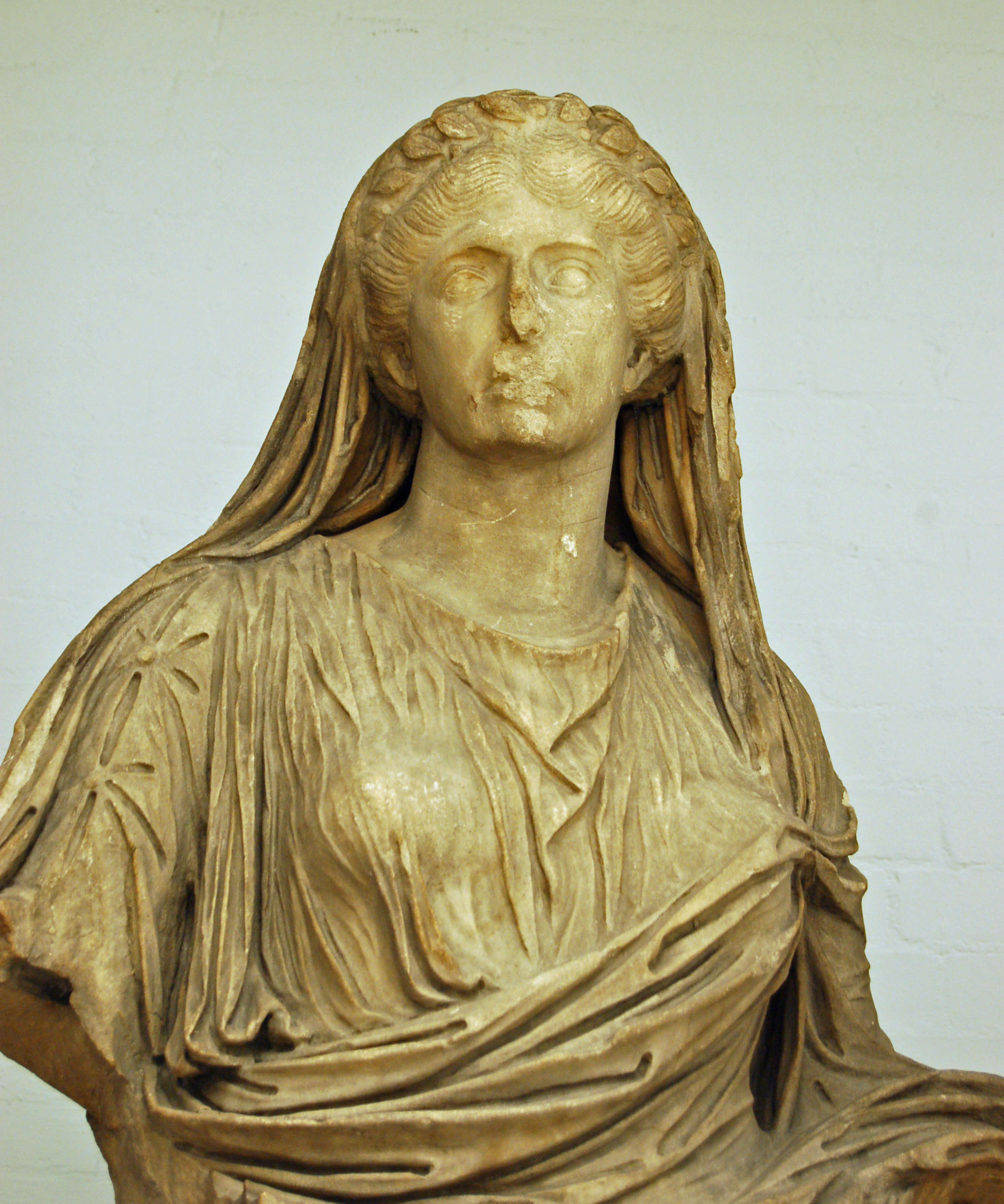
When someone asked her how and by what course of action she had obtained such a commanding influence over Augustus, she answered that it was by being scrupulously chaste herself, doing gladly whatever pleased him, not meddling with any of his affairs, and, in particular, by pretending neither to hear nor to notice the favourites of his passion. Such was the character of Livia.
Cassius Dio, Roman History 58.2.5–6; trans. Earnest Cary
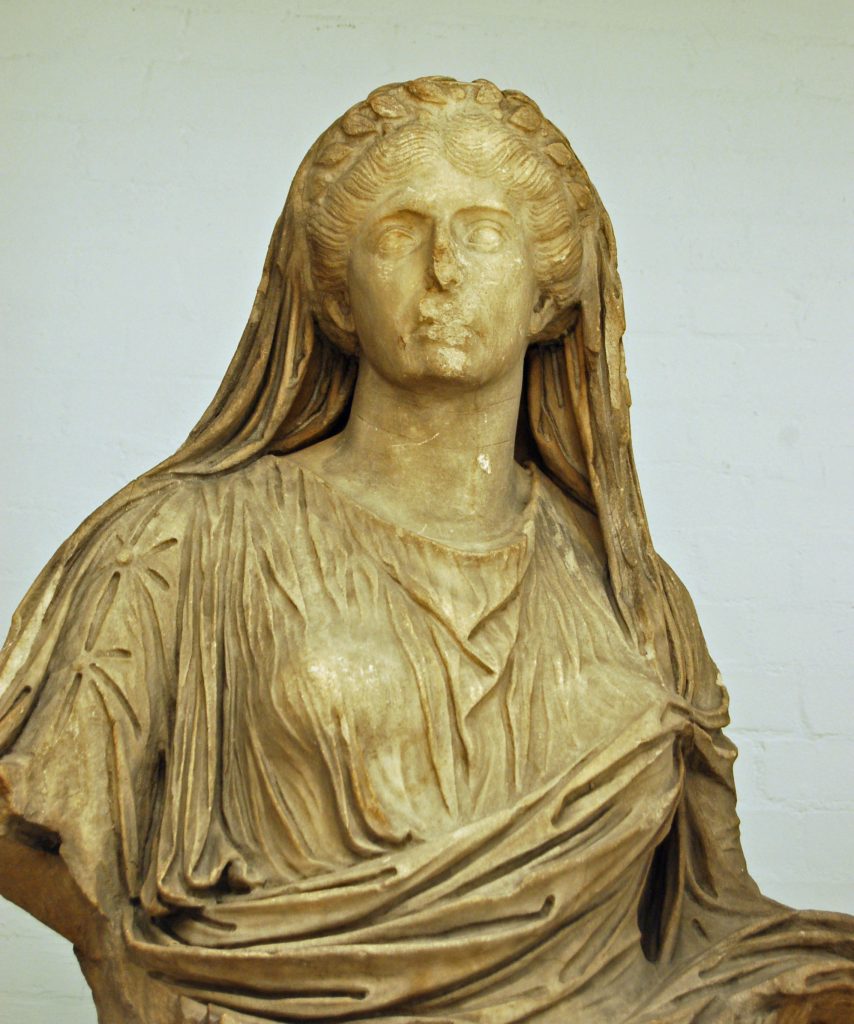
Livia stands near the beginning, as she embodies the patrician type in its cleanest Roman form, perhaps rivalled only by Octavia herself. She was neither elevated into the presence behind the highest sacral office in the empire by rebellion against masculine order, nor by the claim that woman must be released from hierarchy in order to matter historically. On the contrary, the tradition represents her influence as arising through the disciplined inhabitation of wifely office. When asked how she had acquired such commanding influence over Augustus, Cassius Dio has her answer that it was through chastity, by gladly doing what pleased him, by not meddling in his affairs, and by affecting not to notice the objects of his passion. The point is not sentimental self-effacement; it is that feminine force is here shown as gathered, concentrated and made formidable through form rather than through emancipation from it. Thus, against the modern feminist boisterousness and undignified manner of approach, is the paradox of her influence: chastity, reserve, wifely discipline, and quietness becoming the concealed strength beneath Augustus.
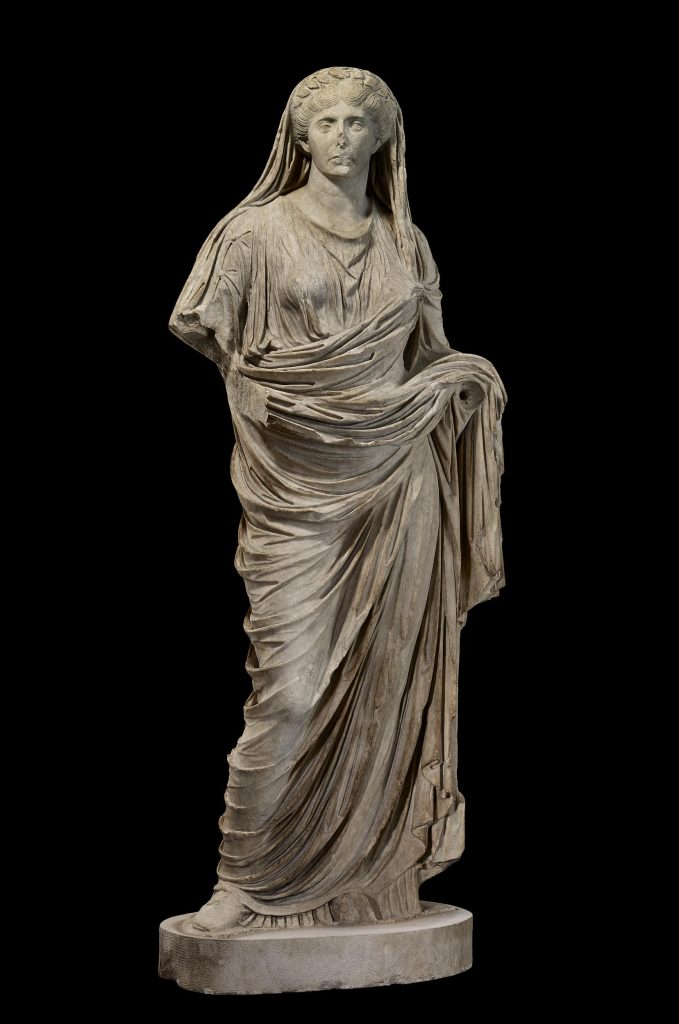
This alone is intolerable to the feminist imagination. Livia cannot be celebrated without mutilation, for her authority is inseparable from marriage, dynastic continuity, household dignity and alliance with the ruler of the Roman world. She does not stand as an autonomous woman confronting patriarchy from outside; she belongs to the very substance of an order in which masculine sovereignty and feminine rank were mutually intelligible. Her greatness therefore refutes the fiction that woman rises only by ceasing to be wife, matron and dynastic force.
Livia’s form of authority is especially offensive to the modern imagination because it cannot be detached from concealment, restraint, and subordination to a greater centre. Liberal history recognises power only where it declares itself, competes openly, and demands attribution; whatever works through counsel, household, continuity, and disciplined presence is either dismissed as passivity or redescribed as covert domination. Livia belongs to another order. Her influence does not require that she rival Augustus, as an equal centre set up against the pater, for the Augustan altitude is precisely what gives her own station splendour. Beneath the Sun, the veil does not extinguish the woman; it gathers her into a form whose gravity would be dissipated by mere exhibition.
Her significance therefore lies in more than exemplary wifehood. She demonstrates how the feminine may participate in a superior sovereignty without claiming its own sovereignty as a sex-right. Her elevation remains particular, qualified, dynastic, and inseparable from the man, house, and sacred-political centre besides which she was placed. Feminism can appropriate her only by stripping away Augustus, marriage, hierarchy, and the Roman order, leaving behind the banal abstraction of an ‘influential, manipulative woman’, and by presenting ancient rumours that were not even accepted in their day, under a new, liberation theology guise. Yet everything that made her influence formidable belonged to the very structure emancipation would dissolve. Livia does not rise by escaping the solar hierarchy; she becomes august beneath it.
Victoria, Queen and Empress: The Sovereign of the Realm Who Would Not Become a ‘Woman’
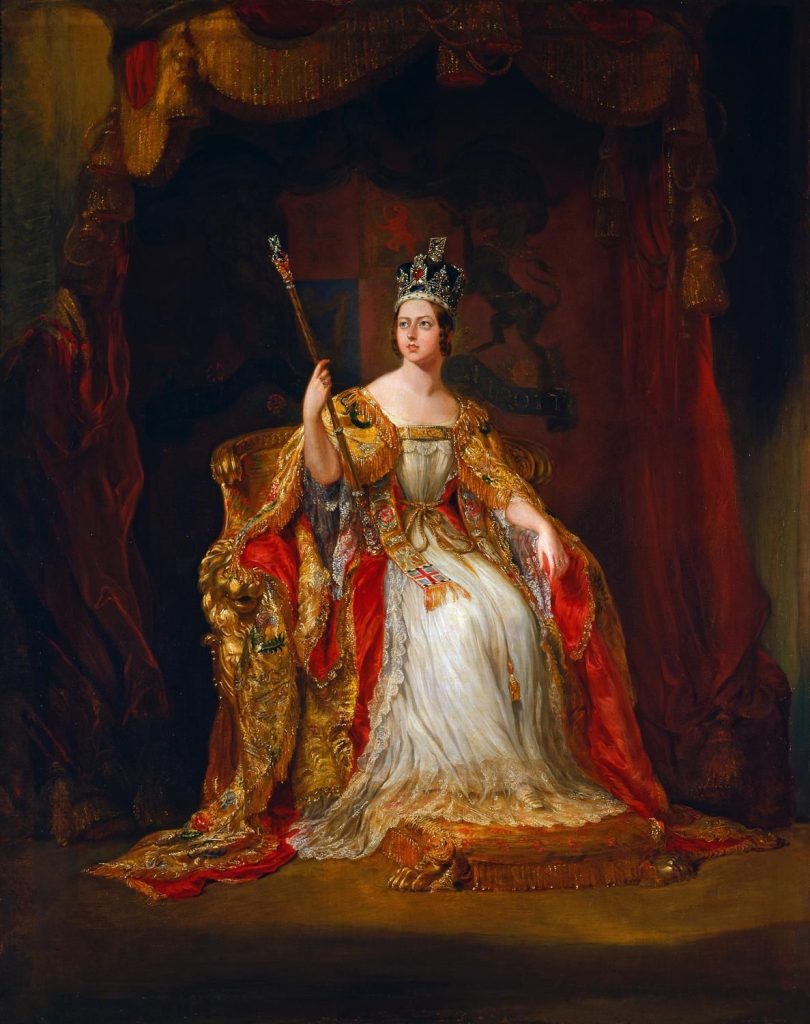
The Queen is most anxious to enlist every one who can speak or write to join in checking this mad, wicked folly of “Woman’s Rights,” with all its attendant horrors, on which her poor feeble sex is bent, forgetting every sense of womanly feeling and propriety. Lady [Amberley] ought to get a good whipping.
Queen Victoria, letter to Sir Theodore Martin, 29 May 1870, in Theodore Martin, Queen Victoria as I Knew Her, William Blackwood and Sons, 1908, pp. 69–70 [download]
It is a subject which makes the Queen so furious that she cannot contain herself. God created men and women different—then let them remain each in their own position. Tennyson has some beautiful lines on the difference of men and women in The Princess. Woman would become the most hateful, heartless, and disgusting of human beings were she allowed to unsex herself; and where would be the protection which man was intended to give the weaker sex? The Queen is sure that Mrs Martin agrees with her.
The very grammar of Victoria’s denunciation confirms the principle. Writing wholly within private correspondance, and no public edict, she does not state, ‘I am most anxious’, nor even shelter herself within the royal ‘We’; she declares that ‘The Queen is most anxious’, and that the subject makes ‘the Queen so furious that she cannot contain herself’. Within the courtly third person, the private individual recedes before the sovereign office. Victoria speaks as the Crown embodied, as though her judgement issued from a dignity anterior to personal opinion and greater than the biological woman who bore it. The peculiar violence of the passage only magnifies the effect: it is ‘The Queen’ who demands that the egalitarian folly be checked, ‘The Queen’ who condemns the attempted unsexing of woman, and ‘The Queen’ whose anger assumes the character of sovereign sentence.
This is precisely what the feminist interpretation cannot preserve. It would reduce Victoria to a woman who happened to reign, then offer her exceptional sovereignty as evidence for the universal claims of women. Her own language reverses the order. She was not first ‘Woman’, subsequently adorned with a crown; she was The Queen, and her womanhood was contained within, qualified by, and subordinated to that singular, hereditary office. The democratic abstraction ‘Woman’ is collective, interchangeable, and politically enumerated; ‘The Queen’ is unique, dynastic, embodied, and answerable to the Realm. To become a ‘Woman’ in the emancipationist sense would therefore have required a descent from office into sex-class, from sovereign distinction into universal female communion, and from the majesty of the Crown into the common political identity whose claims she regarded with such unconcealed contempt.
Victoria is where the principle becomes explicit. ‘Victorian’ already names the pastiche of ethical and traditional mores that would characterise an age, and becomes venomous on the tongue of the modern emancipated woman, as if she rebels against the Queen herself. Feminism cannot absorb her merely by pointing to female sovereignty, since she herself is an authoritative woman that spoke with extraordinary contempt of ‘Woman’s Rights’, calling it a ‘mad, wicked folly’ with ‘all its attendant horrors’, and declaring that if woman were permitted to ‘unsex’ herself she would become ‘the most hateful, heartless, and disgusting of human beings’. Here the reigning queen of the greatest empire on earth gives the lie to the dogma that female power naturally matures into emancipationist consciousness.
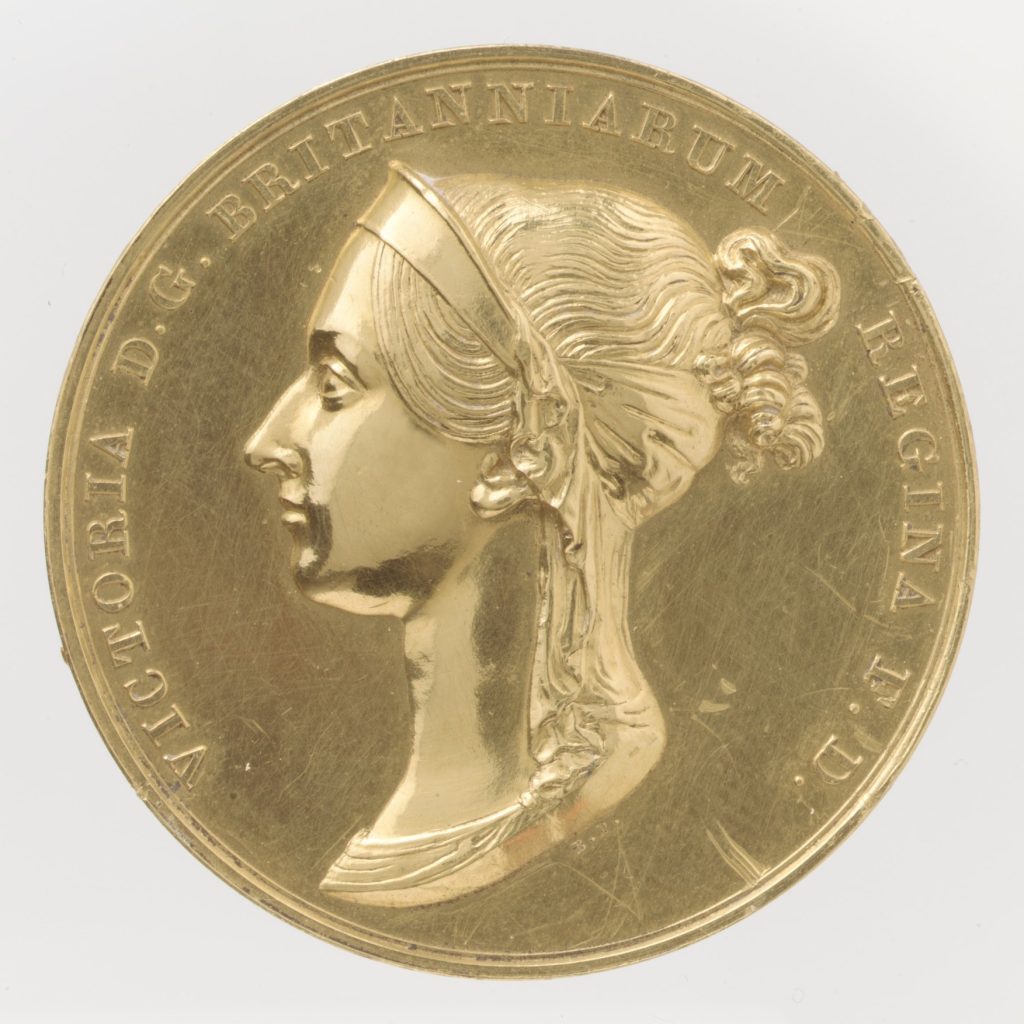
The feminist embarrassment is obvious. A woman standing at the summit of a global monarchy denied that her own exceptional sovereignty entailed a narrow-sighted political doctrine of universal female emancipation. Her queenship was an exceptional office within hierarchy, not an argument against hierarchy. Here, most clearly apprehended by the Queen, appears the unleashing of chthonic, elemental forces through the plebeianisation and pauperisation of the sex along lines of ‘class-consciousness’: a process that would itself undermine her authority, and which her sovereign instincts would most sternly resist by refusing allegiance to the lowest common denominator. Victoria’s queenship did not turn her against hierarchy as the feminist paradigm presupposes; it made her more conscious of it. Her authority was not construed as proof that all women must be levelled into political equivalence, neither with men nor with one another, still less that sex itself should become the primary party of radicalise, weaponised allegiance. She understood, with sovereign instinct, that exceptional office affirms differentiation, rather than abolishing it, and that a woman may stand at the summit of a patriarchal monarchy without desiring the dissolution of rank into the female mass. For that reason, she is one of the women feminism cannot forgive except by condescension, sanitisation, or suppression.
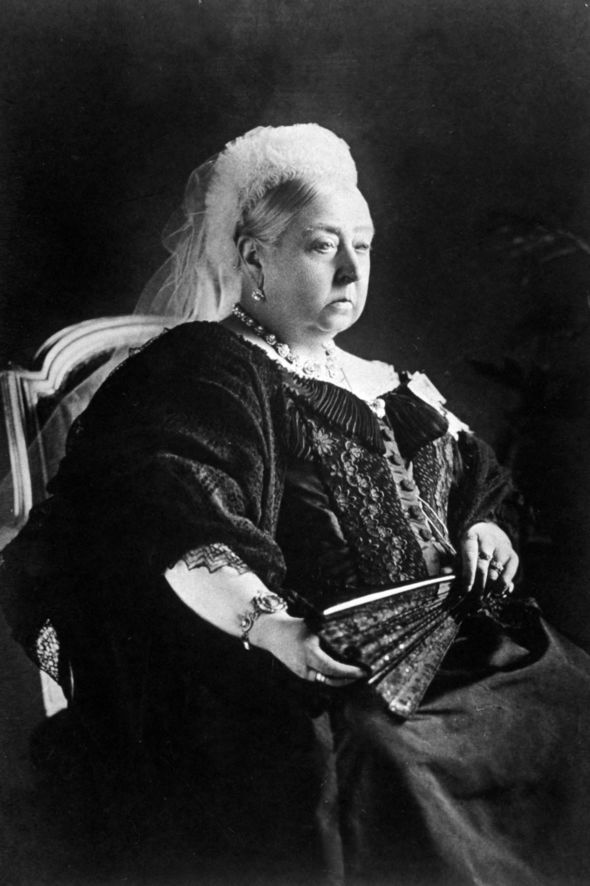
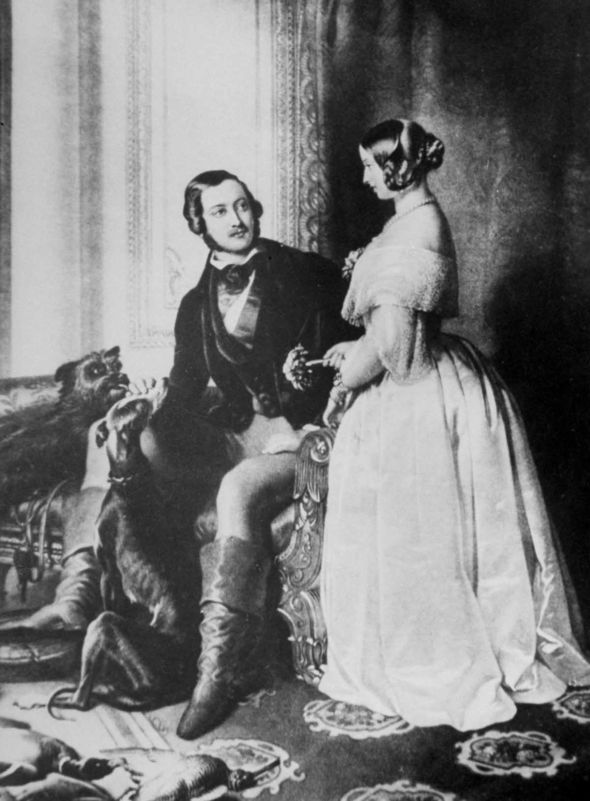
Victoria’s hostility to ‘Woman’s Rights’ possesses a force greater than ordinary political disagreement, because it came from a woman whose own rank stood beyond anything the burgeoning emancipation itself could distribute or generate. Emerging from the ancient royal and solar order, her inheritance is fundamentally patriarchal in nature. She knew in her person the difference between elevation and equality. The Crown had raised her above men and women alike through inheritance, office, and historical continuity; it had never made her the delegate of a self-generating, egalitarian female constituency centred on the populist ‘people’ of the mass socialist revolt. To infer from the existence of a Queen that all women should be politically assimilated to men would have appeared to her as the characteristic democratic confusion of exception, office, and universal entitlement.
Even her habit of speaking in her written correspondence from the stature of ‘the Queen’ rather than merely as ‘I’ illuminates the older, solar conception of personality and supreme dignity. The individual woman did not consume the office and reduce it down to her own sex-specific characteristics; she submitted herself to it and spoke through its greater, supraordinate, and transcendent dignity. Feminism reverses this order by treating every inherited form as an obstacle to personal expression, then demanding that office justify itself before sex. Victoria’s righteous fury arose from the instinct that such levelling would degrade woman as surely as it would the monarchy; the same levelling spirit which profaned monarchy would also pauperise womanhood, confusing sovereign exception with universal entitlement and dragging both Crown and sex into democratic equivalence. The sovereign woman refuses to descend into the undifferentiated, ‘class-conscious’ category of ‘women’, because her authority belongs to the Crown, her allegiance to dynasty and realm, and her sex to a differentiated order whose heights equality can only flatten into the common estate of the mass.
To be called by names of tenderness, I have never yet heard used to me before – was bliss beyond belief! Oh! This was the happiest day of my life!
Queen Victoria, journal entry, 10 February 1840, describing her wedding day to Prince Albert
Of course, Queen Victoria herself remains among the most enduring embodiments of this older ideal of conjugal fidelity: after the death of Prince Albert in 1861, she entered a lifelong state of mourning, wearing black for the remainder of her reign and preserving the memory of her husband with a devotion that transcended fashion, convention, and public expectation; a visible testament to a conception of marriage in which the bond between husband and wife was not merely a temporary arrangement, but a sacred allegiance carried even beyond death. Far beyond any feminist’s cloying claims to independence, she was Empress of India and Queen of the greatest empire the modern world had yet known and still yet has known; yet in the intimacy of her own household she did not conceive sovereignty as a licence to rise above her husband. Queen Victoria possessed a sovereignty unmatched by almost any woman of her age; she ruled over an empire upon which the sun was said never to set, yet she did not interpret the possession of the crown as an invitation to sever herself from the ancient obligations of marriage.
Prince Albert could never take the title of King, despite standing besides the sovereign herself, and yet Victoria did deny him the place of lord within their household; nor to interpret her crown as a reason to dissolve the ancient bonds of marriage and transform authority into personal emancipation from the man to whom she had pledged herself. Prince Albert was formally Prince Consort; the British constitutional system did not allow a reigning queen’s husband to assume the title of king, because ‘king’ would conventionally imply a superior or equal sovereign status, and she was the sovereign, he famously remarked ‘I am very happy and contented; but the difficulty in filling my place with the proper dignity is that I am only the husband, not the master in the house.’ Victoria was consistently concerned that Albert’s position did not adequately reflect his role. Early on she wanted him to receive a higher British status, but political opposition, especially from Parliament and Lord Melbourne, prevented him from becoming King Consort or receiving the kind of rank she thought fitting for her lord and patriarch. After years of frustration, Victoria herself created the title of ‘Prince Consort’ by Letters Patent on 25 June 1857 as a formal recognition of his position; she did honour him in their marriage with the dignity and fidelity proper to a lord. In that paradox lies the enduring image she left behind: a woman who possessed an empire, yet still honoured the domestic throne of marriage.
Take heed, feminists—far from the false substitution of egalitarian class-consciousness, this is what it means to be a true Queen.
The Wife of the Laudatio Turiae: The Pater Familias She Faithfully Held Against Ruin
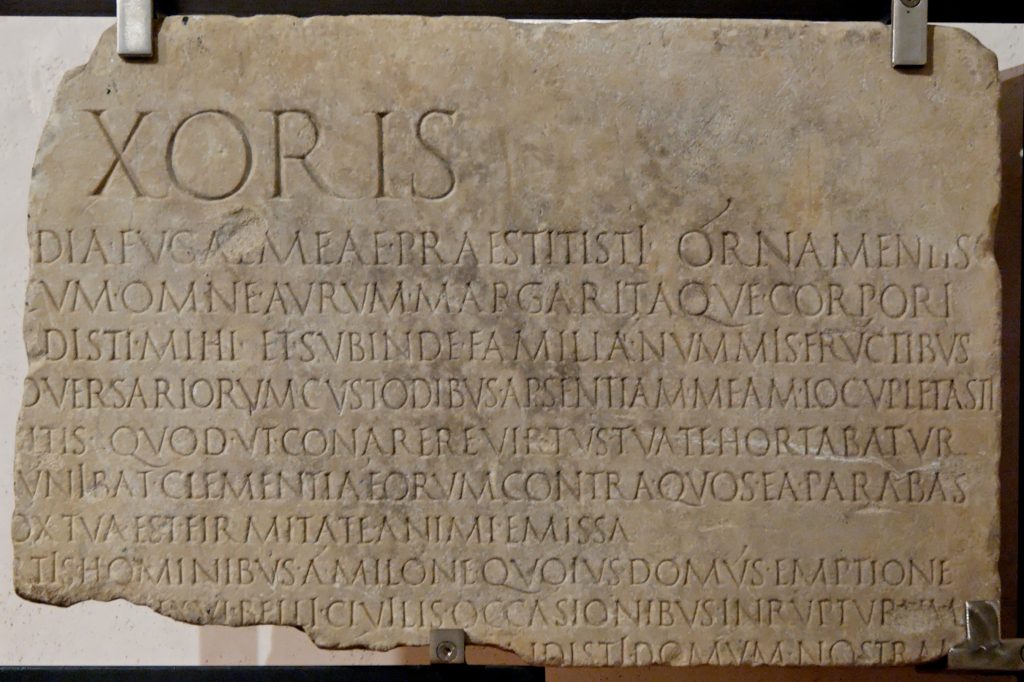
Marriages as long as ours are rare, marriages that are ended by death and not broken by divorce. For we were fortunate enough to see our marriage last without disharmony for fully 40 years. I wish that our long union had come to its final end through something that had befallen me instead of you; it would have been more just if I as the older partner had had to yield to fate through such an event.
The husband of the woman commemorated in the so-called Laudatio Turiae, left-hand column 27–36, trans. Erik Wistrand
Why should I mention your domestic virtues: your loyalty, obedience, affability, reasonableness, industry in working wool, religion without superstition, sobriety of attire, modesty of appearance? Why dwell on your love for your relatives, your devotion to your family? You have shown the same attention to my mother as you did to your own parents, and have taken care to secure an equally peaceful life for her as you did for your own people, and you have innumerable other merits in common with all married women who care for their good name.
It is your very own virtues that I am asserting, and very few women have encountered comparable circumstances to make them endure such sufferings and perform such deeds. Providentially Fate has made such hard tests rare for women.
The woman praised in the so-called Laudatio Turiae rises through no emancipation from relation; every ordeal reveals her more completely as daughter, sister, wife and guardian of the house. Before the appointed day of her marriage, both her parents were murdered in the solitude of the countryside. With her betrothed absent in Macedonia and her sister’s husband in Africa, filial piety did not exhaust itself in grief: through insistent demands and an unrelenting pursuit of justice, she secured the punishment of the guilty, performing, her husband declares, everything the absent men themselves could have accomplished. Having piously avenged her parents, she immediately withdrew to the house of her future mother-in-law to preserve her modesty until her husband returned. When interested parties attempted to invalidate her father’s will and seize control of his estate, she defended his written word with such resolution that they abandoned their claim; she was prepared, even then, to divide the inheritance with her sister rather than profit alone from the destruction of paternal intention. Her agency proceeds throughout from pietas: duty to the dead father, devotion to the sister, fidelity to the absent husband and defence of the house into which she was to enter.
The anti-feminist irony could scarcely be more complete. The commemorated wife, with the drama of a downright femme-fatale blockbuster revenge thriller, does not perform these deeds by escaping or confronting the paterfamilias, exposing his authority as inadequate, or converting her suffering into a claim against the house. She acts by holding the literal patriarch against ruin. She first avenges her own murdered father, defends his written will, preserves the patrimony, sustains her proscribed husband, protects his home, and secures his restoration beneath Caesar’s authority, rather than undermining it. Had cinema directors equal to such material, they might give us an action woman of such aristocratic ferocity, filial vengeance, conjugal fidelity, and political daring that even Tarantino could not dream her. At every point, her formidable intelligence and courage move towards the reinforcement of paternal form. Feminism would teach that woman becomes visible where the father and husband recede; this woman becomes immortal because, when murder, civil war, confiscation, infertility, and proscription threatened to erase them, she made herself the instrument through which their name, property, lineage, and lawful standing endured. Her greatness is therefore inseparable from patriarchy in its most concrete sense. She is neither its mute possession nor its accidental beneficiary, but its fierce inwards guardian: the woman whose pietas becomes terrible because she knows that the fall of the pater would also be the fall of the world that gives her own virtues rank, direction, and historical consequence.
She throws herself at Lepidus’s feet, is denied even the ritual courtesy of being raised by the superior, dragged away ‘brutally like a slave’, and left covered in bruises; yet the physical degradation only hardens her resolve. She turns Caesar’s decree into a weapon, pronouncing it aloud through insults and blows until Lepidus’s cruelty is exposed before the very authority he has defied. The common revolutionary narrative teaches woman to acquire heroic stature by striking against the patriarch; here, every wound is accepted in defence of him. The action heroine risks her body and life to restore the pater familias, vindicate Caesar’s paternal authority, and brand the usurping official with public disgrace. It is little wonder, and a lesson for the modern woman, that her patriarch is struck with a distinctly masculine reverence for her pietas, for, as the account of Livia has already shown, men respond most deeply when feminine devotion rises into the recognisable form of masculine virtue. Nor was her courage confined to petition and endurance. When a band of men assembled by Milo exploited the disorder of civil war and attempted to ‘break into our house to plunder’, she met the invasion at the threshold and ‘beat them back successfully’, preserving the home by her own resolution while its male head remained proscribed and absent. The scene possesses the terse violence of a revenge thriller: armed opportunists descend upon a house they expect to find undefended, only to discover that the wife has become its immovable inner rampart. Again, the action proceeds entirely in favour of the patriarchal order. She does not seize the house from the pater familias during his weakness; she defends it for him, holding his property, name, and domestic sovereignty intact until the man himself can return, as a true, loyal woman should.
But I must say that the bitterest thing that happened to me in my life befell me through what happened to you. When, thanks to the kindness and judgement of the absent Caesar Augustus, I had been restored to my country as a citizen, Marcus Lepidus, his colleague, who was present, was confronted with your request concerning my recall, and you lay prostrate at his feet, and you were not only not raised up but were dragged away and carried off brutally like a slave.
The husband of the woman commemorated in the so-called Laudatio Turiae, right-hand column 11–21; trans. Erik Wistrand
But although your body was full of bruises, your spirit was unbroken, and you kept reminding him of Caesar’s edict with its expression of pleasure at my reinstatement, and although you had to listen to insulting words and suffer cruel wounds, you pronounced the words of the edict in a loud voice, so that it should be known who was the cause of my deadly perils. This matter was soon to prove harmful for him.
What could have been more effective than the virtue you displayed? You managed to give Caesar an opportunity to display his clemency, and not only to preserve my life but also to brand Lepidus’s insolent cruelty by your admirable endurance.
The remainder of the inscription makes the same principle still more formidable. Their marriage endured without divorce or disharmony for forty years. Her husband praises her loyalty, obedience, affability, reasonableness, work in wool, religion without superstition, sobriety of attire and modesty of appearance; yet these domestic virtues did not render her inert. During his flight she stripped the gold and jewellery from her own body to sustain him in dignified exile, deceived the guards of his enemies, beat back armed men attempting to plunder their home, prepared his hiding place, and endured blows and humiliating treatment while demanding that the future Augustus’s decree restoring her husband be honoured. He concludes that he owed his life no less to her never-ending feminine obedience and devotion than to Caesar himself. Everything she does serves the continuity of the house: avenging her parents, defending the will, preserving her husband, resisting plunder, and maintaining lineage through catastrophe. Here feminine courage neither revolts against office nor seeks an independent political destiny: it becomes terrible precisely because daughterly, marital, and household fidelity have concentrated it into action.
You provided abundantly for my needs during my flight, and gave me the means for a dignified manner of living, when you took all the gold and jewellery from your own body and sent it to me, and over and over again enriched me in my absence with servants, money, and provisions, showing great ingenuity in deceiving the guards posted by our adversaries.
The husband of the woman commemorated in the so-called Laudatio Turiae, right-hand column 2a–9a and 0–3; trans. Erik Wistrand
You begged for my life when I was abroad—it was your courage that urged you to this step—and because of your entreaties I was shielded by the clemency of those against whom you marshalled your words. But whatever you said was always said with undaunted courage.
Meanwhile, when a troop of men collected by Milo, whose house I had acquired through purchase when he was in exile, tried to profit by the opportunities provided by the civil war and break into our house to plunder, you beat them back successfully and were able to defend our home.
[…]
Thus I owe my life no less to your devotion than to Caesar.
The wife stands at the opposite pole from the emancipated subject. Her personality, rather than emerging through separation from relation, is carried through the extraordinary intensity with which she inhabits each relation placed upon her. The inscription never presents these offices as restraints upon an otherwise complete individual. They are the forms through which her character becomes actualised, her personality is rendered visible, and her stature is raised into sacrality. Far from the feelings-conservative schoolmarms of our day, incapable of encountering anything beyond their comfort-zones, when her parents are murdered, filial duty becomes vengeance; when their testament is threatened, reverence for the father becomes legal resolution; when her husband is proscribed, conjugal fidelity becomes strategy, courage, and open resistance. Her deeds derive their unity from pietas, the power by which the person binds herself to what stands above private ease, fear, and self-preservation. Here we see what it means for a people to be virile: it does not end in its sons, for its daughters too inherit the discipline, courage, and terrible Romanitas of Mars.
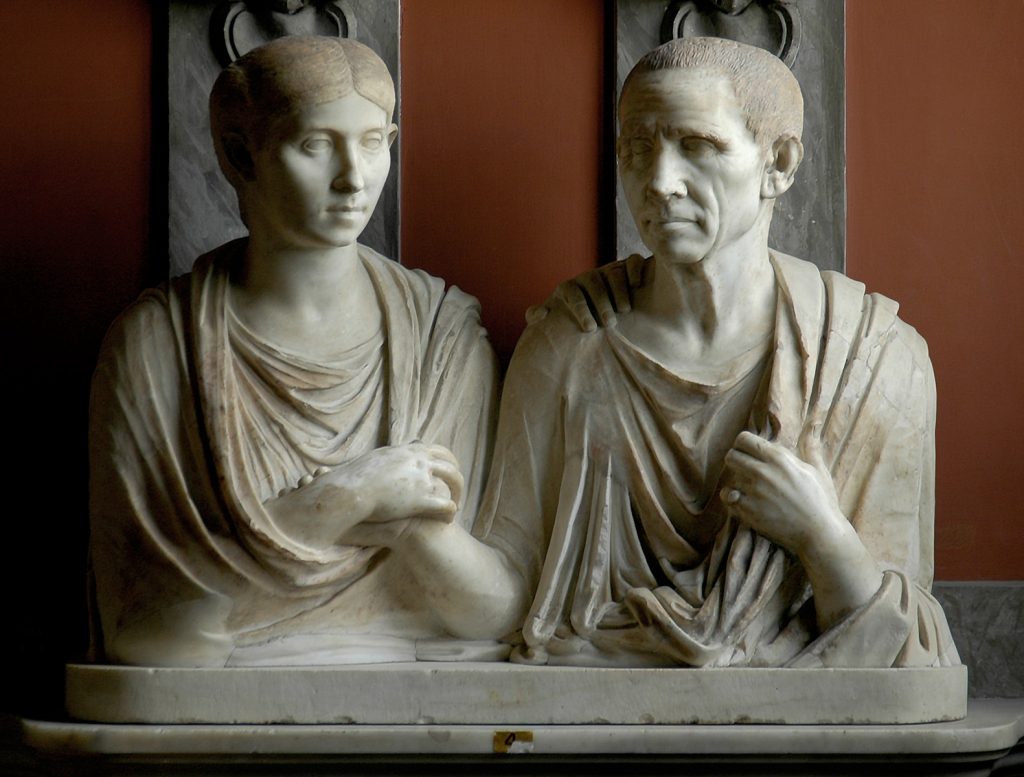
Her husband’s praise of ‘loyalty, obedience, affability, reasonableness’, modest appearance, and a Stoic religious disposition free from superstition, all bearing the rarefied airs of aristocratic Roman dignitas, therefore offers no portrait of inert docility, despite the familiar feminist slander cast upon every woman who refuses emancipation—a slander that degrades women more profoundly than any would-be chauvinist whom they simultaneously outstrip and prove right, by denying the very existence of feminine strength unless it first assumes the conformist posture of mass revolt. Obedience appears besides judgement, endurance, ingenuity, and an almost terrible constancy. The same woman who gladly accepted the differentiated duties of marriage could pursue her parents’ killers, defeat attempts to overturn her father’s will, deceive hostile guards, repel armed plunderers, and confront a triumvir whose men dragged her away ‘brutally like a slave’. The modern mind separates obedience from strength because it knows obedience only as the abasement of an autonomous will. The Roman inscription reveals another possibility: a formidable will aligned so completely with family, husband, and lawful order that its severity increases rather than diminishes through service.
The division of property within the marriage expresses the same higher reciprocity. ‘I had the guardianship of your property, and you had the care of mine’, her husband declares. Neither spouse appears as an isolated proprietor defending a private sphere against the other. The patrimony remains under common custody, though the offices within that custody remain unequal and distinct. He possesses guardianship; she exercises care, administration, generosity, and the inward governance through which property is turned towards family continuity. Her wealth furnishes dowries, assists relatives, sustains her husband in exile, and defends the common house. What emancipation would recast as dependence appears here as participation in a form whose dignity exceeds individual possession.
Her courage reaches its political height during the proscriptions, yet even here she never becomes a revolutionary woman competing for public sovereignty. She acts so that the rightful decree of Caesar may prevail against the ‘insolent cruelty’ of Lepidus. Bruised, insulted, and thrown from his feet, she pronounces Caesar’s edict aloud until the contrast between imperial clemency and the triumvir’s savagery becomes publicly inescapable. She stands neither outside the masculine order nor above it. She becomes the indomitable intermediary through whom the higher authority is recalled and made effective. Hence the husband’s extraordinary acknowledgement: ‘Thus I owe my life no less to your devotion than to Caesar.’ The comparison does not place her beside Caesar in rank; it places her devotion as heir within the sacral chain by which Caesar’s restorative authority could reach and preserve the proscribed man.
Her offer to yield the marriage to another woman reveals an even more difficult height. Believing herself unable to furnish children, she proposes to surrender her place so that her husband’s line might continue, even offering to find him a worthy wife, share the future children as her own, and retain the duties of sister and mother-in-law. Her private claim upon the house is placed beneath the future of the house itself. Yet the husband’s furious refusal completes the reciprocal dignity of the act. She is prepared to relinquish everything for his lineage; he refuses to ‘break faith’ and exchange the certainty of her fidelity for the uncertainty of offspring. The marriage is thus disclosed as something higher than either appetite or contract: an asymmetrical union in which sacrifice calls forth honour, and obedience is answered by an obligation the superior party would disgrace himself by betraying.
The long funeral encomium itself is the final refutation of the cheap maxim that ‘well-behaved women do not make history’. This woman neither agitated before the multitude nor sought an autonomous public name, yet her husband consecrated her actions ‘to immortality to be remembered for ever’. Her quiet domestic virtues and her terrible deeds belong to the same form; the former prepared the latter, and the latter revealed the hidden gravity of the former. Fidelity is proved not by sentiment uttered in tranquillity but by decades of action, danger, household stewardship, and sacrifice. Univira is what an epitaph can say in a word; a life such as Turia’s is what that word could mean when expanded into deeds. She entered history through the house she preserved, the husband she saved, the parents she avenged, the paternal word she defended, and the fidelity that made her memory inseparable from Roman honour. The revolutionary woman demands visibility from the crowd; the wife of the Laudatio Turiae receives immortality from the man whose life and name she proved worthy to sustain.
Click to read the entire Laudatio Turiae
Heading
. . . of my wife
Left-hand column
(1) . . . through the honesty of your character . . .
(2) . . . you remained . . .
(3) You became an orphan suddenly before the day of our wedding, when both your parents were murdered together in the solitude of the countryside. It was mainly due to your efforts that the death of your parents was not left unavenged. For I had left for Macedonia, and your sister’s husband Cluvius had gone to the Province of Africa.
(7) So strenuously did you perform your filial duty by your insistent demands and your pursuit of justice that we could not have done more if we had been present. But these merits you have in common with that most virtuous lady your sister.
(10) While you were engaged in these things, having secured the punishment of the guilty, you immediately left your own house in order to guard your modesty and you came to my mother’s house, where you awaited my return. (13) Then pressure was brought to bear on you and your sister to accept the view that your father’s will, by which you and I were heirs, had been invalidated by his having contracted a coemptio with his wife. If that was the case, then you together with all your father’s property would necessarily come under the guardianship of those who pursued the matter ; your sister would be left without any share at all of that inheritance, since she had been transferred to the potestas of Cluvius. How you reacted to this, with what presence of mind you offered resistance, I know full well, although I was absent.
(18) You defended our common cause by asserting the truth, namely, that the will had not in fact been broken, so that we should both keep the property, instead of your getting all of it alone. It was your firm decision that you would defend your father’s written word ; you would do this anyhow, you declared, by sharing your inheritance with your sister, if you were unable to uphold the validity of the will. And you maintained that you would not come under the state of legal guardianship, since there was no such right against you in law, for there was no proof that your father belonged to any gens that could by law compel you to do this. For even assuming that your father’s will had become void, those who prosecuted had no such right since they did not belong to the same gens.
(25) They gave way before your firm resolution and did not pursue the matter any further. Thus you on your own brought to a successful conclusion the defence you took up of your duty to your father, your devotion to your sister, and your faithfulness towards me.
(27) Marriages as long as ours are rare, marriages that are ended by death and not broken by divorce. For we were fortunate enough to see our marriage last without disharmony for fully 40 years. I wish that our long union had come to its final end through something that had befallen me instead of you ; it would have been more just if I as the older partner had had to yield to fate through such an event.
(30) Why should I mention your domestic virtues: your loyalty, obedience, affability, reasonableness, industry in working wool, religion without superstition, sobriety of attire, modesty of appearance ? Why dwell on your love for your relatives, your devotion to your family ? You have shown the same attention to my mother as you did to your own parents, and have taken care to secure an equally peaceful life for her as you did for your own people, and you have innumerable other merits in common with all married women who care for their good name. It is your very own virtues that I am asserting, and very few women have encountered comparable circumstances to make them endure such sufferings and perform such deeds. Providentially Fate has made such hard tests rare for women.
We have preserved all the property you inherited from your parents under common custody, for you were not concerned to make your own what you had given to me without any restriction. We divided our duties in such a way that I had the guardianship of your property and you had the care of mine. Concerning this side of our relationship I pass over much, in case I should take a share myself in what is properly yours. May it be enough for me to have said this much to indicate how you felt and thought.(42) You generosity you have manifested to many friends and particularly to your beloved relatives. On this point someone might mention with praise other women, but the only equal you have had has been your sister. For you brought up your female relations who deserved such kindness in your own houses with us. You also prepared marriage-portions for them so that they could obtain marriages worthy of your family. The dowries you had decided upon Cluvius and I by common accord took upon ourselves to pay, and since we approved of your generosity we did not wish that you should let your own patrimony suffer diminution but substituted our own money and gave our own estates as dowries. I have mentioned this not from a wish to commend ourselves but to make clear that it was a point of honour for us to execute with our means what you had conceived in a spirit of generous family affection.
(52) A number of other benefits of yours I have preferred to to mention . . . (several lines missing)
Right-hand column
(2a) You provided abundantly for my needs during my flight and gave me the means for a dignified manner of living, when you took all the gold and jewellery from your own body and sent it to me and over and over again enriched me in my absence with servants, money and provisions, showing great ingenuity in deceiving the guards posted by our adversaries.
(6a) You begged for my life when I was abroad-it was your courage that urged you to this step-and because of your entreaties I was shielded by the clemency of those against whom you marshalled your words. But whatever you said was always said with undaunted courage.
(9a) Meanwhile when a troop of men collected by Milo, whose house I had acquired through purchase when he was in exile, tried to profit by the opportunities provided by the civil war and break into our house to plunder, you beat them back successfully and were able to defend our home.
(About 12 lines missing)
(0) . . . exist . . . that I was brought back to my country by him (Caesar Augustus), for if you had not, by taking care for my safety, provided what he could save, he would have promised his support in vain. Thus I owe my life no less to your devotion than to Caesar.
(4) Why should I now hold up to view our intimate and secret plans and private conversations: how I was saved by your good advice when I was roused by startling reports to meet sudden and imminent dangers ; how you did not allow me imprudently to tempt providence by an overbold step but prepared a safe hiding-place for me, when I had given up my ambitious designs, choosing as partners in your plans to save me you sister and her husband Cluvius, all of you taking the same risk ? There would be no end, if I tried to go into all this. It is enough for me and for you that I was hidden and my life was saved.
(11) But I must say that the bitterest thing that happened to me in my life befell me though what happened to you. When thanks to the kindness and judgement of the absent Caesar Augustus I had been restored to my county as a citizen, Marcus Lepidus, his colleague, who was present, was comforted with your request concerning my recall, and you lay prostrate at his feet, and you were not only not raised up but were dragged away and carried off brutally like a slave. But although your body was full of bruises, your spirit was unbroken and you kept reminding him of Caesar’s edict with its expression of pleasure at my reinstatement, and although you had to listen to insulting words and suffer cruel wounds, you pronounced the words of the edict in a loud voice, so that it should be known who was the cause of my deadly perils. This matter was soon to prove harmful for him.
(19) What could have been more effective than the virtue you displayed ? You managed to give Caesar an opportunity to display his clemency and not only to preserve my life but also to brand Lepidus’ insolent cruelty by your admirable endurance.
(22) But why go on ? Let me cut my speech short. My words should and can be brief, lest by dwelling on your great deeds I treat them unworthily. In gratitude of your great services towards me let me display before the eyes of all men my public acknowledgement that you saved my life.
(25) When peace had been restored throughout the world and the lawful political order reestablished, we began to enjoy quiet and happy times. It is true that we did wish to have children, who had for a long time been denied to us by an envious fate. If it had pleased Fortune to continue to be favourable to us as she was wont to be, what would have been lacking for either of us ? But Fortune took a different course, and our hopes were sinking. The courses you considered and the steps you attempted to take because of this would perhaps be remarkable and praiseworthy in some other women, but in you they are nothing to wonder at when compared to your other great qualities and I will not go into them.
(31) When you despaired of your ability to bear children and grieved over my childlessness, you became anxious lest by retaining you in marriage I might lose all hope of having children and be distressed for that reason. So you proposed a divorce outright and offered to yield our house free to another woman’s fertility. Your intention was in fact that you yourself, relying on our well-known conformity of sentiment, would search out and provide for me a wife who was worthy and suitable for me, and you declared that you would regard future children as joint and as though your own, and that you would not effect a separation of our property which had hitherto been held in common, but that it would still be under my control and, if I wished so, under your administration : nothing would be kept apart by you, nothing separate, and you would thereafter take upon yourself the duties and the loyalty of a sister and a mother-in-law.
(40) I must admit that I flared up so that I almost lost control of myself ; so horrified was I by what you tried to do that I found it difficult to retrieve my composure. To think that separation should be considered between us before fate had so ordained, to think that you had been able to conceive in you mind the idea that you might cease to be my wife while I was still alive, although you had been utterly faithful to me when I was exiled and practically dead !
(44) What desire, what need to have children could I have had that was so great that I should have broken faith for that reason and changed certainty for uncertainty ? But no more about this ! You remained with me as my wife, for I could not have given in to you without disgrace for me and unhappiness for both of us.
(48) But on your part, what could have been more worthy of commemoration and praise than your efforts in devotion to my interests : when I could not have children from yourself, you wanted me to have them through you good offices, and since you despaired of bearing children, to provide me with offspring by my marriage to another woman.
(51) Would that the life-span of each of us had allowed out marriage to continue until I, as the older partner, had been borne to the grave-that would have been juster-and you had performed for me the last rites, and that I had died leaving you still alive and that I had had you as a daughter to myself in place of my childlessness.
(54) Fate decreed that you should precede me. You bequeathed me sorrow through my longing for you and left me a miserable man without children to comfort me. I on my part will, however, bend my way of thinking and feeling to your judgements and be guided by your admonitions.
(56) But all your opinions and instructions should give precedence to the praise you have won so that this praise will be a consolation for me and I will not feel too much the loss of what I have consecrated to immortality to be remembered for ever.
(58) What you have achieved in your life will not be lost to me. The thought of your fame gives me strength of mind and from you actions I draw instruction so that I shall be able to resist Fortune. Fortune did not rob me of everything since it permitted your memory to be glorified by praise. But along with you I have lost the tranquillity of my existence. When I recall how you used to foresee and ward off the dangers that threatened me, I break down under my calamity and cannot hold steadfastly by my promise.
(63) Natural sorrow wrests away my power of self-control and I am overwhelmed by sorrow. I am tormented by two emotions : grief and fear-and I do not stand firm against either. When I go back in though to my previous misfortunes and when I envisage what the future may have in store for me, fixing my eyes on your glory does not give me strength to bear my sorrow with patience. Rather I seem to be destined to long mourning.
(67) The conclusion of my speech will be that you deserved everything but that it did not fall to my lot to give you everything as I ought ; Your last wishes I have regarded as law ; whatever it will be in my power to do in addition, I shall do.
(69) I pray that your Di Manes will grant you rest and protection.
The husband of the woman commemorated in the so-called Laudatio Turiae; 0, trans. Erik Wistrand
The Naishosama (内証様): Rope-Bound Ladies of the Inner Citadel
Oft have I heard that no accident or chance ever mars the march of events here below, and that all moves in accordance with a plan. To take shelter under a common bough or a drink of the same river, is alike ordained from ages prior to our birth. Since we were joined in ties of eternal wedlock, now two short years ago, my heart hath followed thee, even as its shadow followeth an object, inseparably bound heart to heart, loving and being loved. Learning but recently, however, that the coming battle is to be the last of thy labor and life, take the farewell greeting of thy loving partner. I have heard that Kō-u, the mighty warrior of ancient China, lost a battle, loth to part with his favorite Gu. Yoshinaka, too, brave as he was, brought disaster to his cause, too weak to bid prompt farewell to his wife. Why should I, to whom earth no longer offers hope or joy—why should I detain thee or thy thoughts by living? Why should I not, rather, await thee on the road which all mortal kind must sometime tread? Never, prithee, never forget the many benefits which our good master Hideyori hath heaped upon thee. The gratitude we owe him is as deep as the sea and as high as the hills.
Lady Aoyagi, wife of Kimura Shigenari, farewell letter to her husband before taking her own life and awaiting him in death, on the eve of his final battle in the service of Toyotomi Hideyori, Osaka Summer Campaign, 1615; Inazō Nitobe, Bushido: The Soulazō Nitobe of Japan, chapter XIV, ‘The Training and Position of Woman’
The Japanese warrior house gave its wife a title whose very form rebukes the poverty of modern judgement: 内証様 (naisho-sama). In Edo-period usage, naishosama designated the wife of a samurai household as the ‘honoured person of inside matters’, referring to her jurisdiction over the interior household and its economy. Naishō (内証) could itself denote the inner quarters, domestic finances, or, honorifically, another man’s wife. The samurai residence was articulated between omote, the frontal sphere in which the male head received the outer world, and oku, the interior reserved to the family; within the latter, the wife or senior mother governed the household and its economy.1 Modern egalitarianism hears ‘interior’ and imagines exclusion, because it can recognise no authority that does not advertise itself before the public. To the warrior caste, the interior was a jurisdiction. Servants, provisions, children, chastity, hospitality, succession and the daily continuity of the house were placed within her keeping while the husband stood outwardly in service to lord and domain. She did not compete with him for the sword or duplicate his office in feminine form; she maintained the citadel from which his service proceeded and to which its honour returned.
Tokugawa moral instruction stated this relation without the liberal circumlocutions that now make obedience unspeakable. The Onna daigaku (女大学, ‘The Great Learning for Women’, 1729) declared that ‘a woman has no other lord’, that ‘the Way of the woman is to obey her man’, and that the wife must keep her husband’s household in proper order. Her filial piety passed through marriage into the line she had entered; its parents, duties and continuance became her own.2 Such discipline did not pauperise her by reducing her to a collection of menial functions. It raised the whole domestic sphere into the office of a warrior house. Acts appearing insignificant beneath a commercial civilisation acquired gravity from the lineage, rank and ancestral continuity they served. The lowest task performed within a noble form could therefore stand higher than the most loudly advertised career undertaken for salary, vanity or public applause.
The martial education of samurai women followed the same principle. In Nitobe’s later exposition of the warrior ethic, girls were trained to master their feelings, harden their nerves and wield the naginata; the purpose of this training remained personal and domestic, enabling the woman to defend her chastity, educate her sons and answer the violation of the house when necessity breached its walls. At womanhood she received the kaiken, which might be turned against an assailant or, at the final extremity, against herself. Even death remained subject to form: she was taught where to cut the throat and how to bind her lower limbs so that the agonies of dying could not leave her body exposed in a posture of shame. Chastity was held above biological survival, and modesty retained its sovereignty after consciousness itself had departed.3
It meant binding the knees or lower limbs together with an obi, belt, or cord immediately before death, so that the body would retain a composed and modest posture. Inazō Nitobe states the practice unequivocally in Bushido: The Soul of Japan. A samurai woman, he writes, was expected to know both where to cut her throat and how to bind her lower limbs:
Before taking her life, the samurai woman knew how to ‘tie her lower limbs together with a belt … [that] her corpse be found in utmost modesty’, with the limbs properly composed.
Inazō Nitobe, Bushido: The Soul of Japan, author’s edition, revised and enlarged, 13th ed., 1908, chapter XIV, ‘The Training and Position of Woman’
He presents this as part of the actual training and expected knowledge of women of the warrior class, alongside their possession of the kaiken and their education in personal and household defence.
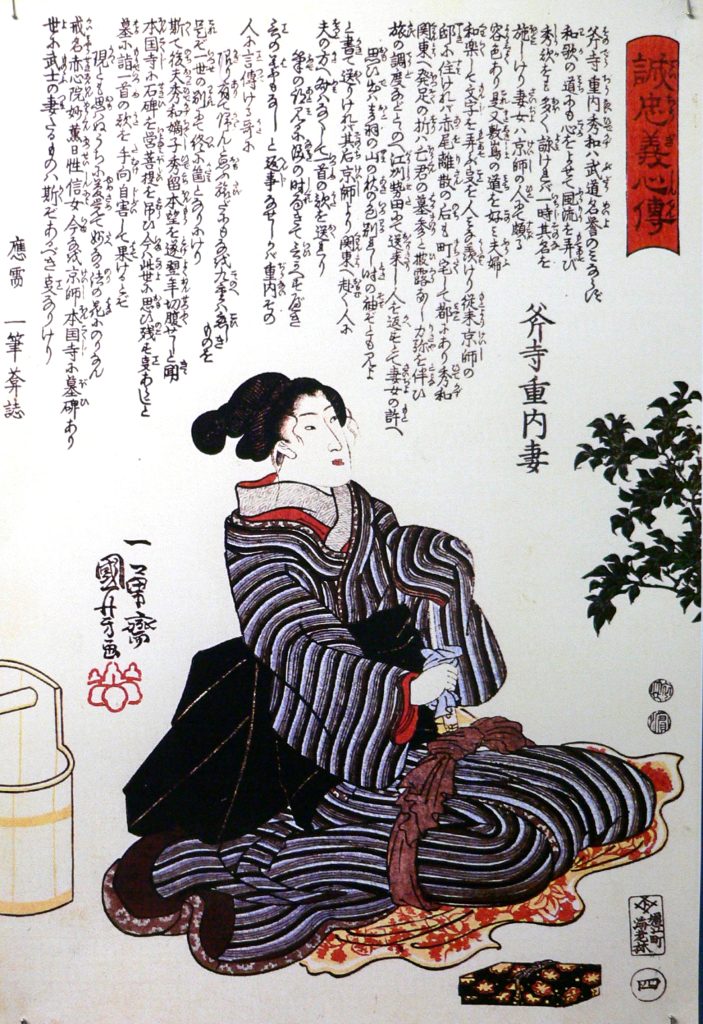
More importantly, the motif precedes Nitobe in Japanese art. Utagawa Kuniyoshi’s 1848 woodblock print of the wife of Onodera Junai depicts her preparing to follow her husband in death with her legs bound together. That is contemporary Tokugawa visual evidence for the recognised custom, rather than a later internet embellishment.it meant binding the knees or lower limbs together with an obi, belt, or cord immediately before death, so that the body would retain a composed and modest posture.
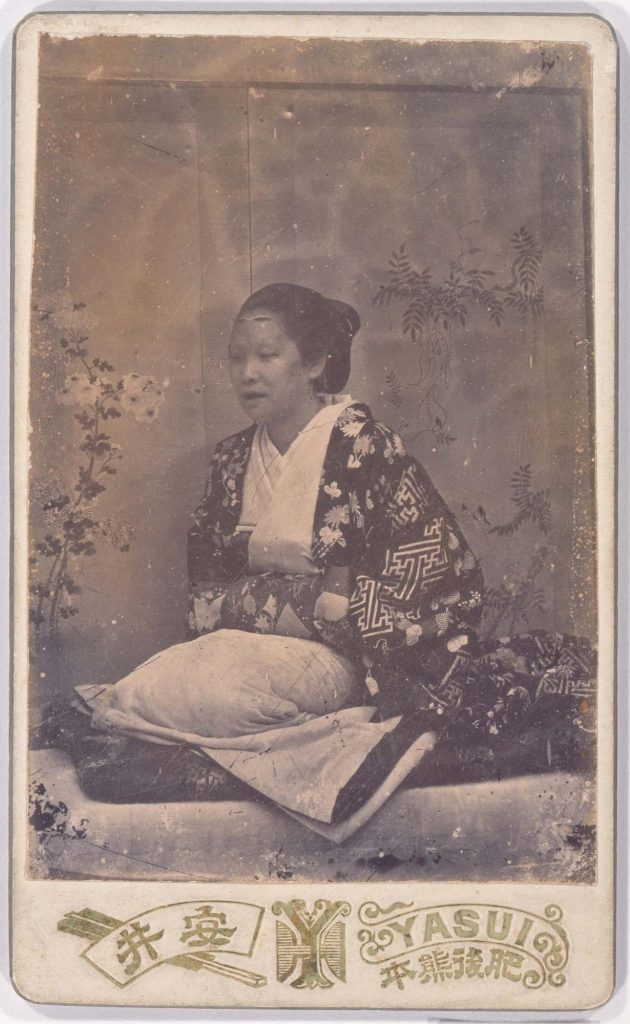
Onodera Jūnai Hidekazu, one of the Forty-Seven Rōnin, followed his lord’s honour through vengeance and accepted the warrior’s death of seppuku in 1703; his wife, Tan, would not permit that bond of fidelity to end with him. Tradition records that she first raised a grave for her husband at Saihōji in Kyoto and secretly caused his head to be removed from Sengaku-ji and reinterred there; having completed these last offices, she relinquished food and followed him in death.4 Later warrior art gathered the whole devotion into a single solemn image: Utagawa Kuniyoshi depicts Tan with her knees bound against indecorous movement and a blade concealed within her sleeve, awaiting the moment of self-sacrifice. Thus the hierarchy is repeated through the conjugal bond: as Jūnai followed his lord beyond dispossession, law, and life, Tan followed her husband beyond bereavement, preserving in death the obedience and fidelity by which she had lived.5
Nitobe first describes the traditional hierarchy with admirable clarity: woman gives herself to husband and household; the husband to lord and country; the lord to Heaven. Yet he immediately recoils, calling this order a ‘weakness’ besides Christianity’s demand that ‘each and every living soul’ answer directly to its ‘Creator’. That supposed superiority is precisely the anarchic and individualist principle which dissolves the structure he has just praised: wife, husband, retainer, and lord are abstracted from their stations and equalised before a universal deity, the Christian priest, like subversives of the modern age, demonstrably exerted a degenerative influence that divided husband from wife, and degraded the marital order of the Roman pater. His subsequent attempt to claim Bushidō’s doctrine of service for Christ is therefore feeble appropriation. Christianity preserves the language of sacrifice only after effacing the sacred hierarchy that gave sacrifice its form. What Nitobe calls weakness is the strength of the order: Heaven is approached through the perfect fulfilment of one’s appointed bonds.
Whereas, the Onna daigaku is explicit with a paternal piety the Roman order considered its very own: the wife is to have ‘no other lord’ and ‘must look to her husband as her lord’, before culminating in the formulation that ‘A woman should look on her husband as if he were Heaven itself and never weary of thinking how she may yield to him and thus escape celestial castigation.’ This noble man would fit perfectly with the patrician pietas of sacred Rome herself. Thus, the obedience of women within a people is a direct reflection of its men and their sense of sacral reverence for themselves and the masculine principle against how much deference to female excess they tolerate, as much as it is the high refinememt or decadence of the women themselves. It is reflected in the plebeian and ‘only mortal’ expectation the modern woman ascribes to men, rather than recognising in them a cosmic and sacral dignity, as modern men increasingly attribute a higher and higher celestial focus on women that goes unanswered when it is not used to beat them over the head. Deference to the masculine and its embodiment in the patriarch is understood throughout tradition as reverence for the celestial itself, because of the masculine nature of the transcendent, and the feminine nature of the immediate and the material, the road to heroic, solar life for a woman is repeatedly expressed as a man; this can be expressed as the costliest payment extracted by feminism. It turns women to the collective and away from a cosmic expression, as well as degrading any men that are foolish enough to follow her downwards. Movement one way or another brings with it a host of philosophical and spiritual implications. Christianity then, must have been a truly formidable force of decadence in direct proportion to the virtue of the patrician religion in order to degrade the noble Romans. In the Japanese conception, she is certainly not to have an abstract ‘bridegroom’, nor a priest intervening within the marriage itself, giving her reasons to betray, rebel or judge over the patriarch and seeding the bed for the matronly moral authority of modern feminism.
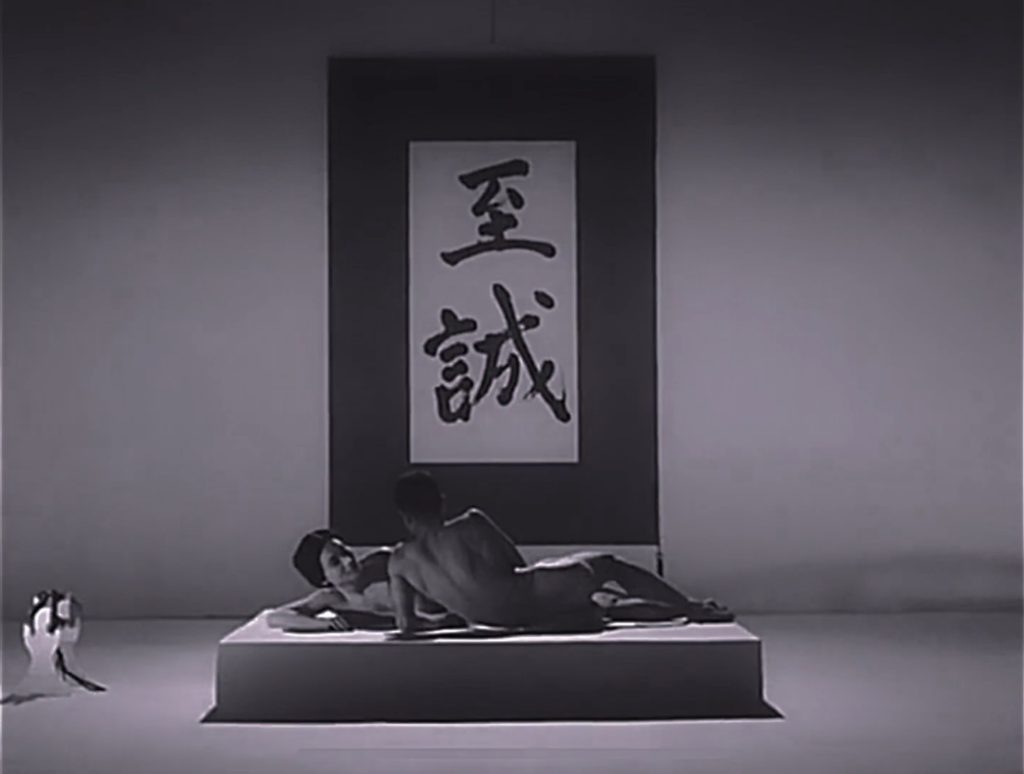
A woman has no other lord; she must look to her husband as her lord and must serve him with all worship and reverence, not despising or thinking lightly of him. The Way of the woman is to obey her man. In her dealings with her husband, both the expression of her countenance and the style of her address should be courteous, humble, and conciliatory, never peevish and intractable, never rude and arrogant—that should be a woman’s first and principal care.
Onna daigaku (女大学, ‘The Great Learning for Women’), 1729; trans. adapted and revised from Basil Hall Chamberlain, in Wm. Theodore de Bary, Carol Gluck, and Arthur L. Tiedemann, eds., Sources of Japanese Tradition, 2nd ed., vol. 2, Columbia University Press, 2005
When the husband issues his instructions, the wife must never disobey them. In doubtful cases she should inquire of her husband and obediently follow his commands. If her husband ever asks her a question, she should answer to the point; to answer carelessly would be a mark of rudeness.
If her husband becomes angry at any time, she must obey him with fear and trembling and not oppose him in anger and forwardness. A woman should look on her husband as if he were Heaven itself and never weary of thinking how she may yield to him and thus escape celestial castigation.
The Onna daigaku goes on to articulate the telluric and yin nature of a woman, and how these traits must interface with a man, with a penetrating insight for a phenomenon that we all have come to recognise in the age of the liberated, unleashed feminine:
The five worst infirmities that afflict women are indocility, discontent, slander, jealousy, and silliness. Without any doubt, these five infirmities are found in seven or eight of every ten women, and it is they that cause women to be inferior to men. A woman should counteract them with self-inspection and self-reproach. The worst of them all, and the parent of the other four, is silliness.
Onna daigaku (女大学, ‘The Great Learning for Women’), 1729; trans. adapted and revised from Basil Hall Chamberlain, in Wm. Theodore de Bary, Carol Gluck, and Arthur L. Tiedemann, eds., Sources of Japanese Tradition, 2nd ed., vol. 2, Columbia University Press, 2005
A woman’s nature is passive (yin). The yin nature comes from the darkness of night. Hence, as viewed from the standard of a man’s nature, a woman’s foolishness [means that she] fails to understand the duties that lie before her very eyes, does not recognise the actions that will bring blame upon her own head, and does not comprehend even those things that will bring calamity to her husband and children.
Nor, when she blames, accuses, and curses innocent persons, or when, in her jealousy of others, she thinks only of herself, does she see that she is her own enemy, alienating others and incurring their hatred. Lamentable errors. Again, in the education of her children, her blind affection induces an erroneous system. Such is the stupidity of her character that it is incumbent upon her, in every detail, to distrust herself and obey her husband.
Yet the warrior wife was no coarse imitation of the man. Music, dancing and literature cultivated grace, harmony and command of the inwards nature. Nitobe insists that these accomplishments were acquired neither for exhibition nor for social ascendancy: they adorned hospitality, restored the husband and father after exertion, and kept the heart itself in measure. Martial and pacific arts alike returned to the hearth as their centre. The samurai wife became naijo, the ‘inner help’, giving herself to husband, home and family as the warrior gave himself to lord and country. Her place within the ascending order of service diminished neither her dignity nor her force; it made both intelligible. Likewise, the binding of the samurai wife’s legs belongs to the same older Japanese order of rope from which hojōjutsu, and later shibari and kinbaku, inherited their forms. Rope was first an instrument of hierarchical arrest: offenders were bound according to sex, station, rank, and offence, so that the binding itself declared their place beneath lawful authority.6 The same warrior order recognised bureiuchi, later called kiri-sute gomen, by which a samurai might strike down a commoner whose grave insolence violated the honour of his station.7 Rope and sword thus formed part of one aristocratic discipline of obedience, rank, and corporeal submission. When the samurai wife bound her own legs before death, she did not repudiate that order by turning it into private self-assertion; she fulfilled it from within, submitting even her final posture to the modesty, fidelity, and obedience proper to her station.
Emancipation has forfeited this type as it has destroyed the world capable of receiving her. The modern woman is released from interior jurisdiction and delivered instead to the market, the State, publicity and the reactive judgement of the mass; the loss of a household office is compensated with employment, electoral enumeration and the freedom to circulate as an unattached individual. Modernity calls this an ascent because it measures existence by visibility. The naishosama exposes the plebeian scale behind that judgement. Her greatness did not consist in forcing her personality into history, but in becoming the inward authority through which a warrior house endured, reproduced its type and preserved its honour against disorder, absence and death.
Scholia
- Luke Roberts, ‘Governing the Samurai Family in the Late Edo Period’, in Mary Elizabeth Berry and Marcia Yonemoto, eds., What Is a Family? Answers from Early Modern Japan, University of California Press, 2019, pp. 153–55
- Onna daigaku, in Wm. Theodore de Bary, Carol Gluck and Arthur L. Tiedemann, eds., Sources of Japanese Tradition, 2nd ed., vol. 2, Columbia University Press, 2005, pp. 263–71
- Inazō Nitobe, Bushido: The Soul of Japan, An Exposition of Japanese Thought, 10th revised and enlarged ed., G. P. Putnam’s Sons, 1905, chapter XIV, pp. 139–47
- Kyoto City, ‘Grave of Tan, Wife of Onodera Jūnai’, historical monument record; the account follows Tan’s commemoration in Kinsei kijinden, where she was praised as an exemplar of the faithful wife.
- Ritsumeikan University Art Research Center, ‘The Wife of Onodera Jūnai’, commentary on Utagawa Kuniyoshi’s Biographies of Loyal and Righteous Hearts, no. 4, 1848; British Museum, collection record 2008,3037.15404.
- ‘Hojōjutsu’, Nipponica encyclopaedia, reproduced in Kotobank; National Diet Library Collaborative Reference Database, entry concerning Edo-period binding methods and distinctions according to the captive’s status.
- Klaus Vollmer, ‘Bureiuchi: The Regulation of Disrespect-Killings within the Framework of Tokugawa Legislation’, study of bureiuchi and the 1742 Kujikata Osadamegaki; ‘Kiri-sute gomen’, Encyclopaedia of Japanese History, reproduced in Kotobank.
Nogi Shizuko-fujin (乃木静子夫人): Daughter of Satsuma, Faithful Unto Her Lord ’Til Death (殉死)
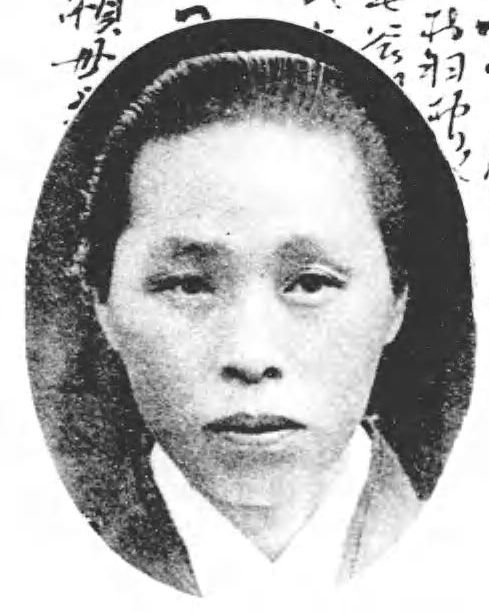
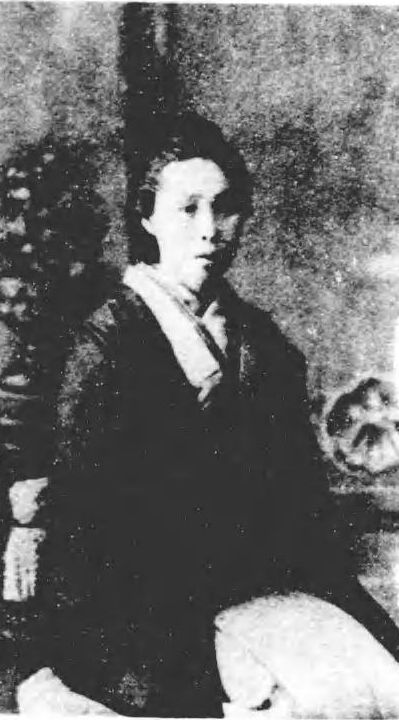
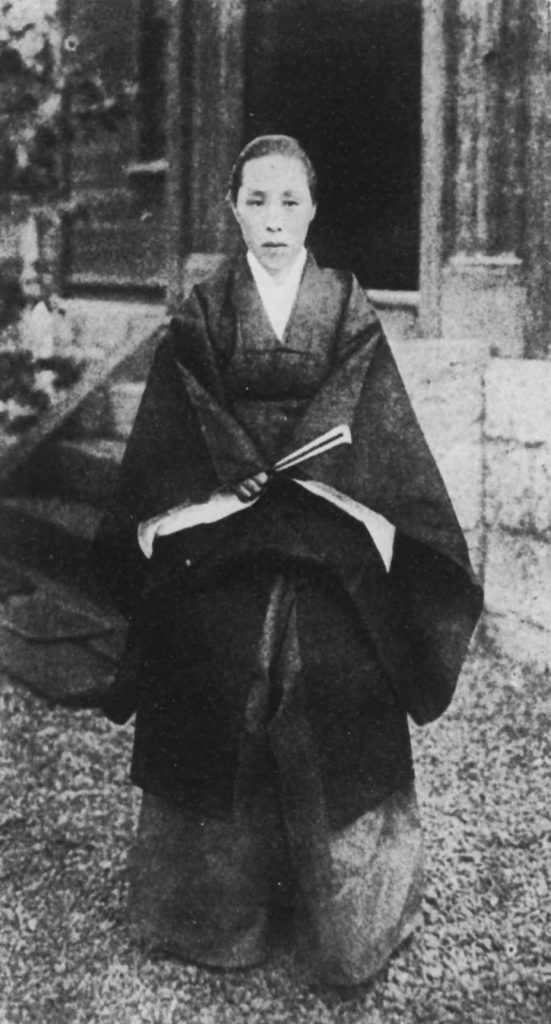
うつし世を
神さりましし
大君の
みあとしたひて
我はゆくなり
[...]
The Master of the World
Has passed away-
And after him,
Eager to serve my lord,
Go I

Count Maresuke Nogi, death poem; trans. CShujin
Lady Nogi Shizuko must first be seen from within the ascending fidelities of the warrior house. Born into a Satsuma samurai family, she married Count Nogi Maresuke (伯爵乃木希典, Hakushaku Nogi Maresuke), lived with the frugality expected of a military officer’s wife, and endured the loss of both sons in the Russo-Japanese War. On 13 September 1912, as the funeral rites of Emperor Meiji marked the extinction of an age, she died besides her husband while he followed his sovereign into death.8 Lady Nogi Shizuko is properly understood as a 内証様 (naishosama), the ‘honoured lady of the inner affairs’: the wife of a warrior-house head whose appointed sphere encompassed the oku, the family economy, its servants and dependants, and the preservation of the house from within.9 She was no private individual accidentally confined behind the public rooms, nor merely a performer of domestic tasks; she occupied the interior office complementary and subordinate to her husband’s outward command. What the master represented before lord, army, and nation, the naishosama maintained within the lineage, ordering the hidden life from which the public dignity of the house proceeded.
The Nasu Nogi Shrine accordingly remembers Shizuko through 内助の功 (naijo no kō), the meritorious inward assistance by which she supported Nogi ‘in shadow and in light’. His will likewise contemplated her continued judgement and administration after his death, while the shrine preserves that she concealed from him her own resolve to follow until the final moment.10 Her junshi must be understood within this office. She had spent her married life guarding the interior of the Nogi house; at its culmination, she refused to allow the conjugal bond itself to be severed by the departure of its head. Their mutual concealment becomes intelligible in precisely these terms: Nogi sought to preserve the house by leaving its lady alive, while Shizuko determined that the highest fulfilment of the naishosama lay in following the husband whose order she had sustained from within.
The Japanese notion of junshi (殉死), ‘following one’s lord into death’, carried feudal loyalty beyond the ordinary limits of service. The retainer did not regard the death of his lord as the cancellation of their bond and the restoration of his life to private ownership; he followed in order to continue that service beyond the grave. The custom could therefore signify more than grief or imitation. It asserted that the vassal’s existence had received its axis from a superior person, and that biological survival, once severed from that axis, possessed no automatic claim upon him. Although the Tokugawa shogunate prohibited junshi in 1663, the ancient form returned with terrible splendour in 1912, when Nogi Maresuke waited for the funeral guns and bells of Emperor Meiji before following his sovereign himself.
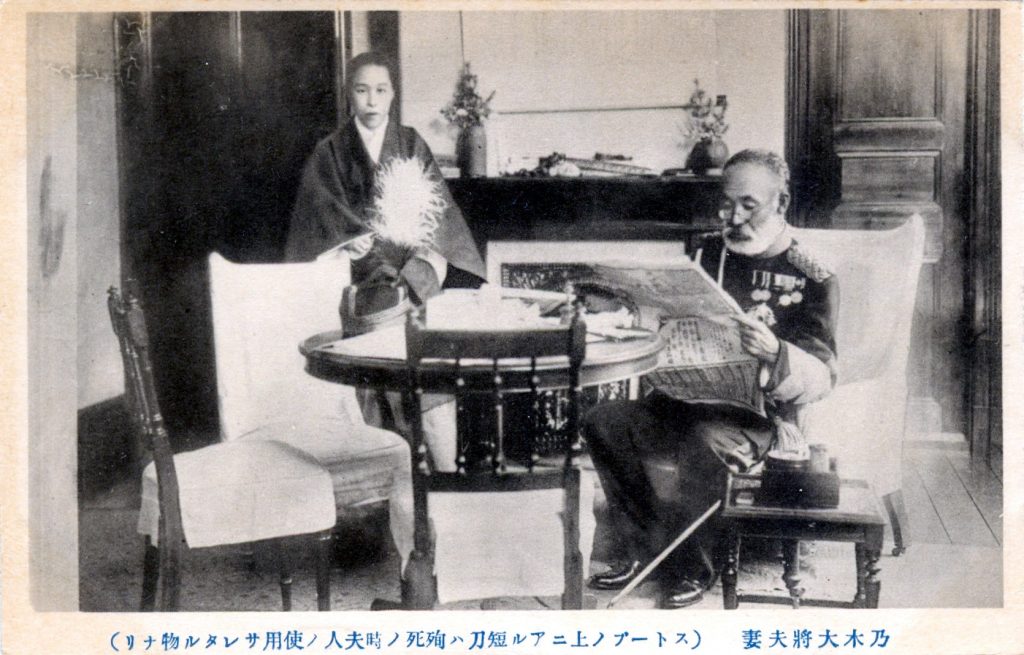
The caption reads, right to left: 乃木大将夫妻(ストーブノ上ニアル短刀ハ殉死ノ時夫人ノ使用サレタル物ナリ)
Translated: General Nogi and his wife (The dagger upon the stove mantel is the one used by the Lady at the time of junshi.)
Shizuko carries this same movement into the interior hierarchy of the warrior house. Strictly, junshi described the retainer following his feudal lord; in her, it receives its feminine correspondence. Nogi’s lord was the Emperor, while Shizuko’s lord and patriarch was Nogi. The chain therefore rises without rupture: wife to husband, samurai to sovereign, house to throne. As he refused to become a private man surviving the Emperor from whom his life and public office had received sacral meaning, she refused to become an autonomous remainder surviving the man through whom her own life, and marital household office had been formed. His fidelity ascended through the sword; hers through the absolute completion of the nuptial bond. The language in the caption on the photo of their final day does not reserve junshi for Nogi and describe Shizuko as merely dying besides him. It names the common occasion of their deaths, then identifies the dagger as that used by fujin, ‘the Lady’ or ‘the wife’, at the time of junshi. The object lying quietly upon the stove mantel consequently becomes a relic of her own fidelity: the weapon by which the inward order of the warrior house answered the sovereign order above it. Lord Nogi followed the Emperor into death; Shizuko followed Nogi, her lord and patriarch, and the commemorative language itself recognises her act as participation in the same ascending law of allegiance. Far from appearing as an incidental companion to a masculine deed, she completes its hierarchy in feminine form.
This was no merely mechanical submission. The commemorative tradition of the Nasu Nogi Shrine records that Shizuko concealed her resolve from her husband until near the end; his testament from the night before addressed ‘Shizuko-dono’ as though she would remain behind to fulfil its instructions.11 Her final act thus appears as an autonomous and conscious feminine appropriation of the principle he embodied. She did not claim his relation to the Emperor as though husband and wife were interchangeable servants standing upon an equal plane. She followed her own lord, and, through him, entered the same ascending current of sacred fidelity. Lord Nogi performed junshi towards the sovereign; Shizuko performed its inwards and conjugal analogue towards the pater of her house. The modern mind sees only two individuals extinguished together. The warrior order saw each remaining faithful to the superior proper to his or her station, even when fidelity demanded passage beyond life. In the provisions Nogi made for Shizuko’s life after his death: he determined where she should live in old age, left the disposal of her property to her future judgement, instructed his relatives to consult her about remaining affairs, and allowed the Nogi comital house to continue in name for as long as she lived. The official Nasu Nogi Shrine consequently states that Shizuko concealed her intention to die from him until shortly before their deaths. Count Nogi was not aware and made no provisions for the fact that Shizuko intended to demonstrate her pietas and ‘follow her lord into death’.
Lord Nogi, Gunshin (軍神): A Woman Participates in the Heroic, Solar Life





Lord Nogi was not remembered merely as a successful officer; he entered the religious imagination of modern Japan as 軍神, gunshin. ‘War god’ is a literal translation, although ‘martial kami’ conveys the Japanese sense more exactly: a warrior whose military renown, loyalty, sacrifice, and exemplary character transcended mere humanity, reaching divine proportion and acquiring cultic form. Through Lord Nogi, a woman not only partakes in the ritual of following her own lord, as he follows his, but she is also deified and brings to completion the heroic, solar life. A cultic expression women have not experienced in the West since the patriarchal ancient Roman imperial cult, which often also deified female members of the imperial household. He and Shizuko were formally enshrined; after their deaths in 1912, following their junshi alongside Emperor Meiji, they were deified together at Nogi Shrine and came to be venerated as kami.10 Thus they receive the divine title -no-Mikoto, as Nogi Maresuke-no-Mikoto (乃木希典命) and Nogi Shizuko-no-Mikoto (乃木静子命), placing them linguistically alongside the kami of the classical Shintō tradition, while the shrine’s own enumeration of his divine virtues deliberately exceeds the battlefield—文武両道, (Bunbu ryōdō, ‘mastery of both martial and literary ways’); 夫婦和合, (Fūfu wagō, ‘conjugal concord’); and 土徳勧農, (Dotoku kannō, ‘the sacral virtue of the earth and encouragement of agriculture’).
Mikoto is an ancient honorific of the highest rank, applied to Shintō deities (kami), members of the Imperial House, exceptionally venerated historical figures, especially after deification. It is often translated inadequately as ‘Lord’, ‘Highness’, or simply left untranslated because none of those quite capture its religious significance. In the oldest sources, it denotes someone invested with extraordinary sacred dignity; the title was also associated with the bearer of a divine command (mikoto originally also meant an august command or decree), before becoming an honorific attached directly to the person’s name. So, in English, Nogi Maresuke-no-Mikoto is best understood not merely as ‘Lord Nogi’, but as ‘the divine and august Nogi Maresuke’, with -no-Mikoto marking his formal status as a kami. His divinisation was therefore, more than the worship of force, the sacralisation of an entire aristocratic type: soldier, poet, educator, husband, cultivator, and loyal servant of the Emperor.
Nogi’s martial renown arose from his place within the wars by which Meiji Japan secured its position as an imperial power. He served during the Satsuma Rebellion; commanded the First Infantry Brigade in the capture of Lüshun, Port Arthur, from Qing China during the First Sino-Japanese War; subsequently served as Governor-General of Taiwan after the island had become Japanese territory; and returned as commander of the Third Army during the Russo-Japanese War, directing the siege which wrested Port Arthur from the Russian Empire before his army participated in the culminating campaign at Mukden. It was from these campaigns, joined to the deaths of both his sons, his austerity, and his final junshi, that Nogi emerged as the martial embodiment of loyalty and sacrifice rather than merely another general of imperial expansion.
In the year 1877, during the Satsuma Rebellion, Count General Nogi Maresuke received the wound that never wholly closed within his spirit. Then a young officer of the Imperial Japanese Army, he commanded the 14th Infantry Regiment in the desperate struggle for Kumamoto Castle, where the defenders of the imperial cause were besieged by the forces of the former samurai domains. Amid the confusion of battle, the regimental banner, sacred emblem of the Emperor’s authority and the honour of the men entrusted to bear it, was lost to the enemy.
To Nogi, this was no ordinary military misfortune; it was a sacrilege against the very principle to which his life was consecrated. The banner embodied the soul of the regiment, and its loss was an indelible stain upon his fidelity to the Emperor. Refusing to accept survival without atonement, he repeatedly sought death upon the field, riding or advancing into positions of extreme danger in the hope of recovering the colours or falling in their defence. He searched the battlefield with a desperation born not of fearlessness alone, but of a conviction that a commander who had allowed the imperial symbol to be taken had forfeited his right to live.
The banner was never recovered, and Nogi was restrained from making the ultimate offering of his own life. Yet although his body returned from the field, his spirit remained fixed upon that moment of failure. The loss became the hidden centre of his existence; a private wound carried beneath the outward discipline of a soldier and statesman. In the years that followed, he was often overcome by grief and self-reproach, and at times sought refuge in heavy drinking. His sorrow descended into periods of excess, during which he was known to become unruly and riotous; but beneath the outward disorder was the same unyielding conviction that he had survived a disgrace that honour demanded he expiate.
The thought of an honourable death therefore remained with Nogi for thirty-five years. It was not forgotten with age, nor extinguished by distinction, nor silenced by the honours later bestowed upon him. When Emperor Meiji departed this world in 1912, Lord Nogi saw the moment for which his soul had long waited. Thus the death of Count General Nogi was not born from a sudden impulse, but from a lifelong fidelity carried to its most severe conclusion. The lost banner of Kumamoto remained before him for three and a half decades as a symbol of an unfinished duty; and when the lord whom he had served was gone, he offered the only recompense that remained to him—his own life.
Mutual Concealment: Each Seeking to Spare the Other, Each Refusing to Be Spared
In the days following the death of Emperor Meiji, Lady Nogi Shizuko appears already to have discerned the solemn course towards which her husband was preparing himself, although its precise form and appointed hour remained concealed from her. His unusual attention to old papers had not escaped her notice; she remarked to her elder sister that something in his recent conduct troubled her. Shukuri’s several accounts differ slightly over the exact moment at which she understood his resolve, but they do not require us to imagine a wife wholly innocent of what was becoming apparent within her own household.
It was in the presence of assembled relatives that Shizuko found sufficient confidence to raise the succession of the Nogi house—a subject she had apparently been unable to broach when alone with her husband. The circumstances are important. She could not confront him openly with the word junshi; she approached the matter through the future of the house, and through what would become of her should anything happen to him. Nogi answered her in the same guarded and playful register:
「跡目のことですけど、天子様さへ御定命のことはどうにもなりません。あなたにもしものことが、私が難渋します」
Countess Nogi Shizuko and General Count Nogi Maresuke, conversation concerning the succession to the Nogi house; quoted in Takagi Mie, ‘A Foundational Study of Shiba Ryōtarō’s Junshi, Part I: A Consideration of the Materials Used’, Philosophy and Education 57 (2010), 70–59; older wording reproduced from the Nogi accounts collected by Shukuri Shigeichi; original translation.
It concerns the succession; even His Majesty could do nothing against his appointed span of life. Should anything happen to you, I shall be left in difficulty.
「卿も儂と倶に黄泉に旅だちすればいゝぢやらう」
Then you too might journey with me to Yomi [the underworld].
「厭で御坐いますよ。これから私は芝居も見、喰べたいものをどつさりたべたいと思って居りますもの」
I certainly do not want that. From now on, I intend to see plays, and eat plenty of whatever I wish to eat.
On the surface, it reads as domestic comedy worthy of Fawlty Towers: a husband dryly and self-effacingly provokes by proposing Yomi in front of company, seeing through the veil of sanctity placed over a probing question, and his wife lays a coquettish, equally flippant and irreverent demurral that she would much rather selfishly indulge in lavish theatres and abundant food, both demonstrating her autonomy and debasing the premise of the sanctified ritual. Beneath the flirtatiously dismissive one-upmanship lies a matter already understood sufficiently to require concealment, and gravely enough to require trivialising. For Lord Nogi to name Yomi is no intrusion, for it rests naturally within the heritage and cultural grammar of the faithful Naishosama. The relatives’ presence afforded Shizuko both courage and a social mask; she probed through succession, Nogi acknowledged the prospect through Yomi, and she parried with a conspicuously worldly refusal. The playfulness need not signify ignorance. More probably, it was the form by which two reserved and refined spouses permitted themselves to touch upon an approaching finality without yet stating it nakedly.
Shukuri Shigeichi, an early biographer of the Nogis, with a family connection through his service as tutor in the household of the grandson of Shizuko’s elder sister, Baba Sadako, understood the exchange in precisely this affectionate sense. He called it 「夫婦愛の濃やかさを表現した言葉遊び」 (Fūfu-ai no komayakasa o hyōgen shita kotoba asobi, ‘wordplay expressing the richness of conjugal love’); he further maintained that Nogi loved his wife deeply, and that she harboured not the slightest doubt of his affection. His interpretation is valuable because it preserves the understanding of those who approached the episode from within the Nogi family tradition, rather than from a later, modernist and feminist disposition, a century departed, to place the authoritative husband under antecedent suspicion against an individualist, independent woman who could not have loved and obeyed her husband—revolutionary revisionism of the kind that did not exist in the samurai milleu of fidelity and martial rite.
Yet the playful invitation to Yomi had not become an agreement governing their final day. Nogi’s will is the clearest evidence of this. Its provisions and final words contemplated Shizuko as one who would survive him, receive his instructions, and continue to exercise judgement within the affairs of the house.11 Takagi Mie, then a first-year master’s researcher at Aichi University of Education, is the author of a source-critical study tracing how Shiba Ryōtarō constructed Junshi from earlier Nogi materials, particularly the works of Shukuri Shigeichi.12 Takagi accordingly observes that, when Shizuko resolved to follow him, Nogi’s original plan underwent a sudden alteration. He had meticulously prepared his own junshi; he had not incorporated her death into it. There is no contradiction here between affectionately raising the image of Yomi and preparing for her continued life. Nogi could cherish the thought of his wife accompanying him without presuming upon her life, soliciting an oath from her, or arranging the act on her behalf. Her outwards refusal demonstrates her wilfull autonomy and gave him every reason to set his temporal affairs in order upon the expectation that she would remain. His affection itself would have inclined him to preserve her; and the fidelity intimated in his playful words could possess its full worth only if it proceeded freely from her own heart.
As Shizuko is now entering old age, I agree that Ishibayashi is an inconvenient place, and that she would feel anxious there in the event of illness. The Ishibayashi residence should be transferred to Shūsaku, and she should live in the house at Nakano. The disposal of the land and house at Nakano shall be left to Shizuko’s judgement at the time.
General Nogi Maresuke, Yuigon jōjō (‘Testamentary Instructions’), clauses 9–10, 12 September 1912; original translation from the Japanese text reproduced in Bonpei Iwata, Nogi shōgun oyobi dō fujin shitai ken’an shimatsu narabini yuigon jōjō, Nogi Shōgun Itoku Kenshōkai, 1936
[…]
As for other minor matters, I have given instructions to Shizuko, so please consult her. The Nogi comital house may remain in name during Shizuko’s lifetime, but it is essential that the intention of allowing the house ultimately to become extinct be fulfilled.
Combined with the will’s expectation that she would survive and administer affairs after him, the most economical interpretation is that Nogi’s secrecy until the final moment was plainly protective. He had hinted at Yomi, and probably understood that she had perceived his direction; yet, after her playful demurral, he prepared a solitary junshi and withheld its appointed hour, precisely because he knew that open warning might provoke the fidelity he wished, through affection, to prevent. Shizuko acted reciprocally. She allowed him to believe that his protective design had succeeded, concealed the answering resolve she had formed, and disclosed it only when his own withdrawal could no longer be postponed. The final scene then becomes a meeting of two loving stratagems of mutual secrecy: he had sought to depart before she could follow; she had determined to follow before he could forbid her. That reading unites the playful exchange, the secrecy on both sides, the will, the shrine tradition, and her final insistence without forcing any one loosely-heard fragment to bear the whole interpretation of feminist ire.
When the appointed evening came, Shizuko discovered the sword, the will, and the immediate character of Lord Nogi’s preparations. He told her that the imperial coffin would depart the Palace at eight o’clock, that the signal gun would then sound, and that at that moment he would take his own life. Only approximately fifteen minutes remained. Her conduct thereafter scarcely resembles that of a woman suddenly deprived of all composure or agency. She went downstairs, obtained wine, exchanged ordinary words with those below, wilfully returned to her husband, and shared the farewell cup. During the conversation which followed, the course already fixed by Nogi changed: Shizuko resolved that she too would depart.
The will tells us plainly what Nogi had intended for her—life. The new and insistent will introduced into the room was therefore hers.
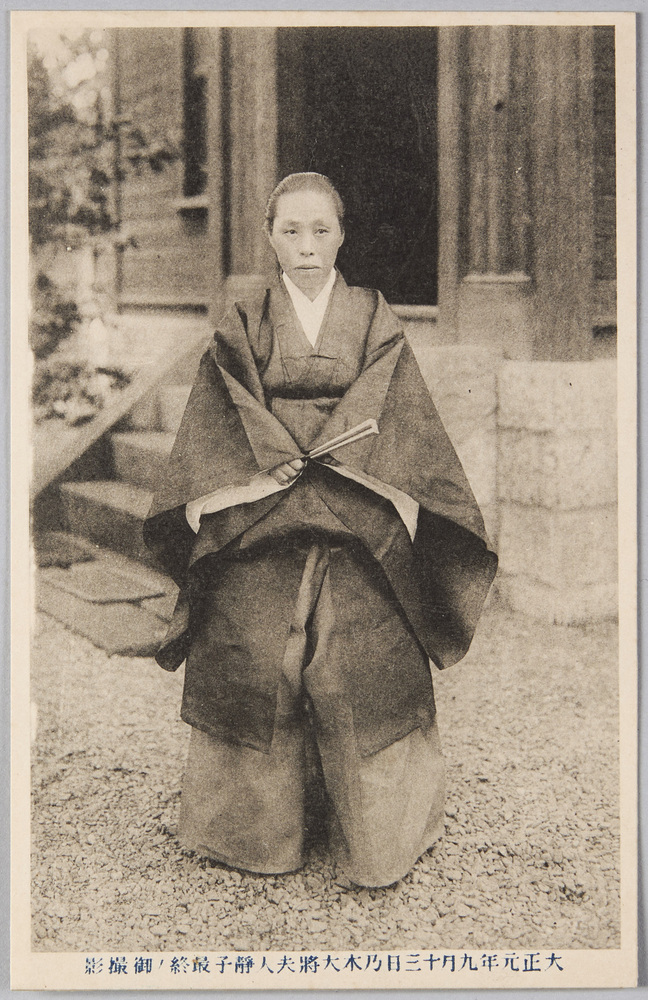
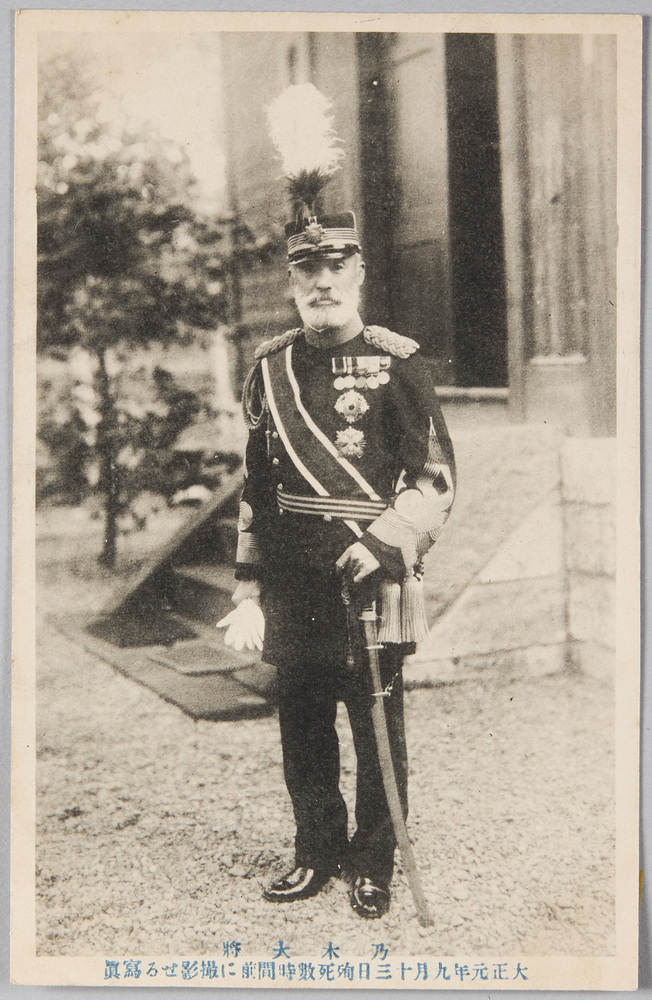
This is best understood within the traditional grammar of fides. The authenticity of junshi rested upon the subordinate’s own devotion; an act merely exacted by the superior would have been emptied of the very meaning it professed to display. It was consequently not unusual for lords to discourage or forbid retainers from following them, while retainers nevertheless persisted, even in contravention of legality. Under the Tokugawa peace, daimyō increasingly opposed junshi because it deprived the succeeding house of its most valuable men; the shogunate eventually prohibited the practice, yet retainers continued to insist upon it as a demonstration of personal loyalty even where command, law, and the interests of the surviving domain required them to live.
Proscription could thus become part of the act’s moral grammar. The superior commanded continued service; the subordinate insisted that the bond was of such an order that he could not accept survival. The resistance encountered by suicidal fidelity did not render it less authentic; it proved that the act had not been mechanically demanded. Lord Nogi’s own junshi, undertaken in an age which no longer legally sanctioned the practice, belonged to this same structure of inwards obligation persisting well beyond formal permission.
That grammar can be read in his testament. Nogi had, in effect, commanded Shizuko to remain: not necessarily through crudely spoken prohibition, but through arrangements which assigned her a place after him. When she declared her intention to follow, his likely first response was therefore refusal. He had reason enough: affection for his wife, responsibility for her life, reluctance to alter the exact form of his own long-prepared rite, and the knowledge that her fidelity would lose its noblest significance were it merely an extension of his command.
It is within this context that the incomplete cry heard from below must be placed:
「今夜だけは—」
Tonight, at least—
The partially-heard, lost words cannot be recovered and should never be counterfeited by an invented completion. Yet the phrase does not stand in an evidentiary void. The will establishes what the Lord expected; the preceding exchange establishes Shizuko’s awareness of the possibility of following him; her conduct establishes that she knowingly returned; and the later forensic sequence establishes that she first undertook the act herself. The traditional account preserved by the Nasu Nogi Shrine is more explicit still: because Nogi’s testament was addressed to Shizuko as one expected to survive him, the shrine concludes that she had concealed from her husband, until immediately before the act, her own settled resolve to accompany him in junshi; the final alteration of his design was therefore volunteered and insisted upon by the wife, not imposed upon her by the husband.
The likeliest sense, therefore, is most cleanly an exceptional plea against Nogi’s refusal:
「今夜だけは、私をお拒みにならないでください。」
Tonight, at least, do not deny me.

「今夜だけは、お供することをお許しください。」
Tonight, at least, permit me to follow you.

「今夜だけは、私の決意をお容れください。」
On this night alone, allow my will to prevail.
These are evidence-based interpretations of the relation. Shizuko, ordinarily obedient and cognisant of her place, may have been asking for the one supreme departure from her husband’s command by which she would consummate a higher obedience to the conjugal bond itself, in one final act, against his protective will. He wished her to live because he loved her; she insisted upon following because she loved him unto death. Shukuri himself supposed that the poorly heard fragment may have expressed resistance to the terrible suddenness of the hour; yet this particular conjecture need not govern the evidence. Read in light of the testament—which had assigned Shizuko a continuing place among the living—and of the traditional pattern in which fidelity asserts itself against the superior’s prohibition, the unheard predicate admits another, and more coherent, completion from a woman.
The quarter-hour between Nogi’s explicit disclosure and the appointed moment must not be mistaken for the whole extent of Shizuko’s knowledge. She had long observed his preparations, had already probed him upon the succession, had heard his playful reference to their journeying together to Yomi, and could scarcely have overlooked the ceremonial photograph and exceptional arrangements of that day. What she received in the final minutes was confirmation of the hour, rather than the first intimation of his purpose. Moreover, Nogi’s testament had expressly contemplated her survival; she remained entirely free to fulfil the life he had arranged for her, and even to leave the room and return without compulsion. His junshi, in customary Zen clarity, hinged upon none of her actions. The alteration of his solitary design therefore proceeded from her own insistence upon accompanying him, and the fragment 「今夜だけは—」 is most coherently read within that contest of wills—as the wife pleading to be admitted to the fidelity her husband, through affection and prior resolve, had intended to deny her. Nor was the significance of the day without visible preparation: Nogi had engaged a neighbourhood photographer on the preceding evening and, when he arrived, posed reading a newspaper in the full ceremonial uniform of a general, with all his decorations upon his breast, remarking that ‘today’s photograph should appear natural’.
Baba Sadako, Shizuko’s second elder sister (jishi 次姉) was downstairs in the Nogi residence, together with her granddaughter Eiko, when Shizuko’s brief cry 「今夜だけは—」, ‘Tonight, at least—’ fell from the upper floor. Two or three further strained voices followed, their words indistinguishable; after a short silence came a heavy impact, compared in the account to a large stone being dropped upon the tatami, which most naturally suggests the heavy impact of a body upon the tatami. The likeliest referent is therefore Shizuko’s body striking the floor—whether as she collapsed during her own attempts or as Nogi assisted her into the fatal position. Alarmed, Sadako ran upstairs, called desperately to Nogi through the keyhole, and, believing that her younger sister was being chastised, pleaded: 「静子に罪があるなら、私が幾重にもお詫びします」—‘If Shizuko has committed any fault, I shall apologise to you many times over on her behalf.’ (Shizuko ni tsumi ga aru nara, watashi ga ikue ni mo owabi shimasu.) Nogi answered from within, but Sadako could not make out the meaning of his reply.
According to the medical reconstruction discussed by Takagi, Shizuko struck herself three times, but the wounds did not prove fatal; Nogi then assisted her in completing the act, taking the role of the ‘second’ in customary ritual suicide. Shukuri rejected the prevailing supposition that she waited until after Nogi’s death. He judged instead that, having resolved in the sudden interval to die together with him, she was first assisted by her husband, after which Nogi performed his own self-sacrifice by the customary harikari method of splitting open the belly. Shukuri described her resolve—formed ‘in the moment’, enacted as the wife of a warrior, and completed with her husband’s aid—as reaching 「夫婦愛の高潮」, (Fūfu-ai no kōchō, ‘the culminating height of conjugal love’).
Nogi’s assistance did not create her resolution; it followed her own repeated attempts and accepted the fidelity upon which she had insisted. The husband who had prepared to leave her alive finally yielded to the wife who would not relinquish him to Yomi.
The Feminist-Liberal Plebeianising of the Naishosama & Gaslighting of an Authoritative Man
A contrary modern reconstruction recasts the deaths of Count and Lady Nogi as a domestic tragedy approaching murder-suicide: Shizuko is imagined as wishing to remain alive, her unfinished cry 「今夜だけは—」, ‘Tonight, at least—’ is completed conjecturally as a plea for reprieve, and Nogi’s assistance after her unsuccessful wounds is transformed into proof that an authoritative husband compelled his wife into death.13 In its most extreme form, the joint junshi ceases to be understood as the consummation of a freely chosen conjugal fidelity and becomes instead a species of double murder—Lord Nogi destroying first his wife and then himself beneath the theatrical forms of honour.
Yet this interpretation depends less upon recovered evidence than upon a modern dramatic construction imposed upon what has been lost. Such readings proceed from a familiar revolutionary catechism. Authority is first rendered inherently suspect; obedience is then mistaken for incapacity; and a wife’s fidelity becomes intelligible only after it has been translated into victimhood. The unheard dialogue is supplied in advance by suspicion; the incomplete fragment is permitted to outweigh the will which expected Shizuko to live, the shrine tradition that she concealed her own resolve from Nogi, her prior apprehension of his purpose, and her own deliberate participation in the act. What presents itself as the exposure of a tragedy is therefore also evidence of a debunking hermeneutic: an egalitarian age, unable to conceive authority without oppression or fidelity without victimhood, rewrites the authoritative husband as murderer and the noble wife as a woman incapable of choosing the very act by which her own tradition remembered her.
Only by thrusting this cumulative body of evidence into the background can the scene be converted by hostile modernists into a compelled death. The testamentary expectation that Shizuko would live, the guarded knowledge displayed in the playful exchange, her voluntary return upstairs, the farewell cup, her own failed wounds, and Shukuri’s family-connected testimony must all first be displaced in favour of one heavily exaggerated and poorly heard fragment; one incomplete cry may then be made to bear the weight of an entire accusation.
Such a construction reveals less about the Nogis than about a modern debunking hermeneutic, in which male authority is treated as incriminating and coercive in itself, the husband’s command is presumed sinister, obedience is mistaken for the extinction of independent feminine will, and assistance is transmuted into violence irrespective of the wife’s preceding acts, fidelity, obedience, and love itself, which are dismissed as if non-existant. It reproduces the feminist-revolutionary suspicion of the authoritative husband, and the failure to understand a higher plane of being as anything but hostile, or oppressive, rather than attempting to understand the moral world in which Nogi and Shizuko acted. Were a husband standing trial upon an allegation that he had coercively killed his wife, a will executed the previous night which expressly contemplated her survival and entrusted her with the future administration of the household would constitute highly probative, contemporaneous documentary evidence against premeditation. It would bear directly upon his antecedent state of mind, materially weakening any prosecution theory that her death had already formed part of a settled design; absent evidence that the will was fabricated, deceptive, or merely contingent, its natural forensic implication would be that, when he wrote it, he expected her to live. Yet, in the modern feminist catechism that assumes guilt before innocence, a sternness firmer than any legal procedure convicts the hated patriarch, and abolishes any possibility of nobility, with no chance for reprieve.
Nor does feminist suspicion restore Shizuko’s agency; a priori, it denies her the capacity to perceive, to choose, to insist, and to enact a fidelity more severe than that which even her husband required of her, all because this expression of female agency supports loyalty and obedience that transcends mortality, which cannot be permitted by the revolutionary revisionist narrative. It likewise effaces her own aristocratic formation, plebeianising the lady of a great samurai house until she conforms as an equal to modern feminist expectations, despite her belonging to a world in which wives had long demonstrated fidelity to their husbands unto death; there was nothing novel in such devotion. Perhaps such a presumption reveals a deficiency in the feminist heart itself. Traditional admirers of the Nogis understood the episode more nobly, within its context, and, on the evidence, more coherently: a husband who prepared to depart alone; a wife who discerned his course, answered him playfully beneath the eyes of her family, and, when the hour came, refused the survival he had arranged for her; and a conjugal love whose final consummation arose, not from his demand, but from her insistence.
To suppress the shrine’s formal account, displace the testament which expected Shizuko to live, and then fill the lacuna of an imperfectly overheard fragment with an imagined scene of male compulsion is not historical recovery; it is the gaslighting of the authoritative man. The husband’s documented intention is denied, the wife’s concealed resolve is effaced, and the very evidence which acquits his antecedent design is made to vanish beneath a revolutionary presumption: where man possesses authority, guilt must be latent; where woman obeys, agency must be absent.
This is the catechism of an egalitarian age which has forgotten the higher forms and therefore cannot see them. It recognises feminine agency only when it assumes the vocabulary of refusal, emancipation, or rebellion; consequently, when a noble wife freely chooses a fidelity more severe than anything her husband had commanded, the choice must be redescribed as victimhood. Shizuko-fujin is thereby plebeianised: the lady of an aristocratic house is stripped of her formation, her moral world, her guarded intelligence, and her power of sacrificial election proper to the Naishosama (内証様) of tradition, until she resembles the modern woman of the commons whom revolutionary doctrine has installed as ‘woman’ in the abstract.
The refusal demanded by the modernist narrative is therefore categorical. One historically provincial and egalitarian feminine type cannot be permitted to exhaust womanhood as such. The noble wife, the patrician matron, the warrior’s consort, and the lady who insists upon fidelity unto death are not defective anticipations of modern emancipation; they belong to another and higher anthropology, in which authority and agency are not opposites, obedience does not extinguish will, and conjugal devotion may culminate precisely where the egalitarian imagination becomes incapable of following it.
One may imagine that Lord Nogi, discovering the concealed resolve by which Shizuko completed her own junshi, would have felt himself profoundly honoured and struck by the same masculine reverence that breathes through the Laudatio Turiae before a woman’s pietas for her lord and master risen into virile form—a stratum of ontological being from which modern feminists, confined to the revolutionary reflexes of grievance, appetite, and sex-class instinct, have locked themselves out entirely. Seen from her side, the act completes the samurai order with terrible symmetry. Nogi’s lord was the Emperor; Shizuko’s lord was Nogi. As he refused to survive the sovereign to whom his sword and life had belonged, she refused to survive the husband within whose military house her own fidelity had acquired form. The ascending chain remained unbroken: wife to husband, warrior to Emperor, household to throne. Modernity, incapable of conceiving obedience except as humiliation, would search anxiously for the autonomous intention hidden beneath the act, as though her dignity could be recovered only by severing it from relation. Yet the act derives its entire altitude from relation. Her will does not disappear; it becomes formidable through allegiance, carrying conjugal office to the furthest boundary at which fidelity can still be proved.
Here the ancient discipline of the samurai wife reappeared at the edge of industrial modernity. The interior guardian of the warrior house had been trained to meet catastrophe without spectacle, to preserve modesty under death, and to regard biological survival as lower than honour. Shizuko had already borne the sacrifice of her sons to the imperial nation; at the passing of the Emperor, she accompanied the man who had given them. Her death was therefore no isolated feminine tragedy and no declaration of equality with the warrior. It was the answering form of his own fidelity. He followed the lord above him; she followed the lord besides and above her.
Shizuko’s death stands favourably beside the Hindu ideal of satī. The rites differed: the Hindu widow entered the pyre of her husband, while Shizuko pierced her heart besides Nogi as the funeral of Emperor Meiji passed. Yet their metaphysical articulation was alike. Nogi followed the Emperor; Shizuko followed Nogi. His life had found its axis in the sovereign, hers in the lord of her house; when the higher bond passed beyond the visible world, she refused the modern fiction that its subordinate term must survive as an autonomous remainder. Her act completed the warrior wife’s fides in the manner that satī completed the bride’s: relation was carried beyond death, and fidelity proved stronger than biological self-preservation.14
The Judaeo-Christian conscience is structurally blind to this plane. Christianity dissolves marriage at the threshold of eternity: in the resurrection, men and women ‘neither marry nor are given in marriage’, while the widow reappears as an individual soul standing immediately before God. Suicide becomes an illicit seizure of the life belonging to the Creator, and the complete renunciation of the woman may be sanctified only after its object has been transferred from husband to Christ.15 The widow may withdraw from the world, preserve continence, enter the cloister, and become the ‘bride of Christ’; the man beside whom she lived can never remain the transcendent axis of her being beyond death.
A Lament for the Vanished Lady
What moves us most in Lady Nogi is not merely the extremity of her final act, but the type of womanhood it reveals: disciplined without being inert, obedient without being vacant, and capable of a fidelity so sovereign that it exceeded even what her lord and master had permitted himself to require. Nogi arranged that she should live; Shizuko concealed that she would not be left behind. Their mutual concealment was therefore love contending against love—he withholding the hour in order to spare her, she hiding her resolve in order that he could not spare her—and the wife’s will prevailed only when it became too late for the husband to preserve her through command.
How barren the modern landscape appears before such women. It has produced innumerable claimants to autonomy, yet few who possess a will sufficiently formed to consecrate itself; innumerable voices demanding recognition, yet few whose fidelity could make recognition superfluous. The lady of an aristocratic house has been displaced by the abstract ‘modern woman’, fashioned according to the manners and anxieties of the commons, taught to experience dependence as degradation, hierarchy as injury, sacrifice as pathology, and the husband’s authority as an accusation requiring no further proof. Where Shizuko’s world understood freedom as the power to choose one’s duty completely, the egalitarian world recognises freedom only in severance, refusal, and escape.
Hence the necessity of falsifying her. An age unable to imagine that a wife might freely insist upon a bond more severe than her husband dared impose must convert her fidelity into coercion; it must place the authoritative man under suspicion, complete an unheard sentence in the language of fear, and call the resulting invention compassion. Yet such interpretations do not rescue Shizuko from Nogi: they rescue modernity from Shizuko. They efface the intelligence with which she discerned his purpose, the stratagem by which she concealed her own, the authority with which she altered his solitary design, and the aristocratic formation by which death itself could become the final expression of conjugal faith.
Playwright, novelist, and samurai Yukio Mishima returned to this ideal almost six decades later in Patriotism (Yūkoku 憂國, 1966), consciously invoking the memory of Count General Nogi and Countess Shizuko Nogi through the story of Lieutenant Shinji Takeyama and his wife Reiko. Set during the aftermath of the February 26 Incident of 1936, the lieutenant discovers that the military has divided into opposing factions and that his duty to the Throne places him in the impossible position of marching against his closest comrades. Rather than survive at the price of divided loyalty, he resolves upon ritual suicide; Reiko, refusing a life severed from her husband, elects to die besides him. Before the sacrifice comes its consummation: Reiko, her fear dissolved into resolve, abandons herself wholly to her husband as they determine to know ‘every part’ of one another’s flesh before death, in an entanglement of graphic sex and death that transforms their final night into an affirmation that perfect conjugal union is completed not despite mortality, but in full consciousness of it. The film lingers over their final hours together with extraordinary deliberation, recalling what were perhaps the final moments shared by Count Nogi and Lady Shizuko in 1912 before he followed Emperor Meiji into death, and she, her lord.
Four years later, on 25 November 1970, Mishima attempted to rouse the nation from the balcony of the Japan Self-Defense Forces Ichigaya Garrison before committing seppuku—the first occurrence in Japan since World War II. Unlike the deaths portrayed in Patriotism, or General and Lady Nogi’s junshi, to follow the lord, Mishima’s was an act of kanshi (諫死): literally, ‘death of remonstrance’ and rebuke of the emperor, offered as a protest against the decline of the nation’s samurai spirit, imperial dignity, and traditional order. Following Mishima’s own death, the existing prints of Patriotism were withdrawn and believed to have been destroyed, leaving the film effectively inaccessible for decades. A surviving negative later resurfaced and allowed Mishima’s cinematic testament to return to public view, preserving one of the most intimate artistic reflections of the ideals that shaped his final years. Mishima’s choice to make his protagonist a patriot torn between personal affection and absolute fidelity was no accident. Nogi’s junshi had become, for Mishima, the supreme modern exemplar of loyalty carried beyond life itself, while Shizuko’s voluntary participation completed the conjugal ideal with equal resolve. Their deaths are transfigured into art, more than mere private tragedy, as the visible restoration of a hierarchy in which marriage, honour, and devotion converge upon a common end.
We lament the dearth of such women because their disappearance signifies more than a change in manners. It marks the loss of an entire altitude of womanhood: the noble wife who does not conceive love as negotiation, who does not measure devotion by the safeguards retained against it, and whose obedience is no extinction of will, but its highest discipline. Lady Shizuko stands against the revolutionary catechism precisely because she cannot be made intelligible within it. She reminds us that the woman of the egalitarian present is not woman as such; she is one historical type among others, and not the highest.
Shizuko’s final act reveals the poverty of the modern demand that every woman preserve an existence independently intelligible from her husband. To the autonomous mind, the death of the man restores the woman to herself; widowhood becomes emancipation by catastrophe. Within the warrior house, the relation had already penetrated more deeply. Her life was neither an adjacent possession nor a private enterprise temporarily joined to his. It had received its orientation through the same ascending order that carried Nogi towards the Emperor. When that order passed beyond the visible world, survival could appear less as freedom than as the empty remainder of a completed allegiance.
There is also something distinctly feminine in the correspondence of their deaths. Nogi’s fidelity moves upwards through military service towards the sovereign; Shizuko’s moves inward and upward through the husband who embodies the warrior house before her. She does not imitate his office, seize his sword, or claim equality with his relation to the Emperor. Her act answers his in another mode, carrying the inward bond to the same extremity as his public loyalty. Modernity can perceive only two extinguished individuals; the older eye perceives a hierarchy completed without rupture, each person remaining faithful to the lord proper to his or her station.
What feminism would name extinction of the self was, within that order, its most complete fulfilment.
Scholia
- Japan Tourism Agency, ‘Junshi: Following One’s Lord in Death’; Nogi Shrine, Tokyo, ‘Deeds of the Enshrined Deities’
- Luke S. Roberts, ‘Governing the Samurai Family in the Late Edo Period’, in Mary Elizabeth Berry and Marcia Yonemoto, eds., What Is a Family? Answers from Early Modern Japan, University of California Press, 2019, pp. 153–54. Roberts identifies the naishosama as the samurai wife responsible for the internal affairs and economy of the house.
- Nasu Nogi Shrine, ‘Deeds of the Enshrined Deities’, official account of Nogi Shizuko-no-Mikoto; on her naijo no kō, Nogi’s testament addressed to her, and her concealed resolution to perform junshi; Nasu Nogi Shrine, ‘History of the Shrine’; Japan Center for Asian Historical Records, ‘Nogi Maresuke’; National Diet Library, Portraits of Modern Japanese Historical Figures ‘Nogi Maresuke’
- National Diet Library of Japan, ‘Nogi Shizuko’, Portraits of Modern Japanese Historical Figures; Nogi Shrine, Tokyo, ‘Deeds of the Enshrined Deities’; Nasu Nogi Shrine, ‘History of the Shrine’; Doris G. Bargen, Suicidal Honor: General Nogi and the Writings of Mori Ōgai and Natsume Sōseki, University of Hawai‘i Press, 2006, ch. 4
- Takagi Mie, ‘Shiba Ryōtarō “Junshi” no kisoteki kenkyū (Dai I-hen)—Shiyō shita shiryō ni tsuite no kōsatsu—’ [‘A Foundational Study of Shiba Ryōtarō’s Junshi, Part I—A Consideration of the Materials Used’], Tetsugaku to Kyōiku 57, 2009, pp. 70–59
- ‘「殉死」に見る惨劇’ [‘The Tragedy Seen in Junshi’], anonymous modern commentary, especially its conjectural reconstruction of 「今夜だけは」 its critical analysis of the Nogi shrine cult and religious reverence, and its characterisation of the deaths as resembling a forced double suicide. https://amidado.jpn.org/kaze/home/nogi.html, retrieved 29 July 2026
- Satī, ‘good or virtuous woman’; Julia Leslie, Widows Under Hindu Law, Oxford University Press, 2023, chapter ‘Sati’; David Brick, ‘The Dharmaśāstric Debate on Widow-Burning’, Journal of the American Oriental Society 130.2, 2010, pp. 203–223; David Brick, Widows Under Hindu Law, Oxford University Press, 2023, ‘Sati’
- Matthew 22.30; 1 Corinthians 7.8, 39–40; Augustine, De civitate Dei 1.17–27
Margaret Child-Villiers, Countess of Jersey: The Countess Who Refused the Vote
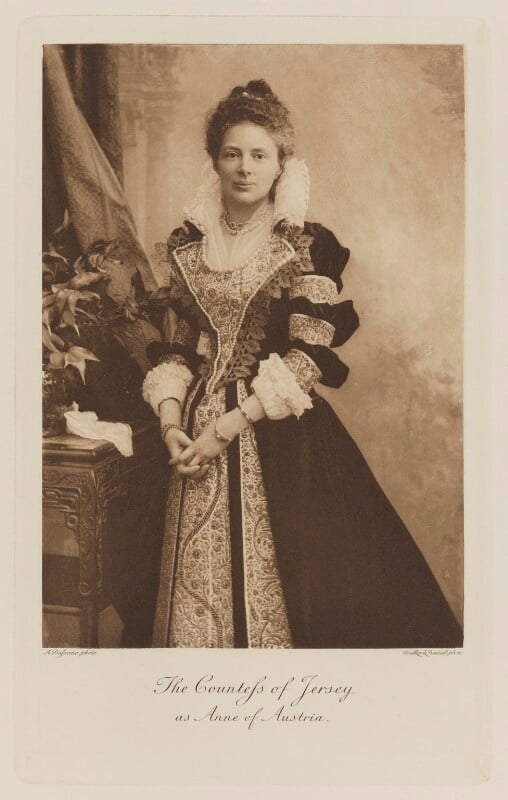
Lady Jersey occupies an ambiguous but useful station in this lineage. Her importance lies less in representing an untouched survival of the patrician matron than in exposing the fiction that politically articulate women naturally desired emancipation. Leading an anti-suffrage deputation to Prime Minister Asquith in 1910, she denied that the opponents of the franchise considered women less intelligent than men; their ‘hands were overfull already’, she argued, and a large feminine field remained in social improvement, the care of schools and municipal affairs. The parliamentary vote appeared to her as an additional burden rather than the consummation of womanhood. Her argument still preserved a distinction of offices: woman might exercise real influence within the social body without being converted into the same undifferentiated electoral atom as man.16 She is valuable because feminism cannot dismiss her as a secluded relic. She was politically active, publicly articulate and organisationally capable; she used those capacities to reject the claim that feminine agency must culminate in feminist citizenship.
Her refusal becomes more intelligible when viewed from within the social psychology of rank. A woman formed by aristocratic household, inherited name, ceremonial precedence, and proximity to sovereign office did not necessarily experience herself as a member of an undifferentiated female class awaiting political awakening. Her place was already particular, visible, and qualified. She possessed influence through family, patronage, hospitality, estate, court, and social obligation; her authority descended through a structure of recognised differences rather than rising from numerical aggregation. To be told that her true ‘consciousness’ lay in discovering a common political interest with every woman, regardless of breeding, conduct, or station, could therefore appear less as liberation than as a demand for social and ontological descent.
Put not this additional burden upon us.
Margaret Child-Villiers, Countess of Jersey, quoted by Lady Jeannie Lucinda Musgrave, president of the East Grinstead branch of the Women’s National Anti-Suffrage League; East Grinstead Observer, 27 May 1911
The feminist appeal to ‘class-consciousness’ required precisely this confiscation of aristocratic self-understanding. Lady, servant, matron, factory worker, agitator, and anonymous elector had to be taught that their decisive bond was sex, that every distinction separating them was secondary or fraudulent, and that the noblewoman’s inherited loyalties merely concealed her objective membership in the oppressed class. Her attachment to household and rank could then be dismissed as false consciousness; her refusal of the common franchise as reaction; her gratitude towards the order that elevated her as complicity in her own subordination. The revolutionary interpreter thus presumed to know her social being better than she did, reducing a woman shaped by lineage and office to an unconscious fragment of a mass constituency.
For such a woman, teetering over the brink of modernism, the vote may well have appeared as the emblem of this pauperisation. It offered one identical unit of political will to countess and chambermaid alike, then called the erasure of every qualitative distinction equality. The ballot possessed no memory of house, no gradation of responsibility, no recognition of cultivated judgement, and no relation to the differentiated duties by which aristocratic society had understood authority. It translated woman into number. Lady Jersey’s resistance can therefore be read as more than caution concerning parliamentary competence: it was the instinctive refusal of a woman accustomed to form to accept that feminine advancement must culminate in being counted equally among the female mass. The revolutionary language called her privileged because it could not comprehend privilege as obligation, inheritance as office, or rank as a reality superior to collective grievance.
Lady Jeannie Lucinda Musgrave served as president of the East Grinstead branch of the anti-suffrage movement, presiding locally over meetings and publicly arguing that the parliamentary franchise would impose upon women an injurious political burden. Lady Jersey occupied the corresponding position of national authority: she had chaired the inaugural meeting of the Women’s National Anti-Suffrage League in 1908 and later became vice-president of the united National League for Opposing Woman Suffrage.19 Musgrave’s invocation of her words—‘Put not this additional burden upon us’—was therefore more than merely the casual recollection of another lady’s opinion, as an appeal from a local president to one of the movement’s principal aristocratic voices, whose judgement supplied both authority and concision to Musgrave’s own argument.19
Yet Lady Jersey should be invoked with discrimination. She was already a political hostess, philanthropist and organiser of women in public controversy; the form of the emancipated woman had begun to appear even within the effort to resist emancipation. Her value therefore lies as a formidable female witness against the pretence of universal sisterhood, rather than as a pure embodiment of the older feminine order. At a still greater distance stands the Duchess of Montrose, who led Scottish anti-suffragism by warning of ‘danger to the State’ should political authority be extended to great numbers of inexperienced women.19 In both cases the contradiction is revealing: modernity had advanced so far that women of rank were compelled to constitute themselves as a public political body in order to oppose the political constitution of women as a body. Their resistance preserved an awareness of differentiation, even as the means by which they defended it disclosed how severely the older world had already receded.
Scholia
- Margaret Child-Villiers, Countess of Jersey, address to the anti-suffrage deputation received by H. H. Asquith, 21 June 1910; reported in The Times
- Julia Bush, Women Against the Vote: Female Anti-Suffragism in Britain, Oxford University Press, 2007, chapter 3, ‘The Women’s National Anti-Suffrage League’; The Times, 22 July 1908; Lady Jersey’s chairmanship and later vice-presidency are also summarised in the Oxford Academic account of the League.
- East Grinstead Observer, 27 May 1911, p. 8; report of Lady Musgrave’s address as president of the East Grinstead branch, including her quotation of Lady Jersey.
- Violet Graham, Duchess of Montrose, statement of the purpose of the Scottish National Anti-Suffrage League, Anti-Suffrage Review
The Satī Brides: Marital Fidelity Beyond the Grave
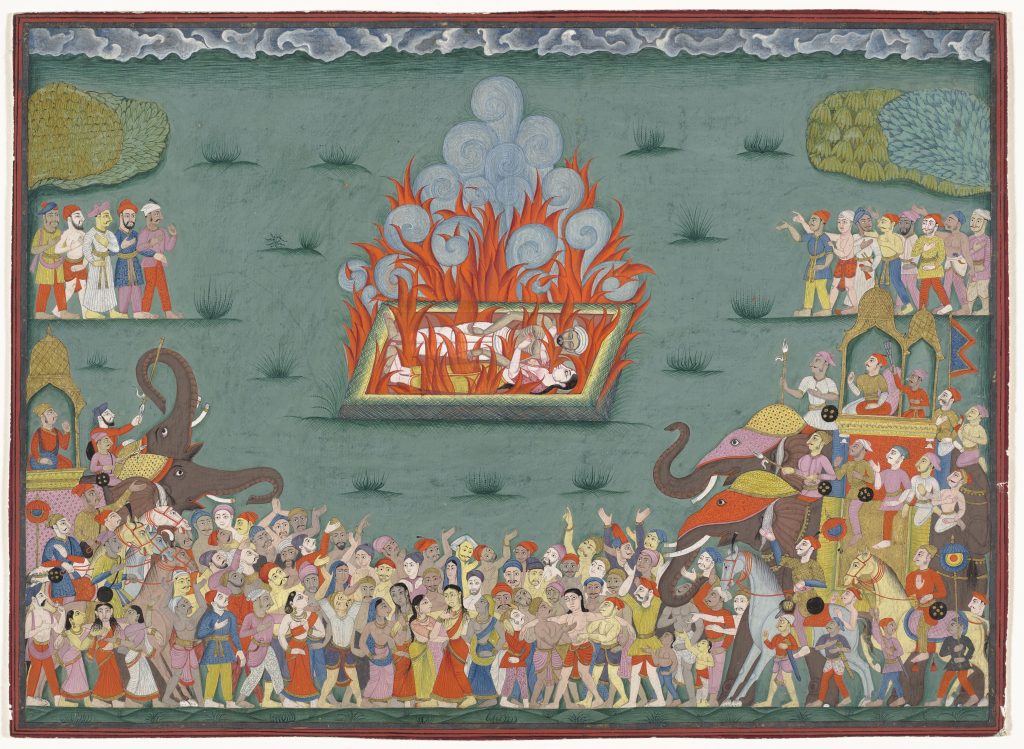
The Sanskrit satī signifies the ‘good’, ‘true’, or ‘virtuous’ wife; the name belonged first to the woman, while the acts later called sahagamana or sahamarana meant ‘going with’ or ‘dying with’ the husband. The rite expressed an ideal in which marriage was held to exceed the merely contractual association of two biological individuals. The husband’s death did not automatically restore the wife to an original, self-sufficient existence, for her identity had already been incorporated into a union conceived as continuing beyond the visible world. The widow who entered his fire enacted that continuity in its most extreme and irrevocable form.
This conception appears explicitly in later Dharmaśāstric authority. The Viṣṇu Smṛti presents two paths after the husband’s death: the widow may preserve her chastity through ascetic continence, ‘or ascend the pile after him’.20 The Parāśara Smṛti attributes heavenly union to the woman who follows her departed lord upon the same funeral pyre and depicts her fidelity as possessing salvific force for the husband himself.21 Such texts belong to a later Brahmanical development rather than to the earliest Vedic stratum; modern scholarship places the clear recognition of satī within orthodox Dharmaśāstric discourse around the seventh century CE, after which the rite became the subject of sustained argument among jurists and commentators.22
The ideal also received narrative embodiment. In the Mahābhārata, Mādrī elects to follow Pāṇḍu in death, entrusting her sons to Kuntī and refusing the continued life of the surviving widow. The textual history of the cremation episode contains difficulties and variant interpretation, yet the tradition plainly received Mādrī as the pativratā whose fidelity culminated in accompanying her husband beyond life.23 The later memorial stones and inscriptions devoted to women who died with their husbands gave this ideal a public and aristocratic form: the wife’s act was entered into dynastic memory alongside the martial death of the man.
The Sanskrit satī belongs to the same sacred family of meaning as satya. Both proceed from sat: being, reality, truth, goodness—the substantive principle of that which truly is. Thus satī signifies not merely the widow who follows her husband, but the ‘true’ or perfectly faithful wife; satya is truth itself, while the Satya Yuga is the primordial Age of Truth, in which existence remained consonant with its divine principle. Evola accordingly notes that satī also bears the senses of ‘gift’, ‘faithfulness’, and ‘love’; the rite was therefore understood as the supreme consummation of the conjugal bond in the order of truth, rather than as the mere extinction of a bereaved life.
Arturo Reghini, writing under the name Pietro Negri for the UR Group, carried this correspondence into the Roman tradition. In his 1928 essay ‘On the Western Tradition’, he proposed that Sāturnus be read as Sat-urnus, with the Latin termination -urnus joined to Sat, just as the Sanskrit -ya joined to Sat forms Satya. Saturn, king of the Roman Golden Age, thus corresponds to the Satya Yuga—the Age of Being—and the Saturnian tradition becomes the doctrine of Sat, the doctrine of Being. Satī, satya, and Saturn belong to one primordial field of meaning centred upon Sat: Being, Reality, and Truth. Satī is the true and faithful wife; satya is truth itself; the Satya Yuga is the primordial Age of Truth; and Sāturnus, understood as Sat-urnus, is the Roman sovereign of the Golden Age. The names disclose one principle under differing traditional forms: truth made existential, fidelity made perfect, and the Saturnian order in which life remains consonant with Being. Modern philology may question the correspondence because it cannot see beyond empirical, consensus-derived linguistic descent; the traditional science of names concerns a deeper identity of principle.24 Satī, Satya Yuga, and Saturn are thereby gathered beneath one primordial idea: truth made existential, fidelity made perfect, and the golden order in which an act accords wholly with the deepest reality of the one who performs it.
At its highest aristocratic standing, satī belongs to the same sacral architecture that joins the householder, the ancestral line, and the divine fire into a single organism. The gṛhapati is more than a domestic proprietor: he is the human lord of the hearth, the embodied centre through whom sacrifice, lineage, protection, and continuity are gathered into form. Agni, the divine gṛhapati, bears offerings between worlds; the mortal householder tends that fire within the family and gives the household its axis. The wife who enters the pyre therefore follows no merely private companion. She follows the lord through whom her marriage had been incorporated into the sacred life of the house.
The aristocratic severity of the act lies precisely here. The husband’s death does not scatter the household into autonomous remnants, nor return the wife to an abstract and self-owning, modernist individuality. The bond has already passed beyond sentiment and contract into lineage, rite, and ontological participation. As the sacrificial flame carries the offering beyond its visible form, the funeral fire carries marital fidelity across the threshold of death. The satī bride refuses to survive as the detached remainder of a union whose governing centre has departed; she preserves its unity by following the gṛhapati into the invisible order, making of herself the final oblation of the house.
This is no universal glorification of biological womanhood, and still less an anticipation of female emancipation. It is an aristocratic ideal of the qualified wife, whose greatness arises from incorporation into something higher than herself; the solar, regal transcendence implied by the ritual fire, on par with deification itself. The mass imagination sees only a woman consumed by fire; the traditional eye sees a household bond carried to its metaphysical conclusion, and a fidelity whose measure is no longer life.
A deeper metaphysics of gṛhapati, Agni, and the household fire as a single sacral organism has been examined elsewhere; here it is enough to recognise that the satī bride follows her husband as the embodied lord of a house whose continuity exceeds the visible world.
The Judaeo-Christian horizon can scarcely interpret such a union except as a violation of the soul’s exclusive, anti-hierarchical dependence upon God. In a typical bodily-attached and material view, Christian marriage terminates at death, and resurrection abolishes the marital bond: the departed wife and husband reappear as separate souls before the divine judge. Total feminine renunciation may be sanctified only when its object has been transferred from the earthly husband to Christ. The woman may abandon property, sexuality, family, and worldly life as a ‘bride of Christ’; the husband himself cannot remain the transcendent axis through which her existence passes beyond individuality. The Christian objection consequently carries a theological jealousy within it: ‘God’ may receive the entire woman, while the husband’s claim must expire at the grave.
Scholia
- Viṣṇu Smṛti 25.14, trans. Julius Jolly, The Institutes of Vishnu, Sacred Books of the East 7, 1880
- Parāśara Smṛti 4.30–31; numbering varies slightly between editions
- David Brick, ‘The Dharmaśāstric Debate on Widow-Burning’, Journal of the American Oriental Society 130.2, 2010, pp. 203–223; David Brick, Widows Under Hindu Law, Oxford University Press, 2023, ‘Sati’
- Mahābhārata 1.116–118, especially 1.117.23–28; compare J. A. B. van Buitenen, trans., The Mahābhārata, vol. 1, University of Chicago Press, 1973
- Arturo Reghini, writing as Pietro Negri, ‘On the Western Tradition’, UR, 1928; later collected in Introduction to Magic, vol. II.
One Man, One Bed, One Mind: The Women Rome Called Univira
iungor, Paulle, tuo sic discessura cubili:
Propertius, Elegies IV.11.35–36; trans. H. E. Butler, Propertius (Loeb Classical Library; London: William Heinemann; New York: G. P. Putnam’s Sons, 1929), pp. 334–35
in lapide hoc uni nupta fuisse legar.
[…]
I was wedded to thy couch, my Paullus, doomed, alas! to leave it thus. Behold the legend on this stone: “To one and one alone was she espoused.”
Among the women whom feminism cannot forgive, the Roman univira deserves a place of peculiar honour, because she represents almost the exact negation of the emancipated woman as modernity has conceived her. The word is brutally simple: unus and vir, ‘one man’. A univira is the woman of one husband, the matron whose sexual and marital history was comprehended by a single man; in its fullest traditional sense, her marriage began with him and ended only in death, and if he died first she could preserve that singularity by remaining his widow. The compact noun becomes conspicuous relatively late, but the ideal is considerably older: Roman authors speak of the woman uni viro nupta, ‘married to one man’, or uno viro contenta, ‘content with one man’. It was not merely a description of marital arithmetic. It was an honorific condition associated with pudicitia, fides, castitas, concordia, legitimate maternity, and the integrity of the household.25
This is what makes the univira so alien to the emancipatory imagination. Feminism teaches woman to regard the permanence of her attachment as a limitation upon the sovereign self: she must retain the possibility of departure, replacement, sexual reinvention, and a life whose meaning is never exhausted by fidelity to a husband. Rome could look upon the same limitation and see distinction. To have belonged to one man was not evidence that a woman had failed to experience sufficient alternatives; it could itself be the accomplishment for which she was remembered after everything else had vanished.
Catullus gives the principle in almost aphoristic form. Addressing Aufilena, he says that for married women there is scarcely a higher praise than viro contentam vivere solo: to live content with one man alone. Propertius made the thought even more monumental. In his great funeral elegy for Cornelia, the dead aristocratic matron imagines her own inscription: in lapide hoc uni nupta fuisse. ‘On this stone, let it be read that I was wife to one man.’
She then turns from her own grave towards her daughter and makes fidelity hereditary: imitate me, she tells her, and ‘make sure you have only one husband’. The maternal inheritance is consequently neither autonomy nor the injunction to ‘find oneself’; it is the transmission of an achieved feminine form from mother to daughter.26
Valerius Maximus is more explicit still. When describing the severe customs of the ancestors, he records that women who had been content with a single marriage were honoured with the corona pudicitiae, the ‘crown of pudicitia’. The reason he gives is extraordinary by modern standards: Roman matrons considered the mind especially uncorrupted when, after surrendering virginity in one marriage-bed, it did not learn to depart from that bed into another; the experience of many marriages, although lawful, was treated as a kind of lawful intemperance, legitima quaedam intemperantia.27
Women who had been content with a single marriage used to be honoured with a crown of [pudicitia]. For they thought that the mind of a married woman was particularly loyal and uncorrupted if it knew not how to leave the bed on which she had surrendered her virginity, believing that trial of many marriages was as it were the sign of a legalized incontinence.
Valerius Maximus, Memorable Doings and Sayings II.1.3; trans. D. R. Shackleton Bailey, Loeb Classical Library 492 (Harvard University Press, 2000), with pudicitia retained
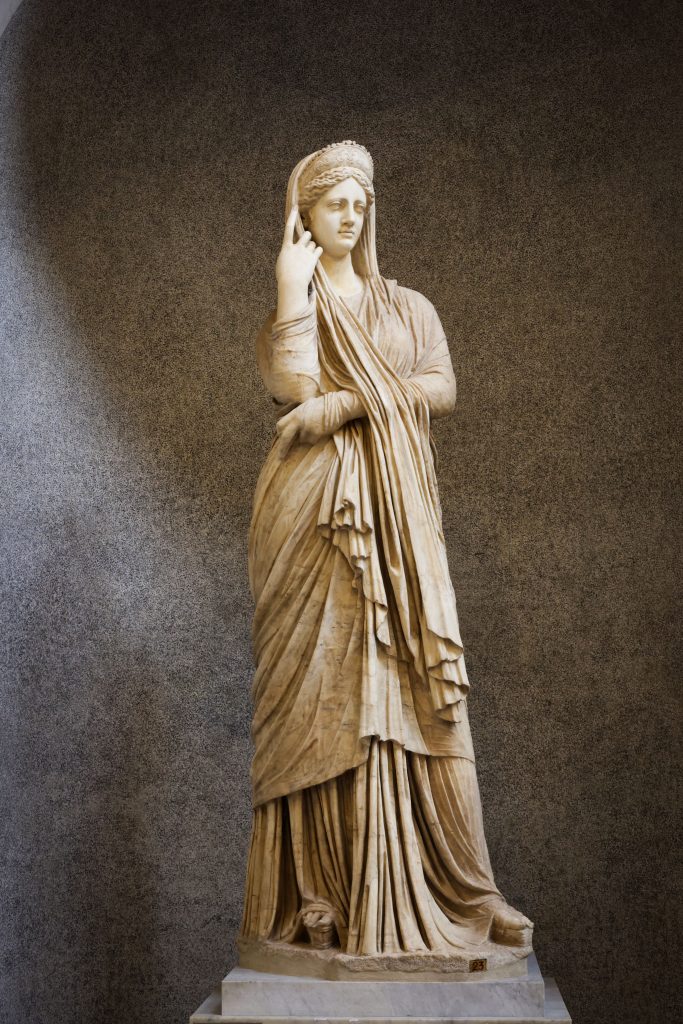
The qualification is, Rome did not need to declare every second marriage adultery in order to rank the first and singular marriage above it. A thing might be lawful without representing the highest form. That distinction has become nearly unintelligible under modern egalitarian morality, which habitually supposes that whatever is legally permitted must also be protected from moral hierarchy. The Roman could permit remarriage and nevertheless crown the woman who did not require it. Freedom from prohibition did not abolish excellence.
Indeed, the univira was more than a literary compliment. Her condition possessed religious efficacy.
Livy’s account of the cult of Pudicitia in Book X provides perhaps the most striking evidence. In his story, set in 296 BCE, the patrician Verginia has married the plebeian consul Lucius Volumnius. Patrician matrons exclude her from the rites of Pudicitia Patricia because she has married outside the patrician order. Verginia indignantly answers that she remains patrician, remains pudica, and is uni nupta—married to the one man to whom she had been led as a virgin. She then establishes an altar of Pudicitia Plebeia within part of her own house and challenges the plebeian matrons to make theirs a competition in feminine virtue answering the competition in virtus amongst men.28
Livy then specifies the qualification for sacrifice. No woman possessed the ius sacrificandi unless she was a matron of proven pudicitia and had been married to one man: spectatae pudicitiae matrona et quae uni viro nupta fuisset. The one-husband wife therefore did not merely enjoy social praise. Her marital integrity qualified her to approach a divine power which another woman could not approach in the same capacity.
The conclusion of Livy’s story is almost too perfect for the argument. He says that the observance was subsequently made common, women who did not satisfy its older standards entered it, and eventually the cult fell into oblivion. Whatever historical strata lie behind Livy’s Augustan retelling, his moral architecture could scarcely be clearer: religious distinction depends upon discrimination. A sacred privilege ceases to signify when possession of it no longer marks a superior condition.
Here Pudicitia requires some care in translation. ‘Chastity’ catches only part of it. Roman pudicitia comprised sexual integrity, modesty, shame in its noble sense, self-command, and the publicly recognised inviolability appropriate to a respectable matron. It was not simply the absence of intercourse. A married woman was sexually active and could nevertheless embody pudicitia because her sexuality was ordered to its legitimate locus. The virtue therefore belongs to a fundamentally different conception from the modern opposition between sexual freedom and sexual repression. Roman morality asked whether sexuality had form, rank, boundary, and rightful object.
The univira represents that form in its most concentrated shape.
Nor was Pudicitia alone. Tertullian, writing as a Christian in the early third century and arguing fiercely against remarriage, is particularly valuable here because he invokes the older Roman religious order as evidence against Christians themselves. In De monogamia he says that only a univira placed the crown upon Fortuna Muliebris, and likewise upon Mater Matuta. His purpose is polemical—if the old Romans could honour one-marriage women, Christians ought to be ashamed of demanding repeated marriages—but precisely for that reason his testimony preserves the prestige attached to the type.29
Fortuna Muliebris is a particularly fitting divinity. Her Roman cult was connected with the traditional story of Coriolanus: when male embassies failed to halt his advance upon Rome, the matrons went out to him, headed in the tradition by his mother Veturia and his wife Volumnia, and their intervention saved the city. A sanctuary to Fortuna Muliebris on the Via Latina commemorated that female service to Rome. Yet the honour did not dissolve distinctions amongst women. Later evidence associates the privileged handling or crowning of the goddess with women in their first marriage; female religious dignity was here connected neither with liberation from marriage nor with independence of men, but with an exemplary condition within marriage.30
The Matralia of Mater Matuta on 11 June presents a related picture. The rites belonged emphatically to the world of the respectable matron; enslaved women were excluded from the normal ritual, and one enslaved woman was ceremonially admitted only to be driven out. Tertullian says that the crowning of Mater Matuta was performed by univirae. Modern scholarship rightly adds a qualification: our explicit statement that the women had to be once-married comes from this later source, while the earlier evidence securely establishes the matronal and status-conscious character of the festival without always stating the univira requirement. The distinction should be retained rather than smoothing the sources together.29
The same sacral logic entered the wedding itself. The pronuba, the matron who attended the bride and in the developed Roman ceremony joined the right hands of bride and groom, was traditionally required to be a woman of good standing who had herself been married only once. The symbolism is transparent. The bride was not inaugurated into matrimony by the sexually experienced woman who had accumulated husbands and thereby knowledge of alternatives; she was placed beneath the auspicious influence of a woman whose own marriage exhibited continuity. Roman ritual selected accomplished fidelity to bless incipient fidelity.31
Even the extraordinary office of the Flaminica Dialis reveals something similar at the highest sacerdotal level. The wife of the Flamen Dialis was no detachable appendage to his priesthood. Their marriage had to be contracted by confarreatio; divorce was forbidden within the office, her ritual participation was indispensable, and if she died the Flamen Dialis was obliged to resign. Here husband and wife formed so complete a sacral conjunction that the priesthood itself was damaged by the destruction of the marriage. Whatever distinctions ought to be made between this office and the ordinary univira, the underlying Roman conception is unmistakable: marriage can be a religious structure whose integrity exceeds the convenience or isolated will of either individual.31
To the Divine Manes: VNIVIRIAE
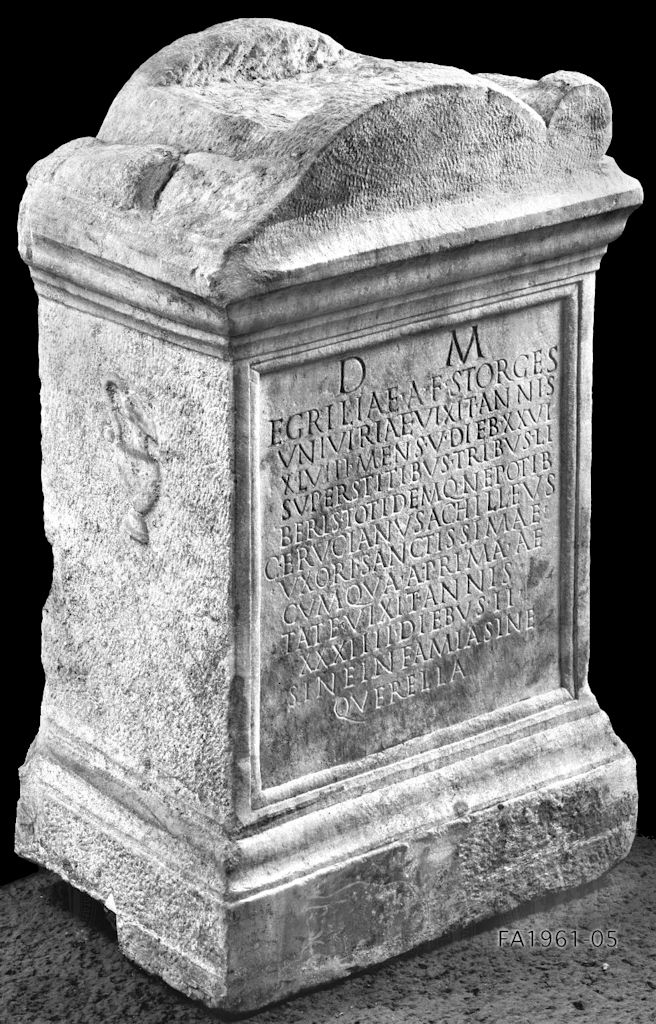
D · M
EGRILIAE A · F · STORGES
VNIVIRIAE VIXIT ANNIS
XLVIII MENS · V DIEB · XXVI
SUPERSTITIBVS TRIBVS LI-
BERIS TOTIDEMQ · NEPOTIB ·
C · ERVCIANVS ACHILLEVS
VXORI SANCTISSIMAE
CVM QVA A PRIMA AE-
TATE VIXIT ANNIS
XXXIIII DIEBVS II
SINE INFAMIA SINE
QVERELLA
[…]
To the divine Manes. To Egrilia Storge, daughter of Aulus, a woman of one husband [VNIVIRIAE]. She lived forty-eight years, five months, and twenty-six days, leaving three children and as many grandchildren surviving her. Gaius Erucianus Achilleus [set this up] for his most venerable wife, with whom he lived from her earliest youth for thirty-four years and two days, without dishonour, without quarrel.
Most devastating to any attempt to dismiss the univira as merely an antiquarian prescription is the epigraphic evidence. Husbands placed the word upon the graves of actual wives.
Among the surviving epitaphs, the funerary altar of Egrilia Storge gives the univira ideal an unusually tangible form, for the word itself remains plainly carved into the stone. Excavated in 1856 and dated to the later second or early third century CE, the altar identifies her in its opening lines as Egriliae Auli filiae Storges, VNIVIRIAE—Egrilia Storge, daughter of Aulus, ‘a woman of one husband’. She died aged forty-eight years, five months, and twenty-six days, leaving three children and three grandchildren after her husband lived with her ‘from her earliest’ youth for thirty-four years of marriage, indicating she was married to him at fourteen in customary traditional marriage; her husband, Gaius Erucianus Achilleus, then names her his uxor sanctissima, his ‘most venerable wife’, and records that he had lived with her a prima aetate for thirty-four years and two days. The epitaph closes with the magnificent formula SINE INFAMIA SINE QVERELLA—‘without dishonour, without quarrel’.32
There is almost an entire Roman conception of marriage compressed into those few lines. Univiria does not stand alone as an arithmetical observation that Storge happened to marry once; it is placed amongst the facts by which her husband wished her character to survive him. Singular fidelity is followed by fruitfulness—children and grandchildren—then by the husband’s declaration of her sanctity and finally by more than three decades of conjugal concord. The sequence is important: one husband, one enduring household, descendants, and a marriage remembered without disgrace or discord. What modernity might dismiss as limitation becomes on the Roman stone a constituent of honour.
The monument is particularly valuable because VNIVIRIAE is not a literary reconstruction, a later moralist’s description of ancestral custom, or an ideal invented for an exemplary heroine. It is the language chosen for an actual wife by the man who buried her. Stone permits little space and asks for what is worth perpetuating; Achilleus caused the singularity of his wife’s marriage to stand near the very beginning of her memorial, before recording the children she bore and the thirty-four years they shared. Here the univira emerges from Roman literature into Roman life: not merely praised by poets, but named upon the grave.
At Genua in Liguria, Marcus Vibius Theophilus commemorated Negelia Noniana, who died at forty-two after more than twenty-four years with him. The sequence of praise is itself revealing: she is femina rarissima, an exceedingly rare woman; univiria; carissima et castissima, most dear and most chaste; and their life together had passed sine ulla querella—without a single quarrel or complaint. The epitaph binds singular marriage to affection, chastity, and concord rather than setting obedience and love against one another as modern polemics habitually do.33a
A second-century monument at Rome commemorates Aurelia Domitia, a freedwoman of the imperial household. Immediately after identifying her comes univiria; then sanctissima, piissima, pudicissima, and reverentissima. She had married at sixteen, lived twenty years with her husband Pompeianus, and died at thirty-six.33b Her one-husband status is not hidden somewhere amongst incidental biographical facts. It stands near the beginning of the virtues by which her husband causes her to be known to posterity.
Fabia Fuscinilla, an elite woman commemorated in late-third-century Rome, receives another magnificent compression. She is clarissima, of the highest senatorial rank, and fecundissima, abundantly fruitful; the verse finally identifies her as: Nupta, univira, unanimis.
Nupta, univira, unanimis.
Epitaph of Fabia Fuscinilla, Rome, CIL VI 31711
[…]
A wife; of one husband; of one mind.
Three words contain an entire philosophy of matrimony. Marriage is the station; singularity is its constancy; unanimitas—being of one mind—is its inwards concord.33c
Perhaps most striking of all is Postumia Matronilla, commemorated in Roman Africa. Her inscription piles virtue upon virtue: incomparable wife, good mother, grandmother, most dutiful, pudica, religious, hard-working, thrifty, capable, vigilant, solicitous—and then univira, unicuba. The second term strengthens the first. Unicuba is literally the woman of one bed: marital singularity is joined to sexual singularity. She has not merely possessed one formal husband on a civic register; the memorial represents her body itself as belonging to one conjugal bed.33d
These epitaphs matter because they rescue the ideal from abstraction. Stone is expensive; epitaphic space is finite. What a bereaved husband carved into it was intended to survive him. Univira therefore belongs beside piissima, pudicissima, castissima, religiosa, frugi, fecundissima, and unanimis within an actual Roman vocabulary of female praise. It tells us what men wished to honour in their wives and what families wished strangers passing a tomb to know about their dead.
Widowhood as Fidelity Rather Than Vacancy
The ideal became still more severe when the husband died first. The modern understanding treats widowhood as the termination of one relationship and therefore, after an appropriate interval, the restoration of the woman to a neutral state from which another attachment may begin. The Roman ideal of the univira permitted another possibility: death need not render the first husband retroactively provisional.
Cornelia, daughter of Scipio Africanus and mother of the Gracchi, supplied one of antiquity’s great examples. After the death of Tiberius Sempronius Gracchus she assumed control of the household, estate, and education of their children. Plutarch records that Ptolemy offered to share his crown with her and sought her in marriage; Cornelia refused him and remained a widow. The contrast has almost mythic purity: an Egyptian king offers queenship, and the Roman matron chooses fidelity to the house of her dead husband and the formation of his sons.34
One need not suppose that every Roman widow behaved so. They plainly did not. Widows remarried for affection, political alliance, economic necessity, inheritance strategy, and reproduction. Under Augustus the demographic interests of the State could actually run against the old univira prestige: the lex Iulia of 18 BCE and lex Papia Poppaea of 9 CE penalised prolonged unmarried status and gave widows and divorcees of child-bearing age limited periods in which to remarry. A widow ultimately received two years under the later settlement; a divorcee eighteen months.35
That apparent contradiction is enormously important. It demonstrates that the univira was not merely the automatic consequence of a legal system which made remarriage impossible. Rome could simultaneously recognise demographic reasons for remarriage and retain a cultural memory in which the one-man woman stood higher. Augustus needed children; ancestral morality admired singularity. Roman civilisation was sufficiently sophisticated to contain both the practical necessity and the superior type without pretending that every permitted choice was equal in dignity.
Nor should every famous Roman wife simply be forced beneath the label. Livia, for example, was twice married and therefore was not technically a univira, however extraordinary the permanence of her marriage to Augustus and whatever other matronal virtues were attributed to her. Octavia likewise had more than one husband. Univira is a precise category, not a synonym for ‘good Roman woman’. Its precision is precisely what gives it force.
Arria provides another related rather than terminologically certain exemplar. Pliny describes her concealing the death of her son from her desperately ill husband Paetus, leaving his room to weep and returning composed so that his recovery would not be endangered. Later, when Paetus was condemned after the revolt of Scribonianus and hesitated before suicide, Arria drove the blade into her own breast and handed it to him with the immortal Paete, non dolet—‘Paetus, it does not hurt.’ Pliny calls her her husband’s solacium mortis et exemplum, his consolation and example in death.36 Here again the Roman imagination does not construct the exemplary wife by discovering how little her husband can mean to her; her greatness is revealed by the extremity of what fidelity enables her to endure.
The Woman Feminism Cannot Forgive
The univira is therefore intolerable to feminism at a deeper level than ordinary sexual conservatism. She cannot easily be appropriated as an ancestral feminist merely because she was strong, intelligent, administratively capable, or publicly honoured. Those qualities do not lead her towards emancipation from the husband. They are gathered into fidelity to him, his house, their children, their gods, and the continuity of their name.
This destroys one of feminism’s most indispensable retrospective assumptions: that a powerful woman must secretly desire the dissolution of the hierarchy within which she exercises her power. The Roman evidence repeatedly supplies the opposite figure. A woman may be formidable because she remains; powerful because she serves a permanent order; honoured because she refuses multiplicity; religiously privileged because the integrity of her marriage distinguishes her from other women.
The univira has no need to discover a political ‘class interest’ opposed to that of her husband. Her excellence depends upon refusing precisely that fracture. Husband and wife do not appear as two atomised sovereign individuals temporarily negotiating access to one another; the marital bond produces a higher unity to which constancy itself belongs. The Roman vocabulary is revealing: fides, fidelity and pledged trust; concordia, hearts in accord; pietas, duty towards gods and kin; pudicitia, sexual integrity; unanimitas, being of one mind. These virtues make little sense if sexual relations are first interpreted as a struggle between competing classes.
And this is why the grave inscription matters so much. Modern emancipation tells the woman that she must retain innumerable possibilities lest choosing one life become oppression. Rome could place above a dead woman a single word announcing that she had excluded every subsequent possibility—UNIVIRA—and intend it as praise.
Not impoverished by one man: distinguished by one man.
Not deprived of alternatives: victorious over the need for them.
Not a woman whose individuality survived despite fidelity, but one whose feminine dignity was manifested through the capacity to make fidelity absolute.
There is something almost offensive to modernity in the economy of the word. No manifesto is required. No theory of liberation; no grievance against the opposite sex; no invention of woman as an oppressed political estate. One husband. One house. One conjugal bed. One fidelity carried, where circumstances demanded it, beyond the grave.
The univira is thus not merely another historical woman whom feminism finds inconvenient. She is the survival of an entirely different moral anthropology: a world in which limitation could sanctify rather than diminish; hierarchy could furnish the setting of devotion; dependence need not mean degradation; and a woman could attain honour not by preserving herself from belonging, but by belonging so completely that Rome itself gave the condition a name, admitted it to its rites, crowned it with pudicitia, and carved it into stone.
Scholia
- The root meaning is ‘a woman who has had only one husband’; the older ideal is expressed through formulations such as uni viro nupta and uno viro contenta. Majorie Lightman and William Zeisel, ‘Univira: An Example of Continuity and Change in Roman Society’, Church History, 46.1 (1977), pp. 19–32; Lewis and Short, s.v. univira.
- Catullus, Carmina 111.1–2, viro contentam vivere solo; Propertius, Elegies 4.11.35–36, 67–68, where Cornelia asks that it be recorded that she was married to one man and instructs her daughter to imitate her.
- Valerius Maximus, Facta et Dicta Memorabilia 2.1.3: quae uno contentae matrimonio fuerant corona pudicitiae honorabantur; D. R. Shackleton Bailey, trans., Memorable Doings and Sayings, vol. I, Loeb Classical Library 492 (Cambridge, MA: Harvard University Press, 2000), p. 131; women content with one marriage received the corona pudicitiae; multiple marriages were treated as a species of lawful intemperance. Rebecca Langlands has suggested that Valerius may have confused a cultic rite in which the univira crowned a divine image with a custom in which the univira herself received the crown. We know independently that once-married women possessed special ritual privileges: antiquarian evidence says a woman who had married only once could touch the image of Pudicitia or Fortuna Muliebris; Tertullian says that only a univira placed the crown or garland upon Fortuna Muliebris, and likewise Mater Matuta; Rebecca Langlands, Sexual Morality in Ancient Rome (Cambridge: Cambridge University Press, 2006), ch. 1, ‘Sexual Virtue on Display I: The Cults of Pudicitia and Honours for Women’, p. 62. Cf. Dionysius of Halicarnassus, Antiquitates Romanae VIII.56.4; Festus, pp. 282–83 Lindsay; Tertullian, De monogamia XVII.4
- Livy, Ab Urbe Condita 10.23.3–10. Verginia emphasises that she is pudica and uni nupta; Livy specifies that only a matron of recognised pudicitia who had been married to one man possessed the right of sacrifice at Pudicitia Plebeia. His narrative places the earlier Pudicitia Patricia shrine in the Forum Boarium and Verginia’s new altar in the Vicus Longus.
- Tertullian, De monogamia 17.3–4, invokes Roman precedents for single marriage and says that only a univira crowns Fortuna Muliebris and Mater Matuta; his testimony should be distinguished from the earlier evidence, especially for the Matralia, where the explicit univira restriction is late.
- On Fortuna Muliebris, its association with the Coriolanus tradition, and the requirement of the matrona univira in the cultic evidence, see Katariina Mustakallio, ‘Some Aspects of the Story of Coriolanus and the Women Behind the Cult of Fortuna Muliebris’, Commentationes Humanarum Litterarum 91 (1990), pp. 125–31; Marta Bailón García, ‘El papel social y religioso de la mujer romana. Fortuna Muliebris como forma de integración en los cultos oficiales’, Habis 43 (2012), pp. 101–18.
- The Roman pronuba was traditionally a once-married matron who attended the bride and joined the couple’s right hands; the Flamen Dialis and Flaminica Dialis were bound by the special confarreatio marriage, could not divorce, and the Flamen had to resign if the Flaminica died. Oxford Classical Dictionary, ‘marriage ceremonies, Roman’; William Smith, Dictionary of Greek and Roman Antiquities, s.vv. ‘Matrimonium’ and ‘Flamen’.
- Funerary altar of Egrilia Storge, excavated 1856, second half of the second or early third century CE, inv. 10656, formerly Museo Lateranense; CIL XIV 963; EDR144121; Arachne 21641. The published transcription gives VNIVIRIAE, VXORI SANCTISSIMAE, the thirty-four years and two days of shared life, and the concluding SINE INFAMIA SINE QVERELLA.
- [a] CIL V 7763 (Negelia Noniana); [b] CIL VI 13303 (Aurelia Domitia); [c] CIL VI 31711 (Fabia Fuscinilla; nupta, univira, unanimis); [d] CIL VIII 11294 (Postumia Matronilla; univira, unicuba)). These epitaphs combine univira/univiria with such praises as castissima, pudicissima, piissima, fecundissima, unanimis, and, in Matronilla’s case, unicuba.
- Plutarch, Tiberius Gracchus 1.3–5: after the death of Tiberius Sempronius Gracchus, Cornelia refused Ptolemy’s proposal and ‘remained a widow’, devoting herself to her children and estate.
- The Augustan lex Iulia de maritandis ordinibus of 18 BCE and lex Papia Poppaea of 9 CE encouraged legitimate marriage and reproduction; under the later rules widows were generally allowed two years and divorcees eighteen months before remarriage was expected. Oxford Classical Dictionary, ‘lex Papia Poppaea’; Enciclopedia Italiana, ‘Giulia e Papia Poppea, legge’.
- Pliny the Younger, Epistles 3.16, derived from Arria’s granddaughter Fannia; Pliny recounts Arria’s concealment of her son’s death and her famous example to Paetus.
Cleopatra and Octavia: Two Women Above the Sisterhood
The feminist appropriation of Cleopatra is characteristic of the lower aspect of the age, evident in the plebeianising of a sacred queen, dynastic sovereign, and living embodiment of cult into a mascot of generic, universalist ‘girl power’. Stripped of throne, lineage, priesthood, and the solar man before whom her royalty could become consecratory, she is recast as the autonomous modern woman enthroning herself over men. Such a myth calls no men to become Caesars, nor to women to attach to obey one, capable of receiving her magnificence without falling beneath it; it assigns the emasculated denizen of the modern anthill the role of Antony—to orbit feminine splendour, surrender their very centre, and mistake sensual absorption for transcendent love.
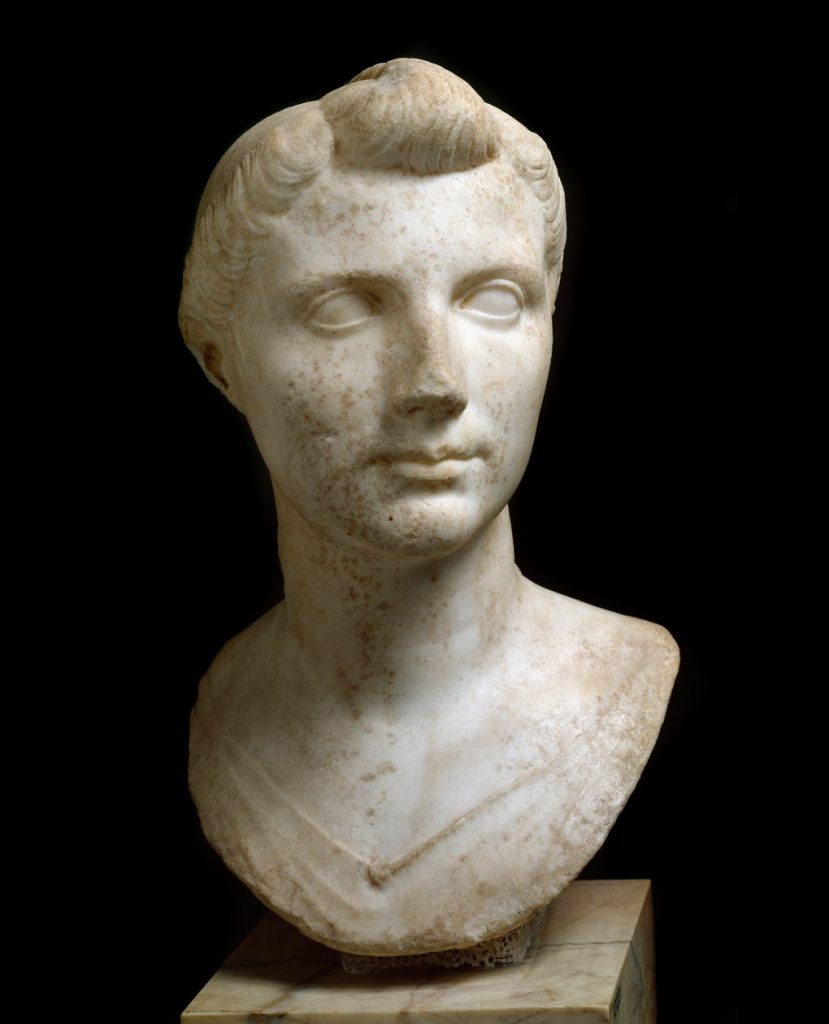
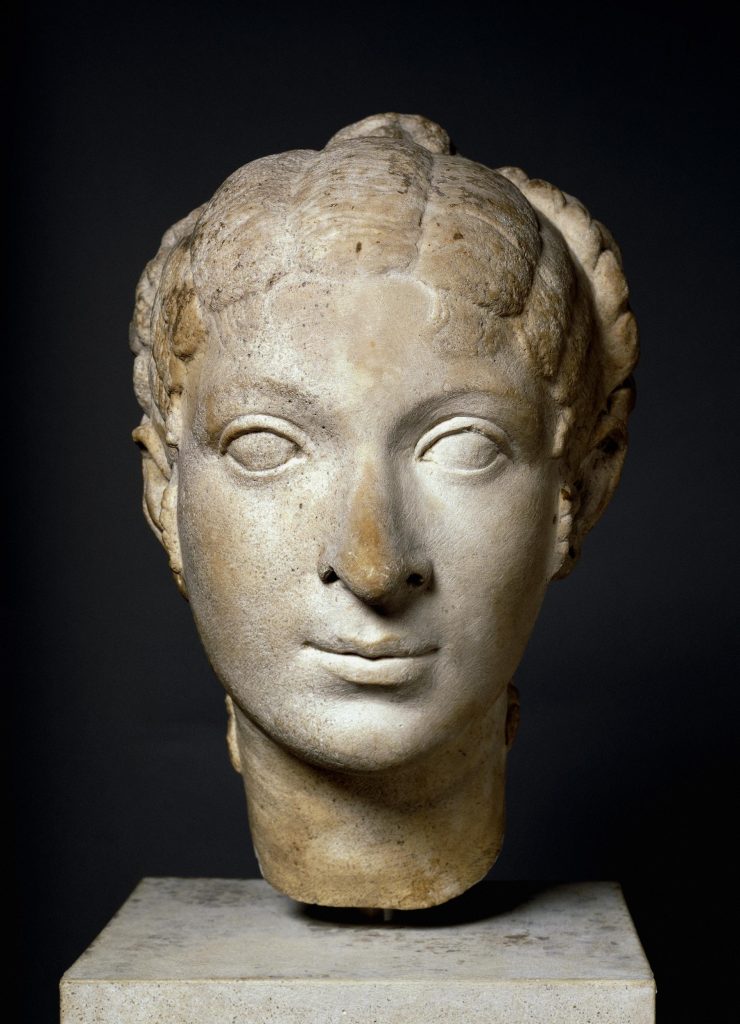
Right: Roman bust, c. 50-30 BCE, depicting a woman from Ptolemaic Egypt, either Queen Cleopatra VII or a member of her entourage during her 46-44 BCE visit to Rome with her lover Julius Caesar.
Great men do not merely govern women; they call forth higher forms of womanhood by giving feminine power rank, direction, and a cause beyond the private self. Shizuko and the women of the warrior houses themselves assumed solar and paternal constancy, severity, and sacrificial resolution through fidelity to their lord, lineage, and marital order; Octavia likewise preserved within feminine office the solar form of Rome which Antony had abandoned. Their strength was not generated against hierarchy, but received through it and made their own. Cleopatra reveals the inverse movement. Before Caesar, her royal and sacral magnificence remains tributary to a still greater imperial centre: she magnifies him, and is herself elevated by the magnitude of that which she serves. Before Antony, the centre fails. Unable either to order her splendour or to withdraw from its orbit, he permits the feminine court to become an alternative sovereignty—erotic, dynastic, maternal, and Aphroditic. Caesar rises through Cleopatra’s homage; Antony descends beneath her gravity; Octavia remains faithful to the solar order he deserts. Feminism abolishes this causal hierarchy and then claims its remnants as spontaneous properties of an autonomous sex. It severs woman from husband, house, lineage, lordship, and civilisation, pauperises her into the undifferentiated individual, and calls the resulting diminution freedom. The noble wife becomes a generic emblem of ‘female strength’, the faithful matron an ‘oppressed victim’, and the queen a mascot of self-created power. Yet higher femininity was never manufactured by emancipation from form. Great men and great orders raised women above the female mass; where the masculine centre collapses, feminine power is either levelled into that mass or enthroned as its inversion.
Cleopatra and Octavia stand above the democratic communion of women, neither can be understood as a mere representative of her sex. Each belongs to rank, dynasty, and a world in which womanhood acquires meaning through unequal form. Octavia is the Roman matron raised through house, marriage, and paternal order; Cleopatra is the sacred queen whose person gathers throne, cult, erotic power, and dynastic ambition into a single, divine centre. Feminism falsifies both whenever it translates them into interchangeable symbols of ‘female strength’. Their greatness begins precisely where the universal category of woman ends.
Octavia embodies the feminine principle held within the solar architecture of Rome. Sister of Augustus and wife of Antony, she does not attempt to become a third sovereign between them. Her distinction lies in preserving the house where masculine ambition threatens to tear it apart. She bears humiliation without converting injury into jurisdiction, continues to care for Antony’s children and adherents after he has deserted her, and maintains the Roman form even when the man placed at its centre has fallen beneath it. Her fidelity is neither passivity nor weakness. It is the severe strength of a woman whose being has been so completely formed by household, lineage, and duty that personal grievance cannot dislodge her from office. Antony abandons the house; Octavia remains its living law.
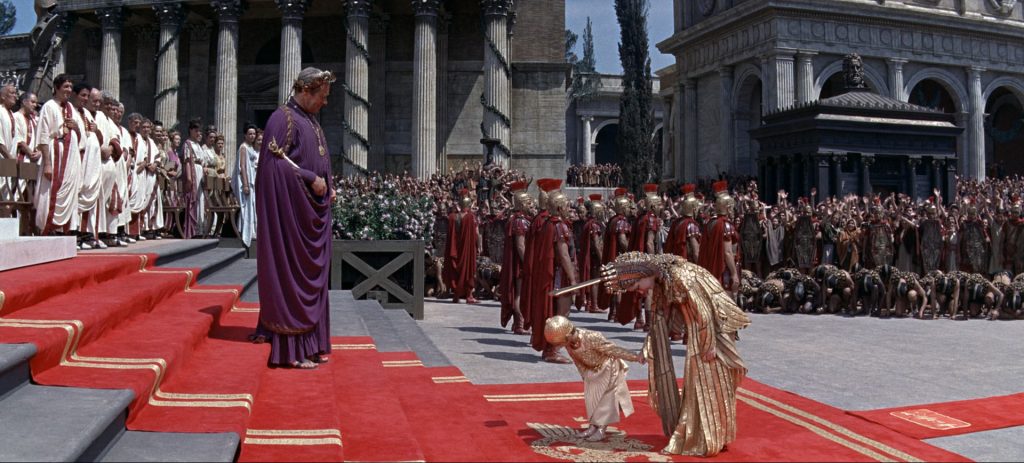
Cleopatra represents another altitude altogether. She cannot be democratised without being destroyed, for everything essential to her belongs to radical inequality: queen, priestess, living divinity, mistress of dynastic Egypt, and sovereign of a court in which politics, cult, fertility, and erotic splendour converge. The modern imagination sentimentalises her through romance with Antony as it cannot endure the greater truth of her relation to Caesar. She honoured him as the man of imperial destiny, bore his child, and placed Caesarion within the horizon of universal monarchy. In that moment, her queenship does not oppose the solar principle; it recognises and magnifies it. She stands beneath no abstract equality, but before a man whose stature could answer her own.
The tragedy begins where Antony mistakes proximity to such a woman for possession of Caesar’s rank. Cleopatra may acknowledge the solar ruler, but where that centre weakens, royal femininity tends to draw sovereignty into another orbit: the court becomes erotic, maternal, dynastic, and sacred around the person of the queen herself. Antony does not master this world; he is absorbed by it. He approaches Cleopatra as Caesar’s successor, yet remains haunted by the measure he cannot equal. Even the romantic legend betrays the truth it tries to conceal: Cleopatra does not merely seek a lover, but a Caesar, and Antony’s failure lies in his inability to become one.
History resists this construction at every point. Cleopatra had more in common with Caesar, the Roman patrician, as a sacral sovereign than with the female multitude of Alexandria; Octavia belonged more profoundly to the Roman house than to Cleopatra merely as another woman. Shizuko’s allegiance was to Nogi as the expression of her own lineage’s warrior order, not to women who would have counselled survival against him, or who manufacture abuse and ‘double-suicide’ narratives in contravention of the established custom of many other women among her order. Lady Jersey and Lady Musgrave opposed women who claimed to speak politically in their name. A queen is not joined in political or even ontological substance to a serving woman merely because both are female, to suggest so is a grave mockery; rank, civilisation, religion, lineage, and office divide them more profoundly than mere sex unites them.
Their contrast therefore refutes the modern notion that the higher woman is necessarily the woman emancipated from man. Octavia reaches altitude through fidelity to a true order; Cleopatra reaches it through sacral queenship, yet even her power seeks a man capable of answering it from above. Higher femininity does not abolish hierarchy—it makes the demand for a genuine masculine centre more severe. Where that centre is present, woman magnifies it; where it fails, she either preserves the abandoned form, as Octavia does, or draws the lesser man into her own orbit, as Cleopatra does with Antony.
Octavia and Cleopatra form no sentimental opposition between virtuous wife and liberated queen. Both stand incomparably above the sisterhood, though they embody different possibilities of the higher feminine type. Octavia receives elevation through fidelity to the Roman house and preserves the paternal centre even after Antony has long deserted it and perished. Cleopatra possesses royal and sacral altitude in her own person, capable of affirming the solar ruler where he appears, yet equally capable, in his absence, of drawing monarchy towards the gynaecocratic and Aphroditic pole in his absence. One guards form from within; the other tests whether the man before her possesses sufficient form to remain sovereign.
Augustus resolves the conflict through Victory. He restores the paternal right of Rome against Antony’s dissolution, overthrows Cleopatra’s competing court, and absorbs the surviving dynasty into the order of Caesar. The victory also reveals the full amplitude of Octavia’s office. Antony’s surviving children—including those born to Cleopatra—were gathered into her household and raised together with her own.37 She did not answer humiliation with the petty vengeance of an injured individual; as matron of the victorious house, she received even the blood of the queen who had displaced her, preserving what could be preserved beneath the Roman order.
Plutarch records that Augustus admired Cleopatra’s ‘lofty spirit’ and ordered her burial with Antony ‘in splendid and regal fashion’; Suetonius independently says that he granted both a common burial honour in the same tomb and ordered their mausoleum completed, while Cassius Dio confirms that they were embalmed alike and buried together. This was no democratic sisterhood between women. Octavia did not approach Cleopatra across the horizontal communion of sex, but from the superior position of the Roman house, extending its guardianship over the remnants of the defeated dynasty. Cleopatra’s children by Antony could be absorbed; Caesarion could not be absorbed in the same manner. He bore Caesar’s name and represented another possible centre of Caesarian succession, so that his existence challenged the singularity upon which Augustus’ sovereignty rested. Plutarch preserves the judgement in its severe brevity: ‘Not a good thing were a Caesar too many.’38 Octavia preserves persons; Augustus preserves succession. Their offices differ, but both act within the same paternal architecture.
Yet Cleopatra’s defeat does not make her democratic, nor does Octavia’s fidelity make her oppressed. Their very contrast destroys the feminist fiction that woman finds her fulfilment through solidarity with women. Octavia belongs to Rome, Cleopatra to crown and divinity; each is separated from the female mass by rank, office, and destiny. Between them stands Antony, judged by two women because he proved incapable of remaining equal to the order either one required.
The Marxist mind encounters history through a closed circuit: unable to perceive the autonomous reality of culture, spirit, and tradition, it translates every phenomenon into the language of material relations. Historical context is therefore not discovered but reconstructed, or rather, constructed; the past must be made to speak the vocabulary of materialism, because anything outside that vocabulary cannot be acknowledged as a genuine historical force. And thus modernism repeats its ignorance of the past as it does the transcendent.
Scholia
- Plutarch, Life of Antony 87.1: Antony’s surviving children were taken in by Octavia and raised with her own; Cleopatra Selene was subsequently married to Juba.
- Plutarch, Life of Antony 81–82: Caesarion’s death and the judgement that another Caesar could not be tolerated.
Breaking Through Marxist Sisterhood-Consciousness Exploitation—You Are ‘A Woman’, Not All ‘Women’
Women are an oppressed class. Our oppression is total…
Redstockings, Excerpts from Redstockings Manifesto, 7 July 1969
Our chief task at present is to develop female class consciousness through sharing experience and publicly exposing the sexist foundation of all our institutions.
We identify the agents of our oppression as men. Male supremacy is the oldest, most basic form of domination. All other forms of exploitation and oppression (racism, capitalism, imperialism, etc.) are extensions of male supremacy: men dominate women, a few men dominate the rest.
We define our best interest as that of the poorest, most brutally exploited woman. […] In fighting for our liberation we will always take the side of the women against their oppressors. We will not ask what is “revolutionary” or “reformist,” only what is good for women.
A barbed hook, once embedded, only tears the flesh further the more violently one pulls away by simple instinct—turning your own power against you while exerting as little of its own as possible, like a barb is designed to do. Part of assisting the injured is to ameliorate ensnared instinctual reactions and to direct the injured away from conventional solutions into properly effective, if unintuitive ones. One’s instinct is ordinarily to pull away, to fight, or to thrash, but the barb must cleverly be removed before free movement is once more regained. Certainly, yes, with enough overwhelming and pure force, one may simply push through the pain, break the barb, and regain his freedom—and this remains a possibility some men may prefer, but at considerable risk to oneself. One must be able to bear the risk. Far cleaner is to apply strategic thought and disengage the trap.
What we are dealing with is the mass exploitation of women as a class, that refutes the natural organisation of the sexes as part of its materialist aspect, in an ongoing movement that has been manipulating thoughts and perceptions long before any of us were born. Under the present circumstances, men can no longer take their interactions with women for granted, can no longer blindly assume in their dealings with women, and must tread as cautiously as a soldier in enemy terrain. Men, ever unsuspecting, ever simple and direct in motive, are the ‘profane’ uninitiated before the infiltrator, and in order to apply solutions, cannot blindly thrash and kick; they must perceptively awaken to what has radically transformed their very daily dealings with ‘women’, or else suffer the fate of repeated woundings and incomprehensible, confusing interactions that demand far too much brainpower to digest, as their own power becomes a weapon against them. Before they know what has happened, their conaciousness has already been shifted. But women are no less ‘blind’ to the larger implications of the dumbing down and abuse of their consciousness, the imposition of a mode of being, and the radicalisation and manipulation of their nature, in service of a cross-cultural agenda they have been conditioned to dismiss by a cascade of media, academia, propaganda, and ‘peer’ pressure. Rotten people shall remain susceptible to dark undercurrents that mine resentment as the noblewomen shall stand with superior men against inferior women. Wiser, more cooperative women must take a step back and reassess what has parasitised their own choices, habits, and consciousness itself.
This is not a problem that can be reduced to an indulgent father or the sexual attention-economy, and the trap is set in such a manner that conventional, short-sighted attempts can only reaffirm and drive deeper the identification of a woman with her class. In order to truly escape, and reintroduce the possibility of a Livia, a Victoria, or a Shizuko into the mutual worlds of men and women, a perceptive approach is required. They do not mean ‘women’ in the sense you do. Criticising ‘women’, precisely because it is the clearest and obvious solution, has been booby-trapped, and only drives the dagger deeper. The concept functions as a sleeper agent: introduced through familiar language, it remains concealed until the conditions allowed its underlying logic to reshape the system from within. The effect of class consciousness on modern women is not merely to provide an interpretation of social relations, but to reorganise the very centre of perception; the individual encounter with a man is no longer experienced as an isolated event, but as an expression of an abstract collective struggle. The personal self becomes a vessel for the consciousness of the class, and private experience is translated into the language of collective grievance.
When you wound her, she is not wounded; she is violated. Not as an individual, but as a representative. The injury is no longer hers alone; it belongs to women. The insult is not personal; it is historical. The disagreement is not between two persons; it is an encounter between classes. The feminine mind and its propensity for feelings-conservstism becomes a proxy for the uniform mass mind, of the insect swarm, of the anthill. The hierarchy is atomised so the individual atoms can be collectivised. A slight becomes a structure, a word becomes a system, a moment becomes a pattern. She does not ask, ‘What happened between us?’ but, ‘What does this reveal about women?’
Her memories become evidence, her emotions become testimony, her experiences become the fragments of a collective indictment that has already been prepackaged and delivered to her. The private self dissolves into the category; the individual voice is absorbed into the chorus. She does not merely feel anger; women are angry. She does not merely suffer; women have suffered. She does not merely seek redress; women demand historical correction. The personal is no longer personal: it is the theatre in which the consciousness of the class speaks through the individual.
The archetypal feminine is not alien to collectivity; on the contrary, it is naturally disposed towards communion, sympathy, receptivity, fecundity, and the preservation of living continuity. As a cosmic principle, it gathers, nourishes, mediates, and binds together; it gives form to kinship, community, and the invisible affinities through which life is sustained. This is what has made women such a viable and profitable medium for Marxist exploitation; as it is the greatest hidden danger of woman as a collectivity, as deconstructionist force that itself justified their taming and limiting under men—ancient wisdom lost to a chivalrous age. Ultimately, the very precepts of Marxist-Feminists justifies everything they rail against, otherwise—and to many who refuse to critically appraise women, or only saw them naïvely—they may have had a point. Yet these are not the properties of an abstract collective, but the expressions of participation in an objective order of being. The feminine unites through concrete relations grounded in nature, lineage, place, and destiny, not through the reduction of persons to an undifferentiated social category. Where the archetypal feminine weaves together the manifold without abolishing distinction, ideological collectivism dissolves qualitative differences into the homogeneity of the mass. The former proceeds from participation in the Real; the latter from abstraction severed from Principle.
The feminist construction begins by treating sex as the supreme political allegiance. Woman’s nurturing instinct is usurped and ordered to recognise woman before she recognises house, lineage, civilisation, cult, husband, father, sovereign, or rank—rather, what she should nurture. Every other bond becomes suspect wherever it crosses the frontier of the female collective. The noblewoman who stands with superior men against inferior women is therefore accused of betraying herself, because feminism has already defined the self it permits her to possess. Her sex becomes a compulsory party, and ‘sisterhood’ the oath by which every higher fidelity must be renounced.
This is not a conflict of man against woman, but of vertical order against horizontal mobilisation. Livia Augusta, the wife commemorated in the Laudatio Turiae, Octavia, Cleopatra, Queen Victoria, Lady Jersey, Lady Musgrave, Shizuko Nogi, Lady Aoyagi, the wife of Onodera Jūnai, and the other samurai and satī women gathered throughout this piece stand upon our side of the true division—not because they can be recruited retrospectively into one modern party or made to speak for one narrow doctrine, but because their lives refute the political abstraction by which feminism claims all women as its natural constituency. They belong to husband, house, rank, dynasty, throne, cult, country, and ancestral order before they belong to any imaginary communion of sex.
Feminism borrowed from Marxism the device of class consciousness: first abstract a population from every concrete bond which distinguishes its members, then persuade it that its common condition constitutes a collective political interest against another class. ‘Women’ must accordingly be manufactured as a political bloc confronting ‘men’, just as the proletariat was manufactured as a block confronting the bourgeoisie. Marriage becomes class exploitation; paternal authority becomes government by an alien caste; domestic duty becomes unpaid labour; and fidelity to husband or house becomes betrayal of one’s supposed sex-interest. The sisterhood is therefore not an ancient fact awaiting discovery, but a revolutionary consciousness requiring continual production.
The feminist doctrine protects itself from this evidence by naming every refusal ‘false consciousness’. The woman who accepts the revolutionary category is declared awakened; the woman who rejects it has merely internalised oppression. Thus no woman is permitted genuinely to stand against feminism: her judgement is annulled before she speaks. The ideology which professes to restore female agency thereby denies agency to every wife, matron, queen, and lady whose will remains ordered towards a husband, house, or superior principle.
The Sisterhood is no natural estate of woman, still less the voice of womanhood in its normal or higher forms; it is a political class manufactured through consciousness-raising. Marx described a dispersed mass becoming united through struggle and thereby constituting itself as a ‘class for itself’; Engels supplied the sexual analogue by casting monogamous marriage as a theatre of class antagonism between man and woman.39 Firestone then openly carried the Marxian method from economic class into ‘sex class’, demanding an analysis of sex war commensurate with the Marx–Engels analysis of class war.40 Redstockings translated the doctrine into its practical command: the relations of individual men and women were to be reclassified as class relations; women were to develop ‘female class consciousness’, identify with all women, and take the side of women as such.41 Catharine MacKinnon finally named the operation with perfect clarity: the transformation of women from a subordinate group into a movement parallels Marx’s transformation of a class ‘in itself’ into a class ‘for itself’.42
Engels’s 1893 letter does not merely use ‘false consciousness’ to mean error, ignorance, or failure to recognise one’s prescribed class interest. Ideology is a process conducted consciously, while its real determinants remain hidden; the ideologue consequently mistakes inherited intellectual material and apparent motives for independent causes. The thinker acts ‘with a false consciousness’ because ‘the real motives impelling him remain unknown to him’.
Ideology is a process accomplished by the so-called thinker consciously, indeed, but with a false consciousness. The real motives impelling him remain unknown to him, otherwise it would not be an ideological process at all. Hence he imagines false or apparent motives. Because it is a process of thought he derives both its form and its content from pure thought, either his own or that of his predecessors. He works with mere thought material which he accepts without examination as the product of thought, he does not investigate further for a more remote process independent of thought; indeed its origin seems obvious to him, because as all action is produced through the medium of thought it also appears to him to be ultimately based upon thought. The ideologist who deals with history (history is here simply meant to comprise all the spheres – political, juridical, philosophical, theological – belonging to society and not only to nature), the ideologist dealing with history then, possesses in every sphere of science material which has formed itself independently out of the thought of previous generations and has gone through an independent series of developments in the brains of these successive generations. True, external facts belonging to its own or other spheres may have exercised a co-determining influence on this development, but the tacit pre-supposition is that these facts themselves are also only the fruits of a process of thought, and so we still remain within that realm of pure thought which has successfully digested the hardest facts.
Friedrich Engels, letter to Franz Mehring, 14 July 1893, in Marx and Engels Correspondence, trans. Donna Torr, International Publishers, 1968
Engels defines ideology as a form of false ‘consciousness’: the thinker imagines himself to be engaged in autonomous reasoning while, in reality, he merely reproduces conceptual categories imposed by historical-material conditions and process. Yet this critique culminates in a profound irony. If every act of thought is reducible to the product of material relations, then consciousness possesses no principle capable of transcending the conditions that constitute it. The denunciation of ideology thus becomes the universalisation of ideology itself. From a Guénonian perspective, class-consciousness is not merely itself a false consciousness, but the effective obliteration of consciousness as such. Thought ceases to participate in immutable principles and is reduced to the rearrangement of historically conditioned abstractions. The intellect no longer apprehends truth; it merely reflects the movement of matter through conceptual forms. Materialism therefore abolishes the very faculty by which it claims to recognise illusion, for every judgement, including its own, is imprisoned within the same contingent determinations. Matter, without form, loses even its own valence and returns to sexless pluripotency, as Shulamith Firestone rebels against Nature itself and the natural division of the sexes ‘as a materialist’, nevermind any transcendent truths. Even the egalitarian fraternal mother cults of the ancient plebeian and the aboriginal that venerated matter would blush at such an all-encompassing irruption of the materialist paradigm; one can scarcely imagine more concentrated, grotesque nihilism without venturing into case studies from the sanatorium (not that this would not find its place among the afflicted). What remains is not consciousness, but an enclosed circuit of discursive conditioning in which inherited categories masquerade as liberation precisely because no standpoint external to them is admitted.
Feminists have to question, not just all of Western culture, but the organisation of culture itself, and further, even the very organisation of nature. Many women give up in despair: if that’s how deep it goes they don’t want to know. […] For feminist revolution we shall need an analysis of the dynamics of sex war as comprehensive as the Marx-Engels analysis of class antagonism was for the economic revolution. More comprehensive. For we are dealing with a larger problem, with an oppression that goes back beyond recorded history to the animal kingdom itself.
Shulamith Firestone, The Dialectic of Sex: The Case for Feminist Revolution (New York: William Morrow, 1970), ch. 1
Amoeba-like, radical feminism, would ingest Marxism. The historical basis is not the economic determinism of the classes but the natural division of the sexes which precedes this. As a materialist Firestone gives full weight to the objective physiological sexual differences. Her argument proceeds thus: there is no doubt that the male and female of the species are distinct; the distinction that counts is the ability to bear children. This is not just because it has been socially exploited to oppress women, but because in itself it is a brutal, painful experience. Hence the revolution is not just against a specific historical form of society (e.g. capitalism), but against Nature (and its untranscended manifestations in all human culture).
Juliet Mitchell, ‘Women: The Longest Revolution’, in Woman’s Estate (Harmondsworth: Penguin, 1971), revised and expanded from the version first published in New Left Review, no. 40 (November–December 1966)
This explains why materialism occupies so singular a place in the modern world, passing itself off as process. Earlier doctrinal systems sought to persuade men within an existing metaphysical or sacral horizon; materialism seeks to determine the horizon itself. It does not merely furnish new answers, but establishes in advance the limits of what may be asked, thought, or known. In doing so, it achieves the consummation of ideology under the guise of its abolition. Marx supplies the political mechanism. Economic conditions first give a mass of people a common situation; struggle subsequently unites that mass and constitutes it as a class for itself, whose interests are henceforth understood and defended as class interests. The political movement does more than represent the class: it completes its conscious constitution as a collective historical subject.
Engels then plants the seed of the feminist transposition by depicting monogamous marriage as a theatre of class antagonism and declaring that the first class opposition coincides with antagonism between man and woman, and the first class oppression with that of the female sex by the male. Shulamith Firestone openly adopts the method: radical feminism requires an analysis of ‘sex war’ comparable to the Marx–Engels analysis of economic class antagonism, learning from Marx and Engels chiefly through their analytic method. Juliet Mitchell described the result with remarkable frankness: radical feminism would ‘ingest Marxism’, replacing economic class with the biological division of the sexes and developing a materialist history founded upon sex itself. Redstockings converts the theory into formal political discipline. The private relation of woman to husband or man is reclassified as a class relation; individual circumstances are absorbed into a universal political condition; consciousness-raising is appointed to create the requisite collective identity. Its manifesto’s sequence is almost a confession of the entire operation
Thus when monogamous marriage first makes its appearance in history, it is not as the reconciliation of man and woman, still less as the highest form of such a reconciliation. Quite the contrary. Monogamous marriage comes on the scene as the subjugation of the one sex by the other; it announces a struggle between the sexes unknown throughout the whole previous prehistoric period. In an old unpublished manuscript, written by Marx and myself in 1846, [The reference here is to the German Ideology, published after Engels’ death – Ed.] I find the words: “The first division of labor is that between man and woman for the propagation of children.” And today I can add: The first class opposition that appears in history coincides with the development of the antagonism between man and woman in monogamous marriage, and the first class oppression coincides with that of the female sex by the male. Monogamous marriage was a great historical step forward; nevertheless, together with slavery and private wealth, it opens the period that has lasted until today in which every step forward is also relatively a step backward, in which prosperity and development for some is won through the misery and frustration of others. It is the cellular form of civilized society, in which the nature of the oppositions and contradictions fully active in that society can be already studied.
Friedrich Engels, The Origin of the Family, Private Property and the State, ch. II, ‘The Monogamous Family’, 1884
Lukács’s argument is that class consciousness is not the actual consciousness of individual workers, nor even of the class as a whole, but a consciousness theoretically imputed to it:
By relating consciousness to the whole of society it becomes possible to infer the thoughts and feelings which men would have in a particular situation if they were able to assess both it and the interests arising from it in their impact on immediate action and on the whole structure of society. That is to say, it would be possible to infer the thoughts and feelings appropriate to their objective situation. The number of such situations is not unlimited in any society. However much detailed researches are able to refine social typologies there will always be a number of clearly distinguished basic types whose characteristics are determined by the types of position available in the process of production. Now class consciousness consists in fact of the appropriate and rational reactions ‘imputed’ [zugerechnet] to a particular typical position in the process of production. This consciousness is, therefore, neither the sum nor the average of what is thought or felt by the single individuals who make up the class. And yet the historically significant actions of the class as a whole are determined in the last resort by this consciousness and not by the thought of the individual – and these actions can be understood only by reference to this consciousness.
This analysis establishes right from the start the distance that separates class consciousness from the empirically given, and from the psychologically describable and explicable ideas which men form about their situation in life.
Georg Lukács, ‘Class Consciousness’, History and Class Consciousness, 1923
It exposes the closed mechanism directly: the actual opinions of women—even of women collectively—do not count; ‘female class consciousness’ is an ideal consciousness assigned to them and deftly manipulated by revolutionary theory, while every woman who refuses it is declared unconscious of what she supposedly is:
But it cannot emancipate itself without abolishing the conditions of its own life. It cannot abolish the conditions of its own life without abolishing all the inhuman conditions of life of society today which are summed up in its own situation. Not in vain does it go through the stern but steeling school of labour. It is not a question of what this or that proletarian, or even the whole proletariat, at the moment regards as its aim. It is a question of what the proletariat is, and what, in accordance with this being, it will historically be compelled to do. Its aim and historical action is visibly and irrevocably foreshadowed in its own life situation as well as in the whole organization of bourgeois society today. There is no need to explain here that a large part of the English and French proletariat is already conscious of its historic task and is constantly working to develop that consciousness into complete clarity.
Karl Marx and Friedrich Engels, The Holy Family, 1845
Juliet Mitchell’s Woman’s Estate (1971), a book-length development of her earlier essay ‘Women: The Longest Revolution’ published in New Left Review (1966), extends the language and framework of socialist revolutionary analysis into the sphere of sex and gender. The very title Woman’s Estate places the feminist project within the inherited vocabulary of revolutionary class analysis. The ‘estate’ is not merely a social description, but an invocation of the historical succession of emancipatory struggles that preceded it: the Third Estate’s challenge to aristocratic privilege and the later socialist critique of economic class domination. Mitchell presents the oppression of women as the continuation of this revolutionary trajectory, extending the socialist analysis of social antagonism into a new category of historical conflict. The feminist subject therefore enters the same conceptual lineage as the proletariat: a class defined by its relation to an opposing structure of power and called upon to achieve liberation through consciousness of that condition.
Firestone makes this theoretical inheritance explicit by taking the categories of Marxist historical materialism and transferring their explanatory function from economic class to sex. Where Engels located the origins of social antagonism in the material organisation of production, property, and class relations, Firestone relocates the fundamental division to the biological organisation of reproduction itself. The language of historical materialism is therefore not discarded, but refitted: the dialectic of class becomes the dialectic of sex, and the proletariat’s revolutionary consciousness becomes the model for a feminist consciousness of sexual class division. In this reformulation, sex is presented as the primordial material contradiction from which the wider structures of social history are derived:
I have attempted to take the class analysis one step further to its roots in the biological division of the sexes. We have not thrown out the insights of the socialists; on the contrary, radical feminism can enlarge their analysis, granting it an even deeper basis in objective conditions and thereby explaining many of its insolubles. As a first step in this direction, and as the ground work for our own analysis we shall expand Engels’s definition of historical materialism. Here is the same definition quoted above now rephrased to include the biological division of the sexes for the purpose of reproduction, which lies at the origins of class:
Historical materialism, is that view of the course of history which seeks the ultimate cause and the great moving power of all historic events in the dialectic of sex: the division of society into two distinct biological classes for procreative reproduction, and the struggles of these classes with one another; in the changes in the modes of marriage, reproduction and child care created by these struggles; in the connected development of other physically-differentiated classes [castes]; and in the first division of labour based on sex which developed into the [economic-cultural] class system.
And here is the cultural superstructure, as well as the economic one, traced not just back to economic class, but all the way back to sex:
All past history [note that we can now eliminate ‘with the exception of primitive stages’] was the history of class struggle. These warring classes of society are always the product of the modes of organisation of the biological family unit for reproduction of the species, as well as of the strictly economic modes of production and exchange of goods and services. The sexual-reproductive organisation of society always furnishes the real basis, starting from which we can alone Work out the ultimate explanation of the whole superstructure of economic, juridical and political institutions as well as of the religious, philosophical and other ideas of a given historical period.
And now Engels’s projection of the results of a materialist approach to history is more realistic:
The whole sphere of the conditions of life which environ man and have hitherto ruled him now comes under the dominion and control of man who for the first time becomes the real conscious Lord of Nature, master of his own social organisation.
Shulamith Firestone, The Dialectic of Sex: The Case for Feminist Revolution (New York: William Morrow, 1970), ch. 1
The higher woman stands with us because the real contest is between form and dissolution, hierarchy and levelling, fidelity and revolutionary conscription of the proletariat. Feminism does not speak for Woman as such; it speaks for a historically produced, plebeianised female subject, severed from vertical allegiance and taught to regard every superior bond as theft. Against that abstraction stand the women named here—sometimes obedient, sometimes sovereign, sometimes severe unto death, but never reducible to the female mass.
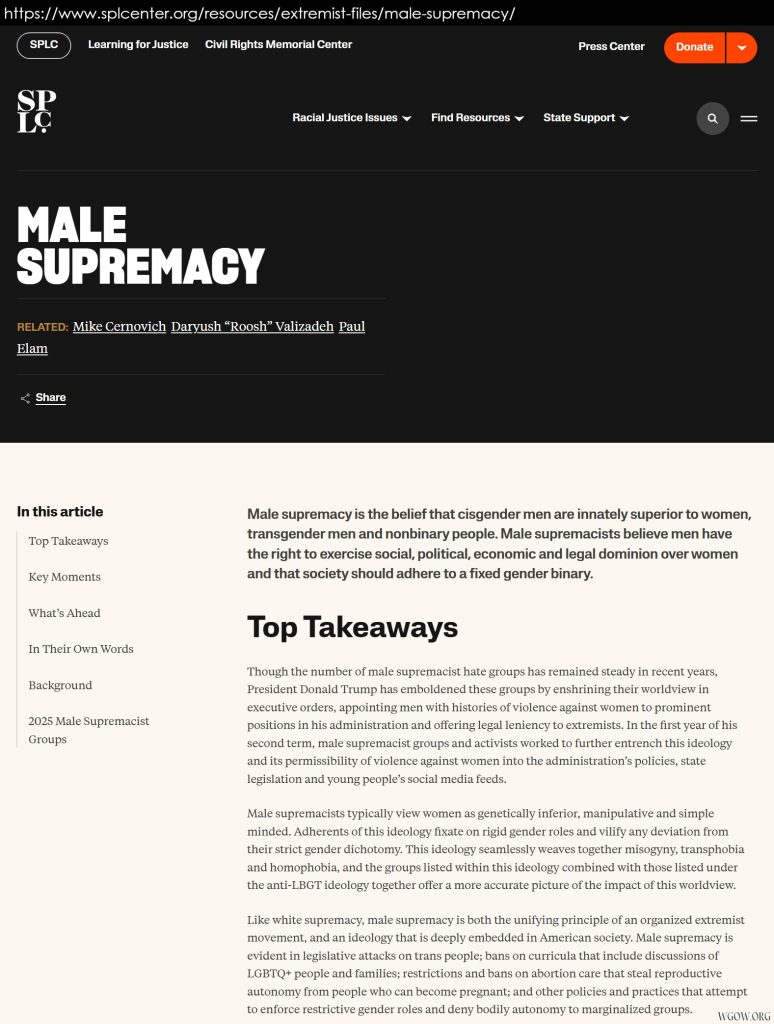
Male supremacy is the belief that cisgender men are innately superior to women, transgender men and nonbinary people. Male supremacists believe men have the right to exercise social, political, economic and legal dominion over women and that society should adhere to a fixed gender binary. […] Male supremacists typically view women as genetically inferior, manipulative and simple minded. Adherents of this ideology fixate on rigid gender roles and vilify any deviation from their strict gender dichotomy. This ideology seamlessly weaves together misogyny, transphobia and homophobia, and the groups listed within this ideology combined with those listed under the anti-LBGT ideology together offer a more accurate picture of the impact of this worldview.
The Southern Poverty Law Center’s definition of ‘Male Supremacy’; https://www.splcenter.org/fighting-hate/extremist-files/ideology/male-supremacy, accessed 30 July 2026 [screenshot]—the naked URL itself consigning traditional masculine hierarchy to the ‘extremist files’; the SPLC’s ostensibly neutral rubric of ‘male supremacy’ is the institutional afterlife of Redstockings radical feminism.
The SPLC defines ‘male supremacy’, on a page under the domain subcategory ‘/extremist-files/’, as the belief that ‘cisgender men are innately superior to women, transgender men and nonbinary people’, then enlarges the category beyond actual domination or violence to encompass adherence to ‘rigid gender roles’, resistance to deviations from a strict sexual dichotomy, restrictions upon abortion, opposition to transgender legislation, and even curricula which decline to incorporate LGBTQ identities. It further concedes that, although it formally lists only a small number of organisations, ‘many mainstream right-wing figures and organisations’ embrace what it calls male supremacy. The result is no neutral description of extremism, but an ideological classification constructed upon the premises of contemporary gender radicalism. The SPLC’s ostensibly neutral rubric of ‘male supremacy’ is the institutional afterlife of Redstockings radical feminism: the same doctrine that casts women as an oppressed class, men as their collective oppressors, and ‘male supremacy’ as the primordial structure from which all other domination proceeds.
The manoeuvre is itself extremist, revolutionary, derogatory, and highly coercive; one that has preyed upon the naivety of our very own ‘liberated’ daughters and sisters in order to weaponise them with a hotly caustic, hateful, and destructive anti-male ideology that serves the ends of social engineers. Long gone are the days of simple ‘misogyny’, itself an anti-traditional, radical entryist tactic that has lost its luster and failed to encompass the broader programme of gender deviancy and destruction. Sexual duality, differentiated offices, paternal headship, and the superiority of masculine authority were ordinary assumptions across civilisations for millennia; the SPLC silently installs the recent egalitarian anthropology of ‘cisgender’, ‘transgender’, and ‘nonbinary’ identity as the unquestionable norm, then pathologises inherited beliefs according to their distance from it.
Feel the real glow that comes from “our” sisterhood. We can teach you something about being gentle and kind for we never felt competitive. Remember WE long before YOU have known discontent with male society and WE long before YOU knew and appreciated the full potential of everything female…. It is WE who say welcome to you, long blind and oppressed sisters, we have been fighting against male supremacy for a long time, join US! We are not intimidated by relational differences, for we have never felt mortgaged by society.
T. B., letter, Everywoman, 26 March 1971; quoted in Anne Koedt, ‘Lesbianism and Feminism’
It goes on to name contemporary masculine figures and coyly associate them with the condemnation of ‘rape accusations’ even when such accusations were defeated in court, fully aware of the guilty-before-innocent ethos of its revolutionaries, that is harsher, gynaecocentric, and more unforgiving than any fair court would allow, such as the accusations of resentment that accrued around authoritative men like Count Nogi, forbidding autonomy or even corruption from the women themselves in a move that may properly be called ‘sexist’. Coercion, hatred, hierarchy, and the refusal of revolutionary gender doctrine are thereby gathered beneath one incriminating label. Tradition becomes ‘extremism’ merely because an egalitarian age has declared its own unprecedented articles of faith moderate; the people who still hold what their ancestors regarded as elementary order are cast as radicals by those advancing the far more radical transformation. This is the revolutionary catechism in juridical dress: its own rupture with the human inheritance disappears into the definition of normality, while fidelity to that inheritance is entered into the extremist file.
This ‘sisterhood’ is no innocent synonym for female friendship; Anne Koedt’s ‘Lesbianism and Feminism’ places the letter beneath her discussion of the lesbian claim to stand as the vanguard of radical feminism,43 having rejected men and conventional sex-roles before the women’s movement itself. Elsewhere in the essay, she records definitions of lesbianism extending beyond the sex of one’s partner into a ‘total life commitment’ to women and an entire mode of life; lesbianism could mean freedom from male relationships, while love between women offered an escape from the submissiveness feminists associated with heterosexual union.
Koedt rejects the conceit that lesbianism by itself abolishes ‘male supremacy’; merely changing one’s lover is, for her, a private solution unless it is consciously placed within the collective political labour of destroying the whole sex-role system. Yet this qualification confirms the revolutionary meaning of the quoted ‘sisterhood’. She explicitly treats resistance to exclusive heterosexuality as an act of rebellion, capable of becoming radical when directed beyond personal withdrawal towards the destruction of the order identified with male rule. The invitation to ‘join US’ is therefore at once sexual, affective, and political: women are summoned to redirect love, commitment, intimacy, and primary allegiance away from men and into the self-enclosed fraternity of the female sex-class. Lesbianism becomes the exemplary secession from ‘male society’; Sisterhood is the political name given to that secession once it is mobilised against ‘male supremacy’.
For the polemic, the significance is exact: the Sisterhood does not merely demand justice among women; it seeks jurisdiction over woman’s affections. It offers warmth, tenderness, and belonging on the condition that man be understood as the hostile world from which these treasures must be withdrawn. Thus the sex-class becomes an erotic community as well as a political bloc, and the revolution reaches completion when solidarity with ‘Women’ supersedes the natural primacy of father, husband, lover, household, and lineage.
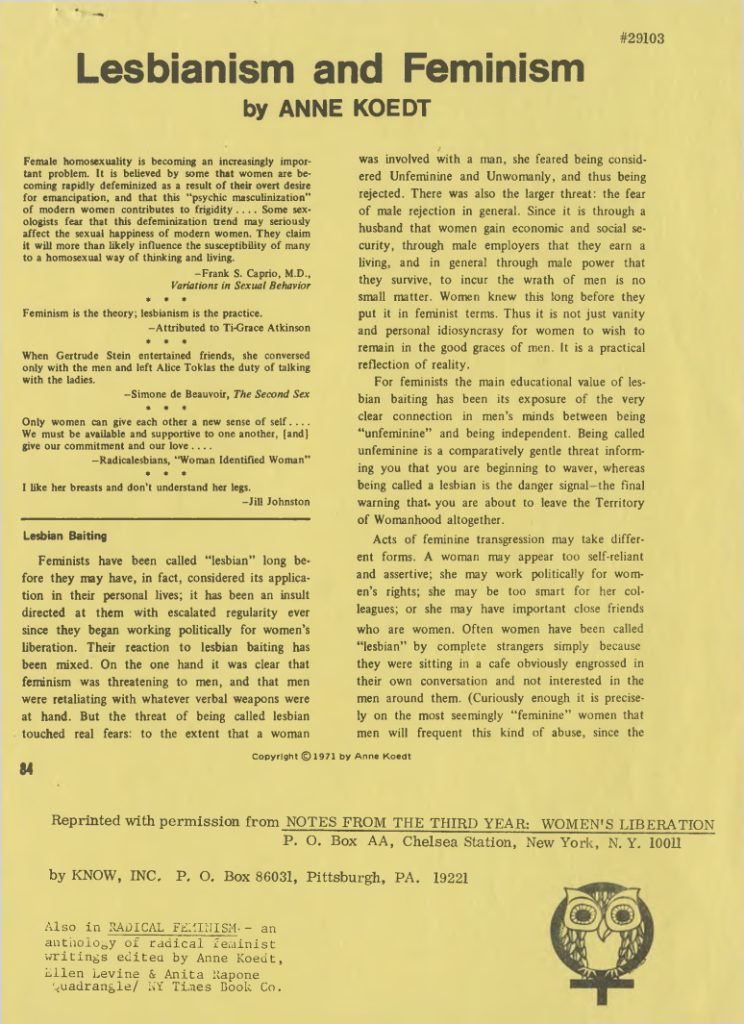
On the first page of Anne Koedt’s ‘Lesbianism and Feminism’, an owl appears enclosed within the sign of Venus, introducing at once the Illuminati–Masonic grammar of illumination, initiation, and brotherly fraternity through which the feminist ‘Sisterhood’ may be understood.44 In the historical Minerval emblem, the owl presided over an open book, signifying illumination, privileged knowledge, and the instruction by which ‘the blind see’; Koedt’s device transfers that same bird into the symbol of the female sex, as though Woman herself had become the book, the lodge, and the initiated order. Minerva supplies its classical ancestry, but the governing resonance is Illuminist: unrelated women awakened into a concealed interpretation of the world, renamed ‘sisters’, and joined through a consciousness withheld from those still bound to the supposedly profane relations of father, husband, household, and ordinary heterosexual fidelity.
Here ‘Sisterhood’ reveals its unmistakable correspondence with the Judaeo-Masonic ‘Brotherhood’, like the ecclesia and synagogue before it. Freemasonry gathers unrelated men within the lodge, renames them egalitarian brothers à la the slave cult of Servius Tullius, binds them through degrees, ceremonies, signs, and a privileged communal knowledge, and establishes an artificial fraternity across the natural distinctions of household, blood, province, and station. Feminism performs the sexual transposition. It gathers unrelated women beneath the abstraction of common sex, names them sisters, initiates them through ‘consciousness-raising’, supplies them with a doctrine intelligible only to the politically awakened that works unseen on those ‘profane’ outsiders, and commands that this manufactured allegiance supersede the concrete relations in which woman formerly possessed her actual identity. Even contemporary female Freemasonry describes itself as carrying the ideals of ‘Masonic brotherhood’ into a special bond among women; the structural correspondence between fraternity and Sisterhood is therefore hardly fanciful.45 The connexion between the suffragette movement and leading figures within Co-Masonry, together with the wider intersection of Masonic ‘brotherhood’ and feminist ‘sisterhood’, has been examined in detail in our study of the radical currents within Britain’s women’s-emancipation movements.
The language itself reveals the transposition. Freemasonry’s ancient vocabulary is one of fraternity: equal men gathered beyond ordinary distinctions, initiated into a common order, and bound by a special fellowship that recalls the old goddess temple of Servius Tullius. When women entered parallel Masonic institutions, this same grammar, rather than being discarded, was transferred. The United Grand Lodge of England describes female Freemasonry as sharing ‘the same values and principles’ as male Freemasonry, while the Honourable Fraternity of Ancient Freemasons is praised for promoting ‘the ideals of Masonic brotherhood’ and creating ‘a special bond between women’. The movement from Brotherhood to Sisterhood is therefore not merely a change of terminology; it is the recreation of an initiatory fraternity in female form, a consciously constructed solidarity which places the bond of the initiated collective above ordinary distinctions of household, lineage, and inherited relation.
Yet the vertical order of rank cuts through the horizontal division of sex. Man and woman remain distinct principles, unequal in office, and irreducible in form; still, a woman of breeding, discipline, and aristocratic instinct may stand ontologically nearer to the patriarch than to the indiscriminate female mass. She may share his standards, defend his house, recognise his authority, and prefer his judgement to the applause of women whose only claim upon her is anatomy. Sex determines polarity; it does not erase quality. The doctrine that every woman possesses a primary solidarity with every other woman therefore belongs to the metaphysics of the herd, where the lowest common attribute is enthroned because every higher distinction would divide the collective.
The higher woman understands that indiscriminate female advancement may signify her own degradation. To be levelled with all women is no elevation for one whose dignity arose from lineage, office, chastity, cult, or participation in a noble house. Emancipation offers her universal membership precisely by confiscating everything particular that once raised her above the universal. She is invited to exchange the judgement of superior men for the applause of inferior women, inherited honour for collective grievance, and a place within an enduring order for numerical equality among strangers. The offer is called liberation because the plebeian mind cannot conceive that admission into the mass may be a fall.
MacKinnon’s central thesis in ‘Feminism, Marxism, Method, and the State: An Agenda for Theory’ (1982) is that sexual domination occupies within feminism the same structural place that economic exploitation occupies within Marxism, with her formula ‘Sexuality is to feminism what work is to marxism: that which is most one’s own, yet most taken away.’
Sexuality is to feminism what work is to marxism: that which is most one’s own, yet most taken away. […] Marxism and feminism are theories of power and its distribution: inequality. They provide accounts of how social arrangements of patterned disparity can be internally rational yet unjust. But their specificity is not incidental. In marxism to be deprived of one’s work, in feminism of one’s sexuality, defines each one’s conception of lack of power per se.
Catharine A. MacKinnon, ‘Feminism, Marxism, Method, and the State: An Agenda for Theory’, Signs 7.3, Spring 1982, p. 515-16
For Marxism, labour is the social activity through which class is constituted, surplus is appropriated, and workers are subordinated to capital. MacKinnon constructs an exact feminist analogue: sexuality is the social process through which men and women are constituted as unequal sexes, and through which women’s sexuality is organised for male use. Thus ‘woman’ is not merely a biological category that later suffers discrimination; she is produced as a subordinate social class through sexual appropriation. Heterosexuality becomes the structure of that appropriation, gender and family its consolidated forms, and control its governing issue.
Her argument can therefore be reduced to four linked propositions:
- First, male dominance creates the sexes politically. Masculinity and femininity are not, in her theory, neutral identities subsequently placed into unequal relations; the unequal relation itself manufactures ‘man’ as dominant subject and ‘woman’ as sexual object. Sexual objectification is consequently not one feminist grievance among others, but the constitutive mechanism of womanhood under male supremacy.
- Secondly, women constitute a sex-class. Their individual experiences—marriage, desire, intercourse, beauty, motherhood, fear, dependence, and private relations with particular men—must be interpreted as manifestations of a common political condition. The apparently personal is therefore declared political because it discloses the collective power relation between the classes ‘men’ and ‘women’.
- Thirdly, ‘consciousness-raising’ is the feminist equivalent of Marxist class-consciousness. Women collectively reinterpret their personal lives through the category of male domination, thereby passing from a dispersed subordinate group into an organised movement. MacKinnon expressly compares this transformation to Marx’s movement from a class ‘in itself’ to a class ‘for itself’. Consciousness-raising does not merely discover a previously articulated reality; it ‘reconstitutes’ the meaning of women’s experience as a collective political fact and makes that consciousness into political practice.
- Fourthly, the supposedly neutral state institutionalises the male standpoint. In the companion essay, her argument becomes jurisprudential: law presents its standards as objective and universal, although those standards embody the perspective of male dominance. Formal equality cannot cure the problem because treating men and women by the same ostensibly neutral standard merely preserves the social order that men have already defined. The state is therefore ‘male’ insofar as its norm of objectivity converts the dominant standpoint into impersonal truth.
MacKinnon radicalises and redirects Marxism; she applies a Marxian analytic structure to women’s social position, she deliberately reconstructs ‘women’ as a political class through a Marx-derived theory of domination and consciousness. Where Marx located the fundamental antagonism in the relation between capital and labour, MacKinnon relocates it in the relation between men and women, with sexuality replacing labour as the primary field of exploitation. Feminism thus becomes, to Marxist class analysis, its transposition from economic class to sex-class. She believes Marxism remains imprisoned within economic class and therefore cannot comprehend sex as an autonomous structure of power. Feminism adopts Marxism’s dialectical architecture, replaces labour with sexuality as the fundamental relation, and then claims to exceed Marxism altogether; her concluding formulation is that feminism turns Marxism ‘inside out and on its head’. For our argument, her thesis is especially valuable; it reveals that the collective political entity called ‘Women’ is not passively found in nature. It is consciously constituted by taking the relations, loyalties, disappointments, and intimate experiences of unlike women, extracting them from household, rank, lineage, character, and particular circumstance, and redescribing them as evidence of one universal class relation. MacKinnon’s theory supplies the mature intellectual machinery by which the woman becomes a member of the feminist proletariat: sexuality replaces labour, men replace capital, consciousness-raising replaces proletarian organisation, and the Sisterhood emerges as the sex-class ‘for itself’.
MacKinnon’s famous formula, ‘Sexuality is to feminism what work is to marxism’—once one is done laughing at the obvious implications of dereliction and misfit dysfunction—does not remain an abstract analogy suspended above private life. Once sexuality has been declared the productive relation through which the sexes themselves are constituted, heterosexual union ceases to be merely one form of love and becomes the principal institution of class appropriation: the arena in which ‘man’ is formed as possessor and ‘woman’ as the sex possessed. Thus the sex act itself becomes the first battlefield of the ‘revolution’ against nature, as the medium of subjugation of women, by placing them in the submissive, receptive posture and resulting in the further oppression of child-bearing; from this premise follows a series of inversions in which the given meanings of sex, embodiment, and sexual relation are treated as structures of domination to be overturned. The revolution against the sex act proceeds into the inversion of sexuality itself: the reordering of sexual relations, the repudiation of inherited distinctions, and the elevation of formerly ‘naturally’ subordinate positions into symbols of emancipation. The masculine is displaced from its traditional position of agency and emasculated into sexual submission as a political act, whereby the most intimate expressions of human nature become the theatre of the sex war and its ideological revolution. It is within this radical atmosphere that the radical-feminist aphorism arises: ‘Feminism is the theory; lesbianism is the practice.’
MacKinnon quotes the saying, attributed to Ti-Grace Atkinson, although she judges its relation between theory and practice too simple; her own refinement is that feminism supplies the epistemology of which lesbianism becomes an ontology. Koedt therefore rejects the slogan only in its crudest literal form: ‘the sex of a woman’s lover’ cannot alone establish radical-feminist politics, since lesbianism may coexist with conventional dependence and heterosexuality with feminist militancy; yet the doctrine has already departed from heterosexuality in principle, for it makes allegiance to the female sex-class prior to union with man and submits that union to the political tribunal of ‘male supremacy’. The revision is more revealing than a simple endorsement would have been. Feminism first teaches woman how to know herself: no longer through father, husband, household, lineage, duty, or particular love, but through the collective consciousness of woman as sexually appropriated class. Lesbianism may then appear as that consciousness made existential—as the sex-class withdrawing affection, loyalty, and erotic recognition from the alleged oppressor class and turning towards itself. The doctrine does not require every feminist to become lesbian in the pragmatic and literal senses; its deeper movement is already accomplished wherever relations with men are placed beneath the prior allegiance owed to ‘Women’, wherever heterosexual love is made politically suspect, and wherever intimacy with man must justify itself before the tribunal of female class-consciousness. Feminism is here the theory because it names the antagonistic classes; political lesbianism is its exemplary practice because it attempts to make the separatism implicit in the theory into a lived condition.
Rank above sex does not allude to the abolition of sexual hierarchy. It means only that womanhood itself admits of altitude and abyss, nobility and vulgarity, qualification and mere biological fact. The queen is no ambassador of women; the matron does not derive her authority from the female multitude; the priestess is not elevated by resemblance to the servant. Their dignity consists in separation. Feminism must therefore democratise every great woman after death, stripping queen of crown, matron of husband, priestess of cult, and noblewoman of house, until each can be exhibited as an early partisan of those whom she would scarcely have recognised as her equals.
The unforgivable woman refuses this posthumous conscription. She knows that the accidents of sex cannot outweigh the substance of rank, and that the female collective may be judged, refused, and left beneath her. She does not descend among women in order to prove that she has risen. She remains where form has placed her, allied with the men, houses, and gods capable of sustaining the height to which she belongs.
Scholia
- Karl Marx, The Poverty of Philosophy, ch. 2.5, 1847; Friedrich Engels, The Origin of the Family, Private Property and the State, ‘The Monogamous Family’, 1884
- Shulamith Firestone, The Dialectic of Sex: The Case for Feminist Revolution, ch. 1, 1970; Juliet Mitchell, ‘Women: The Longest Revolution’, New Left Review 40, 1966
- Redstockings, Redstockings Manifesto, 7 July 1969
- Catharine A. MacKinnon, ‘Feminism, Marxism, Method, and the State: An Agenda for Theory’, Signs 7.3, Spring 1982, pp. 515–544, especially pp. 515–16 and 535
- Anne Koedt, ‘Lesbianism and Feminism’, in Anne Koedt, Ellen Levine, and Anita Rapone, eds., Radical Feminism, 1973, p. 246; the essay itself calls the aphorism erroneous because the sex of a woman’s lover does not establish radical-feminist politics.
- Das verbesserte System der Illuminaten, c. 1788, Minerval insignia depicting the owl upon an open book; the Illuminati’s later system included three Masonic lodge degrees and recruited extensively through Masonic networks.
- United Grand Lodge of England, ‘Women Freemasons’, describing the Honourable Fraternity of Ancient Freemasons as promoting ‘the ideals of Masonic brotherhood’ and creating a ‘special bond between women’.
An Older Feminine Ideal—Become Unforgivable
Woman has been degraded by Marxist class-consciousness; she has not been exalted by it—dragged down from person, rank, vocation, lineage, mystery, and sacred particularity into the coarse anonymity of a political category. Where once she might have stood as daughter, bride, wife, mother, queen, widow, patroness, priestess, guardian of the household, bearer of memory, and living vessel of a people’s continuity, she is now instructed to know herself chiefly as a member of an injured collective called ‘women’; her sex is treated not as the ground of a manifold and elevated estate, but as the badge of an abstract grievance, the mark of a class, and the warrant of perpetual mobilisation. The higher Woman, formed through fidelity, discipline, beauty, sacrifice, distinction, and the acceptance of duties proportionate to her station, is thus displaced by the ideological female: interchangeable, resentful, uprooted, and taught to regard every bond which exceeds the collective as a possible betrayal of it.
This is the peculiar violence of feminist class-consciousness: it does not merely offer woman a political interpretation of certain wrongs; it imposes upon her an entire counterfeit ontology. It tells her that the deepest truth of her life is not whom she loves, what she serves, what she preserves, to whom she belongs, what house she ennobles, what children she raises, what ancestors she vindicates, or what order she embodies, but the supposed antagonism between her sex and man as such. The father becomes an oppressor, the husband a representative of domination, the son an inheritor of privilege, the household a theatre of subjection, chastity an internalised chain, obedience a pathology, sacrifice a fraud, and fidelity the final proof that she has failed to acquire consciousness. Every noble bond is translated into the language of coercion; every asymmetry is presumed guilty; every form of feminine greatness which cannot be reduced to revolt is explained away as delusion.
Under this doctrine, even the woman who loves is taught to distrust her love, the woman who serves to despise her service, the woman who follows to feel ashamed of following, and the woman who remains faithful unto death to imagine herself less free than the woman who abandons all vows at the first summons of appetite. Cleopatra’s fidelity, Shizuko Nogi’s concealment and resolve, the Naishosama’s conjugal steadfastness, the satī bride’s refusal to outlive the sacred bond, Octavia’s magnanimity towards the children of her rival—these become embarrassing relics to a creed which can admire their glamour only after stripping away the acts which made them great. It covets the diadem, the pearl, the veil, the tragedy, the name, and the aura; it recoils from constancy, rank, sacrifice, and submission to anything higher than the autonomous self. Thus it seizes the ornament of Woman while repudiating her stature.
The degradation is completed when the political abstraction is enthroned above the living woman herself. She may be unlike other women in character, station, duty, loyalty, civilisation, and soul; she may stand nearer in honour and allegiance to her father, husband, sovereign, household, or gods than to millions of strangers who happen to share her sex; yet the class-conscious formula declares these profound affinities secondary and the accidental fraternity of sex supreme. The queen and the agitator, the faithful wife and the destroyer of households, the matron and the courtesan, the saintly widow and the revolutionary propagandist are all conscripted into one fictitious army. To refuse that conscription is to be accused of false consciousness, internalised oppression, or betrayal; that is, woman is permitted to speak only when she repeats the ideology which has already decided what her speech must mean.
Here the Marxist inheritance reveals its full ugliness. It cannot endure hierarchy, because hierarchy distinguishes; it cannot endure fidelity, because fidelity binds; it cannot endure gratitude, because gratitude interrupts grievance; it cannot endure particular love, because particular love refuses the universal hatred required by class war. It must therefore flatten Woman before it can mobilise ‘women’. It must dissolve the noble differences among them, detach them from the men and institutions to whom their lives are actually joined, and persuade them that estrangement is awakening. It names this ruin consciousness; it calls suspicion wisdom; it calls severance liberation; it calls the inability to love without ideological reservation freedom.
Yet Woman is not restored by becoming conscious of herself as a proletariat. She is restored by ceasing to be one. She rises when the counterfeit solidarity of grievance is broken; when rank, character, loyalty, and vocation are once again permitted to divide the noble from the ignoble; when she is released from the obligation to identify with every female merely because both are female; when she may honour the man worthy of honour, obey what is worthy of obedience, sacrifice for what transcends her, and distinguish herself through the exacting splendour of fidelity. The higher Woman does not emerge from the clamour of the collective. She emerges where the collective is silenced, where the false sisterhood loses its claim, and where a woman may again become singular, formed, beautiful, terrible, and true.
The older feminine ideal began from qualification rather than universality. It asked what kind of woman stood before the house, the husband, the altar, and the lineage, and by what discipline she might become worthy of the office awaiting her. Womanhood alone conferred no crown. Chastity, fidelity, reserve, piety, courage, obedience, discrimination, and command of the inward life raised one woman above another, just as rank and virtue distinguished men. The higher woman emerged through form, and form demanded that appetite be mastered, personality be subordinated to office, and freedom become capable of allegiance.
Her dignity was relational because relation itself possessed metaphysical depth. As daughter, she received the continuity of blood and name; as wife, she entered a house whose destiny exceeded private sentiment; as mother, she became the passage through which ancestry moved towards posterity; as matron, priestess, or queen, she bore an authority qualified by the order she served. These relations neither exhausted her person nor reduced her to utility. They lifted her beyond the isolated self, giving her conduct consequence within a world of gods, descendants, vows, and inherited honour. The autonomous individual can possess choices; the woman of form possessed a station in Being.
Such a woman required no perpetual exhibition of strength. Her gravity appeared in constancy, in the refusal to convert suffering into grievance, in the capacity to preserve the house through absence, calamity, humiliation, exile, or death. She might avenge murdered parents, sustain a proscribed husband, defend children and inheritance, or follow her lord into the final darkness; yet her deeds remained intelligible through fidelity rather than through rebellion. She did not need to be torn from relation and displayed alone before the crowd before courage could be recognised in her. The quiet act performed for lineage could stand higher than the clamorous achievement performed for publicity, because its measure lay in the order preserved rather than in the attention acquired.
Modern emancipation could only misunderstand this ideal. Having reduced dignity to self-possession, visibility, and equal access, it interprets every form of obedience as diminishment and every inward office as exclusion. It therefore liberates woman from the very relations through which the higher type once became possible, then compensates her with the universal privileges of the mass: employment, consumption, sexual circulation, political enumeration, and the right to announce herself without qualification. The matron becomes an individual, the lady becomes a citizen, the priestess becomes a consumer, and the queen is democratised into an emblem of ‘female empowerment’. Each is supposedly restored to herself only after everything greater than herself has been taken away.
The older ideal offers no indiscriminate flattery of women. Its severity is the source of its elevation. It knows that the feminine may rise towards loyalty, beauty, mediation, sacred receptivity, and the preservation of form, or sink towards vanity, intrigue, maternal absolutism, erotic usurpation, and the tyranny of grievance. It judges woman because it takes her seriously enough to distinguish altitude from degeneration. Feminism grants her exemption from judgement and calls the resulting poverty honour. The older world demanded more, and therefore permitted her to become more.
Become unforgivable. The modern age condemns precisely those virtues which expose its own deformity. If the age can forgive you, it has probably already remade you in its own image.
Better to incur the condemnation of an age that has forgotten Woman than the approval of one that has reduced her to a class. The judgement of the Sisterhood is a small price to pay for the esteem of Livia, Octavia, Victoria, Cleopatra, Shizuko, and every woman whose fidelity has outlived the ideology that would have explained it away. Choose to Go Our Way, once more.
Conclusion: The Women Who Must Be Explained Away
Feminism can forgive and revise into its dialectic almost any woman except the one who understands it and refuses it. The ignorant may be educated, the hesitant persuaded, the wounded mobilised, and the vulgar celebrated as authentic; the woman who has weighed the doctrine and judged it beneath her presents another problem altogether. Her existence cannot be admitted as evidence of free judgement, because feminism has already declared itself the awakened consciousness of woman as such. She must therefore be translated into pathology along with the patriarch himself. Her loyalty becomes dependence, her reserve repression, her reverence conditioning, her preference for hierarchy ‘internalised misogyny’, and her admiration for superior men a humiliating appetite for male approval. The doctrine that proclaims female autonomy survives by denying autonomy to every woman who chooses against it.
This compulsion to explain away dissent betrays the weakness of the supposed sisterhood. A natural solidarity would have no need to invalidate the minds of those who refused it. Feminism, however, cannot permit a woman to stand outside the collective while remaining lucid, dignified, and whole, for such a woman reveals that the common interest of sex is neither natural nor universal. She may prefer household to movement, lineage to class-consciousness, obedience to agitation, chastity to circulation, and the judgement of superior men to the applause of inferior women. Each preference tears another hole in the fiction that emancipation merely gives voice to what all women secretly desire.
Historical women are subjected to the same posthumous correction. The queen must be redescribed as an unconscious egalitarian, the matron as a concealed political actor, the faithful wife as a victim who somehow converted submission into agency, and the priestess as an early professional woman imprisoned by the vocabulary of her age. Their actual loyalties are treated as accidents surrounding the one supposedly essential fact: that they possessed power while female. Feminism strips them of crown, husband, cult, dynasty, and rank, then returns the emptied figure to the public as a mascot of universal womanhood. It cannot honour them as they were, because what they were often stands in judgement upon everything feminism has made of woman.
The same indignity is inflicted upon living women. Those who speak against emancipation are told that their words cannot truly belong to them; some man, religion, trauma, economic dependence, or inherited prejudice must be speaking through their mouths. The feminist interpreter thus assumes the very paternal authority she claims to oppose, correcting the woman’s consciousness, assigning the meaning of her loyalties, and declaring which desires are authentically her own. No patriarch was ever more certain that he knew a woman’s good better than she did. The difference lies chiefly in the degradation of the office: where paternal judgement once answered to household, lineage, and responsibility, feminist tutelage answers only to ideology and the resentments of the sex-class.
The unforgiven woman remains dangerous as she refuses this psychological confiscation. She insists that her fidelity is conscious, her hierarchy chosen, her obedience honourable, and her judgement her own. She does not ask to be rescued from the forms that elevate her, nor mistake equality with the mass for ascent. Her mere composure exposes the emancipationist fraud: feminism does not liberate woman to choose; it liberates her until she chooses feminism, and explains her away when she does not.